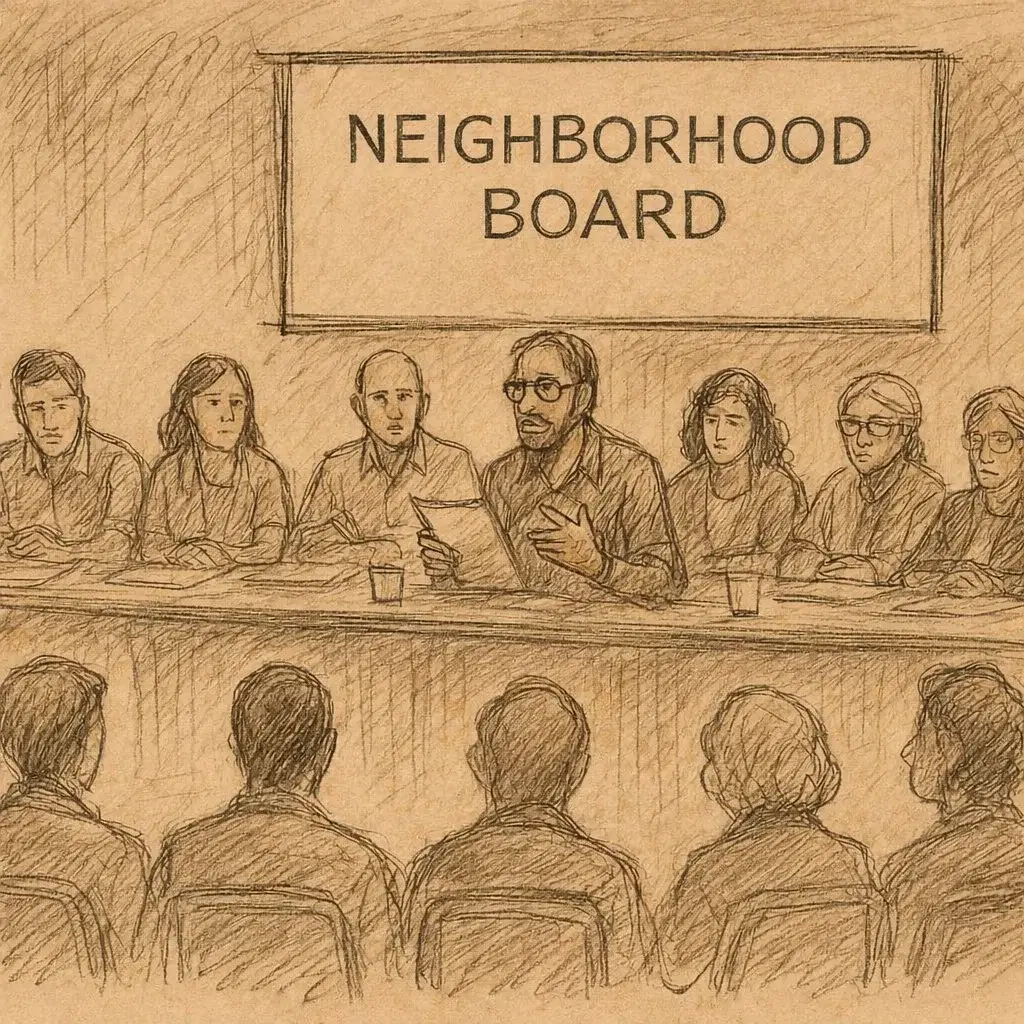
No 04 Kaimuki Neighborhood Board Regular Meeting August 2026
Listen to this article:
4 Kaimuki Neighborhood Board Meeting – August 21, 2026
Illegal Dumping and Mountain Trash Cleanup
A resident reported extensive bagged trash hidden in four separate locations within a wooded hillside area, noting that it cannot be seen from the road and may have been left by someone previously living there. Mayor’s Office representative Brian McKee asked for the exact locations and offered to create a city work order for removal, providing his city email, brian.mckee@honolulu.gov, for follow-up. City Council Chair Tommy Waters later said he had visited the area with community members and estimated that roughly 150 intact trash bags were scattered among multiple sites, including one deep in the mountain near a boulder base. Because access is difficult, Waters proposed coordinating a city Facility Maintenance crew, a roll-off container, and a volunteer chain to pass the bags down a cleared trail. He said he could recruit approximately 20 canoe paddlers and other volunteers to assist, while stressing that the scale of the dumping would require substantial labor and city coordination.
Makapuʻu and Diamond Head Road Pedestrian Signal
A resident requested a review of the traffic-signal timing at Makapuʻu Avenue and Diamond Head Road, especially during the Saturday Kapiʻolani Community College Farmers’ Market. The resident said drivers waiting to turn left toward the market receive a green light at approximately the same time pedestrians are instructed to cross Diamond Head Road, creating a conflict between turning vehicles and people in the crosswalk. The proposed remedy was to give pedestrians their crossing interval before releasing left-turning traffic. Brian McKee agreed to refer the matter for review and provide an update, with the request framed as a recurring pedestrian-safety concern rather than simply a traffic-flow inconvenience.
Route 200 Bus Service
Board members again raised the discontinued Route 200 and the resulting difficulty kūpuna face traveling uphill into Kaimukī. Calvin asked what the city means when it says it will continue to “monitor” the situation and what practical transportation advice can be offered to older residents whose mobility remains impaired. McKee said the responsible department had not indicated that Route 200 would return and that he did not expect reinstatement in the near future, although he would request clarification about what monitoring entails and again convey that community concern has not subsided. Members observed that the response effectively sounded like a denial, while McKee emphasized that transit officials had met with the board several times, heard the concerns, and so far made no changes.
Queen Theater Restoration Effort
The board discussed renewed interest in preserving and reopening the historic Queen Theater as a community arts venue. A member asked whether the mayor’s administration could support the effort through grants, tax credits, permit relief, modest capital assistance, or an expression of public support. McKee said he was unaware of the theater being part of the city’s current real-property strategy, which has primarily focused on homelessness and affordable housing, but agreed to ask the administration whether assistance might be available. Later, Peter, representing the interested artist group, reported that the group had toured the building after arranging access through the listing agent. Although it had been boarded up for about 40 years, the owner had been cleaning it, and the group found the concrete and cinder-block structure to have apparently strong “bones,” while acknowledging that this was not a professional assessment. The group does not intend to demolish the theater and views its location and architectural presence at the top of the hill as irreplaceable, though the storefronts and upstairs offices could be renovated. After using the tour to decide whether to proceed, the group submitted an acquisition offer the previous week and was awaiting a response from the owner and listing agent.
Storm Debris, Flooding, and Drainage Problems
Chair Waters announced that the city would offer special pickups for green waste that could not fit into household green carts on Saturday, August 22, and Saturday, August 29. Residents were required to schedule an appointment with the Department of Environmental Services using a process similar to bulky-item collection. Waters also revisited flooding at 16th Avenue and Kiana Street during the April Kona low. Although the location did not flood similarly during the most recent storm, he had written to Department of Emergency Management Director Dr. Randall Collins asking why the earlier flooding occurred and what could prevent a recurrence. He also presented an April 27 letter to the director of Facility Maintenance concerning badly damaged drainage infrastructure on 17th Avenue, emphasizing that he had repeatedly sought city repairs. These concerns reflected the need to address chronic drainage weaknesses before another major rain event.
Property-Tax Relief and Cost-of-Living Legislation
Waters explained several forms of property-tax relief. Owners whose homes were damaged by the recent storm may apply for a tax remission or reassessment reflecting the damage. He also highlighted the city’s existing income-based property-tax credit, under which qualifying households earning $80,000 or less can limit their property-tax burden to 3% of household income, provided they apply by September 30. He distributed application materials and reminder magnets, while promising to clarify how income is calculated when only one owner is listed on the property. Waters also reviewed Bills 45, 46, 47, 52, and 53. Bill 45 would increase the senior homeowner exemption from $180,000 to $200,000, Bill 46 would raise the general homeowner exemption from $140,000 to $160,000, and Bill 47 would reduce vehicle taxes. He described the exemption increases as an effort to keep tax relief aligned with rising property assessments and reduce household living costs.
Recognition of Brian Kang
Chair Waters presented formal recognition to board member Brian Kang for civic and professional service. Kang has served on the Kaimukī Neighborhood Board since 2013 and as chair since 2023, in addition to his work as a partner at Watanabe Ing LLP. The recognition praised his leadership, collaborative approach, public service, and efforts to create meaningful communication between residents and government.
Diamond Head Crater Emergency Facilities Project
Board members asked about a state project involving improvements to an emergency operations facility and Building 303 within Diamond Head Crater. The limited notice available to the board appeared to describe removal of an underground fuel tank, installation of an aboveground tank, generator work, possible tree removal, and several million dollars in spending, but did not explain whether the buildings themselves or visitor areas would be altered. Waters said he had not previously received information about the state project and agreed that it should be investigated. Governor’s representative David Patterson also offered to identify the appropriate state contact, noting that the Joint Information Center operates in or near the Diamond Head emergency complex and that its personnel might know the project’s scope.
Hurricane Recovery and the Next Storm
Patterson reported that the Governor’s Office remained focused on recovery from the recent storm and on preparing for another system that officials believed could resemble Hurricane or Tropical Storm Lala. He had worked at the Joint Information Center, which coordinates public-information officers from state and other responding agencies. Although national media attention had already moved on, he said the state remained fully committed to recovery and was pursuing federal assistance, with the amount still undetermined. The governor was expected to hold a press conference the following day. Patterson said Hawaiian Electric participated in emergency command meetings at 8 a.m. and 4 p.m. and provided outage and restoration reports, though members questioned why public-facing outage information could remain unchanged for six hours.
Electrical Infrastructure, Underground Lines, and Public Safety
Residents and board members argued that Hawaiʻi’s repeated outages reveal deeper infrastructure weaknesses rather than a problem that can be solved solely through post-storm response. They praised Hawaiian Electric field crews but questioned what the state and utility are doing proactively to strengthen power systems, roads, water infrastructure, and other essential services before a more destructive hurricane arrives. Patterson acknowledged that outages can force households and food businesses to discard inventory, close businesses, impair communications, disrupt school meal programs, and contribute to school closures when water, sanitation, or food safety cannot be maintained. He also recognized the frequency of water-main failures as part of a broader infrastructure problem. A member asked specifically whether Kaimukī has a plan and timeline for undergrounding power lines, recalling a Hawaiian Electric presentation from around 2018 and questioning whether rates would need to increase. Patterson offered to contact Hawaiian Electric representative Darren Pai and explore having the utility attend a future meeting to address undergrounding, outage frequency, system resilience, costs, and timelines.
Emergency Shelters, CERT, and Neighborhood Preparedness
The board expressed serious concern that Oʻahu may not have enough hurricane shelters and that some designated shelters may not meet standards for a direct major-hurricane strike. Residents noted that many older Kaimukī homes, including lightly constructed houses dating from the 1930s and 1940s, may not protect occupants from extreme winds. They questioned where residents could safely go if homes failed and whether schools or other public facilities could withstand the same hazard. Patterson agreed to investigate shelter capacity and coordination among the city, schools, parks, state agencies, and sheriff personnel. Jason Liang also requested more Community Emergency Response Team training because the only announced sessions, one in September and one in October, were already full. Waters agreed to ask the Department of Emergency Management to expand the unpaid volunteer program, noting that additional trained residents improve storm response. Speakers repeatedly stressed that shelter planning, standards, and access must be addressed before—not after—a catastrophic event.
State Disaster-Resilience and Home-Retrofit Programs
Representative Tina Grandinetti described disaster-preparedness work following a July town hall held in anticipation of an active El Niño hurricane season. The event featured the Hawaiʻi Emergency Management Agency’s Hawaiʻi Hazards Awareness and Resilience Program, or H-HARP, which combines training with neighborhood-level organizing. Her office was helping form participating teams, including interested residents in Kāhala, and invited Kaimukī residents—particularly members of neighborhood watches or street text chains—to participate. Grandinetti also reported that the Legislature had appropriated approximately $4 million in Green Fee revenue for a pilot grant program administered by HI-EMA to help homeowners, especially low-income residents and kūpuna, harden homes against hurricanes through improvements such as hurricane clips. She acknowledged that $4 million is limited, comparing it with investments exceeding $75 million in Alabama over a decade and a recent $200 million commitment in Florida, but said the pilot would help Hawaiʻi determine how a larger retrofit program could operate.
Schools, Green Fee Grants, and Community Disaster Plans
Representative Jackson Sayama reported that public schools and the Hawaiian immersion school in Maʻkapālala experienced no major damage from Hurricane Lala. Some tree branches broke, but no one was injured and normal operations continued. Schools discarded some food because of the outage, but the Department of Education quickly replaced supplies so students continued receiving meals. Sayama encouraged residents to report public-property damage through the city’s 311 system or his office, which could forward cases to the appropriate agency while city resources remained stretched. He also announced that the deadline for State Green Fee Funding Opportunity applications had been extended from August 19 to August 24 at 4 p.m., while applications concerning the Green Fee Outcome Framework and Monitoring and Evaluation Dashboard were due September 15 at 2 p.m.; details were available through Hawaiʻi Green Growth’s Green Fee RFP Tracker. Sayama is also working with community leaders on a Palolo disaster and evacuation plan after the Palolo Stream nearly overflowed during the Kona lows, threatening nearby public housing and residences. He hopes to extend similar planning to Kaimukī and assess whether Palolo District Park, local community parks, and nearby state facilities can serve as neighborhood emergency shelters so residents are not required to drive long distances in dangerous conditions.
Hawaiian Electric Claims for Spoiled Food
Residents were informed that Hawaiian Electric has a claims process for food and other property lost during a power outage. The relevant form can be found on the utility’s website by searching for Hawaiian Electric food-damage claims. Sayama cautioned, however, that the utility generally excludes storm-related damages unless negligence can be established, making successful claims difficult. Residents were still encouraged to apply because filing does not hurt their case, though one participant noted the competing concern that submitting a loss through private homeowners insurance could lead to higher premiums.
Mā‘umai Nature Park Volunteer Improvements
Hui Mā‘umai reported that it began organizing in May to keep Mā‘umai Nature Park green and resilient over the long term and received formal Adopt-a-Park approval in early July. Its first cleanup drew 34 volunteers, who cleared the lower trail from the lower lawn area to Koko Head Drive, collected more than 30 bags of green waste, and removed approximately 500 pounds of hardwood cuttings. A T-shirt and tote-bag fundraiser raised more than $400, with the group’s first purchase being the first-aid kit required for volunteer cleanup work. Hui Mā‘umai is working with the Aloha Tree Alliance, the Division of Urban Forestry, and the Adopt-a-Park program to replace invasive growth gradually with native plants. The initial planting area would be above the lower lawn in a section cleared of kiawe and other vegetation in March that is now dominated by invasive grasses. The Aloha Tree Alliance has a grant supporting three pilot projects and is willing to include Mā‘umai, providing technical expertise and native plants. Hui Mā‘umai must first obtain an addendum to its Adopt-a-Park agreement authorizing planting and submit a detailed proposal to the relevant city programs, with copies to the neighborhood board and City Council District 4. The group’s second cleanup was scheduled for Sunday from 7:30 to 9:30 a.m., subject to weather, and members also discussed forming a nonprofit, increasing social-media outreach, encouraging residents to walk the restored trail, and protecting new plantings from the park’s large chicken population.
Draft Mā‘umai Cleanup and Wildfire-Reduction Plan
Envision Kaimukī representatives Lori Yamada and Lot Lau presented a preliminary, park-wide cleanup framework intended to coordinate multiple organizations rather than focus on one volunteer group. The draft divided the park into Section A, the large undeveloped mauka area bounded in part by Koko Head and 16th Avenue, and Sections B, C, and D, which a Department of Parks and Recreation contractor cleared earlier in the year. Envision Kaimukī intends to concentrate on maintaining the contractor-cleared areas because haole koa, fire-prone grasses, and other invasive growth will return. Lau said the scale of the park exceeds the capacity of any single organization and called for coordination among Envision Kaimukī, Hui Mā‘umai, the Aloha Tree Alliance, the neighborhood board, Adopt-a-Park, and the Department of Parks and Recreation. He emphasized that volunteer work should avoid duplication, follow a shared plan, and receive DPR approval because off-trail terrain can be hazardous and the city bears safety and liability concerns. Possible techniques such as goats, controlled burning, manual clearing, and even supervised prison labor were mentioned only as options requiring formal review, not approved actions. Residents cautioned that native plants, including Hawaiian sandalwood or ʻiliahi, must be protected and that indiscriminate clearing could worsen erosion, destabilize hillside lots, and create costly foundation problems. Others emphasized the competing wildfire danger posed by dry vegetation during high winds. The discussion concluded that treatment details, site conditions, erosion control, fire reduction, permitting, planting, and long-term succession planning must all be considered, because restoration and maintenance will require sustained community participation over many years.
Proposed Property-Tax Cap
During community concerns, Jason Liang proposed a future board resolution asking the city to limit qualifying owner-occupants’ property taxes to 1% of household income. The existing city credit limits taxes to 3% of household income for qualifying households earning no more than $80,000, but Liang argued that incomes have not kept pace with assessments and suggested raising the eligibility ceiling to perhaps $100,000, $120,000, or $130,000. He said the change could help retirees remain in their homes and reduce the property-tax burden on children who inherit family residences. Eligibility would continue to require a homeowner exemption, ensuring that the property is owner-occupied. As a potential revenue offset, he suggested creating a higher tax tier for properties valued at $10 million or more, reasoning that many such properties are investment assets and that other counties, including Hawaiʻi County, have established higher tiers. He offered to bring a draft resolution to the board’s property-tax committee and a future meeting.
Proposal for Public Ownership of Hawaiian Electric
Liang also proposed a resolution supporting conversion of Hawaiian Electric into a publicly or cooperatively owned utility. He compared the company with the Kauaʻi Island Utility Cooperative, which is nonprofit, reportedly has Hawaiʻi’s highest share of green energy, and charges approximately two cents less per kilowatt-hour than utilities on other islands. Liang argued that Hawaiian Electric’s for-profit monopoly structure and publicly traded ownership encourage returns to investors rather than service reliability and proactive infrastructure investment. He cited large institutional ownership, including BlackRock, and stated that the utility’s chief executive earns approximately $4 million annually. Under public ownership, he argued, service, stability, and local needs could take priority over profit. With no immediate objection to further discussion, he said he would prepare draft resolutions for a future agenda.
Senator Les Ihara’s Transition
Senator Les Ihara reflected on roughly 40 years of attending the Kaimukī Neighborhood Board, including its early meetings in the same building. With only a small portion of the district remaining under his representation and a transition underway to Representative Sayama, Ihara said leaving office would allow him to apply decades of legislative and leadership experience from outside government. He described plans to work through a nonprofit and become more publicly active on community issues, noting that advocacy from outside the institution may allow him to pursue efforts that were easier to block while he was an internal legislative participant. The board thanked him for his many years of service.
Meeting Records and Announcements
The board approved the written summary and video record for the July 15, 2026 meeting after correcting the attendance record to include Renell Asuega at the candidate forum and identifying Audrey Abe, rather than Carol, as the presenter of the Transportation Committee report and Route 200 discussion. No Transportation Committee report was given because Abe was absent, and members had no reports from other neighborhood boards or public meetings. The next regular meeting was scheduled for Wednesday, September 16, 2026, at 6:30 p.m. at the Kaimukī Public Library and online through WebEx. The board’s meetings were also announced for broadcast on ʻŌlelo Channel 49 at 9 p.m. on the second Sunday of each month.