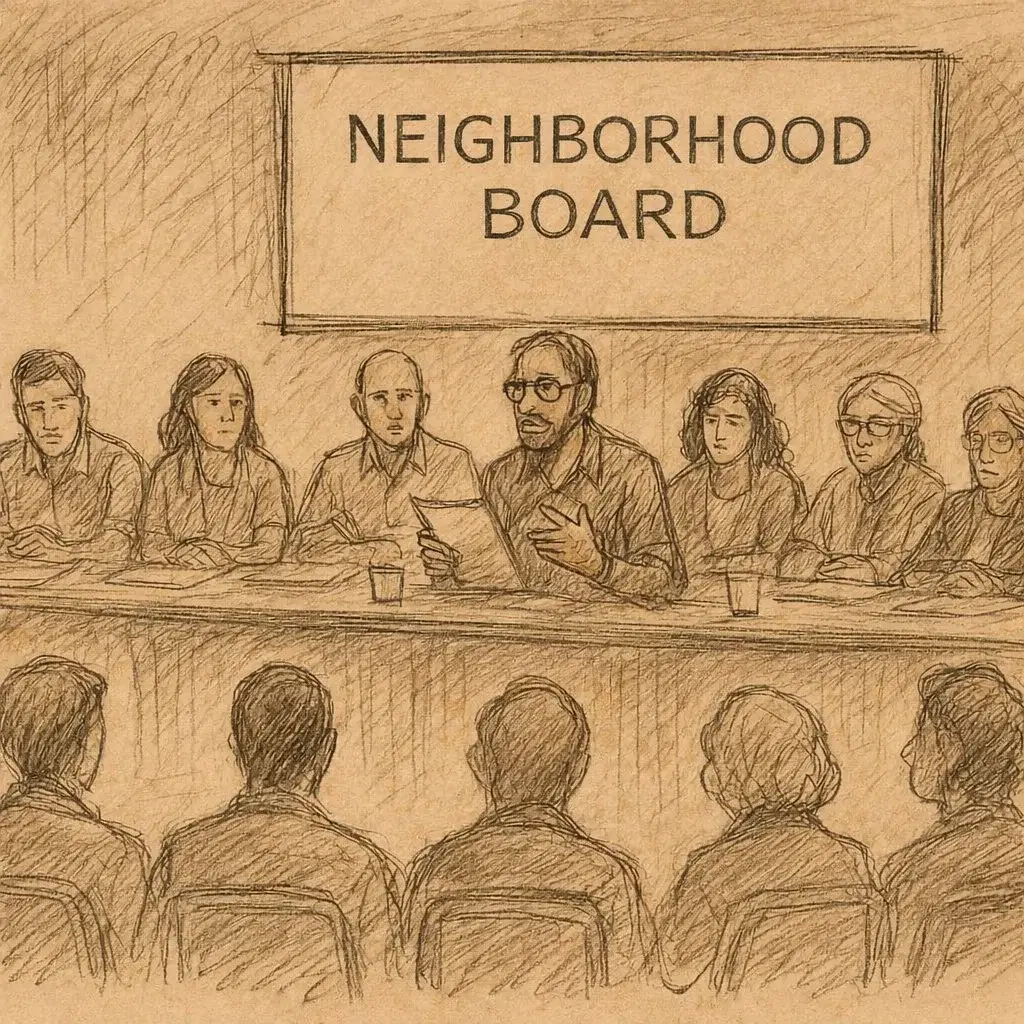
No 04 Kaimukī Neighborhood Board Regular Meeting July 2026
Listen to this article:
4 Kaimuki Neighborhood Board Meeting – July 16, 2026
Honolulu Police Department Community Concern
Following the Honolulu Police Department’s report, a resident raised a difficult-to-hear concern about people near her home allegedly engaging in unusual activity and using cameras. She identified the area as St. Louis Heights or St. Louis Park and provided addresses in the vicinity of 1684 and 1685. The lieutenant said the information would be passed along for follow-up. No other questions were raised for HPD.
Water-Main Breaks and Water Service
Board of Water Supply representative Lorna Heller reported two water-main breaks during June 2026, one on Mauna Loa and another on Waialae Avenue. A resident from the 800 block of 21st Avenue said water pressure had become progressively weaker while watering plants, after having briefly improved. Heller did not have an immediate explanation but recorded the street and block and agreed to investigate whether there were line problems or similar complaints from neighboring customers. A board member also requested an update on the reconstruction of the Wilhelmina 811 water tank. Heller said she would research the project and provide information at the next meeting.
Board of Water Supply Xeriscape Plant Sale
The Board of Water Supply announced its 2026 Annual Unthirsty Plant Sale for Saturday, August 1, from 9:00 a.m. to 1:00 p.m. at the three-acre Halawa Xeriscape Garden, located at 99-1268 Iwaena Street in the Halawa Valley Central Park industrial area. Admission will be free, although purchases must be made by credit card. Parking will be available on Iwaena Street, with shuttle service to the garden throughout the event. Local vendors will offer drought-tolerant, native, and other xeriscape plants, while University of Hawaiʻi Master Gardeners will provide plant-care advice. The family-oriented event will also include information about rain-barrel catchment, a workshop, and free soil conditioner. Additional details are available through the Board of Water Supply’s plant-sale webpage.
Election of Neighborhood Board Officers
The board conducted its annual election of officers for terms running from July 2026 through June 30, 2027, although members themselves serve two-year terms. Brian Kang was the only nominee for chair and was elected with 10 votes. Paul Ho was elected vice chair with 10 votes, Audrey Abe was elected secretary with 10 votes, and Kelsey Aguilera was elected treasurer with 10 votes. The board determined that no additional officer positions were necessary.
16th Avenue Traffic Signal
The board revisited a concern raised at the previous meeting about traffic operations at 16th Avenue. According to the mayor’s representative’s written report, the intersection has been included in the design for an upcoming traffic-signals project. However, after reviewing the existing signal infrastructure and operational constraints, the Department of Transportation Services does not currently recommend changing the intersection’s signal phasing. A board member asked that a link to the mayor’s report be included in the draft meeting minutes so residents can review the underlying information.
New Kaimuki Emergency Medical Services Unit
The mayor’s representative’s written report also stated that a new Emergency Medical Services unit in Kaimuki is expected to open in fall 2026. The chair highlighted the announcement and said the board hoped to receive a fuller update in August. The new unit would add a locally based emergency-response resource for Kaimuki and surrounding neighborhoods.
Approval of June Meeting Record
The board reviewed the written summary of the video record for its June 17, 2026 meeting. Secretary Audrey Abe had posted a revised version containing minor corrections to the board’s Google Drive. The board unanimously approved the record as amended, with no opposition or abstentions reported.
Route 9 Bus Restoration Proposal
Members of the Kaimuki Neighborhood Board Transportation Committee attended the Palolo Neighborhood Board meeting on July 8, 2026 and presented a resolution concerning bus service through Kaimuki. The resolution seeks to restore the main Route 9 alignment through Kaimuki by modifying the current Route 200 service. The Palolo Neighborhood Board adopted the resolution, adding support from an adjacent community for the proposed transit change.
Weather-Disaster Preparedness and Home Resilience
Board member Sean Kegel submitted a written report on Representative Gran DiNati’s June 18, 2026 town hall concerning weather-disaster preparedness. The report covered community preparedness plans, home-retrofitting issues, and a presentation by the Center for Resilient Neighborhoods. The detailed report was made available through the board’s Google Drive for residents seeking information on preparing homes and neighborhoods for severe weather and other emergencies.
Meeting Information and Public Reporting Tools
The board announced that its next regular meeting was scheduled for Wednesday, August 19, 2026 at 6:30 p.m. Meetings are rebroadcast on ʻŌlelo Channel 49 at 9:00 p.m. on the second Sunday. Residents were encouraged to use the Honolulu 311 application to report neighborhood problems directly to the city. The regular meeting then adjourned so the board could convene a House District 21 candidate forum at approximately 7:00 p.m.
House District 21 Candidate Forum
The Kaimuki Neighborhood Board and Kaimuki Business and Professional Association co-sponsored a forum for candidates seeking the House District 21 seat. Brian Kang moderated, Paul Ho served as timekeeper, and Calvin Hara was thanked for organizing the event. The candidates initially introduced were Angie Knight, Jake Mauro Takaya, Andrew Pomsuwan, and Derek Turbin; Renell Asuega-Ulao arrived later and joined the forum. All candidates had been invited, and each response was generally limited to two minutes. The forum was required to conclude by 8:30 p.m.
Support for Small Businesses
Candidates were asked how they would support the many small businesses in House District 21. Derek Turbin advocated paid family leave, arguing that small employers with only a few workers can be disproportionately harmed when an employee must take extended leave. He also supported a small-business procurement bill offering assistance with contracts, leases, and grants, along with targeted tax credits for small businesses that support local purchasing and employment. He said that although he supported the minimum-wage increase, lawmakers should recognize that its costs can fall more heavily on smaller employers.
Jake Mauro Takaya described businesses along Waialae Avenue as facing high overhead, taxes, supply costs, and growing competition from large mainland companies. He proposed grants and emergency loans to prevent otherwise viable neighborhood businesses from closing during temporary downturns. He also supported workforce development and entrepreneurship education so young residents can learn how to start businesses and bring their ideas into the local economy. He contrasted this vision with continued expansion by national chains and big-box businesses.
Angie Knight discussed the potential loss of assistance following cuts to the city’s Office of Economic Revitalization and said the state should consider filling gaps in grants and loans. She emphasized providing some public funding at the beginning of a project rather than requiring small businesses to advance the money and wait for reimbursement. Her recorded answer was cut off, but she also stressed preserving Kaimuki’s distinctive local businesses and helping new enterprises survive their difficult first years.
State and County Roles in Land Use
In a partially captured discussion about development and zoning, candidates generally emphasized collaboration among the state, city, and affected communities. One response stressed that residents should have a meaningful voice in proposed projects and that approvals should account for effects on neighborhood quality of life. Derek Turbin said the state should retain a role because dense hillside communities such as Palolo, Wilhelmina Rise, and St. Louis Heights can experience infrastructure strain from monster homes and projects functioning like small apartment complexes. He said legislators familiar with neighborhood conditions should participate in decisions affecting zoning and development.
Jake Mauro Takaya identified poor communication among state government, city government, and residents as a central problem. He said the state should focus on broad, long-term matters such as climate resilience, affordability, and economic diversification, while the county should manage issues closer to neighborhood conditions. He also said the state should support the city with funding and personnel and that elected officials from both levels must make additional efforts, including attending inconvenient evening meetings, to keep residents informed and coordinate policy.
Decision-Making Values and Competing Priorities
Candidates were asked how they would make difficult decisions when District 21 residents have differing interests or when local priorities compete with urgent statewide needs. Andrew Pomsuwan said legislators are elected to represent their communities and should seek outcomes benefiting the greatest number of residents. He emphasized attending the district’s three neighborhood boards, maintaining face-to-face connections, visiting problem locations such as dangerous intersections or fallen trees, and keeping his office open to residents.
Derek Turbin said issues are not always black and white and described his experience finding common ground while chairing the Democratic Party of Hawaiʻi, which contains members with widely differing views. He said he would seek compromise that helps the greatest number of people but would ultimately lean toward the community’s interests, supported by continued door-to-door outreach even outside election years.
Jake said legislators must weigh district opinions alongside those of unions, businesses, and other statewide interests while remaining grounded in the community. He emphasized integrity, long-term thinking, communication, openness to feedback, and recognition that the seat belongs to the public rather than the officeholder. Angie Knight said she asks why a proposal is needed, what caused the underlying problem, and what consequences may occur downstream. Drawing on homeless-services work, she emphasized avoiding echo chambers and developing durable solutions through collaboration.
Candidate Backgrounds and Perceived Misconceptions
When asked whether any misconceptions about their candidacies needed clarification, Derek Turbin said he believed he had been open and transparent and emphasized that his expressed affection for the community, residents, and fellow candidates was genuine. Jake similarly said he was unaware of substantive misconceptions but joked that residents sometimes confused him with Derek or Andrew; he characterized his campaign as an opportunity to become deeply acquainted with the community.
Angie Knight said the most frequent question she receives concerns her age. Although she was the youngest candidate, she emphasized that she was not inexperienced, citing approximately four and a half years working with the Legislature and county on homelessness, housing, corrections, mental and physical health care, and related public systems. Andrew Pomsuwan said he saw no major misconceptions and believed all candidates had run genuine campaigns and demonstrated care for the community.
Preferred Legislative Committees
Candidates identified the legislative committees they would most like to join. Jake favored the Environment and Energy Committee based on his experience in agricultural and environmental policy. He described working with Representative Kirstin Kahaloa, the Department of Land and Natural Resources, and the Attorney General’s Office on proposed legislation exploring legal rights for nature and watershed protection. He also expressed interest in agriculture and food systems, education, housing, and affordability.
Angie Knight identified Public Safety, Health and Homelessness, and Transportation as areas where she could contribute. She cited her homeless-services experience and work with Representative Della Au Belatti on public-safety matters. She also described transportation safety as a personal concern, including faded crosswalks on Kapiolani Boulevard and pedestrian and vehicle safety around Waialae Avenue and 16th Avenue.
Andrew Pomsuwan selected Agriculture and Food Systems, noting that he worked at the Department of Agriculture for four years, including during the COVID-19 pandemic. He said agriculture receives less than 1% of the state budget despite repeated commitments to increase food production and security. He called for stronger resources for what is now the Department of Agriculture and Biosecurity, particularly in response to coconut rhinoceros beetles and coqui frogs in upper Palolo. He also expressed interest in the Labor Committee and in reducing the six- to eight-month hiring process that contributes to government staffing shortages.
Renell Asuega-Ulao said she was not yet familiar with every available committee but would seek assignments aligned with her priorities, especially youth, public-school quality, and programs serving young people. Derek Turbin selected Judiciary, citing 13 years as an attorney and seven years managing a small law office focused on workers’ compensation and labor claims. He also emphasized protecting constitutional government, separation of powers, and the rule of law amid actions by the federal administration.
Collaboration and Legislative Effectiveness
Candidates discussed the skills they would use to work with legislators, executive agencies, council members, neighborhood boards, and constituents. Angie described her work advancing legislation for community-based medication-assisted detoxification and withdrawal services for chronically homeless people. After an earlier proposal was misunderstood, she spent the following year meeting with stakeholders and clarifying the concept. The revised measure gained signatures from nearly half the House, secured champions in both chambers, received funding, and ultimately produced a contract that helped keep a Maui detoxification center operating.
Andrew said effective work begins with “talking story” with residents about both immediate needs and their larger expectations of government. His state and city experience taught him which agencies handle issues such as potholes and fallen trees, while his master’s degree in public administration provided a framework for identifying neighborhood problems and converting them into policy solutions.
Renell emphasized teamwork, customer service, and her experience working with people at community and corporate levels. She said colleagues at her courier-company job often ask her to assist with difficult customers, clients, and contractors, and she would bring that people-oriented approach to public office.
Derek again cited his leadership of the Democratic Party of Hawaiʻi from 2024 to 2026. He described building agreement within a diverse State Central Committee, developing a policy platform, and coordinating with legislators, committees, and the executive branch. As an example, he referenced party efforts to advance legislation aimed at overturning Citizens United.
Jake cited Representative Kirstin Kahaloa as a model of effective lawmaking, observing that she passed six bills in her second year by combining strong policy knowledge with consistent respect for everyone, including critics. He said effectiveness requires trustworthiness, persistence, detailed understanding of issues, and the ability to work well with people while mastering policy.
Campaign Contributions and Political Independence
The moderator noted that campaign reports covering January 1 through June 30, 2026 showed contribution totals ranging from approximately $1,578 to $65,564 and asked what the amounts and sources said about each campaign. Andrew said his first campaign raised roughly $22,000, largely from relatives, friends, aunties, uncles, and extended family. He also sent 97 endorsement requests to labor organizations, received five responses, and secured three endorsements. He noted that approximately 24% of Hawaiʻi workers are union members and said labor outreach reflected his focus on working people.
Renell said this was also her first campaign and that she valued every contribution regardless of amount, including donations as small as $2. She emphasized gratitude to everyone who provided financial or other assistance and described the learning experience itself as a major benefit of running.
Derek acknowledged extensive fundraising experience from his work with Make-A-Wish Hawaiʻi and from leading the Democratic Party when it was in debt. He said much of his campaign support came from the legal community and from labor organizations, including the Hawaiʻi State Teachers Association and electrical workers. He connected those endorsements to policy goals such as teacher housing, higher teacher pay, and improved public-school facilities.
Jake said he signed the Our Hawaiʻi Pledge and committed not to accept dark money or corporate contributions. Based on his teaching of American politics and observations of corporate influence over policymaking, he said his campaign instead relied on family, friends, and increasingly District 21 residents. He presented public disclosure and clear fundraising commitments as part of a broader ethical response to corruption scandals.
Angie said advisers initially warned that she would need to raise substantial money, especially in a crowded field that included an experienced prior candidate. She chose a grassroots, door-to-door approach and struggled with the fact that campaign expenses could equal a car purchase or even a housing down payment. Much of her financial support came from immediate neighbors, friends, church aunties, and family. She emphasized stretching limited funds as effectively as possible and noted that she had to explain legal contribution limits to particularly enthusiastic supporters.
Outside Employment if Elected
Candidates were asked whether they would keep other employment while serving in the Legislature. Renell said she currently holds multiple jobs and volunteer responsibilities, particularly involving children and youth. After discussing the sacrifices of office with mentors, she accepted that legislative service would reduce time available for some current activities, but she would relinquish positions as necessary and make the district her focus.
Derek said he would step away from managing his law office and might transition to a senior-attorney role. Jake said he had worked for two law firms and served as board director and administrator of the Palolo Zen Center, where he also lives. He would leave most job responsibilities but hoped to continue living and practicing at the Zen center because it is central to his personal discipline and commitment to service.
Angie said she is a one-person household and had already left her job to campaign because her former role as a spokesperson and lobbyist for shelters presented an all-or-nothing choice. If elected, she would be able to make legislative service her sole job. Andrew likewise left his position as a City Council communications manager to campaign. He said he had no “Plan B” and, if elected, would devote himself exclusively to representing and learning from the community.
Invasive Species
Derek identified invasive species as the most urgent District 21 concern he had repeatedly heard. He cited coqui frogs spreading in upper Palolo, albizia trees, coconut rhinoceros beetles, feral cats, and feral chickens as threats to residents’ quality of life and Hawaiʻi’s ecosystem. He proposed legislation to fund a dedicated invasive-species department or program so community-led efforts in Palolo, Wilhelmina Rise, and St. Louis Heights would receive stronger state and DLNR support before infestations spread farther.
Affordability and Cost of Living
Several candidates identified affordability as the district’s broadest underlying concern. Jake said housing, crime, education, opportunity, and monster-home development are interconnected with economic pressure. He described a nearby resident who was evicted and later allegedly committed an armed burglary as an example of how housing instability can compound public-safety problems. He also linked monster homes to severe housing demand and profit-seeking development. Renell similarly said families should not have to worry that a brief illness, missed work, car crash, or other emergency will make Hawaiʻi unaffordable. She placed cost of living and affordable housing at the top of her priorities while acknowledging that residents also raised localized concerns, including seed-dropping street trees that damage cars and vehicles striking a wall near Harding Avenue.
Andrew said many kupuna live on fixed incomes and many families are one emergency expense away from being unable to buy food. He proposed exploring a public option for automobile insurance, noting that other jurisdictions use such systems to promote safe driving and reduce costs. He also recounted a kupuna whose ground floor flooded after a public water line broke and argued that fixed-income residents should not bear costs caused by public infrastructure failures.
Speeding, Parking, and Pedestrian Safety
Angie said speeding and parking were among the concerns she heard most frequently because residents confront them during daily commutes, school activities, and other routine trips. She discussed complaints about speeding down 16th Avenue from the rise and noted that apparently straightforward solutions such as speed humps could alter stormwater drainage and create pooling. She said dangerous intersections, congestion, and vehicle behavior require solutions that account for such secondary effects. She also identified support for kupuna as a major concern, including housing stability, supportive services, long-term-care assistance, and shallow rental subsidies for older residents whose housing costs rise while their incomes remain fixed.
Closing Statements
In closing, Jake said he did not seek office simply to become a politician but was motivated by corruption, declining ethical standards, and leaders he believes have prioritized themselves over the public. He criticized recent pay increases for the City Council and Legislature while teachers buy classroom supplies and residents, including Native Hawaiians, are priced out of the islands. He called for leadership centered on community service and lasting public benefit.
Angie described herself as someone who remains present in the community, listens to residents’ pain points, and acts collaboratively to resolve them. She compared the cost-of-living crisis to both a slow-cooking problem and a pressure cooker requiring immediate relief. She pointed to her service on the neighborhood board and Neighborhood Commission, legislative work, meeting attendance, and door-to-door outreach as evidence of her approach.
Andrew connected his public-service motivation to his parents’ immigration from Laos during the Vietnam War and the difficulties they faced building a life for their family. He said he understands the struggles of working households, grew up in the district, attended St. Patrick School on Waialae Avenue, took the bus to his Palolo home, and intends to remain in the community.
Renell thanked outgoing Representative Jackson Sayama for consistently attending meetings, remaining accessible, and setting a high standard for constituent service. She said residents may not agree on every issue but should remain united around serving people. Citing her own experience working multiple jobs, she said many residents are too busy surviving to advocate for themselves and promised persistent follow-up on their behalf.
Derek thanked the other candidates, neighborhood-board participants, residents who welcomed him at their doors, and people who supported his sign-waving. He promised to attend meetings, return calls, listen to concerns, and advocate persistently for the district. He presented his leadership of the Democratic Party and experience building a downtown law practice as evidence that he could manage difficult organizations and deliver results.
Primary Election Deadlines
The forum concluded with thanks to the candidates, the Kaimuki Business and Professional Association, Calvin Hara, the Kaimuki Neighborhood Board, Paul Ho, ʻŌlelo, and neighborhood assistant Curtis. Voters were advised to watch for primary-election ballots in their mailboxes beginning July 21, 2026. Completed ballots must be received by the county clerk no later than 7:00 p.m. on August 8, 2026. Residents who were not yet registered were told they could still register online or use printed applications available through the State of Hawaiʻi Office of Elections website.