No 04 Kaimuki Neighborhood Board Regular Meeting May 2026
Listen to this article:
4 Kaimuki Neighborhood Board Meeting – May 21, 2026
Meeting Opening, Procedures, Quorum, and Board Vacancy
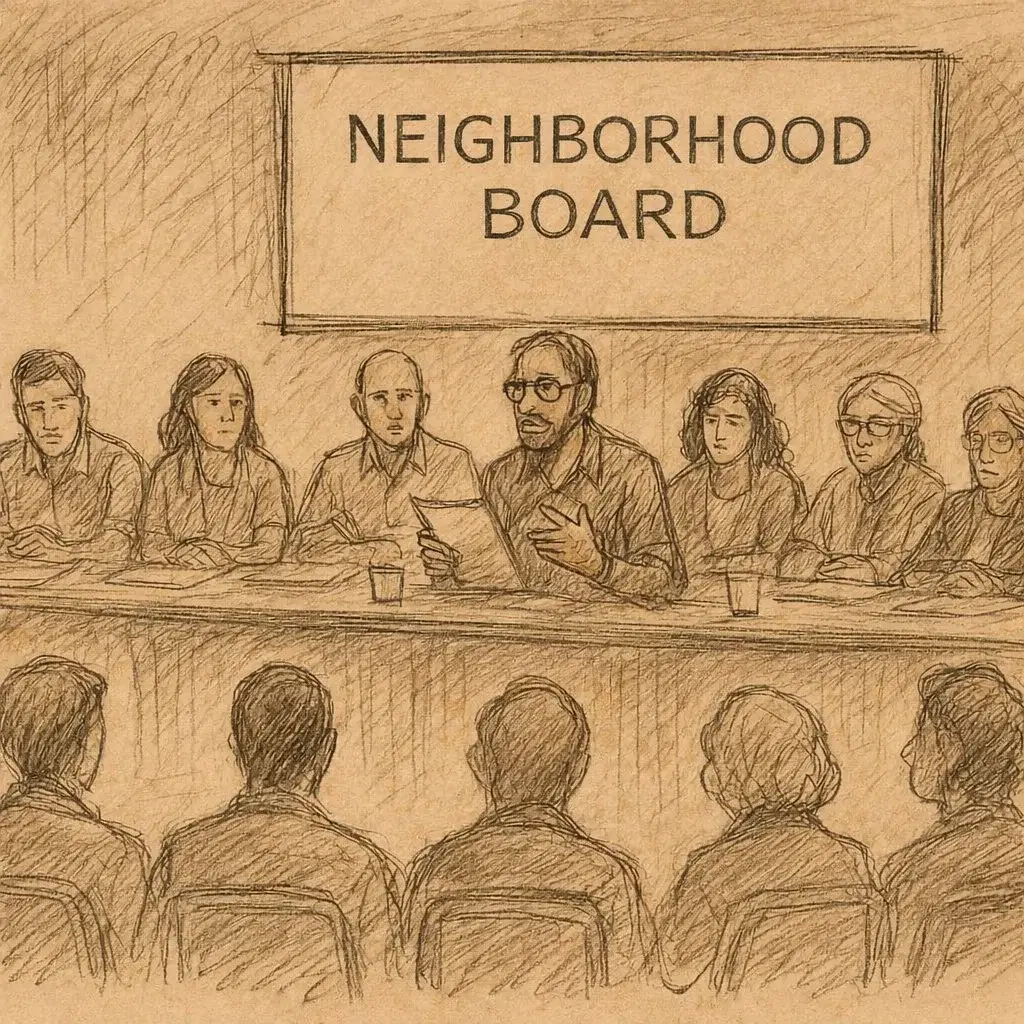
The meeting was called to order by the vice chair, who served as presiding officer for the evening and began with procedural reminders about agenda limits, the purpose of public comment, and meeting decorum for both in-person and online participants. The board confirmed quorum with seven members present. Early in the meeting, the board addressed an at-large vacancy and invited applicants to present themselves. Two residents sought appointment: Ann Castelo Franco, a University of Hawaiʻi computational neuroscientist who has lived in Kaimukī since 1996 and said she wanted to help preserve the neighborhood as she moves toward retirement, and Gerald Tahir, an entrepreneur, former state legislator, and ʻŌlelo host who described a renewed desire to participate directly in local democracy. Board and audience questions focused on each candidate’s community priorities. Tahir emphasized flooding and stormwater management as his first concern, while Castelo Franco pointed to the proposed kyūdōjo at Māʻumae Park, transit service changes, and preservation of the Queen Theater. After nominations and a roll-call vote, Ann Castelo Franco was appointed to the board by a 6–1 vote and was set to be sworn in during the meeting process.
Honolulu Fire Department Report and Wildfire Risk Around Māʻumae
Captain Welch of the Kaimukī Fire Station presented the Honolulu Fire Department’s April statistics for the area: one nuisance fire, one cooking fire, three activated alarms, 64 medical calls, one motor vehicle collision involving a pedestrian, one motor vehicle crash, and one hazardous materials incident. The safety message for the month focused on wildfire prevention as Hawaiʻi moves into a drier season after recent rains produced heavy vegetation growth. Residents were urged to clear dry brush, avoid parking on dry grass, avoid spark-producing activities in hot and windy conditions, and stay alert to wildfire conditions. Discussion quickly turned to Māʻumae Nature Park and surrounding homes. The captain said the department does not formally categorize individual sites in the way some residents may expect, but noted that access and water supply limitations make certain nearby properties a longstanding operational concern, especially houses reached by a long driveway and bridge where hydrant access is poor. Residents pushed back on the idea that the park had no brush-fire history, recalling a fire started by campers roughly 15 years earlier and another reportedly sparked by a discarded cigarette around 21 years ago. One resident cited a prior East Honolulu wildfire-risk report that rated Māʻumae at a “code red” level and suggested grazing goats as a vegetation-management strategy. The exchange underscored persistent concern about overgrown grasses, vehicle parking near vegetation, and the challenge of reducing fire hazards in a dry hillside park embedded in a residential area.
Honolulu Police Department Report and Hurricane Season Preparedness
Lieutenant Nishimura, representing HPD District 7, East Honolulu, reported April crime statistics for the district: seven motor vehicle thefts, seven burglaries, 19 thefts, seven unauthorized entry into motor vehicles, and 5,614 total calls for service. HPD’s monthly public safety message concerned hurricane preparedness, with a reminder that hurricane season runs from June through November. The department noted that a hurricane warning is issued 36 hours before expected arrival and urged residents to know in advance whether they live in flood-prone or storm-surge-prone areas, where they would evacuate if necessary, and how they would manage through utility outages. Residents were advised to maintain emergency kits sufficient for several days to a week. No additional questions were raised to HPD during the meeting.
Board of Water Supply Rebate Update
Although the Board of Water Supply representative was absent due to a family graduation, a short written update was read into the record. Oʻahu residents are now eligible for rebates of up to $200 per toilet under the Water Sensible Rebate Program for WaterSense-labeled toilets using 1.28 gallons per flush or less. The program was described as capable of reducing water waste by 20 to 60 percent and saving up to 13,000 gallons annually per toilet, with rebate amounts not exceeding the purchase price. The update reflected continuing efforts to encourage conservation through household fixture replacement.
Recognition of Student Valedictorians
Before elected officials’ reports, the board paused to recognize two student valedictorians from neighborhood schools. Rochelle from Sacred Hearts Academy and Titus Onn from Kaimukī Christian School were honored publicly. The recognition highlighted a celebratory community moment amid a meeting otherwise dominated by infrastructure, safety, and land-use issues.
Mayor’s Office Report: Kyūdōjo Project Halted, Storm Recovery, Zoo Accreditation, and Ambulance Capacity
Mayor Rick Blangiardi’s representative, Brian McKee, delivered one of the evening’s most consequential updates by announcing that, after what he described as careful consideration, the Hawaiʻi Kyūdō Federation and the City and County of Honolulu would seek an alternative location for Oʻahu’s first public kyūdōjo and suspend efforts to build it at the nature park in Kaimukī. He said revised details and a future site had not yet been determined, but the organization still intended eventually to donate and help maintain a facility owned and operated by the city through the Department of Parks and Recreation. In response to board questions, McKee confirmed that plans for a kyūdōjo at Māʻumae Park had been abandoned due to strong public opposition. When asked about the status of the environmental assessment connected to that proposal, he said he expected it would likely also be canceled but would verify that with the Department of Planning and Permitting.
McKee also summarized continuing city recovery work after multiple Kona low storm systems brought serious flooding to parts of Oʻahu, especially the North Shore. He said cleanup remained ongoing and involved heavy equipment, dump trucks, dumpsters, and debris hauling. He reviewed disposal options at transfer stations and H-Power and noted that previously planned mayor’s town hall meetings had been indefinitely postponed while the administration concentrated on storm response. Additional city updates included the mayor’s State of the City address, the Honolulu Zoo’s newly regained Association of Zoos and Aquariums accreditation for the first time in about 10 to 12 years, and a report that the mayor had returned from China optimistic about the possibility of eventually bringing pandas to Honolulu, which would place the city among a very small number of panda-hosting locations outside China.
The report also revisited questions raised at prior meetings. On a possible Kaimukī-area bus workshop following transit route concerns, McKee said the Department of Transportation Services was still working on whether to host a session closer to the neighborhood. On requests for detailed local storm-damage reporting, he said the Department of Emergency Management had asked for more time and would likely respond in a future report. He also answered a previous question about island ambulance capacity, stating that Honolulu Emergency Medical Services operates a fleet of 64 ambulances, with 23 in service during the day and 21 at night; American Medical Response maintains 32 ambulances, including specialty and standby units; and the federal fire department has 10 ambulances with four stations in service.
A resident then pressed the administration on planned sewer rate increases, asking why the city had not pursued general obligation bond financing for wastewater infrastructure instead of relying on escalating user fees and whether rates would ever decline after the 10-year increase cycle. McKee said he did not want to speculate and would take the question back to the Department of Environmental Services for a future answer.
City Council Chair’s Office: Queen Theater, Traffic Safety on Pahoa and 22nd, and Town Hall Invitation
Tasha Luke from Council Chair Tommy Waters’ office thanked residents for participating in the Māʻumae Nature Park survey and for their support of efforts to restore and revitalize the Queen Theater. She said a resolution necessary for the city to purchase the theater property was scheduled to be heard the following morning at 9:00 a.m. by the Zoning and Planning Committee and urged residents to submit testimony in writing, in person, or remotely through the council website. This update signaled a concrete procedural step toward possible public acquisition of one of Kaimukī’s most recognizable historic buildings.
She also relayed that residents had notified the office of an apparent rise in crashes at the intersection of Pahoa Avenue and 22nd Avenue. The Department of Transportation Services was said to be conducting an investigation that could include research, site inspections, traffic counts, and review of collision history, with findings expected by the end of the year. Waters’ office also announced an upcoming town hall in ʻĀina Haina on May 28 at 6:30 p.m. at the ʻĀina Haina Elementary School cafeteria, with multiple city departments invited and the public welcome to attend.
Governor’s Office Report and Public Request Regarding Kilauea Park
Governor Josh Green’s representative, David Patterson, had little formal news to share and said he hoped to return next month with a fuller summary of major legislation passed in the recently concluded session and the governor’s position on key bills. During public comment, resident Jason Liang asked that the governor refrain from signing Senate Bill 2613 concerning transfer of ownership of Kilauea Park, arguing that the community had not been given an adequate chance to provide input. Patterson agreed to forward the request to the governor’s office and invited direct follow-up to ensure the message was conveyed accurately. The exchange introduced a land-ownership issue that remained unresolved and of concern to nearby residents.
Senator Stanley Chang’s Office: Legislative Package and Capital Improvements
Ella Matsui from Senator Stanley Chang’s office reported on several bills from the recently ended legislative session that were now awaiting gubernatorial action. Among them were Senate Bill 2175, which would ban the sale of disposable vapes in an effort to reduce nicotine use and environmental pollution; Senate Bill 2964, which would allow homeowners to purchase supplemental insurance coverage to help ensure more complete and current protection, a response shaped by lessons from the Lahaina wildfire and recent storms; and Senate Bill 3157, which would require installation of speed enforcement cameras in high-speed areas. Matsui also said that capital improvement items advocated by Senator Chang had been funded in the state budget, including $1 million for infrastructure updates at Diamond Head State Monument and $750,000 for improvements to the Waikīkī Aquarium. The office encouraged residents to call for details or sign up for the senator’s newsletter.
Other State and Federal Representation
Senator Sharon Moriwaki’s office was not represented live, though the board chair noted that the senator had been present earlier and asked residents to contact her office directly with questions. Representative Tina Grandinetti was expected later and had reportedly sent information related to Kilauea Park and Kaimukī Middle School, but that material was not fully presented before the meeting moved on. Representative Jackson Sayama and Congressman Ed Case’s office were absent.
Māʻumae Nature Park After the Kyūdōjo: History, Hazards, Stewardship, and Restoration Plans
A major portion of the meeting was devoted to a community presentation on Māʻumae Nature Park following the city’s decision to halt the kyūdōjo project there. Ann Castelo Franco and others described the park as a place of deep historical, cultural, and environmental importance and argued that suspension of the archery range should mark the beginning of a community-led restoration effort rather than a return to neglect. The presentation reviewed the park’s historical significance, describing Māʻumae as a site associated with ancient Hawaiian religious practice, strategic military lookouts, and a ridge believed to be connected to the burial place of an Oʻahu chief. Presenters referred to nearby heiau and noted the area’s role in visual communication and surveillance in pre-contact and Kamehameha-era times. The dry character of the ridge and the meaning of the name Māʻumae, translated as “withered grass,” were highlighted as part of the site’s environmental identity.
The group revisited concerns that had arisen during opposition to the kyūdōjo proposal, including stormwater runoff and flooding, wildfire risk, and the scale of construction that had been contemplated. While some slides from an older presentation accidentally appeared, the core message was that the neighborhood wanted to move from resistance to stewardship. The presenters stressed wildfire vulnerability, citing the basic conditions needed for ignition and the high share of wildfire threats linked to human activity. They spoke about brush management, dead tree removal, roof and gutter clearing, and use of landscaping to create fire breaks. Some of this had already been discussed earlier with HFD, but the community team framed it as part of a broader park-care strategy.
The emerging stewardship effort, identified as Hui Māʻumae and linked with Envision Kaimukī, described plans to seek or use Adopt-a-Park status, hold regular cleanups, and begin rehabilitation work. A first cleanup was announced for May 31 at 8:00 a.m. The work envisioned included weed-whacking, removal of invasive plants, and testing a small plot of drought-tolerant and fire-retardant plantings before expanding efforts. Presenters said the volunteer group includes a horticulturalist, a field biologist, a scientist, five architects including an urban planner, and a retired firefighter. They also said they had support from Protect and Preserve Hawaiʻi and Aloha Tree Alliance.
The group emphasized that it did not intend to pursue the previously proposed large parking lot and restroom buildout associated with earlier park planning concepts. Instead, it wanted to focus on trail maintenance, possible future trail improvements, and incremental additions such as benches if grants become available. The emphasis was on a modest, ecological, community-centered use of the site.
Aloha Tree Alliance Partnership and Funding for Native Reforestation
Christopher Chang, executive director of Aloha Tree Alliance, explained how his nonprofit could assist with restoration at Māʻumae. He described the group as a 501(c)(3) focused on reforesting native plants and trees to protect watersheds and removing invasive species, with five years of experience at the Kuliʻouʻou Ridge Trail Restoration Project. There, he said, the organization has restored about three acres of degraded land and reintroduced more than 10,000 native plants and trees, supported by around 1,600 volunteers per year. Chang said this experience could translate directly to Māʻumae through site assessment, volunteer education, plant selection and sourcing, and funding support.
He noted that Aloha Tree Alliance operates its own 1,400-square-foot native dryland plant nursery in Kamilo Nui Valley, and that about 70 percent of the 3,000 native dryland plants introduced to Kuliʻouʻou this year came from that nursery. The organization had recently been awarded a small grant that might allow it to extend knowledge and restoration work to additional Oʻahu sites with similar dry lowland forest characteristics and strong volunteer accessibility. Chang said Māʻumae appeared to fit those criteria and that the group was interested in helping move the project forward. In response to a question about donations, he said Aloha Tree Alliance could set up a dedicated fund for Māʻumae and identified likely budget categories such as irrigation, soil sampling, and plant incubation, with milestones to be reached by 2027 under the timeline of the new grant.
Board members generally welcomed the restoration approach but asked for more structure, especially regarding partners, funding, and city approval processes. One board member said prior communication with Protect and Preserve Hawaiʻi had been unsatisfactory and asked for clearer documentation of roles and scope. Chang acknowledged that planning was still at an early stage and said discussions with city agencies, especially around Adopt-a-Park and urban forestry approvals, would be necessary. Another resident suggested the board formally seek the Department of Parks and Recreation’s position as plans evolve. The board indicated it would invite the group back for a future update once it could answer more specific implementation questions.
Broader Community Vision: From Māʻumae to “Hui Kaimukī”
Community member Oren Schlieman expanded the conversation beyond the park and argued that the mobilization over Māʻumae had awakened a broader sense of neighborhood identity and possibility. Drawing on his longtime ties to Kaimukī and memories of places like Queen Theater and Kaimukī Theater, he described the current moment as an opportunity to turn neighborhood energy into a larger project of community improvement. He suggested that Māʻumae, Queen Theater, Kaimukī Town, and underused assets such as a building at Maunalani Heights Park could all be part of a more unified vision, likening the potential to the strong organized identity seen in Mānoa. He proposed thinking in terms of not only Hui Māʻumae but also a broader “Hui Kaimukī” that could gather ideas, history, and goals from across the neighborhood and channel them into practical future action.
Pedestrian, Driver, and Nighttime Road Safety Presentation
Eric, a recurring transportation and safety presenter at board meetings, returned to address a question from the prior month about increasingly bright headlights and whether vehicles such as Teslas comply with regulations. He confirmed that headlights do appear brighter because newer LED systems can produce around 4,000 lumens per bulb compared with roughly 1,000 lumens for older halogen lights, and because the color temperature has shifted from yellowish tones to white-blue hues. He said such vehicles are generally compliant with current federal and state standards, including updated federal standard 108 revised in February 2022. He acknowledged widespread public frustration with glare and shared examples of online complaints and media coverage.
He framed the issue within a larger road-safety context, noting that only about 22 percent of vehicle travel occurs between 7:00 p.m. and 6:00 a.m., yet 46 percent of traffic fatalities happen during those hours. As of May 19, statewide traffic fatalities stood at 34 compared with 53 at the same time the prior year, and he emphasized that Kaimukī itself remained at zero traffic fatalities under the Vision Zero framework. He also described adaptive driving beam technology, which can create shaded zones or “tunnels” around other road users while preserving forward illumination, as the direction in which vehicle lighting is heading. His message was that brighter lighting and advanced systems can improve safety even if the transition period is uncomfortable.
The discussion then widened to other visibility issues. One board member complained that many vehicles seem to operate with daytime running lights that illuminate the front but not the tail lights, creating danger when drivers mistakenly think their full lighting system is on at night. Another board member raised concern about vehicles with heavily tinted windows, saying they make it impossible for bicyclists and motorists to read driver intent at intersections, especially when turn signals are not used. Eric suggested such tint issues would be appropriate for HPD enforcement. An older resident added practical advice from his aviation experience, urging drivers to keep their windshields clean inside and out because age-related vision decline and film buildup on glass worsen nighttime glare.
East Oʻahu Climate and Resiliency Mandate
Aloha McGuffie presented an overview of a draft East Oʻahu climate and resiliency mandate that she said was developed through a regional process spanning Kaimukī through Waimānalo. She explained that East Oʻahu shares a watershed system draining into either Maunalua Bay or Waimānalo Bay and that local environmental conditions connect upland forests, streams, and reefs. The rationale for the mandate was grounded in recent lived experience: Kona low flooding, wildfire risk, reef pollution after heavy rains, strong winds, power outages, coastal erosion, and sea-level rise. McGuffie said these are local problems requiring local solutions and described the effort as an attempt to better align community action with city and state planning processes.
She traced the effort to sustainability planning work begun in 2022 with the Kahala Hotel and Resort and to a broader community group called the KISCA Hui, the Kahala Initiative for Sustainability, Culture, and the Arts, formed in 2020 and now involving roughly 130 participants from government, nonprofits, educators, businesses, and residents. In September 2025, the group hosted a two-day climate resilience symposium involving about 100 participants. Ten roundtables addressed coastal resilience, cultural heritage, green infrastructure, education and youth, disaster preparedness, food security, clean streams and storm drains, ecosystems, and policy alignment and advocacy. One key conclusion was that East Oʻahu is fragmented across three city planning documents: the Primary Urban Center Development Plan, the East Honolulu Sustainable Communities Plan, and the Koʻolaupoko Sustainable Communities Plan. Because these plans are on different 10-year cycles and cover adjoining areas inconsistently, the group wants the city to align them so local communities can more effectively shape projects and secure funding.
McGuffie said neighborhood boards from Kaimukī, Pālolo, Waiʻalae-Kāhala, Kuliʻouʻou-Kalaniʻiki, Hawaiʻi Kai, and Waimānalo had been engaged in the process, and that a 20-member steering committee now includes neighborhood board members and educators such as a representative from Kaimukī Middle School. The draft mandate has also been reviewed for alignment with Hawaiʻi Green Growth and the Aloha+ Challenge. She said the next steps would be to gather more public input, form project committees around priorities such as clean streams, watershed restoration, food security, resilient hubs, and renewable energy backup, then revise the mandate and propose updates to the city’s community plans. She said a survey would be distributed before the board’s June 17 meeting, when she expects to return for further discussion.
Resolution on Restoring Kaimukī Bus Service Through Rerouting Route 200
One of the board’s principal action items was a transportation resolution urging the Department of Transportation Services and the City and County of Honolulu to restore Kaimukī’s main bus trunk route by rerouting Route 200 through central Kaimukī. The presentation, delivered by longtime transit advocate Juanita, was described as the product of collaboration among the Kaimukī, Diamond Head/Kapahulu/St. Louis Heights, and Pālolo neighborhood boards after about a year and a half of work. She said earlier proposals had been rejected by DTS as too expensive, so supporters redesigned the concept into a more cost-effective route. The new proposal would eliminate the existing loop around Kapiʻolani Park and instead route the bus through central Kaimukī along Kaimukī Town, Pahoa Avenue, and 18th Avenue, reconnecting the neighborhood’s commercial core and civic destinations.
Juanita argued that the current Route 200 alignment leaves a “big puka” in central Kaimukī while concentrating service along Kaimukī Avenue, 6th Avenue, and ʻAlohea near the edge of the district. She said bus observations, rider counts, and spot surveys suggested that about 80 percent of ridership comes from Pālolo, with most passengers exiting around Waiʻalae Avenue and Market City, while ridership in the Kaimukī-to-Kapiʻolani Park segment is very low, often with buses carrying four or fewer passengers and many running nearly empty. The proposed reroute, she said, would better connect Pālolo residents and central Kaimukī residents to the library, post office, Kaimukī Town businesses, Leahi Hospital, Kaimukī Middle School, Kapiʻolani Community College, and transfer opportunities.
A particularly strong argument centered on youth access. Juanita emphasized that Kaimukī Middle School has over 1,000 students and that the old bus pattern had allowed students to travel independently to the library and town after school. She portrayed the removal of the route as a hardship for working families and a loss of independence and opportunity for children. She also noted that the route had existed for nearly 80 years and said the city had removed it without meaningful public notice or input. Supporters from other boards and community groups added that residents in St. Louis Heights also saw the issue as part of broader Kaimukī access. A concern was raised about student safety and narrow stretches on 18th Avenue, with a resident recalling previous opposition to buses there because of limited sidewalks. Juanita responded that 18th Avenue is relatively level, has good shoulder width and visibility, and has long served as part of the route network. After discussion, the board approved the revised resolution by voice vote.
Candidate Forum for House District 21
The board agreed to host a candidate forum for House District 21 in partnership with the Kaimukī Business and Professional Association. The event would take place at an abbreviated board meeting on July 15. The board approved the plan by motion and sought a board member to help coordinate the event with KBPA, though discussion showed that most logistics would likely continue to be led by the association, as in previous years. The forum will provide a structured opportunity for residents to hear from candidates ahead of the election.
Community Concerns: Candidates, Board Boundaries, and Traffic Signal Requests
During community concerns, city council candidate Jason Liang introduced himself and invited residents to speak with him after the meeting. Another District 21 candidate, Angie Knight, also identified herself and then, in her role connected to the Diamond Head/Kapahulu/St. Louis Heights board and the Neighborhood Commission, raised a more structural issue: St. Louis Heights subdistrict would like to explore leaving the Waiʻalae-Kāhala board area and being absorbed into the Kaimukī Neighborhood Board district. She said the St. Louis Heights Community Association supports the idea because residents feel more aligned with Kaimukī. Board leadership indicated the matter would need to be placed on a future agenda and coordinated with the Neighborhood Commission, which has been asking boards to review boundaries and propose any desired changes through resolutions.
Resident Amy Brown then raised a traffic concern about the intersection of Paula Drive and 16th Avenue, saying she regularly experiences long waits and sees collisions caused by impatience and difficult turning movements. She asked that the board seek feedback from transportation officials on a signal pattern that would provide a dedicated green phase for traffic heading makai down Paula Drive while stopping opposing mauka traffic. The vice chair noted that similar concerns about the intersection had been raised over the years and advised her to continue taking the matter directly to elected officials and city transportation staff. Mayor’s representative Brian McKee, still online, offered to take the issue to DTS that same week. Brown also asked that the concern be included on a future agenda.
Transportation Committee Report and Prior Meeting Minutes
The board’s Transportation Committee briefly thanked the board for supporting the revised Route 200 resolution, calling it the second amendment to the original effort and the result of sustained advocacy. The board then approved the written summary of the video record for the April 15 meeting with amendments that had been circulated in advance.
Notices Received: Zoning, Liquor Licenses, and Parkview Work
Before adjournment, the board chair read several notices into the record. These included a request for comments to the Department of Planning and Permitting by June 1 regarding a zone change application for the Central YMCA; a special liquor license application for Kaimukī LLC doing business as Laila at 1108 12th Avenue; another liquor license matter involving Mānoa Honey and Mead at 1132 Koko Head Avenue beginning June 1; and a zoning variance application related to the Parkview property for drain, waste, and vent pipe replacement along with fire-safety retrofit work. These notices signaled ongoing commercial and land-use activity in and around the neighborhood.
Closing and Next Meeting
The meeting concluded with a reminder that the next regular board meeting would be held on June 17, 2026. The board also noted that broadcasts can be viewed on ʻŌlelo Channel 49. The session adjourned after a long agenda that combined appointment of a new board member, major updates on Māʻumae Nature Park and Queen Theater, public safety reporting, climate planning, transit advocacy, and emerging questions about neighborhood boundaries and traffic operations.