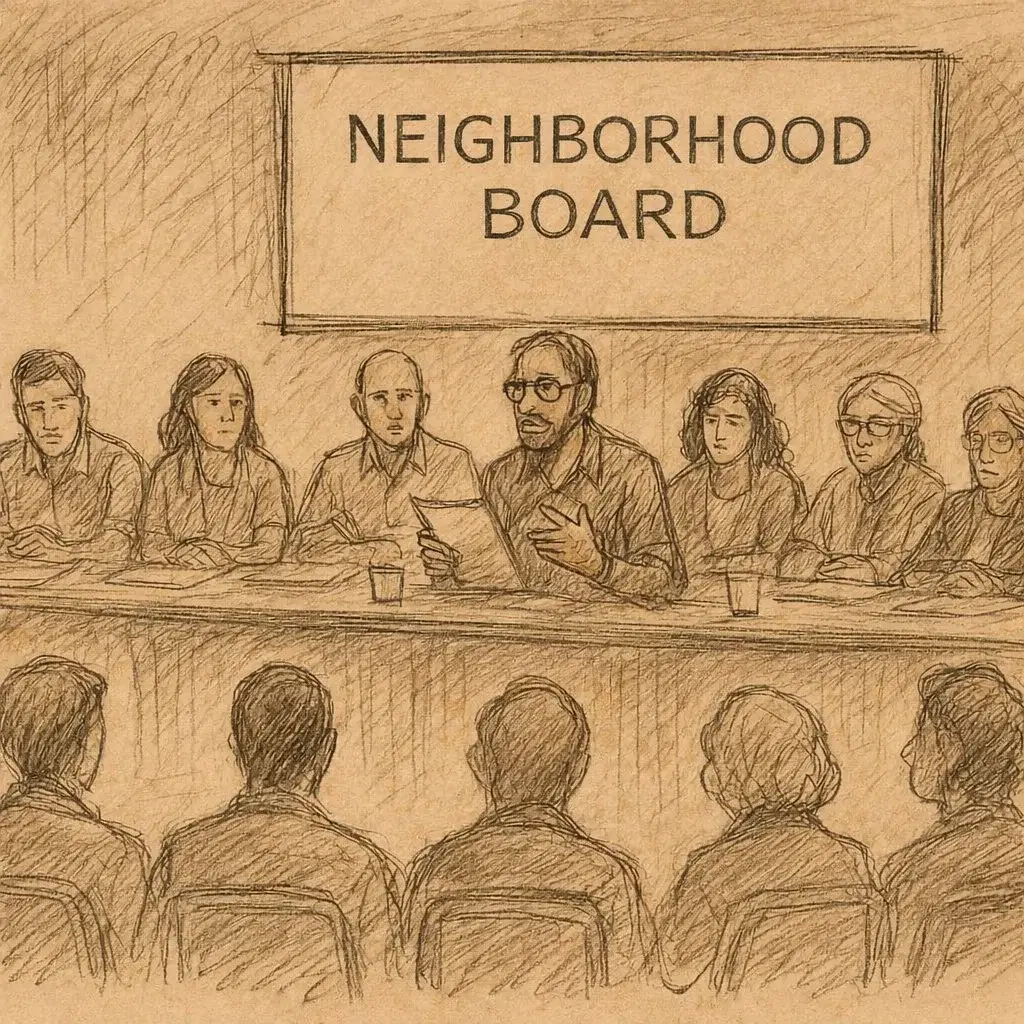
No 31 Kailua Neighborhood Board Regular Meeting September 2026
Listen to this article:
31 Kailua Neighborhood Board Meeting – September 4, 2026
Call to Order and Meeting Procedures
The hybrid meeting began at 7:02 p.m. with a roll call. The board initially established a quorum with 11 members present, including seven in person and four remotely; arrivals by Annie Bird and Anamalia Kia increased attendance to 13 members, with nine in person and four online, and other members joined later. The chair announced that Kailua District Park closes at 10 p.m. and that board meetings must now conclude by 9:45 p.m., ten minutes earlier than the previous 9:55 p.m. deadline, to provide sufficient time to vacate and secure the facility.
330 Kuulei Affordable Apartments
The Kailua-based AHI Group is nearing completion of the 330 Kuulei Apartments, described as Kailua’s first affordable-housing project in nearly four decades. Of the 39 one- and two-bedroom rental apartments, 36 are reserved for households earning between 30% and 60% of area median income, and all units are intended for households at or below 100% AMI. AHI Group has pledged to preserve affordability for 61 years, with one-bedroom rents beginning at $769 per month at the 30% AMI level. Applications opened September 3 and remain available through September 14, with preference criteria for people who live or work on the Windward side. A lottery among qualified applicants is scheduled for September 17, and occupancy is expected to begin in October, with Council Member Esther Kiaʻāina later identifying October 15 as the anticipated move-in date. Applications can be submitted at the on-site office at 330 Kuulei or online through AWI Management Corporation’s Hawaii communities webpage.
Affordable Housing, Building Height, and Parking Debate
Board members revisited the policy disputes surrounding 330 Kuulei while expressing support for its affordable units. Evan Weber said the project could allow younger residents who grew up in Kailua to remain in their hometown, noting that many of his peers cannot otherwise afford local housing. The chair praised AHI Group leader Makani Maeva and emphasized Kailua’s longstanding affordable-housing shortage. Donna Wong clarified that the board had not opposed affordable housing itself but had objected to the building’s approximately 60-foot height because the Koʻolaupoko Sustainable Communities Plan identifies a 40-foot limit for Kailua and Kāneʻohe business districts. The chair described a conflict between that plan and Bill 7 of 2019, which permits qualifying affordable projects on lots smaller than 20,000 square feet to reach 60 feet. David Laʻea also recalled concerns that Bill 7 did not require sufficient resident parking. The project complied with applicable city law despite those concerns, and the board distinguished its support for affordable housing from its objections to height, legal consistency, and parking policy.
Community Events and Workshops
The fifth annual Kailua Fall Festival is scheduled for Saturday, September 26, from 5 to 10 p.m. on Hahani Street, with award-winning music and entertainment, approximately 120 vendors, food, drinks, and family activities. Admission is free. Parking and trolley service will be available from Kainalu Elementary School at presale prices of $8 per vehicle or $3 per rider, with proceeds supporting the school’s JPO program; adults 21 and older can purchase a wristband package for participating bars. A land-conservation workshop sponsored by Council Member Kiaʻāina was rescheduled to Tuesday, September 29, from 10 a.m. to 12:30 p.m. at Windward Community College. The workshop will explain how nonprofits and communities can work with city, state Legacy Land Conservation Program, and federal partners to acquire land for conservation or agriculture.
Kailua Windsports Fall Classic
The Kailua Windsports Association, a local nonprofit representing multiple ocean wind-sport disciplines, plans to hold the Kailua Windsports Fall Classic 2026 as a community fun day. Up to 75 windsurfers, wing-foilers, and kiteboarders are expected to complete a five-mile course around Kailua Bay, beginning and ending in Kailua Beach Park Area Zone A near the park entrance, commonly called Kite Beach. Organizers reported a safety plan, two escort vessels, liability insurance, and pending permits from the Department of Land and Natural Resources, Division of Boating and Ocean Recreation, and Department of Parks and Recreation. The tentative date is Sunday, September 20, subject to wind and weather, with backup dates of September 27 and October 4.
Kailua Half Marathon and 5K
The 2026 Ulua Kailua Half Marathon and 5K is scheduled for Sunday, October 4, beginning at 5:30 a.m., with the half marathon starting at 6 a.m. behind Kalapawai at Kailua Beach Park. The route will travel along Kalaheo Avenue toward Kāneʻohe, turn onto Mokapu Boulevard, continue over the hill to Kāneʻohe Bay Drive, return down Kalaheo Avenue, and finish with a loop through Lanikai. Runners will remain along the sides of Kalaheo Avenue and Kāneʻohe Bay Drive, and no roads are expected to close. Honolulu police will assist, and organizers do not anticipate significant traffic impacts.
Maunawili and Olomana Board Vacancy
The board considered a vacancy for Subdistrict 3, covering Maunawili and Olomana, for a term ending June 30, 2027. Donna Wong nominated Janet Onopa, a lifelong Maunawili resident and retired physician who worked at Queen’s Queen Emma Clinic and Kaiser Permanente. Onopa also identified herself as a master gardener and said she cares deeply about the community, its land, and balancing human needs with environmental protection. She expressed familiarity with the transfer of former Maunawili golf-course acreage for public use and said she would like to see a community garden there if feasible.
Janet Onopa’s Policy Views and Appointment
In response to board questions, Onopa identified the balance between housing needs and protection of Kailua’s natural character and resources as a pressing issue. She said widespread vacation rentals can remove housing from the long-term rental market and therefore should be strongly limited, although a small number of well-controlled units could be acceptable. On building heights, she acknowledged that affordable and sustainable housing may require taller buildings or development of unused land, and said height limits sometimes need reconsideration to provide enough housing, while each proposal should be evaluated in context. The board appointed her unanimously by 16 votes. She then took the oath to support federal, state, and city laws and the neighborhood plan and joined the board.
Honolulu Police Department Crime Report
HPD Lieutenant Sanford, accompanied by Sergeant Duncan of District 4 night watch, presented August public-safety statistics. Kailua recorded nine motor-vehicle thefts, up from one the previous month; three burglaries, down from four; 17 thefts, up from 11; six vehicle break-ins, up from two; and three robberies, up from zero. Officers answered 1,709 calls for service. Islandwide year-to-date traffic outcomes were more favorable: fatal motor-vehicle occupant incidents were down 29%, motorcycle fatalities 76%, moped fatalities 60%, and pedestrian fatalities 53%. Critical motor-vehicle collisions fell 56%, critical moped collisions 44%, and critical pedestrian collisions 40%. HPD urged motorists to leave earlier, obey speed limits, and wear seat belts, and the board noted new 20-mph zones being posted near schools.
Resident Concerns About Crime and Disorder
Resident Lance Tinson described what he viewed as a worsening pattern of violence, property damage, drug use, discarded needles, sanitation hazards, and delayed emergency responses around Enchanted Lake and Kailua Beach Park. He cited a violent assault at Enchanted Lake Shopping Center, a lockdown at St. John Vianney School following volatile property damage at the church, two street fights involving the same unhoused man, erratic screaming near Enchanted Lake Elementary School and a park, and syringes found near the Kailua Beach Park boat ramp. He also described a July 21 incident near the Enchanted Lake Starbucks in which an unhoused person publicly defecated in view of traffic and families, while his wife allegedly waited 30 minutes to reach a 911 dispatcher. Tinson stressed that he was not seeking to criminalize homelessness and called for both compassionate services and accountability for violence, threats, public drug use, biohazards, and property damage. He requested five-year Kailua crime and call-for-service trends, an explanation and remedy for the 911 delay, and more visible, proactive responses near schools, parks, shopping centers, and recurring problem areas.
HPD Staffing, 911 Capacity, and Homelessness Response
HPD said longer-term crime trends would require additional research and explained that 911 delays are affected by communications-center staffing shortages and by nonemergency calls that congest emergency lines. Calls are prioritized by severity, but dispatchers cannot simply abandon existing callers to answer later ones. Communications positions are being advertised, yet vacancies are severe enough to require mandatory overtime, reflecting broader HPD shortages; the board noted that academy classes that once graduated more than 100 officers may now graduate about 10. On homelessness and behavioral crises, HPD said officers generally cannot compel treatment unless authorized by law, a court order, or a determination from a department psychologist that a person can be taken for evaluation. Expanded outreach units can offer services, but individuals may refuse absent legal grounds for involuntary intervention. The board asked for reassurance that criminal conduct such as drug dealing, vandalism, and violence would still be enforced and noted that the shortage is islandwide and national. Board members also offered to advocate for resources if HPD identifies specific personnel or operational needs. The chair committed to forwarding Tinson’s written comments to HPD and adding them to the meeting record.
Additional Public-Safety Testimony
Enchanted Lake resident Jamie Brassfield described an incident in which his 15-year-old daughter had to leave a public bus after an unhoused passenger defecated aboard it. He said other bus rides have exposed students to people visibly experiencing behavioral-health episodes. Brassfield expressed concern that repeated exposure to dangerous, unsanitary, or disruptive conduct is becoming normalized for children and argued that elected officials must provide for the community’s general welfare rather than allow such conditions to become accepted as ordinary.
Ocean Safety Department
Ocean Safety reported several notable August rescues, including paddlers outside the Mokulua islets, two swimmers in distress inside the Mokuluas, and another distressed swimmer at Waimānalo Beach. Medical responses included assisting a 74-year-old woman experiencing a stroke in a park, responding to a seizure at Waimānalo Beach, and helping with a heart attack at the Kailua Boat Ramp, where off-duty lifeguards also assisted. Ocean Safety expects to occupy its new building in October if work remains on schedule. The parking lot has recently been paved, signaling that the facility is nearing completion.
Support for Ocean Recreation Operators
Longtime resident Tom Laidlaw, an active swimmer, diver, and kayaker, opposed what he characterized as a “not in my backyard” attitude toward windsurfing and kayaking. He specifically defended kayak-company staff who assist people entering and leaving the water, saying they help visitors and residents regardless of whether the individuals rented equipment from their business. Based on his daily beach walks between the windsurfing area and boat ramp, he said kayak staff, windsurfers, and swimmers regularly monitor conditions, help people in trouble, and collect or respond to hazards. He urged the community and government to support their safety role rather than restrict their presence on the beach.
Fire Department and Board of Water Supply
No representative from the Honolulu Fire Department attended. Board of Water Supply representative Danny Bernal was also unable to attend, but a written report was to be added to the meeting materials. A separate Board of Water Supply presentation concerning updates to its insurance-claims policy was deferred until the following month because potential policy changes were still undergoing internal review, with the weather contributing to the delay.
Marine Corps Base Hawaiʻi
Marine Corps Base Hawaiʻi reported a visit by Acting Secretary of the Navy Hung Cao, during which installation leaders showed him military housing conditions, aging infrastructure, and modernization needs. Such high-level visits are used to seek headquarters funding, and the base reported progress including new barracks and a newly renovated K-9 kennel expected to open near the end of September. Kalaheo High School NJROTC cadets are scheduled to visit September 11 and 12 to tour the airfield and use the Indoor Simulated Marksmanship Trainer. The base will also hold an ʻŌʻōlenuʻupia community workday on September 26 for National Public Lands Day, with participation from Mokapu Elementary School’s Aloha Ambassador. Colonel de Trana’s quarterly community message was sent to the chair for distribution.
Lanikai Parking and Transportation Changes
A resident asked for an update on parking in Lanikai after being away for about a month. The chair summarized the Department of Transportation Services’ Lanikai transportation plan, noting that no major change had occurred earlier in 2026 but implementation was imminent. The first phase will prohibit parking on both sides of the makai portion of the loop and establish small loading and unloading zones at each of five beach accesses. A second phase, expected within roughly nine months and funded in the city fiscal year that began July 1, will widen the nine cross streets where necessary to at least 18 feet, convert them into alternating one-way streets, and stripe legal parking stalls. Markings will reflect existing Revised Ordinances of Honolulu requirements, including parking in the direction of travel and maintaining required distances from driveways and fire hydrants. Officials acknowledged that adjustments may be needed after observing the plan’s real-world effects.
City CORE and MH-3 Behavioral-Health Response
Mayor Blangiardi’s representative, Shane Enright of the Honolulu Emergency Services Department, explained the Community Outreach, Response and Engagement, or CORE, program in response to concerns about homelessness. CORE includes community health workers, emergency medical technicians, paramedics, nurses, and a physician. It began with voluntary outreach, but Act 219 of 2025 gave Emergency Services and HPD additional authority to transport people for care when a physician or advanced practice registered nurse determines that they are a danger to themselves or potentially to others. A pilot that initially operated with HPD and state sheriffs one day per week has expanded under the new police chief to five days per week through the MH-3 program. Enright said CORE knows many of the individuals in Kailua and has transported people for treatment, including to behavioral-health services, although shelter capacity and the need for different types of placements remain major constraints. Incidents involving public defecation and severe disorientation were identified as examples that may justify immediate intervention with HPD support. Residents can contact CORE at 808-768-2673 or use the HNL 311 application. CORE does not sweep people from Kailua into other communities; it transports eligible individuals to a shelter, hospital, or behavioral crisis center. Kailua itself does not have a homeless shelter.
Behavioral-Health Data and Discharge Concerns
Malia Espinda asked the city to provide Kailua-specific monthly data on MH-1 and MH-3 cases, referrals to the Kāhi Mōhala or Castle behavioral-health system, and subsequent discharges into the community. She described encountering an apparently disoriented older man near Hibachi’s who did not appear to know where he was and questioned whether increased MH-3 activity could lead to more vulnerable people being discharged locally without adequate support. Enright agreed that discharge coordination is a valid concern and said Adventist Health Castle generally contacts CORE when unhoused individuals are released so that transportation to shelter can be arranged. He acknowledged that coordination remains an evolving part of the program and offered to provide future reports on CORE’s Kailua activities.
Triangle Park and Storm Warning
The mayor’s representative reported that efforts to establish grass at Triangle Park following roundabout work had failed and that the contractor was considering sod to accelerate restoration. Residents said the project has remained unfinished for more than a year and asked for a definite installation schedule. The representative agreed to seek a timeline from the Department of Transportation Services for the next meeting. He also warned residents about Tropical Storm Lowell, expected near the islands the following Monday, and urged households to use available preparedness resources and check on family members and neighbors.
State Emergency Proclamation
Governor Josh Green’s representative reported that the governor had declared a state of emergency and pre-positioned resources for September tropical cyclones. The proclamation authorizes activation of the Hawaiʻi National Guard, activates the Major Disaster Fund, suspends the usual $10 million spending cap for a single emergency, directs agencies to supply personnel and equipment, permits public property to be used for response and recovery, protects utilities and critical infrastructure, and temporarily streamlines procurement, contracting, budgeting, hiring, permitting, and repairs. It did not itself order evacuations, curfews, school closures, or business and government shutdowns. The proclamation was effective immediately through November 1, and six high-water tactical vehicles were staged on Kauaʻi. Gary Weller asked which state agency monitors water levels at Kawainui Marsh, noting that during the Kona low the reported level came within approximately seven inches of overtopping; the governor’s representative agreed to investigate.
Kalaheo Hillside Downzoning
Council Member Kiaʻāina reported that Resolution 26-188 would downzone approximately 10 acres at Kalaheo Hillside from R-7.5 residential to P-2 preservation. Following a September 9 hearing, the resolution was moving to the full Council, after which the Department of Planning and Permitting would prepare recommendations, the Planning Commission would review it, and it would return to the Council for final action. David Laʻea questioned why residential land should be removed from potential housing use without a completed soil report and asked whether community recreation or other public uses had been fully explored. Kiaʻāina responded that preliminary findings made further analysis not worth pursuing because the expansive soils would be costly and potentially unsafe to mitigate. She noted that the state originally transferred the land to the city at no cost for a planned elementary school and said preservation zoning still permits uses such as agriculture, forestry, limited animal raising and composting, public facilities, and nature-based recreation. The chair said extensive prior testimony and board discussion supported removing residential zoning if the land is unsuitable for housing. Jade Lau added that unstable soils have caused decades of movement and repeated costs for existing Kalaheo Hillside homeowners, dating to the area’s original development in the 1950s.
Bill 7 Affordable-Housing Legislation
Council Member Kiaʻāina discussed changes to the city’s Bill 7 affordable-housing framework. She opposed Bill 18 of 2026, introduced by Council Member Tupola, because it would allow qualifying buildings to reach 75 feet or the underlying zoning height, whichever is greater. She is drafting a replacement that would permit up to 75 feet in transit-oriented development plan areas but, elsewhere, cap projects at 60 feet or the underlying zoning or applicable special-district limit, whichever is lower. She said this approach would have prevented a 60-foot building at the 330 Kuulei site, where underlying zoning was 40 feet, while permitting qualifying projects elsewhere. Kiaʻāina also said she and Council Chair Tommy Waters were working on legislation to legally support local live-or-work preferences in affordable-housing lotteries across Oʻahu, not solely at 330 Kuulei. She encouraged developers to respond voluntarily to neighborhood concerns, including by providing parking even where Bill 7 does not require it.
Commercial Aquarium Fishing
Kiaʻāina thanked the board for opposing commercial aquarium fishing. On August 28, the Board of Land and Natural Resources rejected a Division of Aquatic Resources proposal to reopen commercial aquarium collection in West Hawaiʻi, which opponents feared could become a pathway to reopening the practice statewide. More than 8,000 people submitted testimony, and approximately 400 attended in person, including Kiaʻāina and Senator Chris Lee. DLNR now has authority to consider prohibiting commercial aquarium fishing statewide.
Wildfire Preparedness and Vehicle Registration
Following a Windward wildfire-preparedness town hall at Kailua Intermediate School, residents in Lanikai and Kalaheo Hillside began exploring participation in the Hawaiʻi Wildfire Management Organization’s Firewise Communities program. No Windward community was yet formally recognized as Firewise, and Kiaʻāina encouraged other Kailua neighborhoods to organize. She also announced that Kailua Foodland had installed a vehicle-registration renewal kiosk. The kiosk was already operating and was expected to be formally announced the following Tuesday, with access from 6 a.m. to 10 p.m. daily while Foodland is open.
Military Land, Bellows, and Landfill Options
In response to a question about whether state negotiations for military lands could identify an Oʻahu landfill site, Kiaʻāina said the mayor’s office and military had referenced a study of possible military locations, but she requested a detailed briefing and remained unconvinced that all options had been exhausted. She is also preparing legislation seeking the return of the Air Force portion of Bellows, arguing that military recreational use of restricted shoreline property is inequitable when Waimānalo residents have limited access to recreational lands and organized activities have been restricted at city parks. She said military land availability, landfill needs, recreation, and community access require continued scrutiny rather than reliance on broad national-security claims.
Landfill Legislation and Community Position
Representative Mike Lee said siting a landfill at Kapaʻa Quarry would require repeal or amendment of Act 73, which established a half-mile buffer between landfills and homes, schools, hospitals, and conservation districts. Reducing that buffer could make other sites eligible as well, and Lee said Act 73 was enacted for good reasons and that the Kailua community does not support the proposed location. He criticized the city for announcing a preferred site before conducting robust community participation. Lee also noted that landfills have historically been placed near growth areas and argued that Kailua is no longer the island’s principal development area. His office and Representative Scott Matayoshi’s office will each make a humane chicken trap available to residents for two-week periods, with borrowers responsible for caring for captured birds. A legislative tour of the Women’s Community Correctional Center was planned for October 9, with some space expected for neighborhood board participants.
Bridge Construction and School Traffic
A resident reported severe morning congestion between Kailua town and Kalaheo High School, with travel between approximately 7:30 a.m. and the start of school taking 30 to 45 minutes and causing repeated student tardiness. Representative Lee said the bridge project and associated traffic have been difficult to resolve through the city but assured the community that state lawmakers are supporting Council Member Kiaʻāina’s efforts and understand the impact on students and families.
Hamakua Marsh Cleanup and Windward Community College
Representative Lisa Marten reported that an August 8 Hamakua Marsh cleanup removed more than 1,400 pounds of trash, including bicycles, shopping carts, and other large debris. The cleanup is conducted twice yearly, with the next planned for Martin Luther King Jr. Day in 2027. She also promoted a Windward Community College fundraiser scheduled for September 19 from 10 a.m. to 2 p.m., featuring a paniolo theme, music, food, and family activities. Marten noted that Kailua high-school graduates can attend their first year at Windward Community College tuition-free, expanding postsecondary access for students from varied economic backgrounds.
Medicaid Work Requirements and Health Coverage
Marten warned that federal Medicaid work requirements will begin January 1, 2027. To maintain eligibility, affected people will need to demonstrate qualifying activity equivalent to approximately half-time work during a relevant one-month period within six months of renewal. Work, school, training, and approved volunteer activity may count, making advance planning essential. She said the state cannot simply replace Medicaid coverage without risking federal funding for the entire program, but Hawaiʻi has taken other steps, including replacing certain lost Affordable Care Act subsidies for people who earn too much for Medicaid yet cannot afford private coverage. The state also secured a rural health-transformation grant that can strengthen community health centers, including Waimānalo Health Center and facilities on the neighbor islands. Marten said loss of Medicaid would affect individuals, hospitals, and insurance costs throughout the state.
Renewable Energy Policy
Marten noted that the Hawaiʻi State Energy Office was holding a same-evening meeting for Kailua and Waimānalo concerning renewable energy. She said the administration’s interest in importing liquefied natural gas would represent a significant departure from existing energy policy and encouraged Windward residents to remain involved in decisions about Hawaiʻi’s future energy sources and infrastructure.
Hurricane Insurance and Infrastructure Resilience
Senator Jarrett Keohokalole discussed storm preparedness and the insurance market. Legislation enacted in 2025 restarted the Hawaiʻi Hurricane Relief Fund after condominium hurricane coverage became difficult to obtain following the Maui wildfires. Similar problems now affect some owners of single-family, single-wall, or roof-deficient homes, who may be forced into lender-placed insurance costing four to six times their former premiums. The existing law provides a possible mechanism to expand state-backed options to single-family owners, and discussions are beginning. Keohokalole said storm hardening—including hurricane clips, regular maintenance, utility resilience, and home upgrades—is likely to be a major legislative issue in 2027. He also noted that the February 2026 Kona low caused extraordinary damage, including approximately two feet of rain in four hours in Kāneʻohe and landslides that destroyed stretches of power infrastructure on Hawaiʻi Island, leaving about 5,000 people without electricity for more than 10 days.
State Settlement Funds and Capitol Repairs
Board members asked whether the state should dedicate extraordinary settlement revenues to disaster preparedness rather than other projects, citing Hawaiʻi’s reported $76 million share of an August technology-company settlement and the approximately $54 million State Capitol reflecting-pool and infrastructure project. Keohokalole said he would investigate the settlement and explained that the drained Capitol pools had leaked into and threatened the building’s electrical and structural systems after prolonged deferred maintenance. He said the governor may recommend uses for settlement revenue in the state budget, but the Legislature can allocate it differently while meeting the constitutional balanced-budget requirement. He acknowledged that the Legislature could use a dedicated-fund approach similar to the tobacco settlement and was open to discussing hurricane or disaster-resilience uses. Board members requested meaningful public input before settlement proceeds are allocated.
Congressional Report
McKenna Herney, the new constituent advocate for U.S. Representative Jill Tokuda, reported that the congresswoman spent much of the congressional recess in Hawaiʻi. Tokuda led a bipartisan delegation of the House Agriculture Subcommittee on Conservation, Research and Biotechnology on a multiday examination of local agricultural production, biosecurity, and aquaculture. She also introduced the bipartisan Rural Emergency Hospital Designation Improvement Act to reduce rural hospital closures and preserve access to specialized and essential care, including psychiatric, obstetric, and postpartum services.
Oʻahu Landfill Background and Deadlines
Department of Environmental Services Director Roger Babcock gave an extensive presentation on selecting Oʻahu’s next landfill. The Waimānalo Gulch Sanitary Landfill’s state Land Use Commission special-use permit requires waste acceptance to stop on March 2, 2028, although the permitted footprint has physical capacity until approximately spring 2031. The city intends to request an extension to use that remaining capacity, but the landfill cannot expand beyond its existing permitted boundaries. Babcock said numerous panels over more than 20 years have reviewed replacement sites, repeatedly resulting in extensions of Waimānalo Gulch rather than a new landfill. The present process began with a landfill advisory committee formed in 2021, whose work was altered by the November 2021 Red Hill fuel contamination crisis. The committee recommended avoiding sites over potable aquifers, evaluating military land, reconsidering statutory buffers, and exploring eminent domain where a small number of homes prevented otherwise viable sites.
Kapaʻa Quarry Proposal and Legal Changes
The city’s review found that Kapaʻa Quarry could become eligible if Act 73’s landfill buffer were reduced from one-half mile to one-quarter mile and if conservation-zoning restrictions were modified. The quarry has appeared on landfill-candidate lists for roughly 20 years and has previously ranked among the stronger options. The city later selected a Wahiawā site over a potential drinking-water aquifer, arguing modern landfill technology could protect groundwater, but the Legislature responded in 2025 with a law prohibiting landfills above areas within the Underground Injection Control line. That eliminated many previously evaluated locations. The administration then stopped pursuing the Makaʻiwa Hills site adjacent to Waimānalo Gulch and refocused on Kapaʻa Quarry. The city plans to seek state legislation in the next session that could make Kapaʻa Quarry eligible, potentially through a narrowly tailored exception.
Quarry Operations, Access, and Environmental Review
Babcock said the city is conducting due diligence and has spoken with the Castle Foundation, the property owner, and the quarry operator, which holds a long-term lease and operates a successful business. Because substantial additional excavation would be needed before the site could function as a landfill, the city is considering a model in which quarrying continues while landfill cells are developed over time. Excavated rock would remain valuable to Hawaiʻi’s construction industry. Detailed planning would require environmental review, permitting, traffic and safety analysis, engineering, and potentially legal proceedings. Existing access is from Kapaʻa Quarry Road, while a board member asked whether an H-3 interchange or another route would be required to avoid directing large numbers of refuse trucks through the current corridor. Babcock said access alternatives would be assessed during design and environmental review.
Landfill Development Gap and Waste Export
Developing a new landfill is expected to take at least seven years, which the director characterized as an aggressive estimate given permitting and possible legal challenges. Because Waimānalo Gulch is expected to run out of permitted space around 2031, a gap of at least two years could arise before a replacement opens. The city is considering a temporary landfill on military property at Waipiʻo Peninsula, modeled on Maui’s temporary post-wildfire debris site. It is also preparing a request for proposals, expected later in September, to bale Oʻahu’s waste, load it into shipping containers, and transport it to mainland disposal facilities. Thousands of containers currently return to the mainland empty, giving shipping companies an economic incentive to carry waste. A similar city contract around 2013 failed because of receiving-end permitting problems, although the waste-baling operation itself was technically feasible. Babcock said off-island shipping is likely to be necessary at some point but would be expensive.
Military and Commercial Waste
Babcock confirmed that waste generated by military installations is handled through Oʻahu’s overall system. Commercial collectors deliver military, apartment, and business waste to the city, while municipal crews collect residential waste through the three-cart system. When all three H-POWER boilers are operating, most suitable waste goes to H-POWER and the ash goes to Waimānalo Gulch; green waste and mixed recyclables are diverted. During H-POWER outages or capacity problems, some municipal solid waste must be taken directly to the landfill.
Construction and Demolition Waste
The board asked why construction companies are not required to separate recyclable metal, clean wood, pallets, drywall, and other recoverable materials in the same manner as households. Babcock said construction and demolition waste is not comprehensively regulated under current city ordinances. Commercial loads generally go to the privately operated PVT landfill in Nānākuli, while city convenience centers and transfer stations are intended for residents, and Waimānalo Gulch will accept small do-it-yourself residential loads but not commercial construction waste. PVT previously separated and recycled more material but said the process was not cost-effective, partly because sending combustible residuals to H-POWER would incur a tipping fee of more than $80 per ton. The city is considering a material-recovery facility and possible public-private arrangements. PVT has said for several years that it has approximately five to seven years of capacity remaining, but once it closes, the city will have to manage those waste streams through recycling, combustion, landfilling, or export.
Opposition to a Windward Landfill
Gary Weller argued that locating another landfill in Kailua would place an excessive burden on a community that has already hosted multiple disposal sites. He favored continued or adjacent use near Waimānalo Gulch because H-POWER, scales, roads, rock-crushing facilities, and other infrastructure already exist there and the area is farther from Windward schools, neighborhoods, wetlands, and heavy rainfall. He cited approximately 12,000 daily vehicles on Kapaʻa Quarry Road, roughly 250 Ameron employees, increasing retail and visitor traffic within the industrial area, and previous crashes involving large trucks near streams. He also raised concerns about airborne ash, risks to two nearby schools, impacts on Kawainui Marsh, truck emissions from hauling ash across the island, quarry employment, and the need for concrete aggregate for future construction and rail expansion. The chair added that Kailua’s higher rainfall could increase leachate-management needs. Babcock acknowledged that landfill siting is inherently political and that future waste-processing technologies may eventually reduce or eliminate the need for conventional landfills, although such systems are not yet ready at the required scale.
Waimānalo Gulch Closure and Ash Reuse
When Waimānalo Gulch eventually closes, it will require a final cap, long-term gas collection, monitoring, and maintenance, potentially for 30 years or more. No specific post-closure recreational or community use has yet been selected. Babcock also discussed long-running research into using H-POWER ash in asphalt as a partial replacement for sand. University of Hawaiʻi studies and demonstration paving were conducted approximately 20 years ago, and the city continues seeking Department of Health approval for larger-scale use. Prior pilot work suggested approximately 40% of the ash stream might be recoverable for asphalt, but public-health concerns remain over whether contaminants would remain permanently immobilized. The city is preparing another sampling and analysis plan. No public cost comparison between Kapaʻa Quarry and alternatives near Waimānalo Gulch was available at the meeting.
Makaʻiwa Hills Alternative and Mayoral Commitments
The city previously evaluated Makaʻiwa Hills, adjacent to Waimānalo Gulch, but owner James Campbell Company is pursuing an approved residential development and does not wish to sell. Although eminent domain remains a governmental power, Mayor Blangiardi decided not to pursue that site based on a commitment not to locate another landfill on the Leeward side at this time. Jennifer Berra questioned the reliability of that commitment because the mayor had also previously said no to Kapaʻa Quarry at a Kāneʻohe meeting. Babcock said the mayor would need to answer that policy question directly.
Administrative Business and Adjournment
The board approved the August 6 minutes with a correction to Ronald Hew’s name. Published committee reports were accepted without expansion. Annie Bird joined the Parks and Recreation Committee without objection. Committee agendas for October were due by Sunday, September 20. The meeting adjourned at 9:48 p.m., three minutes beyond the new 9:45 p.m. target, as participants began stacking chairs and clearing the room.