No 31 Kailua Neighborhood Board Regular Meeting July 2026
Listen to this article:
31 Kailua Neighborhood Board Meeting – July 6, 2026
Call to Order, Quorum, and Membership Changes
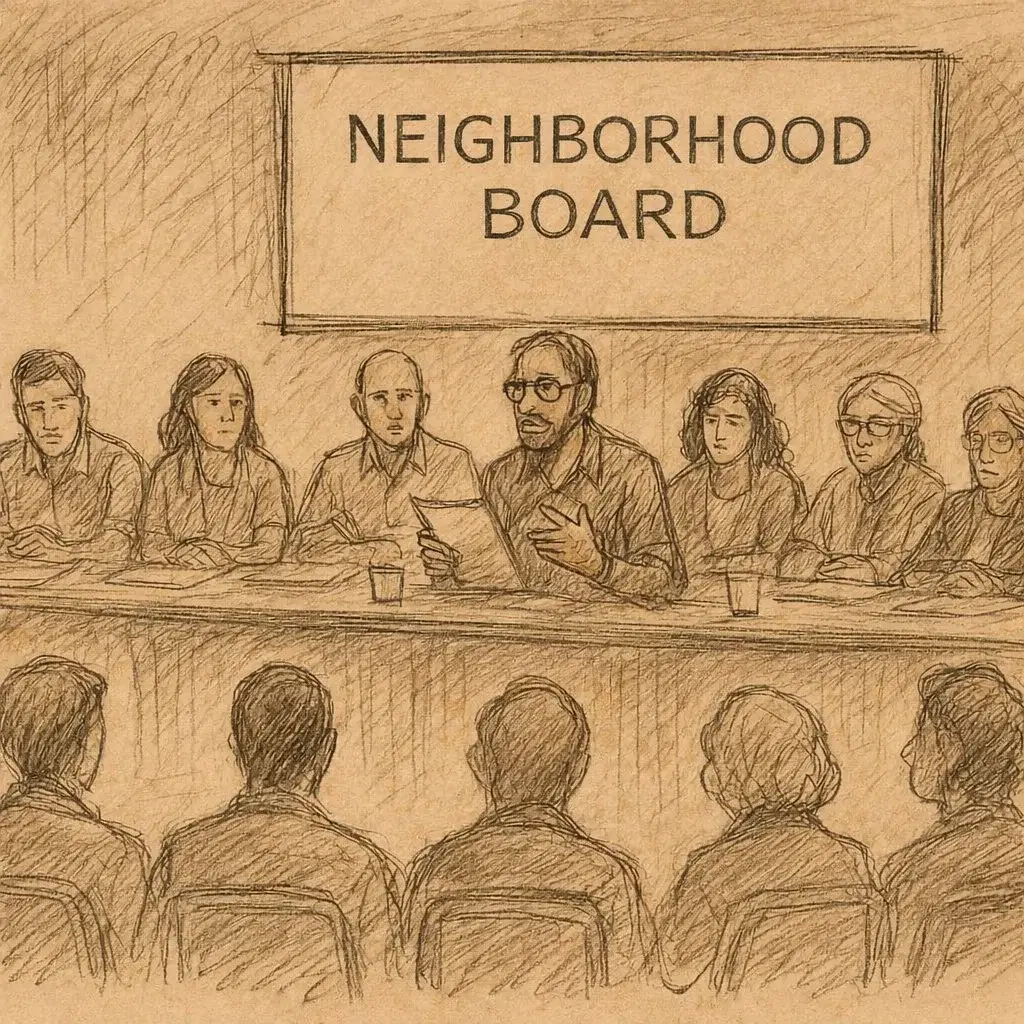
The hybrid meeting opened with 14 members present—six in person and eight remotely—establishing a quorum. Chair Bill Hicks announced that Malia Tomes had resigned that morning because of serious health issues. He thanked her for her enthusiastic service, recalling that she joined the board immediately before the prior year’s Fourth of July parade and volunteered along the route after only one day as a member. Her departure reduced the board to 18 members, with the vacancy scheduled to be addressed at the August meeting. Near the end of the meeting, Hicks also announced that Kate Ryder would resign effective the following week because of extensive family obligations. He praised Ryder’s leadership as Parks and Recreation Committee chair, her major role in the Water Quality Subcommittee, and her help preparing greenery for the board’s parade float.
Election of Board Officers
Because July begins the board’s new annual term, members elected officers to serve through June 30, 2027. Bill Hicks was nominated and unanimously reelected chair with 14 votes. Leivani Lipton was unanimously elected vice chair and said the board’s members bring substantial expertise and should continue being vocal advocates for Kailua. Jade Lau was nominated for secretary and accepted; the subsequent roll call was unanimous, although the transcript’s concluding announcement shifted directly to congratulating Gary Weller as treasurer. The proceedings indicated that Weller would serve a second term as treasurer, also with 14 unanimous votes. The annual elections covered the required positions of chair, vice chair, secretary, and treasurer.
Fourth of July Parade and Fireworks
For the nation’s 250th anniversary celebration, the Kailua Chamber of Commerce planned the 77th annual Kailua Fourth of July Parade and fireworks. The parade route was to begin on North Kainalu Drive near Uilama Street and continue approximately one mile to Kailua Intermediate School on South Kainalu Drive. HPD was expected to close Kainalu Drive promptly at 9 a.m., with the parade beginning at 10 a.m. Fireworks at Kailua Beach Park were scheduled for approximately 8 p.m. Alexander & Baldwin was sponsoring shuttles every 30 minutes from 4:30 to 10:30 p.m. between the Kailua Town parking garage at Lihala Shops and Longs and the Kailua Beach Center. The board thanked Trudor Hawaii for lending a flatbed truck and Hardware Hawaii for donating lumber to make it suitable for riders. Participating board members were directed to stage at 146 Inoni Street by 9 a.m.
Community Events and Public Notices
The board announced several upcoming events. The Hawaiʻi Symphony Orchestra was scheduled to present a free concert at Kailua District Park on Tuesday, July 14 at 5:30 p.m., sponsored by Alexander & Baldwin, with attendees encouraged to bring blankets, chairs, and picnic dinners. The Mid-Pacific Road Runners Club’s Lanikai Bike Path 8K was set for Sunday, July 19 at 6:30 a.m., beginning at the Lanikai Memorial Monument, descending to Mokulua Drive, completing two counterclockwise loops of the bike path, and ending at the Kailua Beach boat ramp; no road closures were planned. A Windward Community Career Fair was announced for July 6 from 9 a.m. to 1 p.m. at Windward Community College’s Hale Akoakoa. Portions of the 100-mile Honolulu Century Ride on Sunday, September 27 would use Kailua roads between Kāneʻohe Bay Drive and the Keolu Drive–Kalanianaʻole Highway intersection. Board committee meetings held on the third Tuesday of each month were returning to the Boettcher Estate at Kalama Beach Park after completion of its reroofing project.
Marine Corps Stormwater Plan
Marine Corps Base Hawaiʻi’s new stormwater management plan was made available for public review through the website listed on the meeting agenda. Written comments could be submitted to the Hawaiʻi Department of Health Clean Water Branch through July 24. The plan and comment period provided the public an opportunity to review how runoff and potential pollutants from the base would be managed before the plan was finalized.
Honolulu Fire Department Activity and Hiking Safety
Kailua Fire Station Engineer Ken Bai reported that the Fire Department responded during the previous month to one brush fire, one nuisance fire, 11 activated alarms where no fire was found, 96 medical incidents, two motor vehicle accidents, two mountain rescues, one ocean rescue, and two hazardous-material incidents. Both mountain rescues occurred at the pillboxes, and HFD confirmed that it does not charge people for rescue services. The month’s safety guidance focused on hiking: select a trail appropriate to one’s stamina and skill, check rain, wind, and ocean-swell forecasts, stay on established trails, avoid dangerous photo-taking near cliff edges, hike with a companion, tell someone the planned route, allow enough time to return before dark, and begin with a charged cell phone. HFD incident details and mapping are available through the department’s online fire-response search tool.
Ocean Safety Statistics and Major Incidents
Honolulu Ocean Safety reported 185,833 beachgoers across District 2 beaches during June. Lifeguards conducted 16,121 preventive actions, 1,487 public assists, 22,294 public contacts, and 52 rescues. Most rescues involved swimmers in distress at Sandy Beach, China Walls, Makapuʻu, Bellows, and Kailua. Significant incidents included multi-person rescues at Sandy Beach, separate distressed swimmers at China Walls, a capsized kayak at Bellows, swimmers in trouble at Kailua Beach, assistance at a bicycle-versus-vehicle collision near the Kailua boat ramp, a multiday search at Rock Bridge for a missing adult and child, towing a disabled vessel from Kaiona Beach Park, and responding to two overturned six-person canoes outside Hanauma Bay. All 12 canoe occupants and both canoes were returned safely to shore. Ocean Safety thanked HFD for handling after-hours swimmer emergencies at China Walls and Spitting Cave when lifeguard resources were unavailable after 6:30 p.m.
Kaʻelepulu Student Street-Mural Proposal
Students from Kaʻelepulu Elementary School, supported by the school’s PTSA and community partners, presented a street-mural proposal for the corners of Keolu Drive at Akiahala and Akea Places. The students explained that the project was inspired by deaths and safety concerns in the area and was intended to make the intersection brighter and safer while sharing the moʻolelo of Kaʻelepulu and Kailua. They began with a field trip to Kaʻelepulu Pond, interviewed artist Lauren Roth and the Kailua Historical Society, and studied stories involving the Makalei branch, honu as guides for safe journeys, and the moʻo as guardian of waterways and pedestrians. Student teams developed mauka imagery of mountains, plants, and the Makalei branch; animal imagery featuring honu and moʻo; and makai imagery incorporating water, waves, fish, and the pond. Roth simplified and unified their designs so they could be readily painted and visually understood by passing motorists while retaining the students’ central ideas.
Mural Installation, Funding, and Long-Term Plans
The mural team expected to present the proposal to the mayor’s office on August 4 and hoped to install it by the end of September. Because the painting areas would be outside the active roadway, organizers did not anticipate road closures. Children participated in research and design but would not paint in the road; adult volunteers would carry out installation over two selected weekends. Funding included a grant from the Pui South Foundation for artist consultation, rendering, and installation, school support and donated painting supplies, PTSA participation, and assistance from Lisa Martin and Healthy Climate Communities. A lemonade stand on school grounds was also proposed during installation. The group had already briefed the city’s Complete Streets team and hoped the artwork could be incorporated into the eventual permanent Keolu Drive improvements anticipated over the next 10 to 15 years. Board members suggested interpretive signs or plaques explaining each moʻolelo, documenting the process through a video or fundraising page, and inviting the board to the dedication. The board unanimously adopted a motion applauding and supporting the project and encouraged members to volunteer during installation.
20 Puʻukani Place SMA Application
G70 senior planner Ethan McCown, joined by principal planner Jeff Overton, presented a Special Management Area major-permit proposal for 20 Puʻukani Place, a beachfront property off Kalaheo Avenue near Kailua Beach Park. G70 had previously briefed the Planning, Zoning, and Environment Committee on June 16 and revised its renderings in response to committee concerns, including using exterior wall tile and paint intended to better fit the surrounding neighborhood. After the board presentation, the applicant planned to submit the permit to the Department of Planning and Permitting, which would review the application and the board’s recommended conditions before scheduling a public hearing. Archaeological testing and an archaeological inventory survey would be completed, along with a Ka Paʻakai analysis of potential effects on traditional and customary rights. G70 invited consultation with lineal and cultural descendants and practitioners familiar with the area.
Puʻukani Design, Beach Access, and Shoreline Features
Renderings compared the existing residence with the proposed new home from several street and property perspectives. A narrow public beach-access path beside the parcel would remain open and unobstructed throughout construction. A wooden boundary fence on one side would be replaced with a rock wall. G70 stated that the residence would not be visible from the beach because the shoreline is screened by dunes and dense naupaka approximately 15 feet above beach level and at least 20 to 30 feet deep in places. The dunes, naupaka, and coconut palms would remain undisturbed. The makai side of the design included a shallow water feature, which the presenters emphasized was not a swimming pool. The existing house has five bedrooms and four bathrooms; the proposed residence would have four bedrooms and six bathrooms.
Puʻukani Community Character and Housing Concerns
A resident opposed the project as another beachfront mansion that could raise surrounding property assessments and housing prices, make it harder for local families and children to remain in Kailua, and further alter the community’s working-class character. He also questioned the wisdom of building an expensive new residence on an eroding shoreline and whether taxpayers could eventually face pressure to protect or acquire threatened private beachfront properties. Planning, Zoning, and Environment Committee Chair Donna Wong acknowledged that committee members considered the proposed home very large and out of character with nearby houses, but said existing planning rules allow the structure. She noted that the SMA process at least gives the neighborhood board and residents an opportunity to place concerns on the public record.
Historic Review, Utilities, and Property Use
In response to a question about the existing 1940s-era house, G70 explained that any structure more than 50 years old must be evaluated for historic integrity before demolition. The property is not on the State Register of Historic Places, but documentation and review by the State Historic Preservation Division would still be required. Gary Weller raised concerns about electric capacity at the nearby Mokapu substation, sewer capacity following substantial area growth, stormwater management, and possible future storm-drain utility fees. G70 said the SMA application must address utilities and that DPP would consult providers to determine whether existing systems can support the project. The owner was described as a Japanese national who would use the house as a Hawaiʻi residence approximately three to five times per year and would not rent it out. Housekeeping or property-management staff would visit regularly or stay onsite, including to maintain the water feature. The project did not currently include a tsunami safe room, although G70 agreed to take that suggestion back to the design team. One board member commented that SMA permitting adds substantial procedural burdens compared with building outside the coastal management area and wished the applicant a smooth construction process.
Puʻukani Permit Conditions
The Planning, Zoning, and Environment Committee moved that 17 conditions published in the meeting agenda be added to the 20 Puʻukani Place application before approval by the City Council’s Zoning and Planning Committee. Wong described the conditions as protective rather than anti-development and said they were intended to safeguard natural and cultural resources, consistent with conditions previously adopted for other SMA applications. The board approved the motion by a vote of 13 in favor and three abstentions. The vote endorsed adding the conditions, not approving the project itself.
Board of Water Supply
The Board of Water Supply reported no Kailua water-main breaks for May. Construction and the final walkthrough for the 16-inch Aoloa Road water main had been completed, although several areas still needed final paving and lane striping. Customers were expected to receive the semiannual water-quality report in the July 1–2 mailing, with another report due at the end of December; address-specific information about water sources and quality is also available online. The board revisited a resident’s denied claim for significant property damage caused by a May water-main break. BWS was reviewing its claims policy and planned to present information at the board’s September 3 meeting. Weller requested a map or chart identifying where Kailua’s water-pipe capacity can and cannot support additional demand, along with comparable sewer-capacity information. BWS agreed to investigate and coordinate, if possible, with the city’s environmental services department.
New Marine Corps Base Hawaiʻi Commander
Marine Corps Base Hawaiʻi introduced its new commanding officer, Colonel Stephen DeTrinis. Although new to the position, DeTrinis had lived in Hawaiʻi for three years and described the base’s essential missions as preparing units to deploy, protecting service members’ families and building community on base, and being a responsible partner in the surrounding community. He shared that he and his wife, Margaret, have eight children, several of whom attend Damien Memorial School or Kailua High School, are homeschooled, or are active in surfing. He said the base was reorganizing parts of its community and strategic-communications work and welcomed opportunities to build stronger relationships with Windward Oʻahu residents.
Base Access, Recreation, and Upcoming Events
Residents thanked DeTrinis for attending, noting that only one previous base commander had personally appeared before the board, and expressed appreciation for allowing a coastal-defense history group to visit Battery Pennsylvania and related sites. The colonel said the base was continuing to seek ways to host people who do not normally have access. A resident asked that the former Pyramid Rock Wounded Warrior bodysurfing event be revived because it had allowed rare community access to Pyramid Rock and North Beach while strengthening military-community relationships. DeTrinis agreed to explore the idea and noted that the base was also developing youth ocean-safety activities. The base planned to participate in Kailua’s parade with its color guard, personnel, and the commander’s family. It also announced the Kaupiko Canoe Regatta for the following weekend, an open-base event expected to draw approximately 3,000 paddlers and spectators. A base concert and fireworks event was scheduled for July 3 for people with installation access, with fireworks set for 9:18 p.m. and limited to approximately 250 feet in height.
State Senate and House Candidates
Bobby Silva introduced himself as a candidate for State Senate District 25, the seat held by Senator Chris Lee. Silva said he was born and raised in Kailua, spent time growing up in Waimānalo and Hawaiʻi Kai, graduated from New Pacific Institute, and is the son of a police officer who served for 32 years. He described his candidacy as an opportunity to serve the East Oʻahu communities that shaped him. Jesse Fitzgerald introduced himself as the Green Party candidate for House District 50, the seat held by Representative Mike Lee. Fitzgerald advocated Medicare for All, recognition of Hawaiian Kingdom sovereignty, possible elimination of taxes for kūpuna, marijuana legalization, agricultural revitalization, greater food self-sufficiency, and policies to help Native Hawaiian and local families remain in their homes. A longtime Kailua resident and licensed painting contractor, he also raised concerns about housing costs, military housing allowances, the loss of working-class families, and competition from unlicensed contractors.
Little Fire Ant Eradication
Jarrett Lau, an Oʻahu noxious-weed and pest-control specialist with the Hawaiʻi Department of Agriculture and Biosecurity, addressed concerns about little fire ant treatment in the Kalaheo Hillside neighborhood. Little fire ants can inflict painful stings, produce welts, blind pets, and severely limit outdoor activity. The hillside treatment area borders Alexander & Baldwin property, and A&B has allowed access for eradication work. Because the terrain is steep and vegetated, the state has used drones to apply Tango, an insect growth regulator, and Advion, an ant-targeted toxicant, in a thick peanut-butter gel roughly comparable to pancake batter. Its viscosity reduces drift and allows the bait to drop through vegetation, where ants carry it back to their nests. The treatment may attract other protein-feeding ants, slugs, or beetles, but officials said it is targeted to insects and is used in quantities too small to pose a meaningful risk to people or pets.
Drone Safety and Treatment Oversight
The department rejected claims that drone contractors were operating without government supervision. Lau or co-lead Jessica Leong oversees each operation, state staff mix the chemicals, and Aloha ʻĀina Drones—the only company in Hawaiʻi holding the relevant certification—conducts the flights. Drones treat only the hillside, do not fly over homes, and are not used to spray residential properties. The program seeks permission from every property within 100 feet of a planned flight zone and alters routes if consent is not obtained. While the program was between drone contracts, crews were treating the area on foot. Lau said drones improve efficiency and reduce the safety risks to employees working on steep slopes. The program provided a work contact number, 808-852-8506, and accepted suggestions to post advance treatment notices on Nextdoor, My Kailua, and neighborhood email lists.
Fire Ant Scope, Testing, and Staffing
The Department of Agriculture was leading work at 84 active sites islandwide, including two residential sites in Maunawili. A “site” can encompass anywhere from roughly four to more than 40 houses. Residents can submit free ant test kits to the department, the Oʻahu Invasive Species Committee, or Hawaiʻi Ant Lab. If little fire ants are confirmed, crews conduct a detailed peanut-butter-bait survey to map the infestation and connect residents with a state-funded pest-control operator. Treatment generally consists of eight to 12 applications spaced six weeks apart, at no cost to the property owner, with a buffer around the known infestation to prevent spread. The state also tests nurseries and agricultural businesses and assists with treatment when ants are found. Lau said his six-person team often conducts two daytime treatment assignments and also works at night on coqui frogs. Additional staff would be useful because some infestations developed for more than a decade while the program was under-resourced. Treatment can eliminate an infestation in about one year, but the state requires three years with no detections before declaring eradication.
Military and Community Relations Conversations
A representative from the State of Hawaiʻi Military and Community Relations Office invited residents to participate in “Community Conversations,” small discussions of approximately five to 10 people about military-leased training lands and future military-community engagement. Participating groups have included nonprofits, businesses, community organizations, and Native Hawaiian organizations. Summaries are reviewed by participants and forwarded to the governor’s office to inform state decision-making. The representative clarified that, despite its name, the office is a state entity rather than part of the military. Small groups were chosen to encourage candid discussion, while larger public events were also being planned.
Military-Related Traffic and Housing
Board members raised concerns about increased traffic near military facilities, particularly around Schofield, and the effect of Basic Allowance for Housing and cost-of-living benefits on rents. The state office said it was conducting a neutral, data-focused housing study examining BAH, COLA, and related market effects, with results to be posted online and used as a reference in future decisions. Members noted that existing studies, including work associated with the congressional delegation, had already documented housing impacts and that many Kailua landlords can receive substantially more from military tenants than local wages can support. Chair Hicks added that Hawaiʻi’s reapportionment process removes military personnel and dependents from census totals and that the military population appeared relatively stable between the 2010 and 2020 census-based calculations. The office welcomed further information on both traffic and housing.
Kailua Library and Kalanianaʻole–Ulupiʻi Traffic Issues
Governor Josh Green’s representative, Aaron Connor-Jerome, reported that the State Librarian would welcome community participation once planning begins for improvements to Kailua Public Library. She also relayed Department of Transportation responses concerning the Kalanianaʻole Highway and Ulupiʻi Street area near Castle hospital. The intersection is to be repaved as part of the Kailua Road resurfacing project between Kalanianaʻole Highway and Hamakua Drive, with damaged traffic-sensor loops replaced and HDOT working with the city Department of Transportation Services on vehicle-detection alternatives. The work is being delayed until the city completes the North Kalaheo project so two major nearby road projects do not occur simultaneously. Over the preceding 10 years, the area had 25 reported crashes and five serious injuries, with no crashes in 2025 or 2026. Three occurred between 7 and 8 a.m., and four between 1 and 3 p.m., overlapping school arrival and dismissal periods. DOT estimated that a new traffic signal, including fencing, sidewalks, signs, clearing, and related work, would cost about $8 million. Details about the time of day used for traffic studies in 2007, 2014, and 2018 remained pending.
Clean Water Advisories and Public Notification
Connor-Jerome relayed Department of Health explanations about differences between Marine Corps Base Hawaiʻi discharge notices and DOH Clean Water Branch advisories. DOH issues an initial advisory based on the discharger’s early report and estimates a potentially affected area conservatively, accounting for tides and water movement. The discharger’s later press release may contain more precise information, but DOH no longer routinely revises and reissues notices after receiving complaints about excessive emails. The Clean Water Branch administers National Pollutant Discharge Elimination System permits governing point-source discharges from wastewater facilities, industrial operations, and storm systems, but it does not manage nonpoint pollution such as agricultural or urban runoff. The branch declined a requested meeting with the board chair and vice chair, explaining that permit-compliance discussions are conducted directly with permit holders and involve technical, regulatory, and enforcement matters.
Shoreline Bacteria and Brown-Water Concerns
Chair Hicks questioned whether the state’s advisory system adequately reflects actual water-quality risks. City monitoring data from January 2025 through May 2026 reportedly showed more than 100 shoreline samples above allowable bacterial levels, with more than 20 percent of samples exceeding the trigger at some locations. These exceedances did not consistently coincide with wastewater-treatment-plant violations and appeared likely to involve storm runoff and brown water. During the same period, Hicks found only three state brown-water advisories affecting Kailua: one statewide, one islandwide, and one specific to Kailua. He asked how frequent sample exceedances could correspond to so few warnings and requested a direct technical discussion with DOH. Vice Chair Lipton also asked for consistent follow-up identifying the cause of each advisory, what corrective action was taken, and whether recurrence could be prevented. Connor-Jerome agreed to restate the request and seek more information.
Roadwork Accountability and Wildfire Planning
A board member asked whether road-construction contracts include incentives or penalties to reduce extended closures, citing delays near Waimea Bay and nighttime H-1 work where five of six lanes were reportedly closed despite many trucks appearing idle. Connor-Jerome agreed to ask DOT about project schedules and accountability provisions. Weller requested that the State Fire Marshal attend a future meeting to discuss wildfire preparedness for Kailua’s undeveloped areas covered by dry California grass and other fuels adjacent to homes. He asked for information on how local fire stations, neighboring stations, and military firefighting resources would coordinate during a large wildfire and suggested developing and publishing a dedicated wildfire response plan.
Kawainui–Hamakua Water Transfer
Representative Lisa Marten’s office reported that a design team had been selected for the proposed controlled, pumped transfer of water from Kawainui to Hamakua. A design kickoff meeting was expected during the second half of July. The project remained at an early stage, but it marked progress on a long-term effort involving water management and flood control in the Kailua wetland system.
Kaʻiwa Ridge Trail Repairs
Funding had been encumbered for the first phase of improvements to the Kaʻiwa Ridge, or pillbox, trail, where two rescues had occurred during the reporting month and dry conditions had made the route slippery. Because the narrow, steep lower section lacks room for switchbacks, the current concept calls for a wide stone staircase capable of supporting two-way foot traffic. Where the trail widens, switchbacks would be supported by stone structures. The work is intended to address severe erosion, keep hikers on a defined route, and allow vegetation to recover. A second phase, supported by approximately $1.2 million, would address the badly eroded area beneath the pillboxes, where a fatality and many rescues have occurred. The trail would close during construction, which DLNR estimated could begin in four to six months, although no firm duration was available.
Kaʻiwa Reservations and Access
When the trail reopens, the state plans to introduce a reservation system. Initial plans would allow Hawaiʻi residents to enter without reservations while requiring free reservations from nonresidents; later adjustments could require residents to reserve as well while preserving free access. Representative Marten supported using the system to limit hours and prevent predawn hikers from waking neighboring residents with vehicles, doors, and conversation. A proposed “Friends of Kaʻiwa Ridge Trail” group could allow frequent local hikers special access in exchange for carrying water and helping restore native vegetation. Some members worried that reservations, parking restrictions, and limited hours would make it increasingly difficult for local residents to hike or view the sunrise. Marten said the system would be adjusted over time, similar to Hanauma Bay, to balance resident access, neighborhood conditions, safety, and the heavy use of a trail that already receives more than 1,000 hikers per day.
State Waterway and Flood-Prevention Working Group
Representative Marten reported that the State House had launched a working group on streams, culverts, and other waterways. Recent flooding highlighted the need for proactive and consistent flood prevention comparable to the state’s post-Lahaina emphasis on wildfire prevention. The effort would examine flooding risks in Waimānalo, the Buzz’s area, Kailua Hills, Enchanted Lake, and other places where clogged waterways can obstruct the historic mauka-to-makai movement of water. The city and other agencies would be invited to participate, but the state may also need to provide resources where municipal maintenance is insufficient. Near Buzz’s, relatively modest work to clear an ʻauwai may help, but nearby residents should receive formal authorization, a plan, and support rather than undertaking unapproved work. Larger sites would require equipment, coordinated access, and long-term maintenance arrangements.
Senator Chris Lee’s Legislative Report
Senator Chris Lee reported passing 27 bills and resolutions during the session, compared with a legislative average of eight. Measures included canceling unaffordable medical debt for approximately 50,000 families statewide, including about 2,000 families in the local community; strengthening oversight of utility investments so unnecessary costs are not automatically shifted to customers; and addressing ticket resellers such as Ticketmaster and Live Nation that contribute to high event prices and reduce local access. He also highlighted a new Office of Community Culture and the Arts, intended to employ local workers for street cleanup, public engagement, and community arts programming, along with a fund to help cover upfront costs for events such as the I Love Kailua Town Party. A statewide network of conservation sanctuaries would protect endangered native species through public-private partnerships.
School-Zone Safety and Tree Protection
Lee said the state had established dedicated funding to replace lost federal Safe Routes to School support and finance projects that improve safety around schools, including efforts like the Kaʻelepulu mural and street improvements. Other schools interested in similar projects could seek assistance through the new program. He also described legislation prompted by an incident at Kaʻelepulu Elementary, where a neighbor entered campus and cut down shade trees reportedly because they obstructed a view. The new law creates penalties for criminal destruction of trees and requires offenders to pay the replacement value, enabling schools and other affected parties to recover losses.
Arts, Symphony, and Community Programming
The Hawaiʻi Symphony Orchestra was designated the official state symphony, allowing direct public support and reducing the risk that financial downturns could force layoffs or closure. The Legislature also created a performing-arts grant program to bring more concerts and cultural programming to communities that lack easy access to performances concentrated in urban Honolulu. Lee connected this funding to events such as the free Symphony in the Park concert at Kailua District Park and said the new programs should expand local access to performing arts.
Kailua Library Funding
Senator Lee reported that the state budget included $5 million to begin planning for the Kailua Public Library project and its disaster-resiliency component. Once the budget took effect, the Department of Budget and Finance would review the appropriation, after which the library system could request release of the funds and begin community engagement, planning, and design work. Although the library system is administratively within the Department of Education, it is managed separately by the State Librarian and library staff.
Hamakua Dog Park
A board member asked about the long-delayed dog park proposed for Hamakua. Lee said survey work was underway and that the transfer of land from Alexander & Baldwin to the state depended on confirming that the property did not contain contamination or other conditions that would create public liability. The current concept would restore roughly half of the site as functioning wetland and use the portion containing former construction debris for the dog park. City management had been difficult because municipal standards generally favor simple grass-and-chain-link facilities. A newly authorized state co-management process could instead allow a local nonprofit or community organization to operate the park in partnership with the state, potentially reducing red tape. No reliable completion date was offered because the timeline depends heavily on survey and remediation findings. The board asked to be kept informed because prior debates have exposed conflict between advocates for dog facilities and children’s recreation areas.
Additional Elected-Official Updates
Representative Mike Lee’s office thanked Jake Chine for helping clean several neighborhood locations before the Fourth of July parade, describing the work as community action in preparation for visitors. The office also referenced continuing design and planning for the Kalaheo Hurricane Refuge, although the transcript ended that update before further details were provided. Tallulah Somafua was identified as representing U.S. Representative Jill Tokuda.
Minutes, Attendance, and Committee Business
The board approved the May 7 and June 4 meeting minutes without corrections. Chair Hicks reviewed Kalama Souza’s three absences during the prior board year, explaining that one occurred while Souza was out of the country and two involved family responsibilities on Maui. Souza’s Honolulu Fire Department schedule is irregular, but he remained committed to board service; without objection, the board closed the attendance matter. Committee reports were accepted as published, and no committee-membership changes were proposed. August committee agenda items were due by Sunday, July 26.
Closing and Parade Participation
Chair Hicks asked members who had not yet responded to confirm whether they would participate in the Fourth of July parade so enough seating could be prepared on the flatbed truck. He encouraged the board to make the parade a celebratory sendoff for departing member Kate Ryder and again recognized her contributions. The meeting adjourned at 9:58 p.m. with wishes for a happy Fourth of July.