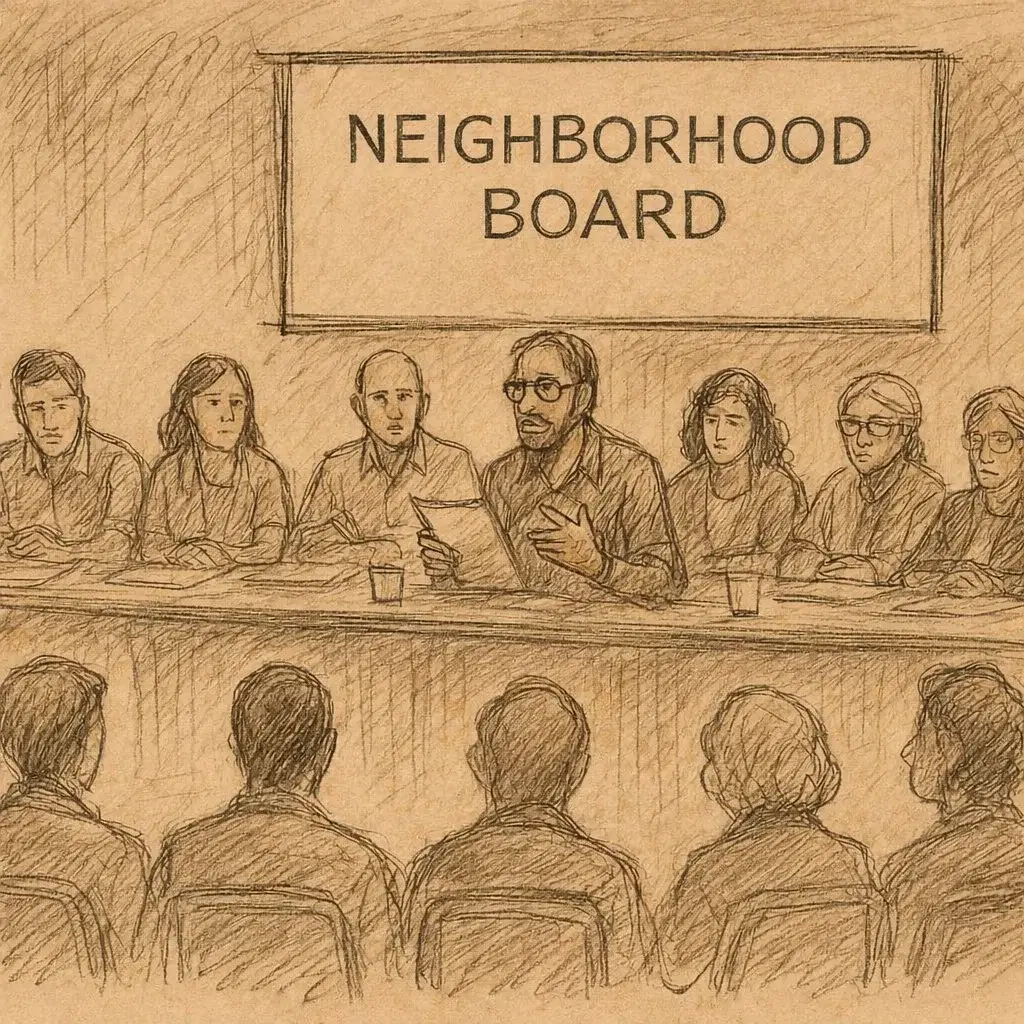
No 31 Kailua Neighborhood Board Regular Meeting June 2026
Listen to this article:
31 Kailua Neighborhood Board Meeting – June 9, 2026
Fire Department Report and Hurricane Preparedness
The Honolulu Fire Department reported Kailua-area response statistics for May 2026, showing no structure fires and no cooking fires, but two wildland or brush fires, two nuisance fires, 10 activated alarms, 84 medical emergencies, one motor vehicle collision crash, one mountain rescue, one hazardous materials incident, and no ocean rescues or vehicle collisions involving pedestrians. Residents were directed to the HFD FireResponse online search tool at fire.honolulu.gov for incident details and mapping. HFD also used the report to emphasize hurricane season preparedness, noting that Hawaii’s hurricane season runs from June 1 through November 30. The department urged households to refresh their emergency kits, make sure family disaster plans are understood, and prepare for up to 14 days without utilities or outside supplies. Residents were reminded to review insurance coverage because standard homeowners and renters insurance generally does not include hurricane or flood damage, to obtain window protection materials well before any storm, and to sign up for emergency alerts at hnlalert.gov. Questions for HFD were invited, but none were raised.
Ocean Safety Activity at Kailua and Lanikai Beaches
A Honolulu Ocean Safety Department representative reported that beach towers from Kalama Beach to the Kailua Boat Ramp served just under 100,000 beachgoers during May. During that same period, personnel conducted nearly 4,000 preventative actions, just under 900 minor first aids, roughly 10,000 public contacts, and 12 water rescues. Two rescues were highlighted: a windsurfer in distress off Kailua Beach who was brought in after swallowing water, and a man on a floatie about 200 yards offshore from Lanikai Beach who was brought in by rescue craft. A question from the audience asked when ocean safety would move into its new facility, and the answer was that the move is hoped for by the end of summer.
Motion Seeking a Traffic Signal at Ulupii Street and Kalanianaole Highway
The board considered a committee motion asking the State of Hawaii Department of Transportation to again expedite installation of a traffic signal at Ulupii Street and Kalanianaole Highway. The motion relied heavily on prior and current community support. It cited an April 2026 poll conducted by the Olomana Association in which 119 of 330 households responded, with 100 supporting and 19 opposing a traffic light, or about 84% in favor among respondents. It also cited results from a survey conducted at the 2026 I Love Kailua Town Party, where 170 respondents supported and 27 opposed the proposal, roughly 86% in favor. The motion further referenced a September 4, 2014 Kailua Neighborhood Board resolution, adopted 18 to 1, requesting the same traffic signal nearly 12 years earlier. Supporters framed the issue around safe egress for approximately 1,200 residents in the Olomana community and around access for Maunawili Elementary School, which sits at the Ulupii location. Board members stressed that the issue affects children, kupuna, and all residents trying to leave the neighborhood safely during heavy traffic conditions.
Maunawili Elementary School Survey Results and Mixed Stakeholder Views
Maunawili Elementary School Principal Kaui Tanaka shared school-community feedback gathered from 78 respondents that included faculty and staff, parents, students in grades 3 through 6, and community partners including Olamana School and Kupa Aina. Of those surveyed, 69.2% supported adding a traffic light at Ulupii Street and Kalanianaole Highway, while 30.8% did not. She described recurring safety concerns, including multiple accidents in the area and three crashes during her first week as principal, one involving very young preschool students and another involving a faculty member. She said these incidents helped lead to installation of speed humps and other safety measures already in place. Respondents also described the difficulty and danger of exiting Olomana, especially when attempting to turn left toward the Pali or cross Kalanianaole Highway, which can force drivers into a dangerous U-turn near the Women’s Community Correctional Center. At the same time, some stakeholders worried a traffic light could worsen congestion, back traffic up toward the school, interfere with school drop-off and pickup, and encourage cut-through driving in the surrounding neighborhood. Principal Tanaka said that, before the current speed humps and left-turn restrictions, she had strongly favored a signal, but in her current view the existing arrangement is working. She also noted that most students who walk or bike to school come from the Olomana side, with fewer than 10, in her estimate, crossing from the Pohakupu side, and that a pedestrian overpass already exists.
Olomana Community Testimony About Safety, Crashes, and Neighborhood Access
Olomana Community Association corresponding secretary Crystal Bronco testified in support of the traffic signal and described a long history of safety concerns and difficulty exiting the neighborhood because of increasing traffic volumes and shrinking gaps in highway traffic. She pointed to a severe T-bone crash at around 7 a.m. on January 27 that she said intensified concern in the neighborhood, describing a vehicle struck so hard that it landed about 30 feet from the exit and tipped on its side. She also referenced another later crash involving a mother and children. Bronco said residents are not asking for many things, but want at least one safe way to leave the neighborhood, and that Ulupii next to the school is the only practical location because it is far enough from the next traffic signal. She repeated the neighborhood survey figures of 330 homes, 119 responses, and 100 yes votes. In discussion, she added that some residents who opposed the light said they did not use that exit or did not travel during peak times, but she argued that the neighborhood still needs a safer option for teenagers, kupuna, and everyone else. She also raised concerns about the usability of the pedestrian overpass for some families, including those with large bicycles or trailers.
Parent Concerns About School Traffic and the Need for More Data
Lisa Doyle, a Maunawili Elementary parent and school community relations program assistant, testified from the perspective of daily school operations and urged the state transportation department to evaluate the full traffic effects before installing a light. She described the heavy flow of morning drop-off traffic for the school’s 260 families between 7 a.m. and 7:50 a.m. and asked what effect a new signal would have on more than 200 vehicles entering and leaving the campus each day. She questioned whether a light synchronized with the Castle Hospital intersection could still lead to backups on Ulupii Street or Kalanianaole Highway, potentially affecting both school access and the broader community. She did not state support or opposition, but asked for a more complete traffic analysis before any decision.
Questions About Traffic Studies, Timing, and Accident Data
Board members and testifiers explored the history and limits of prior state traffic analysis. It was explained that the State Department of Transportation had conducted traffic signal evaluations at Ulupii and Kalanianaole in 2007, 2014, and 2018, and each time concluded that vehicle and pedestrian volumes crossing the intersection did not meet warrants showing that a signal would improve safety or operations. In 2024 the state reconfigured the intersections and added speed tables to improve safety. Board members questioned whether the prior studies properly measured conditions during the most critical times, such as school arrival and dismissal, and asked if the data collection windows could be confirmed. There was also concern that the studies may have underestimated potential use of a signalized exit because, if a safe exit existed, some drivers who now use the other two neighborhood exits would shift to Ulupii. Questions were also raised about whether a comprehensive list exists of accidents at the neighborhood’s intersections over the last 10 years, and whether earlier state study details could be obtained and shared publicly.
Debate Over Cost, Priorities, and Public Safety
As discussion continued, the cost of a signal became part of a larger debate over transportation priorities and risk. One speaker said that in Hawaii traffic signals are often installed only when federal funding is available and that projects then compete on a priority list. A historical figure of about $250,000 was cited as the cost of a different signal in Hawaii. Testimony argued that cost should be weighed against human safety, especially where children and families are involved. The board also examined whether existing enforcement tools and roadway design changes have already improved conditions or whether only a signal can provide the level of predictability and safety residents are seeking.
Board Approval of the Ulupii Traffic Signal Resolution
After testimony and board discussion, the board voted on the motion requesting the state to expeditiously install an appropriate traffic signal at Ulupii Street and Kalanianaole Highway. The motion passed unanimously, 14-0, with the chair also voting aye. The board’s action reaffirmed its 2014 position and added current survey data and school-area concerns to the record, creating renewed formal pressure on the state transportation department to revisit the intersection.
Marine Corps Base Hawaii Activities, RIMPAC, and Stormwater Permit Comments
Marine Corps Base Hawaii reported several upcoming activities with direct community relevance. On July 4, base commander Colonel Stephen Detrinis and Sergeant Major Don Moreno are expected to participate in the Kailua Independence Day parade. On July 12, the base will host the Hui Nalu Kupiko Canoe Regatta, described as an open-base event for community observation and participation. The base also announced that RIMPAC training will begin at the end of June and continue through July into early August, bringing adjusted airfield hours and training activity in the Bellows area. As part of that training, there will be several weekends in July when Bellows Beach will be closed and unavailable for camping. The board was also informed that the Department of Health will seek public comments on the permit renewal for the base’s stormwater management plan, with the notice to be posted June 24 and comments due July 24. Comment submission options include mail to the Hawaii Department of Health Clean Water Branch, P.O. Box 3378, Honolulu, 96801, and email to cleanwaterbranch@doh.hawaii.gov. Board members noted they want to review the permit through their water quality work and submit comments.
Lanikai Transportation Management Plan: New Two-Phase Implementation Approach
Transportation Director Roger Morton presented an update on implementation of the Lanikai Transportation Management Plan and announced that the City Council had just approved an operating budget that includes $500,000 for Lanikai improvements. He said the city now intends to proceed in two phases, using a new “plan C” approach that emerged after the earlier board discussion. Phase one would install no-parking signage and cross-hatching along Mokulua Drive, the main exit route, with the immediate goal of helping residents leave the community more easily. Phase two would later add no-parking signs on Alapapa Drive, widen some side streets, convert selected side streets to one-way traffic, and create marked legal parking stalls. Morton explained that parking on unimproved shoulders is already not allowed, but in practice HPD prefers posted signage before citing violators. The city therefore views formal signage as necessary to make the parking plan enforceable. He also emphasized that the city remains committed to preserving beach access by creating several passenger loading zones at Lanikai beach accesses so visitors can drop off people and gear for a short period before leaving the area.
Emergency Access and Resident Safety in Lanikai
Public testimony highlighted how traffic congestion and roadside parking in Lanikai affect emergency response. A resident described two serious incidents in recent months, including a roof fall and a deadly wall collapse at a construction site near a beach access, and said emergency vehicles faced major delays reaching the scene because of congestion and parked vehicles. He urged the board and city to view the plan primarily as a safety measure rather than a beach-access restriction. That testimony reinforced the city’s argument that Lanikai’s road system and geography make unobstructed access especially important for ambulances, fire trucks, and other responders.
Parking Loss, Beach Access, and Enforcement Questions in Lanikai
Board members and residents pressed the city on how much parking would effectively be removed before side-street improvements are completed and what that would mean for public access to Lanikai Beach. Questions focused on the fact that Alapapa already has restrictions in place along part of the route, and that removing parking from Mokulua first would eliminate a large share of the existing informal supply. Several participants argued that the city is reducing practical beach access without first creating replacement parking. Others asked why improved side-street parking could not come before the no-parking restrictions. City officials responded that the immediate focus is on relieving the exit problem on Mokulua while the more complicated side-street design, widening, regulatory review, and community consultation proceed. They said they will monitor the effects closely and remain committed to the full project. The discussion also examined enforcement, including the difference between “no parking” and “no parking tow-away zone” signs. City officials said Lanikai’s streets do not currently meet tow-away-zone criteria, which generally apply to arterial and peak-hour roadways, though board members questioned whether higher penalties or special enforcement provisions should be pursued. The inadequacy of the standard $35 parking fine as a deterrent was also raised, with comparisons made to higher penalties used elsewhere for bike lane violations.
Concerns About Process and Departure From Earlier Board Recommendation
Several board members expressed frustration that the city returned with a modified approach after months of board discussion in which the board had rejected immediate no-parking signage around the full loop and instead favored implementing changes all at once when side streets were ready to absorb displaced parking. The city answered that the new proposal is a different compromise: rather than sign the whole loop immediately, it would target only Mokulua first while still advancing the larger project. Staff also said that because the $500,000 appropriation must be moved into design and contracting quickly before it lapses in a year, there is risk in delaying all visible action until the larger side-street work is fully designed and permitted. The city did not commit to bringing the modified plan back to the board for another formal recommendation before implementation.
Triangle Park Restoration and Kailua Library Planning
During community concerns, residents requested an update on Triangle Park. City staff said they had just walked the site with the contractor, inspector, and designer and that the seeded grass area is only about 60% established after roughly two months. More watering and seeding are planned, and while sod remains an option, the city wants to see whether further growth can be achieved first. The area was planted with El Toro grass based on community preference, but staff are now also testing Bermuda grass in a staging area to see if it establishes better under site conditions. Residents asked when the fence could come down, but the city indicated more work is needed first. A separate request was made for community engagement around funding that legislators have secured for a public library, with residents asking for a facility plan and early public involvement.
Governor’s Office Responses: Lanikai Pillbox, Kailua Road, Noise, and Water Quality Advisories
Governor Josh Green’s representative returned with responses to several questions from the prior month. On the Lanikai Pillbox trail maintenance project, DLNR’s Division of Forestry and Wildlife said the work had gone out to bid but exceeded available funds, so the scope is being revised. Construction is hoped to begin in four to six months, though the timeline is flexible, and the trail will be closed during construction. DLNR is also developing a reservation system similar to Diamond Head, expected to go live in about six months, though it may be delayed until after construction to avoid adding pressure to Kailua residents. On the North Kalaheo bridge-related repaving sequence, the board was told the city expects to complete the bridge project in October, after which the state DOT can take up repaving of Kailua Road. Utility poles on Kalanianaole Highway need to be braced first, and HECO is seeking permits for that work.
Additional responses addressed resident concerns over roadway conditions and noise. The state said highway-specific concerns can be sent to complaint_highway_oahu@hawaii.gov, while city road issues can be reported through the Honolulu 311 app. For neighborhood noise concerns, the Department of Health handles general complaints through a noise hotline at 586-4700, while traffic, vehicle, and moped noise issues fall under HPD or DOT. On motorcycle noise standards, the state explained that revising motorcycle safety inspection standards can be done either legislatively or through DOT administrative rule changes. DOT’s motor vehicle inspection office said it will work with county partners to reinforce enforcement and compliance with current motorcycle noise standards.
Continuing Frustration Over Wastewater Advisory Confusion
The board devoted significant discussion to the clarity of public warnings issued when wastewater treatment problems occur. In response to questions about a May 6 advisory, the state said Clean Water Branch sends email notifications as soon as an incident is confirmed, even when some details are still unknown, and updates the website as more information becomes available. Marine Corps Base Hawaii posted warning signs at seven locations. The state explained that the advisory’s orange polygon on maps is meant to show a general region that could potentially be affected, not an exact “do not enter” boundary, because ocean currents and conditions are unpredictable. Board members argued that the wording remains confusing because the advisory refers both to the vicinity of the outfall pipe and to Kailua Bay more broadly, while posted signs appear to emphasize a smaller red-circled area. Members called for better coordination between the Department of Health and the Kailua wastewater plant and suggested a meeting to align messaging, science, public-health communication, and local expectations. They stressed that paddlers, swimmers, and beach users need clearer guidance on where and when the risk actually exists.
Public Demands for Greater Sewage-System Transparency
Public testimony expanded the wastewater discussion into a broader critique of transparency and infrastructure oversight. A speaker argued that mainland wastewater plants often use real-time sensors connected to public websites and said similar transparency should be required locally. He also criticized delays in posting advisory signs over weekends and said documentation fields in the state’s software that should explain what happened and how incidents were resolved have not been properly filled out. He questioned whether recurring exceedances reflect underfunding, poor maintenance, or system failures, and tied these concerns to the long history of infrastructure problems, including the previously broken ultraviolet disinfection system.
Mayor’s Representative: New City Leadership, Homelessness Data, and MH3 Mental Health Response
The mayor’s representative announced several city leadership updates, including the departure of Managing Director Mike Formby, the designation of Krishna Jayaram as managing director, and the selection of David Lazar as Honolulu’s new police chief. He also noted that the federal aid deadline for storm-related damage claims is approaching and urged eligible residents to act quickly. On homelessness, he said the latest point-in-time count showed approximately 600 to 700 fewer unsheltered homeless individuals on Oahu compared with two years ago, though about 2,200 people remain unsheltered. He described the city’s MH3 program, based on Act 219 from the 2025 legislative session, which allows a health-care provider working with a police officer or sheriff to involuntarily transport a person who is a danger to self or others because of mental illness or substance abuse for emergency examination. About 70 people have been handled through the pilot so far, and roughly a third are now permanently off the streets. Most are taken to the Behavioral Health Crisis Center in Iwilei, while others have gone to Castle Medical Center or The Queen’s Medical Center. The city said MH3 activity has begun in Kailua, including near the district park, Walgreens, and the beach park, and will expand as the program grows. The mayor’s representative also addressed a recent Lanikai construction-site fatality and said emergency response had not taken as long as some perceived, though he agreed congestion there complicates response and supports the need to reduce obstructions.
Councilmember Kiaaina: Bridge Construction, Budget Priorities, Wastewater Investment, and Emergency Management Staffing
Councilmember Esther Kiaaina updated the board on the North Kalaheo Avenue bridge project and apologized for the disruption caused by repeated traffic pattern changes. Through June 12, the project was operating with contraflow from 8:30 a.m. to 3:30 p.m. and two-way travel at other times. From June 15 to July 31, the plan was to return to the heavier pattern of contraflow from 7:30 a.m. to 5:30 p.m., with one-direction operation overnight favoring Kaneohe-bound traffic. She said the full project extends through October, though the worst congestion impacts should lessen after July. A project website link was to be shared through her office.
On the city budget, Kiaaina said the operating budget had just passed 6-3, including her vote in favor, though it could face a mayoral veto. She highlighted the inclusion of $500,000 for the Lanikai transportation plan and major continuing appropriations for Kailua Wastewater Treatment Plant improvements, including $62.2 million this year for multiple elements. She noted that the UV disinfection system has been working and said there had not been a bacterial exceedance in Kailua since its installation, contrasting this with a recent spill affecting Kaneohe Marine Corps Base and urging lessons from Kailua’s upgrades. She also referenced ongoing concerns around mangrove removal and Kaʻelepulu Basin and said the Clean Water and Natural Lands Fund may be the appropriate mechanism if acquisition of private land becomes feasible. On disaster readiness, she highlighted what she called her proudest budget achievement: 13 new positions for the Department of Emergency Management, nearly doubling staffing from a base of about 16 people. She said this increase is necessary if the department is expected to do real pre-disaster preparedness work with communities. She also noted plans for an August wildfire preparedness town hall.
Representative Martin: Homeless Shelter Capacity, Coconut Rhinoceros Beetle Supplies, and Legislative Town Hall
Representative Lisa Martin linked the recent drop in unsheltered homelessness to the expansion of shelter and transitional options on the Windward side. She highlighted the recent blessing of 20 additional tiny homes at the Waimanalo Emergency Shelter, a project she said she had pushed for over five years. Combined with the existing emergency shelter and Auntie Blanche’s Hui Mahiʻai ʻĀina, she said there are now more acceptable placements for people willing to follow rules and accept services, and she said the community can feel the difference as more individuals become housed and receive wraparound support. She also announced two June 29 events in the same meeting room: from 5 p.m. to 6 p.m., a free distribution of supplies to combat coconut rhinoceros beetles, including netting, pheromone traps, and both organic and synthetic pesticide options, with advance sign-up requested at crbhawaii.org/community; and from 6 p.m. to 7:30 p.m., a legislative town hall featuring multiple Windward state lawmakers for informal discussion of the recent legislative session.
Representative Mike Lee: Government Modernization, Paid Family Leave, Base Relations, and Correctional Facility Visit
Representative Mike Lee described summer work on labor and modernization issues, including upgrades at the unemployment office where paper-based processes have been replaced with a modern data platform intended to improve public access and efficiency. He said paid family leave will remain a major topic for next year, with lawmakers examining both the cost and staffing implications of creating and administering such a system. He also mentioned work on retaining government employees by keeping compensation and benefits competitive. Locally, he noted the recent change of command at Marine Corps Base Hawaii and said efforts are underway to meet with the new commander and reinforce the importance of maintaining strong community relationships. He also said a visit to the Women’s Community Correctional Center is being organized, likely in early August, and that Windward legislators and possibly board members may be invited. He also promoted a large e-waste drop-off event at Castle High School on June 20 from 8 a.m. to noon.
Representative Matayoshi: Elections, Workers’ Compensation, Vaping, AI Safety, and Maunawili Falls
Representative Scott Matayoshi highlighted several measures from the legislative session, including a bill aimed at reducing dark money influence in elections and challenging the post-Citizens United landscape, three workers’ compensation bills intended to speed medical care and return injured workers to their jobs, and two anti-vaping bills that he described as incremental but meaningful steps. He also pointed to a new law concerning AI chatbots and minors, meant to limit dangerous interactions that could encourage violence or self-harm. He echoed the June 20 Castle High e-waste drive announcement and said it has become one of the island’s largest such events. For Maunawili, he updated residents that the Maunawili Falls trail remains closed while restoration and cultural preservation work continue. He said the state is also in the process of purchasing a large piece of land near the back entrance area so future access could be routed more directly from near the golf course clubhouse, avoiding the need for hikers to pass through the neighborhood and potentially allowing new trailhead facilities.
Federal Disaster Assistance Deadline Reminder
Representative Jill Tokuda’s office reminded residents that FEMA applications related to storm damage from the Punaluʻu storms are open only until Sunday, June 14. The office shared a link to detailed application guidance and invited residents needing help to contact the district office for assistance connecting to the proper agencies.
Kailua Wastewater Treatment Plant Construction Projects for 2026
City and consultant representatives presented two major construction projects beginning at the Kailua Regional Wastewater Treatment Plant, both part of long-term modernization at a facility originally built in 1965 and heavily upgraded in 1994. The first is the bio-tower rehabilitation project, a roughly $24 million contract awarded to Hawaiian Dredging Construction Company and designed by Brown and Caldwell. It involves removing the geodesic domes visible from Keolu Drive, taking out and replacing internal media and mechanical systems, and upgrading associated wet well and pump station components. Notice to proceed was issued in August, the project has been in pre-construction since then, and the team hopes to finish in about two and a half years, earlier than the 3.3-year contract duration.
The second project is a new dewatering building, approximately $68 million, designed by Community Planning and Engineering and built by Nan, Inc. This project will handle solids removed from sewage, reducing moisture so the material can be transported more efficiently. The resulting sludge “cake” is currently sent to H-Power rather than the landfill, and the long-term goal is eventually to upgrade processing further so the solids become Class A biosolids usable as fertilizer. The building will be about three stories high and among the tallest structures on the site. It also includes digestor system renovations and pump replacements. The plant team said both projects are beginning major construction activity this month, with additional upgrades in planning and design behind them.
Construction Impacts, Backup Power, and Future Plant Tour
The treatment plant presentation also addressed neighborhood effects. Construction traffic is expected to approach the plant via H-3 rather than by crossing the congested North Kalaheo bridge. Contractors are subject to noise permit limits and monitoring, with weekday work generally occurring during daytime hours and some Saturday work under variance on the dewatering project. The city said contractors must submit odor mitigation plans and monitor for fugitive odors during construction. The board also asked about backup power, and the city explained that since earlier plant upgrades, the entire facility is now connected to a centralized emergency generator plant with three 3-megawatt generators, replacing several older decentralized units and addressing earlier concerns that some plant functions could not continue during outages. Board members requested, and plant staff supported, the idea of another future board tour once more construction is completed. Questions were also asked about disposal of demolished materials, and staff said materials are tested and sanitized before disposal, with some salvageable equipment sold for reuse.
Hawaiian Electric Renewable Energy Zones Initiative
Hawaiian Electric presented its Renewable Energy Zones initiative, part of planning required to support Hawaii’s 100% renewable energy mandate and recent directives from both the governor and the Public Utilities Commission. The utility said it has been instructed to designate two large renewable energy zones by June 2026. The zones are not final development approvals, but rather targeted areas where more detailed planning for future renewable generation and transmission can be focused. Hawaiian Electric explained that it worked with the U.S. Department of Energy’s national laboratory system to examine Oahu land availability and identify places that could potentially host larger concentrations of renewable generation. Criteria for selection include generation potential, development cost, long-term transmission maintenance cost, known developer interest, state land opportunities, and equity, with a goal of avoiding overconcentration of projects in areas that already host many facilities while also improving grid resilience through geographic diversity. The utility said concentrating projects in designated zones allows more orderly transmission planning and avoids a “spaghetti” pattern of disconnected line extensions across the island.
Electricity Cost Concerns and the Promise of Price Stability
In response to board questions about rising electric rates, Hawaiian Electric acknowledged concerns over high current kilowatt-hour costs and said it cannot provide an exact 2045 future rate estimate. The utility explained that current prices are heavily tied to fossil fuel costs, especially fuel oil and gas, and argued that the purpose of long-term renewable procurement is to stabilize prices by replacing volatile fuel exposure with long-term contracts, often spanning 20 years. A board member asked for follow-up information on projected long-range cost impacts so the public can better understand how the transition to renewable energy may affect household and business electricity bills over time.
Closing Business and Attendance
Because of time constraints, the board deferred approval of prior meeting minutes and skipped reports from members who attended other meetings. At the end of the transcript, the board moved into its required agenda item addressing members who had accumulated three absences, beginning with Jeremy Truskan.