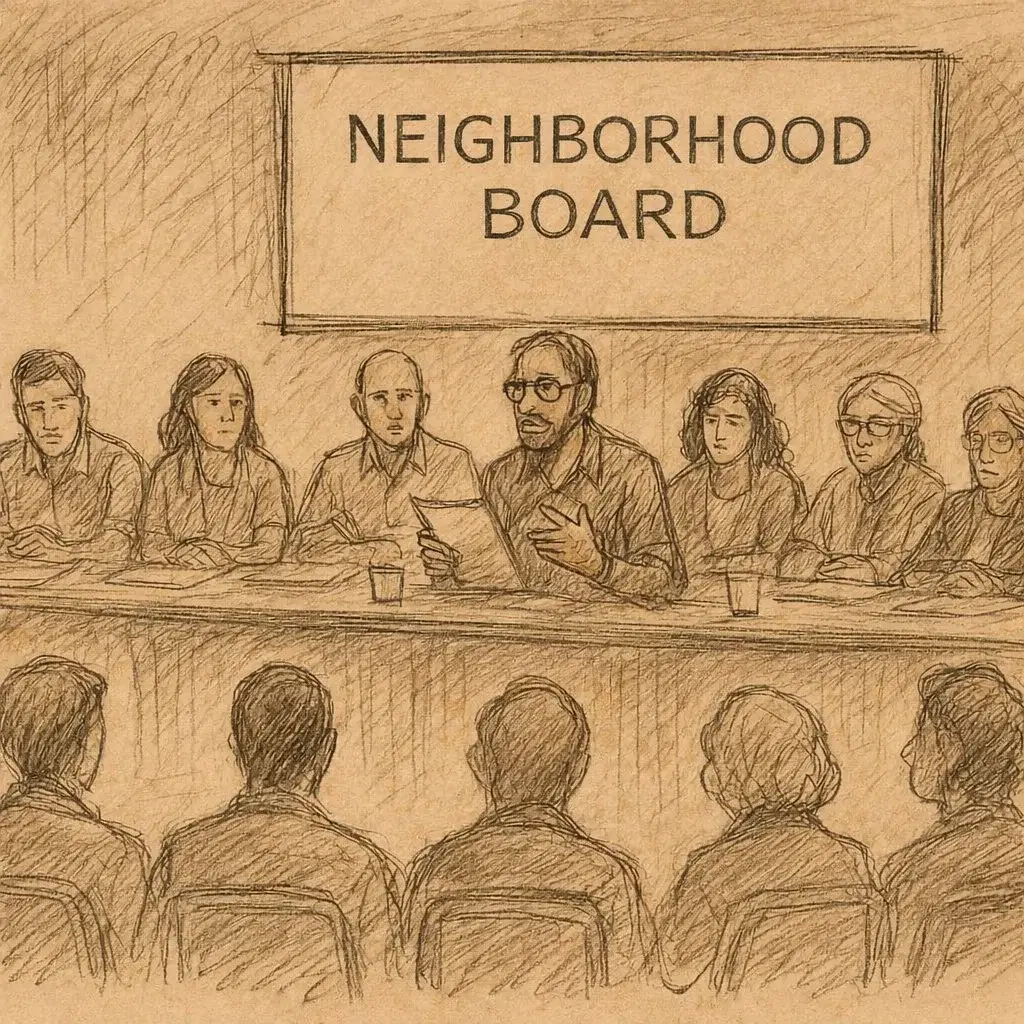
No 29 Kahaluʻu Neighborhood Board Regular Meeting October 2026
Listen to this article:
29 Kahaluu Neighborhood Board Meeting – October 15, 2026
Meeting Opening
The meeting was called to order at 6:01 p.m. The transcript identifies the meeting date as October 14, although the meeting title lists October 15, 2026. The board proceeded with emergency-service reports, government and community updates, neighborhood concerns, and board business. The meeting adjourned at 8:24 p.m.
Honolulu Fire Department
Firefighter Paul Guerlain of Kahaluʻu Station 37, First Watch, reported three activated alarms, 45 medical calls, one mountain rescue, and three ocean rescues during the month. The department’s seasonal safety message focused on holiday decorations and activities. Residents were advised to use electrical decorations, appliances, and devices certified by a nationally recognized testing laboratory, follow manufacturer instructions, remain present and alert whenever cooking indoors or outdoors, and keep combustible materials away from heat and flames. HFD also urged pedestrians and drivers to remain especially vigilant between dusk and dawn. No questions were raised.
Honolulu Police Department
Lieutenant Drew Akagi reported September crime statistics for the Kāneʻohe-Kahaluʻu area. Motor-vehicle thefts increased from two in the previous month to five, burglaries declined from two to one, and thefts increased from two to three. There were no vehicle break-ins and no robberies in either month. Calls for service declined from 432 to 366. HPD said several vehicle-theft cases involved acquaintances who obtained access to keys, one involved a personal arrangement that went wrong, and another occurred because an extra key had been left inside a vehicle parked along the road. At least two or three stolen vehicles were believed to have been recovered, although the lieutenant did not have complete recovery information. One truck was found damaged and abandoned rather than stripped.
Heʻeia Pier Stabbing and Police Jurisdiction
A board member asked about a stabbing at Heʻeia Pier. HPD said the matter remained an active assault investigation but had reached an apparent dead end because the complainant was no longer cooperating. The lieutenant confirmed that HPD has jurisdiction at the pier even though the harbor is state-operated and state and city boundaries overlap in the area. Officers respond there whenever police services are required, and HPD indicated that it visits the area regularly.
Board Vacancies and Vice Chair Position
The board has vacancies in Subdistricts 4 and 6. The Subdistrict 4 seat became vacant after Parker moved to Maui, and the chair indicated that potential candidates may exist for both vacancies. Rather than opening the seats at large, the chair deferred action until the December meeting. The board also still lacks a vice chair, a concern as the 2027 legislative session approaches. No member volunteered, and the chair encouraged members to identify candidates from Subdistricts 4 or 6 who may also be willing to serve in that role.
Waiahole and Waikāne Stream Maintenance
Mayor Rick Blangiardi’s representative, Department of Facility Maintenance Deputy Director Warren Mamizuka, said the city needed additional time to respond to the board’s request for a regular maintenance schedule for the Waiahole and Waikāne bridge and stream areas. The city was coordinating with the state to determine schedules and jurisdiction and expected to report in December. A board member observed that a state Department of Transportation contractor appeared to have cleared roughly three-quarters of the Waiahole channel toward the ocean and that water moved better during the most recent flooding. Members emphasized that the channel should be cleared fully to the ocean while also accounting for environmental concerns.
Heʻeia Encampment and Roadside Safety
The city followed up on concerns about a growing houseless encampment across from Heʻeia State Park, where people, including some who appeared to be experiencing mental-health crises, had reportedly walked in the roadway. The Department of Community Services and the city’s homelessness coordinator were expected to work with HPD and report in December. HPD’s District 4 Community Policing Team said the encampment was concealed high on the mountainside and that officers planned to confirm its coordinates and determine whether it was on government or private land. A site visit had been postponed because recent weather made access unsafe. Officers would continue monitoring the roadside and offer outreach and intervention services when encountering people who need help. Residents stressed that pedestrians walking along the narrow roadway, combined with overgrown guinea grass and vehicles crossing toward the oncoming lane, created an immediate collision risk.
Overgrown Vegetation Near Heʻeia and Ulumalu
Extensive discussion focused on grass, trees, and brush obstructing sidewalks and road shoulders near Heʻeia State Park, Ulumalu, and the curve between Kākoʻo and Heʻeia Pier. The city said it maintains the makai side of Kamehameha Highway and portions of the mauka side, but some land may be leased to a nonprofit, potentially making the lessee responsible for maintenance. Members disputed the boundaries and noted that vegetation repeatedly grows over the sidewalk and into the roadway. The board asked whether the Department of Planning and Permitting could issue a notice of violation if a nonprofit is responsible, and the mayor’s representative agreed to accept the request. Residents argued that the question of ownership should not delay action when motorists are narrowly avoiding pedestrians. The board assigned its Transportation and Infrastructure Committee to meet with the city, state DOT, and Kākoʻo ʻŌiwi or other responsible land managers to establish jurisdiction and secure coordinated maintenance.
City 311 and Hui Iwa Curb Repair
A member described submitting a Honolulu 311 request concerning damaged curbing on Hui Iwa Street and then being told to contact the Kāneʻohe Base Yard personally. After calling, the member was told a supervisor would return the call, but no response had been received after two or three weeks. The Department of Facility Maintenance explained that 311 reports should be received centrally, routed to the proper agency, investigated, and then placed on a repair schedule if city action is warranted. Residents should not ordinarily have to coordinate directly with the base yard. The department acknowledged that it receives a large share of 311 requests and that repairs can take time.
Charter Amendments and Ranked-Choice Voting Costs
A board member asked the mayor’s office whether Charter Amendment No. 5, concerning ranked-choice voting, would increase or reduce city costs. He argued that voters should receive fiscal information before deciding on charter changes that may govern city operations for many years. The request was broadened to seek estimated costs or savings for all 20 proposed charter amendments. Both the mayor’s representative and Councilmember Esther Kiaʻāina’s office agreed to seek information, although they cautioned that the general election was only weeks away. A resident later urged the board to revive its past practice of holding election forums or public education sessions, particularly for complicated charter amendments. The chair acknowledged the request but said it was likely too late for the current election cycle.
Dangerous Curve North of Heʻeia Pier
Residents described a sharp blind curve on Kamehameha Highway approximately one mile north of Heʻeia Pier, near Makiman’s Corner, as a longstanding and severe safety hazard. On October 4, a vehicle reportedly entered the curve at an estimated 60 to 80 miles per hour, left the roadway, carried a large rock with it, and struck a monkeypod tree. A resident said the tree prevented the vehicle from reaching a neighboring house. Drivers traveling southbound said they avoid stopping to turn into their driveways because vehicles, including buses, enter the blind curve at 40 to 50 miles per hour. Other residents described nearly being T-boned while leaving driveways, having vehicles totaled while turning into their properties, and crossing the highway with children and fishing equipment in fear of speeding traffic.
Requested Safety Study and Improvements at the Curve
Residents asked the board to place a formal item on its December 9 agenda requesting that the responsible transportation agency study the curve and implement safety improvements. Potential measures mentioned included speed tables, rumble strips, restored warning signs, improved guardrails, and other traffic-calming treatments. Residents said curve-warning signs and visibility mirrors had already been struck and removed by vehicles, while an existing guardrail had been hit repeatedly and remained badly bent. One resident said nighttime acceleration around the curve caused particular concern because her daughter’s bedroom is closest to the road. The chair agreed to coordinate proposed wording for a December resolution and noted that traffic engineering, road maintenance, and police enforcement would all need to be involved.
Bus-Pass Access and Satellite City Hall Services
A resident criticized the limited availability of student bus passes. After being turned away at a convenience store and a satellite city hall, she had to travel to the transit office in Kalihi, where parking was difficult and local residents shared a long line with arriving visitors purchasing passes. She said student passes were available at only two locations, Kalihi and Kapolei, creating a major burden for families from Kahaluʻu, Hauʻula, and other Windward communities. She urged the city to restore student bus-pass sales at satellite city halls or provide separate, accessible service and parking for local residents.
Keahiakahoe Canoe Club Facilities
The community raised the longstanding request from Keahiakahoe Canoe Club for space to park a container and store equipment. The club was praised for placing Kahaluʻu in a positive spotlight by finishing first among Hawaiʻi crews in the Molokaʻi race, described as a major achievement after approximately 30 years. Residents also noted the club’s relationship with Tahitian paddlers and its contribution to Kahaluʻu’s cultural and sporting identity. They urged the city and the board to resolve the facilities request rather than allowing it to remain pending.
Roadside Trees and Arborist Review
A resident asked the city or utility responsible for trimming trees near electrical lines along Kamehameha Highway to obtain an arborist’s assessment. Some monkeypod trees had reportedly been trimmed in a way that left most of their weight extending over the road. The resident expressed concern that the imbalance could make the trees unstable during increasingly frequent storms.
Councilmember Kiaʻāina’s Updates
Councilmember Esther Kiaʻāina’s office announced that the Honolulu Charter Commission was holding an informational session at Windward Community College and offered to send printed charter materials to the board. The office also reported that its September 29 land-conservation workshop was successful. Presentation materials were available online, and the program was expected to be rebroadcast on ʻŌlelo Community Media. The office agreed to coordinate with the city and other agencies on the transportation, vegetation, bridge, and public-safety concerns raised during the meeting.
Storm-Damage Property-Tax Relief
The council office announced that owners whose land or structures were damaged by recent storms may qualify for remission of city real-property taxes. Applicants must submit Form BFS-RP-P-48A with documentation such as photographs, repair estimates, invoices, contractor reports, and insurance records. Relief applies to real property, including land and buildings, but not to vehicles, furniture, crops, equipment, or other personal property. The application deadline is June 30, 2027, and claims may be submitted online, by mail, or in person through the city’s real-property tax system.
Koʻolau Resiliency and KEY Project
The board acknowledged KEY Project’s annual Koʻolau ʻOhana Dinner and its theme emphasizing that no task is too large when undertaken together. KEY Project and the Koʻolau Resiliency Hub Network were recognized for coordinating flood response, debris removal, food and supply distribution, and access to safe community spaces. The report portrayed the network as a continuing resource during storms and other emergencies.
Kalauhaka Bridge
The deteriorated Kalauhaka Bridge generated urgent discussion. The council office had asked the Department of Design and Construction to inspect the bridge’s structural integrity after a September 23 council committee meeting at which transportation officials said city engineers could examine private roads presenting an imminent public danger. A 2021 document reportedly shows that the city maintains the bridge’s road surface. Residents said the bridge has been discussed for roughly 40 years, is at risk of collapse, and is essential as an alternate route when other Kahaluʻu roads are blocked by storms or crashes. One participant reported approximately 18 inches of open air beneath the footing on the mauka or Kahuku end and suggested that temporary concrete support should be considered immediately.
Kalauhaka Bridge Ownership and Funding
Members explained that ownership is complicated because the bridge is nominally associated with approximately 57 deceased owners and dissolved trusts. One proposed solution was use of Hawaiʻi Revised Statutes Section 264-2, under which the state transportation director may assign a road to the city, allowing the city to record ownership and pursue repairs. Members said ownership would also need to be clarified along the connecting roadway to Waiheʻe Road or Waiheʻe Bridge so the project could qualify for federal funds. Other possible avenues included the still-open 1969 Kahaluʻu Watershed Work Plan and coordination among DOT Director Ed Sniffen, DLNR, the governor, and the city. DOT’s representative asked the board to adopt a resolution requesting that the state assign the bridge to the city, and the board planned to consider such a resolution in December.
Vendor Activity at Hygienic Store
The board discussed six or seven vendors operating around Hygienic Store, the adjacent city park, and the Baptist church area. Some vendors had moved there after DOT cleared activity that was causing hazards elsewhere along Kahekili Highway. Members said the cluster of vendors and customer vehicles created dangerous entering, exiting, and parking conditions, especially because the roundabout and banyan-tree area leave less room for vehicles to pull off the road. The board asked the Department of Planning and Permitting to inspect the area, determine which uses were authorized, and coordinate with the state to clarify property boundaries between the store, church, city park, lagoon perimeter, and highway.
Statewide Disaster and Recovery Update
The governor’s representative reported that four disasters in six months had caused an estimated $1 billion in damage, recovery costs, and future resilience needs statewide. The events included the March Kona lows, a May earthquake on Hawaiʻi Island, and Hurricanes Lala and Lowell. Across the four disasters, 1,290 homes were affected. Potential recovery sources included federal disaster aid, state legislative appropriations, and green-fee revenue.
Heʻeia State Park Employment and ʻAhu o Laka
DLNR responded to prior allegations that houseless individuals had been hired at Heʻeia State Park. The department said it had no employees assigned there and believed the allegation concerned the permittee operating the banquet hall. The permittee reportedly denied hiring houseless workers. DLNR stated that any department hiring would follow suitability reviews and background-check procedures. Regarding alleged illegal commercial activity at ʻAhu o Laka, DLNR said the site involves three divisions: Forestry and Wildlife for the land, Boating and Ocean Recreation for surrounding waters, and Aquatic Resources for marine life. Administrators from those divisions conducted a boat survey and were evaluating next steps with Representatives Lisa Kitagawa and Scot Matayoshi.
Heʻeia State Park Erosion Concern
A community member asked why an area of Heʻeia State Park, also identified by its traditional name, had been closed off with yellow tape and whether a cliff or soil section was deteriorating. She requested an explanation of what the state was doing to stabilize or repair the area, particularly because the park continues to host gatherings. The governor’s representative agreed to seek information from DLNR.
HK Construction and Wailehua 1
The board revisited Wailehua 1 LLC and HK Construction properties identified by TMKs 4-7-014-051, 052, and 055. Residents reported that someone had broken into the mauka-most house, after which a window was boarded. A vehicle, personal belongings, open garage doors, cots, and a dog were later observed, indicating that a person was living in the garage and using it for storage even though the building lacked a certificate of occupancy. One neighbor said the man had stayed there intermittently for approximately three years and more consistently recently, while also being the only person maintaining the property. Members said the structure lacked approved electrical, plumbing, and wastewater systems and questioned whether any septic system existed.
HK Construction Enforcement and Wetland Restoration
The board noted that DPP had revoked the project’s special management area permits and that the state Department of Health had imposed a multimillion-dollar penalty, described during the meeting as approximately $2.1 million to $2.4 million, along with an obligation to restore the wetland. Members said the matter remained in a contested-case proceeding and alleged that enforcement had been delayed for more than a year. They sought investigation of illegal occupancy, unauthorized storage, possible wastewater use, and the status of the fine and restoration order. Members maintained that the buildings should ultimately be dismantled, with reusable components recycled, and the wetland restored.
Formal HK Construction Letter
The board reviewed and unanimously approved an amended enforcement letter concerning the occupied Wailehua 1 property. The letter asks authorities to investigate whether occupancy, security use, and garage storage violate the Revised Ordinances of Honolulu when no certificate of occupancy exists. The board directed that the letter request enforcement before the December 9 meeting, including removal of the occupant and implementation of any final order affecting the structures and wetland. In addition to the Department of Health, copies were to be sent to DPP, the mayor, the governor, elected officials, the Department of the Attorney General, Corporation Counsel, DLNR, the Army Corps of Engineers, and the state Office of Planning and Sustainable Development.
Wailehua Sewer Survey and Development Concerns
A Wailehua Place resident reported that survey crews had been working in the neighborhood for roughly a week and a half and said they were surveying for sewer installation. The resident believed an earlier agreement had effectively exempted existing homes and expressed concern that senior homeowners could face both sewer assessments and expensive private connection costs. Board members had received no formal notice of a sewer project and suggested the work might only be a feasibility study. Residents were advised to ask the surveyors for company identification so the city department or contractor responsible could be confirmed.
Sewer Infrastructure, Wetlands, and Future Growth
The sewer report prompted broader concern that new sewer lines and highway infrastructure could enable urban development, including possible legalization or reuse of the HK structures. Members emphasized that much of the area is designated urban by the state even where county zoning, agricultural uses, wetlands, streams, estuaries, and potential loʻi restoration suggest a rural or agricultural character. They said prior claims that every individual owner must petition to change state land-use designations were incorrect and that agencies may pursue broader boundary changes with community support. The board planned to consider December resolutions concerning land-use designations and the community’s preferred future, including protection of agriculture, wetlands, waterways, and rural landscapes from large-scale development pressure.
Senator Brenton Awa’s Office
Senator Brenton Awa’s office reported that the Board of Land and Natural Resources approved a 50 percent rent reduction for eligible agricultural permit holders affected by severe weather in 2027. The relief initially applied to Hawaiʻi Island, but the office was monitoring whether it could be expanded to Oʻahu farmers and ranchers. Following repeated storm-related power outages, the office contacted Hawaiian Electric and advised customers with losses to file claims within 30 days; claims would be reviewed individually even when all receipts were unavailable. The office also said Heʻeia State Park’s Monday closures had resulted from staffing shortages and should end now that additional employees had been hired.
Highway Maintenance and Hui Iwa Visibility
HDOT scheduled maintenance from October 12 through 16 along Kahekili Highway between Hygienic Store and Castle Junction, including tree trimming, grass cutting, sign maintenance, and litter removal. Additional tree work was planned along the broader corridor toward Kualoa. The board separately raised vegetation inside the canal fence between the two Hui Iwa Street intersections near McDonald’s and the former theater area. Although the growth had recently been cut, it returns approximately every three months and blocks sightlines to the signal and curve, where serious crashes repeatedly occur. Senator Awa’s office agreed to ask HDOT about a more lasting treatment rather than recurring trimming.
Giving Trees and Food Sustainability
Senator Awa’s office reported another ʻulu-tree giveaway and sign unveiling for the Kahaluʻu ʻulu project, now named “The Giving Trees” after Shel Silverstein’s children’s book. Schools and community organizations received ʻulu trees to grow on their campuses. The project is intended to strengthen local food sustainability and make fruit and fruit trees available to Windward families.
Windward Community College Programs
Chancellor Ardis Eschenberg announced the Hawaiʻi Conservatory for Performing Arts production “Local Heroes of Hawaiʻi,” scheduled for November. The one-year conservatory program is intended to develop local performers and expand Hawaiʻi’s workforce for film, television, theater, and other productions. The show will feature locally written stories about people who have influenced Hawaiʻi. The chancellor also reported that students were in the middle of exams and papers and that the spring course schedule would be available by the next board meeting.
Windward Community College Tuition
Windward Community College tuition will remain flat for the next two academic years, extending a period of roughly seven years without an increase. Tuition would then increase by 3 percent in the third year and another 3 percent in the fourth year. For a full-time Windward student taking 12 credits, each increase would be approximately $96 to $100 annually. The chancellor said this remains comparatively modest but acknowledged that even small increases burden students already struggling with Hawaiʻi’s housing, food, family-support, and transportation costs. She said financial aid may absorb some of the increase.
Windward Tuition Assistance and Student Pathways
The Poʻole tuition initiative currently covers remaining tuition for qualifying first- and second-year students after financial aid, supported in part by the Harold K.L. Castle Foundation. The grant sunsets after the current year, but the college is raising funds and reorganizing internal resources in hopes of continuing it. Eligibility focuses on graduates of Windward public and charter schools, students who participated in Windward early-college programs, and other local students with financial need, including some who attended private schools. The program has increased freshman enrollment, Native Hawaiian participation, and fall-to-spring and fall-to-fall persistence. Windward is also creating career-based pathways for high-school students in engineering, pre-health, pre-nursing, Hawaiian studies, marine science, and related fields leading toward living-wage employment.
University of Hawaiʻi Reorganization
The chancellor explained that the University of Hawaiʻi community-college subsystem will be abolished in December. Windward’s chancellor will report directly to the UH president rather than through the vice president for community colleges. Community-college human resources and administrative personnel will move under systemwide vice presidents, although staff will remain on their campuses. The change is primarily in reporting structure but may affect how community colleges coordinate shared processes, accreditation, funding, tenure, and promotion while preserving each campus’s distinct culture.
Kāneʻohe Bay Regional Council
Board representative Keoni Machado had no new Kāneʻohe Bay Regional Council developments to report. He was awaiting notice of the council’s next meeting and expected to provide an update in December.
U.S. Representative Jill Tokuda
Representative Jill Tokuda’s office reported that she voted for a short-term continuing resolution keeping the federal government funded through December 11, 2026, while Congress negotiates full-year fiscal year 2027 funding. She introduced the Rural Emergency Hospital Designation Improvement Act to help keep rural hospitals open and preserve access to specialized care. As a co-convener of the House Democrats’ affordability working group, she participated in a national roundtable on rising food and household costs. Discussed options included relief for farmers and families, reversing cuts to nutrition assistance, and removing presidential tariffs. Tokuda also surveyed hurricane damage on Hawaiʻi Island and Kauaʻi, supported an emergency declaration making federal assistance available, and was working on Postal Service accountability and the return of tax refunds to consumers.
Marine Corps Base Hawaiʻi
Marine Corps Base Hawaiʻi reported several leadership transitions, including a new commander and chief of staff. Lieutenant O’Hara was preparing to leave the Marine Corps, and Lieutenant Emma was expected to begin attending neighborhood board meetings in December. The base said seabird season runs from approximately November through January or February, during which hangar doors are closed at night and field lighting is reduced to limit impacts. Residents may use the base’s noise-reporting system for lighting as well as sound concerns. The base also highlighted its Readiness and Environmental Protection Integration program, under which Kākoʻo ʻŌiwi has received support.
Makahiki and Marine Corps Events
The base announced a Makahiki event for November 14 and was seeking approval to make it an open-base activity. A Marine Corps birthday pageant was planned for November 9, with veterans invited to request access. A board member suggested referring to the military mission as a “Department of Peace” during Makahiki, emphasizing that peace should be the objective of military service.
Community Events and Recovery Grant
The Rope for Wishes Rodeo was held October 10 and 11, 2026. Organizers requested a board presentation too late to be placed on the agenda, but information was shared with the community so residents could anticipate traffic. The board also announced an Oʻahu Kona Low recovery grant opportunity administered through the Chamber of Commerce Hawaiʻi, with applications available at OahuKonaLowRecovery.org.
Coastal Highway Resiliency Project
HDOT representative Casey Abe reported on the Kamehameha Highway Long-Range Coastal Resiliency Project. The first community meeting had been held September 24 in Hauʻula, and the project website contains the presentation. The Planning Concepts Study, the third of four project studies, was expected to be posted in early November, while the Transportation Study and Coastal Vulnerability Study were also being added. A second community meeting was being planned for early December, potentially at Hauʻula Elementary School. The project examines long-term highway exposure to erosion and sea-level rise, including the corridor near Kualoa Regional Park, and HDOT invited comments on transportation needs, coastal risks, and cultural sites.
Kahekili Highway Rockfall Hazard
After receiving photographs from a board member on October 11, HDOT investigated a potential rockfall hazard on Kahekili Highway approximately 200 yards from Koʻolau Shopping Center toward Kāneʻohe. DOT consulted its geotechnical engineer and district maintenance personnel and planned to hire a contractor to install anchored erosion-control matting with plate anchors set at alternating depths of three and five feet. DOT would report when the maintenance contract and construction schedule were finalized.
Political Sign-Waving Safety
A member raised concern about election sign-waving along narrow highway shoulders, particularly along the ocean side of Kaʻaʻawa where only about six feet separate campaign participants from a drop-off near recent revetment work. Without calling for a ban, the member urged candidates and supporters to stand farther from travel lanes, reduce roadside distractions, and consider social media or other campaign methods that do not increase risk for pedestrians or distracted drivers.
Board Committees and Social Media
The Hawaiian Affairs Committee had no new report. The Social Media Committee was developing a regular posting schedule and planned to introduce board members through headshots, short biographies, and contact information where members consent. The committee also intends to feature Kahaluʻu businesses, kūpuna quotations, community history, and local schools. The Transportation and Infrastructure Committee received assignments to coordinate on vegetation, roadway ownership, Kalauhaka Bridge, and related safety issues. The Land and Natural Resources Committee praised HDOT’s inclusive Hauʻula meeting and encouraged residents to participate in the coastal-resiliency process.
Meeting Minutes and Technical Difficulties
Approval of the September 9 meeting minutes was deferred until December. Members requested that attendance times affected by microphone or connection failures be marked with “TI” for technical issue so those delays are distinguished from ordinary lateness. The meeting transcript also contained repeated audio and transcription problems during portions of the discussion.
Subdistrict Updates
A Subdistrict 6 member reported upcoming pavement work and seal coating on Hui Iwa Street near the former theater entrance and dialysis center. Work was expected to begin in the first week of November and continue through the area’s parking lots, potentially affecting driving and parking. The shopping center has previously allowed neighborhood residents to use parking between the center and McDonald’s when street parking is limited. The member also reminded residents that the Kāneʻohe Christmas parade was expected on the first Saturday in December, before the board’s next meeting.
Meeting Schedule and Recesses
The board ordinarily meets at 6:00 p.m. on the second Wednesday of each month at KEY Project, with Webex access available. There will be no November meeting because the regular date falls on Veterans Day. The next meeting is scheduled for Wednesday, December 9, 2026, and will be the final meeting of the calendar year. The board is entitled to three recesses during the July 1, 2026–June 30, 2027 term but has not scheduled them, partly to avoid creating predictable periods when significant proposals might proceed without board review.
December Agenda and Legislative Preparation
The chair warned that the December meeting will have a full agenda because it must address the dangerous highway curve, Kalauhaka Bridge, HK Construction enforcement, land-use and development concerns, vacancies, deferred minutes, and any issues arising during the November break. Members who want the board to propose state legislation for the 2027 session were asked to prepare substantive proposals by December because legislators will begin filing bills in January. The chair said the meeting would need to move efficiently because of the volume of required action.