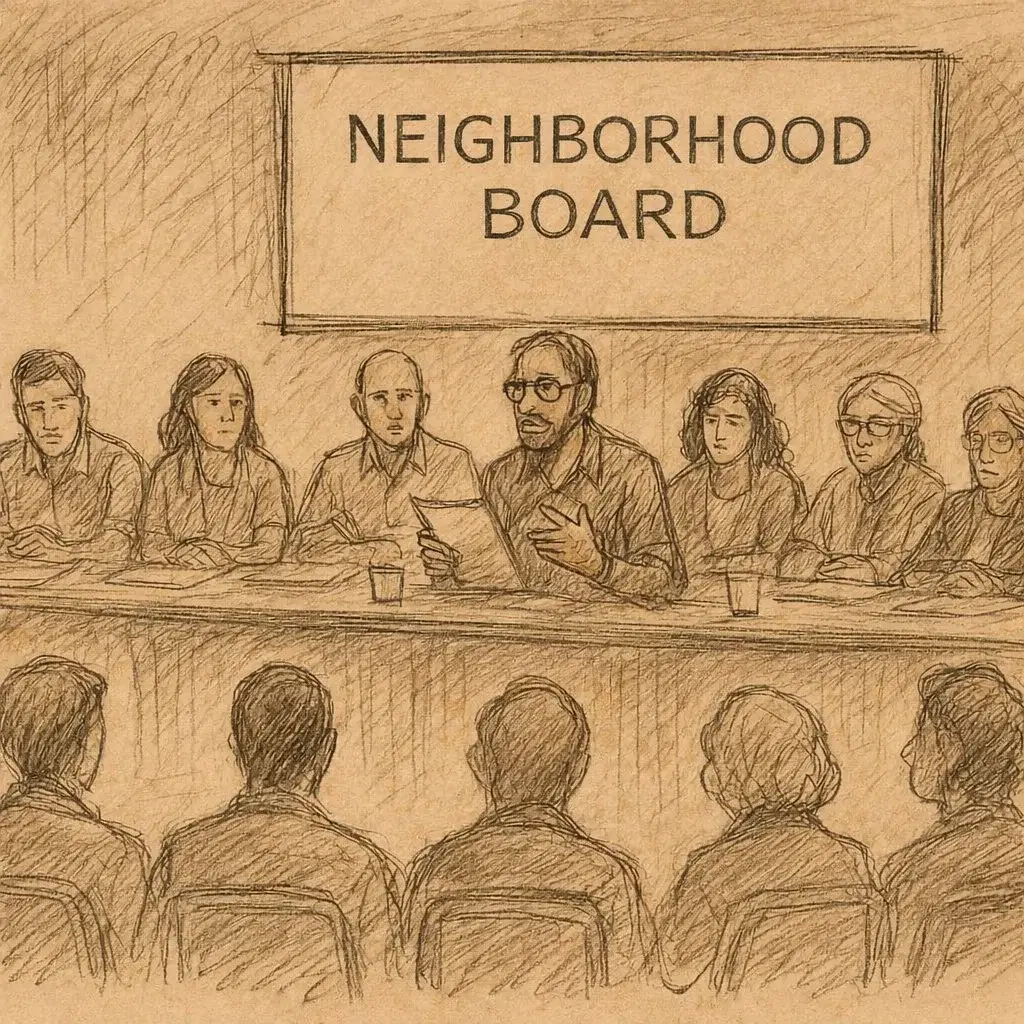
No 29 Kahaluʻu Neighborhood Board Regular Meeting September 2026
Listen to this article:
29 Kahaluu Neighborhood Board Meeting – September 14, 2026
Meeting Opening and Agenda
The transcript records the meeting as being called to order at 6:01 p.m. on September 9, although the meeting is identified as the September 14, 2026 regular meeting. The board addressed emergency-response statistics, public safety, vacant board seats, officer elections, storm recovery, transportation and drainage infrastructure, coastal and marine-resource management, community events, land-use hearings, and other neighborhood concerns. The meeting adjourned at 8:00 p.m.
Honolulu Fire Department Report
The Honolulu Fire Department reported that the Kahaluʻu station responded during August to one cooking fire, two activated fire alarms, and 49 medical incidents. HFD focused its monthly safety message on the increasing number of fires involving lithium-ion batteries in smartphones, laptops, e-bikes, e-scooters, toys, tools, and electric vehicles. Residents were advised to use the charger and cord supplied with each device, charge devices on hard surfaces, unplug them once fully charged, charge tools and rideable devices outdoors, stop using batteries that become hot, and keep battery-powered devices visible while traveling by air. HFD invited the public to its Fire Prevention Week Family Day at the Honolulu Zoo on October 3 from 10 a.m. to 2 p.m., with the theme “Charge into Fire Safety.”
E-Bike Fire Safety
A resident asked how to control an e-bike battery fire before firefighters arrive. HFD advised calling 911 immediately, moving to a safe location, and removing nearby combustible materials if that can be done safely. A fire extinguisher may be used, but the firefighter cautioned that its effectiveness against a lithium-ion battery fire is uncertain. HFD agreed to return with more specific guidance at a future meeting.
Honolulu Police Department Report
HPD reported two motor-vehicle thefts in August, up from none the previous month; two burglaries, up from one; two thefts, down from five; no vehicle break-ins, unchanged from the previous month; and no robberies. No additional crime statistics were presented.
Heʻeia Encampment and Neighborhood Safety
Residents raised concern about an expanding houseless encampment on the mountainside near Heʻeia State Park and the harbor area. One resident said people associated with the encampment appeared to be moving into nearby neighborhoods and engaging in activity perceived as suspicious. HPD described the encampment as an intermittent, ongoing issue and said enforcement is complicated by questions of land ownership and jurisdiction. The matter was referred to community policing for further review, with HPD promising a response through the board chair.
A community member said residents and organizations have been working with HPD and Kākoʻo ʻŌiwi, including patrols and enforcement operations in the mountain area. She also said Heʻeia State Park had employed some people experiencing homelessness and expressed concern about how workers were vetted, including an individual she described as having previously been restricted from approaching a canoe club. HPD responded that employing unhoused individuals is not itself unlawful and that the responsible organization should follow applicable hiring and screening requirements. The board sought coordination among HPD, the Governor’s Office, the park, Kākoʻo ʻŌiwi, and other land and law-enforcement agencies.
Board Vacancies and Vice Chair
No candidates came forward for the vacant Subdistrict 4 seat, covering the ʻĀhuimanu Road area, or the longstanding Subdistrict 6 vacancy behind Temple Valley Shopping Center. The chair initially considered asking the Neighborhood Commission to convert at least one vacancy to an at-large seat. Because a board member may know someone interested in Subdistrict 6, the board agreed to wait through the October meeting. If no candidate appears in October, the chair intends to request that the commission open the Subdistrict 6 position as an at-large seat. The board also still needs a vice chair for the term running from July 2026 through June 2027. The chair emphasized the need for dependable backup when she cannot attend and said she may nominate someone in October if no volunteer comes forward.
Meeting Hospitality and Potluck
The board continues to provide food at meetings but has shifted to preparing takeout plates, which are available outside the meeting room. Attendees were encouraged to eat even if they did not wish to enter or remain inside the meeting.
Mayor’s Office and Storm Preparedness
The Mayor’s Office representative was absent, so the chair read highlights from the September 2026 mayoral newsletter. The city activated its Emergency Operations Center and Joint Operations Center in response to Tropical Storm Lala, deployed city workers, launched islandwide recovery operations, and expanded assistance for affected residents. The newsletter also includes guidance on preparing for future natural disasters. No newer city information was available concerning Hurricane Lowell because the meeting occurred soon after the storm. A board member warned residents to monitor another storm system that was reportedly expected around September 20.
Commercial Fishery Ban
Council Member Esther Kiaʻāina’s office thanked the board for supporting a ban on commercial fisheries following the August 28, 2026 Board of Land and Natural Resources meeting. Council Members Kiaʻāina and Matt Weyer both testified and intend to pursue a statewide ban. Kiaʻāina’s office also announced that its land-conservation workshop had been rescheduled to September 29 from 10 a.m. to 12:30 p.m. at Windward Community College’s Hale ʻĀkoakoa, with RSVP information to be distributed separately.
Storm-Recovery Information
Council Member Weyer’s office reported that no new city resources had yet been announced specifically for Hurricane Lowell. Information already published through the District 2 newsletter remained current, while aid associated with Tropical Storm Lala continued to be distributed. Residents were encouraged to subscribe to council newsletters for updated relief information.
Kalohaka Bridge Ownership
The board again requested progress on Kalohaka Bridge, where unclear ownership has delayed a long-term solution. Council Member Weyer’s office reported that transferring the bridge to the city would require the current owners to complete dedication procedures through the Department of Design and Construction’s Land Division. The bridge’s tax map key reportedly lists many owners, some of whom may be deceased, making a voluntary transfer difficult. Acquisition through eminent domain would require the Department of Facility Maintenance to formally ask the Department of Design and Construction to take the property. The council office continues to seek departmental responses and evaluate both approaches.
Mahakea Road Drainage Threat
A Mahakea Road resident reported that storm runoff nearly overwhelmed the pipe carrying a stream beneath the private road. Large amounts of floating debris were blocking the pipe and beginning to erode its sides. If the crossing fails, residents could lose their only means of entering and leaving the area. Although Mahakea Road is private, the resident noted that the city has conducted work nearby, including around Mapumapu Road during earlier Kona Low events. He requested a long-reach excavator to remove the debris and equipment to haul it away before the crossing is destroyed. Council Member Weyer’s office took his contact information and agreed to investigate.
Food-Waste Disposal Changes
A resident asked how the city was notifying District 2 households about a new food-waste disposal process beginning October 1. Council Member Weyer’s office had received few questions and said the Department of Environmental Services is leading the program. The resident recommended postcards, email notices, and council newsletter announcements so households understand the new requirements and can comply.
State Disaster Recovery and Grid Resilience
The Governor’s Office reported that Tropical Cyclone Lala and Tropical Storm Moke damaged approximately 690 homes and structures, many occupied by residents already recovering from the Kona Lows and a magnitude 6.0 earthquake. The figure was believed to predate Hurricane Lowell and therefore likely did not include Lowell-related damage. Governor Josh Green issued an emergency proclamation positioning state resources, the National Guard, and response teams for additional storms during the Super El Niño hurricane season.
The State Energy Office, Hawaiian Electric, and the Hawaiʻi Emergency Management Agency secured $18.5 million in federal funding toward $25 million in grid-resilience and hazard-mitigation investments on Oʻahu, Maui, and Hawaiʻi Island. Five projects scheduled for completion between 2027 and 2029 are intended to reduce outages, accelerate restoration, and allow sections of the power grid to be de-energized rapidly during hazardous conditions. A board member asked whether funding might be reorganized to assist Kauaʻi after Hurricane Lowell; the Governor’s representative agreed to follow up, while noting that Kauaʻi’s electric utility is separate from Hawaiian Electric.
Emergency Proclamation and Waiāhole Inspection
The ninth emergency proclamation associated with the March and April 2026 weather events remained effective through September 29. Its suspension-of-laws provision included certain permitting waivers. The Governor’s Office also followed up on a prior question about inspection of Waiāhole Bridge and Stream after construction work. The inspection was visual and was conducted by Department of Transportation district engineer Ryan Nakata.
Waiāhole Bridge, Flooding, and Poi Factory
Board members requested direct engagement with DOT and the consultants working on the Waiāhole Bridge replacement, a project discussed for roughly 30 years but advancing more substantially in recent years. Recent clearing and flood-preparation work was acknowledged, but residents said the bridge’s center support traps large debris, including albizia trees more than 100 feet long. During the latest flooding, water overtopped the area near the poi factory and ran along the road. Members said the existing commercial location is exposed to recurring floods and hazardous traffic at the Kamehameha Highway intersection.
The community has discussed moving marketplace activity to a roughly one-acre parcel farther along the inside curve between Waiāhole and Waikāne that is owned by the Hawaiʻi Housing Finance and Development Corporation. Agencies including HHFDC and the University of Hawaiʻi have participated in earlier discussions. Residents asked for renewed consideration of the site as a safer community market location.
DOT later reported that the Waiāhole Bridge project is in environmental permitting and is expected to proceed as a design-build project, with construction tentatively beginning in fall 2028. DOT intends to realign the highway slightly makai and construct the permanent bridge there instead of first building and later removing a temporary bridge. Community members supported that approach but asked that the design reconnect the traditional mauka-to-makai water system, support restoration of former taro lands, account for rising sea levels, and consider a bridge higher than one designed around a 25-year planning horizon. Members also asked DOT to coordinate the project with Waikāne Bridge, where flooding often stops traffic even though Waiāhole Bridge has higher structural priority.
Stream Management and Flood-Control Coordination
Residents said stream management must extend from upstream sources to blocked ocean outlets. Clearing below Waiāhole Bridge is not sufficient if the outlet to the bay remains clogged, particularly during high and king tides. The board called for coordinated work among DOT, the Agribusiness Development Corporation, DLNR, HHFDC, the Department of Hawaiian Home Lands, the Department of Education, city agencies, and local organizations. Community members cited a previous Heʻeia stream-clearing partnership that combined city trucks, community participation, and outside funding, saying the work likely prevented homes from being lost during later storms.
Concern was also raised about steep streambanks near Country Stop, formerly known as Tank Store, where a single fallen tree could redirect water, undermine the bank, and threaten the business. Members asked engineers to evaluate retaining walls and other long-term protections after emergency clearing is completed.
Guinea Grass, Roadside Maintenance, and Pedestrian Safety
Much of the meeting focused on rapidly growing Guinea or California grass along the road near Heʻeia, Kākoʻo ʻŌiwi, the pier, and blind curves. The grass forces pedestrians and cyclists into traffic and causes drivers and city buses to veer toward the centerline. Several residents described close calls, including one motorist who nearly struck a pedestrian forced off the shoulder. Members said weed trimmers are inadequate and urged regular use of articulated mowing equipment capable of extending roughly 12 feet. Residents had seen such equipment used before and after the most dangerous curve while the curve itself was skipped.
The board requested a clear maintenance schedule identifying which sections belong to city DTS or DFM and which belong to state DOT, with work potentially needed every few weeks during rapid growth. Members emphasized that road rights-of-way may extend 40 to 44 feet and should be maintained throughout that width. Suggestions included sharing machinery, crews, base yards, capital funding, and workforce-development resources between the state and city. A proposal to cover vegetation with black plastic was questioned because residents said it could worsen soil saturation and slope instability. The chair plans to ask the city base-yard manager or another responsible official to attend the October meeting, weather and emergency duties permitting.
Kahikili Highway Rockfalls and Slope Stabilization
Residents warned that the recent rockslide along Kahikili Highway may be a precursor to larger failures at at least three other locations. They said the hillside contains dike rock that can break into large blocks, threatening vehicles and potentially closing the highway. Closure during morning contraflow could also prevent ambulances and other emergency vehicles from passing. Community members suggested slope netting and anchored pins similar to treatments installed elsewhere along the corridor. DOT asked residents to email precise locations, photographs, or Google Maps images so staff can inspect and prioritize the sites.
Kamehameha Highway Coastal Resilience Study
DOT announced a public meeting on September 24 from 6 to 8 p.m. at Hauʻula Elementary School concerning long-range coastal resilience along Kamehameha Highway from Kualoa Regional Park to Hauʻula Beach, west of Hauʻula Homestead Road. Consultant AECOM is evaluating adaptation scenarios for sea-level rise through 2100. Representatives from the City and County of Honolulu, the State Office of Planning and Sustainable Development, and DLNR’s Office of Conservation and Coastal Lands were expected to participate. Updates would also cover the completed Kaʻaʻawa erosion-mitigation work near Kaʻaʻawa Elementary, the midterm Kamehameha Highway shoreline-mitigation project through Kaʻaʻawa and Punaluʻu, and the Pīlīhia fishpond-restoration project.
Board members requested a comparable planning process from at least Haʻikū Road to Kualoa because that area faces different problems involving streams, inland flooding, bridges, road safety, and polluted runoff rather than only coastal erosion. DOT’s new highways representative, Casey Abe, agreed to receive concerns directly, conduct field investigations, coordinate with support offices, and return with possible action plans. Residents offered to accompany him on an informal site tour.
State Highway Request Process
DOT asked residents and board members to submit state-highway concerns by email, preferably with photographs and map screenshots. Because highway offices are short-staffed, DOT said requests may be expedited when Senator Brenton Awa or Representative Lisa Kitagawa forwards them to Deputy Highways Director Robin Shishido and copies the neighborhood representative. DOT also said federal highway money is generally used to reimburse eligible repair costs for damaged state highways, while other disaster aid is typically administered through FEMA.
Illegal Roadside Vending
DOT reported that approximately seven new “No Vending” signs were installed on September 5 on the makai side of Kahikili Highway, between Lulani Street and the roundabout, at HPD’s request. Hawaiʻi Revised Statutes §264-101 prohibits parking or placing a vehicle or structure on a highway to sell goods, services, or the vehicle itself without authorization from the Director of Transportation. Residents may call HPD for enforcement. Because the signs appeared to stop vending at the original location, the board withdrew its planned resolution. Some vendors may have relocated near Paradise Bay Resort, where the board will continue to monitor traffic and roadside safety.
Potholes and Highway Maintenance
The board reported a repeatedly failing pothole near the turn from Haʻikū Road, where a bus had swerved into another lane to avoid the damaged pavement. DOT explained that contractors are responsible for potholes within active project limits, but once a project is completed and accepted, repairs become a DOT maintenance responsibility; there is no continuing contractor warranty.
Accessibility and Speed Table Proposal
A resident asked DOT to ensure that higher bridge designs comply with accessibility standards and involve the State Disability and Communication Access Board so pedestrian routes serve people with disabilities. Another proposal called for a speed table on Kamehameha Highway on the Kahuku side of the Waiāhole Valley Road intersection, where vehicles approach quickly around a curve near the poi factory. DOT said the neighborhood board must first vote to support a speed table at a specific location. DOT’s Traffic Operations Branch would then determine whether it is justified, develop a preliminary design, and return to the board before construction. Because the proposed location lies near the boundary with Koʻolauloa, the board plans to coordinate with that neighborhood board before acting.
Missing Heʻeia Bus Stop
A resident asked about the bus stop across from the Heʻeia pier and harbor entrance, which has reportedly been missing for about two years. Council Member Weyer’s office agreed to identify the stop number, consult the Department of Transportation Services, and follow up. Residents will provide photographs to clarify the location.
Temple Valley Drainage Canal
Residents said the drainage canal behind the former movie theaters near Times Shopping Center and Tropicana Village has not been cleaned. Mud and standing water have accumulated around a concrete slab where water passes beneath the area toward Kahikili Highway, and the water level is approaching adjacent residential property. Large trees are growing inside the fenced canal. Although the city had reportedly denied responsibility, residents said property maps show that most canals in the area belong to the City and County of Honolulu, while only one canal running perpendicular to Kahikili Highway is privately owned by the Hokulua association. The board will ask whether state emergency authority can assist if the blocked canal contributes to wider flooding.
McDonald’s Drive-Through Safety
A community member raised concern after a vehicle apparently traveled over the hillside or into a ditch near a McDonald’s drive-through. The shopping center, McDonald’s, and insurers may need to consider a guardrail or another barrier at the straight section of the turn to prevent future vehicles from leaving the roadway.
Wilson Tunnel Visibility
A board member reported that failed lighting in the Wilson Tunnel creates a “black hole” effect for Kāneʻohe-bound drivers entering from daylight. Rainwater and soil also obscure painted lane lines. He had already discussed the issue with DOT Director Ed Sniffen and suggested restriping the lanes or painting the side curbs in a bright color to improve visibility until the lighting is fully restored.
Legal Clinic and ʻĀhu O Laka Agency Review
Representative Lisa Kitagawa reported that she and Representative Scot Matayoshi held their first free Windward Legal Clinic at Windward Mall with the Hawaiʻi State Bar Association Young Lawyers Division. Attorneys could not provide full legal representation but offered general information, answered questions, and directed attendees to resources. Additional clinics may be held in the future.
Kitagawa and Matayoshi are also following up on illegal commercialization, tourist overuse, and crowding at ʻĀhu O Laka. They plan to meet with DLNR and other agencies having jurisdiction, conduct a site visit later in September, and develop possible solutions.
Kāneʻohe Bay Pollution and Cesspools
Board members warned that clearing streams to prevent floods can also accelerate the movement of polluted runoff into Kāneʻohe Bay. Wetlands near Waiheʻe, Kahaluʻu, and Waiāhole were described as receiving sewage contamination from failing cesspools, with the corridor from ʻĀhuimanu through Waiāhole said to have one of the state’s highest cesspool concentrations. Residents recalled skin infections among canoe-club members decades ago and said current conditions require renewed Department of Health participation, particularly from the Clean Water Branch.
The board has invited the Department of Health to report quarterly or at least every six months, although recent storms have prevented attendance. One suggested nature-based approach was oyster or mollusk cultivation in deeper water to filter pollutants and support fish populations. Members said a similar concept had previously been raised for Kahaluʻu Lagoon.
Kāneʻohe Bay Regional Council and Aquarium Fish Collection
The Kāneʻohe Bay Regional Council had no new formal actions because its meeting schedule changed, apparently in connection with decisions on fishing regulations. A community representative reported that the Office of Hawaiian Affairs had assigned a new Oʻahu representative to the council, giving OHA an active voting presence.
The board also heard a report from a hearing on aquarium-fish collection. More than 100 people reportedly testified in favor of keeping the closure, while 28 opposed it. The closure remained in place, though speakers emphasized that the issue is not permanently resolved and could return. Testimony included disputes about fish counts, the adequacy of cultural-impact and environmental analyses, and the effects of extraction on Kāneʻohe Bay.
ʻĀhu O Laka Commercial Activity and Enforcement
A community member reported serious concerns about unauthorized commercial boating and parties at ʻĀhu O Laka. She said a Memorial Day weekend event involved several boats, commercial alcohol activity, sexually explicit entertainment, and more than 100 vessels, while the number of legally authorized commercial operators in Kāneʻohe Bay is capped at a much smaller number. She also reported that the Coast Guard had recently rescued three people allegedly dropped off and not retrieved. Another allegation involved a film crew pressuring a local family to move its fishing boat during adult-content filming.
Makai Watch participants are receiving DLNR stipends to monitor weekend activity, and federal, state, city, military, and elected officials are discussing enforcement. Because bookings and payments may occur online and operators may not disclose who was paid, participants said federal jurisdiction may be implicated. The board offered to consider a future resolution and requested a publicly accessible link to a recorded cultural presentation explaining the genealogy and sacred significance of ʻĀhu O Laka. A nearby resident said the loud parties and activity are visible and audible from shore. Marine Corps Base Hawaiʻi was also reported to be examining how it might assist.
Marine Corps Base Hawaiʻi
Marine Corps Base Hawaiʻi recently hosted Acting Secretary of the Navy Hung Cao and other senior military and congressional leaders, with discussions focused on aging infrastructure. New K-9 kennels are nearing completion, and a water-reclamation project is under construction. The base planned to host Kalaheo JROTC on September 11 and 12 and expressed interest in expanding partnerships with Windward Oʻahu high schools, including Castle if its ROTC program remains active. An ʻŌla Nuʻupia workday for National Public Lands Day was scheduled for September 26, including vegetation-management work. The commanding officer is also issuing a quarterly community letter. The offshore wave-energy device previously visible near the base has been removed.
Community Emergency Preparedness
The Kāneʻohe-Kahaluʻu Community Emergency Response Team announced a preparedness event with Kailua CERT on September 12 from 9 a.m. to noon in the parking area near Longs Drugs in Kailua. HPD, HFD, the Red Cross, and other organizations were expected to provide information on storm and disaster readiness. Speakers stressed preparing before emergencies rather than responding only after damage occurs.
Giving Tree Project and Community Events
Senator Brenton Awa’s office announced that the local planting initiative would be renamed the “Giving Tree Project.” A sign unveiling and starter-plant giveaway was rescheduled because of Hurricane Lowell and was expected to occur Friday, September 18 at 10 a.m. Windward Community College’s Paniolo Day was announced for September 19, likely beginning around 10 a.m., while ʻĀhuimanu Elementary School’s Fun Fair was also scheduled for September 19, beginning around 9 a.m. The Koʻolaupoko Hawaiian Civic Club recognized KEY Project at its Labor Day luncheon for years of community service and storm-related assistance.
Kauaʻi Hurricane Lowell Recovery
A board member with family in Anahola gave a detailed update on Kauaʻi’s post-Lowell conditions. Six of 15 transmission lines, or 40 percent, had been restored, up from none the previous day. Approximately 16 percent of customers had power, up from 10 percent. Parts of Kōloa, ʻŌmaʻo, Lāwaʻi, Kalāheo, ʻEleʻele, and Hanapēpē had electricity, while crews were working on transmission lines between Līhuʻe and Hanalei. The estimate was that half of Kauaʻi residents could remain without electricity for two weeks, with full restoration potentially taking one month.
Only two gas stations were reportedly open on the west side, limiting residents’ ability to operate generators. Target, Walmart, and Home Depot had begun reopening, but fuel, supplies, utility workers, electricians, and debris-clearing assistance remained urgently needed. Members expressed concern that another storm could arrive before the island recovers. A resident also relayed that many Niʻihau residents had been on Kauaʻi for a wedding during the storm, leaving relatively few people on Niʻihau itself.
KEY Project Storm Response
Representative Kitagawa and community members thanked KEY Project for its extensive work responding to storm-related needs. Kitagawa’s office continues to partner with the organization to obtain resources, and the Koʻolaupoko Hawaiian Civic Club formally honored KEY Project for its broader service to the region.
Land-Use Hearings
The board announced a public hearing for conditional-use permit application 2026-CUP-50 for Kina Ole Estate, submitted by Windward Care and Development LLC with G70 as agent. The affected properties are 45-219, 45-219A, 45-225, and 45-225A William Henry Road in Kāneʻohe, identified as TMKs 4-5-012:079 and 080 in the R-7.5 Residential District. The application was accepted July 30, and the hearing was scheduled for September 28 at 10 a.m. in the sixth-floor conference room of the Frank F. Fasi Municipal Building.
The board also announced Special Management Area major permit application 2026-SMA-46 for the Blakeney residence at 44-646A Kāneʻohe Bay Drive, TMK 4-4-013:099, also in the R-7.5 Residential District. Planning Solutions Inc. is the agent. Its hearing was scheduled for the same time and place on September 28.
Youth Climate Action Fund
The City and County Office of Climate Change, Sustainability and Resiliency, the Honolulu Youth Commission, and Bloomberg Philanthropies extended the Youth Climate Action Fund deadline to September 14 because of the storms. Awards ranging from $1,000 to $4,999 are available for youth-led events, educational programs, and campaigns addressing climate change, community resilience, and city climate goals. Projects must have two youth leaders between ages 15 and 24, partner with a school or nonprofit organization, benefit Oʻahu communities, and address environmental resilience, sustainable arts and technology, or Indigenous knowledge and community resources.
Board Schedule and Committees
The board continues to meet on the second Wednesday of each month at 6 p.m. at KEY Project and through WebEx. It will recess in November because the normal meeting date falls on Veterans Day. The chair recommended meeting in December rather than taking the customary holiday recess because there will be no November meeting, the legislative session will be approaching, and severe weather may force additional cancellations. No committees added members or announced new meeting dates. The Budget and Finance chair was absent, while Hawaiian Affairs, Social Media, Transportation and Infrastructure, and Land and Natural Resources reported no separate business beyond matters already discussed.
Minutes and Subdistrict Reports
The board unanimously approved the amended minutes of the August 12, 2026 regular meeting. No additional reports were offered from the board’s subdistrict representatives.
Next Meeting
The next regular meeting was scheduled for Wednesday, October 14, 2026 at 6 p.m. at KEY Project and online through WebEx. Potential October business includes filling the Subdistrict 6 vacancy or requesting an at-large seat, selecting a vice chair, following up with DOT and city maintenance officials, obtaining a roadside maintenance schedule, considering a speed-table resolution, and reviewing continuing concerns involving streams, bridges, drainage, vegetation, encampments, and ʻĀhu O Laka.