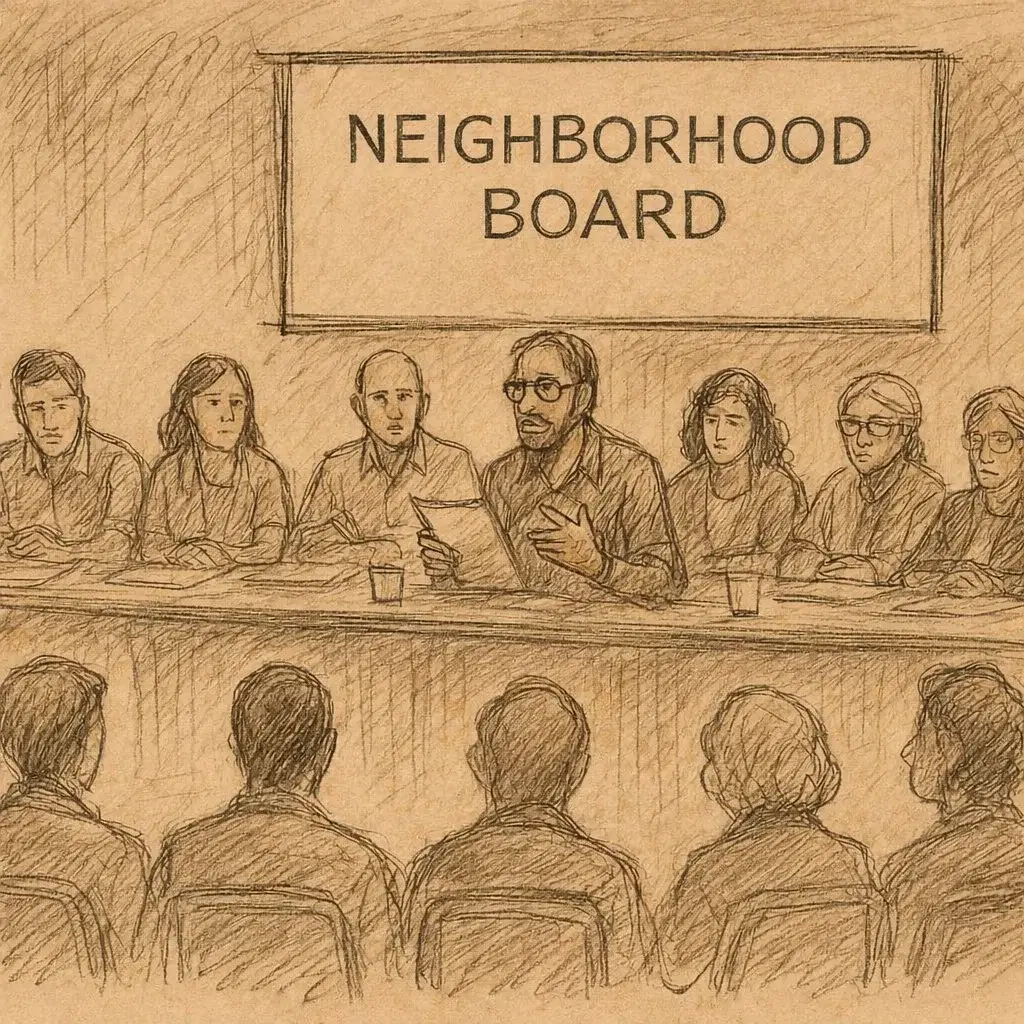
No 29 Kahaluʻu Neighborhood Board Regular Meeting August 2026
Listen to this article:
29 Kahaluu Neighborhood Board Meeting – August 13, 2026
Opening, Audio Problems, and Police Report
The meeting began with significant microphone, camera, and online-audio problems, requiring repeated sound checks and requests that speakers talk loudly. No Honolulu Police Department representative was present when the HPD report was called, so the board deferred the item in case a representative joined later. HPD did not ultimately provide a regular report, although police enforcement responsibilities arose later in discussions about reckless driving, animal nuisances, homelessness, and activities around Kāneʻohe Bay.
Board Resignation and Community Engagement
A longtime board member and former chair announced an immediate resignation after four years of service as both a chair and member. The departing member thanked residents and officials for their support, said family and business ties would keep them active in the area, and encouraged the public to continue bringing concerns to the board. The speaker emphasized that the board’s jurisdiction covers a broad and diverse area, roughly from Temple Valley through the rural Windward communities, and that effective responses to land use, infrastructure, environmental, and public-safety concerns depend on residents remaining vocal and engaged with the board and elected officials.
Board Vacancies and Officer Elections
The board solicited candidates for vacant subdistrict seats, including a vacancy covering a rural road corridor and another in Subdistrict 6 near Times Supermarket and ʻĀhuimanu. No eligible residents volunteered during the meeting. The chair said vacant seats could later be opened as at-large positions if no subdistrict residents came forward by September. The vice-chair position also remained vacant after no member volunteered. Dan Bender volunteered to serve as treasurer and was elected by roll-call vote. The chair encouraged members to consider taking on the remaining leadership responsibilities because consistent officer attendance is necessary to keep board operations functioning.
Ending Landfills Task Force
Councilmember Andria Tupola described the newly convened Ending Landfills Task Force and asked that major landfill siting decisions be held until the task force completes its work. The approximately 22-member group includes specialists and representatives from recycling, green waste, solid waste, private industry, the Department of Land and Natural Resources, Department of Health, Department of Environmental Services, and other city and state agencies. The task force plans to meet monthly through November 2027, with meetings available through the City Council website. Its goal is to reduce and eventually eliminate Oʻahu’s dependence on landfills by identifying technologies, operational changes, implementation plans, and funding requirements. A conclusive public report is expected at the end of the process. Tupola said the ultimate objective is to move the island in a direction where another landfill would never need to be sited.
Stream Clearing, Flooding, and the Mayor’s Office
During the mayoral representative’s portion, a resident praised recent state stream-clearing work near Kāʻalaʻa, saying water appeared to be flowing much better in advance of an approaching storm. The representative clarified that the work was being performed by the State Department of Transportation and promised to relay the compliment to Director Ed Sniffen. Another resident cautioned that the area has flooded badly even after previous clearing and asked why a higher bridge has not been built and whether responsibility rests with the city or state. Because of the full agenda, the board deferred the broader bridge-design discussion for future consideration. A resident also referenced the city’s CORE program as a possible response to people experiencing homelessness, noting that the program combines HPD involvement with ambulance or care services.
Heʻeia Kea and Film-Industry Responsibilities
Residents raised concerns about the roughly 220 acres of city-owned land at Heʻeia Kea, including overgrowth, encampments, old cesspools, and the absence of a visible long-term management plan. Because the film industry frequently uses the valley, community members argued that production companies should make a structured contribution toward stewardship and restoration rather than offering occasional, isolated donations. They asked the city to clarify the agreements governing film use, involve both the city and state film offices, and bring the Department of Parks and Recreation into planning discussions. The requested approach would connect continued filming privileges with sustained help maintaining and improving the land.
Land Conservation and Agricultural Acquisition Workshop
Councilmember Esther Kiaʻāina announced a land-conservation workshop for August 17, from 10 a.m. to 12:30 p.m. at Windward Community College’s Hale ʻĀkoakoa. City, state, and federal agencies with conservation funding were expected to participate along with the Trust for Public Land, Hawaiʻi Land Trust, and the Office of Hawaiian Affairs. The workshop was designed to inform nonprofit and community organizations about acquiring private land for conservation or agricultural use, often with a governmental entity retaining a conservation easement. Kiaʻāina said the city was holding more than $50 million that could potentially support private-land acquisitions and stressed that the workshop was open to organizations from across Oʻahu, not only Windward communities.
Commercial Aquarium Collection
Kiaʻāina thanked the board for previously supporting a ban on taking aquatic life from Hawaiʻi’s marine waters for the commercial aquarium trade. The Honolulu City Council had passed two related resolutions that day, one directed to DLNR and another to the State Legislature, bringing Honolulu’s position into alignment with Kauaʻi, Hawaiʻi, and Maui counties. She urged interested residents to monitor the Board of Land and Natural Resources agenda to be posted on August 21 and attend the August 28 meeting at 9 a.m., when an aquarium-collection item was expected to be heard. Councilmember Matt Weyer also supported restrictions, noting that commercial collection had already been illegal on Oʻahu for at least five years and arguing that enforcement would not improperly shut down lawful businesses.
Kapaʻa Quarry Landfill Proposal
Kiaʻāina strongly opposed considering Kapaʻa Quarry as a future municipal landfill. Her office’s research found that the Windward region from Makapuʻu to Kaʻaʻawa has already hosted 11 landfill sites, in addition to the active landfill at Marine Corps Base Hawaiʻi. She said the administration had not performed due diligence comparable to that conducted for other proposed sites and questioned whether officials had even completed site visits sufficient to understand Kapaʻa Quarry’s topography. She pledged to oppose city funding and any Public Infrastructure Map designation needed to advance the location. She also warned that although Act 73 currently prevents Kapaʻa Quarry from being used as a landfill, lawmakers elsewhere could attempt to reduce required buffer zones, making unified opposition from Windward legislators necessary. Weyer joined her commitment to oppose both funding and a PIM designation, comparing it to the Council’s earlier removal of funding for a landfill proposal over an aquifer.
Agricultural Use of City Land
Weyer reported continuing discussions about making unused city land available for agriculture, although the elimination of the Office of Economic Revitalization in the recent budget disrupted that work. The Department of Parks and Recreation has resisted overseeing agricultural parcels because it lacks the capacity to manage farm leases, so discussions are continuing with the Office of Climate Change, Sustainability and Resiliency. Weyer’s Energy, Environment and Sustainability Committee planned to examine whether Clean Water and Natural Lands Fund money could support community agriculture. He favored placing suitable parcels in the hands of local organizations and trained farmers, including graduates of agricultural programs who have skills but cannot readily access land. He was cautious about relying too heavily on the state Agribusiness Development Corporation because its operating model and clientele might not match the community-focused use envisioned for city parcels.
ʻĀhilama Road Bridge and Private-Road Liability
The deteriorating bridge and private-road segment at the beginning of ʻĀhilama Road remained a major concern. Residents said the route serves agricultural land, has been in legal limbo for decades, and is associated with ownership interests linked to numerous deceased persons and trusts. They warned that bridge collapse could isolate residents and threaten a nearby concrete-encased five-inch water line serving a significant portion of Kahaluʻu. Recent Kona Low flooding was said to have worsened the bridge’s condition. Residents cited HRS §264-2.1, concerning disputed roads, and said the statute was written with this road segment in mind; under the process they described, state acquisition could ultimately transfer responsibility to the city.
Weyer said his preference is for the city to accept the bridge and road in their present condition because they pose a health and safety risk, even though the usual city policy is to require private infrastructure to be brought up to code before acceptance. He referenced a 2021 resolution, 21-160, and earlier opposition from the Department of Design and Construction. His office is arranging further meetings and exploring whether the road’s agricultural and resilience functions could qualify it for Clean Water and Natural Lands or other special-fund assistance. He also supported state involvement if it resulted in the city assuming responsibility.
Board of Water Supply Project on ʻĀhilama Road
Board of Water Supply representative Barry Usagawa reported that the planned waterline replacement along ʻĀhilama Road remains in design. No construction timetable has been established. Because the relevant road section is private, BWS must secure an easement before proceeding, and city acquisition of the road could simplify the project. BWS clarified that its existing infrastructure does not run directly across the bridge in a way that would presently create maintenance responsibility for the structure, although residents distinguished the proposed replacement line from the existing concrete-encased line near the bridge.
Usagawa also announced the 2026 “Imagine a Day Without Water” event, scheduled for September 26 from 9 a.m. to 1 p.m. at Waiʻanae Mall’s Arc of Safety. The event is being organized with Representative Chris Muraoka’s office and more than 25 city, state, nonprofit, and community organizations.
Kāneʻohe Bay Commercial Activity and Parking Enforcement
Weyer referred to a recent Ahu o Laka meeting and said his office would continue working with Kiaʻāina and the state delegation on activities in Kāneʻohe Bay. Possible city support could include HPD coordination with DLNR, amendments to city regulations, or more targeted parking enforcement associated with commercial operations. The Council members planned to continue examining which city tools could supplement state marine-resource and boating enforcement.
Resilience Hubs and Emergency Shelter Capacity
Weyer reported ongoing discussions with the Office of Climate Change, Sustainability and Resiliency and the Department of Emergency Management regarding standards for community resilience hubs. The Council appropriated $16 million in the latest budget for these facilities. The proposed hubs would provide places where residents could shelter more effectively and access essential supplies during emergencies. Existing public shelters vary by storm and are generally intended to move people out of flood or inundation zones; many are not designed for severe high-wind events. Weyer also highlighted a proposed charter amendment that would make certain special funds, including resilience money, more directly accessible to nonprofit and community organizations for local projects.
Kahaluʻu Regional Park and Neglected Parkland
Residents described extensive maintenance and planning deficiencies throughout Kahaluʻu Regional Park. Only about 17 acres were said to be developed, while large mauka and shoreline portions extending toward Waiheʻe Stream are overgrown with invasive vegetation. Areas near the lagoon and Muliwai that residents once maintained are now difficult to access. Similar concerns were raised about a makai parcel formerly cleared near an art-supply business and land used by Kiaʻiākaʻahoʻi Canoe Club. Community members said the canoe club and residents, rather than the Parks Department, have completed nearly all improvements and upkeep. Weyer agreed to revisit the issue with Parks, while acknowledging that departmental capacity and the elimination of OER had complicated efforts to activate city land. Senator Brenton Awa later said he understood that work at Kahaluʻu Regional Park had received a green light and was awaiting scheduling, and he planned to follow up with city officials.
State Highway, Bridge, and Stream Projects
Governor Josh Green’s representative, Jenna Siegel, relayed several Department of Transportation updates. The Waiāhole Bridge replacement is in environmental permitting, with construction tentatively scheduled to begin in July 2028 and finish in July 2029. The estimated cost is approximately $20 million, and the work includes replacing the existing bridge and realigning part of Kamehameha Highway.
Kāʻalaʻa Stream clearing was underway and expected to continue through the remainder of the week. Crews were removing boulders, rocks, and sediment deposited by Kona Low storms to restore flow capacity near the highway, the Hygienic Store, and the stream outlet. DOT was operating under a Kona Low emergency proclamation that waived normal permitting requirements. At Waiāhole Stream, DOT had cleared approximately 275 feet. An inspector found no current brown-water runoff attributable to the completed work. At Waikāne Stream, DOT cleared about 1,200 feet and installed swales and boulders to reduce erosion following the March and April storms.
A resident questioned the emergency proclamation’s duration and asked what environmental requirements governed discharge into the bay. The resident also challenged the finding of no runoff, reporting continuous muddy water for approximately three months and visible plumes of red soil entering the bay from the Waikāne-Waiāhole direction. Siegel agreed to ask DOT when the emergency waiver expires, which agency’s inspector conducted the review, and exactly where and when the inspection occurred. DOT also asked the board to clarify earlier concerns about Kamehameha Highway between the Hygienic Store and Haʻikū, including tree and power-line issues. Reports of burnouts and reckless driving near the canoe club were referred to HPD.
Senator Awa’s Community Recognition and Tree Project
Senator Brenton Awa presented a Hawaiʻi State Senate letter of recognition to Hollinger Abbey, who had volunteered for about two years to mow the community tree project every other week without accepting fuel money or other compensation. Because Abbey avoids public recognition and did not attend, the letter was accepted by his sister. Awa also reported that the tree project had propagated 77 cloned trees. The plants were being quarantined after little fire ants were discovered on the Temple Valley side of the project. Once cleared, likely within two or three weeks, the trees were expected to be distributed to schools from Kahuku through Kāneʻohe Elementary and to neighborhood boards for planting. Existing trees at the project were already producing food.
School Supply Drive and Election Update
Representative Lisa Kitagawa was unable to attend but submitted a written report. Her annual Castle Complex school-supply drive provided supplies to more than 500 students across all 10 complex-area schools, including eight elementary schools, King Intermediate, and Castle High School. She thanked residents for donations and participation and also thanked voters following the primary election, stating that she looked forward to continuing to serve for the next two years.
Hawaiian Telcom Fiber Expansion
Hawaiian Telcom reported that it is nearing completion of a statewide fiber build intended to make Hawaiʻi the first fully fiber-enabled state. After approximately three and a half to four years of work and an estimated $1.2 billion investment, the project was expected to finish within six to eight months. Neighbor island work was complete except on Hawaiʻi Island, with most remaining construction on Oʻahu. The reported completion levels were approximately 71 percent in Kāneʻohe, 80 percent in Kaʻaʻawa, 61 percent in Kahaluʻu, and 75 percent in Lāʻie. Remaining locations are generally harder to reach or face access and infrastructure barriers.
Copper, Lead, and Obsolete Cable Removal
With fiber increasingly available, Hawaiian Telcom is beginning a three-to-five-year program to remove obsolete copper cables and other legacy infrastructure. Work is starting in higher-risk areas and locations where fiber construction is complete. Removal in the Kahaluʻu region is anticipated around late 2027 or 2028. The project is expected to reduce weight on utility poles, remove visual clutter, and eliminate aging equipment that is more difficult to maintain. It will include unused service-drop lines between poles and homes, but those removals will require advance notice and coordination with property owners. A resident from Mahaʻōlelo noted that multiple old lead lines, in addition to copper, remain attached between the pole and the home; Hawaiian Telcom confirmed that unused drop lines of all legacy types are intended to be included.
Residents asked whether fiber would be transferred from old poles to newer Hawaiian Electric poles. Hawaiian Telcom explained that HECO owns most poles and requires a pole-attachment review, often taking at least 45 days. Additional time may be necessary for “make-ready” work, pole replacement, or engineering review. Some large steel poles carrying primary electrical power may not safely accommodate telecommunications lines. Hawaiian Telcom agreed to continue coordinating with HECO on individual problem areas.
Vegetation Around Telecommunications Lines
Hawaiian Telcom confirmed that it, rather than HECO’s contractor Asplundh, is responsible for trimming vegetation around the communications portion of poles. Asplundh generally trims only around electrical lines. The company agreed to provide the board with direct contact information for reporting branches and growth affecting phone or fiber lines. It also said cleanup had begun along parts of the corridor from Kahaluʻu toward Lāʻie, although full cable removal must wait until customers have been migrated from copper to fiber.
Fiber Repair and Storm Readiness
In response to a resident’s question, Hawaiian Telcom said damaged fiber can generally be restored as quickly as, and sometimes faster than, old copper. Current tools, materials, and workforce skills are increasingly centered on fiber, while copper repair is becoming more difficult because of age and limited materials. With a storm forecast for the weekend, the company activated its internal network operations center, mobilized construction crews, and coordinated with state and county emergency operations centers and emergency-management agencies.
Windward Community College
Windward Community College announced its Paniolo Barbecue for September 19 from 10 a.m. to 2 p.m. The event will offer free children’s activities, music, and hula, with a small charge for horseback rides benefiting veterinary-technology students. The college had also extended its fall application deadline through the Friday following the meeting, with applications available online at no cost.
The college’s Hoʻole scholarship guarantees that eligible Windward public or charter-school graduates will not pay tuition out of pocket if financial aid does not cover the full amount. The program has been expanded to consider Windward students who attended Kamehameha Schools or another private school and then returned to attend their home community college; those students may contact the chancellor’s office for assistance. Students who received Hoʻole support in the prior year were also awarded a second year, allowing both years of an associate degree to be tuition-free.
Congressional Rural Health and Service Academy Updates
Representative Jill Tokuda’s office reported two bipartisan rural-health bills. The Rural Hospital Cybersecurity Enhancement Act would require the federal government to develop training plans so rural hospital employees understand fundamental cybersecurity practices. A second bill concerning reimbursement for emergency services would align Medicare payments for air and ground medical transport more closely with actual costs. Tokuda also led a bipartisan letter signed by more than 60 members of Congress urging the Centers for Medicare and Medicaid Services to improve reimbursement for telehealth visits at community health centers and rural health clinics.
Tokuda’s office is accepting applications from Second Congressional District residents seeking nominations to the U.S. Military Academy, Naval Academy, Air Force Academy, or Merchant Marine Academy. Application information is available through her congressional website.
Marine Corps Base Hawaiʻi
Marine Corps Base Hawaiʻi reported a busy July. The base hosted the KoʻPiko Regatta, which drew more than 3,000 participants and was open to the public. It also hosted participants in the two-year Pacific Century Fellows program, created by former Mayor Mufi Hannemann and modeled after the White House Fellows program. Fellows spent part of their annual military-focused day at Pearl Harbor and the remainder at the Marine Corps base learning about military training and cultural matters. A junior lifeguard program for base families also provided water-safety instruction.
RIMPAC had concluded, but the base acknowledged the aircraft-noise impact experienced by surrounding communities. Residents were encouraged to document aircraft or ammunition-training noise on available reporting forms. Those reports are entered into a data system and provided to air-station and command leadership so they can evaluate the geographic and community impacts of military operations.
GROW Food-Waste Recycling Program
The City and County Refuse Division introduced GROW, or Green Recycling Organic Waste, which expands use of residential green carts to include food scraps. Oʻahu households generate approximately 60,000 tons of residential food waste annually, and the program is part of the city’s goal of reaching 95 percent landfill diversion by 2030. A pilot began April 1 in Waipahu, Nānākuli, Waikīkī, Mililani, Kailua, and Kalihi. Islandwide implementation is scheduled for October 1 for homes using blue, gray, and green carts.
Residents will be able to place meat, seafood, bones, cheese, yogurt, and other solid or semi-solid food waste into green carts along with grass, leaves, branches, and other plant material. Liquids and foods that are not solid at room temperature, such as ice cream, are excluded. Plastic, paper, and compostable bags are not accepted, nor are takeout containers or other paper products labeled compostable. The city is excluding those products because some may contain PFAS “forever chemicals,” which could contaminate finished compost.
Food scraps should be collected in a sealed reusable container and emptied loosely into the green cart on collection day. Pickup will remain every other week. Freezing scraps, burying them beneath yard waste, and keeping cart lids fully closed were recommended to reduce odors, insects, and mess. Residents may request lid repairs from the city. Food and green waste may also be dropped off free at Hawaiian Earth Recycling in Wahiawā, with up to two personal-vehicle loads per day. Transfer stations and convenience centers will continue accepting green waste only. Collected material will be composted by Hawaiian Earth Recycling and sold to individuals, landscapers, and agricultural users.
Special Management Area Hearing
The board announced an upcoming Special Management Area hearing concerning 47-347 Lulani Street, identified by TMK 4-7-020. The hearing was scheduled for August 14 at 10 a.m. at the Fasi Municipal Building, not Honolulu Hale as initially stated. The proposal had previously been presented to the board, reportedly in April.
Wailua Road Subdivision Enforcement
The board reviewed Department of Health enforcement docket 2025-CW-EO-36 concerning alleged Hawaiʻi water-pollution violations at a residential subdivision on Wailua Road, involving TMKs 1-4-7-014-051, 052, and 055. DOH had been invited to explain its enforcement but did not attend. The chair reported that people appeared to be living in at least the garage portion of one house even though the structures were supposed to be removed after violating the approved SMA minor permit and after the permit was revoked. The board did not know whether the occupied area was connected to an approved septic or wastewater system.
47-649 Lamahula Road Property
The board reported no direct update from Manai Kalani Holdings, LLC, regarding the property at 47-649 Lamahula Road. The Department of Planning and Permitting told the chair that inspectors had attempted to enter the property but were denied access. DPP therefore planned to issue a notice of violation based on the new owner’s failure to cooperate with the inspection process.
Mahakea Road Chicken and Animal-Nuisance Dispute
The city continued investigating complaints associated with 47-372 Mahakea Road, including chickens, noise, and other alleged nuisances. The property operators had provided breeders’ cards, but the board said those organizational credentials were not city permits and did not end the land-use or nuisance inquiry. Supporters of the family argued that the matter was fundamentally a dispute between neighbors rather than a legitimate chicken complaint. They said the property had been improved, that similar poultry activity had existed there previously without enforcement, and that police and inspectors had visited when residents were away.
Representatives of the Hawaiʻi Breeders Association maintained that agricultural land does not generally require a permit merely to raise animals, that their birds are bred for shows rather than fighting, and that nearby palm vegetation—not chickens—was a likely source of rats. They also alleged that neighbors had thrown objects into the chicken area, causing the birds to make noise. The chair noted that the parcel is approximately one acre and subject to the revised Land Use Ordinance, which may differ from regulations applying to larger farms. The board left the city to continue determining how the amended LUO and animal-nuisance laws apply while seeking a resolution that respects agricultural character and neighboring residents’ right to reasonable peace.
KEY Project Waiheʻe Stewardship Proposal
KEY Project requested board support for an application to DLNR’s Hoʻōla ʻĀina fiscal year 2026–27 grant program. The program will distribute $8 million in state Green Fee money for ahupuaʻa-level stewardship. KEY’s application proposed invasive-species removal on Department of Parks and Recreation land around the pond behind the Hygienic Store; stewardship on Board of Water Supply and park lands in mauka Waiheʻe; loʻi workdays promoting food security and cultural-resource protection; fish surveys and stream-health monitoring; and restoration of lawful access for food production in Kahaluʻu Regional Park consistent with the city’s food-systems plan.
Funding would support regular community workdays linking mauka and makai stewardship, two staff positions, technical work unsuitable for general volunteer days, permitting, tree removal, land-clearing contracts, food cultivation on public land, and educational visits to newly managed areas. KEY described its prior work on an ʻōʻopu ladder, its access agreement with BWS, the former proposal for a mauka learning center on land later found to be a formerly used defense site, and its coordination of the Waiheʻe Ahupuaʻa Initiative. The organization also highlighted its role in coordinating Hawaiʻi’s first aerial drone treatment for little fire ant eradication in Waiheʻe and identified staff with experience in farming, education, youth programs, and ʻāina stewardship.
The board unanimously adopted a resolution supporting KEY Project’s application. The resolution recognized Waiheʻe’s cultural, historical, agricultural, and environmental significance; identified threats from little fire ants, haole koa, albizia, and other invasive species; endorsed KEY’s history of conservation partnerships; and asked DLNR and other decision-makers to give favorable consideration to the application. Certified copies were to be sent to KEY Project, DLNR, and other appropriate agencies.
Canoe Club Storage Resolution
The board approved a resolution supporting a storage unit at Kahaluʻu Regional Park Makai for Kiaʻiākaʻahoʻi Canoe Club. The action followed broader discussion that the canoe club and community have provided much of the upkeep and infrastructure in that portion of the park without sufficient Parks Department assistance.
Animal-Nuisance Enforcement Resolution
The board adopted a resolution asking the City and County of Honolulu to enforce the Revised Ordinances of Honolulu provisions concerning animal nuisances. The measure cited ROH Title 3, Chapter 12, Article 2; HPD Policy 4.26; rules concerning crowing roosters and unreasonable noise on residential or country-zoned property; and enforcement roles assigned to HPD and the Hawaiian Humane Society. It specifically requested enforcement under circumstances presented at the board’s July 8, 2026 meeting. The resolution affirmed that HPD is the lead agency for investigating and enforcing covered animal-nuisance and dangerous-dog complaints, while the Humane Society is authorized to investigate, enforce, and follow up on such complaints and animal-cruelty matters.
Resolution Opposing Kapaʻa Quarry Landfill
The board adopted a resolution strongly opposing consideration, evaluation, or selection of Kapaʻa Quarry—or another Windward Coast location—as a future solid-waste landfill. The measure cited Kapaʻa’s previous landfill history, potential risks to freshwater aquifers and wetlands, degradation of the Windward landscape, and effects on traditional practices and community resources. It endorsed the Ending Landfills Task Force and urged the city to prioritize waste-to-energy systems, expanded recycling, alternative diversion technologies, and other zero-landfill approaches. Copies were to be transmitted to the mayor, City Council, Department of Environmental Services, and neighborhood commissioners.
Meeting Procedures, Recesses, and Committees
The board reaffirmed that presentations had been shortened from 10 minutes to seven minutes to preserve more time for questions and dialogue. Members also discussed using a point of order under parliamentary procedure to return debate to the published agenda without dismissing the underlying concern. Because no other members had joined it, the board voted to dissolve the Committee on Legislation. The chair offered to assist other committees as needed.
The board normally recesses in December, but because the November 2026 meeting date falls on Veterans Day, the chair proposed meeting in December instead so the board can convene before the legislative session. Members were invited to recommend other recess dates at the next meeting. The board also approved the July 8, 2026 regular meeting minutes as amended.
Committee Reports
The Budget and Finance Committee noted that the State Legislature had created a fund for sewer repairs, an issue raised over several preceding months. The committee said the next step should be to ask how the fund will be implemented and enforced, since resolutions and appropriations are ineffective without clear administrative procedures. The Transportation and Infrastructure Committee said its main matters had already been covered in the extensive bridge and road discussions. The Hawaiian Affairs and Social Media committees had no substantive updates, and the Land and Natural Resources Committee’s report was deferred until the following month.
Subdistrict Road, Safety, and Homelessness Concerns
A resident requested a no-parking sign near 47-855 Kamehameha Highway. Vehicles parked around the sharp curve reportedly obstruct sightlines for residents leaving neighboring driveways and attempting to turn toward either Kāneʻohe or Kahuku, especially because traffic approaches uphill from the Kāneʻohe side. Another subdistrict representative reported that an abandoned boat had been removed, improving turning safety, but vegetation around the nearby state park and KEY Project curve had again become overgrown. People traveling on foot or bicycles from hillside encampments were frequently in the roadway at night wearing dark clothing, creating a serious collision risk.
Members also reported increasingly permanent-looking homeless tents around park areas. Encampments were making some residents uncomfortable using walking paths, and the board considered inviting the Department of Community Services or another appropriate agency to explain available outreach and enforcement options.
ʻĀhuimanu Canal and Shopping-Center Flooding
The board reported that mapping work had confirmed city ownership of the canal behind the ʻĀhuimanu shopping center, although the exact extent of city responsibility still needed clarification. Trees and other growth along the canal are extending over fences and roofs of adjoining properties. Recent rains caused standing and floodwater behind the former theater area and toward Kahekili Highway, leaving stagnant water that is difficult to see from the public side of the shopping center. A nearby building, constructed on clay, was reportedly cracking and shifting, although it was not yet clear whether vegetation or drainage contributed to the damage. Members said all canals in the immediate area appear to belong to the city except one privately owned channel associated with Hoʻolua and asked Councilmember Weyer’s office to help secure city maintenance.
Agency Attendance and Future Reports
The Department of Health and Hawaiian Electric did not attend despite invitations, and the Department of Transportation Services declined because it considered the roads under discussion to be State DOT responsibilities. State DOT also did not participate directly because personnel were preparing for the approaching storm, but the governor’s office delivered its report. The chair expressed hope that DOH, HECO, DTS, and DOT would provide regular updates at future meetings.
Next Meeting and Adjournment
The next regular meeting was scheduled for Wednesday, September 9, 2026, at 6 p.m. at KEY Project, with hybrid participation available through WebEx. After briefly reopening the meeting to clarify that supporting materials and resolutions are available through the online agenda, the board adjourned at 8:19 p.m.