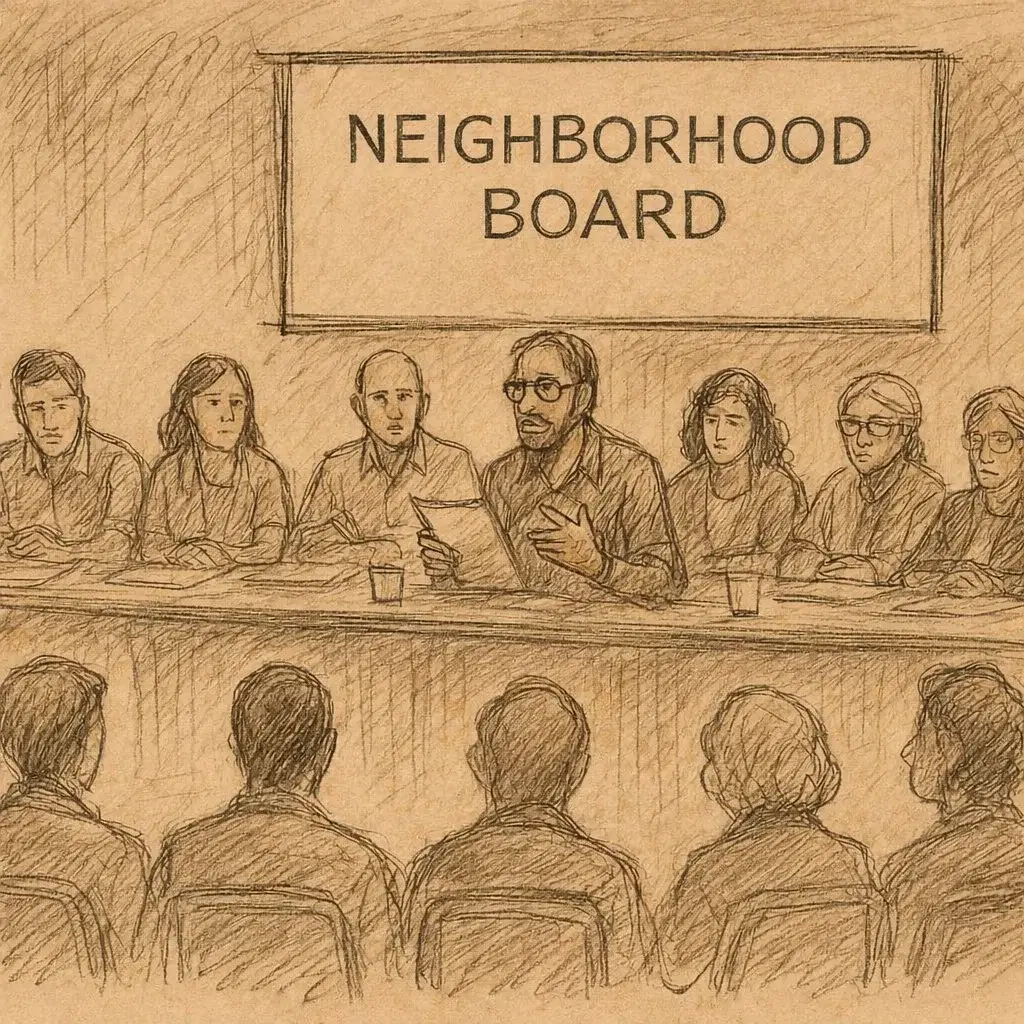
No 29 Kahaluʻu Neighborhood Board Regular Meeting June 2026
Listen to this article:
29 Kahaluu Neighborhood Board Meeting – June 12, 2026
Hurricane Season Preparedness and Follow-Up With State Agencies
The meeting opened with a report from the Governor’s office highlighting the June edition of the Governor’s newsletter and emphasizing that Hawaiʻi is now in hurricane season. Residents were urged to prepare early, monitor forecasts, understand local risks, and act quickly when storms threaten. The office also followed up on several concerns raised at the previous board meeting. Regarding an incident involving dirt being wheelbarrowed and dumped along the coastline, the Department of Land and Natural Resources asked for details about how the complaint had originally been filed, including whether it came by phone or email and which office received it; a board member later confirmed it had come by phone and offered to provide the homeowner’s address. DLNR also confirmed two public reporting numbers: the enforcement hotline at 808-643-DLNR and the burials hotline at 808-692-8015. On the long-discussed glass bottom boat in Kaneohe Bay, DLNR’s Division of Boating and Ocean Recreation said the owner cannot renew the commercial permit because the vessel is not seaworthy, and the division has been working with the owner on full removal, though weather in Kaneohe Bay has delayed the process. In the meantime, another vessel is being used so passengers can still view underwater marine life. The Governor’s office also reported that it had contacted the Department of Transportation about painting curbs at the entrances to Wilson Tunnel, but had not yet received a response and would continue following up.
State Legislative Update and Valley of the Temples Traffic Concerns
Senator Brenton Awa’s office reported that although the Legislature is in interim, work at the Capitol remains active. Of the 268 bills that passed the Legislature and were transmitted to the Governor, 123 had been signed into law as of the meeting date, including 17 signed the prior Friday and 19 more signed that Monday. The enacted laws span public safety, health care, transportation, government operations, tax relief, environmental protection, and family and community support. Locally, Senator Awa’s office gave an update on a community concern involving heavy commercial traffic on Ukupu Street near Valley of the Temples. After meeting with Valley of the Temples representatives, the office learned that the repeated traffic consists largely of large cesspool pumping trucks entering through an easement on that residential street once, twice, or even three times per week. The pumping is tied to an earlier sewage seepage problem on the property that had affected visitors paying respects to loved ones. While the pumping helped address seepage, it shifted the burden onto neighbors who now face frequent large-truck traffic on a residential road. The office is working with the City to explore connecting the cemetery to the sewer system so the pumping trucks would no longer be needed so often. The Senator’s staff said they hoped to have a better update soon. Residents were also reminded that Senator Awa continues his roadside “tree time” outreach, where people can stop and raise concerns directly while he works on roadside tree maintenance.
Brief Recess for Technical Difficulties
The board took a short recess at 6:16 p.m. because of connectivity problems with the online meeting platform. During the pause, participants tested audio and video, and the meeting was called back to order at 6:22 p.m. once the online connection had stabilized. The interruption itself was procedural, but it affected the flow of participation by remote attendees and led the chair to revisit earlier agenda items after reconvening.
City Budget Tensions and Bridge Follow-Up From Councilmember Weyer’s Office
Councilmember Matt Weyer’s office reported that the City Council had passed a budget at its last full council meeting, but the budget remained unsettled because of major concerns and the Mayor’s public insistence that the passed version be vetoed. As a result, the board was told to expect the budget to return to the Council for further action and possible changes. The office also apologized for not yet having a full answer on the Kalahaka Bridge issue, saying the concern had been flagged and elevated to the deputy director and department staff but no response had yet come back. The office asked for more time, citing the heavy workload departments have faced after storms. Board members stressed that Kalahaka Bridge is an important issue not just for nearby residents but for broader emergency access and city infrastructure reliability.
Transportation Infrastructure Coordination Between State and City
A substantial discussion followed about the need for a focused transportation and infrastructure meeting involving both state and county agencies. Board members said many neighborhood concerns cross jurisdictional lines, making it difficult to solve problems when only one level of government is present. Examples included bridge conditions, evacuation and circulation issues during floods, and the relationship between public roads and privately owned but heavily used access points. One board member noted that even where a bridge is private, such as in some local cases, its condition still affects public movement in storms and emergencies. The board discussed whether to place this subject on the full board agenda or handle it through the transportation and infrastructure committee. Staff advised that a committee meeting could be scheduled with one week’s notice, an agenda, and board-kept minutes, since Neighborhood Commission staff do not record committee meetings. The board leaned toward a committee meeting as a more efficient first step, allowing a more focused conversation and easier scheduling while still maintaining public notice requirements. The expectation is that the committee would gather information, involve Department of Transportation Services and state DOT representatives, and then report back to the full board.
Kaneohe Bay Regional Council and the Bay Master Plan
The Kaneohe Bay Regional Council representative reported that there was little new to share because he was still waiting to be formally sworn in. Even so, he said work continues around review of the Kaneohe Bay Master Plan, with attention on identifying which items should be prioritized next and whether current systems and policies are functioning properly. The brief report underscored that bay management continues to be active in the background even when formal appointments are delayed.
Federal Legislative Update From Representative Tokuda’s Office
Representative Jill Tokuda’s office reported on several federal measures and district activities. Congresswoman Tokuda recently introduced the Rural Hospital Revitalization Act, which would create USDA-backed, interest-free loans for up to 10 years to support rural hospital construction and renovation. She also introduced legislation to prohibit a proposed USPS rule that would allow individuals to ship handguns through the mail, and a bipartisan resolution reaffirming longstanding U.S. policy toward Taiwan. In district work, she visited Pokai Road on the west side with the Department of Transportation and the Navy to assess flood prevention needs, returned to Waialua to check on local businesses, visited farmers in Kahuku and Laie, and continued pushing for federal disaster assistance. On Kauaʻi, she met with people connected to Native Hawaiian education funding, including preschool and early-learning programs, and heard concerns from HGEA retirees about issues including VA disability benefits. During discussion, a board member urged the office to research the idea of “riparian zone management laws,” comparable in some ways to coastal zone management law, to address flood and watershed issues from mountain to ocean after repeated Kona low events. The same board member also raised concern about the housing market impact of military exemptions in the city’s proposed empty homes tax framework and asked for information on the level of military tenancy in the area.
Marine Corps Base Hawaiʻi, RIMPAC, Stormwater Planning, and Protected Land
Marine Corps Base Hawaiʻi was represented by Lieutenant O’Hara, who responded to a prior question about whether the upcoming RIMPAC exercise would be used to support additional humanitarian aid and disaster relief. The answer was that such work does not fall within the formal scope of the exercise, and the visiting international forces are not arriving configured for that purpose. However, the base stressed that its normal procedures and assets for support remain in place if needed. RIMPAC was said to begin later in June, continue through the end of July, and conclude with departures in early August. Residents were told to expect increased activity, particularly aircraft and training at Bellows and on the base, and possible temporary beach closures that would be publicly posted. The base also distributed a flyer about a public comment period for its stormwater management plan, which would open June 24 and run through July 24 on the Clean Water Branch website. In response to questions, the base said wastewater discharge problems are partly due to infrastructure limits and partly due to back-to-back storms that overwhelm systems, which is why the base is trying to improve both capacity and redundancy. The stormwater plan itself is intended to look at broader stormwater catchment and system improvement strategies. The base also announced the completion of a conservation project involving nearly 1,000 acres of Kaneohe Pali land that will now be protected from further development through work with the Trust for Public Land and state partners. The land protection was described as a first-of-its-kind completed project for the base and was linked to water resiliency and natural forest preservation.
Questions About RIMPAC’s Purpose, Disaster Readiness, and Community Communication
Board members pressed for more detail on RIMPAC, asking what countries participate, what the exercise is intended to prepare for, and whether worsening El Niño-era weather threats should be a more direct topic of discussion among Pacific partners. The base described RIMPAC as the largest exercise in the region, involving roughly 30 nations including countries such as the Philippines, Japan, and Tonga, and said its main purpose is to help forces operate jointly and integrate systems so they can respond more effectively to regional conflict or humanitarian disaster when needed. A board member argued that major weather threats across the Pacific Rim should be treated as a top priority, especially for Hawaiʻi. The base said it would take that suggestion back. Another resident asked how the base educates incoming military personnel about Hawaiian culture and respect for the ʻāina. The base replied that orientation for new arrivals includes cultural and environmental messaging and that it is looking to strengthen those communications further.
Military Housing Data and Competition in the Local Housing Market
Later in the same discussion, a board member asked the base to help Representative Tokuda’s office gather numbers showing how many active-duty military personnel are housed on base versus off base. This request was tied to the broader housing discussion, with board members arguing that military housing allowances can intensify competition in local neighborhoods by enabling service members to rent homes that might otherwise be within reach of local families. The base said it could help provide those figures. This was part of a recurring thread throughout the meeting linking public policy, land use, and housing affordability to military presence.
Proposed Use of the Former Laos Village Property at 47-649 Lama Ula Road
One of the meeting’s longest and most detailed discussions centered on the former Laos Village property at 47-649 Lama Ula Road, which had been listed on the agenda in connection with reports of evictions and a proposed party pavilion. A new owner, Kona Fairbairn, appeared in person with his wife and later with a representative from planning firm G70. Fairbairn introduced himself as a local resident with roots in Kaneohe, a Hakipuʻu graduate, and someone involved in voyaging education. He said the property had been purchased vacant and denied that there was a plan for a “village” or event pavilion as previously described. Instead, he said the vision is to provide a more permanent home for Kanehunamoku, the voyaging-related educational program, while keeping the property ʻāina-based with agricultural uses. He described family-scale farming goals, including ideas tied to ʻulu products, and emphasized that the intent is not to subdivide the parcel or create high-density development. He said the 10 existing homes would remain, with no changes to building specifications such as additional bedrooms or bathrooms, and would simply be restored to safe, livable condition.
Environmental Compliance, Wetlands, Floodplain Risks, and Existing Violations
Board members, especially those living nearby, raised serious concerns about visible activity on the site, including trucks, grading, grubbing, and a recently delivered load of material. They stressed that because the parcel is in the Special Management Area, adjacent to wetlands, and part of a floodplain system that drains into Kaneohe Bay, even cleanup work can trigger regulatory requirements. One board member directly stated that grubbing in the SMA requires permits and told the new owner that the board considers the project to be in violation at present. There was also concern about cesspool use on the property and the requirement to convert before undertaking certain construction. The owner acknowledged that the property still uses cesspools and said he was trying to understand the process for doing things correctly, while also dealing with major cleanup from years of neglect, including trash, broken cars, broken boats, engine blocks, potholes, storm damage, and unsafe structures. Board members made clear that the same environmental standards applied here as in other controversial cases and that local ownership, Hawaiian ancestry, or community service would not excuse noncompliance. The board drew a direct comparison to the nearby Hōʻolono case, where prolonged concern over wetland filling had recently led the Department of Health to impose a $2.1 million fine for backfilling. The message was that wetlands, wastewater, floodplain conditions, and country character remain nonnegotiable issues in Kahaluʻu.
G70 Planning Involvement and Call for a Full Public Presentation
A representative from G70 said the firm was just beginning to understand how to help bring Kanehunamoku to the site as a permanent home. He said the team recognizes that the property lies within the SMA and will likely require a conditional use permit process, site planning, engineering review, and a fuller understanding of all relevant regulations. He also said G70 approaches projects by considering past, present, and future land relationships, including mauka-makai connectivity and the cultural and agricultural history of the area rather than treating the parcel as an isolated lot. Board members welcomed that tone but asked for a much more complete future presentation covering permits, wastewater, land use, and site impacts. The board also encouraged coordination with the Department of Planning and Permitting and with soil and water conservation authorities. A longtime board member strongly recommended that the owners become formal cooperators with the Soil and Water Conservation District and develop a conservation plan, especially if they intend to pursue loʻi or other agriculture. Discussion repeatedly returned to the larger significance of the site: this is part of low-lying former loʻi land with a history of flooding, neglect, and piecemeal development, and the board wants any future use to reverse those patterns rather than deepen them.
Broader Land Stewardship Vision for Kaʻalaea
The Laos Village discussion widened into a broader reflection on Kaʻalaea and the surrounding floodplain. One board member recalled major flooding in the 1960s, including deep inundation at nearby businesses, and warned that the area could experience Waialua-style flooding if wetland and drainage systems are mishandled. He described Kaʻalaea as an ahupuaʻa that has never really had master planning despite its rich history of loʻi and kalo production. He also spoke about conversations with former tenants who had been displaced and the continuing strain on local housing. At the same time, he said Kanehunamoku’s educational work in Kaneohe Bay is valuable and that students in the program become direct observers of water quality and marine conditions. The board’s overall position was that this project could become either a bad precedent or a model for culturally grounded, ecologically responsible stewardship, depending on how permits, wastewater, wetlands, and agriculture are handled from this point forward.
Outreach Materials for the Neighborhood Board
During resident concerns, one community member noted that at a recent fair at Windward Mall she had handouts for other neighborhood boards but nothing for Kahaluʻu. She asked whether the board or commission could prepare a basic information sheet explaining when the board meets, where it meets, and what it does. The chair agreed that a simple outreach graphic or flyer could be created, likely using Canva, posted on social media, and potentially printed if approved by Neighborhood Commission staff. The exchange reflected a desire to improve public awareness and resident engagement with the board.
State Military and Community Relations Office Survey on Training Lands
A representative from the state’s Military and Community Relations Office, known as MACRO, attended to announce a “Community Conversations” effort focused on gathering public input about military training and the lands used for that training. She explained that the office has already been speaking with unions, business groups, Native Hawaiian organizations, nonprofits, and others, and is collecting a range of perspectives and actionable ideas. The board asked what was being requested of them specifically, and she clarified that residents could complete a short survey of about five questions, available through a QR code or in print. A board member asked that the questions be sent through the board’s administrative channels so they could be distributed with the minutes for later response.
Formerly Used Defense Sites and the Lasting Military Footprint
The MACRO announcement prompted a forceful response from a board member who said the community cannot allow the military’s physical footprint to disappear from public memory once personnel rotate out. He pointed out that parts of Waiheʻe, Heʻeia Kea, Haʻikū, and Waikane Valley are legally designated “formerly used defense sites,” and he argued that this should lead to more formal structures such as Restoration Advisory Boards. He said the military’s long-term impact on Koʻolaupoko is massive, especially because contamination, land disturbance, and watershed effects ultimately move toward Kaneohe Bay. He invited direct follow-up with the MACRO representative to discuss these issues in depth, stressing that the community still lives with the legacy of military land use even as institutions and officeholders change.
Ongoing Concern Over a Proposed Cell Tower Near Homes in Kaʻaʻawa
Another resident returned to the issue she had raised at an earlier meeting concerning a proposed 4G/5G installation on a utility pole near her home in Kaʻaʻawa, specifically near bedroom windows. She brought an article about AT&T withdrawing a controversial cell tower plan on Kauaʻi after community pushback and described the similarity to her own situation, where a tower-related installation associated with Spectrum and a HECO pole could affect nearby homes in a country area. She asked how to move forward. The board advised her to gather the articles and supporting materials and send them by email to the appropriate elected officials, including Councilmember Matt Weyer, Senator Brenton Awa, and the area’s state representative, so that they could help navigate the issue through the public utilities and permitting structure. The chair noted that because the matter likely involves utility regulation, legislative help may move faster than the board alone can. A board member added that following a conversation with elected officials, it helps to immediately send a follow-up email with attachments so staff have a written record to work from. Another board member suggested the board should regularly hear from HECO, Spectrum, and Hawaiian Tel, since pole-sharing and utility infrastructure issues increasingly affect the community and should also be considered by the infrastructure committee.
Resolution Supporting an Empty Homes Tax
In board business, the board took up a formal resolution supporting the concept and intent of Honolulu’s proposed empty homes tax, identified as Bill 46 and Charter Commission Proposal 170. The resolution laid out the context of Hawaiʻi’s longstanding affordable housing crisis, the continuing out-migration of residents because of high housing costs, and Governor Josh Green’s repeated statements in both his 2024 and 2026 State of the State addresses that building more housing alone will not solve the problem and that more homes must be returned to local families. The resolution cited DBEDT reporting showing significant out-of-state demand for housing and widespread belief that thousands of units on Oʻahu remain vacant, many potentially held by outside investors. It stated that an empty homes tax could discourage investor speculation, push vacant homes back into the rental market, and generate revenue for affordable housing efforts. It also noted that eight other Oʻahu neighborhood boards had already passed similar resolutions, including Downtown-Chinatown, Makakilo-Kapolei-Honokai Hale, Ala Moana-Kakaʻako, Pearl City, McCully-Mōʻiliʻili, Makiki-Lower Punchbowl-Tantalus, Mililani Mauka-Launani Valley, and Kailua.
Debate Over Enforcement, Effectiveness, and Market Impact
The board’s discussion of the empty homes tax focused heavily on whether the measure could actually be enforced and whether it would meaningfully affect housing availability. One board member, drawing on long experience with the city’s Budget and Fiscal Services department, argued that the proposal lacked adequate legislative analysis and that no clear connection had been proven between taxing speculators and housing people who need homes. He questioned who would identify vacant homes, how long a home would have to be empty, and whether real property appraisers would be expected to shoulder the burden. He also doubted whether the tax would meaningfully deter wealthy owners for whom it would simply become a cost of doing business while values continue to rise. In response, a volunteer advocate who helped draft the original neighborhood board resolution in another district said the likely enforcing agency would indeed be the Department of Budget and Fiscal Services, beginning with self-declarations backed by possible audits, much like other tax systems. He said studies had been done, including a recent Ernst & Young analysis commissioned by the City that, using conservative estimates based on Board of Water Supply data, found that tens of thousands of units may be vacant and projected that roughly 1,000 homes could be returned to the local rental market and about $290 million in net revenue generated over 10 years. He also cited examples from Vancouver, Washington, D.C., and Oakland as other jurisdictions with similar approaches. The board also connected the issue to military demand in the rental market and questioned whether active-duty military exemptions should exist if local families are competing with federally supported housing allowances. Even with unanswered concerns, board sentiment moved toward supporting the tax as one piece of a broader set of housing responses.
Adoption of the Empty Homes Tax Resolution
After discussion, a motion was made and seconded to support the resolution. The board then voted to approve it in its current form. The chair said the adopted resolution would be sent to the board chair for signature and then transmitted to the mayor, City Council, city clerk, Charter Commission, and other neighborhood boards as testimony and formal board position. The vote aligned Kahaluʻu with the growing number of Oʻahu neighborhood boards publicly backing the measure.
Committee Organization and Use of Board Committees
The board reviewed the status of its committees and the practical requirements for holding committee meetings. Under neighborhood board rules, committees need members and published meeting dates, with at least one week’s notice and a posted agenda, and the board itself must keep minutes because Neighborhood Commission staff do not do so for committee meetings. The chair noted that several committees have been established but have struggled to recruit participating members. The budget and finance committee chair said he has been informally speaking with neighbors and believes the board should devote more time to positive, proactive work rather than mostly reacting to complaints and conflicts. He suggested inviting representatives from KEY Project to discuss how their programs are doing financially and whether the board can help raise awareness or support for efforts such as the kūpuna breakfast or food bank. The transportation and infrastructure committee explained that it has been functioning informally with board members and one public member and may soon schedule a more focused meeting on transportation matters involving state and county agencies. Other committees mentioned included legislation, Hawaiian affairs, social media, and land and natural resources, all of which remain open to greater community participation.
Deferral of February and May 2026 Meeting Minutes
The board deferred approval of the February 11, 2026 amended regular meeting minutes and the May 13, 2026 regular meeting minutes because members identified corrections that still needed to be made. These included repeated misspellings of board member names and place names such as Kahekili, along with grammatical errors. Board members agreed to send their corrections to Neighborhood Commission staff so the revised versions can be brought back for approval at a future meeting.
Subdistrict Reports and Johnson Road Safety Problems
In subdistrict reports, the main substantive update concerned Johnson Road. A resident and board members described ongoing danger at the intersection with Kamehameha Highway, especially because the traffic mirror at the top of the road is damaged or swinging in the wind and often gets hit again soon after being repaired. Residents said the mirror likely needs to be moved back farther from the road rather than simply replaced in the same spot. They also described dangerous behavior by visitors who turn onto Johnson Road and then reverse back onto Kamehameha Highway at a blind hump, or who drive too fast down the one-lane road to find a turnaround point elsewhere. There was discussion of adding signage and following up directly with the Hawaiʻi Department of Transportation, and one resident said she had already obtained an HDOT contact and planned to email. A board member recalled that there have been more than 90 accidents at the Kamehameha Highway–Johnson Road intersection over roughly 30 years and noted that warning signage had previously been installed to slow traffic. The board indicated that this issue would likely be taken up through the transportation and infrastructure committee.
Emergency Response Location at Coral Kingdom
A clarification was made during subdistrict discussion concerning earlier references to Coral Kingdom. A board member explained that Coral Kingdom is not being considered as a “resilience hub” in the broader disaster-preparedness sense; instead, the idea under discussion is to use the site for a first-responder presence, especially an ambulance, that could better serve the rural northern stretch of the coast rather than being pulled toward Kaneohe. The idea reportedly originated in discussions with Dr. Ireland, who had also looked at possible city-controlled property in Waikane Valley Road. Because Coral Kingdom has been discussed as a property that might be sold, some board members believe it would be an excellent location for emergency medical staging in a part of the district that can otherwise face long response times.
Increased Police Presence and Property Clearing Activity
In another subdistrict update, board members noted that they are seeing more police patrols in the area and generally welcomed the greater visibility. A resident then asked about heavy excavation or clearing activity on property near Kahaluʻu Stream across from her area, saying the work had been noisy and noticeable. The response from the board was that, as far as members knew, only clearing was occurring and that clearing by itself does not require a permit, though digging up roots or engaging in grubbing would. The concern was left open for further observation if activities intensify or change.
Meeting Close and Overall Themes
By the end of the meeting, several themes had emerged clearly: concern about floodplain and wetland protection; frustration with infrastructure and transportation issues that cross city-state boundaries; continued attention to housing affordability and vacant homes; scrutiny of military impacts on land, housing, and environmental conditions; and a strong insistence that local projects, even those led by local families or culturally oriented organizations, must meet the same environmental and permitting standards as everyone else. The board also showed interest in becoming more proactive, whether through committee work, support for service organizations like KEY Project, or better public outreach so residents know how to engage with the board.