No 01 Hawaiʻi Kai Neighborhood Board Regular Meeting August 2026
Listen to this article:
1 Hawaii Kai Neighborhood Board Meeting – August 26, 2026
Attendance and Board Vacancies
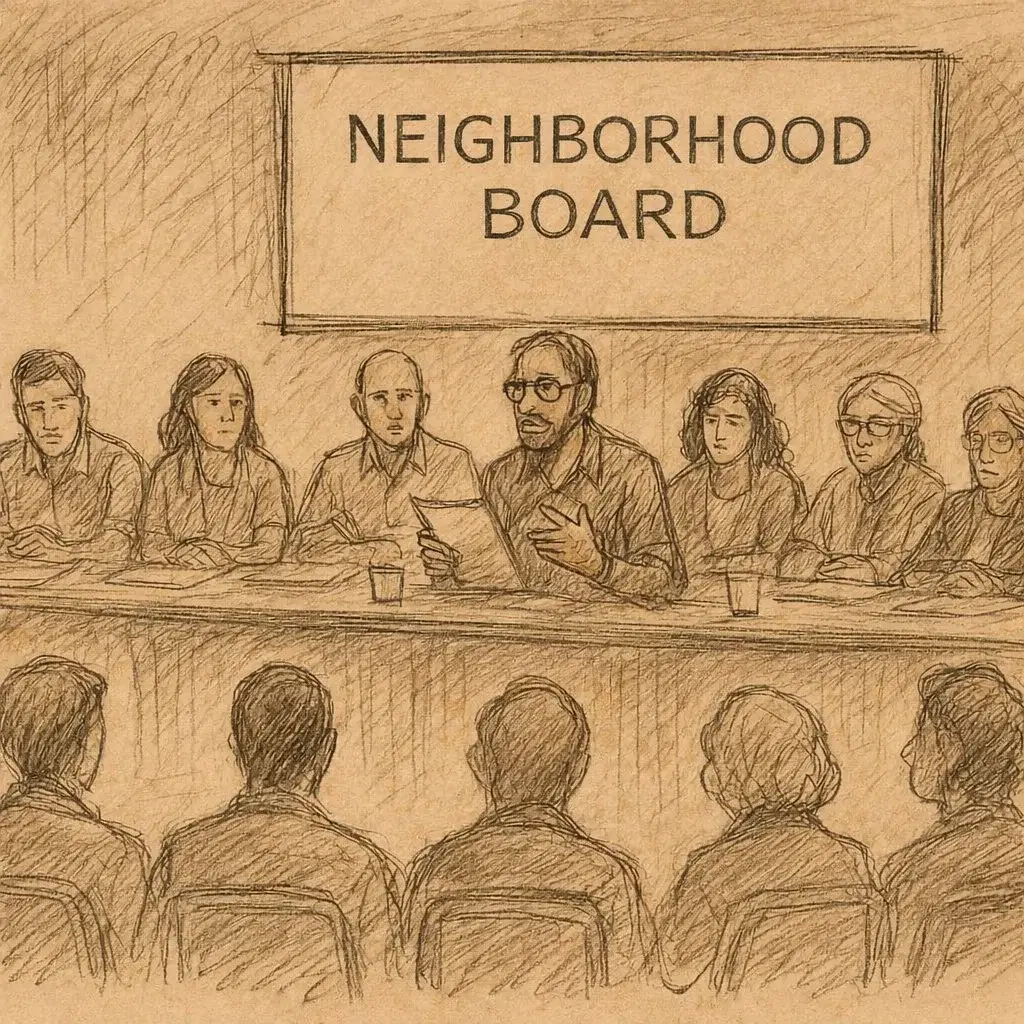
Chair Roberta Mayer opened the meeting with seven of the board’s 15 members present, initially leaving the board without a quorum, and proceeded with agency reports while awaiting additional members. Attendees introduced included Paula Bender of Sub-District 9, Elijah Lee of Sub-District 5, at-large member Greg Knutson, Johanna Ward of Sub-District 3, Paige Alton of Sub-District 11, Robbie Allen of Sub-District 2, and neighborhood assistant Anson Wu. Mayer later reported that only 12 of the board’s 15 seats were filled and invited community members to seek appointment to an at-large vacancy for the remainder of the year, but no one volunteered during the meeting.
Fire, Medical, and Rescue Activity
Honolulu Fire Department representatives from Hawaiʻi Kai Fire Station reported July 2026 activity consisting of 10 activated alarms, no fires, 67 medical emergencies, one motor-vehicle collision, four mountain rescues—all at the Koko Head Trail in Koko Head District Park—and two ocean rescues, one at Irma’s and one at China Walls. Board members thanked firefighters for their extensive work during the recent storm and power outages. Greg Knutson also thanked HFD for quickly controlling a structure fire in Kalama Valley shortly after electricity was restored following an approximately 22-hour outage. The firefighters said their crew was among the initial responders, but the cause remained under investigation and could not yet be confirmed as power-related.
Emergency Alerts and Communications During Outages
HFD reviewed the city’s emergency notification options, including opt-in HNL Alert messages delivered by text, email, or app notifications; official government social-media accounts; the Emergency Alert System carried through radio and television; Wireless Emergency Alerts sent directly to mobile phones; and outdoor warning sirens. Residents were directed to hnlalert.gov and the Department of Emergency Management’s “Stay Informed” resources. Paige Alton described being without electricity, internet, Wi-Fi, and cellular service for nearly 48 hours during the storm while caring for a bedbound 95-year-old, leaving battery radio as her only information source. She said emergency guidance that depends on apps is inadequate for outages and for kūpuna and others who do not use smartphones. She also expressed disappointment that radio stations continued regular music programming rather than providing continuous emergency updates. HFD acknowledged the vulnerability and emphasized maintaining multiple communication options, especially a battery-powered radio.
NOAA Radios, Neighbor Assistance, and Power-Restoration Safety
Resident Tom Cooper recommended NOAA emergency radios, saying models costing about $45 can receive AM, FM, and multiple emergency channels, charge a cellphone, provide a flashlight, and operate through three power sources. He urged HFD to publicize these radios as standard preparedness equipment; HFD said an emergency radio is included on its disaster checklist, although not necessarily a specific model. Firefighters also warned that appliances may remain switched on unnoticed during an outage and energize when power returns. They cited incidents involving stoves and portable butane units, including one that reportedly exploded when electricity was restored, and suggested residents consider switching off breakers during prolonged outages. Board members requested wider public education on this practice. Knutson emphasized checking on kūpuna and neighbors, noting that households with photovoltaic systems can serve as informal community resources during outages.
Crime Statistics and Active-Shooter Guidance
Honolulu Police Department District 7 reported three motor-vehicle thefts, up from none in the previous month; two burglaries, up from one; nine thefts, up from eight; and two unauthorized-entry or theft-from-vehicle incidents, unchanged from the prior month. District 7 handled 5,475 calls for service. HPD’s safety presentation focused on the first three minutes of an active-shooter event and the “avoid, deny, defend” framework. Residents were advised to stay aware of surroundings, identify exits, move away from the threat, create distance and barriers, turn off lights, silence phones, remain hidden and quiet when escape is impossible, and defend themselves aggressively as a last resort. When officers arrive, people should display their hands and immediately comply with commands.
Wāwāmalu Beach Camping, Sanitation, and Motorcycle Damage
Residents again raised concerns about former Handi-Vans and other vehicles apparently being used as long-term residences near the entrance to Kaiwi State Scenic Shoreline at Wāwāmalu Beach. Sam described continued overnight occupancy, litter, and human defecation and said he had recent photographs of the vehicles. HPD said officers make checks and will cite violations or direct occupants to move when an enforceable offense is observed, but residents should call 911, including its non-emergency function, and meet responding officers to identify the precise location, complainant, witnesses, and suspects. HPD noted that enforcement can depend on whether the location is city, state, or other property. Reese Liggett volunteered to meet officers and document the area. Liggett also reported that motorcyclists entered the restoration area behind the boulders at Wāwāmalu, performed repeated “donuts,” and damaged native planting work maintained monthly by teams of roughly 10 to 30 volunteers over the past 48 months. HPD asked residents to report such activity immediately.
Vehicle Break-Ins, Electric Bicycles, and Excessive Vehicle Noise
The board asked whether break-ins had changed at Hālona Blowhole and Lānaʻi Lookout. HPD said overall vehicle-entry statistics were unchanged but did not have location-specific numbers and would need to consult its Community Policing Team. A lengthy discussion followed on electric-bicycle rules. HPD initially said genuine electric bicycles should generally use bicycle lanes and are prohibited on freeways, while electric motorcycles may be governed differently. Community members clarified that bicycles and e-bikes may legally enter regular travel lanes in certain circumstances, such as bypassing a right-turn-only lane before returning to the bike lane, and generally have roadway rights on state highways, though not freeways. Residents were cautioned not to report lawful bicycle movement as a violation. Paula Bender also raised extremely loud vehicle sound systems that startle cyclists; HPD said excessive-noise laws are enforced but did not provide citation statistics. In response to questions about personal alarms, sprays, and self-defense tools, HPD said children may not carry chemical agents, adults bear responsibility for demonstrating that any defensive force was necessary, and further educational guidance may be available through community policing or the police chief’s office.
Water-Main Conditions and Repairs
The Board of Water Supply reported one July water-main break in the Hawaiʻi Kai board area, near 1096 Kamoku Street on July 30. It also followed up on earlier questions about police and utility crews in the Kūliʻouʻou area, explaining that officers were assisting with traffic control while a leaking valve was repaired. The broader Kūliʻouʻou area experienced 11 water-main breaks in 2025 and nine through June 2026. BWS continually evaluates pipe age, condition, and break history, grouping warranted replacements into capital-improvement projects that require design, construction planning, permitting, and longer timelines, while emergency crews focus first on restoring service at individual breaks.
Navy Treated-Water Disposal
BWS responded to a previous concern about reports that the U.S. Navy had discharged tens of thousands of gallons of treated water rather than reusing it for irrigation while residents were being asked to conserve. BWS said it has no regulatory authority over Navy remediation or decisions about reuse and discharge; those matters fall under the Navy, Hawaiʻi Department of Health, and U.S. Environmental Protection Agency. Nevertheless, BWS Chief Engineer Ernie Lau raised the community’s concern with Rear Admiral Ortiz on August 5, demonstrating that the agency could still convey local objections even without enforcement authority.
Water-System Hurricane and Outage Preparedness
Board members pressed BWS on its readiness for a direct hurricane strike and prolonged islandwide outages. BWS said it participates in emergency coordination, receives frequent storm updates, tops off reservoirs before an event, deploys generators to major well stations, and monitors open reservoir and dam levels. Wells pump groundwater into reservoirs, after which gravity distributes water, allowing generators to be shut down and refueled between pumping cycles. Operations can continue as long as fuel and road access remain available. The system is interconnected, so water may sometimes be pushed into Hawaiʻi Kai from town or, if necessary, around the island from the Waimānalo side. BWS could not immediately confirm how many water-delivery trucks are available or how livestock needs would be handled, but stated that domestic human consumption is the priority. Residents questioned whether sufficient trucks would be available for all neighborhoods after a catastrophe, citing reports that approximately 6,000 cattle in Nāʻālehu were without water. BWS agreed to seek more details about trucking capacity and generator duration.
Household Water Conservation and Storage
BWS advised residents to conserve water whenever power is out because electricity is needed to pump groundwater and refill reservoirs, even if household taps continue operating. Water should be limited as much as possible to drinking, cooking, and basic hygiene during prolonged outages. The representative said she personally stores water in pots and containers rather than relying solely on a bathtub, which may leak and can be difficult to manage. Johanna Ward described using flat, refillable BWS emergency water-storage bags distributed at community fairs and asked that more be brought to a future board meeting. BWS agreed to investigate renewed distribution. The agency also announced the free “Imagine a Day Without Water” event on September 26 from 9 a.m. to 1 p.m. at Waiʻanae Mall, featuring more than 25 government, nonprofit, and community partners, interactive displays, activities, prizes, a rain-barrel workshop, and food for purchase.
Wastewater and Stormwater Planning
Chair Mayer announced city meetings concerning the future of wastewater and stormwater systems on September 2 at Kailua Elementary School, September 3 at Kapolei Hale, and September 10 at Mission Memorial Auditorium. BWS clarified that wastewater and stormwater are handled by other city agencies, not BWS. Board members noted that previous proposals contemplated creating a stormwater utility and charging property owners according to impervious surface area and runoff. Concerns included the fairness of charging dry areas compared with high-rainfall neighborhoods and the possibility of an additional monthly fee. Council Chair Tommy Waters later said the administration’s prior concept could have cost households approximately $15 to $20 per month to fund drainage-system upgrades.
Kaiser Complex School Updates
Hahaʻione Elementary Principal Kappe Gu reported for the Kaiser Complex. Kaiser High School defeated PAC-5 by 55–7 in a preseason football game and was preparing for homecoming from September 14 through 19. Planning for the International Performing Arts Center continued, with summer work involving soil coring and locating underground pipes. Niu Valley Middle School was offering MathCounts, Korean and kendama clubs, cross-country, club and sports recruitment, and Saturday community gardening. ʻĀina Haina Elementary planned a 75th-anniversary celebration on September 20. Hahaʻione Elementary’s dual-language program now serves kindergarten through fifth grade, dividing instruction between Japanese and English; its global-connections program visited Fukuoka and Kumamoto in July 2025, Kobe University Elementary School in June 2026, and plans a Nagoya-area trip in June 2027. Kamiloʻiki Elementary is using “Magic School AI,” described as a closed system protected from outside interaction and machine learning, to build student research and AI skills. Koko Head Elementary selected J.C. Cunningham as its permanent principal; she previously served in the Farrington Complex and taught at Kahala Elementary.
Student Science Achievement and Storm Impacts on Schools
Kaiser High School’s 2026 graduate Vera Wang received recognition for research identifying fungi in coconut husks that can break down plastics and sunscreen chemicals. Her project placed third at the International Science and Engineering Fair in May, and she is now attending MIT. Gu also reported that Kaiser Complex schools were prepared to serve as shelters during the recent storm. Hahaʻione lost power for about 40 hours, and Niu Valley for approximately 12 hours longer, while Kamiloʻiki, Koko Head, and Kaiser regained service sooner. Custodians and administrators cleared downed trees and branches, with the most substantial damage occurring to the roof of Niu Valley Middle School’s C Building.
Kaiser Homecoming, Clubs, and Community Garden
Kaiser student body vice president Yasmin Hajiro announced that the homecoming parade would begin at 5 p.m. on September 17 and include cheerleaders, student council, ROTC and color guard, the marching band, student athletes, alumni, and the homecoming court. The parade would be followed by the Powderpuff flag-football game and traditional Flaming K. Students planned door-to-door outreach to residents along the route. Homecoming week would also include spirit activities, dress-up days, assemblies, music, giveaways, and a dance. Kaiser’s fifth annual Club Rush highlighted more than 35 student-run clubs and approximately 600 participating students, including competitive programs such as Science Olympiad, math, chess, and robotics; hobby groups such as gaming, mahjong, pickleball, and baking; and service organizations including Leo Club, Key Club, Interact, Just Serve, Wipeout Crew, and the Global Library Initiative, which is collecting books for libraries in Ghana. Kaiser also hosts volunteer workdays at its Peace and Sustainability Garden every second Saturday from 9 a.m. to noon, with New Hope providing refreshments and lunch.
Abandoned Vehicle Below Kalanianaʻole Highway
Hawaiʻi Department of Transportation representative Galen Wong discussed the wrecked vehicle remaining below Kalanianaʻole Highway near Kaiwi State Scenic Shoreline. HDOT said it does not have a towing or storage contract for privately owned vehicles and would have to seek reimbursement from the owner if it removed the car. Its immediate responsibility is repairing the damaged guardrail and recovering those costs from the vehicle owner or insurer. Once the guardrail is restored, the owner may need permits and agency approval to remove it temporarily to retrieve the vehicle. Board members questioned why the car was not towed when the crash occurred and noted that an earlier wreck was removed while this nearby vehicle was left behind. Governor Green’s representative agreed that the matter likely requires coordination among HDOT, the Department of Land and Natural Resources, State Parks, the county, and possibly the owner, especially because the vehicle appears abandoned and severely deteriorated.
Highway Lane Closures and Public Notice
HDOT explained that planned closures of two lanes on Kalanianaʻole Highway require approval from Director Ed Sniffen and advance public notice, typically at least 48 hours. Utility companies are also expected to coordinate closures with HDOT, though emergency work may occur without the usual notice. Board members stressed that even one lane closure can greatly lengthen travel from East Honolulu and asked when disruptive work must be shifted to nighttime. HDOT said scheduling depends partly on noise and the nature of the work, since nighttime construction near homes can trigger complaints. Members asked the department to weigh the cumulative delay to thousands of commuters, families, workers, and businesses rather than relying only on construction noise. Representative Joe Gedeon announced that Director Sniffen and a Department of Transportation Services representative would attend his August 27 community talk story at the Oʻahu Club to discuss current and future Hawaiʻi Kai projects.
Lunalilo Home Road Yield Sign and Bicycle Safety
Residents again challenged the location of a general yield sign at the protected right-turn lane from Lunalilo Home Road onto Kalanianaʻole Highway near Koko Marina Center. They argued that the lane is dedicated and separated by a solid white line, meaning traffic approaching from the Hanauma Bay direction should not cross into it at that point. The existing sign, located after the pedestrian crossing, may incorrectly suggest that lawful right-turning traffic must yield to vehicles crossing the solid line. Suggestions included removing the sign entirely or replacing and relocating it with a clear “yield to pedestrians” or pedestrian-crossing message. Cyclist Natalie Wassa described being cut off and crashing after a motorist passed her, turned in front of her, and stopped for a pedestrian. HDOT agreed to take the location back to traffic staff, while Chair Mayer said she would follow up.
Preserving the Hahaʻione Commercial Buildings
Tom Cooper, representing Hahaʻione Advocates for Respectful Development, or HARD, promoted efforts to preserve the James Building, Boston Pizza, 7-Eleven, and the neighboring Koko Head building. He asked residents to sign a petition and complete a survey at the organization’s website so Kamehameha Schools/Bishop Estate can consider community preferences for the properties’ future. Cooper reported that a major charter-school representative had toured the James Building and that he and board member Lisa Bishop accompanied resilience-center advocate Aloha McGuffie and a Fujitsu representative on another tour. The organization also hosted James Building alumni for a visit and meal. Council Chair Waters and Representative Gedeon planned to include the survey QR code in newsletters, and Cooper invited residents to serve as volunteers or leaders.
Ocean Uprise Summit and Legislative Ethics
Kahi Pacarro announced the third annual Ocean Uprise Summit at Kualoa Bay, an all-expenses-paid “glamping” event pairing 15 youth environmental activists from around the world with 15 Hawaiʻi participants ages 18 to 30. One participant from the Hawaiʻi Kai area had already been identified, but applications for additional local participants were due that Friday. Pacarro also created a Hawaiʻi Kai power-reliability survey aligned with Representative Gedeon’s Hawaiian Electric survey so results could be combined and presented to the utility. He further supported a requested special legislative session on corruption and urged lawmakers to close what he described as a contractor loophole that allows potential conflicts when legislators receive compensation from, or work for, government contractors.
CERT Training, Resilience Hubs, Public Power, and Tax Relief Proposals
Jason Liang said he asked Council Chair Waters to expand Community Emergency Response Team training in storm response, fire response, first aid, and triage. He advocated developing neighborhood resilience hubs that could offer radios, electricity, charging, information, and support during outages. Liang also proposed that the board consider a resolution supporting public ownership of Hawaiian Electric’s grid, pointing to Kauaʻi’s electric cooperative and arguing that removing a profit motive could redirect resources toward reliability and disaster prevention. He said Kauaʻi experienced approximately 270 outages during the recent storm compared with roughly 114,000 customers on Oʻahu. He separately proposed a property-tax credit limiting taxes to 1% of household income for households earning less than $120,000. Mayer asked him to submit written proposals for future consideration.
Koko Head Slope Wildfire Hazard
Jennifer Taylor, president of the Maunalua Triangle/Koko Kai Community Association, warned that dry vegetation on the Koko Head slope behind Lumahaʻi and Pohakupu-area homes could fuel a devastating wildfire affecting at least 500 residences and more than 1,000 people from the slope through Portlock and Maunalua Bay. The East Oʻahu wildfire conservation plan reportedly classifies the area as high risk. The association began asking the Department of Parks and Recreation for action in 2023. DPR said in November 2023 that it was developing a plan; in February 2024 that it would work with HFD; in May 2024 that remediation was difficult and costly; and in March 2025 that it would issue a contractor request for proposals and had ranked the slope fourth among fiscal year 2024–25 priorities. By July 2026, the project had reportedly fallen to tenth place without work beginning. Hawaiian Electric previously cleared vegetation beneath its lines, showing that at least part of the terrain is accessible, but the vegetation has regrown.
Possible Wildfire Mitigation Approaches
Board members discussed goats, controlled burns, drone-assisted reseeding, and replacing invasive vegetation with less flammable native plants, while cautioning that the steep ravines make work difficult. Paige Alton said she might have a lower-cost alternative and offered to confer with Taylor and Council Chair Waters. Members suggested seeking state assistance through a memorandum of understanding because the land around Hanauma Bay may require state coastal and conservation approval, even where the city has primary management responsibility. Others recommended coordinating with Hawaiʻi Kai Strong and its firewise mitigation network and considering community-led work if agencies continue to delay. Council Chair Waters supported escalating the issue to Mayor Rick Blangiardi and suggested a public event or press conference if necessary, while board member Lisa Bishop preferred first arranging direct city-state discussions rather than surprising the mayor publicly.
Hawaiian Electric Reliability and Repeated Outages
Paige Alton thanked Hawaiian Electric line crews but said Hawaiʻi Kai had reached its limit with repeated outages, including approximately 45- to 48-hour losses of electricity during the storm and additional outages in Portlock and the Triangle afterward under normal weather. She called for a larger discussion involving Hawaiian Electric, the state, and the Public Utilities Commission concerning the transmission system across the Koʻolau range and the need for proactive infrastructure improvements before a direct hurricane strike. Representative Gedeon said Hawaiian Electric recognizes the challenges posed by aging infrastructure, rooftop solar, battery systems, substations, and transmission lines crossing the Koʻolau. The utility said undergrounding would be a major undertaking, while protective cable coverings might offer another option, though no firm project had been announced. Gedeon’s online reliability survey received about 425 responses in its first 24 hours, with more than 200 long-form comments. He planned to share preliminary results with the board and prepare a broader report for utility leadership.
Cell Service and Critical-Facility Backup Power
The board repeatedly addressed the failure of cellular data and, in some areas, voice service during the outage. Residents said the lack of communication prevented them from checking on family, obtaining utility updates, or determining whether 911 remained accessible. Council Chair Waters agreed to investigate whether the city has authority to require backup power at cellular sites. Chair Mayer recalled that a Verizon representative previously said generators had been installed at transmission stations. Gedeon reported that T-Mobile deployed mobile generators, including one near the Hanauma Bay trail, while AT&T said a major transmission line had been severely damaged and could take three to four weeks to repair; he had not yet received a response from Verizon. Governor Green’s representative Cameron Black recommended expanding the discussion to critical facilities such as shopping centers, medical offices, grocery stores, wastewater infrastructure, and residential systems, all of which may need maintained generators, adequate fuel, and safe operating procedures.
City Election Dispute and Request for a Special Election
Paige Alton asked for public consideration of a special election in the City Council race involving incumbent Tommy Waters, saying voters received conflicting information about whether Waters was eligible and some may have voted for Trevor Ozawa only because they believed a Waters vote would be wasted. She argued that a new election could ensure that the winner had been chosen under clear and fair conditions. Mayer noted that the Hawaiʻi Supreme Court had heard oral arguments that day and was expected to rule by Friday. Waters said every outcome remained possible, including rerunning the race with all four candidates, only the top three, only the top two, or leaving him disqualified and sending Tara and Ozawa to the general election. He said he had announced his intended candidacy more than a year earlier in the hope that eligibility questions would be resolved before ballots were printed.
Hawaiʻi Youth Prevention Initiative
Jenny Faust of the Hawaiʻi High Intensity Drug Trafficking Area prevention team presented the Hawaiʻi Youth Prevention Initiative, a statewide collaboration with the Department of Education, Department of Health Alcohol and Drug Abuse Division, and the Opioid Settlement Fund. HIDTA’s broader federal mission is to improve coordination among federal, state, and local law enforcement against drug trafficking, while its prevention team connects community organizations, residents, and stakeholders to reduce youth use of alcohol, tobacco, and other drugs. Faust emphasized the “science of flourishing,” which builds on existing healthy behaviors rather than concentrating resources solely on problems. She reported that 86% of Hawaiʻi high-school students do not use marijuana and approximately 83.9% do not drink alcohol. Adults were encouraged to reinforce the reality that most youth make healthy decisions, ask what helps young people succeed, and ensure youth feel heard.
Youth Summit, Workshops, and Community Action
The prevention initiative has three stages. Community workshops first teach effective prevention strategies and help residents understand their role in supporting youth. A statewide youth summit is scheduled for October 26 at Koʻolau Ballrooms, with five students invited from every public, private, and charter high school, accompanied by a school administrator with decision-making authority and a trusted teacher, coach, or mentor. Separate youth and adult tracks will operate during the all-day event. The final stage will form youth-led community work groups connecting summit participants with residents and local resources. Faust stressed that adults will not prescribe issues to youth; students will identify their own community needs and learn to advocate for action. One-hour workshops have already been held on Hawaiʻi Island, Maui, and in Hāna, with additional sessions planned for Kauaʻi and Nānākuli. The initiative is seeking Hawaiʻi Kai partners and venues, and its website will track work-group meetings, cleanups, and other activities. A University of Hawaiʻi social-psychology survey is also collecting information about local prevention gaps. Although HIDTA has a drug-related mandate, Faust said stronger protective factors can also reduce dating violence, improve mental health and coping skills, and support homeless youth.
Mayor’s Office Report and Administrative Change
Chair Mayer announced that Amy Asselbaye would no longer serve as the board’s mayoral representative following changes affecting the Office of Economic Revitalization, and that a replacement would be assigned. Council Chair Waters later clarified that the council had fully funded Asselbaye’s position and several related positions but sought stronger accountability and a strategic plan, while the mayor chose to dismantle the office. The written mayoral report noted new driver’s licenses and state IDs, David Lazar’s swearing-in as Honolulu police chief, the reduction of school-zone speed limits to 20 mph, and a national award for greener city parks. The city’s Youth Climate Action Fund is accepting applications for grants of up to $4,999 for youth-designed climate projects, and the opportunity was shared with Kaiser High School. Board members praised Asselbaye’s responsiveness and professionalism, and Mayer agreed to send her a letter of appreciation.
Park, Stable, Restroom, and Hanauma Bay Maintenance
The city reported no regular update on the Koko Crater Stables because discussions continued with the concessionaire and its attorney. The board was also awaiting a maintenance plan for statues at Hanauma Bay, with Lisa Bishop following up through the Mayor’s Office of Culture and the Arts. In response to earlier complaints about the Hahaʻione Park restroom, DPR said it cleans the comfort station daily, found the sink operational, painted over graffiti, and thoroughly cleaned the facility. Staff also inspected Wāwāmalu but reported finding no human feces and said rubbish is removed during restroom cleaning. Residents’ separate reports of sanitation problems at Wāwāmalu remained unresolved.
Property-Tax Credit and City Spending Priorities
Council Chair Waters distributed applications for the city’s real-property-tax credit, which can limit property taxes to 3% of household income for qualifying homeowners earning $80,000 or less. The threshold had been raised from $65,000 to reflect inflation, and applications were due September 30. Waters also discussed Bills 33 and 44, which would direct certain park fees and a portion of the transient accommodations tax into special funds for park maintenance and the zoo. While supporting parks, he noted that DPR had allowed approximately $13 million to lapse and suggested that some available funding should instead support storm resilience, drainage, stream clearing, culverts, ditches, vegetation management, and other infrastructure. He also cited roughly $200 million in citywide savings from vacant positions and unspent operating funds as a possible alternative to imposing a new stormwater fee.
State Energy and Storm Resources
Governor Green’s representative Cameron Black distributed information on housing assistance for residents affected by the storm and emphasized generator maintenance, ventilation and placement, fuel storage, and refueling arrangements. He announced that Hawaiian Electric would hold a public technical conference on August 31 from 10 to 11 a.m. via Microsoft Teams regarding its request for proposals for new Oʻahu generation sources. He also cited the wastewater treatment plant near Sandy Beach as an example of critical infrastructure using photovoltaic panels and batteries, although he could not confirm whether the system can operate the entire facility independently during an outage.
Pigeon Feeding and Vector-Control Complaint
A resident from a condominium complex reported chronic pigeon waste, health concerns, interference with window washing, and damage associated with excessive pigeon populations. He identified a resident on Hahaʻione Street who allegedly puts out five-gallon buckets of bird feed twice daily and said repeated messages to the Department of Health’s Vector Control Branch had gone unanswered. Governor Green’s representative agreed to determine whether DOH or another vector-control authority could intervene and planned to follow up.
Representative Gedeon’s Community Programs
Representative Joe Gedeon described his office as a communication hub during the storm, sharing Hawaiian Electric updates every few hours through email, Instagram, Nextdoor, and other platforms. His July talk story addressed hurricane preparedness with the Department of Emergency Management and Matt Gly of Hawaiʻi Kai Strong. Gedeon is helping revive and update Hawaiʻi Kai Strong’s emergency-preparedness materials, with Hawaiian Electric and DEM participating. His August talk story would feature transportation officials discussing aging roads, unsafe intersections, speeding, and planned projects. He also outlined his “Drive Aloha” campaign, with anti-speeding signs installed near Kaiser High School, Kamakani Street, Portlock Road near Koko Head Elementary, and a planned location on Poʻipū Drive. He encouraged continued resident participation in monthly topic-driven meetings.
Shelter for Hanauma Bay and Botanical Garden Guards
The board considered and approved by general consensus a motion asking the Department of Parks and Recreation to provide adequate weatherproof shelter for security guards stationed at the entrances to Hanauma Bay and Koko Crater Botanical Garden. Knutson said guards were exposed to severe weather with only inadequate temporary shade, including a small blue-and-white shelter that had leaned sharply during the storm. Board members said the current arrangement was unsafe for employees and created a poor first impression at a major visitor destination. At Bishop’s suggestion, the motion used “provide” rather than “construct,” allowing DPR to install a prefabricated or temporary shelter without waiting for a potentially lengthy capital-improvement process. Mayer agreed to send the department a formal letter.
Scenic Byway, Agricultural Lands, and Place Naming
No substantive update was available on the Eviko Scenic Byway, Kamilo Nui Valley agriculture, or the Koko Crater Stables beyond the city’s ongoing concessionaire discussions. A board committee had discussed whether Wāwāmalu Beach should receive a more historically grounded name, including possible use of “Awāwāmalu,” and whether it should be designated as a nature park rather than only a beach park to reflect restoration and preservation goals. Knutson said a condensed Hawaiʻi place-name reference did not confirm earlier use of “Awāwāmalu” and noted that “Wāwāmalu” remains the nearly universal current usage. The committee will continue studying the issue before presenting a recommendation to the full board.
Aquarium Fish Collection
Chair Mayer reported that the board sent the City Council a letter supporting resolutions opposing the commercial collection of reef fish for the aquarium trade. She resubmitted the same position to the Board of Land and Natural Resources for its August 28 meeting, at which regulations allowing the reinstatement of commercial aquarium permits were expected to be considered.
Minutes and Next Meeting
The board approved the July 28 meeting minutes with a geographic correction changing a reference from “Kamilo Nui Valley” to “Niu Valley.” The next regular Hawaiʻi Kai Neighborhood Board meeting was scheduled for September 29 at 7 p.m. at the Hahaʻione Elementary School cafeteria and through WebEx. Recorded meetings remain available through ʻŌlelo and the Neighborhood Commission Office websites and are rebroadcast on cable channel 49 on the second Monday of the following month at 9 p.m. and again on the third Friday at 7 a.m.