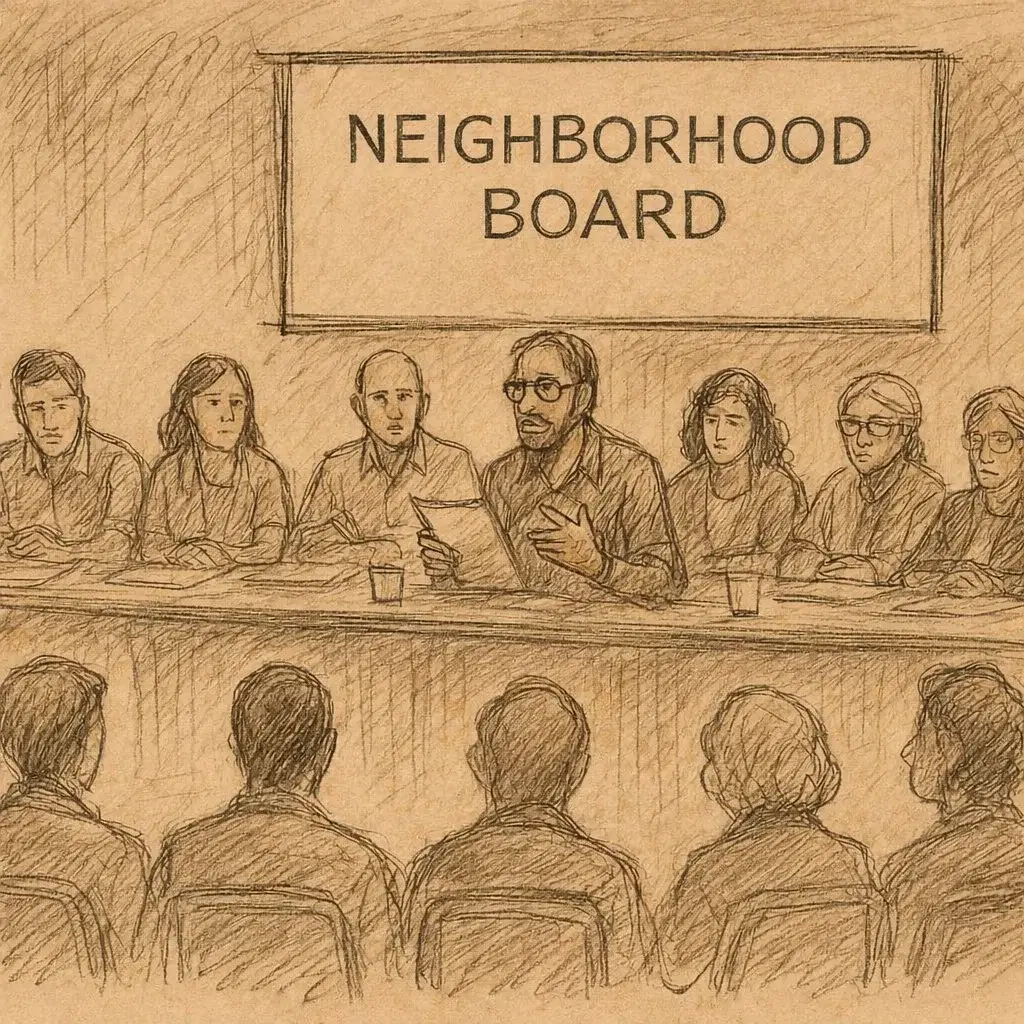
No 01 Hawaiʻi Kai Neighborhood Board Regular Meeting July 2026
Listen to this article:
1 Hawaii Kai Neighborhood Board Meeting – July 30, 2026
Meeting Opening and Board Membership
Chair Roberta Mayer opened the regular meeting and introduced the board’s participating members and staff. Members present included Herb Schreiner of Subdistrict 6, Kamilonui Valley; Robbie Adelin of Subdistrict 2, Koko Kai and Spinnaker Isle; Paula Bender of Subdistrict 9, Koko Head Terrace; at-large member Greg Knudsen; Samuel Wolf of Subdistrict 4, including the Hahaʻione Valley condominium towers; and at-large member Lisa Bishop. At-large member Tiffany Donnelly participated online. Neighborhood assistant Anson Wu was introduced as the staff member who assists with parliamentary procedure and meeting minutes. The Honolulu Fire Department was not present at the beginning of the meeting but arrived later to provide its report.
Honolulu Police Department Crime Report and Hurricane Preparedness
Honolulu Police Department Lieutenant Nakamura presented June 2026 statistics compared with the prior month. Motor-vehicle thefts fell from two to zero, burglary increased from zero to one, general theft declined from nine to eight, and unauthorized entry into motor vehicles or theft from autos increased from one to two. HPD recorded 5,315 total calls for service, with additional data available through HonoluluPD.org. The department also reminded residents that Hawaiʻi was in hurricane season and that forecasts indicated a potentially active year with more than 10 storms. Tropical Storm Falsa was reported to be roughly 200 to 300 miles northeast of Kahului at the latest check, and the lieutenant said Hawaiʻi appeared to have avoided its direct effects.
Wāwāmalu Beach Sanitation, Homelessness, and Vehicle Enforcement
Board member Samuel Wolf reported seeing approximately eight to 10 piles of human feces and toilet paper while walking with his four-year-old son near Wāwāmalu Beach, the tide pools, and the route toward Allen Davis. He had previously submitted a request through the city’s 311 service and asked how frequently HPD patrols the area, particularly because former Handi-Vans, buses, and other large vehicles appeared to be used as long-term residences. HPD initially said the area might fall under Department of Land and Natural Resources jurisdiction, but resident Maurice Liggett clarified that Wāwāmalu is an extension of Sandy Beach Park and that city parkland extends to the Allen Davis wall, with state land beginning beyond that point. HPD agreed to research the jurisdictional boundary and said officers can address vehicles parked after hours in violation of park rules. The department generally responds when complaints are received and recommended calling 911 while offending vehicles are present because requests routed through other offices may take several days or a week to reach officers. Chair Mayer also offered to notify the Department of Parks and Recreation about the sanitation complaint.
Water Conservation Plant Sale and Main-Break Concerns
Board of Water Supply representative Iris Oda announced the 2026 Annual Unthirsty Plant Sale for Saturday, August 1, from 9 a.m. to 1 p.m. at the three-acre Hālawa Xeriscape Garden, 99-1268 Iwaena Street. The free, family-friendly event was to feature drought-tolerant and native plants, local xeric-plant vendors, University of Hawaiʻi Master Gardener “plant doctors,” rain-barrel catchment information, and limited free soil conditioner. Plant purchases were to be by credit card only. Because on-site parking is limited, attendees could park along Iwaena Street and use signed shuttle pickup locations. Oda inadvertently brought the wrong water-main-break report and agreed to email the June data to the chair and provide a fuller report at the next meeting. A board member raised concern about repeated water-line breaks along Kuliʻouʻou toward Niu Valley, near the Muʻumuʻu or Mōʻole area, which had caused substantial traffic congestion. Oda explained that the Board of Water Supply tracks repeat failures and may package an entire line for replacement when recurring problems justify planning, design, permitting, and construction rather than continuing isolated repairs.
Red Hill Water Discharge and Water-System Jurisdiction
A board member cited a July 14 Civil Beat article reporting that the Navy had discharged approximately 4.5 billion to 5 billion gallons of filtered water associated with the Red Hill response rather than redirecting it for irrigation or other uses, describing the amount as roughly 5,000 Olympic-sized swimming pools. He questioned the contrast between household conservation messages and such a large federal discharge and asked whether the Board of Water Supply could penalize or otherwise restrain the Navy. Oda said the Board of Water Supply manages its municipal system but does not have direct jurisdiction over the federal water system. Overall water-resource management falls under the state Commission on Water Resource Management, to which the Board of Water Supply itself is accountable as one water user among federal, agricultural, private, and municipal systems. She agreed to ask whether other mechanisms might address the concern.
Kaiser Complex Schools and the New School Year
Hahaʻione Elementary School Principal Shannon Gu reported that July 30 was the first day back for teachers throughout the Kaiser Complex and Department of Education schools. The following days were dedicated to professional development, classroom preparation, planning, and family orientation events. Kaiser High School’s fall sports included football, cross-country, junior-varsity softball, air riflery, soft tennis, bowling, volleyball, and cheerleading. The Kaiser PTSA planned a night market from 4 to 8 p.m. in the school parking lot, although the transcript did not clearly identify the complete August date. Work on the International Performing Arts Center was progressing, with sounding, surveying, and core sampling underway or recently completed to prepare the site and refine cost estimates. The Kaiser Athletic Foundation planned a May 29, 2027 lūʻau, with honorees to be announced later.
Niu Valley and Hahaʻione Language Programs
Niu Valley was adding Spanish for sixth-grade students for the first time, joining its existing Mandarin and Japanese offerings. The school designated August 4 as a transition day for newcomers and incoming sixth graders, similar to Kaiser High School’s first-day support for freshmen and new students. Principal Gu also described Hahaʻione Elementary’s Japanese dual-language program as unique within the Department of Education. Students receive instruction in both English and Japanese throughout the day rather than in a rigid 50-50 split, while following the same International Baccalaureate curriculum. The objective is for participating students to achieve fluency in both languages by eighth grade.
Kaiser High School Homecoming Parade
Kaiser High School Student Body President Gavin Antonio, accompanied by Student Activities Coordinator Paul de la Blas, announced that Homecoming Week would run from September 14 through September 19. For the third consecutive year, Kaiser planned a Homecoming Parade followed by a community spirit rally, including a powder-puff flag football game and the revived “Flaming K” tradition, on Thursday, September 17. The parade was scheduled to begin at 5 p.m. at Koko Head District Park, proceed along ʻĀinapō Street, turn onto Lunalilo Home Road, and finish at the Kaiser High School parking lot. Participants were expected to include cheerleaders, ROTC and color guard, the marching band, student government, students, athletes, alumni, and the Homecoming Court. School leadership had contacted condominium associations and residents along the route and planned door-to-door flyer distribution to explain potential impacts and invite neighbors. Organizers were coordinating with city transportation and parks agencies, the Department of Education facilities office, and HPD. Antonio also reported that Kaiser’s student council had again received national Gold Council of Excellence recognition and the Hawaiʻi “Oscar” award for leadership success. Student representatives planned to attend neighborhood board meetings monthly.
State Transportation Laws and Enforcement Changes
State Department of Transportation representative Galen Wong summarized several measures signed by the governor. Act 12, based on House Bill 1510, prohibits license-plate covers or shields that obstruct plates and authorizes state or county officers to cite violations, effective January 1, 2027. Act 132, House Bill 1667, lowers from 18 to 16 the age at which a person may obtain a state civil identification card without a parent’s or guardian’s signature. Act 95, House Bill 1692, requires drivers approaching stationary vehicles displaying warning signals to slow to a reasonable and prudent speed, change lanes when safe, and stop if necessary; it also raises from 12 to 16 the minimum age for riding in the bed or load-carrying area of a pickup truck. Act 259, House Bill 2021, establishes classifications, labeling, speed, and operating requirements for electric bicycles and motor scooters and is intended to clarify the relationship between state and county rules. Act 260, House Bill 2023, concerns intelligent speed-assistance systems for habitual speeders or impaired-driving offenders, with a target of making approved installation services available by January 1, 2028.
Crashed Vehicle Near Ka Iwi and Guardrail Coordination
The board again asked about a crashed vehicle remaining in a ravine near the highway beyond the golf course, around Ka Iwi State Scenic Shoreline on the approach to Makapuʻu. Wong said HDOT had repaired the roadside and guardrail within its right-of-way, but the vehicle appeared to be on DLNR property. Members emphasized that the matter requires coordination rather than a jurisdictional handoff because the guardrail may have to be removed again to extract the vehicle, and the vehicle had crossed transportation property before coming to rest close to the road. Wong agreed to contact DLNR, determine how the two departments could coordinate removal, and provide a status report at the next meeting.
Highway Delineators, Traffic Congestion, Resurfacing, and Camera Locations
Members reported damaged delineators at the end of H-1 and recommended adding double solid white lines farther in advance to discourage unsafe lane changes and vehicles striking the posts. They also described frequent slowdowns on Kalanianaʻole Highway, including severe backups from Hawaiian Electric work near Kalani High School and recurring congestion associated with food distribution near Calvary by the Sea. Members asked HDOT to improve lane-closure coordination and prevent queues from blocking through lanes. The board further noted that resurfacing between Makapuʻu and the golf course was already well underway despite limited public notice and asked for updated schedules and more consistent reporting of weekday and weekend lane closures. Wong also announced that the state was considering 10 additional red-light and speed-camera locations by the end of 2026. Two possible East Honolulu sites were Kalanianaʻole Highway at ʻĀinakoa/Waiʻalae and at East Hind Drive. The state expected to consult affected communities before installation decisions were finalized.
Annual Election of Board Officers and Vacant Seats
The board conducted its annual election of officers for one-year terms. Roberta Mayer was reelected chair, Greg Knudsen was reelected vice chair, Lisa Bishop was reelected secretary, and Elizabeth Reilly was reelected treasurer, each receiving nine votes without opposition. Chair Mayer thanked the officers for continuing to serve and encouraged other members, including younger residents, to consider future leadership roles. Later in the meeting, the board announced that three at-large seats were available for the coming year and invited interested community members to seek appointment. No one volunteered that evening, so the invitation will be repeated at the next meeting.
Hanauma Bay Sewer Improvements
A community announcement described a two-phase sewer-system improvement project at Hanauma Bay Nature Preserve. The first phase was scheduled for August 3 through August 11, during which the bay would be closed. A second phase was planned for early 2027, although exact dates had not been set. The estimated $1.8 million project will replace or substantially upgrade the approximately 35-year-old sewer system serving comfort stations at both the beach and parking-lot levels. The Department of Parks and Recreation issued a press release on July 2, and board members acknowledged that the closure would inconvenience visitors but that the aging infrastructure required major rehabilitation.
Protecting the Former James Campbell School and Koko Head Properties
Tom Cooper, speaking for Hahaʻione Advocates for Respectful Development, or HARD, continued the group’s campaign to preserve the former James Campbell school building, 7-Eleven, Boston’s Pizza, and nearby Koko Head Plaza properties. The coalition was working toward 10,000 petition signatures and encouraging residents to complete an online survey that landowner Kamehameha Schools Bishop Estate had agreed to review. Cooper announced an August 1 tour and luncheon at the James building for alumni known as “James Bond,” with food and drinks purchased from Boston’s Pizza and 7-Eleven to support the affected businesses. HARD also highlighted the churches, yoga studio, keiki center, and small businesses based at Koko Head Plaza. Cooper thanked community partners, board members, and elected officials who had supported preservation efforts, including Councilmember Tommy Waters, Representative Joe Gedeon, Senators Chris Lee and Stanley Chang, Representative Mark Hashem, and various political candidates.
Hawaiʻi Kai Mile and Election Participation
Hawaiʻi Running Lab owner Michael Garrison announced the fifth Hawaiʻi Kai Mile, scheduled for October 25. The one-mile run and walk will begin at the skate park and end at Kaiser High School. One lane on the Koko Head side of Lunalilo Home Road will be closed for approximately 45 minutes. Registration stood at 38 participants at the time of the meeting, and organizers projected about 250 participants, which would exceed the prior annual range of roughly 200 to 210. Teams can compete for a cash prize based on the number of registered runners, and information is available at hawaiikaimile.com. State House District 19 candidate Kahi Picarro separately reported that 2,806 of the district’s 17,560 registered voters had returned ballots, representing approximately 15% to 16% turnout at that point, compared with an average turnout near 40%. He encouraged residents to vote.
Candidate and Civic Announcements
Several candidates introduced themselves. Bobby Silva announced his campaign for State Senate District 25, Jay Kang identified himself as a candidate for City Council District 4, and James Otoyo introduced his candidacy for State House District 18. Kang reported that a new Property Tax Committee held its inaugural meeting on July 17 and discussed a Proposition 13-style property-tax proposal; interested residents were invited to contact committee chair Bruce Wong for future meeting information. Otoyo discussed a proposed November Charter Amendment No. 1 that would dedicate one-half of 1% of existing real property-tax revenue to food sustainability rather than impose a new tax. He said the money would support local farmers by purchasing locally produced food for hunger-relief programs. Citing his service with the Hawaiʻi Foodbank, he said one in four Hawaiʻi families experiences hunger, rising to one in three when ALICE households are included, and argued that the program could provide healthier alternatives to primarily shelf-stable foods.
Community Recognition and Graffiti Removal
Board member Elizabeth Reilly thanked Hawaiʻi Kai Marina Community Association president Malia Marquez and Charlie Hunter for their rapid response after the Hawaiʻi Kai entry sign was vandalized with graffiti. She reported that the damage was addressed within hours and that the sign had been restored to good condition, highlighting the quick coordination among local community organizations.
Clean Water and Natural Lands Program
Van Matsushige of the Department of Housing and Land Management’s Conservation Office presented an overview of Honolulu’s Clean Water and Natural Lands Program. Established by a 2007 Charter amendment, the program receives one-half of 1% of real property-tax revenue for land acquisition. A seven-member advisory commission was authorized in 2016, stewardship funding was approved in 2022, the program moved into the Department of Housing and Land Management in 2023, and a three-person Conservation Office was created in 2025. Eligible projects must satisfy at least one of seven conservation values involving watershed protection, forests, beaches, ecological habitat, public access, recreation and education, historic or cultural sites, or hazard mitigation such as erosion, rockfall, and wildfire protection. The program can fund fee-simple acquisitions or conservation easements that permanently restrict development, subdivision, structures, or other uses even if ownership later changes. Applications undergo staff screening, advisory commission review, City Council funding approval, negotiation, due diligence, and closing, generally taking 12 to 24 months.
Protected Lands in East Honolulu
The Clean Water and Natural Lands Program has protected 14 properties islandwide, with four more undergoing due diligence. These properties cover more than 1,400 acres and have received approximately $38 million; five East Honolulu projects account for more than $11 million. Matsushige highlighted the five-acre Hāwea Heiau and Keawāwa Wetland, which protects cultural and ecological resources amid surrounding development; the 180-acre Kaiwi Mauka Lands, protected in 2017 and now guided by a newly completed five- to 10-year management plan; Kānewai Spring, described as urban Honolulu’s only freshwater spring flowing directly to the ocean and a site containing cultural remnants; the 3.5-acre Lower Paikō Ridge property, closed in October 2025 and serving as a buffer for endangered species and watershed resources farther inland; and the 9.5-acre Wailupe Nature Reserve, owned by the city and managed by DPR in connection with adjacent DLNR lands. Matsushige stressed that projects are largely community-generated and that continued advocacy, volunteer stewardship, monitoring, and reporting are needed to identify and protect additional sites.
Conservation Funding, Stewardship, and Charter Proposals
Matsushige said stewardship grants can support invasive-species removal, outplanting, and property maintenance, but only for groups whose land acquisition was originally financed through the Clean Water and Natural Lands Fund. East Honolulu organizations connected with funded acquisitions are therefore eligible. The fund has a balance of approximately $70 million, but he cautioned that individual land purchases can cost $20 million or more. Administrative expenses are governed by an ordinance allowing a limited portion of the fund, while stewardship receives 5% of the previous year’s deposit. A possible Charter amendment under review could expand the program to acquire and improve historic buildings and potentially rename the fund to reflect that purpose. No historic-building application had yet been received under the existing provision for cultural and historic sites. Members asked whether natural and cultural resources could retain priority if historic buildings were added, and Matsushige said the Charter Commission was nearing decisions on which proposals would appear on the ballot.
Potential Conservation Acquisitions and Koko Villas
Matsushige said no new East Honolulu proposal was actively being sought by his office, but a Wailupe burial cave had been recommended by the commission and approved for funding by the City Council. The Office of Hawaiian Affairs would hold title, and lineal descendants would steward the site after due diligence. In response to questions about privately owned preservation land near the Koko Crater stables, he explained that his office processes applications rather than initiating advocacy; community members and lawmakers must first engage a willing landowner and identify a steward. Board members discussed one of the two tax-map-key parcels associated with the proposed Group 70/Koko Villas development at the base of Koko Crater, saying the owner had been informed of the conservation program. Community representatives had discussed separating that parcel, potentially expanding parkland with DPR, creating a firebreak, and assisting with stewardship. Members said the parcel is currently in a preservation district and expressed continued opposition to losing scarce preservation land.
Honolulu Fire Department Incidents and Canoe Rescue
The Honolulu Fire Department reported June 2026 activity consisting of zero structure fires, zero wildland or brush fires, zero cooking fires, two activated alarms with no fire, 65 medical calls, zero pedestrian collisions, one motor-vehicle collision, four mountain rescues, one ocean rescue, and zero hazardous-material incidents. The department gave a detailed account of the June 27 rescue of paddlers approximately one mile offshore of Hanauma Bay. HFD received the 911 call at 9:17 a.m., dispatched six units and 20 personnel, and had its first unit arrive at the Lānaʻi Lookout area at 9:27 a.m. Three canoes had overturned in high, rough seas, leaving six paddlers initially confirmed in the water and 20 paddlers ultimately requiring transport to shore. Honolulu Ocean Safety personnel and nearby private vessels assisted. After everyone was accounted for, HFD Air One located the canoes, which were towed ashore by HFD’s rescue boat, Ocean Safety watercraft, and a bystander vessel. The department agreed to provide the locations of the four mountain rescues later, as members wanted to know whether they occurred on the Koko Crater stairs.
Hiking Safety and Emergency Sirens
HFD reminded hikers to select official trails appropriate to their ability, consult HawaiiTrails.org, check rain, wind, and ocean-swell forecasts, remain on marked routes, avoid dangerous photo opportunities, tell someone their plans, carry needed supplies, and allow sufficient time to return before dark. A resident also asked whether fire engines need to use sirens late at night while leaving the Hawaiʻi Kai station. The captain explained that emergency vehicles traveling above normal speed limits must use both lights and sirens for public safety, though crews may sometimes reduce siren use immediately around the station or for nonemergency lift-assist calls. Traffic signals do not always automatically clear the route, so the department must maintain warning devices when responding to emergencies. The captain agreed to remind crews to be mindful of nighttime noise when conditions safely allow.
School-Zone Speed Limits and Youth Climate Grants
Mayor Rick Blangiardi’s representative, Amy Asselbaye, announced that city school-zone speed limits will be reduced from 25 mph when children are present to 20 mph from 6 a.m. to 6 p.m. on school days under Ordinance 24-32. The city also plans to replace missing, faded, or outdated school-zone signs within 1,000 feet of schools. Because more than 200 schools and thousands of signs are involved, implementation will occur in phases over several years, beginning with public schools. Priorities will consider enrollment, Title I status, the number of students walking, grade level, local crash history, and speeding patterns. For roads outside city jurisdiction, the city will ask the responsible agency to adopt the lower limits. Asselbaye also announced the Youth Climate Action Fund, offering up to $4,999 for youth-led climate projects. Applications were open from July 27 through September 7 at ResilientOahu.org/YCAF.
City Park Maintenance, Accessibility, and Coconut Rhinoceros Beetles
The mayor’s office reported that the recent visible HPD presence between Koko Marina, Sandy Beach, and Kalanianaʻole Highway involved routine patrols, proactive enforcement, traffic safety, and responses to complaints, although operational details are not released. DPR had no current capital project to renovate or add accessibility improvements to the Maunalua Bay restrooms; future reconstruction would include ADA-compliant features. The comfort station is cleaned twice daily during staff hours from 6:30 a.m. to 3 p.m. No update was available on statue maintenance at the Hanauma Bay Visitor Center or on the Koko Crater stables. At Hālona Blowhole, standard trash-can lids are often misused or blown away, and the more durable containers seen in Waikīkī were donated rather than purchased by the city. DPR will continue replacing lids as needed. At Hanauma Bay, coconut palms received systemic insecticide treatment for coconut rhinoceros beetles in November 2024 and December 2025 and are scheduled for retreatment in December 2026. The chemical lasts about one year. DPR also treats coastal palms annually from Kakaʻako to Lēʻahi Beach Park, but limited resources make Hanauma Bay the only treated DPR park farther east.
Additional Sanitation and Park-Facility Requests
Board members asked DPR to conduct more regular cleaning at Wāwāmalu Beach near Kealahou Street because of human waste, trash, and the apparent presence of people living in parked vehicles. Similar concerns were mentioned at Baby Makapuʻu outside the board district. A member also reported that the men’s restroom at the Hawaiʻi Kai Recreation Center near Hahaʻione Elementary was covered in graffiti, had a nonfunctioning sink, and needed power washing and repainting. The mayor’s representative agreed to forward these requests. Chair Mayer also asked whether the city and the Koko Crater stables concessionaire had held or scheduled meetings to resolve outstanding issues, and the representative agreed to seek more specific information.
Hawaiian Electric Reliability and Household Cost Legislation
City Council Chair Tommy Waters reported frequent outages in Hahaʻione Valley and power flickering in Portlock. Hawaiian Electric told him that some underground lines had been installed without protective conduit or encapsulation, allowing deterioration and short-circuiting during rain. A new transformer would not correct that underlying problem, and Waters said he would continue pressing the utility for a repair plan. Members also cited a roughly 90-minute area outage on a clear day that apparently forced Costco and other businesses to discard refrigerated food, and they questioned how businesses are compensated and how HECO can be held accountable. Waters suggested that the board take a formal position or invite HECO to explain its plans, while noting that the state Public Utilities Commission has direct regulatory authority. He also promoted Bills 45 and 46, which would raise the homeowner exemption, and Bill 47, which would reduce vehicle-registration weight fees from seven cents to 5.5 cents per pound. Waters said the city leaves more than $200 million unspent annually and could return some of that amount to residents, although outdated information systems were cited as a possible obstacle to lowering registration fees.
Portlock Safety, Clean Water Funding, and Wāwāmalu Nature-Park Proposal
Waters reported complaints about speeding and possible impaired driving in Portlock near China Walls. His office obtained an HPD electronic message board asking motorists to slow down, but HPD declined a request for a DUI checkpoint. He suggested the neighborhood board make its own request. Waters reiterated that the Clean Water and Natural Lands Fund receives about $8 million annually and explained that dedicating a percentage of existing property taxes does not create a new tax. He noted a roughly $7 million acquisition proposal near Kekaulike/Kekilani Circle above ʻĀina Haina, where excavation and construction of a large rock wall had caused concern; the Council approved funding, and the property was moving through due diligence. He has also introduced legislation intended to shorten the program’s two-year processing time. Waters supported considering a formal designation of Wāwāmalu Beach Park as a nature park, observing that a similar designation at Mauʻumae Nature Park helped prevent construction of a large archery facility.
Councilmember Waters’ Election Eligibility
Waters disclosed that a court had ruled him ineligible to run for reelection. He planned to meet with attorneys the following day to assess an appeal. He said the larger unresolved issue was how election officials would treat ballots already cast for him, noting that approximately 10,000 district voters had already voted. He expressed concern that those voters might be disenfranchised because they had lost the opportunity to select another candidate and questioned whether the primary would need to be redone. At the time of the meeting, he said no clear answer had been provided.
State Legislative Updates and Community Bill Ideas
Senator Stanley Chang’s office highlighted Act 250, Senate Bill 2866, which establishes permanent kūpuna rent assistance, and Act 177, House Bill 1721, which creates expedited housing permitting. The senator also opened his second annual “There Ought to Be a Law” initiative, inviting Hawaiʻi residents to submit policy ideas for possible introduction during the 2027 legislative session. Suggestions could address neighborhood projects, statewide reforms, or changes to existing laws and were due September 1 so staff could review and develop proposals. Representative Joe Gedeon’s office similarly invited early submission of bill and resolution ideas and announced an August talk-story session featuring state and city transportation agencies.
East Honolulu Roadwork, Speeding, and Drive Aloha
Representative Gedeon’s office said resurfacing from Sea Life Park toward the golf course was nearly complete. Once that segment is finished, work is expected to continue toward Hawaiʻi Kai, likely producing additional lane closures later in 2026. The office acknowledged that promised closure notices had not been consistently issued. Residents had also reported speeding by automobiles and e-bikes, including a crash that damaged a parked vehicle. Gedeon’s office was working with city and state officials on speed reduction and planned to install “Drive Aloha” signs at suitable corner properties and businesses. The next transportation-focused talk story was scheduled for the final Thursday in August at the Oʻahu Club.
Stream Pollution, Cesspools, and Communications Resilience
A board member cited Surfrider Foundation testing that repeatedly found high enterococcus bacteria levels in Kuliʻouʻou Stream and asked whether cesspools in Kamilonui or Kuliʻouʻou valleys might be responsible. Gedeon’s office said Kamehameha Schools had been working on sewer conversion since approximately 2018 and offered to connect the member with project contacts. Another board member noted that Kamilonui stormwater drains toward the Hawaiʻi Kai Marina and that the marina association conducts monthly water-quality sampling with extensive historical data. She also proposed state legislation requiring cellular providers to maintain generators, batteries, or other independent backup systems because cellular towers that rely entirely on the electric grid may fail during outages, leaving residents without communications. Gedeon’s office agreed to examine the idea as a resilience measure.
Maunalua Bay Improvements and Little Fire Ants
Representative Mark Hashem reported that the state budget contains $1 million for planning and design for a second phase of Maunalua Bay improvements. Concepts include modifying the bulkhead so commercial vessels can load and unload passengers without occupying a boat ramp and repaving the entire parking lot. Regarding Kuliʻouʻou Stream, Hashem said his office had requested city cleaning but had not received a response and acknowledged that the water appeared dirty and stagnant. He also announced that little fire ants had been detected in ʻĀina Haina. Test kits were available at the ʻĀina Haina Public Library, and the state had appropriated $1.5 million for little fire ant eradication. Residents who receive positive test results from the Department of Agriculture may qualify for free treatment while funds remain. A board member argued that the amount was inadequate given the ants’ spread, painful stings, and potential to injure pets and wildlife and suggested proactive distribution of test kits to every ʻĀina Haina household. Hashem also corrected a newsletter error, clarifying that a referenced bill did not require merchants to accept cash.
Kamilonui Valley Sewer Conversion
Chair Mayer reported receiving an update from Kamehameha Schools on the conversion of Kamilonui Valley cesspools to sewer service. Construction was scheduled to begin during the week of August 3 and would include roadway excavation and trenching, installation of gravity sewer mains, lateral connections to individual parcels, and protection or relocation of existing utilities. Kamehameha Schools is funding the project. Later phases will connect individual homes and restore and repave roads. Contractors intend to confine work to localized roadway segments rather than excavating the entire corridor at once and will use best management practices to reduce disruption. The chair agreed to circulate the full update to board members.
Ban on Commercial Aquarium-Fish Collection
The board considered Honolulu City Council Resolutions 26-159 and 26-160. Resolution 26-159 urges the Board of Land and Natural Resources and DLNR’s Division of Aquatic Resources to adopt rules prohibiting the commercial harvest of aquatic life from Hawaiʻi marine waters, while Resolution 26-160 asks the Legislature to enact a statutory statewide prohibition. Board member Lisa Bishop said the measures respond to coral bleaching, ocean warming and acidification, polluted nearshore waters, and declining reef health. She reported that an April 2026 Environmental Court ruling confirmed BLNR and DLNR’s authority to enact a statewide ban, that a similar 2026 legislative bill received more than 800 written testimonies in one hearing with approximately 90% in support, and that a 2025 study found 84% of Oʻahu residents supported a statewide ban. Hawaiʻi County adopted a comparable resolution in January 2026, and Maui County did so in March 2026.
Aquarium Trade Impacts, Aquaculture, and Enforcement
Sierra Club of Hawaiʻi director Wayne Tanaka, Earthjustice attorney Elena Bryant, and advocate Inga Gibson explained that the proposal targets commercial collection for profit, not personal noncommercial collection, public aquariums, research, education, or captive breeding. Commercial aquarium collection has effectively been closed for most of the past decade, so the resolutions would not eliminate an active large workforce. Seven collectors in West Hawaiʻi and approximately 10 on Oʻahu were seeking to reopen collection, beginning in West Hawaiʻi and potentially extending to Oʻahu. Speakers argued that reopening would remove hundreds of thousands of reef animals and require substantial monitoring and enforcement resources. They noted that captive breeding offers an alternative, including successful yellow tang aquaculture at a Waimānalo facility. Gibson cited research comparing 17 Oʻahu collection sites with protected Hanauma Bay and reported 93% lower abundance of targeted aquarium species at the collection sites, particularly among the four most commonly collected species. She also noted that a trade-sponsored environmental impact statement was unanimously rejected by BLNR in 2021.
Board Support for Reef-Fish Resolutions
Bishop moved that the neighborhood board send a letter supporting Council Resolutions 26-159 and 26-160, and Herb Schreiner seconded the motion. After discussion about livelihoods, enforcement, sustainability, aquaculture, and the distinction between commercial and noncommercial activities, the board approved the motion unanimously without objection. Chair Mayer agreed to send the letter before the resolutions reached the full City Council, whose meeting date was clarified as August 12.
Beach Committee, Minutes, and Next Meeting
The board’s beach committee meeting planned for earlier in July was canceled because its formal agenda had not been submitted and posted at least seven days in advance as required by the Sunshine Law. The meeting was rescheduled for August 11 from 6 to approximately 7:30 p.m. in the Hawaiʻi Kai Public Library meeting room. The board approved the June 30 regular meeting minutes as distributed, without amendments. The next regular Hawaiʻi Kai Neighborhood Board meeting was scheduled for Tuesday, August 25, at 7 p.m. in the Hahaʻione Elementary School cafeteria and through Webex. Recordings will air on ʻŌlelo Channel 49 on the second Monday of the following month at 9 p.m. and again on the third Friday at 7 a.m., with videos also available through ʻŌlelo and the city Neighborhood Commission Office website.