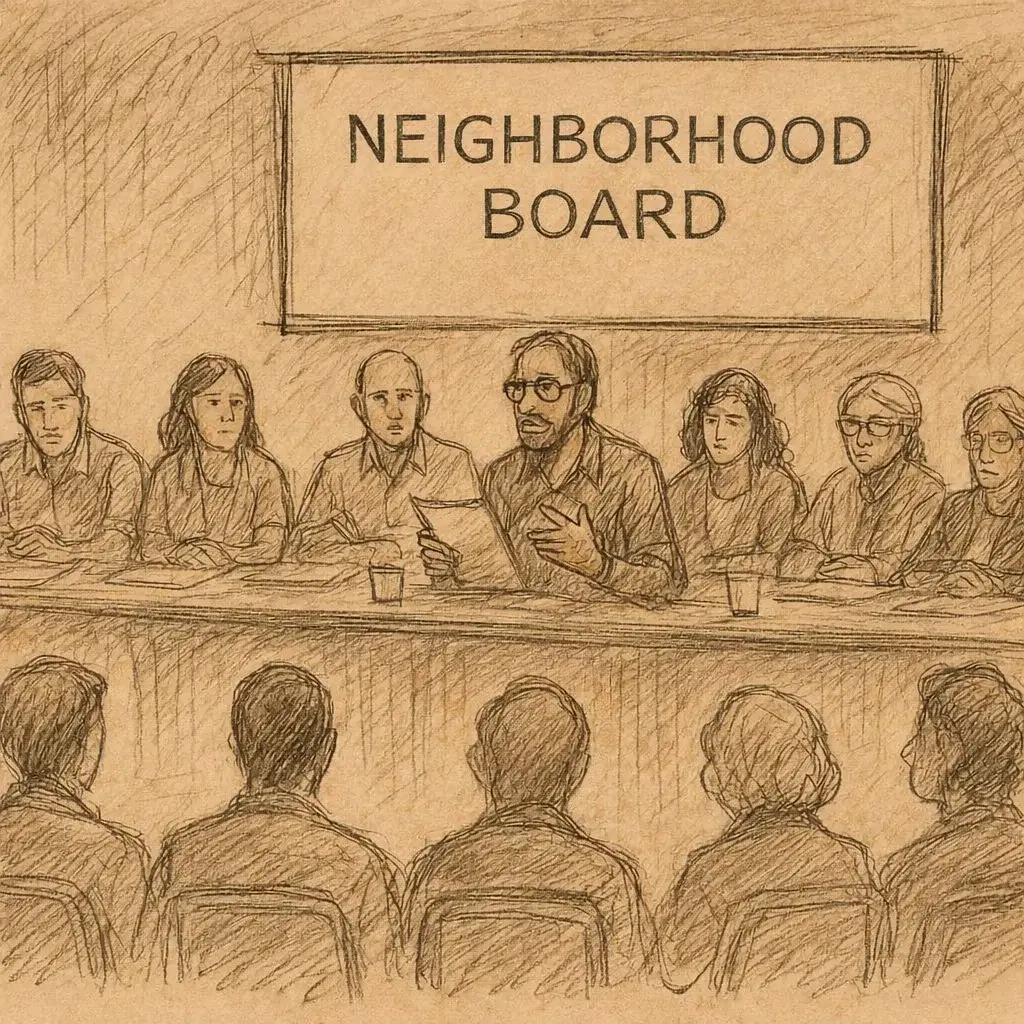
No 23 ʻEwa Neighborhood Board Regular Meeting November 2026
Listen to this article:
23 Ewa Neighborhood Board Meeting – November 13, 2026
Call to Order and Meeting Procedures
The meeting was called to order at 6:30 p.m. with residents participating both in person and online. The board reviewed its role as an advisory body intended to promote fairness, integrity, collaboration, and effective public participation in government decisions. Speakers were asked to address the chair, generally limit comments and reports to two minutes and presentations to ten minutes, and take one speaking turn unless recognized again. Remote participants were reminded to remain muted when not speaking. Under the Sunshine Law, the board could act on any properly noticed agenda item, while adding an unlisted matter would require a two-thirds vote, or eight votes on the 11-member board, and could not be done for a major issue affecting a significant number of people. Members introduced themselves, and the board initially appeared short of a quorum before confirming that enough members were present to proceed.
Honolulu Police Department Crime and Service Report
HPD District 8 Community Policing Team Sergeant Fumi Moroka presented October 2026 statistics. The district recorded 32 incidents described in the report as “motor vehicle deaths,” including eight in Ewa, although the transcript did not clarify whether this category may have referred to motor vehicle thefts. The district also recorded 22 burglaries, six in Ewa; 80 thefts, 24 in Ewa Beach; and 21 unauthorized entries into motor vehicles, 12 in Ewa. Officers issued 20 speeding citations, 469 moving citations, and 305 parking citations, for 948 total citations. District 8 received 7,032 calls for service during the month, including 2,095 from Ewa. In response to a question about violent crime, Sergeant Moroka said the statistics regularly presented to neighborhood boards are standardized categories intended to show property-crime trends. He said violent crime had declined in the district, although he did not have printed figures, and directed residents to HonoluluPD.org for additional crime data.
Homeless Outreach and West Loch Patrols
HPD reported continued work with homeless individuals near the meeting area. Officers contacted HONU and began attempting to place a couple into shelter, but medical issues had to be resolved before screening and admission could occur. Police intended to continue working with them and other nearby individuals. At West Loch, HPD continued using all-terrain vehicles to patrol in response to concerns about fires and encampments. Officers found signs of possible makeshift tents but no occupants. HPD was coordinating with the Department of Facility Maintenance and City and County parks personnel on a cleanup and planned to continue ATV patrols and enforcement.
School-Zone Speed Limits
A board member raised concerns about newly installed signs around schools, including Ewa Makai Middle School, establishing a 20 mph limit from 6 a.m. to 6 p.m. on school days. The member observed motorists traveling well above the new limit, particularly after the traffic signal changed, and asked how HPD would interpret and enforce the signs. Sergeant Moroka said posted speed restrictions are enforceable but would verify the exact requirements and provide a fuller response later. HPD had already conducted speed-awareness sign waving near Ewa Makai on Kapolei Parkway and recognized that morning commuters and parents dropping off children frequently rush through the area.
Kalaeloa Historic Airfield, Drag Racing, and Jurisdiction
Resident Karen Luke reported that drag racers had occupied the historic warm-up pad and part of the former Barbers Point runway, areas listed on the National Register of Historic Places and subject to preservation covenants. She said racers had brought hundreds of worn tires to mark courses, left crash debris, car parts, food wrappers, and other rubbish, verbally threatened dog walkers with trespassing allegations, and used vehicles to force people away from areas previously used for memorial services. She asked which agency was responsible for protecting the historic property and suggested parks and pickleball facilities as alternative uses. HPD explained that Kalaeloa contains a complicated mixture of city, state, federal, Navy, Department of Hawaiian Home Lands, and possibly Hunt-controlled property. The portion under development for a racetrack had reportedly been transferred from the state to the city, but officers could not immediately identify all jurisdictional boundaries. State land enforcement might fall to the Department of Law Enforcement or DLNR, depending on ownership and authority. HPD agreed to investigate the location and jurisdiction further.
E-Bike and E-Motorcycle Enforcement
A community member asked whether the new state e-bike law had changed youth behavior or made enforcement easier. HPD reported recent enforcement that resulted in the arrest of two juveniles and confiscation of their electric motorcycles, with parents required to retrieve the youths and vehicles. A new police drone unit was used to track the riders to a residence before the arrests. Sergeant Moroka said behavior had not declined significantly, but riders appeared more aware that enforcement was taking place. Staffing limitations continued to restrict how often these operations could occur.
Ewa Beach Christmas Parade and Traffic
HPD announced that the Ewa Beach Christmas parade would take place on December 12 at 10 a.m. The route would follow North Road through Kuhina Street, return to North Road, and end at the school. Residents were advised to expect detours and traffic delays lasting a few hours.
Honolulu Fire Department Report and Holiday Safety
Firefighter Rooney of Ewa Beach Fire Station Engine 24, Second Watch, reported October activity consisting of one wildland or brush fire, one nuisance fire involving rubbish outside a structure or vehicle, 28 activated alarms with no fire, 159 medical emergencies, four motor vehicle collisions, and three hazardous-material incidents. The department’s holiday travel guidance emphasized driving sober and alert, avoiding cell phones and drowsy driving, arranging designated drivers or rideshares when alcohol is involved, using seatbelts and age-appropriate child restraints, and keeping medications, identification, itineraries, and emergency contacts accessible. Residents were also reminded to turn off holiday lights and close doors before leaving home or going to bed. Asked for one broad safety message, Rooney urged motorists to “drive with aloha,” avoid distractions and unnecessary rushing, and remain mindful of pedestrians and other road users. HFD does not directly offer routine CPR or first-aid classes, but residents may contact its Community Relations Office for assistance or visit fire.honolulu.gov.
At-Large Board Vacancy
The vacancy created when former board member Corey Rosenlee was elected to the state House drew two candidates. James Hoskin, a Campbell High School graduate and Air Force Reserve firefighter, said his public-service experience had taught responsibility, teamwork, and dedication, and that he wanted to represent younger Ewa residents and help develop collaborative solutions. Banner Fanene, a Navy veteran who had recently moved to Kapilina after eight years in Wahiawa, described his extensive attendance at Wahiawa Neighborhood Board meetings, work with homeless residents, and availability for community service during retirement. Both acknowledged that this was their first in-person Ewa board meeting, although Hoskin said he had watched meetings online. The initial roll-call vote ended in a 3–3 tie. Fanene then conceded in support of Hoskin while expressing interest in continuing to participate and seeking a future opening. A second vote unanimously selected Hoskin with six votes, after which the meeting recessed briefly for his swearing-in. Members encouraged Fanene to remain engaged and noted that registration for the next neighborhood board election was expected to begin around February 2027.
GROW Food-Waste Recycling Program
Amber Unabia of the City and County Department of Environmental Services introduced GROW, or Green Recycling Organic Waste, which allows food scraps and wasted food to be placed in green carts with yard waste. Oahu households generate approximately 60,000 tons of residential food waste annually, and the program supports the city’s goal of diverting 95% of waste from landfills by 2030. A pilot began April 1, 2026, in Waipahu, Nanakuli, Hawaii Kai, Mililani, Kailua, and Kalihi. As of October 1, 2026, GROW had expanded islandwide to residences receiving automated blue, green, and gray cart collection. Acceptable materials include grass, leaves, plant matter, meat, seafood, bones, cheese, yogurt, and other solid or semi-solid dairy products. Milk, ice cream, other liquids, plastic bags, and manufactured compostable takeout containers or utensils are not accepted. The city is excluding manufactured compostable materials because of possible PFAS contamination until further testing and regulations are established.
Green-Cart Handling, Collection, and Composting
Residents were advised to collect scraps in sealed reusable containers or bags, repurposed tubs, or kitchen pails, then empty the contents loosely into the green cart. Food may be frozen until collection day, layered beneath yard waste, and covered with green material to reduce pests and odor. Cart lids should close fully, and the city can help repair lids that do not. Collection will remain every other week, alternating with blue-cart service, because changing the schedule would involve operational and union considerations. Residents remain responsible for cleaning their carts. Food and green waste are taken to Hawaiian Earth Recycling and turned into compost sold to landscapers, agricultural users, and individuals under products such as Menehune Magic; free mulch is also available at the Wahiawa facility. Residents may self-haul up to two loads per day in personal vehicles to Hawaiian Earth Recycling, while city transfer stations and convenience centers continue accepting green waste only.
GROW Program Concerns and Waste-to-Energy Debate
Board members questioned whether two-week intervals would create odors, flies, and maggots, particularly for households without freezer space. The city acknowledged the issue but said there were no current plans for weekly pickup or smaller carts. Residents who repeatedly misuse green carts are not subject to fines because the city lacks an applicable enforcement law, although carts can be removed. Pilot inspections showed declining contamination after carts were tagged with educational notices, but the city had not yet studied corresponding changes in gray-cart contents. A community member argued that separating green and blue-cart material may be financially inefficient because H-POWER operator Covanta reportedly charges the city when minimum tonnage is not supplied, while the city also pays to transport and process green waste. Unabia responded that wet organic material produces essentially no net energy at H-POWER; composting returns nutrients to the soil and reduces the ash ultimately deposited in landfills. Another member praised the city’s “Tour de Trash” program and suggested producing a virtual tour, particularly for children younger than the minimum age of 12 for physical tours. The city said such a video remained on its future project list.
Food Distribution, Christmas Parade Participation, and Toys for Tots
A community announcement described a food distribution at the school’s T Building beginning at approximately 7 a.m. on the coming Saturday. Vehicles would enter from Ikanaka, register on site, receive food, and exit toward North Road. Distributions were expected on the second Saturday of each month through November 2027, except December because of the Christmas parade. Parade participants were urged to register promptly and attend the mandatory safety meeting; groups missing that meeting would not be allowed to participate because of permit and insurance requirements. Organizers were also considering moving the 2027 parade later in the day, around 5 or 5:30 p.m., and ending at the school with concerts, food trucks, and a larger holiday event. The community was asked to help address a reported shortage of 20,000 Toys for Tots gifts by donating new, unwrapped toys. Collection events were planned at Ewa Beach Shopping Center and on November 28 at Ewa Makai Middle School, with boxes also available at local businesses near Shiro’s and Bill’s Fishing Supply. Online monetary and merchandise donations were available through Marine Corps-linked channels, Amazon, and possibly Walmart.
2027 Aloha Racing Events
Aloha Racing Event Director Dee Wiedeman announced four Ewa road races for 2027. The events use Keoneula, Geiger, Roosevelt, and Coral Sea roads, with two also using Kapolei Parkway and Papipi and two using Kamakana. Roads would not be fully closed; participants would use one lane where two lanes travel in the same direction and otherwise remain in bike lanes or shoulders. The Akahai event on January 16 would benefit the Hawaii Parkinson Association, Ho‘omau on May 8 would support Fur Angel Foundation, Laulea on July 17 would benefit Protectors of Paradise, and Makoa on November 20 would support Sheepdog Impact Assistance. Questions could be submitted through AlohaRacing.com.
Red Hill Health Registry and Pet Donation Campaign
Jolie Nunasaki reported that the Red Hill Registry continues enrolling people affected by the 2021 jet-fuel water contamination crisis, including Kapilina Beach Homes residents. November 20, 2026, would mark five years since the initial fuel spill. The registry tracks human health outcomes but recognizes that many residents reported pets becoming ill or dying after drinking contaminated water. For the holiday season, the registry was partnering with the Hawaiian Humane Society on a “Paws for a Cause” campaign seeking monetary gifts and physical donations such as puppy and kitten formula and toys.
Pu‘uloa Range Training Facility Lead Concerns
Vice Chair Alexander Gauss, the board and community representative on the Pu‘uloa Range Training Facility Working Group, reported frustration with the group’s limited progress. The Legislature created the body after investigations documented possible lead contamination near the Marine Corps range. Marine Corps testing in 2024 found elevated lead and antimony, and the Department of Health requested additional shoreline soil and groundwater investigations, but no such testing had occurred and none was scheduled. During roughly 18 months, the group had met only three times, largely reviewing existing studies and discussing possible testing, without adopting formal recommendations or even agreeing that recommendations should be a priority. Gauss said recommendations could prompt agency action, legislative involvement, and funding without prematurely prescribing remediation. A recently released military assessment added only four surface-water samples collected on one day and did not answer broader questions. With the working group scheduled to end in June 2027, residents were encouraged to contact Representative Julie Reyes Oda and request formal recommendations for investigations into whether lead is reaching nearby communities, shoreline areas, groundwater, and marine life.
Environmental Reviews and Development Notices
The board received notice of draft environmental assessments and anticipated findings of no significant impact for the Waipahu wastewater pump station force-main project and rehabilitation work, although the cited November 9 comment deadline had already passed. It also discussed an application by Grace Pacific LLC to amend the state special-use permit for the lower Makakilo quarry, identified as TMK 9-1-016-004. The Department of Planning and Permitting requested comments by December 7. Although the quarry lies outside the Ewa board district, members noted that projects uphill and across the valley can affect Ewa. A separate public scoping session for a planned Kalaeloa liquefied natural gas project was announced for November 19 from 5 to 7 p.m. at the Kroc Center. The Pohaka Puna cluster-housing project was also open for environmental review. After an earlier board resolution called for an environmental impact statement on a 21-unit proposal, the developer reduced the plan to 15 units. Comments on the new environmental assessment were due around December 8, and a board member said the revised plan appeared consistent with what developer Kenny Lau had previously presented and what nearby residents had generally supported.
Board of Water Supply Main Breaks and Employment
Board of Water Supply representative Keoni Matos reported three October water-main breaks: an eight-inch break on October 11 at 91-1023 Waihua Place, a six-inch break on October 16 at 91-623 Pupu Street, and an eight-inch break on October 28 at 91-633 Pupu Street. BWS also promoted permanent full-time and contract employment in business management, engineering, information technology, and executive or managerial leadership. Job listings were available at BWSjobs.org.
Kalaeloa Seawater Desalination Plant
BWS said its Kalaeloa seawater desalination plant remained in design and permitting, with construction anticipated to begin in early 2027 if no unforeseen delays arose. The estimated cost was approximately $145 million for an initial output of 2.5 million gallons per day, with some infrastructure sized for eventual expansion to 5 million gallons per day. Most water would serve the Campbell Industrial area and nearby users, although the interconnected distribution system could allow water to flow toward Ewa Beach. BWS described desalination as a dependable and diversified supply not as vulnerable to reduced rainfall as groundwater. Community members objected that long-time Ewa residents could eventually receive desalinated water while large developments and recreational facilities consume freshwater from the Honouliuli aquifer. One speaker cited a water park reportedly requiring 2 million gallons to fill, losing about 1 million gallons annually to evaporation, and requiring periodic draining and refilling. BWS agreed to clarify whether desalinated water would move directly to customers, reservoirs, or both; the conventional system generally pumps water into reservoirs before gravity distribution.
Gentry Homes: School Land and Geiger Road Signal
Gentry Homes reported continuing work on the Ho‘omua land dedication to the Department of Education. Attorneys were reviewing two easement grants, after which an updated title report would be commissioned and submitted to DOE with the final warranty deed. Completion was still estimated at about one more month. Gentry continued targeting August 2028 for the Geiger Road traffic signal, but learned in mid-October that the project had to be resubmitted through HNL Build, the city’s new permitting system, despite already being under review and having received most approvals. No updated processing timeline was available. Several speakers urged Gentry to replace the proposed signal with a roundabout, arguing that roundabouts slow vehicles and maintain traffic flow while signals can increase backups, speeding through yellow lights, sudden braking, and collisions. Gentry agreed to determine whether a roundabout had been studied and what would be required to change the design, while cautioning that the signal project was already well advanced.
Public Transit Question
A resident referred to an article suggesting that the city might spend approximately $50 million to subsidize free bus rides for tourists and asked for a report at the January meeting. The board clarified that the issue would fall under the city Department of Transportation Services rather than the state Department of Transportation and agreed to route the inquiry to the proper agency.
Haseko and Other Developer Reports
Haseko reported no new developments for November but remained available for questions. No representatives or reports were received from Hunt Companies or D.R. Horton/Ho‘opili during their scheduled agenda portions.
Navy Tours and West Loch Ammunition Project
The Navy reported that Saturday ship tours had been affected by staffing turnover but remained available when openings occurred. Community white-boat tours were expected to resume in 2027. The Navy was preparing responses to questions raised during the previous month’s presentation on the West Loch Magazine project. Board members expressed strong frustration that they had sought detailed information for several years about the associated bypass road, including its width, sidewalks, bicycle and pedestrian accommodations, complete-streets standards, fencing or sound walls, and effects on homes bordering the agricultural or safety zone. Residents who bought homes facing open land could soon have a road behind their properties, creating concerns about noise, safety, pests, and neighborhood character. The Navy liaison said Captain Brinkman and his team were developing answers and would be asked to participate in the December 10 Military Affairs Committee meeting.
Navy Community Service and Iroquois Point Lighting
The Navy confirmed that its Laulima community-service program operates year-round. The board requested volunteers with weed trimmers and landscaping equipment to assist the Ewa Beach Boys & Girls Club, and the Navy asked for project details so the request could be distributed to base senior enlisted leaders. A further request concerned the AMVETS softball field at Iroquois Point, where electrical service for field lighting had reportedly been restored and later switched off again. The lack of lighting was described as a safety problem for families and youth sports during early winter sunsets. The Navy liaison agreed to investigate.
Mayor’s Report and City Services
The mayor’s November newsletter highlighted growth in affordable-housing projects, HPD recognition for heroism, three new emergency medical service stations, preparations for Honolulu City Lights, and a panda sculpture gifted to the city. In response to a resident’s request for a flashing crosswalk at Kamaile Street and Kai‘i Uva near Kamaile Park, the Department of Transportation Services planned a site inspection, crosswalk warrant study, speed survey, and review of collision history, with findings expected by the end of April 2027. The city also responded to concerns about narrower HandyVan vehicles by explaining that all vehicles are accessible and that the fleet now includes both traditional 20-foot cutaways and narrower SUVs. The smaller vehicles can better reach narrow residential streets and multifamily properties without adequate loading areas.
Road Conditions, Traffic Calming, and Street Signs
A community member thanked the mayor and managing director for filling holes on Kuhina Street but said previously promised traffic-calming improvements on Kuhina and Hanakai toward North Road had not been completed. The speaker argued that repeated patching would leave roads uneven and deteriorating and requested full repaving and traffic-calming devices. Faded or missing street signs were also identified as a public-safety problem because emergency responders and visitors need clearly marked addresses and intersections. Residents were encouraged to document damaged signs with photographs and submit them to the city.
Proposed Kalaeloa Racetrack
Residents repeatedly raised concerns about a proposed community racetrack on approximately 23 acres near Coral Sea Road and Independence, identified as Lot 13060 and TMK 9-1-013-020, adjacent to Kalaeloa rental housing. One resident asked whether an environmental impact study had examined effects on nearby homes and how racers could be moved from the protected historic airfield to a legal site. Resolution 26-265, reportedly intended to expedite the racetrack, was expected before the City Council on November 17. Speakers also discussed a larger Legacy Ventures proposal on Department of Hawaiian Home Lands property for a world-class facility with a two- to three-mile multi-surface road course and quarter-mile drag strip. Ownership and land-use boundaries were described as complex, involving city land transferred from the Navy, DHHL land, Hunt property, and other parcels. Community opinions differed: some supported a legal venue because Oahu has lacked a racetrack for more than 20 years, while others preferred housing for Native Hawaiian beneficiaries, parks, dog facilities, botanical gardens, sports fields, and general recreation. Representative David Alcos said the area should become a broad sports and recreation hub rather than serve only one activity.
Kalaeloa Cleanup, Illegal Dumping, and Future Uses
Representative Alcos reported that state and city agencies had recently participated in a major Kalaeloa cleanup, removing approximately 15 to 20 loads of rubbish, with an estimated 40 to 50 additional loads of illegal dumping still present. The Department of Health and homeless outreach teams had also inspected the area, but agencies lacked sufficient resources for a complete cleanup. Alcos said more than 1,000 acres in the larger Kalaeloa area had long been contemplated for parks and recreation. He opposed a possible DHHL waste-to-energy plant near residential communities and favored locating such industry farther inside Campbell Industrial Park. He advocated a “sports hub of the Pacific” that could provide training, education, events, tourism, and economic activity while also accommodating gardens, walking, jogging, dog use, and community gathering areas. Another speaker noted that DHHL was also considering more solar development and urged preservation of land for recreation.
Recreation Center and Nonprofit Storage Needs
Representative Alcos and Councilmember Augie Tulba’s office were exploring development of another recreation center for Ewa. Alcos contrasted Ewa’s single recreation center with approximately seven in Mililani, despite Ewa and nearby Kapolei serving a much larger combined population. One possible location was the roughly 20-acre Pu‘uloa District Park, where three or four acres might support a facility with a gym, boxing space, pool, clubs, and other programs. A board member recommended including inexpensive storage for nonprofit youth organizations and sports teams, noting that commercial storage is costly and that even donated container space can require expensive liability or vehicle insurance. Alcos also proposed exploring tax credits or state support for organizations that provide after-school wrestling, volleyball, hula, and similar programs but face warehouse rents as high as $8,000 per month.
Council District 9 and Community Representation
Councilmember Augie Tulba’s representative stood on the office’s written report and agreed to obtain the councilmember’s position on Resolution 26-265 and the Kalaeloa racetrack. The office was also asked to support more active recommendations from the Pu‘uloa Range working group. A resident suggested that public murals and community recognition projects should reflect Ewa’s plantation history, limu traditions, and broader local culture, not only generic palaka imagery. The board complimented the quality of the councilmember’s community publication.
State Senate Reports
Senator Mike Gabbard’s liaison announced that his November newsletter included community updates, recent events, and preparation for the 2027 legislative session. The office, like several agencies, had experienced email disruption due to a Microsoft outage and expected service to resume the following morning. The chair asked Senator Gabbard to encourage the other senators representing parts of the board district to attend meetings or send staff, noting that Ewa residents wanted more consistent representation from all elected officials.
Representative Corey Rosenlee and Kunia Interchange Study
Newly elected Representative Corey Rosenlee thanked the board for his experience as a former member and said neighborhood board work had taught him about grassroots concerns that he intended to carry into the Legislature. He announced a state Department of Transportation environmental scoping meeting on the Kunia Interchange for November 18 from 5:30 to 7:30 p.m. at Kaleopu‘u Elementary School. The study would examine future traffic, environmental effects, and community input. A virtual meeting was later announced for November 19 from 6 to 7:30 p.m. Residents recalled that earlier funding for interchange improvements had been redirected to work elsewhere and urged the state to keep the project moving. Information was available at KuniaInterchange.com.
Waipahu Walk-In Health Services
Representative Rosenlee announced that the Wai‘anae Coast Comprehensive Health Center had opened a walk-in care site at the Filipino Community Center in Waipahu. It would operate from 8 to 10 a.m. on Mondays, Tuesdays, Wednesdays, and Fridays, providing basic services for illnesses such as colds and offering routine immunizations without appointments.
Representative Julie Reyes Oda
Representative Reyes Oda reinforced the Kunia Interchange meeting schedule and said the statewide transportation plan emphasized multimodal connections, safe-system roadway design, and infrastructure resilience. Her office was also helping organize a Saturday cleanup at the Ewa Beach Boys & Girls Club, with the date still pending because of scheduling and email-system problems. On the West Loch Ammunition Storage project, she explained that the modernization and expansion would consolidate Army munitions operations from aging facilities at the Lualualei Annex into more secure facilities closer to shipping hubs. The project had been presented to the board in 2020 and broke ground in May 2026. Her office had received concerns about the bypass road, proximity to homes, accident prevention, safety procedures, pests, and inadequate communication. She intended to follow up through Joint Base Pearl Harbor-Hickam and a Navy legislative liaison. Reyes Oda also said the Pu‘uloa working group was attempting to schedule another meeting between December 8 and 11, but needed a host location because Capitol construction and post-election room use limited availability.
Representative David Alcos and Community Outreach
Representative David Alcos introduced himself to newer board members, emphasized that he was born and raised in Ewa Beach, and offered regular constituent meetings on Tuesdays and Thursdays at homes, coffee shops, or other convenient locations. He described monthly homeless outreach at Calvary Chapel on the fourth Thursday, offering food, restrooms, haircuts, identification assistance, shelter referrals, and help transitioning into housing. A kupuna gathering at Asing Park on the second Wednesday of each month provides social time, music, and ukulele playing. Alcos invited residents to contact him with legislative proposals or community concerns, particularly before the January session.
Governor’s Representative
Jai Cunningham, now with the Department of Agriculture and Biosecurity, introduced himself as Governor Josh Green’s liaison to the Ewa Neighborhood Board. He said he selected Ewa over Waipahu as his assigned board and intended to return regularly. Drawing on prior Department of Transportation experience, he acknowledged that overlapping city, state, federal, military, HCDA, DHHL, and private jurisdictions in Kalaeloa often lead agencies to redirect responsibility. He offered to help identify responsible agencies and route community questions, including those related to the historic airfield and racetrack parcels.
Military Affairs Committee
The board announced a Military Affairs Committee meeting for December 10 at 6:30 p.m. in the regular meeting location. Because the full board would be in recess during December, the committee meeting would provide extended time to revisit the West Loch magazines, the Army and Navy ammunition projects, the bypass road, and Pu‘uloa Range Training Facility contamination concerns. Residents and board members were invited to propose additional agenda items and participate.
Board Administration and Next Meeting
The board approved the prior regular meeting minutes without correction. Committee chairs were invited to involve the newly appointed member in parks, education, transportation, public safety, community outreach, homeless outreach, economic development, climate change, Hawaiian affairs, or military affairs work. The board confirmed that it would recess in December 2026. Its next regular meeting was scheduled for Thursday, January 14, 2027, at 6:30 p.m., both virtually through WebEx and in person at the Ewa Beach Library. Recorded meetings air on ‘Ōlelo Channel 49 on the first Sunday at 6 p.m. and the second and fourth Fridays at 10 a.m. The chair closed by wishing participants a safe holiday season, Merry Christmas, and Happy New Year before adjourning the meeting.