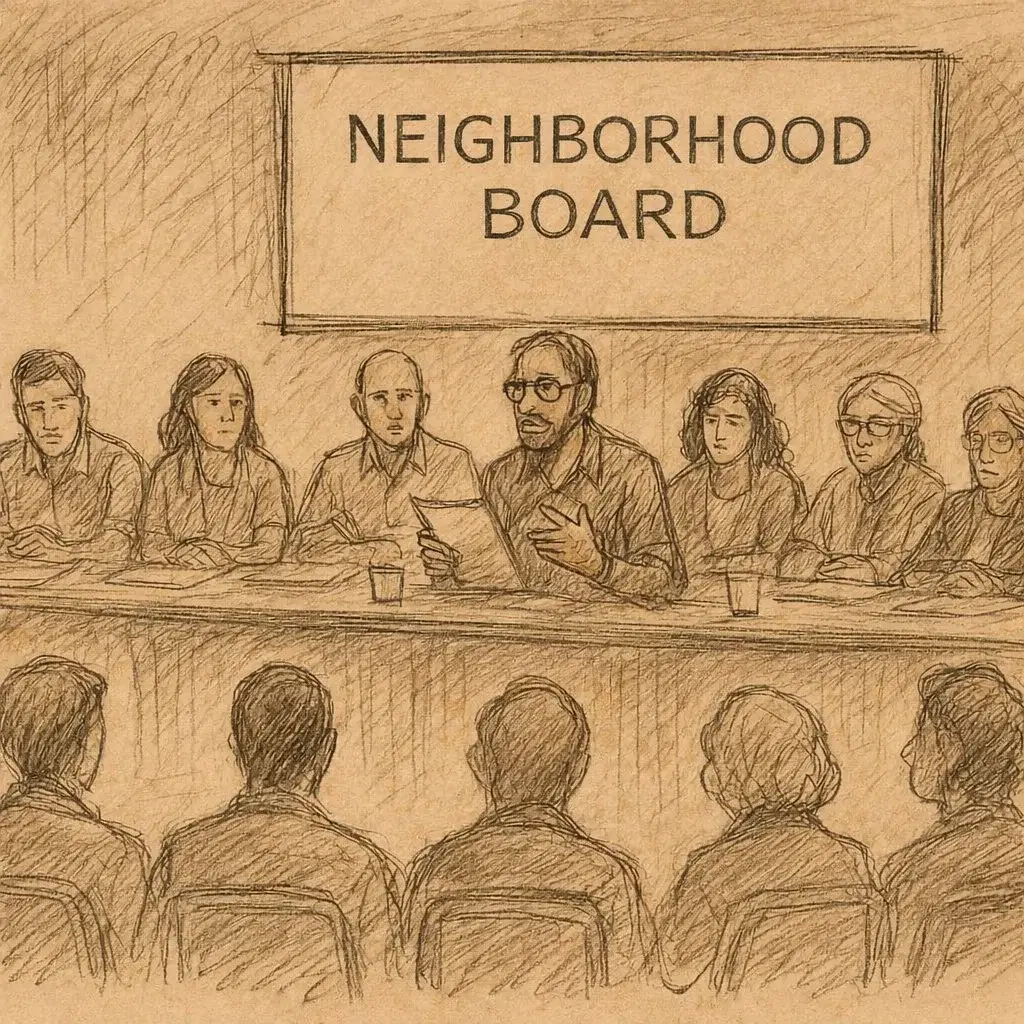
No 23 ʻEwa Neighborhood Board Regular Meeting August 2026
Listen to this article:
23 Ewa Neighborhood Board Meeting – August 14, 2026
Honolulu Fire Department
Captain Costello of Engine 24 at the ʻEwa Beach Fire Station reported July 2026 activity consisting of no structure, brush, cooking, ocean-rescue, mountain-rescue, or hazardous-material incidents. Firefighters responded to three nuisance fires, defined as rubbish fires outside a structure or vehicle; 14 activated alarms; 166 medical emergencies; two motor-vehicle collisions involving pedestrians; and one other motor-vehicle crash. The department’s monthly safety message emphasized knowing how to receive accurate emergency information. Residents were encouraged to register at HNLAlert.gov for text, email, or app notifications and to follow official government social-media accounts. During immediate threats, authorities may also use the Emergency Alert System, Wireless Emergency Alerts, and outdoor warning sirens. When asked for a practical household recommendation, Costello urged residents to test smoke alarms and replace batteries every six months. He noted that firefighters frequently encounter chirping detectors during medical calls and cautioned that families, especially children, can become desensitized to the sound. Board members also noticed mourning bands on firefighters’ badges, which were being worn in honor of a firefighter who recently died.
Police Activity and Crime Statistics
Corporal Corey Makino of the Honolulu Police Department’s District 8 Community Policing Team, joined online by Sergeant Fumi Muraoka, presented July crime and enforcement data. District 8 recorded 22 motor-vehicle thefts, including five in the ʻEwa area; 11 burglaries, including one in ʻEwa; 109 thefts, including 18 in ʻEwa; and 20 unauthorized entries into motor vehicles, including four in ʻEwa. Police issued 63 speeding citations, 1,190 moving-violation citations, and 273 parking citations, for a total of 1,633 citations in the ʻEwa Beach area. District 8 received 8,758 calls for service, of which 2,743 came from ʻEwa Beach.
E-Bikes, Mopeds, and Shared-Use Path Safety
A board member asked how HPD is implementing Act 259, which revised state bicycle and electric-mobility definitions and restrictions under Chapter 291C. The member specifically raised the prohibition against mopeds and motorcycles using bicycle lanes and shared-use paths, requirements affecting businesses that sell e-bikes, and possible confiscation and enforcement procedures. He said motorized devices continue to travel on the West Loch bike path and described an incident in which a West Loch Estates resident moved to avoid a fast-moving motorized vehicle, fell, broke her wrist, and filed a police report. Sergeant Muraoka said HPD is reviewing Act 259 with its Traffic Division and plans to publish a revised informational flyer on HPD.org. Police will continue education at schools and public events and conduct additional enforcement operations. Similar operations in the prior year resulted in arrests and citations and, according to Muraoka, visibly demonstrated that the rules were being enforced.
Weed and Seed Community Fair
Makino delivered the Weed and Seed report on behalf of Corporal Roland Pagan. The principal announcement was a Safer Community Fair scheduled for September 26 from 10 a.m. to 1 p.m. at Pearlridge Shopping Center. Sponsored by the U.S. Attorney’s Office and Weed and Seed, the free public event will feature safety information and booths staffed by HPD and other law-enforcement agencies.
Holomua Elementary Traffic Safety
Principal Christopher Banila of Holomua Elementary School asked for help addressing dangerous traffic conditions around the campus. Banila previously served as a Campbell High School counselor and ʻIlima Intermediate principal and was a finalist for a Masayuki T. Toyofuku Fund award through the Public Schools of Hawaiʻi Foundation. Holomua is the state’s only multitrack school. On Keaunui Drive, flexible traffic delineators or “tuff curbs” have been installed along the median, but a gap remains across a speed hump, allowing drivers leaving the school parking lot to make illegal left turns. Banila proposed adding one or more median barriers across that gap. On Laʻau Pai Street, vehicles regularly block the side gate and loading area used by the special-education bus, preventing it from entering or leaving. Custodians and administrators repeatedly intervene, but the obstruction continues. Banila also reported that some parents park across Keaunui Drive and jaywalk with children rather than using the crosswalk, increasing the likelihood of a serious collision during congested arrival and dismissal periods.
School Travel Alternatives and Traffic Coordination
A board member suggested creating a “walking school bus” in which supervised groups of children walk or bicycle to Holomua, potentially using the broad sidewalk connecting the area to the West Loch path and a designated neighborhood drop-off point. Banila said the school had considered the idea, but stakeholders concluded it was not currently feasible because parents must leave for work, volunteers would be needed consistently, and use of school employees could involve staffing logistics and collective-bargaining requirements. Campbell-Kapolei Complex Area Superintendent Casley Lee emphasized that traffic is chaotic around nearly every area school, with thousands of students leaving as thousands of vehicles arrive or depart. Some parents line up and block traffic an hour to 90 minutes before dismissal. School officials asked drivers to be patient and avoid rushed decisions, noting that the previous school year included accidents and roadway tragedies. Holomua has worked with HPD, the city Department of Transportation Services, and Representative Julie Reyes Oda. The board also noted that it previously adopted a resolution addressing Holomua’s traffic problems and may resend or update it.
Safe Routes to School Design Issue
Representative Reyes Oda explained that the Keaunui Drive improvements were funded through Safe Routes to School. Because Keaunui is a city street, the city designed the project while the state installed it, complicating responsibility for the apparent omission over the speed humps. Reyes Oda initially approached both governments but made little progress in having the gap treated as a design flaw. She has since elevated the matter to the Governor’s Office and is seeking help to install the missing median segment specifically across the speed-hump area.
Holomua Land Transfer
The board requested an update on a proposed transfer of approximately five acres near Holomua, associated with the former tennis-club property. Lee said the transfer has been delayed while the Department of Education’s superintendent’s office, facilities office, and the state Department of the Attorney General review the legal and operational implications. DOE wants to ensure that it can responsibly maintain the parcel and will not inherit environmental, financial, or other long-term liabilities. Lee said an answer on whether DOE can accept the land was expected soon.
Enrollment, School Meals, and Preschool
DOE reminded families that kindergarten is now compulsory and that the school year had already begun, with an initial official enrollment count due the day after the meeting. Lee said the complex had temporarily lost its Leeward school-food-service supervisor, delaying data requested about summer meal participation. Reduced-price meals, which were provided at no charge in the prior school year, will remain free. Families classified as ALICE households—Asset Limited, Income Constrained, Employed—at up to 300 percent of the poverty threshold will also qualify for free breakfast and lunch during the 2026–27 school year. However, ALICE eligibility does not change the federal free-and-reduced-meal threshold used to determine a school’s Title I status. DOE is introducing more meal choices, including salad or vegetable options, and an “offer versus serve” model that allows students to choose components rather than automatically receiving every item. Meals must still contain the federally required components to qualify for USDA reimbursement. Board members requested follow-up data on the percentage and number of Campbell-Kapolei Complex students eligible for and participating in free meals, the gap between eligibility and actual participation, and total Executive Office on Early Learning preschool enrollment. Lee said most or all elementary campuses have some form of preschool, either special education or EOEL, but did not have classroom and enrollment totals available.
School Leadership and Future Capacity
Lee proposed regularly bringing principals and vice principals to neighborhood board meetings so residents can learn about individual schools, their leaders, programs, challenges, and accomplishments. He said elementary and middle schools often receive less public attention than high schools despite substantial work on those campuses. Asked about broader community needs, Lee identified aging facilities, air-conditioning repairs, abatement work, and enrollment capacity. The complex includes relatively newer campuses such as Keoneʻula and Holomua as well as ʻEwa Elementary, which is more than a century old. Even newer schools face costly cooling-system and maintenance failures. Growth in Hoʻopili and East Kapolei is expected to affect ʻEwa schools because housing is being built faster than new campuses. Although East Kapolei Elementary has received development support, a new high school remains a much more difficult and expensive undertaking. Campbell High School is already full, and Kapolei High School is expected to reach capacity as surrounding communities expand.
ʻEwa Beach Sewer Improvement District
Department of Environmental Services Director Roger Babcock explained the city’s wastewater system and the proposed ʻEwa Beach Sewer Improvement District. ENV manages liquid and solid waste through approximately 2,000 miles of sewer pipe, 72 pump stations, and nine wastewater-treatment plants. The Honouliuli treatment plant near ʻEwa Beach is the island’s second largest. More than 7,000 Oʻahu homes are not connected to public sewer service and generally rely on cesspools; the largest concentrated unsewered neighborhood is in ʻEwa Beach, with more than 900 cesspools. State law enacted in 2017 requires all cesspools to be upgraded or closed by 2050, but it did not provide funding to affected owners. Some North Shore communities from Haleʻiwa toward Lāʻie and Kahuku are outside any planned sewer basin and are not expected to receive municipal sewer service.
Sewer Project Approval and Public Response
Babcock described the multistage City Council process for creating a sewer improvement district. ENV must first obtain permission to plan, then complete planning and return for authorization to design, followed by approval of the design, cost estimate, and construction. Because the city had not conducted outreach before initially seeking Council approval, the Council directed ENV to consult affected residents first. Working with Councilmember Augie Tulba’s office, the city distributed flyers, visited homes, and held a June 9 town hall at Kaimiloa Elementary School attended by roughly 120 people. ENV explained anticipated construction disruption, including prolonged street excavation, as well as future sewer charges that could exceed $100 per month for a household with median usage. At the end of the meeting, no one raised a hand when asked who supported the project. ENV therefore postponed it, and a second town hall planned by Senator Kurt Fevella for approximately June 15 was canceled. Babcock stressed that “postponed” does not mean permanently canceled, but the city has no legal duty to sewer currently unconnected properties. The project would move forward only when residents demonstrate that they want it. ENV has 18 other sewer improvement district proposals around Oʻahu, but all are smaller than the ʻEwa project.
Cesspool Upgrade Costs and Connection Rules
Homeowners who do not receive a public sewer must replace cesspools with an approved onsite system, most commonly a septic tank and leach field. Babcock said costs vary widely according to lot size, walls, trees, paving, and access, ranging from approximately $20,000–$25,000 in favorable conditions to as much as $100,000 in difficult cases; ENV commonly uses about $50,000 as a planning estimate. If the city later installs a sewer main on the street, the owner is legally required to connect even after paying for a compliant septic system and must close that onsite system. Under an existing ordinance, an owner in that situation may receive a 25-year sewer-fee waiver to offset the prior investment. The waiver belongs to the owner who paid for the upgrade, however, and ends if the property is sold; a new owner begins paying sewer charges.
Private Sewer Connections and Easements
Under a conventional sewer improvement project, the city installs the main, often at least 10 feet underground, and a separate four- to six-inch lateral for each home from the main to the city right-of-way near the sidewalk or property line. The homeowner ordinarily pays to connect the house to that lateral. The private-side work requires a Department of Planning and Permitting plumbing permit and professional approval, and ENV estimated the typical cost at about $10,000. To make the ʻEwa proposal more attractive, ENV had considered paying for the connection all the way onto private property and retaining responsibility for the lateral. That arrangement would require each homeowner to grant the city a permanent access easement. Babcock cautioned that this additional benefit was only proposed and had not been approved because it could establish a precedent for other districts. He also emphasized that construction costs would be borne by all existing sewer ratepayers, while newly connected residents would thereafter pay the same ongoing sewer fees.
Sewer Timing and Public Survey
Babcock suggested that community views may change closer to 2050, when the cost of private cesspool replacement becomes more immediate and a city sewer could be more economical. If the city were actively constructing a sewer near the deadline but had not completed it, he expected regulators would recognize that service was forthcoming rather than penalize owners. Representative Reyes Oda questioned whether the approximately 120 attendees at the June meeting adequately represented more than 900 affected properties and asked what formal data supported postponement. Babcock acknowledged that ENV conducted no owner-verified vote or separate survey; its conclusion was based on the meeting, where no attendees indicated support when asked. ENV also promoted an eight-question “Your Water, Your Sewers, Your Say” survey about wastewater, stormwater, cesspools, beach cleanliness, and water quality. Responses will help ENV prioritize projects and demonstrate community preferences to the state Department of Health and the U.S. Environmental Protection Agency. Information is available at honolulu.gov/ENV.
Kamahao Canoe Club
Sharina Prince, representing Kamahao Canoe Club, thanked the board for resolutions supporting the club during its ongoing discussions with Kapilina Beach Homes. The club is communicating with Kapilina in an effort to resolve its situation, although no timeline has been established. Prince also reported that the club completed its regatta season and that its girls’ 10-and-under crew qualified for the HCRA State Championship and finished among the state’s top 10. Members also conducted a cleanup of the beach and surrounding practice area at Kapilina, collecting substantial amounts of rubbish.
Military Land Community Conversations
Zoe Wilkes of the state Military and Community Relations Office introduced a “Community Conversations” initiative designed to obtain direct public input about military training lands and leases. Her office has met with approximately 50 groups statewide, often in informal groups of five to 10 people, and records the feedback for delivery to the Governor’s Office. Although military lease negotiations are a central focus, discussions may also address training on non-leased military property, infrastructure, environmental effects, and other military-community concerns. The office has visited every neighborhood board and plans to continue rotating through communities into 2027. Residents can use the office’s QR code or website to request a conversation, obtain information, or subscribe to its newsletter.
Red Hill Health Registry
Jolly Nubusaki, an ʻEwa Beach resident and community engagement specialist for the Red Hill Registry, explained that the registry is tracking the long-term health of people exposed during the 2021 Red Hill water contamination crisis. A newly released one-page healthcare-provider letter allows exposed individuals to document the exposure in their medical records, which may be particularly useful for military households and others who relocate. Contact and website information was to be posted online. A board member reminded Kapilina Beach Homes residents that the development receives water from the Navy system and said residents living there during the 2021 incident may have been exposed.
Flock Camera Privacy Concerns
Resident John Stewart raised concerns about Flock Safety cameras recently installed along Papipi Road. He argued that automated license-plate-reader systems can collect and retain extensive vehicle and location information and cited cases from other states involving alleged misuse by law-enforcement personnel. He also asserted that such systems could affect Fourth Amendment privacy rights and urged the board and residents to research relevant court decisions and civil-liberties concerns. Some of Stewart’s broader technical and corporate-association claims were presented as allegations and were not independently confirmed during the meeting. Board members said they had not previously been informed about cameras on Papipi Road and requested an agency presentation explaining their purpose, ownership, funding, legal authorization, and data practices.
Investigation of Papipi Road Cameras
Councilmember Tulba’s representative, Aaron Michael, said the office had contacted the city Department of Information Technology, Department of Facility Maintenance, Department of Transportation Services, HPD, the state Department of Transportation, Hawaiian Electric, and other possible entities, but none had confirmed authorizing the devices. HPD suggested they could be associated with the state Department of Law Enforcement, which had not yet responded. Four cameras were reported: one near the 7-Eleven, two facing opposite directions on utility poles near Kapolei Parkway, and one at the entrance to Oneʻula Beach Park. Hawaiian Electric was checking whether they might be part of a wildfire-detection program, although the hardware did not appear consistent with that system. Because the cameras are attached to property controlled by others, the council office said it would verify ownership and authorization before seeking removal. The Mayor’s representative also agreed to follow up.
Firearms Near Public Transit
Resident David Aki asked the board to consider a resolution discouraging or prohibiting firearms around bus stops, transit centers, buses, and Handi-Vans following a court ruling affecting Hawaiʻi’s concealed-carry restrictions. Drawing on 47 years in public transportation, Aki said children, kūpuna, passengers, and drivers should not have to encounter firearms in transit settings. He referenced proposed City Bill 45, which addresses weapons and hazardous items such as knives, guns, bombs, and gasoline on transit vehicles. Another resident questioned whether restrictions would primarily disarm law-abiding citizens while criminals continued to ignore the law. Aki replied that he did not oppose gun ownership generally but wanted transit environments protected and acknowledged that legislation could not prevent every unlawful act. No resolution was adopted during the meeting.
Rooster and Animal-Nuisance Complaint
Stephanie Kamanawa, a Navy veteran, homeschool parent, and resident of the zero-lot Sunterra South community in ʻEwa by Gentry, described severe sleep disruption caused by a neighbor’s rooster crowing as early as 4 a.m. She played a recording to demonstrate the repetitive noise and said the bird is kept too close to neighboring homes to comply with location restrictions. Kamanawa said her HOA recognizes nuisance provisions and a two-chicken rule but told her it would not enforce them, citing Fair Housing Act concerns and possible claims that animals are emotional-support animals. She also reported being referred among HPD, the Hawaiian Humane Society, and mediation services without effective intervention. HPD’s website describes the department as the lead agency for animal-noise complaints under Chapter 12 of the Revised Ordinances of Honolulu, but Kamanawa said officers told her they would need to witness the noise over a 30-minute period. Early-morning shift changes and higher-priority calls made that difficult, and officers would not rely solely on her recordings. Board members suggested formally submitting the concern through the Neighborhood Commission Office for referral to elected officials, seeking independent legal advice regarding HOA enforcement, and participating on the association board. A Gentry representative said Gentry and the ʻEwa by Gentry Community Association are legally separate but offered to connect Kamanawa with senior customer-service and association personnel.
Community Environmental Announcements
Board member Susan Gorman Chang announced an August 20 online meeting of the Community Representation Initiative featuring Dr. Eva Davis discussing thermal remediation of the jet-fuel plume above the aquifer. She also announced a screening of the documentary Gaslit at the Honolulu Museum of Art on September 11 or 12. The film addresses liquefied natural gas facilities, accidents, and community effects in areas where LNG has been introduced, amid discussion about possibly importing LNG to Oʻahu.
Geiger Road Traffic Signal
Gentry representative Sunny Rosario reported progress on the long-delayed traffic signal near Geiger Road. Following discussions with the new official responsible for the project, the parties agreed on next steps, including the electrical-conduit approach. Assuming timely design approvals, procurement, and construction, completion is estimated for August 2028. Procurement alone is expected to take approximately 10 to 13 months, followed by about seven months of construction. Board members expressed frustration that a traffic light could still require two more years, noting that two fatalities have occurred at the intersection and that earlier discussions had focused on the electrical connection to Fort Weaver Road rather than renewed design work. Rosario said the project was not restarting from the beginning and that the conduit concept had been resolved, although further coordination remained.
Gentry Landscaping, Recycled Water, and Beetles
A board member asked whether Gentry uses R-1 recycled water for landscaping along Fort Weaver Road, observing that the landscaping remains green even though other areas using recycled water experience outages. Rosario agreed to determine whether the irrigation uses R-1 water. Another member asked what Gentry is doing about coconut rhinoceros beetles and why palms in some communities remain healthy while heavily affected areas such as the West Loch Golf Course and Oneʻula surroundings show extensive damage. Rosario said she would return with information on Gentry’s beetle-management practices.
ʻEwa Carnival and Royal Kunia II
Haseko representative Keola Fisher announced the ʻEwa Carnival at the Wai Kai Event Lawn on Saturday, August 15, and Sunday, August 16, from 2 to 10 p.m. Paid parking will cost $10 per vehicle in three nearby lots open from 1 to 10 p.m. Special-duty officers will manage traffic at Keoneʻula Boulevard’s intersections with Kapolei Parkway, Kamakana Street, and Kaileolea Drive. Travelers were advised to allow extra time. Wai Kai and the promoter were monitoring the severe-weather forecast and would post any changes through official websites and social media. A board member requested a future update on the Royal Kunia II development, particularly how Haseko is addressing reported dioxin contamination and warning signs at the site. Fisher agreed to provide information at a subsequent meeting.
Navy Community Programs and Munitions Project
Chief Jose Hain of Commander Navy Region Hawaiʻi promoted the Navy’s weekly Moʻolelo newsletter and monthly Saturday ship tours, normally held from 9 to 10:45 a.m.; reservations can be requested at 808-473-2890. The August 21 community white-boat tour was already full. Hain also updated the board on a Navy munitions-magazine construction project. The contract was awarded in June, and the Navy intends to coordinate with the contractor and provide the community with the scope, schedule, and expected effects once accurate information is available. Board members noted that the last comprehensive presentation was around 2020, during environmental review, and that the Navy had promised a subject-matter-expert briefing for several consecutive meetings. Hain agreed to emphasize the request to installation leadership. He said answers about a West Loch homeless encampment on Navy land had been emailed to the chair and that information on the LSM project had been shared through a recent open house.
Red Hill Decommissioning Open Houses
The Navy Closure Task Force–Red Hill announced a September 17 public open house concerning decommissioning of the Red Hill Bulk Fuel Storage Facility and the safety of Joint Base Pearl Harbor-Hickam drinking water. The open house will begin at 5 p.m., followed by a town hall from 6 to 7:30 p.m., at the American Veterans Hawaiʻi West Oʻahu Veterans Center, 5001 Iroquois Avenue in ʻEwa. Subject-matter experts will be present to answer questions. A separate September 15 event on Joint Base Pearl Harbor-Hickam will be directed primarily to base residents and Navy water-system consumers.
Army Training Noise
The board relayed an Army notice advising residents that additional training activity may generate noise. Concerns can be reported to U.S. Army Hawaiʻi’s noise line at 808-766-7778 or through the Army Garrison Public Affairs community-relations contact. Responses are provided during business hours, Monday through Friday from 8 a.m. to 4 p.m.
Severe-Weather Preparation
The Mayor’s Office and multiple presenters warned that severe weather could affect Oʻahu during the weekend. Residents were urged to prepare before conditions deteriorated, register for emergency notifications at HNLAlert.gov or by texting “HNLAlert” to 888-777, and consult the Department of Emergency Management at honolulu.gov/dem. The city was issuing public updates twice daily and planned to continue until the storm passed. The Board of Water Supply recommended storing one gallon of water per person per day for 14 days and including water for pets. Residents can fill clean containers with tap water rather than relying solely on bottled water. A board member recommended commercially available bathtub-liner storage bags that hold a large supply of clean water and include a small pump.
Mayor’s Office Updates
The Mayor’s representative reported that Hawaiʻi driver’s licenses and state identification cards received their first design and security update in 17 years, a new Honolulu police chief was sworn in at the end of July, school-zone speed limits are being lowered under the city’s “Pump the Brakes” safety initiative, and the Department of Parks and Recreation received recognition for energy-saving work in city parks. The Office of Climate Change, Sustainability and Resiliency and Honolulu Youth Commission are also offering Youth Climate Action Fund awards of up to $4,999 for youth-designed climate projects. Applications are open from July 27 through September 7 at resilientoahu.org/YCAF.
Parks, Baseball, and Exceptional Tree Recognition
The Mayor’s Office reported that the youth Little League team whose Puʻuloa Neighborhood Park permit had been revoked regained its permit beginning in August and received access to usable space while the city monitors neighborhood effects. The board thanked the city for quickly resolving the matter and noted that Hawaiʻi’s 12U team was scheduled to play Southern California on August 15 for a place in the Little League World Series. DPR has no current plan to install a backstop at Oneʻula Beach Park. In response to a prior request, the Division of Urban Forestry will install a plaque by the end of August recognizing the community’s first designated exceptional tree.
Coconut Rhinoceros Beetle Response
DPR explained that it had not conducted a formal citywide study to prioritize coconut rhinoceros beetle treatment. Current efforts focus on places with relatively low beetle activity and manageable surrounding debris, including Hanauma Bay, Honolulu Botanical Gardens plant collections, and the Waikīkī-Kakaʻako corridor. DPR cannot presently treat Oneʻula, Kāpapaʻapuhi, or Puʻuloa Beach Parks because those areas are already heavily infested, surrounded by untreated land, and would require resources beyond current staffing and funding. The chair argued that untreated, dying palms become breeding sites and asked the city either to treat them or remove and properly dispose of them before the beetles spread to bananas and other palms.
Brush Clearance, Stray Dogs, and Traffic Calming
DPR inspected Kāpapaʻapuhi Park on July 15 following concerns about dry brush and fire danger and placed it on a priority clearance list. There is no dedicated brush-clearing budget line in the current fiscal year, so the department is exploring reallocation of funds for a contract; no schedule was available. Regarding stray dogs, HPD District 8 contacted the Department of Land and Natural Resources, which referred the issue to its Forestry Division and the Hawaiʻi Community Development Authority; those agencies are working on a response. DTS reported that speed tables on Hanakahi Street between Hanaloa and Kawiki Streets are in final design under the Traffic Engineering Devices at Various Locations Phase 4 project. Bid advertisement is expected by March 2027, with construction anticipated in fall 2027. Proposed speed tables on Kuhina Street are included in Phase 6, which remains in design procurement.
West Loch Gate and Kalaeloa Parklands
A board member reported that the cattle gate near Renton Road on the West Loch bike path had reopened after being locked for an extended period, allowing vehicles to enter. The member also asked about Kalaeloa Parklands after enforcement displaced a large encampment but some people appeared to move into less-visible brush areas. The Mayor’s representative said the city recently executed a contract to begin master planning for the park acreage transferred from the Navy in 2025. The process will take years and will involve community engagement, environmental review, and decisions about recreational amenities for a rapidly growing West Oʻahu population. No immediate schedule was provided for another stored-property or encampment operation.
Homelessness R3 Program
Councilmember Andria Tupola’s office announced the Revive, Restore and Reconnect, or R3, homelessness initiative. Through the week of Thanksgiving, service sessions will be held Tuesdays and Wednesdays from 5 to 6 p.m. on the second floor of the Kapolei Public Library. Participating providers will help unhoused residents obtain identification, driver’s licenses, housing assistance, treatment, and employment connections. Churches and other partners will conduct outreach at beaches and encampments, distribute program information, and provide limited food. The office invited residents and organizations to request flyers or volunteer.
Councilmember Tulba Storm and Drainage Work
Councilmember Augie Tulba’s office said it had received numerous calls about the approaching storm and had repeatedly contacted the Department of Facility Maintenance about drainage complaints. As a result, much of the ʻEwa drainage channel next to ʻEwa Beach Community Park had been cleared. The office asked residents to remain cautious during the tropical-storm watch and reiterated its investigation into the unidentified Papipi Road cameras.
Board of Water Supply
Board of Water Supply representative Keone Matos reported no water-main breaks in the ʻEwa Neighborhood Board area during July. He announced an “Imagine a Day Without Water” event on September 26 from 9 a.m. to 1 p.m. at the Arc of Safety at Waiʻanae Mall. Organized with Representative Chris Muraoka’s office and approximately 25 government, nonprofit, and community partners, the free event will include educational displays, family activities, games, prizes, a rain-barrel workshop, and food for purchase. It will promote the “One Water” concept that drinking water, wastewater, stormwater, and other water resources are interconnected and should be managed as a unified resource.
Skyline Community Meeting
Senator Mike Gabbard’s office announced a Listen Story community meeting on Saturday, August 29, from 9 to 10 a.m. in the Kapolei High School teachers’ lounge, with an online option available by RSVP. HART information specialist Harry Cho will discuss Skyline operations, current rail construction, and upcoming changes affecting West Oʻahu travelers. The senator’s August newsletter was also made available. A board member asked the office to follow up regarding reported violations mentioned during the discussion, although the transcript did not clearly identify the site or activity involved, and the chair invited Senator Gabbard to attend a future board meeting personally.
State School-Lunch Funding
Representative Reyes Oda discussed proposals to provide free school meals to all students. She said she has consistently supported statewide free-lunch measures and noted that many students at schools such as Nānākuli High and Intermediate already receive free breakfast and lunch because of high Title I eligibility. The primary obstacle is the cost and the need to identify what other state or DOE spending would be reduced to fund a universal program. A board member responded that meal costs themselves may not be the largest barrier; DOE has cited substantial facility upgrades as necessary without always establishing where those upgrades are required. With approximately half of Hawaiʻi students already qualifying under Title I-related measures and additional ALICE families becoming eligible, some campuses may approach universal eligibility. The board intends to examine participation during the current school year and determine the remaining gap. Reyes Oda also reported that she was attending meetings about recycling lithium-ion, electric-vehicle, and other large batteries to prevent them from entering landfills.
Villages of Kapolei Infrastructure Transfer
Representative Diamond Garcia reported that the long-delayed transfer of Villages of Kapolei infrastructure from the state to the city is expected within one or two months. Roads, sidewalks, medians, and landscaping built in the 1990s were originally intended to become city responsibilities, but the transfer never occurred. The Hawaiʻi Housing Finance and Development Corporation has therefore continued paying for tree trimming and grass cutting even though its primary mission is housing development. Once the transfer is complete, the city will assume those duties. A board member asked that bicycle lanes on Kapolei Parkway be extended between the fire station and Kualakaʻi Parkway so cyclists are not forced into travel lanes; Garcia agreed to discuss the issue with transportation officials.
East Kapolei Development and West Oʻahu Health
Garcia said the state released $500,000 in capital-improvement funding for an environmental impact study of transit-oriented development near the Keoneʻae rail station and University of Hawaiʻi–West Oʻahu. Potential uses include mixed-use commercial development and proposed film-studio facilities. He also announced plans for an early October town hall with the U.S. Department of Health and Human Services addressing West Oʻahu’s significant health disparities, including conditions in Hawaiian homestead communities. Event details will be provided after the date and venue are confirmed.
Transportation and Airspace Committee Updates
The board’s transportation discussion noted that a proposed shared-use path from Puʻuloa Beach Park had originally been planned for the makai side of the roadway. Following committee input, the route was corrected to the mauka side near the Pacific Tsunami Warning Center, preserving more roadside parking. The Military Affairs Committee also reported on the Hawaiʻi Airspace Modernization project. Agencies categorized public comments, including the board’s resolution, but had not yet released a written compilation. A solution-kickoff meeting occurred on August 4, and organizers said a video would be posted after approval. The committee will forward the recording to the board when available.
Meeting Administration
The board approved the minutes of its July 9, 2026 regular meeting without amendment. No reports were presented by the Parks, Education, Public Safety, Community Outreach, Homelessness, Economic Development, Climate Change, or Hawaiian Affairs committees. The next regular meeting was scheduled for Thursday, September 10, at 6:30 p.m., continuing the new earlier start time rather than the former 7 p.m. schedule. Attendance will be available in person at the ʻEwa Beach Public and School Library and virtually through Webex. Recorded meetings air on ʻŌlelo Digital Channel 49 on the first Sunday at 6 p.m. and the second and fourth Fridays at 10 a.m. The chair closed by urging everyone to prepare emergency supplies and remain safe during the approaching storm.