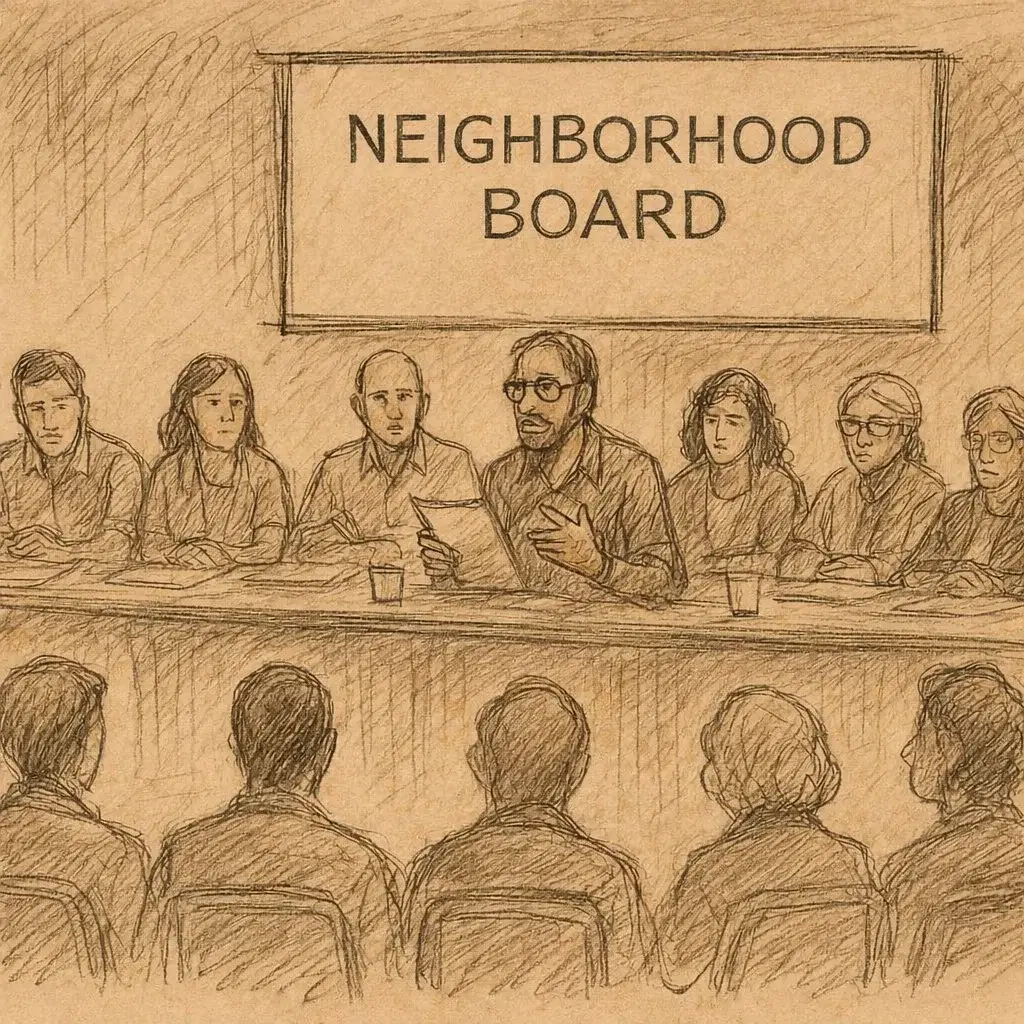
No 13 Downtown Chinatown Neighborhood Board Regular Meeting October 2026
Listen to this article:
13 Downtown-Chinatown Neighborhood Board Meeting – October 2, 2026
Opening and Attendance
The board opened the meeting amid severe weather and introduced members attending in person and online. Present or participating during the meeting were Chair Chulan Kwock, Ian Nguyen, Dan Mestes, Nicole Shintani, Robert Armstrong, Heho, and later Ross Isokane. Ross O’Connor was absent, while Kevin Lai had notified the chair that he was traveling and could not attend or call in; his community report on the citizen patrol was placed in the board’s Google Drive. The chair also noted that agency reports, presentations, and supporting materials would continue to be made available through the shared drive.
Fire Department Report
Captain Harrison of the Honolulu Fire Department’s Central Fire Station reported that there are no current plans to rebuild or relocate the department’s training center on Valkenburgh Street or to construct a new downtown fire station or training facility. During September 2026, Engine Company 1 responded to four nuisance fires involving rubbish outside structures or vehicles, 14 activated alarms where no fire was found, and 111 general medical calls, with no other serious incidents reported. October’s fire-safety message urged residents to use electrical decorations and appliances certified by nationally recognized testing laboratories, follow manufacturers’ instructions, remain present and alert while cooking indoors or outdoors, keep combustible materials away from heat and flames, and exercise added caution while walking or driving between dusk and dawn.
Fire-Damaged Building and Overcrowded Venues
A resident raised concerns about 905 Kekaulike Street at Nimitz Highway, where a fire had occurred approximately three months earlier. The Department of Planning and Permitting reportedly ordered the owner to board the building and obtain repair permits, but squatters were still occupying the ground floor. Captain Harrison agreed to consult HFD’s investigation section to determine whether the building had been declared unsafe or illegal to occupy and which agency is responsible for enforcement, with an answer expected at a future meeting. The chair also asked HFD to confirm the appropriate fire inspector for bars and entertainment venues that appear overcrowded during weekend music events, citing online videos and concerns about occupancy safety. HFD confirmed that the contact previously approached by the board was the appropriate official. The chair additionally asked the department to update its records so notices are sent to the current board leadership rather than the former chair.
Police Statistics and Recent Enforcement
Honolulu Police Department Sergeant Freeman reported 2,293 calls for service in September, up from 2,054 the previous month. Reported offenses included seven motor-vehicle thefts, unchanged from August; four burglaries, also unchanged; 24 thefts, up from 19; five unauthorized entries into motor vehicles, up from three; eight assaults, down from 19; one sexual assault, down from two; one graffiti case, compared with none; 19 drug cases, up from 14; and 72 motor-vehicle collisions, down from 88. Board members thanked HPD for visible enforcement and arrests involving drugs, prostitution, and individuals repeatedly causing disturbances in the neighborhood. A member also described ongoing nighttime loitering near Maunakea Street and Dick’s Bistro, noting that sidewalk lighting at a nearby property had reportedly been out for roughly a year and that police recently responded to activity there.
Chinatown Drug, Prostitution, and Property-Crime Operations
HPD provided more detailed enforcement figures for September 1 through October 1 in the Kukui Street and Chinatown Cultural Plaza area. Officers made 17 arrests for second-degree possession of dangerous drugs and issued three citations, while a crime-reduction unit recorded one promoting-dangerous-drugs case, one first-degree possession case, and another second-degree possession case. Police also apprehended a suspect linked to extensive property damage in Chinatown. Two prostitution arrests were made, and one runaway case was investigated and found not to involve trafficking. These operations involved district crime-reduction officers and the Narcotics/Vice Division’s human-trafficking unit. Narcotics/Vice also conducted a separate mid-September buy-bust that led to a first-degree promoting-dangerous-drugs arrest and the execution of multiple warrants. HPD said these operations were expanded in direct response to concerns raised by the board.
HPD Drone-as-First-Responder Program
Assistant Chief Lynch, Major Cliff Ramson, and Sergeant Souza presented HPD’s drone-as-first-responder, or DFR, pilot program, which is initially focused on District 1 and later District 5. Unlike tactical drones carried in police vehicles for SWAT operations, planned events, emergencies, flooding, and officer overwatch, DFR drones launch from a fixed site to respond to eligible 911 calls, officer requests, crimes in progress, violent incidents, fires, missing-person searches, burglaries, vehicle break-ins, and stolen-vehicle cases. Information from an incoming 911 call can be relayed in real time to an operator at HPD headquarters, allowing a drone to launch before a patrol officer is formally dispatched. The drone flies autonomously to the location, after which a trained pilot assumes control and provides officers with an overhead view, night vision, and, when needed, a spotlight. HPD said this can reduce uncertainty, help officers distinguish real weapons from harmless objects, identify concealed dangers, support de-escalation, follow fleeing suspects or vehicles, and improve safety for officers and the public.
Drone Launch Times, Operations, and Evidence
HPD’s goal is to launch a drone within approximately 20 seconds of receiving an eligible call, with flight times unaffected by road traffic. At the time of the meeting, officers were manually launching the aircraft while permanent rooftop pods were being installed at HPD headquarters. After a call is completed, a drone returns to its pod, docks, and uploads relevant footage to a secure cloud-based evidence system similar to that used for body-worn cameras. The aircraft ordinarily operates at or below 200 feet above ground because pilots are controlling it beyond visual line of sight. HPD described the drones as quiet enough to be difficult to hear over normal urban traffic. The department stressed that drones do not continuously record while traveling; recording begins when the drone arrives and takes position over the incident. Footage with no evidentiary value is automatically deleted after 30 days, while evidence related to a case is retained under applicable rules. Camera footage connected to the real-time investigation system is also subject to the 30-day deletion period when it has no evidentiary value.
Drone Privacy, Surveillance, and Oversight
Residents asked whether drones could look into high-rise apartments, capture unrelated homes while hovering over an incident, use facial recognition, or be repurposed for general surveillance. HPD said the program does not use facial-recognition technology and drones are not sent out to search generally for crimes, inspect private homes or businesses, or record unrelated activity. They travel directly to and from specific calls, with cameras oriented toward the incident once on station. Any deliberate surveillance outside the DFR mission would have to comply with constitutional standards and generally require a search warrant or other judicial authorization. Supervisors continuously monitor the operators, the department’s policy is posted on HonoluluPD.org, and the public will be able to review aircraft flight tracks and compare them with calls for service. HPD said deviations would require justification and officers would be accountable for policy violations. The department also stated that it does not share drone footage outside HPD except as permitted for investigative purposes. A board member praised the program’s potential to prevent unnecessary confrontations and emphasized that de-escalation should be central to public explanations of the technology.
Open Drug Use and Neighborhood Safety
Former board chair Ernest Carvalho reported persistent public drug use near Sun Yat-sen Park, particularly around the lion statues, and said residents were considering leaving Chinatown because they no longer felt safe. He also raised concerns about marijuana smoking in front of bars and asked for more consistent police intervention. HPD explained that the DFR program was not designed primarily for persistent street disorder but could support particular calls. Residents were encouraged to continue reporting specific conditions so District 1 leadership could coordinate crime-reduction officers, Narcotics/Vice, or other resources. HPD acknowledged that enforcement shifts among multiple Chinatown problem locations and said reports from residents remain essential to determining where resources should be deployed.
Chinatown Police Substation and Security Cameras
In response to questions from board member Robert Armstrong, HPD reported that the planned renovation of the Chinatown police substation had been expected to begin in October but was delayed, with no revised start date yet available. Police promised to update the board when a construction schedule is established. HPD also confirmed that approximately 60 public-safety cameras in the area operate continuously. The cameras are owned by the city’s Department of Information Technology rather than HPD, although police use their feeds for public-safety and investigative purposes.
Illegal Parking and Blocked Crosswalks
The chair described recurring illegal parking and loading problems along North King Street, Kekaulike Street, River Street, and the area in front of 555 North King Street. Concerns included cars blocking crosswalks and fire hydrants, merchants storing umbrellas, boxes, and paper on sidewalks, obsolete or defaced signs, confusion over commercial-loading rules, and six recently created loading stalls on Kekaulike Street, two of which reportedly received conflicting no-parking markings. Two former bus-stop areas on River Street were opened for commercial loading, but updated signs had not yet been installed, making enforcement difficult. The chair said volunteers asking drivers to move were frequently cursed at and nonemergency calls often went unanswered because parking complaints are lower priority. HPD stated that Kekaulike Street already accounts for a substantial share of area parking citations and offered to provide figures and discuss a focused response offline, but clarified that drones and live camera monitoring would not be used routinely to enforce parking violations.
Community Outreach, Resource, and Engagement Program
Assistant EMS Chief Jeff Zorkinick presented the city’s Community Outreach, Resource, and Engagement program, known as CORE, which operates under the Emergency Medical Services Department led by Dr. Jim Ireland. CORE has approximately 32 to 34 employees and includes community health workers, ambulances marked with a red stripe, advanced practice registered nurses, and a physician. Community health workers engage unhoused residents and connect them with shelters, health care, and other services. CORE ambulances transport clients who need stretchers, respond to lower-acuity 911 calls involving identified unhoused individuals, and may take patients to shelters rather than emergency departments when medically appropriate. This reduces pressure on conventional 911 ambulances and crowded hospital emergency rooms.
Mental-Health Detentions and Assisted Treatment
CORE’s advanced practice nurses, EMTs, community health workers, HPD crisis-intervention officers, Department of Law Enforcement personnel, and the state Department of Health collaborate under Act 219 and the process referred to as MH-3. Teams may detain and transport a person believed to be at risk of harming themselves or others when a significant psychological crisis is present, including cases complicated by medical needs. Appropriate receiving locations include the Behavioral Health Crisis Center when no major medical issue exists, or Queen’s Medical Center and Castle Medical Center when medical care is required. Receiving facilities must conduct further psychiatric assessments and may refer eligible people to Assisted Community Treatment, which can impose court-ordered monthly medication. Since the program began in December 2025, approximately 150 to 160 transports or detentions had occurred, involving about 120 unique individuals. Due to HIPAA restrictions, CORE could only estimate that roughly 20 to 30 people had entered longer-term care.
CORE Hours, Referrals, and Funding
CORE’s community health workers and clinical staff primarily operate Monday through Friday from 7 a.m. to 3 p.m., although ambulance operations continue on weekends. The program serves the entire island but focuses additional attention on areas with high numbers of unhoused residents and conducts Thursday-night work with the Department of Law Enforcement. Residents were told to call 911 for emergencies, submit nonemergency referrals through the Honolulu 311 app, or leave a message through CORE’s public telephone line. CORE is pursuing a federal SAMHSA grant of approximately $12 million and a Department of Justice grant of roughly $3 million to $4 million, both aimed at mental illness, substance-use disorders, and homelessness. Board members strongly supported expansion to nights and weekends, explaining that crises occur around the clock and daytime-only access leaves significant service gaps. Zorkinick agreed to return monthly with updates and emphasized that city, state, police, nonprofit, and community partners are collaborating more closely than he has seen during his 32 years in Hawaii EMS.
Neighborhood Commission Guidance
Neighborhood Commission Chair Patrick Smith addressed complaints and procedural concerns involving the board. He urged members to support the chair elected by the board majority and to raise mistakes or meeting-management concerns directly with the chair, clearly identify the problem, and suggest corrective action before filing a formal complaint or approaching the Office of Information Practices. Members may also contact Smith or Neighborhood Commission Executive Secretary Lloyd Yataga. Smith said the commission’s default position is to support the elected chair, while also reminding the chair that speaking-time limits must apply equally to everyone.
Community Cleanup and Public Comment
The Honolulu Chinatown Lions Club announced a cleanup of Smith-Beretania Urban Park and surrounding Chinatown sidewalks from 9 to 11 a.m. on the following Saturday, with community volunteers invited to participate. Kukui Plaza resident Lynn Pyle asked the board not to reduce the public-concerns period from two minutes to one minute, arguing that public testimony is how the board and government representatives learn about neighborhood priorities. The chair and other members clarified that the two-minute public-concerns period would remain unchanged and that the proposed reduction applied only to questions and comments on agenda items.
One-Minute Question Limit
Because several recent meetings had run out of time before elected officials and later agenda items could be heard, the board considered limiting audience and board-member questions on agenda items to one minute. The chair explained that police drone presentations and other major subjects had required extended discussion and that shorter questions could help preserve time without reducing the separate two-minute public-concerns period. Residents suggested using facilitation prompts and giving inexperienced speakers some accommodation. The board adopted the one-minute limit as an experiment, with the chair announcing a 6–1 result, although the audible roll call included “no” votes from both Robert Armstrong and Ross Isokane. Members said the rule could be reconsidered if meeting timing improves.
Approval of Prior Meeting Record
The board approved the draft written summary and video record of the prior regular meeting without stated opposition. The transcript identified the prior meeting date inconsistently, referring to both September 3 and September 9. Members had access to the draft materials in the board’s Google Drive before the vote.
Board of Water Supply
The Board of Water Supply reported one water-main break on September 17 near 31 North Nimitz Highway. The agency also reminded residents that power outages limit its ability to pump groundwater into reservoirs. During an outage, the remaining stored water may be the only supply available, so customers should restrict use to essential drinking, cooking, and personal-hygiene needs. Conservation should continue after electricity returns because pumps need time to refill reservoirs and restore normal pressure, particularly following prolonged or widespread outages. Current information is available through the Board of Water Supply website and official social-media channels.
Hawaiian Electric Downtown Grid Improvements
Ricky Hama began a new monthly Hawaiian Electric report intended to improve advance notice of construction, traffic disruption, and effects on businesses. He described downtown and Chinatown as the most complex and reliable electrical grid in the state, with multiple backups and redundancies that also make maintenance difficult. Hawaiian Electric has replaced more than 7.8 miles of underground cable, including almost two miles during 2026, inspected every manhole in the service area, inspected approximately 140 underground and in-building vaults, replaced nine transformers, and installed 95 remote monitors. The company plans to invest more than $180 million in the network through 2030. By then, it expects to replace 36.2 miles of underground cable, rehabilitate 33 manholes, replace 29 transformers, and install 135 remote-monitoring systems from the Iwilei substation through Chinatown and downtown.
Upcoming Hawaiian Electric Construction
Fourth-quarter work includes underground network activity along Ala Moana Boulevard and Nimitz Highway between Fort Street Mall and Punchbowl Street, postponed from September to October because of conflicts with other projects. Rehabilitation of Manhole 208 at South King and Bethel Streets was expected to be completed by October 26 after necessary equipment arrived. Overnight work on Manhole 308 on Queen Street between Mililani and Richards Streets was scheduled to begin October 5 and continue into January 2027. Work on Manhole 426 was expected to run for approximately 30 days, from October 12 to November 12, and additional work at the Prince Kūhiō Federal Building was being scheduled. Hawaiian Electric established a downtown-network webpage to post construction and traffic advisories and acknowledged that previous notification had been inadequate. Residents asked the utility to provide direct email notices comparable to Liquor Commission notifications.
Electric Rates and Reliability
Residents praised Hawaiian Electric employees for reliable service during recent storms and noted that Chinatown had experienced no major outage since a severe five-day shutdown, but they objected to a pending rate increase in a state where electricity costs were described as nearly three times the national average. Hama said approximately 70 percent of a customer’s bill reflects fuel costs, taxes, and surcharges passed through without markup, while roughly 30 percent supports capital and other operating costs. He directed residents to a Public Utilities Commission hearing listed for October 2 at 6 p.m. at 465 South King Street, Room 103, with WebEx access. The chair asked about vegetation management, termite-damaged poles, and leaning poles that can cause outages; Hawaiian Electric said it is directing resources toward vegetation and distribution-line risks, particularly on the island’s east side and across the Koʻolau. Board members suggested inviting the PUC to a future meeting because it ultimately decides rate cases.
Downtown Honolulu Business Improvement District
The Downtown Honolulu Business Improvement District reported continued work to establish its clean-and-safe program. Its leadership recently met with HPD’s chief and assistant chief regarding persistent open drug use at Wilcox Park and problems similar to those at Sun Yat-sen Park. The BID’s new safety network had attracted 27 participants representing 45 properties. The organization continues to coordinate with property owners, the Chinatown Security Team, and community partners. The chair said communication between downtown and Chinatown had improved and emphasized that the partnership seeks solutions rather than simply displacing unhoused people from one area to another.
Chinatown Business and Community Association
The Chinatown Business and Community Association reported that public safety remained its leading concern at its September 15 meeting, with continued homelessness, behavioral-health crises, and drug-related activity. HPD and CORE were recognized as essential partners, but weekend gaps in CORE coverage remained a major problem. The association also highlighted vehicles blocking no-parking areas and major crosswalks at North King and Kekaulike Streets, creating particular danger for kūpuna and people with limited mobility. The Chinatown Security Team has volunteered hundreds of hours keeping crosswalks clear on Fridays, weekends, and holidays and has used cones while awaiting a special permit from the Department of Transportation Services. Other concerns included sit-lie enforcement, people occupying bus stops and preventing elderly riders from sitting, storm-related tree stumps on North Hotel Street, theft, fires, and increased open drug use along Pauahi Street near the Maunakea Marketplace. The next association meeting was scheduled for October 13 at 10:30 a.m., and its security data report was posted online.
Chinatown Heroes and Community Patrol Reports
The 17th Chinatown Heroes Awards were scheduled for October 24 at Legends Seafood Restaurant. Honorees were Paul Lam, Frankie Chun, Jason and Elaine Lai, Florence Nakakuni, and Eddie Ho, recognized for their contributions to Chinatown and the broader community. Kevin Lai’s Neighborhood Citizen Patrol report was placed in the board’s Google Drive because he was unable to attend. The Oʻahu Metropolitan Planning Organization representative said its next meeting had not yet occurred and postponed that monthly report.
Aloha Tower Centennial
The governor’s representative announced two public events marking Aloha Tower’s 100th anniversary, which occurred on September 11. A blessing and reopening of the observation deck were scheduled for October 15 at 10:30 a.m. at Pier 9. A public centennial celebration was scheduled for October 16 from 5:30 to 9 p.m., with entertainment, food trucks, beer, and wine. Event details and a Department of Transportation flyer were placed in the board’s Google Drive.
Governor’s Affordability and Policy Update
The governor’s office responded to prior questions about Hawaii’s high business taxes, utility costs, labor costs, and regulations. It cited the largest individual income-tax reduction in state history, efforts to improve energy affordability and resilience, increased housing supply, childcare support, strengthened career pathways, public-private workforce pipelines, and shared infrastructure for food production, product manufacturing, fashion, and creative industries. Questions about legislative travel to a national conference were referred to the Legislature because it appropriates those funds. The office also said modified mufflers and truck air horns should be detected during annual vehicle inspections if noncompliant at the time, while violations occurring afterward fall under county traffic enforcement. Information about the governor’s position on Pohakuloa Training Area land issues was referred to an online state engagement portal.
Questions for the Governor
Residents asked what the governor was doing to prevent Hawaiian Electric’s proposed rate increase and why he was not participating in a general-election gubernatorial debate after taking part in the primary debate. Another resident asked the administration to explain its assertion that lower housing costs could reduce labor costs. Board member Ross Isokane requested an update on whether all necessary federal disaster declarations had been obtained to secure federal reimbursement for an estimated $1 billion in damage from Kona lows, storms, and the Hawaiʻi Island earthquake. The representative agreed to research the questions and return with detailed answers at the next meeting.
Mayor’s Departmental Responses
The mayor’s representative reported that the Department of Facility Maintenance still needed time to answer complaints about Sunday-morning leaf blowers. Chinatown public restrooms at Pauahi Hale were being renovated to improve accessibility and meet Americans with Disabilities Act requirements. A temporary solar streetlight near a bus stop remained under discussion, while HART was coordinating permanent repairs with its contractor. The Department of Transportation Services said delays and cancellations on bus routes can result from traffic, road closures, unforeseen conditions, and an ongoing operator shortage, so additional buses for Routes 2 and 4 could not be considered. Responses concerning other streetlights, a missing utility-hole cover, and vandalized street signs were deferred to the next meeting.
Bus Reliability and City Spending Concerns
A resident objected that the concern was not a request for more buses but for existing service to run on schedule. He described four rush-hour buses being canceled in succession while several buses on the same route later traveled together, disrupting connections for riders who rely on public transportation for work. Another resident questioned a roughly $2 million study of a proposed park cap over the downtown freeway, arguing that the city already faces poor road conditions, a rail project whose estimated cost rose from approximately $3.7 billion to more than $15 billion, and an over-budget stadium project. The mayor’s office agreed to bring back responses. A board member also asked that property-tax reform remain in an open public process rather than being handled primarily through a permitted-interaction group exempt from ordinary Sunshine Law requirements.
Vacant Chinatown Storefronts and Parks
Councilmember Tyler Dos Santos-Tam’s office reported progress on Bill 10, which would simplify the process for leasing city-owned vacant storefronts in Chinatown. The city reportedly owns approximately 40 percent of the vacant spaces, but current leasing procedures are cumbersome. The office also reported that planned lighting for the Kamamalu Community Park tennis courts had been delayed by one year, with an explanation still pending. Residents asked the councilmember to address bus reliability, open drug use in and around the remaining structure at ʻAʻala Park’s former restrooms, graffiti covering walls at Dole Community Park, and nonfunctioning drinking fountains there. The office encouraged direct reports of park graffiti and agreed to follow up.
Micromobility and Development
A resident thanked the councilmember for supporting restrictions on motorized two-wheeled vehicles in bicycle lanes and on sidewalks and asked when the mayor-signed law would take effect; the representative believed implementation would occur in 2027 but promised to verify the exact date. The resident also encouraged the city to identify ground-level parking lots near transit that could support affordable housing and mixed-use development while retaining parking beneath residential buildings, rather than using parks or green space for development.
Surveillance Agreements and Council Oversight
Board member Ross Isokane cited reporting that HPD had given a federal agency access to surveillance data and supported Councilmember Dos Santos-Tam’s statement that the City Council should review such agreements. He suggested broader ordinances establishing safeguards for surveillance technology and interagency data sharing, including the drone program, rather than relying entirely on internal police oversight. The council office said these discussions had also arisen during increased federal immigration enforcement and would likely continue in response to the recent report.
Constitutional Amendments and Voting
Senator Karl Rhoads described a proposed state constitutional amendment he introduced that would give the Senate an additional month to consider judicial nominations submitted during the legislative interim. The change could reduce the expense of repeated special sessions, particularly travel for neighbor-island senators, and encourage the governor and chief justice to group nominations more efficiently. He reminded voters that leaving a constitutional-amendment question blank effectively counts as a “no.” He also reported that general-election ballots should reach mailboxes by October 16 and advised anyone without a ballot by October 17 or 18 to contact the county clerk at 768-3610. Voters could return ballots to drop boxes or vote in person before or on Election Day. Attempting to vote another person’s ballot, including that of someone deceased, was described as a Class C felony punishable by up to five years in prison and a $10,000 fine.
Power-Outage Claims, Health, and Traffic
Senator Rhoads advised residents that they may file claims with Hawaiian Electric for qualifying property losses caused by an outage, potentially receiving repair costs or the depreciated value of damaged items. Claims must be filed within 30 days, although the utility may deny claims involving circumstances outside its control. He also noted another increase in COVID-19 cases and said updated vaccines were available and covered by insurance. A traffic emergency zone remained in effect around Nimitz Highway and River Street because of bridge work, with motorists warned to expect congestion.
Senator Rhoads’ Farewell and Election Discussion
Senator Rhoads announced that this was his final Downtown-Chinatown Neighborhood Board meeting in an official capacity. He first joined what was then the Downtown Neighborhood Board in 1997, served nine years, and later represented much of the area for 10 years in the House and another 10 years in the Senate. Residents and board members thanked him for decades of public service. In response to criticism of low voter turnout and reports of ballots sent to former or deceased residents, Rhoads said the recent primary had been operationally smooth, with prompt results and no major lines. He acknowledged that turnout was discouraging but argued that Hawaii provides extensive access through mailed ballots, early voting, Election Day voting, and same-day registration. He said federal law can require voter names to remain on records for multiple election cycles and encouraged recipients of erroneous ballots to notify election officials.
Corporate Election Spending Law
A board member asked about litigation challenging Senate Bill 2471, legislation introduced by Senator Rhoads to restrict corporate election spending. Rhoads said a lawsuit from the Grassroot Institute of Hawaii and the U.S. Chamber of Commerce had been expected because major financial interests would be affected. He urged the state attorney general to defend the law through the U.S. Supreme Court if necessary and noted that Montana voters were considering a similar measure. He argued that the law is not solely a First Amendment matter because states have long-standing authority over the corporations they create and over out-of-state corporations doing business within their borders. He added that the law applies to similarly structured entities, including labor unions.
Representative Kim Coco Iwamoto’s Legislative Agenda
Representative Kim Coco Iwamoto of House District 25 outlined several bills planned for the next legislative session. She intends to reintroduce measures requiring the reporting of bribery, instituting ranked-choice voting in general elections while eliminating separate primaries, and creating free statewide public transportation funded through a modest increase in the barrel tax. New proposals would establish environmental safeguards for data-center construction and revise Department of Health noise standards so commercial properties located within 1,000 feet of residential dwellings must comply with residential noise limits. She also discussed an empty-homes and vacant-property general excise tax surcharge intended to discourage land speculation and long-term vacant storefronts, increase the supply of usable commercial space, and potentially reduce rents for small businesses.
Honolulu City Lights
Organizers presented plans for the 42nd Honolulu City Lights celebration. The annual parade will follow its traditional route from ʻAʻala Park along King Street to Honolulu Hale, ending near Alapaʻi Street. Punchbowl Street between Beretania and King Streets will close beginning at 11:30 a.m., while King Street and intersecting streets will close progressively starting around 5 p.m. The parade begins at 6 p.m., and all roads are expected to reopen by 10 p.m. Unlike the previous year’s split locations at Thomas Square and the Civic Center grounds, the large Show Aloha Land light display will return to the Civic Center grounds. Questions were directed to citylights@honolulu.gov, and the presentation was to be uploaded to the board’s Google Drive.
Oʻahu Resilience Hub Learning Community
Sage Murakami presented the Oʻahu Resilience Hub Learning Community, a partnership supported by the city’s Office of Climate Change, Sustainability and Resiliency and operated with the Līhuʻe Foundation and community-resilience organizations. The program supports neighborhood resilience hubs, emergency preparedness, shared best practices, and relationships among the Department of Emergency Management, Hawaiʻi Emergency Management Agency, the Hawaiʻi Foodbank, the American Red Cross, nonprofits, and local communities. It recently held its first Resilience Hub Summit at Camp Erdman in Haleʻiwa and hopes to organize another with sufficient funding. Members can receive free training, including a FEMA community-resilience certification planned for November, and may apply for ʻiliʻili mini-grants supporting local resilience work. The program also places university and college students with hubs as “next-generation” leaders. Its next monthly gathering was scheduled for October 15, with registration and further information available through the program’s website and QR code.
Chinatown White Paper and Business Marketing
The Chinese Chamber of Commerce reported on the first Chinatown White Paper Initiative, an eight-week research project completed by three Worcester Polytechnic Institute students with extensive input from Chinatown stakeholders. The report provides a snapshot of Chinatown’s cultural, economic, business, and physical landscape and is available through ChineseChamber.com. The chamber intends to repeat the research every five years. One major finding was that approximately 90 percent of Chinatown merchants lack the human resources needed for active marketing and rely heavily on word of mouth. In response, the chamber is developing a QR-code project for 10 to 20 historic buildings, combining building histories, business information, and points of interest into self-guided digital tours for Waikīkī visitors and cruise passengers.
Chinatown Directory and Visitor Excursions
The chamber is also creating an updated directory of Chinatown businesses, with the goal of printing and distributing it in Waikīkī hotels if funding permits. A third initiative involves working with a tourism team referred by the Hawaiʻi Tourism Authority to create a Chinatown food-and-culture excursion for cruise-line passengers. Because cruise operators plan itineraries six months to a year in advance, that project will require a longer development period. The board welcomed the initiatives as tools for increasing awareness of Chinatown businesses and connecting the district more directly with the visitor economy.
Downtown Family Christmas Event
New Life Church Honolulu announced its third annual Downtown Family Christmas event for December 12 from 10 a.m. to 1 p.m. at Smith-Beretania Urban Park. The free gathering will feature live entertainment, gifts for every child, face painting, community information tables, and practical door prizes such as rice cookers, toasters, toaster ovens, and gift cards for Safeway and Longs Drugs. Organizers hoped HPD officers could help distribute children’s gifts. The Chinatown Lions Club and Neighborhood Board were invited to host booths, and volunteers were welcome. The chair praised the event for supporting families and children while bringing positive activity into the park.
Safe Streets Planning Project
The Department of Transportation Services presented a federally funded Safe Streets and Roads for All planning project covering seven high-injury urban corridors: Beretania Street, South King Street east of Alapaʻi Street, Young Street west of Punahou Street, Wilder Avenue, Piʻikoi Street, Kapiʻolani Boulevard, and Kaheka Street. The city competitively received just under $2 million for the planning work. These multi-lane arterial roads have significant patterns of fatal and serious-injury crashes, with 13 particularly high-risk intersections on the Beretania, King, and Young corridors. While crashes involving vehicles alone are the largest category by volume, pedestrians, bicyclists, motorcyclists, and moped users suffer a disproportionate share of severe outcomes.
Beretania Street Conditions
Beretania Street’s western section through downtown and Chinatown carries more traffic and is wider than its eastern section, expanding to approximately six lanes and 60 feet near Punchbowl Street compared with about three lanes near Isenberg Street. It is also a major transit corridor, with some segments carrying more than 10,000 bus passengers and over 60 buses during the peak hour, particularly near the Alapaʻi Transit Center. The standard speed limit is 30 miles per hour, reduced to 20 miles per hour near Queen Kaʻahumanu Elementary School under a recent ordinance. Portions east of Alapaʻi contain a conventional bicycle lane, and the full corridor is identified in city bicycle and pedestrian plans.
Chinatown Street Markings and Signal Timing
The chair asked DTS to repaint “Buses Only” pavement markings at the entrances to the Hotel Street transit mall near River and Alakea Streets because overhead signs are difficult for drivers to see. Unauthorized vehicles frequently enter Hotel Street, increasing risk at the Kekaulike, Maunakea, and Smith Street crosswalks. DTS confirmed that repainting these markings and replacing some signage are included in a work order. A resident suggested adopting signal timing similar to Portland, Oregon, where motorists traveling at a moderate speed receive successive green lights while speeding results in red lights, rather than timing signals in a way that encourages drivers to race between intersections.
Maunakea and Beretania Safety
Board members and residents identified the intersection of Maunakea and Beretania Streets as a serious pedestrian-safety concern. Although a previous fatal collision reportedly involved an intoxicated driver running a red light, members said the underlying street design still permits high speeds and creates conflict between turning vehicles and pedestrians crossing toward Chinatown Cultural Plaza. Elderly residents have nearly been struck even while crossing with the signal, and vehicles turning toward Vineyard Boulevard often fail to yield. The board asked DTS to study signal timing, protected-turn phases, possible restrictions on left or right turns, and longer pedestrian intervals for kūpuna, wheelchair users, and people with limited mobility.
Complete Streets Public Meeting
DTS announced a public meeting on the Beretania, King, and Young Street safety project for Wednesday, November 4 at 5:30 p.m. at Central Union Church, 1660 South Beretania Street at Punahou Street. The meeting will address near-term changes that could be coordinated with Department of Facility Maintenance repaving during the next year, as well as longer-term capital improvements. The board asked DTS to continue returning with updates because signal timing, crosswalk design, pedestrian access, bicycle facilities, and vehicle speeds directly affect daily safety throughout downtown and Chinatown.
Reports Not Presented and Next Meeting
No representative from Congressman Ed Case’s office appeared, and the scheduled Hawaiʻi Department of Transportation representative was also absent. An introduction from Aloha Mortuary did not proceed because its presenter had apparently left before the item was reached. The next regular board meeting was announced for November 5 at the same location and time, with Vice Chair Dan Mestes expected to preside while the chair was traveling. The meeting concluded with reminders to review agency reports and presentations in the Google Drive and to email agencies directly when additional questions could not be accommodated within the meeting’s time limits.