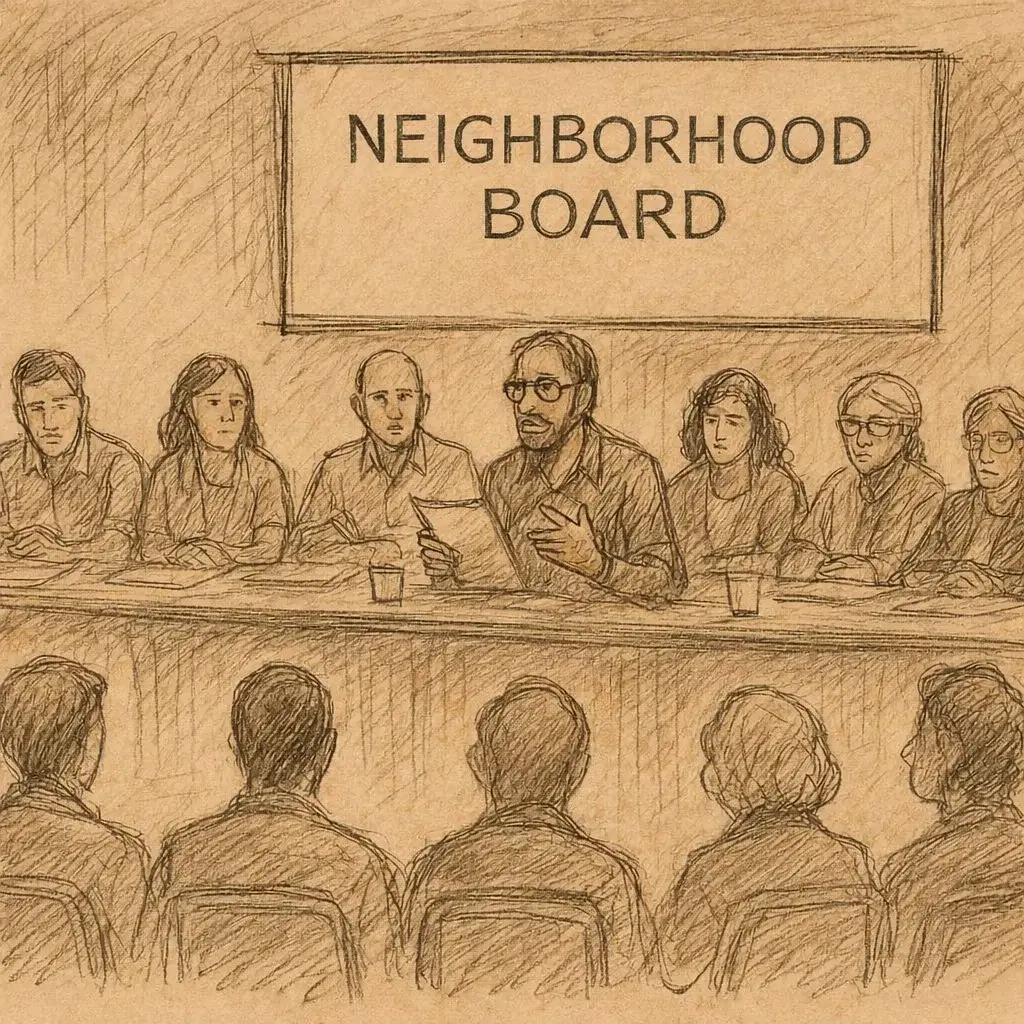
No 05 Diamond Head-Kapahulu-St Louis Heights Neighborhood Board Regular Meeting November 2026
Listen to this article:
5 Diamond Head-Kapahulu-St. Louis Neighborhood Board Meeting – November 13, 2026
Call to Order, Attendance, and Quorum
The meeting was called to order at 6:00 p.m., with Chair Winston Welch initially participating remotely before resuming chair duties. The first roll call identified seven members, later increased to eight when Knight joined. Rosman reported having neither a working camera nor microphone, creating uncertainty over whether that attendance could count toward quorum. Members were advised that, without a quorum, the board could receive reports and discuss community matters but could not appoint new members or act on resolutions. Linda Wong and Laura St. Denis subsequently joined online, bringing attendance to ten and allowing the board to conduct official business, including filling vacancies and voting on resolutions.
Fire Department Report and Holiday Safety
Captain Bellis of the Waikiki Fire Station reported that during October the station responded to one nuisance fire, six activated alarms with no fire involved, 50 medical calls, one motor-vehicle crash, and one hazardous-materials incident. The department’s holiday travel guidance urged residents to drive alert and sober, avoid cell-phone distractions and drowsy driving, arrange a designated driver or rideshare when alcohol is involved, use seat belts and age-appropriate child restraints, and keep medications, identification, itineraries, and emergency contacts accessible while traveling. Residents were also reminded to turn off holiday lights and close doors before leaving home or going to bed. In response to concerns about homes containing excessive stored materials, Captain Bellis said firefighters may recommend housekeeping but generally cannot enforce against hoarding. The board was later advised by the mayor’s representative that severe property conditions may be referred to the Department of Planning and Permitting for inspection and possible action.
District 6 Police Statistics and Diamond Head Abduction
Lieutenant Hanuna reported District 6’s October statistics: two robberies, seven burglaries, 103 thefts, seven unlawful entries into motor vehicles, 44 assaults, and eight sex crimes. Police issued two speeding citations, 1,192 parking citations, 43 citations involving loud mufflers or prohibited noise, and 71 park-closure citations, along with 12 park-related arrests. District 6 also made ten arrests for operating a vehicle under the influence and handled approximately 4,100 calls for service. The lieutenant said bicycle and skateboard violations on sidewalks had decreased during the month.
Much of the discussion centered on a widely publicized attempted abduction in the Diamond Head neighborhood. According to the police description, a man pulled up in a vehicle, entered a garage area, and suddenly grabbed a woman who did not know him. Her screaming alerted neighbors, who came outside to help, and the suspect was quickly apprehended. Police advised runners and pedestrians to remain aware of their surroundings, avoid noise-canceling headphones when possible, scream loudly, and resist forcefully if attacked rather than passively cooperate. The prosecutor’s office, rather than HPD, provides victim-support and counseling resources in such cases. The suspect had been arrested and the matter had gone through the grand jury process; further decisions, including questions relating to his mental condition, were in the hands of prosecutors and the courts.
District 7 Police Report and Impaired Driving
Lieutenant Nishimura reported 11 motor-vehicle thefts, four burglaries, 20 thefts, and four unlawful entries into motor vehicles in District 7 during October. The district, which covers Kapahulu, St. Louis Heights, and East Honolulu, recorded 5,720 calls for service. With the holiday season approaching, residents were urged not to drink and drive and instead to use a designated driver, taxi, rideshare service, or another safe transportation option. No additional District 7 questions were raised.
St. Louis Heights Board Vacancy
With a quorum established, the board considered two interested residents for the vacant Sub-District 1 seat representing St. Louis Heights: Arjun Arayal and Dylan Davis. Arayal said he had lived in the neighborhood for more than 20 years, works as University of Hawaiʻi faculty, has children attending La Pietra and Kaimukī Middle School, and has experience serving on condominium and community boards. Davis said he had pursued the vacancy because it had remained unfilled for too long, but he was willing to defer if another resident volunteered. A procedural dispute arose because Davis was sitting in a seat reserved for board members before being elected. Members acknowledged his interest but asked him not to occupy an official board seat unless appointed. Arayal was nominated without opposition and appointed by nine votes, after which the oath of office was administered.
Kapahulu Board Vacancy
The board initially deferred the vacant Sub-District 2 seat because a prospective candidate had been delayed. Nathaniel Alm later arrived, had his residency verified, and described himself as a Castle Street resident near Kapahulu Avenue and Sixth Avenue. Alm said he was born and raised in Hawaiʻi, attended Damien Memorial School, studied in Pennsylvania, lived for a time in California, and has worked for nearly a decade in sales representing electrical manufacturers. He expressed an interest in local and national public affairs, staying informed, connecting residents with useful information, and supporting neighbors. After questions about his background and community interests, Alm was nominated and appointed with ten votes. He was sworn in and encouraged to join board committees.
Board of Water Supply
Board of Water Supply representative Kathleen Pahinui reported that there had been no water-main breaks in the board district during the month. She also promoted employment opportunities at the agency and directed interested residents to the jobs section of the Board of Water Supply website. Asked about reports of oil contamination connected with Navy well pumping, she said no contamination had been detected in the municipal water system and suggested that any reported detection may have involved the Navy’s system.
Winter Road Races Around Diamond Head
The Mid-Pacific Road Runners Club presented plans for two established Sunday morning races. An 8K race is scheduled for January 17 and Johnny Faerber’s 10K for February 7, both beginning at 7:00 a.m. in Kapiʻolani Park. Each race usually draws approximately 250 to 300 participants and generally concludes by about 9:00 or 9:30 a.m., although some runners may take more than two hours. The routes travel from Kapiʻolani Park along Diamond Head Road toward the Medal of Honor Park, with one extending farther toward Kāhala Road before returning. Police will manage traffic, assist vehicles entering from driveways and side streets, and reserve a lane for runners, but there will not be complete street closures. Course information and maps are available through the Mid-Pacific Road Runners Club at mprrc.com.
Thanksgiving Turkey Trot
Organizers also announced the Honolulu Marathon Clinic’s Thanksgiving Day Turkey Trot on November 26, beginning and ending at the Kapiʻolani Park bandstand. The five-mile event starts at 7:30 a.m. and travels along Kapahulu Avenue, Paki Avenue, Diamond Head Road, and around Fort Ruger Park before returning to the bandstand. Shorter 3.6-mile and 1.8-kilometer events will start five to ten minutes apart and circle Kapiʻolani Park. Right lanes will be closed along portions of the courses, with the five-mile event expected to finish by 9:30 a.m. Activities will include awards, prizes, and a costume contest, and organizers intend to remove cups and other race materials and leave the park by 11:30 a.m. The event has obtained city permits, so the board did not need to approve it; the presentation served as the required community notice. The Turkey Trot reportedly dates to 1975, and details are available at honolulumarathonclinic.org.
Vehicle Noise on Kalākaua Avenue
Residents living near the Diamond Head end of Kalākaua Avenue described increasingly disruptive vehicle noise, including horn use, engine revving, loud mufflers, and amplified music during overnight hours. Nuria Whitaker, a 21-year resident and schoolteacher, said the noise repeatedly wakes adults and children, can feel intentional and intimidating, and affects her ability to work after losing sleep. She requested signs prohibiting excessive noise, noise-monitoring cameras near the Kalākaua fountain, and a stronger police presence. Marsha Johnson, who lives in the same building, supported the complaint but opposed conventional speed bumps because drivers may accelerate over them and create additional noise.
Board members said five noise cameras had reportedly been deployed elsewhere two years earlier and suggested investigating whether any could be relocated to Kalākaua Avenue. They also noted that the section of Kalākaua west of Monsarrat Avenue falls within the Waikīkī Neighborhood Board’s jurisdiction and encouraged residents to raise the issue there as well. Waikīkī has installed electronic message signs warning drivers of fines for loud mufflers and other violations. Members discussed the overlapping roles of the Department of Health, which regulates noise under state law, and HPD, which enforces applicable city traffic and public-safety laws. Some speakers argued that HPD lacks decibel meters and that noise complaints should be directed to the Department of Health, while others maintained that city ordinances, vehicle equipment violations, speeding, and reckless driving still require active police enforcement. The board chair had already contacted police about the problem and said the chief of police was expected at the next meeting.
Speeding and Safety Around Diamond Head
The vehicle-noise discussion expanded to speeding, crashes, and pedestrian safety on Diamond Head Road. Residents said loud vehicles frequently travel around the Diamond Head curves late at night and early in the morning, with crashes into roadside slopes and a history of pedestrian fatalities. Members said residents, including Kendrick Wong and Alexi Druin, have raised these concerns for years without sufficient enforcement or traffic-calming improvements. Suggested measures included police patrols, flashing signals, speed humps, and other interventions. One member distinguished lower-profile speed humps from more abrupt speed bumps and said the State Department of Transportation has prioritized installations near schools while the Diamond Head area remains delayed. The three-way stop at Makalei Place was cited as an example of a measure that has slowed traffic. The board intended to raise the matter with HPD’s new chief, the mayor’s office, the City Council, the Department of Transportation Services, and the State Department of Transportation.
Public Safety, Unhoused Residents, Dogs, and Transit
Community testimony raised concerns about conditions between Date Street and the Ala Wai, particularly around the golf course. Dylan Armstrong described encountering two unsecured pit bulls, people drinking near the golf-course entrance, narrow or obstructed pedestrian routes, and a person on a bus who appeared intoxicated or under the influence and blocked passengers from boarding. He argued that residents should not have to wait for police to resolve each isolated incident and called for coordinated policy addressing affordable housing, poverty, behavioral health, violent conduct, and transit security. He also questioned whether Oʻahu Transit Services is adequately providing security aboard city buses.
Another resident, a University of Hawaiʻi student originally from Memphis, cautioned against diverting police resources from serious threats and said he had generally felt safe using the bus. Other speakers responded that drug-related confrontations and unsecured animals can become legitimate safety issues. The chair advised residents to call 911 whenever they believe a person, animal, or situation presents an immediate danger, allowing dispatchers to determine whether HPD, the Hawaiian Humane Society, or another agency should respond. Board members also supported the idea of officers walking neighborhood beats, learning local conditions, and establishing relationships with residents.
Waiʻalae Waterfall and Stream Maintenance
Community advocate Laura Ruby alerted the board to state stream-clearing work near the Waiʻalae Waterfall, which she described as a valued neighborhood walking and natural area accessible from Kewalo Road toward Kanewai Field. She supported removing trash, brush, and saplings but urged agencies not to remove mature trees, riprap, or large boulders. She said the boulders slow stream flow and help reduce downstream flooding. The matter was flagged for the mayor’s representative and state officials.
Proposed Municipal Ownership of Hawaiian Electric
Jason Liang asked to make a future presentation on converting Hawaiian Electric into a publicly owned or municipal utility. He argued that Hawaiian Electric has not delivered consistently reliable service, plans further rate increases, and may have reached the limits of its insurance liability, potentially leaving customers exposed to costs from future wildfires or extreme-weather events. Liang said he and other advocates are presenting the issue to neighborhood boards across Oʻahu and would provide citations, a bibliography, and a proposed resolution. Board members expressed interest, requested materials in advance, and discussed placing the presentation on the December agenda.
Mayor’s Office and City Department Updates
Mayor’s representative Anton Krucky highlighted affordable senior housing under development on School Street near Kamehameha Schools, HPD officers honored for heroism, three newly opened emergency medical services stations, and the upcoming Honolulu City Lights program. Follow-up reports addressed several neighborhood concerns. At Leʻahi Beach Park, Sea Engineering completed a topographical survey to determine which permits will be required to repair a failing seawall. A similar initial assessment was completed for the seawall near Barefoot Beach Cafe, with Department of Parks and Recreation staff scheduled to review the findings. At Crane Community Park, no major facility or landscaping improvements are currently planned, but Urban Forestry expected to remove a fallen tree by the end of November and then consult the board about replanting.
Regarding the Diamond Head Community Garden, city officials said parking cannot currently be placed within the city right-of-way because of ordinance restrictions. Parks officials may evaluate parking on park property, and the Oʻahu Pedestrian Plan identifies Leʻahi Avenue for possible future walkway improvements, subject to funding. Residents also asked about a deteriorating city-owned house behind the garden that may eventually become part of the garden. The building has loose awnings, an overgrown tree damaging a shed roof, and other potential hazards. The mayor’s representative requested the address and photographs for referral.
The Department of Transportation Services will study Monsarrat Avenue traffic, including concerns about left turns, and report by June 2027. The Department of Planning and Permitting requested more time to investigate burned-out homes near Kaimukī High School, including two structures near the playing fields and another at Palani and Date Streets. DPP also expected to report in December on the Seabreeze condominium issue. On requests for direct departmental liaisons to neighborhood-board committees, Krucky said establishing formal contacts across every city department would be difficult, but DTS Director Roger Morton had offered to meet with relevant committees, and Krucky offered to attend committee meetings and relay significant concerns.
Route 200 Bus Service
The mayor’s office reported that DTS has repeatedly reviewed requests since August 2024 to reroute Route 200 away from Alohea Avenue. The agency has discussed the issue at Diamond Head-Kapahulu-St. Louis Heights and Kaimukī neighborhood board meetings and through written communications and site visits. DTS maintains that no new compelling data supports changing the route and that Route 200, in its current configuration, has consistently ranked among the bus system’s more productive routes, with 2026 ridership generally exceeding 2025 and substantially exceeding the route’s early 2024 ridership. A resident countered that most riders board and leave in Pālolo, while the section between Waiʻalae, Waikīkī, and the zoo appears lightly used. She also said some drivers speed on Alohea Avenue and occasionally do not stop at Paki Avenue because few riders are waiting.
Ala Wai Canal Walls and Bridge Elevations
During questions to the mayor’s representative, Laura Ruby requested much more information about proposed repairs to the historic Ala Wai Canal walls. She said a brief report to the McCully-Mōʻiliʻili Neighborhood Board did not explain whether an environmental assessment, environmental impact statement, structural engineering review, or comprehensive plan for the entire canal exists. She also questioned inconsistent elevations among bridges crossing streams and waterways connected to the canal, noting that the golf-course bridge sits close to water level while other bridges are higher. She asked why the proposed new Ala Wai crossing would be approximately 12.5 feet above the canal when other bridges are lower, and whether that height is connected to earlier Army Corps of Engineers flood-control plans.
City Council and Government Reports
The office of outgoing Council Chair Tommy Waters was not represented. Waters’ term was expected to end in December, with Councilmember-elect Trevor Ozawa taking the seat in January. The board agreed to place a certificate or letter of appreciation for Waters on its December agenda. Councilmember Scott Nishimoto’s representative announced an Ala Moana-area public-safety town hall co-sponsored with Representative Ikaika Olds’ office. Police Chief Arthur “Joe” Logan’s successor, Chief Lazar, was expected to attend the November 17 event from 6:00 to 8:00 p.m. at the Shingon Mission, 915 Sheridan Street. A resident asked why Councilmember Nishimoto had supported Bill 53, concerning possession of shopping carts away from commercial property, but no substantive response was recorded. Congressman Ed Case’s written report was placed in the board’s Google Drive. No representatives delivered reports for the governor, Senator Stanley Chang, or Senator-elect Jackson Sayama.
Green Recycling Organic Waste Program
The agenda included an introduction to the city’s Green Recycling Organic Waste, or GROW, program by Recycling Specialist Amber Unabia of the Refuse Division. The presenter was not present, so the item was deferred to a future meeting. Board members understood the proposed presentation to concern food or organic-waste recycling.
Follow the Drop Stormwater Program
Cyrus Howe of Hawaiʻi Green Growth presented “Follow the Drop,” a green stormwater infrastructure initiative supported by the National Fish and Wildlife Foundation, Hawaiʻi Community Foundation, and, for work at Aliʻiolani Elementary School, Hawaiʻi Sea Grant. The program seeks to reduce polluted runoff, flood risk, and poor aquifer recharge by intercepting rainwater from roofs and paved surfaces before it reaches streets, storm drains, streams, the Ala Wai Canal, and the ocean. The Ala Wai watershed extends from Punchbowl to Diamond Head and from the Koʻolau Range to the reef, including Waikīkī and Ala Moana. It contains approximately 200,000 residents, more than 4,000 acres of impervious surfaces, 11 neighborhoods, and eight neighborhood-board districts.
The Follow the Drop mobile application, licensed by the Department of Facility Maintenance for iPhone and Android devices, allows assessors to map roof and pavement areas draining into each downspout. The application estimates annual runoff volume and recommends suitable infrastructure, including rain barrels, rain gardens, bioswales, or permeable surfaces. After assessing nearly 200 properties, the program has found rain barrels to be the most popular option because they are inexpensive, simple to install, and require less space than rain gardens. Rain gardens generally need setbacks from foundations and retaining walls. Approximately two dozen barrels were installed in partnership with Mālama Maunalua after its incentive pilot began in January 2025.
Hawaiʻi Green Growth is finalizing a contract with Pono Home to install 100 additional barrels and is pursuing a “Million Gallon Project” intended to capture or divert one million gallons of rainwater annually by 2030. Current installations represent about 10 percent of that target. Free residential assessments will remain available through the following fall, and people already assessed will receive priority when the next barrels become available. A barrel painted by local artist Mari Izuma will be awarded in a year-end drawing to promote participation.
Rain-Barrel Design and Multifamily Properties
Board members asked whether the program can serve small condominiums and apartment buildings. Howe said a barrel had been installed at a medium-sized Makiki condominium to support community garden plots, but participation requires cooperation from property managers and homeowner associations. Standard diverters fit rectangular two-by-three-inch or three-by-four-inch downspouts and return excess water to the original drainage system after the barrel fills, preventing open standing water and mosquito problems. Circular condominium downspouts may require a different system, although the program can still conduct assessments and suggest alternatives.
Members also asked how homes with five or six downspouts could avoid placing unattractive barrels around the entire property. Howe described planned “biocatchment boxes,” narrow raised planters containing engineered soil and plants that remove pollutants, with slim water-storage tanks underneath. Six such boxes are included in the next contract and are intended for tight urban spaces where a standard two-foot-diameter barrel would obstruct walkways. Water collected from ordinary roof systems is considered nonpotable and should be used on ornamental rather than edible plants or for animal drinking water.
Proposed Ala Wai Pedestrian-Bicycle Bridge
Laura Ruby, representing the Ala Wai Mauka Community Association, presented continued opposition to the city’s proposed Ala Wai pedestrian-bicycle bridge, often called “Ala Pono” by the city. She objected to that name as an inappropriate use of Hawaiian language and asked the board not to normalize it. She emphasized that the board and three other neighborhood boards had previously supported requiring a full environmental impact statement. The Oʻahu Historic Preservation Commission has since issued a letter questioning whether the city’s environmental assessment and finding of no significant impact adequately address the bridge’s effects.
Ruby said the proposed structure would interfere with protected views of Diamond Head and the Koʻolau Range and alter the historic Ala Wai Canal, promenade, and adjoining park. The area supports canoe paddlers, kayakers, senior softball leagues, community gardeners, Ala Wai Elementary School, families, Pacific Islander gatherings, and the historic Malia canoe and hālau. She raised concerns about improperly combining or separating related projects, including a city-funded hālau expansion, the bridge, canal-wall work, and Army Corps flood-control plans. She also cited the Diamond Head Special District’s zero-build protections and federal Section 4(f), which generally requires parkland taken for transportation uses to be replaced with comparable nearby land. The proposed bridge approaches and ADA ramps would occupy substantial park space, including a large cantilevered structure on the makai side and elevated looping approaches connecting with the bicycle path.
Bridge Cost, Design, Evacuation, and Community Effects
Board members and residents criticized the bridge’s estimated cost of approximately $63 million to $64 million and questioned why a pedestrian crossing would cost far more than a simpler bridge. Supporters of walkable and bicycle-friendly connections still asked the city to justify the scale and economic value of the project. Speakers described the proposed bridge as approximately 20 feet wide, comparable to two traffic lanes, and feared it could eventually accommodate vehicles or connect to future high-rise development and a possible rail extension along Kapiʻolani Boulevard. Others expressed concern that the bridge could create a new route for crime, drug activity, prostitution, and homelessness from Waikīkī into areas near schools, parks, gardens, and senior activities.
The city has cited emergency evacuation as a purpose for the bridge, but opponents argued that emergency guidance generally directs Waikīkī occupants to move vertically to upper floors of nearby buildings rather than cross into lower-lying Mōʻiliʻili. They noted that the Mōʻiliʻili side may be two to three feet lower than Waikīkī and could itself be flooded. Ruby also questioned whether the crossing would close with the park at 10:00 p.m., how long-term security and maintenance would be funded, and why the structure must rise so high above the canal. She said a prior public meeting drew approximately 50 attendees, around 40 of whom opposed the design or height, while a petition had received approximately 600 signatures. Members said the city’s earlier outreach offered many variations of essentially the same bridge without meaningfully presenting a no-build alternative.
Environmental Impact Statement Resolution
The board reviewed its January 2024 resolution requesting a full environmental impact statement for the bridge, protection of the Ala Wai Canal’s historic character and view planes, community participation in an EIS advisory process, and a halt to the proposed 180-foot-tall cable-supported design. That resolution had passed 10–2. Chair Welch suggested readopting it with a preamble citing the Oʻahu Historic Preservation Commission’s concerns about the existing environmental assessment and finding of no significant impact. A motion and second were offered, but newer members and other participants suggested adding concerns about project cost, nearby development, evacuation claims, park use, and related planning. Because the environmental notice could trigger a 30-day response period, speakers stressed the need to act quickly. The board ultimately deferred the vote until December so the chair could prepare a revised draft clearly identifying the additions. Members were strongly urged to attend the December meeting to ensure a quorum.
Property-Tax Reform Proposal
Property Tax Committee representative Bruce Wong presented a resolution intended to protect owner-occupied homes from rapid tax increases caused by nearby high-priced property sales. The proposal would base taxes on the property’s most recent sale price and limit annual increases in the taxable amount to 2 percent. Wong said the approach was modeled on California’s Proposition 13, while Oregon uses a different limit involving 3 percent or inflation. The benefit would be inheritable, allowing families to retain long-held homes without their taxes automatically rising to match newly sold properties nearby. Wong contrasted this with the current assessment system, under which an unusually high sale price can raise surrounding assessments. One resident cited a neighborhood property listed for several million dollars that was purchased by an offshore buyer for approximately $4 million, affecting neighboring tax bills.
Members supported protecting longtime residents and preserving homes for future generations but questioned how the city would maintain police, infrastructure, and other public services if assessment growth were capped during periods of high inflation. They also asked whether inherited low assessments could create a permanent class of owners paying far less than newer residents. Wong responded that the city could adjust its tax rate, currently described during the meeting as approximately 0.35 percent, while the assessed-value growth limit would remain. The board adopted the resolution by 11 votes in favor, none opposed, and one abstention. Wong was encouraged to present the proposal to other neighborhood boards to build broader support.
Next Meeting and Adjournment
The next regular meeting was announced for Thursday, December 10, at 6:00 p.m. Major anticipated matters include the revised environmental impact statement resolution for the Ala Wai bridge, possible follow-up on noise and traffic enforcement with the police chief, and other deferred presentations. The chair urged all members to attend so the board would have a quorum during the holiday period. The meeting concluded with Thanksgiving wishes and was adjourned.