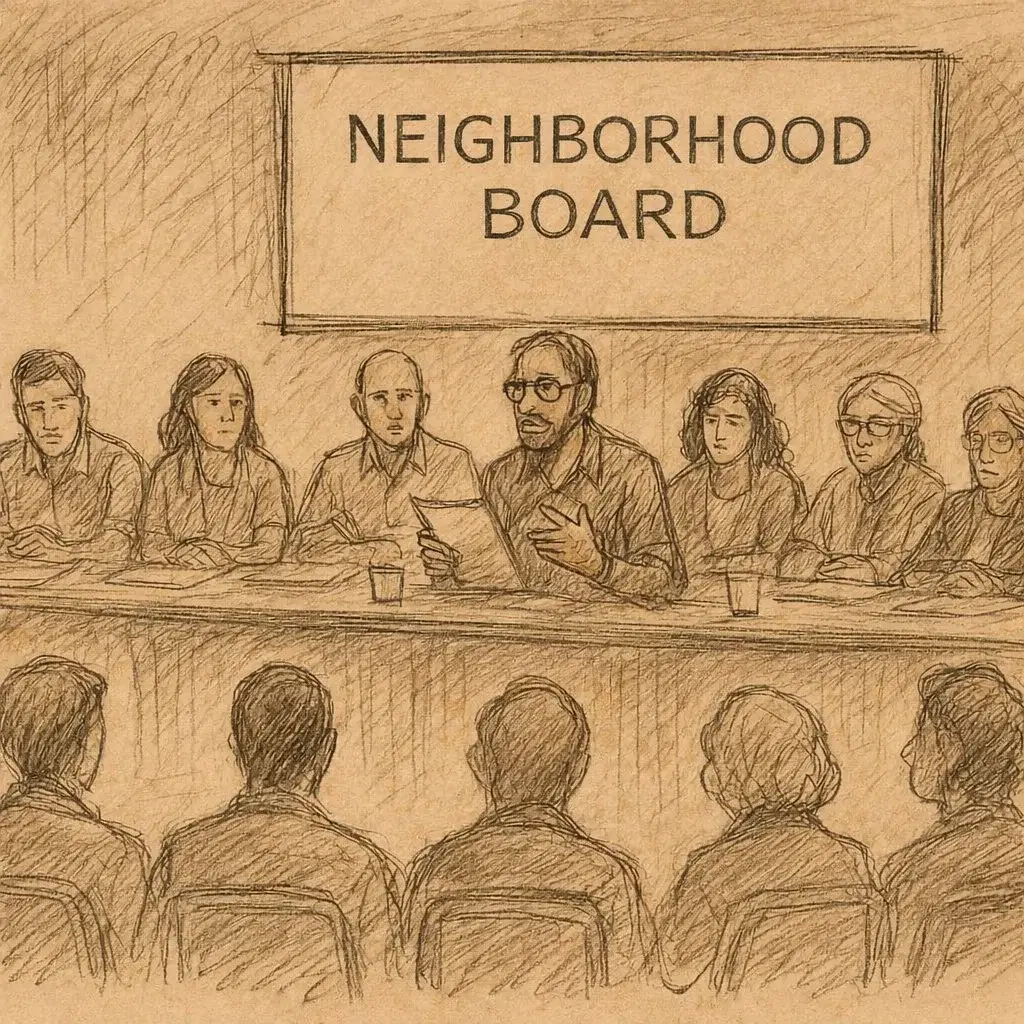
NO 18 Āliamanu-Salt Lake-Foster Village-Airport Neighborhood Board Regular Meeting October 2026
Listen to this article:
18 Aliamanu-Salt Lake Neighborhood Board Meeting – October 14, 2026
Opening and Quorum
Chair James Gower opened the regular meeting by reminding attendees that Neighborhood Board No. 18 exists to increase public participation in government. Speakers were asked to keep public comments to approximately one minute, reports to under three minutes, and board remarks to one minute so others would have an opportunity to participate. Secretary Chandra Kanemaru reported that Patty Igawa, Clarence Davis, and David Yohems were absent. Joseph Omura, Douglas Fujikura, James Gower, Faye Johnson, Nancy Valdez, and Kanemaru were present, establishing a six-member quorum.
Honolulu Fire Department Report
Captain Dana Bjorn of the Moanalua Fire Station reported September activity in the area. Firefighters responded to five nuisance fires involving rubbish outside structures or vehicles, 17 activated alarms where no fire was found, 142 medical emergencies, five motor-vehicle crashes or collisions, and one hazardous-materials incident. With the holiday season approaching, the department advised residents to purchase electrical decorations and appliances tested by a nationally recognized laboratory, follow manufacturers’ instructions, remain present and alert while cooking indoors or outdoors, and keep combustible materials away from heat and flames. Pedestrians and drivers were also urged to remain especially vigilant between dusk and dawn.
District 3 Police Report
Sergeant Miller reported that District 3’s Foster Village area recorded one unauthorized entry into a motor vehicle during September, with no other significant statistics to report. The district had recorded two thefts in August. For Halloween safety, police encouraged pedestrians to wear reflective materials and reminded both drivers and walkers to pay close attention. In response to a board question, Sergeant Miller confirmed that theft statistics include stolen conventional bicycles and electric bicycles, along with shoplifting and other forms of theft.
District 5 Police Report
Sergeant Corpuz of District 5 reported September crime statistics for Salt Lake and Āliamanu. The area recorded one aggravated assault, compared with none during the previous two months; four auto thefts, up from one in August; no burglaries; two sexual assaults; no robberies; one simple assault; five thefts, an increase from August; and one unauthorized entry into a motor vehicle. Officers responded to 562 total calls for service, down from 600 in August. Police again confirmed that bicycle and e-bike thefts are included in the general theft category.
Hawaii Bicycling League Warrior Award
The board named the Hawaii Bicycling League, or HBL, its October 2026 Warrior of the Month in recognition of the organization’s education, advocacy, events, and community service. The resolution described HBL as Hawaiʻi’s oldest and largest bicycling organization and highlighted its support for clearer Class 1, 2, and 3 e-bike laws that distinguish street-legal e-bikes from high-speed, high-powered electric motor devices. HBL also supported the three-foot vehicle-passing rule and a vulnerable-road-user law establishing stronger penalties when motorists carelessly or negligently injure or kill unprotected road users. Its work has included collaboration with Councilmember Radiant Cordero, the Department of Transportation Services, Senator Brandon Elefante, and others on improvements to the Pearl Harbor Historic Bike Path as part of the proposed 30-mile South Shore Trail connecting Nānākuli, Mānoa, and Waikīkī. HBL has advocated for protected bicycle lanes, including infrastructure honoring the late Zachary Manago, a Moanalua High School graduate and avid cyclist.
Bicycle Education, Events, and Service
The HBL resolution also recognized the organization’s partnership with the city in proclaiming May as Bike Month and organizing social rides, free workshops, a bicycle festival and swap meet, keiki helmet giveaways, and Bike to Work Week incentives. Its Honolulu Century Ride is in its 43rd year and attracts roughly 2,000 participants from Hawaiʻi, North America, Japan, Europe, and Oceania, while the Haleʻiwa Metric Century is held in the spring. HBL offers instruction in adult learn-to-ride skills, bicycling basics, road riding, flat-tire repair, e-bikes, and tricycle riding. Since 1989, its BikeEd program has taught safety and basic cycling skills to fourth graders across Oʻahu. HBL also organizes helmet distributions, bike-path and beach cleanups, Ride Aloha activities, and street-safety advocacy. In 2025, the city Department of Facility Maintenance gave HBL a Stormwater Hero Award for volunteer work reducing pollution through projects such as Pearl Harbor Bike Path and Waimānalo back-road cleanups.
Salt Lake Boulevard Bicycle Improvements
Accepting the award, HBL representative Eduardo Hernandez said the organization has operated since 1975 with a mission to increase bicycling for recreation, transportation, and health through advocacy, education, and events. He expressed particular enthusiasm for the Salt Lake Boulevard improvements now under construction. Although the project has experienced delays, he said new bicycle facilities are expected to come online during the coming year and should make the corridor safer for people who walk, bicycle, or use other rolling transportation. Hernandez emphasized that HBL’s safety work benefits motorists and pedestrians as well as cyclists.
Tribute to Howard Mitsuo Shima
The board paid posthumous tribute to Howard Mitsuo Shima, the first recipient of the board’s Warrior of the Month recognition. Shima was honored as a founding father of the Salt Lake community whose leadership, compassion, collaboration, and civic stewardship shaped the neighborhood and inspired later generations. The board presented a People’s Award in remembrance of his death on September 5, 2026, and observed a minute of silence.
Salt Lake Waterway and Genki Ball Project
Secretary Kanemaru announced the next Salt Lake Waterway restoration activities. On Saturday, November 7, volunteers were asked to meet from 10 a.m. to noon at Howard Shima Likini Street Mini Park, where free parking would be available. Participants would then walk to the Country Club Village Recreation Center to make 1,000 Genki Balls, which are used to improve water quality. A pat-down session was scheduled for November 14 from 11 a.m. to noon and was expected to take approximately 45 minutes to one hour. The 1,000-ball toss was planned for November 21 beginning at 10 a.m. at Howard Shima Park. Volunteers were advised to arrive on time because the balls could be distributed quickly if turnout was strong.
Charter Amendment on Food Security
Melissa Pavlisak discussed a group of high school students she is mentoring who are attempting to visit every neighborhood board on Oʻahu while advocating against hunger. The students were unable to attend this meeting because of school schedules but wanted residents to learn about proposed Charter Amendment No. 1. The proposal would dedicate one-half of one percent of real property tax revenue to addressing food insecurity and supporting locally produced agriculture. Pavlisak also encouraged residents to support the students’ civic involvement, even though voting on the question would conclude before the board’s next meeting.
Public Health Support for Local Food Security
Nikos Leverenz, a Keaka Drive resident and employee of the Hawaiʻi Health and Harm Reduction Center, also supported Charter Amendment No. 1. He explained that his organization responded to needs arising during the COVID-19 pandemic by partnering with the Hawaiʻi Foodbank and distributing hundreds of thousands of pounds of food. Leverenz said economic conditions remain difficult across income levels, particularly for working-class residents and people with little or no income, while federal involvement in food assistance is declining. He directed residents to yesonlocalfoodsecurity.org for updates and campaign information.
Red Hill Health Registry
Tori, a community engagement specialist with the Red Hill Registry, explained that the independent registry tracks health outcomes among people exposed to the 2021 jet-fuel contamination. She stressed that the registry is not affiliated with the military and depends on broad community participation to produce meaningful health information. People who were affected, or who know someone affected, may enroll through redhillregistry.org, beginning with a pre-enrollment questionnaire. Once enrolled, individuals and families can be connected with education, childcare, health care, and other resources. Because many military-connected families have moved away from Hawaiʻi, the registry is working with community-based organizations in other states and cities to ensure that support follows affected residents throughout the country.
Red Hill Facility Closure and Defueling
Joanna Delphin of Navy Closure Task Force–Red Hill presented an update requested by the board. The task force was established in November 2024 to decommission the Red Hill Bulk Fuel Storage Facility after the November 2021 fuel spill. Under a Department of Defense directive, Joint Task Force–Red Hill removed approximately 104 million gallons of fuel in early 2024. The fuel was gravity-drained through the system to Pearl Harbor, placed on ships, and transported out of Hawaiʻi. After defueling, the Navy Closure Task Force assumed responsibility for decommissioning, environmental assessment and investigation, and recommendations for long-term remediation. The task force also addressed a 2024 aqueous film-forming foam, or AFFF, concentrate spill by removing contaminated soil and later began tank cleaning and pipeline removal.
Tank Cleaning and Pipeline Removal
The closure effort is organized around decommissioning, environmental remediation, and public communication. Decommissioning includes ventilating tanks, inspecting and constructing needed infrastructure, pressure washing, removing sludge, cleaning pipes, and confirming that no residual fuel remains. Cleaned and certified pipelines are cut into sections, placed in containers, and shipped to the mainland for recycling. The facility contains 20 tanks, six of which were not in use at the time of the 2021 spill. The task force is actively working on the other 14 tanks at varying stages of ventilation, inspection, pressure washing, and sludge removal. Delphin reported that approximately 99 percent of the relevant tank-cleaning work had been completed earlier in the summer, while difficult-to-reach pipe sections would be cleaned progressively as cutting continues during the following year. As of the meeting, 3,785 gallons of residual fuel had been removed from the tanks.
Drinking Water Monitoring and Aquifer Work
The Environmental Protection Agency endorsed the Navy’s enhanced drinking-water monitoring conducted over the preceding several years, and the Navy reported that no fuel had been detected in the Joint Base Pearl Harbor-Hickam drinking-water system since 2022. In September, the Hawaiʻi Department of Health conditionally approved reactivation of the Navy’s ʻAiea-Hālawa Shaft, which Navy data indicated was not affected by the 2021 spill but had been shut down as a precaution. The Navy is also coordinating with the EPA and Department of Health on eventually reactivating the Red Hill Shaft, although that process is expected to take several more years. Groundwater monitoring wells, modeling, and site characterization are continuing to guide future remediation recommendations. The Navy said its priorities remain safe closure, water-system resilience, and environmental stewardship, with activities conducted under EPA and Department of Health oversight.
Red Hill Public Information Resources
The Navy highlighted several public-information tools, including NavyClosureTaskForce.Navy.mil, the Joint Base Pearl Harbor-Hickam Safe Waters website, and the NCTF–Red Hill mobile application for Apple and Android devices. The app includes an operational dashboard showing the status of each tank, gallons of residual fuel and sludge removed, and pipeline-cutting and removal progress. The Navy also produces technical podcasts on YouTube covering drinking-water monitoring, tank cleaning, and pipeline-cleaning procedures. Drinking-water information booths, open houses, town halls, and community meetings remain part of the task force’s communication work.
Hawaii Youth Prevention Team
Victoria Schlesinger of the Hawaiʻi National Guard Counterdrug Program introduced the Hawaiʻi High Intensity Drug Trafficking Area Prevention Team. HIDTA is federally funded through the White House Office of National Drug Control Policy and supports cooperation among federal, state, and local law-enforcement agencies. Its prevention team expands that collaboration to schools, organizations, families, and communities to delay or prevent youth misuse of alcohol, tobacco, and other drugs. Schlesinger emphasized that prevention has developed into an evidence-based science that builds health and positive behavior rather than focusing exclusively on problems. As an example, she said 86 percent of Hawaiʻi high school students do not use marijuana, demonstrating that most young people are making healthy choices.
Three-Tier Youth Prevention Strategy
The prevention team’s three-tier strategy is youth-led, adult-guided, community-supported, and grounded in evidence. The first tier consists of workshops that teach community members what works and does not work in prevention, how adults who interact with youth are already part of prevention, and how they can strengthen protective factors. The second tier is a planned one-day statewide youth summit, organized with the Departments of Health and Education. The team hopes to invite five students from every public, private, and charter high school, accompanied by an administrator with decision-making authority and a trusted adult who already supports youth. The summit would build prevention knowledge, advocacy skills, and awareness of available resources. The third tier would bring workshop participants and summit attendees together into local working groups that identify successful community conditions, address gaps, and design responses to local concerns.
Prevention Workshops, Data, and School Outreach
The team has held workshops on Hawaiʻi Island, Maui, and Oʻahu, with another planned in Kapolei, and invited communities to request additional sessions through hawaiiyouthprevention.org. The website is intended to serve as a hub for strategy information, meetings, cleanups, and future work-group projects, while the program’s Instagram account shares positive youth statistics and community successes. The University of Hawaiʻi is evaluating the initiative and surveying prevention gaps across the state. In response to board questions, Schlesinger said the team is coordinating with the Department of Education and principals, although it generally does not provide direct in-school services to students. She confirmed that alcohol and tobacco are included with other drugs in the prevention framework. She also noted that fear-based presentations may deter some students but can increase stress and potentially worsen use among youth already engaging in substance misuse, illustrating the need for evidence-based, universal prevention methods. Long-term measurement remains difficult because there are limited longitudinal studies, but the program uses Youth Risk Behavior Survey data and UH evaluation work to establish performance measures.
Common Cause Hawaii and Voter Participation
Nikki Ames, election protection organizer for Common Cause Hawaiʻi, described the nonprofit as a nonpartisan organization that has advocated since 1970 for open and accountable government. Its work includes voting and fair representation, anti-corruption and government accountability, ethical use of media and technology, and civil rights and liberties. Because Hawaiʻi has one of the nation’s lowest voter-turnout rates, Common Cause is running its first election-protection campaign in the state in approximately 40 years. The effort focuses on voter education, easier access to voting, assistance navigating the process, and monitoring to ensure voting remains accessible.
Election Protection Volunteers and Ballot Deadlines
Common Cause is recruiting in-person poll monitors, ballot drop-box monitors, event volunteers, and drivers who can provide rides to voting sites. Drop-box volunteers may inspect nearby boxes to ensure required signs are present, access is unobstructed, and there is no evidence of tampering. Prospective volunteers complete a sign-up form, watch a 26-minute online training, pass a short quiz, and then select shifts. Ames stressed that mailed ballots must be received—not merely postmarked—by 7 p.m. on Election Day. She said voters should expect ballots around mid-October, while the mayor’s later written report stated that active registered voters would begin receiving mailed ballots on October 16. Election Day was announced as November 3.
In-Person Voting Access
Ames initially identified Honolulu Hale and Kapolei Hale as Oʻahu’s primary Election Day voting locations and noted that other voter service centers would operate before Election Day. Residents were directed to the Hawaiʻi Office of Elections website for current locations and hours. Board members raised concerns about access for residents in Haleʻiwa, Punaluʻu, Kailua, Kāneʻohe, and other communities far from the two main sites. Ames agreed that more in-person locations are needed and said Common Cause has advocated for expansion. Councilmember Cordero later clarified that voter service centers would also be available at Wahiawā District Park and in the meeting room at Kāneʻohe District Park. A question about whether election workers are paid or volunteer personnel was referred to the Office of Elections for an authoritative answer.
Approval of Meeting Minutes
The board considered the minutes from its July, August, and September 2026 meetings. No corrections were offered by board members or the public, and all three sets of minutes were approved as written.
Mayor’s Office Report
No representative from Mayor Rick Blangiardi’s office attended, so the chair summarized a written memorandum. Its highlights included expanded crisis-response services across Oʻahu, the selection of new Honolulu Police Department deputy chiefs, city assistance related to Kauaʻi, a recovery milestone associated with a Kona low, and upgrades to the Honolulu Zoo’s penguin and hippopotamus exhibits. The memorandum also reminded residents that the general election would be held November 3 and that active registered voters would begin receiving mail ballots on October 16.
Charter Amendment Information
Councilmember Radiant Cordero advised residents that 20 proposed Honolulu Charter amendments would appear on the ballot. A Charter Commission informational session was announced for 6 p.m. at Āliamanu Elementary School, with another session listed for Zoom. Amendment guides and a downloadable PDF were available through HonoluluCityCouncil.org/OahuVotes. Cordero offered to deliver printed booklets to residents unable to attend an informational session and repeatedly encouraged the community to review the questions and vote.
Halloween and Family Events
Cordero announced several October activities. Salt Lake District Park was scheduled to host a Trunk or Treat on October 23, with the council office offering candy, prizes, glow sticks, and a football-throwing activity. Another safe trick-or-treat event was planned along Skyline, including Middle Street and Hālawa stations, accompanied by a Read to Me International read-aloud for keiki. The first Salt Lake Neighborhood Trick or Treat was scheduled for October 31 from 3 to 7 p.m. at Hoa Aloha Neighborhood Park.
Food Distribution in Public Parks
Cordero reported that Bill 30 had become Ordinance 26-23, amending city rules to permit nonprofit farmers markets and food-distribution events in public parks when organizers obtain permits and comply with Department of Parks and Recreation requirements. The ordinance defines a food-distribution event as an organized nonprofit effort to provide food directly to individuals and families experiencing food insecurity. Such events are restricted in locations already served by the People’s Open Market, but because that market no longer operates at several neighborhood sites, Salt Lake and surrounding communities may now have additional options. Possible locations discussed included Āliamanu-area parks and Howard Shima Likini Street Mini Park, subject to confirmation and permitting.
Churches, Nonprofits, and Food Assistance
A board member asked why city government could not coordinate more closely with churches that already feed people experiencing homelessness and food insecurity, while also raising concerns about public funds failing to reach intended recipients. Cordero said the city generally does not distribute food directly but supports nonprofit organizations through grants-in-aid and Department of Community Services contracts; those organizations may then partner with churches. She explained that the new ordinance primarily expands access to public locations rather than creating a city-run food program, allowing churches and other nonprofits to use parks for permitted distributions without unnecessarily expanding government operations.
Salt Lake Municipal Lot Parking Meters
The Department of Transportation Services installed meters at four existing accessible parking stalls in the Salt Lake municipal lot. Two more meters were planned for previously unmetered accessible stalls on the ʻewa side near Līhuʻe Street so that the facility would comply with applicable Hawaiʻi Revised Statutes.
Ala Moana High-Rise Development
A board member questioned the City Council’s conceptual approval of a roughly 38- to 40-story development near Ala Moana Center, objecting to high-rise growth near Ala Moana Beach Park and expressing concern that the project would primarily serve wealthy buyers. Cordero said the property’s existing zoning could have permitted an all-luxury project with no affordability requirement. Through negotiations involving Unite Here Local 5 and others, the development was revised to include approximately 67 additional non-luxury units and roughly 28 to 38 lower-income units, although she noted the exact figures from memory were uncertain. The developer is also expected to provide approximately $5 million to $6 million in road, pedestrian, lighting, and other infrastructure improvements. The approval was only conceptual; the project must still obtain Department of Planning and Permitting approvals, Board of Water Supply review, utility clearances, and other permits.
Governor’s Office
Diamond Batajos, representing Governor Josh Green, apologized for recent absences caused by family scheduling obligations and said she hoped to resume regular participation. She had no formal report but remained available for state-related questions. None were raised.
Senator Glenn Wakai’s Office
Ashley from Senator Glenn Wakai’s office reported that the senator had departed for Korea as part of continuing efforts to strengthen athletic connections between Hawaiʻi and Asia. Interest is growing in sending athletes to Hawaiʻi, and the University of Hawaiʻi had already signed a pitcher from Tokyo whose fastball had reportedly been clocked at 93 miles per hour. The office also followed up on Hālawa Stream erosion. Senator Wakai, Chair Gower, Councilmember Cordero, and city officials had recently met to inspect the issue, and the next tasks are identifying access points for heavy equipment and securing funds for stream dredging.
Representative Garner Shimizu’s Office
Brittany, representing Representative Garner Shimizu, described several constituent-service cases. For overgrown vegetation on a state parcel next to 99-029 Iwaipa Way in ʻAiea, initial records suggested Department of Land and Natural Resources ownership, but further review linked the land to a highway project. Residents were directed to the Department of Transportation Highways Maintenance complaint line at 808-831-6700, extension 113. At the crosswalk near Center Drive and Radford Drive by the H-1 overpass, HDOT evaluated nighttime visibility, repaired streetlights along Radford Drive between Kamehameha Highway and Bougainville Drive on July 6, restriped the crosswalk and stop bar with reflective material, and issued a work order for additional median striping and a “STOP” pavement marking. On Ala Oli Street, residents raised concerns about tall palm trees in the median near Radford High School and their potential danger during high winds. The city’s Division of Urban Forestry created a work order but said inspectors would assess the trees after completing higher-priority hurricane-damage and debris-removal work.
Aloha Stadium Community Events
Chris Kinimaka of the Department of Accounting and General Services, reporting on behalf of the stadium, invited residents to the second annual Skyline Halloween event on October 31. Activities were planned at five stations: Middle Street, Hālawa, West Loch, Hoʻopili, and East Kapolei. At Hālawa, Aloha Stadium representatives planned to distribute keiki squishy toys and coupons for free admission to the swap meet. The event would also include a costume contest and opportunities to win prizes.
Hālawa Community Mural
The stadium reported on a September 26 Community Art Day at which participants of varying ages and artistic experience helped create a mural inspired by the history, culture, and landscape of Hālawa Valley. Native Hawaiian artist Solomon Robert Nui Enos designed the piece using a pointillist technique so each person’s contribution would form part of a larger collective image. Although tropical-storm conditions brought clouds, rain, and eventually strong winds that caused the event to end early for safety, participants completed the mural. Organizers thanked Senators Wakai and Elefante, Councilmember Cordero, and Representative Shimizu for participating. Future activities may allow local students and additional community members to expand the mural.
Aloha Stadium Demolition and Design
Justin Lui of Aloha Hālawa District Partners said demolition of the former Aloha Stadium was nearly complete. He apologized for overnight noise after a subcontractor began dismantling the elevator shaft late on a Monday and then had to continue through the night because of concerns about structural stability. The contractor was instructed to begin similar work in the morning so it can be completed safely without nighttime disruption. The south end zone was the principal remaining structure, and dismantling was still expected to finish by mid-November. Summer storms had saturated the ground and temporarily prevented crane use because the equipment requires firm soil, but crews were attempting to recover lost time. Stadium design refinement was continuing in preparation for construction bidding, with the design-development phase expected to begin shortly.
RISE Bond Amendment
Lui discussed state constitutional amendment Question No. 2 concerning RISE, or Resilient Infrastructure, bonds. If approved, the amendment would allow counties to issue bonds for public infrastructure and repay them using future property-tax growth generated within locally designated districts, without changing the property-tax rate. Potential uses could include roads, water and sewer systems, drainage, parks, and resilient infrastructure. Passage would not automatically authorize a specific project; county governments would still determine eligible districts and uses through an oversight process. Lui noted that an unanswered ballot question counts as a “no” vote and offered to provide nonpartisan material from the Hawaiʻi Institute for Public Affairs.
Army Training Advisories
Army representative Liana Kim announced continued October training at East Range and Schofield Barracks. Residents may request training notices by emailing usag.hawaii.comrel@army.mil and may report concerns about unusual noise outside announced training periods at 808-766-7778. The Joint Pacific Multinational Readiness Center exercise was scheduled for November 7–16. In preparation, residents could expect more military vehicles around installations and on public roads, as well as daytime and nighttime helicopter and cargo-aircraft flights. Training locations include Kahuku Training Area, Kalaeloa Airfield at Barber’s Point, Joint Base Pearl Harbor-Hickam, Wheeler Army Airfield, and Schofield Barracks, with aircraft including C-130 Hercules and C-17 Globemaster transports.
Makalapa Crater Cleanup Proposal
The U.S. Army Corps of Engineers is seeking comments on an interim proposed plan for the Makalapa Crater Navy Salvage Yard Formerly Used Defense Site. The proposal calls for removing the upper two feet of soil from two currently inaccessible areas so they may eventually be used safely by maintenance or outdoor workers. The work would address only part of the 19.3-acre property and would not constitute the final cleanup decision for the entire site. Work is tentatively planned for summer 2027. A 30-day public-comment period was announced through October 28, with comments accepted by mail, email, or at a public meeting scheduled at the Oʻahu Veterans Center. Project materials were made available through the Army Corps of Engineers Honolulu District website.
Army Employment Fairs
The Army also announced public hiring fairs associated with Helemano Military Reservation. Events were identified for October 19 and November 17, with hours from 8:30 a.m. to 2 p.m.; the November event was to be held at the Helemano Military Reservation gym. Additional information was available through himwr.com.
Navy Review of Hālawa Stream
Navy representative Chuck Anthony said the Navy was responding to requests from the board and elected officials for a field inspection of Hālawa Stream. Participants want to examine debris, erosion, and possible remediation needs in the streambed. Before scheduling the visit, the Navy will conduct reconnaissance to identify a safe way into and out of the stream. Chair Gower explained that a previous inspection near McDonald’s and the stadium found no convenient access point and that the curving stream borders Navy, city, and private property. Officials are concerned that a rising or obstructed stream could threaten nearby lives and property, making multiagency coordination necessary.
Board of Water Supply Planning
Jimmy Yanos of the Honolulu Board of Water Supply answered questions carried over from August. He reported that 2026 was considered a wet year because the five-month moving average for rainfall was above the normal rain-gauge index. The price of water is based on capital, operating, and maintenance costs associated with delivering service. Overall Oʻahu population growth is currently flat and water consumption continues to decline, but BWS uses Department of Planning and Permitting population forecasts to identify where future demand and new water sources may be needed. The Water Master Plan update is evaluating future source development, water-system facility charges, and capital-improvement needs that will influence future costs. The ten-year plan update is expected to be ready for review in 2027.
Water Service During Power Outages
No water-main breaks were reported for September. BWS reminded residents that during power outages it has limited ability to pump groundwater into reservoirs. Until electricity is restored, the water already held in reservoirs may be the only supply available, so customers should limit use to cooking, drinking, and personal hygiene. Conservation should continue after power returns so electrically powered pumps can replenish storage. Full service and pressure may take time to recover after a prolonged outage or widespread damage. In response to a question about whether drinking-water quality differs among communities such as Wahiawā, ʻEwa Beach, Honolulu, Waikīkī, Kailua, and Kāneʻohe, Yanos said every system must meet applicable standards and is sampled monthly, but he would consult the water-quality division for a more detailed comparison.
State Transportation Projects and Roadside Conditions
State Department of Transportation representative Kaylin Wong reported that the Gulick Avenue project had begun and a section of roadway was closed. Information and updates were available at HawaiiWidening.com, and project completion was projected for February 2028. HDOT’s planning section is also studying a possible freeway cap park spanning the H-1 between the Liliha area and Queen Emma Street; the board may request a presentation in 2027. A board member reported that conditions had improved near Catlin Road, where an encampment had been removed, but a large pit across from an airport hotel again contained substantial trash and bags. An encampment remained on the Valkenburg Street side, though the resident said it appeared more organized. Wong asked for photographs so he could refer the debris concern to HDOT’s homelessness coordinator.
Committee Reports and Next Meeting
The board reviewed its committee assignments covering homelessness, health and the environment, transportation, legislation and construction, the Oʻahu Metropolitan Planning Organization and Neighborhood Board System, kūpuna issues, schools and parks, community meetings, and military and public safety. Kanemaru had submitted reports on several community events, which the chair said would be made available through the Neighborhood Commission Office website. The next regular meeting was scheduled for Thursday, November 12, at 6:30 p.m. at the same location. Before adjournment, the board and attendees sang “Happy Birthday” in recognition of Chandra Kanemaru.