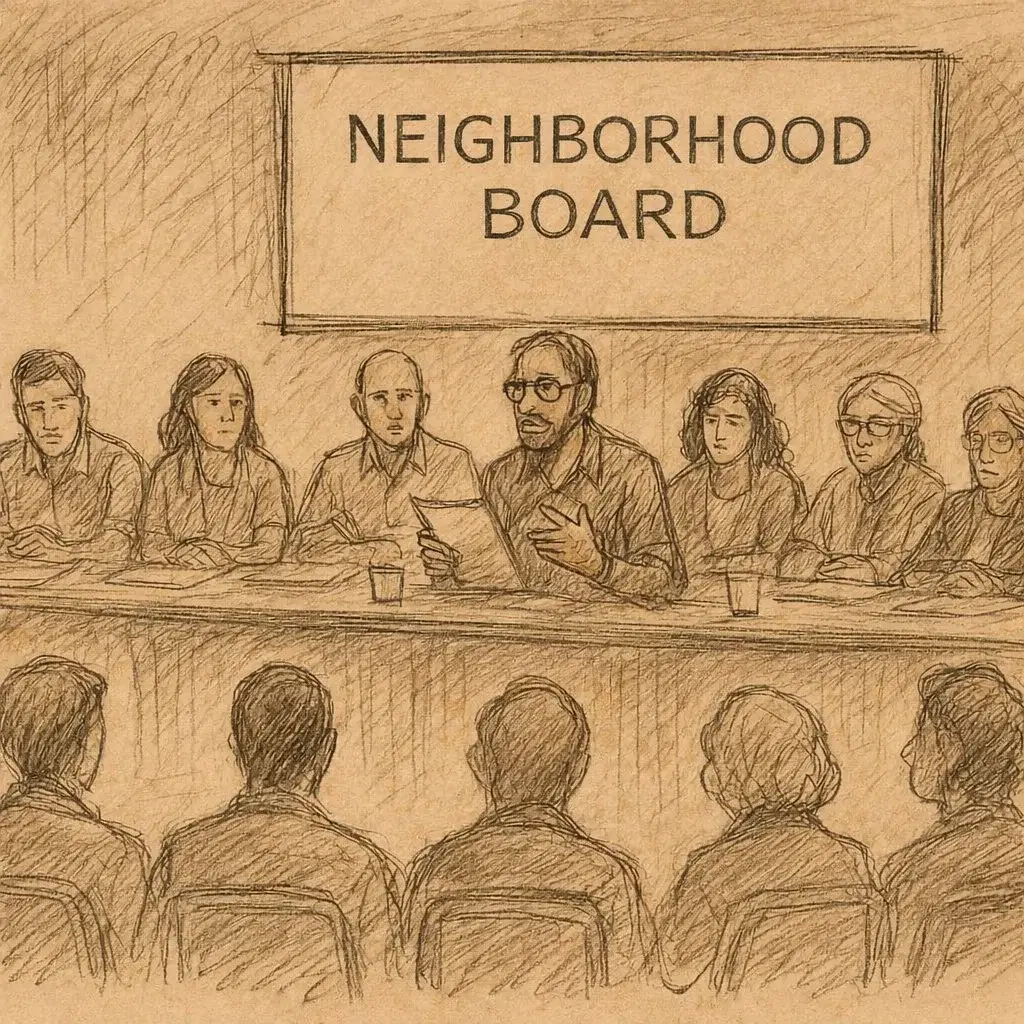
No 11 Ala Moana Kaka'ako Neighborhood Board Regular Meeting August 2026
Listen to this article:
11 Ala Moana-Kakaako Neighborhood Board Meeting – August 26, 2026
Call to Order and Meeting Purpose
The regular meeting was called to order at 6:04 p.m. with six members present, establishing quorum. Chair Lee welcomed board members and residents and reiterated that the Neighborhood Board exists to encourage civic participation and help make Ala Moana-Kakaʻako a strong place to live, work, play, and thrive. Because of recent tropical storms, first responders and elected officials were asked to emphasize emergency preparedness, safety guidance, and recovery resources throughout their reports.
Honolulu Fire Department
Captain Kaleo Young of the Pāwaʻa Fire Station reported July 2026 activity consisting of one structure fire, two nuisance fires, 28 alarm activations without fire, 152 medical emergencies, one collision involving a pedestrian, and one other motor vehicle collision. His preparedness message focused on understanding emergency notifications and relying on official information. Residents can register at hnalert.gov for location-based HNL Alert notifications by text, email, or app push notification and follow official government social media accounts. Immediate threats may also trigger the Emergency Alert System, Wireless Emergency Alerts, or outdoor warning sirens. Additional information is available through the Honolulu Department of Emergency Management’s “Stay Informed” webpage. In response to questions about traveling during dangerous weather, Captain Young advised residents to remain home whenever possible because unnecessary traffic increases personal risk and can delay emergency vehicles. He said the recent storm weekend generated more than 100 alarms compared with approximately 20 on a normal day. The department had enough personnel to respond, but the volume caused longer response times.
Honolulu Police Department Crime and Traffic Report
Sergeant Richard Townsend reported that auto thefts declined from 12 to 10, burglaries from four to three, thefts from 100 to 98, and assaults from 24 to 17. Unauthorized entries into motor vehicles increased from seven to nine, sexual assaults rose from one to three, graffiti increased from zero to one reported case, and drug cases remained at four. Motor vehicle collisions rose sharply from 96 to 135. HPD encouraged drivers to slow down, allow more time during morning travel, secure their vehicles, lock doors, avoid leaving running vehicles unattended, park in safer locations, and report suspicious conduct. Asked whether older residents are disproportionately targeted for vehicle theft, Townsend said theft is generally driven by opportunity rather than age. He also advised residents concerned about nighttime safety to stay off their phones, observe their surroundings when leaving businesses, inspect the area around their vehicles before entering, return to a secure location if something appears wrong, and call police.
Violent Crime and the Keʻeaumoku-Kapiʻolani Stabbing
Board members discussed a recent fatal stabbing near Keʻeaumoku Street and Kapiʻolani Boulevard, as well as earlier shootings and violent incidents on Kona and Keʻeaumoku streets. Residents have reported feeling unsafe walking at night even when broader crime statistics may not fully reflect that perception. Sergeant Townsend emphasized situational awareness and prompt reporting of suspicious activity. Media reports suggested that the stabbing suspect may have been unsheltered and affected by mental or behavioral health issues, but Townsend could not confirm whether the individual regularly stayed near the H&R Block-area encampment between Ala Moana Center and Kapiʻolani Boulevard. He explained that unsheltered individuals often move between districts and that mental illness and substance use frequently complicate police contacts. The board indicated that any connection between violent incidents and nearby encampments would warrant further discussion with the mayor’s homelessness representatives.
Homelessness, Encampments, and Public-Space Safety
A lengthy discussion addressed the visible increase in unsheltered people throughout Ala Moana Beach Park, Kakaʻako, bus stops, commercial properties, and areas between Waikīkī and downtown. First Vice Chair Jeannie Rice said people who once concentrated near Atkinson Drive are now increasingly present farther into the park and toward Kamakeʻe Street. Sergeant Townsend, who has worked in the district for roughly 10 years, agreed that the population has grown significantly. He described past nightly park sweeps and efforts to connect individuals with shelters, but said many decline help because of mental illness, substance use, or restrictions associated with shelters. He also described cases in which families arrived from the continental United States expecting shelter placement, only to be turned away because facilities were full and to lose their belongings within weeks. HPD can cite people, ask them to move, or arrest them when violations occur, but individuals are often released or simply relocate and return because IHS and other providers lack capacity. Townsend said moving people from one district to another does not resolve the underlying shortage of housing, shelters, treatment, and supportive services.
Resident and Business Concerns About Unsheltered Activity
Residents described public urination near children, suspected drug activity, occupied bus shelters, blocked parking areas, repeated trespassing, and safety concerns for employees and transit riders. Resident Elena argued that enforcement appears more effective in Waikīkī than in Ala Moana and asked HPD to examine what Waikīkī does differently, increase surveillance, and press state leaders to confront the effects of failed homelessness policies. Kakaʻako business owner Courtney Monahan said three unsheltered people entered her store on the day of the meeting and that her female employees regularly face safety concerns near Haleakalā Street and 7-Eleven. She said businesses lose work time and sales while repeatedly calling police, yet individuals often return shortly after officers leave. Former resident Dylan Armstrong described bus stops at Kapiʻolani and Keʻeaumoku, Kapiʻolani and Kamakeʻe, and along Queen Street being used as long-term shelters, forcing riders to avoid urine, needles, and personal belongings. HPD advised residents and businesses to continue reporting incidents but acknowledged that enforcement alone cannot prevent recurrence without more treatment and housing options.
Interagency Homelessness Response and Community Advocacy
Secretary Farinas asked whether HPD is collaborating with health and harm-reduction organizations instead of being expected to solve a complex social and behavioral health problem alone. Sergeant Townsend said HPD has begun working with the city’s Crisis Outreach Response and Engagement program, or CORE, to approach people with mental health needs and connect willing individuals to care. Some interventions succeed, but providers are limited by eligibility rules, treatment capacity, and refusals of service. Board members urged residents to write to the governor, mayor, legislators, and City Council, testify on legislation, attend meetings, and continue documenting neighborhood conditions. Rice noted that HPD is short approximately 463 officers islandwide and said the Ala Moana-Kakaʻako area has about 20 officers assigned during a typical watch. Johnny Mae Perry recommended inviting the governor’s and mayor’s homelessness coordinators and noted that legislation concerning bus-stop occupation is pending before the City Council. The board’s Action Committee, which meets informally each month, will continue examining homelessness and public-safety solutions, and the mayor’s representative later offered to arrange a presentation by Honolulu Director of Homeless Solutions Roy Miyahira.
AIDS Memorial and Community Memory Site
Dean Hamer and Joe Wilson of the Lei Pua ʻAla Foundation, together with Kanani Dreyer of the Hawaiʻi Health and Harm Reduction Center, presented plans for an AIDS Memorial and Community Memory Site at Kakaʻako Waterfront Park. The project has been developed over approximately two and a half years with the medical school, WCIT Architecture, the City and County of Honolulu, historians, archivists, medical students, and community organizations. H3RC, formed through the merger of the Life Foundation and the CHOW Project, considers the project central to preserving the history of HIV/AIDS services and affected communities in Hawaiʻi. The memorial would honor those who died or suffered during the HIV/AIDS epidemic while also recognizing other epidemics that shaped Hawaiʻi, including smallpox, Hansen’s disease, and COVID-19. Presenters described Kakaʻako as historically connected to epidemics because it housed early smallpox and leprosy hospitals and served as a departure point for people with Hansen’s disease sent to Molokaʻi. Today, the medical school and H3RC give the area a renewed role as a place of healing.
Waterfront Park Improvements and Memorial Design
The memorial would center on the existing overlook at the highest point of Kakaʻako Waterfront Park, using existing rock walls, the circular layout, and other built infrastructure rather than creating an intrusive new structure. Proposed additions include reflection benches, public art, interpretive plaques concerning HIV/AIDS and other epidemics, material on Hawaiʻi’s traditions of inclusion and well-being, entrance maps, historical information, and wayfinding signs. A digital portal would preserve oral histories and community stories as a living “electronic quilt.” The foundation has an Adopt-a-Park agreement and has conducted cleanups and talk-story sessions to address graffiti, damaged lighting, destroyed signs, and vandalism while gathering public input. Presenters said more regular community use and positive activation could make the park safer and more welcoming without excluding runners, visitors, or people already using the overlook. They have coordinated with representatives connected to the Ehime Maru Memorial, the Mothers Against Drunk Driving memorial, and existing public art to ensure the additions harmonize with the park. The memorial is on public park property rather than Office of Hawaiian Affairs land, although OHA owns nearby parcels.
Memorial Funding and Board Support Process
The project has been funded through a three-year Mellon Foundation Monuments Project grant, which is expected to cover the improvements described. The newly established nonprofit Lei Pua ʻAla Foundation also has funding available for maintenance and possible future enhancements. The mayor has approved the concept, the organizers have worked with the Department of Parks and Recreation, and the project has undergone review by the Oʻahu Historic Preservation Commission and participated in HCDA’s Kakaʻako planning process. The next formal step is a City Council gift resolution. Second Vice Chair Dale Vanderbrink proposed that the board support the memorial, and First Vice Chair Rice seconded the motion. However, Dylan Armstrong cautioned that the agenda listed only a presentation and did not provide notice of a formal action item. To avoid a possible Sunshine Law violation, the board deferred the vote and agreed to place formal consideration on a future agenda while expressing general support for the project.
HPU Shark Race 5K
Hawaiʻi Pacific University representative Kevin Schwarz was not present to give the scheduled presentation on the Shark Race 5K. The event was announced for September 6, 2026, and the course map was made available in the board’s Google Drive for residents interested in reviewing the route and possible neighborhood effects.
Aloha Festivals Floral Parade
Dre Kalili announced the 76th annual Aloha Festivals Floral Parade, part of the festivals’ 80th anniversary year, scheduled for Saturday, September 26. The traditional route will begin at Ala Moana Beach Park, travel through Waikīkī, and end at Kapiʻolani Park. Roads around Ala Moana Beach Park will begin closing as early as 6 a.m. while floats move from the Hawaiʻi Convention Center to the staging area, and Ala Moana Boulevard toward Waikīkī will close closer to the 9 a.m. parade start. Applications remained open for community organizations wishing to participate. Board members expressed concern that parade participation, including high school bands, hotel floats, visitor-industry groups, and volunteers, has declined since the COVID-19 pandemic. Kalili identified transportation costs for school bands, float-construction expenses, and reduced volunteer participation as major barriers. The festival attempted to sponsor buses in the prior year, but costs remained prohibitive for some schools. Member Rick Egged, who has worked with Aloha Festivals since 2008 and was serving as its president, said fundraising was improving and the festival appeared to be on an upswing. Rice urged hotels, activity companies, and transportation providers such as Roberts Hawaiʻi to renew their support and involve visitors in float preparation.
July Meeting Minutes and Student Recognition
The board unanimously approved the July 28, 2026 regular meeting minutes. The board also recognized Ala Moana-Kakaʻako student Jessica Lee, who could not attend. Her mentor, Vanessa Distaho, reported that Representative Ed Case presented Jessica with the U.S. Congressional Award Gold Medal on August 13. Jessica completed more than 400 hours of volunteer service with St. Francis Healthcare System and founded CHAMP, the Cancer Health Awareness and Mindfulness Program, through which she conducts workshops at schools, libraries, and community centers. In July she partnered with the University of Hawaiʻi Cancer Center’s Skin Van for a SunSmart event at Ala Moana Regional Park, and her next workshop was scheduled for August 29 from 11 a.m. to noon at Lanakila Senior Center. Punahou School also selected her as a “One to Watch.” The chair noted that the award process took three years and that Jessica was only the seventh Oʻahu recipient since the program began in 1979.
Business Improvement District Model
Trevor Abarzua, chief executive of the Waikīkī Improvement Association, explained how a business improvement district, or community benefit district, could provide supplemental “clean and safe” services in Ala Moana-Kakaʻako. Waikīkī’s district was established in 2000 and is funded through assessments on commercial properties, generating approximately $4.5 million to $5 million annually, about 85 percent of which is spent directly on street-level programs. Roughly 60 full- and part-time Aloha Ambassadors provide power washing, trash removal, visitor assistance, landscaping, security, homeless outreach, and enhanced safety services. Some security personnel wear body cameras and coordinate closely with HPD. The district does not replace city employees or services; it adds personnel, equipment, advocacy, and neighborhood-specific attention. Abarzua said the model also creates full-time professional staff whose central responsibility is improving the district and maintaining relationships with the mayor, City Council, police, parks personnel, and other operational agencies.
Waikīkī Crime and Homelessness Strategy
Abarzua described the Safe and Sound Waikīkī initiative developed after the pandemic, when returning visitors and businesses encountered increased homelessness and habitual criminal activity. The district convened HPD, the prosecuting attorney, the mayor’s office, tourism organizations, and community leaders to address repeat offenders and unsheltered homelessness. Geographic restrictions were used against habitual offenders repeatedly returning to Waikīkī, allowing stronger consequences for violations. The district later expanded outreach by funding street medicine through partners including Waikīkī Health and IHS, with a physician providing care five days a week, including wound treatment and antipsychotic medication. The strategy combines extensive offers of shelter, treatment, family reunification, transportation, housing assistance, and medical care with enforcement of park hours, beach-sleeping restrictions, and unacceptable public behavior. Abarzua reported a 92 percent reduction in unsheltered homelessness in Waikīkī’s core area—Kalākaua Avenue, Kūhiō Avenue, and the beach—from 111 people in 2022 to 10. The organization conducts its own twice-yearly count with the University of Hawaiʻi and includes Ala Moana Beach Park, Kapiʻolani Park, and nearby Kapahulu areas in its broader survey.
Creating an Ala Moana-Kakaʻako Improvement District
Board members and residents strongly supported exploring a similar district for Ala Moana-Kakaʻako, where rapid development, high property values, tourism, retail, residential towers, homelessness, and public-space concerns create needs that citywide agencies may not address at a neighborhood level. Potential boundaries, governance, services, and funding would be determined through City Council legislation and community negotiations. Unlike Waikīkī and downtown Honolulu, which assess only commercial properties, many mainland districts assess both commercial and residential property. Abarzua suggested that including Ala Moana-Kakaʻako’s high-value residential towers could significantly increase resources; as an illustration rather than a formal estimate, he said a commercial-only district might generate $2 million while one including residential properties might generate $4 million, potentially supporting far more ambassadors and services such as a street-medicine physician. Assessments could be structured in tiers based on property type, value, square footage, or location. Residents acknowledged that assessments imposed on owners might ultimately affect rents or condominium costs but discussed whether an estimated contribution such as $200 annually could be worthwhile for enhanced safety, cleanliness, advocacy, and public-space management.
Improvement District Governance and Accountability
Abarzua said a district would be governed by a board representing assessed property owners and other stakeholders, which could approve budgets, change priorities, replace staff, lower or increase assessment rates, or dissolve the organization if a majority of ratepayers supported doing so under the governing ordinance. Waikīkī’s board has approximately 25 members and includes large and small businesses, tenants, and the neighborhood board chair. If crime and homelessness were substantially reduced, funds could be redirected toward public art, cultural events, street festivals, landscaping, environmental design, and other forms of positive activation. He cited crime prevention through environmental design, such as replacing a location associated with illegal activity with an interactive or family-oriented amenity. Waikīkī’s broader organizational structure also includes separate entities for beach restoration, transportation management, Aloha Festivals, and membership-based activities. Beyond assessments, the nonprofit can accept donations and grants; Hilton Grand Vacations, for example, donated $1 million for improvements at Kūhiō Beach Park, including graffiti removal and upgraded turf.
Development Contributions and District Startup Funding
Second Vice Chair Vanderbrink suggested that development-related contributions could help launch an Ala Moana-Kakaʻako district. He cited the proposed 1588 Ala Moana Boulevard condo-hotel project at Ala Moana Center near Atkinson Drive and Kapiʻolani Boulevard. In exchange for height and density waivers, the Department of Planning and Permitting required the developer to contribute $5 million toward Atkinson Complete Streets and $1.5 million for tree planting along Ala Moana Boulevard. Vanderbrink suggested that some comparable development contributions could instead support a neighborhood improvement organization, though Abarzua emphasized that such funding would supplement, not replace, city obligations. Howard Hughes’ Ward Village security and maintenance system was discussed as an effective private model, but participants noted that a district could address conditions beyond individual property boundaries, including travel between residential towers, Ala Moana Center, parks, and surrounding streets.
Citizens Patrol and Action Committee
The board introduced the idea of a volunteer citizens patrol, previously raised by Representative Ikaika Olds and discussed with Senator Sharon Moriwaki. The concept would involve residents watching neighborhood areas and reporting safety concerns and was presented as another possible component of broader public-safety and improvement-district efforts. The board’s Action Committee, reactivated to allow more informal and detailed discussions than regular meetings permit, meets on the second Thursday of each month. Rice described recent sessions with Senator Moriwaki, Councilmember Scott Nishimoto, and Representative Olds as productive. The next meeting was scheduled for September 10 with Councilmember Tyler Dos Santos-Tam, who helped establish downtown Honolulu’s new business improvement district and could answer questions about creating one in Ala Moana-Kakaʻako.
Community Outreach and Farmers Market Participation
Chair Lee and a board member recently attended the Kakaʻako Farmers Market for voter outreach and to explain the Neighborhood Board’s work. What began as a voter-registration effort developed into broader conversations about community issues. The board intends to continue appearing at neighborhood events to increase engagement and provide more opportunities for residents to raise concerns outside formal meetings.
Straub Parking Structure and South King Street Disruptions
Secretary Farinas reported that construction had reached phase three on the Straub parking structure. Lane closures were affecting South King Street and Kealamakai Street and were expected to continue through mid-September while geological testing and HECO utility work proceeded. The area previously experienced a construction-related collapse in July in which part of the structure fell toward a major street, and the cause had not been publicly clarified by Hawaiʻi Dredging. HPD has been directing traffic at the site. Pedestrians, cyclists, and drivers were advised to avoid the area when possible and allow additional travel time because South King Street is a heavily used corridor.
Shopping Cart Legislation and 1588 Ala Moana Boulevard
Vanderbrink highlighted City Council Bill 53, which would establish fines and possible criminal penalties for taking shopping carts off private property without permission. The measure passed first reading and will return for additional hearings. He also reminded residents that the Council’s zoning and planning committee would consider the 1588 Ala Moana Boulevard condo-hotel project on August 27, including formal approval of waivers and the required $5 million Atkinson Complete Streets contribution and $1.5 million Ala Moana Boulevard tree-planting contribution. Residents were encouraged to submit written testimony or testify in person or remotely.
Protest Noise and State Land Near the Ala Wai
Yacht Harbor Towers resident Steve Bailey complained about demonstrators near Ala Moana Boulevard, Ala Moana Park Drive, and Atkinson Drive who use inflatable costumes and signs encouraging motorists and truck drivers to honk. While supporting the right to protest, he said prolonged horn noise disrupts nearby high-rise residents and that police have not consistently responded to his noise complaints or checked whether permits are required. Bailey also identified a state-owned strip of land between the guardrail near the Ala Wai Canal and the rear of the Waikīkī Yacht Club gym as a recurring hidden encampment and graffiti location. After four years of requests, he wants the state to secure the site, possibly by placing large rocks or other barriers to prevent encampments. Chair Lee noted that Senator Moriwaki had responded to his concerns.
ʻAʻaliʻi at Ward Village HVAC Complaint
Todd Adams returned to document his ongoing complaint about noise or vibration from HVAC machinery affecting his home in ʻAʻaliʻi at Ward Village, an HCDA-approved reserved-housing development. He said newly discovered development approval documents appear to show that HCDA and Howard Hughes were advised by engineers that HVAC equipment could create residential noise issues requiring evaluation inside units. Adams said his complaints went unanswered for six weeks and were later met with legal correspondence questioning his expertise and motives. He argued that testing in a stairwell cannot conclusively establish conditions inside his residence and emphasized that no in-unit acoustic or vibration testing had occurred after approximately 10 months. He asked that the record reflect the absence of direct testing in the affected home.
Rail Construction and Small-Business Impacts
Courtney Monahan, who has operated a Kakaʻako business for 15 years, said she has repeatedly sought concrete plans from HART to protect small businesses during rail construction. She accused the city of failing to mitigate losses and said businesses are at risk of failing because of construction impacts. HART representative Harry Cho later reported that major guideway construction on Kalākaua Street is targeted to begin in October, following preliminary tree work in September. The work will resemble ongoing construction on Nimitz Highway and Dillingham Boulevard and will have significant traffic and access effects. HART held a community meeting at SALT in July and was finalizing traffic plans. Cho said HART would contact individual tenants, including Monahan and others in her building, within approximately a week and would provide public updates through news outlets and HART’s online newsletter. Another resident questioned whether simultaneous rail work and planned Kapiʻolani Boulevard paving could create severe congestion during the holiday shopping season.
Red Hill Registry
Tara Sutton, director of community engagement for the Red Hill Registry, introduced the Kakaʻako-based program operating from the Gold Bond Building. The registry was co-designed with the community to track long-term health outcomes, guide future research and clinical recommendations regarding fuel exposure, and provide resources to people affected by the 2021 Red Hill fuel contamination. Eligibility may include anyone who lived, worked, visited, ate, worshipped, played, or otherwise spent time on the Navy water system during the exposure period. As of early August, 2,895 people had begun pre-enrollment, but only about 500 had completed baseline or expanded enrollment. People were asked to verify their status by calling 808-427-8260 or emailing info@redhillregistry.org. Sutton was invited to make a full presentation at the September 22 board meeting.
Crosswalks, Signals, and Pedestrian Safety
Deputy Director Mark Yonamine, representing the mayor, reported that the crosswalk button at Cooke Street and Kapiʻolani Boulevard is functioning, although the pedestrian phase is automatically coordinated with the Kapiʻolani-to-Cooke left-turn cycle rather than being directly triggered by the button. DPP inspected the metal property-line strip in the sidewalk outside Velocity Honolulu and found no current defect; the property owner would be responsible if replacement becomes necessary. DTS agreed that crosswalk markings near Sheridan Community Park need repainting and issued a work order to the Department of Facility Maintenance. At the park’s makai side, a tree has damaged the sidewalk, and the city plans to preserve the tree by rerouting the walkway into the park and reconnecting it near Piʻikoi Street. DTS also apologized for installing a four-way stop at Makaloa and Sheridan without first presenting the change to the board and will issue a formal letter. The city was asked to confirm a possible four-way pedestrian crossing at Kapiʻolani Boulevard and Keʻeaumoku Street.
High-Injury Corridors and Kapiʻolani Boulevard Work
DTS has retained a consultant to study seven Tier 1 high-pedestrian-injury corridors in urban Honolulu: Kapiʻolani Boulevard, South King Street, Beretania Street, Piʻikoi Street, Pāʻia Street, Young Street, and Wilder Avenue. Possible recommendations include enhanced crosswalks, lane reconfiguration, signal changes, lower speed limits, transit-priority measures, and bicycle-lane upgrades. Findings will be presented to affected neighborhood boards after the study is completed. Rice again raised damaged yellow delineator posts on Kapiʻolani Boulevard near Sheridan Street that were intended to prevent an illegal left turn. Yonamine said they are expected to be replaced as part of a paving project from Ward Avenue to Atkinson Drive, tentatively beginning around October or November after traffic-control approvals. The board was also reminded that it can designate a representative to the Oʻahu Metropolitan Planning Organization Citizens Advisory Committee to participate in discussions about major transportation projects.
Traffic Signal and Bus-Service Concerns
Member Rand reported that the left-turn signal from Ala Moana Boulevard onto Kamakeʻe Street sometimes fails to activate for two full cycles late at night. Although Ala Moana Boulevard is under state jurisdiction, Yonamine agreed to ask DTS, which monitors traffic signals, to investigate. Vanderbrink also reported major service gaps on TheBus Route 1 along King Street, with riders who normally expect buses every 10 to 15 minutes seeing only two buses over a two-hour period. Route 2, serving Kalākaua Avenue and King Street, has also experienced cancellations and reduced frequency. The city was asked to explain the extent of the bus-driver shortage and how it is affecting routes serving Ala Moana-Kakaʻako.
Governor’s Office and Storm Recovery
Governor’s representative Ashton Stallings reported on Maui wildfire recovery, the 20th anniversary of the Hawaiʻi National Guard’s partnership with Indonesia on disaster preparedness, and a record award of more than 1,000 Department of Hawaiian Home Lands leases in July. For storm-related insurance claims, residents were advised to contact insurers immediately, obtain a claim number, confirm documentation deadlines, photograph and record all damage, preserve pre-storm photographs when possible, and retain receipts for temporary repairs, lodging, meals, and other emergency expenses. Insurance guidance is available at cca.hawaii.gov/ins or by calling 1-844-808-3222. President Biden had approved Governor Green’s request for a federal emergency declaration shortly before the meeting, allowing Hawaiʻi to coordinate additional resources with FEMA and other federal agencies.
City Council Storm Resources
Councilmember Scott Nishimoto’s representative, Jarrett Kimura, advised residents to use the Honolulu 311 system to report potholes, damaged sidewalks, storm drains, street signs, fallen trees, and damage in city parks. Residents may voluntarily report storm damage to homes at honolulu.gov/homedamage to help the city document countywide impacts, although this does not replace an insurance claim or constitute an application for aid. Damaged gray, blue, or green refuse carts can be reported to the Department of Environmental Services at 808-768-3200 or collection@honolulu.gov. An extra green-waste pickup was planned for the following Saturday, with appointments required by Thursday. Nishimoto’s office was also coordinating a community cleanup tentatively scheduled for October 3.
State Legislative Reports
Representative Ikaika Olds encouraged residents, especially high-rise occupants, to maintain emergency kits and prepare to be isolated after a major storm. Uninsured residents and renters without renters insurance may seek information from FEMA at 1-800-621-3362. His district office was expected to remain closed for renovations through approximately the end of September, but phone and email services would continue, and he asked residents to support his forthcoming homelessness legislation. Representative Adrian Tam’s office provided an emergency-preparedness checklist. Representative Kim Coco Iwamoto’s office invited residents to suggest bills for the 2027 legislative session and said she was interested in reviving a free-bus proposal and exploring ranked-choice voting. Senator Moriwaki’s office invited Kakaʻako residents to complete a legislative-priority survey by September 30.
Mānoa Stream and Ala Wai Flood Mitigation
Senator Moriwaki’s office reported that work began August 3 on the $9.5 million Mānoa Stream Flood Mitigation Project, a state-city partnership intended to remove debris and improve water flow through the Ala Wai Canal and Small Boat Harbor. Work is expected to continue for approximately four and a half months. Residents affected by recent storms can find information on debris removal, rebuilding assistance, food support, and other recovery services at oneoahu.org.
HCDA Affordable Housing and Kakaʻako Makai Planning
HCDA announced an affordable-housing meeting for August 27 at 5 p.m. at the Entrepreneurs Sandbox, 643 Ilalo Street, to discuss ongoing Kakaʻako housing efforts and development plans. HCDA also scheduled a second Kakaʻako Makai community workshop for September 19 from 10 a.m. to 1 p.m. at the John A. Burns School of Medicine. Public input gathered during earlier planning was consolidated into four scenarios, and HCDA will ask participants which alternatives they prefer. Bentos and refreshments were expected to be available after the session.
Upcoming Events and Closing Announcements
Upcoming events included the HPU Shark Race 5K on September 6, the Kakaʻako Makai planning workshop on September 19, the Aloha Festivals Floral Parade on September 26, and the 2026 Make-A-Wish Hawaiʻi Jingle Rock Run. The next Action Committee meeting was scheduled for September 10, and the next regular Neighborhood Board meeting for September 22. Chair Lee thanked ʻŌlelo and board support staff, especially neighborhood assistant Kamalia, who was leaving after two years of service to work with another board. Kelly was expected to assume the role beginning in September. The meeting adjourned at 8:51 p.m.