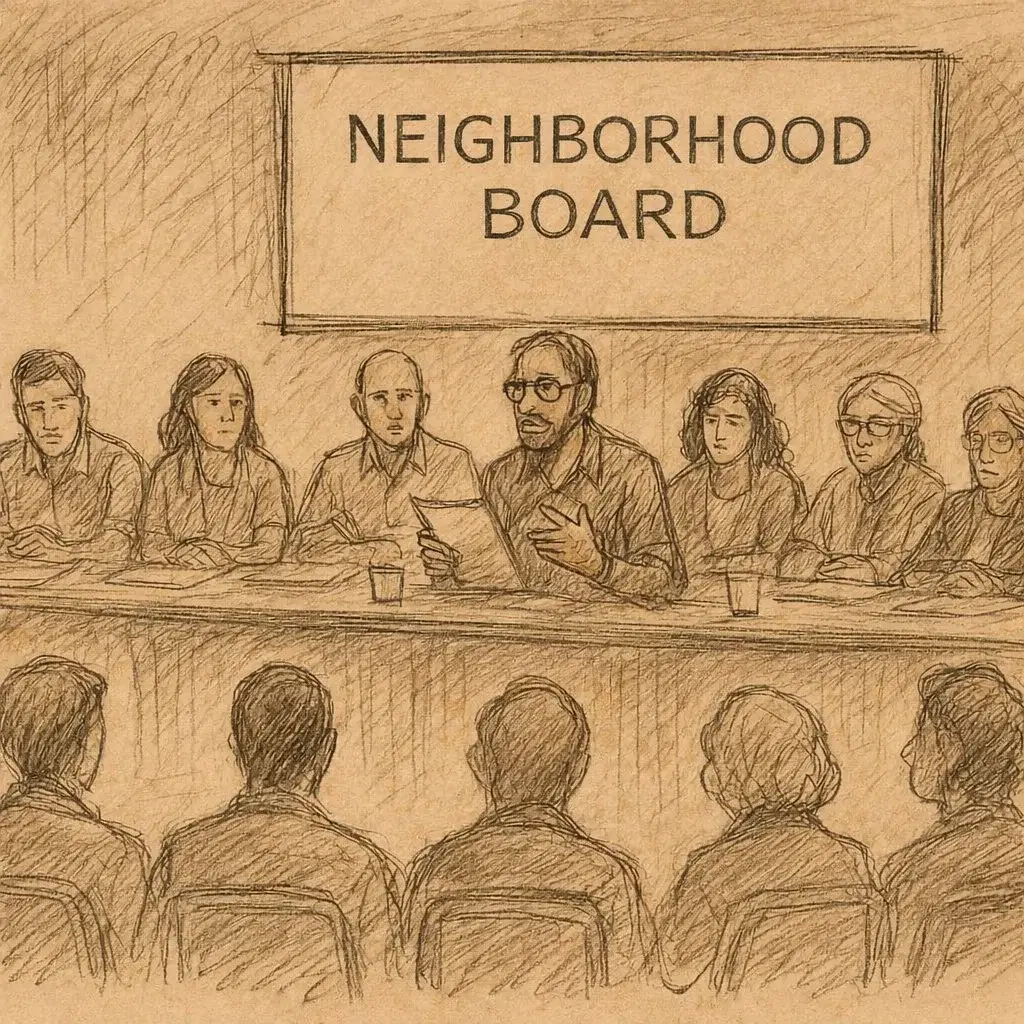
No 11 Ala Moana Kaka'ako Neighborhood Board Regular Meeting July 2026
Listen to this article:
11 Ala Moana-Kakaako Neighborhood Board Meeting – July 31, 2026
Honolulu Police Department Crime and Service Statistics
District 1 Sergeant Kendrick Mota reported June 2026 public-safety statistics. Motor-vehicle thefts declined from 16 in the previous month to 12, while burglaries increased from three to four. Thefts decreased from 104 to 100, and the category identified as “UNV” declined from eight to seven. Assaults increased slightly from 23 to 24, sexual assaults fell from two to one, the category identified as “PDs” dropped from four to zero, and drug cases declined from five to four. Motor-vehicle collisions fell substantially, from 123 to 96. HPD handled 3,202 calls for service during June, compared with 3,308 during the previous month. With public schools reopening on August 3, HPD urged drivers to expect more children and other pedestrians and to exercise extra caution at crosswalks throughout Ala Moana and Kakaako.
Kona Street Shootings and Late-Night Business Safety
Second Vice Chair Dale Vandenbrink raised continued concern about another shooting on Kona Street and the broader pattern of shootings and fights in the area over approximately the previous six months. He acknowledged HPD’s earlier explanation that staffing limitations prevent continuous after-midnight patrols and asked what businesses could do to protect patrons and people on the street. HPD said prevention is difficult, particularly when witnesses are unwilling to cooperate, but emphasized that surveillance cameras can provide evidence needed to identify repeat offenders, complete investigations, and support criminal charges. Better lighting was also discussed as a possible deterrent, although HPD did not offer additional technical recommendations. When asked whether earlier bar-closing times might reduce violence, HPD explained that hours of operation fall under the Honolulu Liquor Commission rather than the police department. Captain Scott Matsumura later reported that District 1 night-watch officers and lieutenants have increased communication and joint activity with the Liquor Commission, including occasional weekend inspections of bars and nightclubs. The commission tracks its own enforcement work, so HPD did not have inspection statistics available.
Community Safety Outreach and Police Visibility
First Vice Chair Jeannie Rice praised HPD’s July 14 safety presentation with JL Capital concerning conditions in the Keeaumoku area. Board members who attended described the session as informative and suggested organizing similar presentations for businesses and residents near Kona Street, Ala Moana Center, Ward Village, and SALT at Our Kakaako. Rice said businesses can feel helpless after robberies or other incidents and shared that her own store had been robbed four or five years earlier, after which the alarm system was upgraded. Captain Matsumura credited the District 1 Community Policing Team and invited other community groups to request comparable meetings or informational sessions. Member Hashimoto also thanked HPD for its July 14 Coffee with a Cop event at the Keeaumoku McDonald’s, citing the strong police turnout and direct access provided to neighborhood residents. Vandenbrink thanked District 1 for attending board meetings in greater numbers than it had seven months to a year earlier and invited the new police chief to attend a future meeting. HPD said the chief has been visiting community meetings and would be informed of the invitation.
Sheridan and Kapiolani Traffic Conditions
Captain Matsumura followed up on repeated board concerns about damaged or missing delineator posts near Kapiolani Boulevard and Sheridan Street. HPD cannot repair the devices and must defer to the Department of Transportation Services, but residents were again encouraged to report the condition through Honolulu 311 so the responsible agency receives the request directly. HPD found three reported collisions at the intersection during the previous year and none in the most recent month, while cautioning that dispatch records may not precisely reflect the actual collision location because incidents can be entered under different nearby addresses or intersections. Later in the meeting, Member Chang contrasted the delay in addressing the Kapiolani-Sheridan delineators, which he said had been pending for close to a year, with the relatively quick conversion of Makaloa and Sheridan Streets into a four-way stop. He said the latter change had not been requested by the board and asked what data had supported it. Vandenbrink added that he had heard Keeaumoku Street and Kapiolani Boulevard might also be considered for a four-way crossing configuration, although the status of that discussion was unclear.
Dangerous Dogs and Outstanding Warrant
Responding to questions from the prior meeting, Captain Matsumura said dangerous-dog and dog-bite cases are not normally included in the neighborhood board’s monthly crime statistics. HPD found only one dangerous-dog case within the board’s area during the relevant period, involving a pack of small dogs that attacked a person without causing serious injury. He cautioned that unreported incidents cannot be tracked. Regarding a separate high-profile case previously discussed by the board, the person involved had been arrested on an outstanding warrant shortly before the June meeting and was proceeding through the legal process.
Street Racing, Loud Mufflers, and Park Patrols
Member Rand reported a successful HPD response to a caravan of street racers and loud vehicles that traveled around Ala Moana Beach Park, Whole Foods, Ward Avenue, and Kapiolani Boulevard about two weeks before the meeting. After she contacted 911 through the nonemergency process, an officer called back within approximately seven minutes, verified vehicle descriptions, tracked the caravan, and stopped it. HPD said the positive feedback would be passed to patrol officers. Rice also asked about a noticeable increase in ATV patrols at Ala Moana Beach Park over the previous 10 days, including several officers seen around 11 a.m. that day. HPD said the presence was part of normal operations rather than a special response. ATVs allow officers to cover areas that are difficult to access on foot or by patrol car, and teams regularly patrol Ala Moana Beach Park, Aala Park, Cartwright Field, and other District 1 parks, with particular attention to Ala Moana because it is the district’s major park.
Drones as First Responders Pilot Program
Assistant Chief Brian Lynch announced that HPD would launch a Drones as First Responders, or DFR, pilot program in August 2026 in District 1 and District 5, which covers Kalihi. Small drones stationed around the pilot areas will be dispatched only in response to 911 calls, allowing them to reach scenes without traffic delays while ground officers continue responding normally. Lynch said drones could rapidly locate moving street-racing caravans, monitor fights outside bars, find missing or vulnerable people, identify suspect clothing, direct officers to the correct location, and provide immediate situational awareness that improves officer safety and criminal investigations. DFR programs are already used in all 50 states, and Maui is operating a similar program. HPD stressed that the drones will not patrol indiscriminately, search for violations on their own, look into buildings, or peer into residential windows. A flashing blue light will identify an HPD drone in flight.
Drone Flight Safety, Recording, and Transparency
HPD said DFR pilots are FAA-certified and that the aircraft will generally fly at or below 200 feet, including between tall buildings where necessary. The drones have advanced collision-avoidance systems designed to detect buildings, aircraft, and other obstacles, and HPD will coordinate with aviation authorities where required. In response to privacy questions, Lynch said cameras will not record while a drone travels from its launch point to the 911 location. Recording begins only after arrival at the reported incident. Routine video will be retained for 30 days, while material associated with a crime may be kept longer under existing video-evidence policies and used in court. HPD will establish a DFR page at honolulupd.org containing the department’s policy, an explanation of permitted and prohibited uses, a question-submission link, and publicly accessible flight logs. Those logs will show dates, times, GPS routes, and return information so residents can determine whether a drone they observed belonged to HPD. Lynch agreed to return after the pilot launches to present findings and examples of successful responses.
Honolulu Fire Department Activity
Firefighter Michael Waters and Captain Marcino of Ladder 2 at Pawa’a presented Honolulu Fire Department statistics for June 2026. The neighborhood recorded no structure fires and no wildland or brush fires, but there were six nuisance fires, one cooking fire, and 32 alarm activations where no fire was found. Emergency responses included 150 medical calls, one collision involving a pedestrian, three other motor-vehicle crashes, no mountain rescues, no ocean rescues, and one hazardous-materials incident. HFD explained that nuisance fires include rubbish burning outside a structure or vehicle. In response to a board question about the 32 false or nonfire alarm activations, firefighters said possible causes include malfunctioning systems, smoke without an active fire, condensation, humidity, electrical shorts, and weather conditions. Most such calls involve monitored systems in commercial properties, restaurants, shopping centers, or high-rise buildings rather than stand-alone residential smoke detectors. Detailed incident mapping is available through the Fire Response search tool at fire.honolulu.gov.
Summer Hiking Safety
HFD’s monthly safety message addressed hiking during the summer. Residents and visitors were advised to select official trails appropriate to their skill and stamina, review trail information at hawaiitrails.org, and check rain, wind, and ocean-swell forecasts before leaving. Hikers were urged to remain on marked trails, avoid taking risks for photographs, travel with a companion, tell someone their planned route, and allow enough time to return before dark.
Board Officer Elections and Annual Recess
The board conducted its annual officer elections for the term ending June 30, 2027. Kathleen Lee was unanimously reelected chair, Jeannie Rice was unanimously elected first vice chair, and Dale Vandenbrink was unanimously reelected second vice chair. After one member declined nomination as secretary, Lori Farinas was nominated and unanimously elected. Dyson Chee was unanimously elected treasurer. The board also agreed that its annual recess would occur in December 2026. The June 23, 2026 regular meeting minutes were approved without opposition.
Subdistrict 3 Appointment of Rick Egged
Rick Egged, a Pacifica resident, applied to fill the board’s Subdistrict 3 vacancy. Egged had retired on July 1 after serving 27 years as president of the Waikiki Improvement Association and had previously worked for the state, including as state planning director. He said he no longer owns a car, walks throughout the neighborhood, and wanted to apply his background in urban planning and local government to Ala Moana-Kakaako. Egged described the urban core as central to Honolulu’s future and supported concentrating growth around public transportation rather than continuing road-dependent expansion. He cited a comparison under which Honolulu ranked last among 492 major U.S. metropolitan areas in road miles per capita, with approximately 1.55 road miles per person compared with about 2.11 in the next-lowest city, which he identified as Long Beach. He praised TheBus and noted that his senior pass provides unlimited rides for $45, while another member observed that a standard monthly pass had risen to $110. Egged also emphasized careful planning, preservation of community character, and directing tourism to designated areas. After residency verification, the board appointed him by a vote of 10-0 with no abstentions, recessed briefly, and swore him into office.
Action Committee Meetings with Elected Officials
Rice and Vandenbrink reported that the Action Committee held an approximately two-hour discussion with Representative Ikaika Olds on July 9. They described the exchange as candid, transparent, and much more detailed than the limited question periods available at regular board meetings or public town halls. Two community members attended in addition to the committee leaders. The next Action Committee session was scheduled for Thursday, August 13, in the same meeting room, with Senator Sharon Moriwaki and Councilmember Scott Nishimoto expected to participate. Residents and board members were encouraged to attend with concerns, proposed solutions, and requests for advice concerning the district.
Voter Registration and Community Announcements
Member Morala reported that the board had confirmed a Saturday date to continue voter-registration outreach and provide information about local candidates at the farmers market. Volunteers were invited to assist. The board also reminded residents that mail ballots should already have arrived and provided information for checking voter-registration status. Street-closure information and the board’s Facebook and Instagram accounts were highlighted. The next Action Committee meeting was confirmed for August 13, 2026, and the next regular board meeting for Tuesday, August 25, 2026. The board thanked Olelo and its recording staff before adjourning the regular meeting to begin the candidate forum.
Ulana Ward Village Noise and Vibration Complaints
Anna Armstrong testified that persistent low-frequency noise and structural vibration had made portions of her family’s new reserved-housing unit at Ulana Ward Village unusable. She said that after only 12 days in the home, severe sleep deprivation, a racing heart, headaches, and nausea forced the family to leave temporarily. Although some sound-dampening work was later performed, more than eight months had passed and her children still could not sleep or study in their bedrooms as school approached. The family now sleeps together in one room with white noise to mask the humming and vibration. Armstrong said neither the homeowners association nor developer Howard Hughes had conducted a meaningful investigation inside the unit, even though the Department of Health issued a noise violation approximately one week after an initial walkthrough. She objected that later vibration measurements were taken in a stairwell rather than in the affected bedrooms. Armstrong asked the Hawaii Community Development Authority to require an independent in-unit investigation before suggesting that she sell the reserved unit to another qualifying family, arguing that an unresolved condition should not be passed to another household.
Additional Ulana Homeowner Testimony
Todd Adams, a Handy-Van commercial driver and first-time homeowner at Ulana through the reserved-housing program, described a similar gap between Howard Hughes’ public statements and the response he received. He said company representatives had never tested the curtain-wall or window locations inside his home, and that attorneys instead characterized his reports as unsupported, not credible, and manufactured for ulterior purposes. Adams criticized an engineering report based on only two measurement points on solid concrete in an unspecified stairwell. He said the report did not document the testing duration, number of air-conditioning condenser-unit fans operating, or the system’s load, and did not assess the curtain wall or windows in his unit. Nevertheless, he said Howard Hughes presented it to HCDA as proving that no mechanical-room vibration issue existed 11 stories above the measurement location. Adams also disputed a statement that neither homeowner had commissioned independent testing, saying another owner obtained testing from an acoustical engineering firm in November 2025 and notified the company the following day. He said Howard Hughes later offered a 30-minute visit by as many as five representatives but did not answer questions about who would attend, what would be examined, whether measurements would be taken, or how observations would be used. He asked HCDA to examine its responsibility when reserved-housing owners report machine-generated vibration affecting the peaceful use of their homes. The board said both homeowners’ written testimony would be made publicly accessible.
Proposed Ala Wai Canal Ferry
Laura Ruby requested a future board presentation and possible resolution supporting low-cost ferry service across the Ala Wai Canal. She envisioned one or more vessels approximately the size of a bus, though wider, operated by a single person and integrated with the HOLO fare card. The ferries would carry pedestrians and bicyclists but exclude gasoline-powered mopeds and other motorized vehicles. Ruby suggested a landing near the Hawai‘i Convention Center, potentially providing another connection between Waikiki, Ala Moana, and surrounding destinations while reducing some short-distance car trips. She also described the open views of Diamond Head, the Koolau Range, Punchbowl, and the urban skyline as part of the experience. A board member asked that the proposal be placed on the next agenda so Ruby could provide visual materials.
Candidate Forum Participants and Introductions
Following adjournment of the regular meeting, the board hosted a candidate forum with five officeholders or candidates whose districts include portions of Ala Moana-Kakaako. Councilmember Tyler Dos Santos-Tam, who represents Ward Avenue through Middle Street and was scheduled to appear only on the general-election ballot, highlighted his prior service on the Liliha Neighborhood Board and said 57% of councilmember-originated bills enacted during his term came from his office. He cited work on housing, transportation, public spaces, homelessness, Chinatown, rail expansion, and a requirement that bars and nightclubs carry naloxone. Representative Ikaika Olds, who represents House District 23, described eight years as an Army infantryman, two deployments to Iraq, and 10 years working in homeless services, with homelessness and public safety remaining his main legislative priorities. Representative Adrian Tam of House District 24 emphasized practical quality-of-life concerns, particularly noise. Republican House District 23 candidate Victor Mu described living and working in China, France, and Austria, speaking German, Chinese, and French, and operating a human-optimization clinic on Kalakaua Avenue; he advocated greater self-sufficiency, fewer imports, more exports, and root-cause analysis of public problems. Representative Kim Coco Iwamoto of House District 25 discussed her legal-services and civil-rights background and her focus on representative democracy, legislative rules, condominium residents, renters, and government accountability.
Candidates’ Case for Election or Reelection
Dos Santos-Tam asked voters to assess his legislative record and said a second term would focus on housing, transportation equity, and basic infrastructure. Iwamoto supported legislative term limits and proposed a general-excise-tax surcharge on some of Hawai‘i’s approximately 74,000 vacant homes, arguing that such a measure could generate housing subsidies and encourage more homes onto the sale or rental market. Mu said voters seeking a change from the status quo should support his proposals to review the state budget line by line, reduce unnecessary taxes and regulations, support local businesses, expand attainable homeownership, and improve government transparency. Tam pointed to the years-long process of establishing noise-camera pilots, beginning with 2023 legislation and continuing through procurement and installation in early 2026; he hoped to make the program permanent after reviewing its data. Olds said his role was to represent rather than impose a personal agenda and committed to remaining accessible, candid, and responsive, including returning constituent calls within 48 hours during the legislative session.
Housing Supply, Affordability, and Homelessness
Candidates were asked how to address a statewide need for approximately 10,000 new homes annually when only about 4,000 are being built. Dos Santos-Tam said the shortage involves not only total supply but also prices, rental availability, and location. He advocated more two- to four-story apartments and cited Bill 6, which gives greater flexibility in existing apartment zones, while proposing additional housing over shops and restaurants along corridors such as King, Young, and Beretania Streets. Tam supported partial public subsidies for infrastructure serving below-area-median-income housing, modeled on Washington State’s Connecting Housing to Infrastructure Program, and noted state action permitting some commercial buildings to convert to mixed-use housing. Iwamoto called for greater direct state and county involvement in buying land, constructing and managing rental housing, and keeping household housing costs below one-third of income; she also noted that Hawai‘i has roughly one shelter bed for every two unhoused people. Mu argued that regulations can represent up to 58% of new construction costs and proposed simplifying rules, converting low-income rentals into state-restricted ownership units, and scrutinizing the source of funds used by nonresidents to purchase Hawai‘i real estate. Olds emphasized housing for kupuna being priced out of long-held homes and criticized “affordable” projects where households earning six figures may qualify for units such as a roughly 591-square-foot home priced at about $533,000.
Campaign Finance and Government Integrity
On campaign-finance reform and donor influence, Iwamoto called for eliminating campaign-to-campaign contributions, which she described as a way donors can indirectly exceed contribution limits, and for changing legislative rules that allow committee chairs to unilaterally stop bills. Tam advocated a full-time legislature, both to permit year-round lawmaking and to restrict outside employment that can create conflicts of interest or function as a disguised payment for influence. Mu said he had rejected corrupt practices in prior media and advertising work and promised to prioritize transparency and accountability. Dos Santos-Tam argued that legislators and councilmembers should explain their votes publicly rather than simply follow committee chairs, noting that he regularly discusses legislation and votes through social media. Olds described refusing a large contribution from tobacco interests because of his opposition to flavored vaping and tobacco products. He also supported campaign-spending caps modeled on limits applied to publicly financed candidates, so elections would depend less on the ability to raise $100,000 or more. Iwamoto cautioned that spending caps could still favor incumbents because sitting legislators can use public funds for constituent mailings near election periods.
Candidate Responses to the Ulana Defect Allegations
All five candidates who answered supported investigation or disclosure concerning the reported Ulana reserved-housing condition. Dos Santos-Tam said HCDA should examine the allegations and also described a separate city property-tax issue: Ulana buyers received their keys after the September 30 deadline for claiming the owner-occupant exemption, causing units in an owner-occupant-only building to be taxed initially as non-owner-occupied property. He said the council was advancing a remission process under which owners would pay the assessed amount and later receive refunds, with action hoped for by September. Iwamoto said known flaws and health-related habitability concerns should be disclosed before a unit is transferred. Mu said government housing agencies should meet at least the same safety and habitability standards expected of private companies. Olds said government should hold itself to a higher standard, and Tam also answered yes. The forum later included a question about why the Beretania and South King Street corridors between Piikoi Street and University Avenue remain underdeveloped, but the provided transcript did not contain the candidates’ answers before moving to the next subject.
Federal Safety-Net Reductions
Candidates discussed expected effects of federal social-service cuts associated with the “One Big Beautiful Bill Act,” including a board member’s report that his student-loan payment had tripled. Iwamoto proposed state revenue measures such as higher conveyance-tax rates on homes valued above $4 million, lower rates on more affordable homes, vacant-home surcharges, and greater contributions from wealthy households to maintain services. Dos Santos-Tam said the city also provides housing, homelessness programs, and small-business support, and criticized council action reducing the Office of Economic Revitalization, which administers federal grants. He supported shifting more property-tax responsibility toward wealthy nonresident owners and high-end second-home purchasers. Tam said state agencies and service providers would need to revise policies while preserving equity programs threatened by federal restrictions, and he supported a more progressive state tax structure and economic diversification. Mu characterized federal reductions as a temporary overcorrection intended to stop corruption and predicted that programs would later recover, while emphasizing local economic development and the creation of a sovereign-wealth-style fund. Olds said the state was already filling federal gaps affecting food security and health care and rejected the idea that forcing kupuna to choose between medical care and food was a necessary correction. He added that international conflict and higher fuel prices would raise the cost of nearly everything imported into Hawai‘i.
Reducing the Cost of Living
Dos Santos-Tam criticized the recent $10 monthly increase in bus-pass prices and said the city should expand a $1.5 million reduced-fare program that was only about 38% utilized. He also described changes intended to lower sewer costs for households conserving water and a $14 million assistance program offering qualifying customers up to $240 annually toward sewer bills. Tam advocated economic diversification beyond tourism through exports, film production, international trade offices, and industries that create higher-paying local employment. Iwamoto proposed requiring qualifying state-owned buildings with at least 250 residents or workers to reserve space for childcare or kupuna care, including when renovations exceed $5 million, thereby reducing providers’ occupancy costs and supporting higher wages. She also supported eliminating the general excise tax on food, medicine, medical supplies, menstrual products, and diapers, potentially offset by taxes on luxury goods. Mu advocated increasing local production of beef, sheep, deer, and other foods suited to island conditions and revisiting the federal Jones Act and state fuel taxes. Olds focused on expanding public preschool access to children as young as two, describing early education as both a developmental investment and childcare support. He said the combined increase in his family’s insurance and preschool costs after having children exceeded many mortgage payments.
Recent Bribery Charges and Calls for Reform
In light of charges against Lieutenant Governor Sylvia Luke, former Representative Ryan Yamane, and others, as well as prior convictions involving former lawmakers Kalani English and Ty Cullen, candidates were asked whether the Legislature had done enough to combat corruption and whether Luke should resign. Olds said the Legislature could do more and that greater transparency was needed; he thought resignation would create a clean transition but emphasized that all defendants are presumed innocent until proven guilty. Tam supported more reform and a full-time Legislature but objected that focusing the resignation question on Luke while not asking the same of another paid official reflected a double standard. Dos Santos-Tam favored allowing due process to proceed and observed that the Lieutenant Governor’s formal duties, including international certifications and name-change work, continued under an acting official. Iwamoto noted that Luke had voluntarily stepped aside without pay and did not personally call for immediate resignation. She instead focused on reforming the House, reviving the Foley Commission, and confronting what former Judge Daniel Foley characterized as a broader “culture of corruption” rather than isolated misconduct. Mu said Luke should resign if found guilty but stressed that an indictment is not a conviction. He characterized public office as temporary civic service rather than a career or business opportunity.
Candidate Closing Statements
Olds closed by emphasizing his experience as a father, veteran, and homelessness-service professional and said he would continue applying practical, front-line knowledge to homelessness policy. Iwamoto thanked the board and reiterated that collective action could improve government and community conditions. Mu argued that Hawai‘i should retain more of the wealth generated by its resources, visitors, and economic activity, develop local industry, raise living standards, and focus on evidence-based root causes. Tam promised practical solutions, candid communication, attention to quality-of-life concerns, and a constituent-first approach. Dos Santos-Tam reiterated his goal of making Honolulu “a city that works,” with sufficient local housing, safe and high-quality public spaces, dependable public transportation, and incremental policy improvements. The board thanked all candidates for seeking public office and concluded the evening with a group photograph.