No 11 Ala Moana-Kaka'ako Neighborhood Board Regular Meeting May 2026
Listen to this article:
11 Ala Moana-Kakaako Neighborhood Board Meeting – May 27, 2026
Opening, Roll Call, and Board Purpose
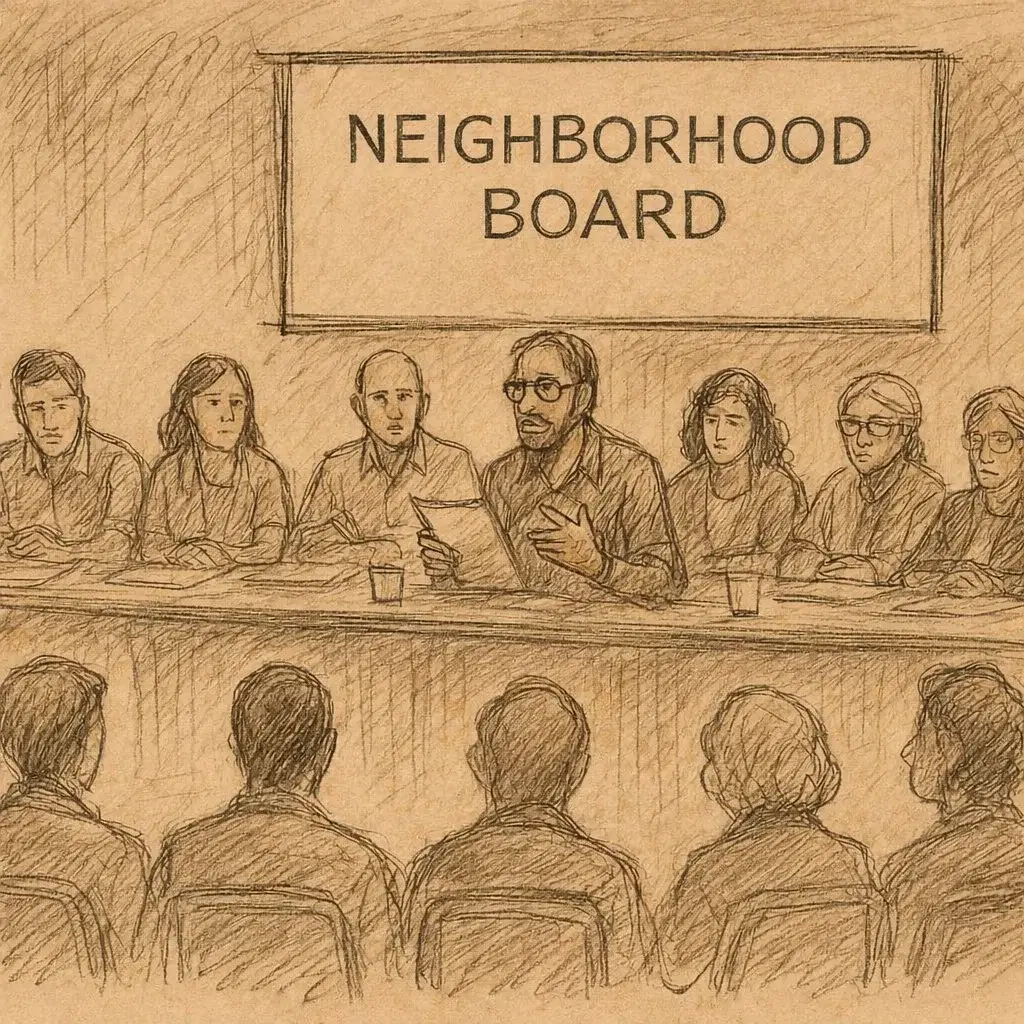
The Ala Moana-Kakaako Neighborhood Board convened its regular meeting at about 6:03 p.m. with Chair Lee calling the meeting to order and reaffirming that the board’s role is to encourage civic engagement and help make the neighborhood a place where people can live, work, play, and thrive. Roll call established a quorum with six members initially present, including Chang, Chi, Hashimoto, Vanderbrink, Chair Lee, and later confirmation that Member Rand was online. The meeting then proceeded into public safety reports, presentations, board business, resident concerns, and reports from elected officials and agencies.
Honolulu Fire Department Report
The Honolulu Fire Department, represented by Firefighter Yoshimura from the Kaala/Koolau station area, presented April 2026 incident statistics for the board area. Reported incidents included five nuisance fires, one cooking fire, 31 activated alarms with no fire, 136 medical emergencies, three motor vehicle collisions involving pedestrians, and one mountain rescue. The “mountain rescue” drew immediate attention because there are no mountains in Kaka`ako or Ala Moana; the firefighter acknowledged he did not know the location and suggested the incident may have been counted within the broader response area. The department’s safety message focused on wildfire prevention and preparedness as Hawaiʻi enters a period of elevated wildfire risk due to dry conditions, tall grass, and shifting winds. Residents were urged to clear dry vegetation, avoid parking on dry grass, avoid activities that create sparks during hot and windy weather, and monitor conditions through fire.honolulu.gov and hawaiiwildfire.org. Board members also discussed false alarm calls caused by smoke detector batteries chirping rather than active fire alarms. HFD said the department still responds when neighbors report the sound, but if there is no smoke or fire, the advice is typically to contact the owner to replace the battery. A prior kupuna smoke-alarm assistance program no longer exists.
Honolulu Police Department Crime Statistics and Safety Messaging
Honolulu Police Department representatives began by promoting two public information tools: the Honolulu 311 app for non-emergency city service issues such as water leaks and broken streetlights, and Honolulu Alert for faster notification of emergencies such as severe weather, flooding, or earthquakes. HPD’s April 2026 crime statistics showed mixed trends in the district. Motor vehicle thefts increased from 9 to 10, burglaries fell from 8 to 4, thefts dropped from 117 to 83, unauthorized motor vehicle entries decreased from 9 to 7, assaults dropped from 22 to 11, sexual assaults increased from 2 to 6, graffiti incidents dropped from 1 to 0, drug-related offenses increased from 3 to 7, and motor vehicle collisions rose from 113 to 131. Total calls for service declined from 3,533 in March to 3,139 in April. HPD emphasized that impaired, distracted, and aggressive driving account for most crashes, estimating that 90% of accidents stem from inattention, intoxication, cell phone use, or unsafe driving behavior. Residents were urged not to drink and drive and to practice defensive driving rather than assuming other drivers will obey signals or right-of-way rules.
HPD Enforcement Activity in Parks, Sidewalks, and Homeless-Related Complaints
District 1 Captain Scott Matsumura provided a detailed follow-up to concerns raised at the previous meeting, especially regarding homelessness, park rule enforcement, and sidewalk obstruction in Ala Moana and Kaka`ako. Over roughly the four weeks since the last board meeting on April 28, HPD reported 40 citations for creating or maintaining sidewalk obstructions, 10 citations for obstructing sidewalks, 115 citations for various park rule violations, 99 citations for park closure violations, and 15 sit-lie citations on public sidewalks. Through special district projects, officers also recovered eight bicycles and 30 shopping carts, the latter returned to the Department of Facility Maintenance. Within Ala Moana Beach Park alone, HPD issued 55 park-closure citations, made three arrests, cited nine tent violations, six lying-at-bus-stop violations, two liquor violations, two smoking violations, four animal violations, and eight stored-property violations, and made 14 contempt-of-court warrant arrests and four dangerous-drug arrests. The park also saw one stolen vehicle case and one driving-without-a-license arrest. The report reflected a highly enforcement-driven response to longstanding complaints about park conditions, encampments, and disorder.
Resolution of Specific Problem Locations: Vans, Vacant Lots, and Stanchions
HPD updated the board on several site-specific issues raised previously. A commercial van or handy-van type vehicle that had been parked around Cook and Pohukaina Streets and used intermittently as a living space had been a recurring problem because ownership records were outdated and the vehicle was moved around. HPD said the occupants were encouraged to leave the area; the van is now gone, and although shelter services were offered and declined, officers hoped the individuals moved closer to an available shelter. The board also asked about missing traffic stanchions on Kapiʻolani Boulevard that block a prohibited left turn onto Sheridan Street. HPD said the Department of Transportation Services is aware the stanchions need replacement, but no timeline has been provided. On private vacant lots, officers described progress at two formerly problematic sites. Near Sky Ala Moana and the Renaissance Hotel, day watch officers coordinated with the property manager and adjacent owners to gain access to a lot where unhoused individuals had established long-term habitation; services were offered and declined, but the area was cleared and the owners committed to better maintenance. On the Sheridan Street lot where a fire had recently occurred, the property has now been leased to Paul’s Electric, which has begun moving in heavy equipment, cleaning up the parcel, and assuming responsibility for site security and maintenance.
Nightlife Safety and Calls for More Late-Night Bar Enforcement
Second Vice Chair Vanderbrink renewed concerns about late-night bar activity on Kona Street and in Kakaʻako more broadly, especially around the 1:30 a.m. last-call to 2:30 a.m. crowd-dispersal period. He referenced a recent shooting outside Gatsby Bar in Kakaʻako at approximately 2:13 a.m., in which someone fired into a crowd and one person was hit. The board member urged HPD to consider targeted patrol presence during the specific half-hour to 45-minute window when crowds leave bars and fights or other disturbances are most likely. He compared the need to nightlife enforcement practices in Waikīkī and the Fort Street Mall area. HPD responded that officers already make regular checks, especially on Friday and Saturday nights, but staffing limitations prevent assigning personnel to remain stationed outside bars for extended periods. The request was nonetheless acknowledged and would be passed along to night watch personnel.
Conditions at Kakaʻako Waterfront Park and Other Troubled Public Spaces
Board members asked whether Kakaʻako Waterfront Park, once associated with significant encampments, dog attacks, and safety complaints affecting nearby users such as medical school students and the Children’s Discovery Center, has improved. HPD stated the park is substantially better than it was several years ago, when side streets and sections of the park had large encampments. Officers from night watch, bicycle units, and ATV units now make regular checks, and police said crime and disorder there are markedly reduced even if no exact statistical breakdown was available at the meeting. This exchange highlighted the board’s continued concern that waterfront open space, educational institutions, and family destinations remain safe and usable, especially given the district’s concentration of public parks that carry both heavy use and a long history of enforcement challenges.
Towing Complaints Around Community Events
Member Chang raised a complaint related to prior Italian Festival events held near Kakaʻako Waterfront Park, where attendees allegedly parked in nearby areas only to have tow trucks arrive early and remove vehicles before legally authorized times. He characterized the reports as potentially abusive and financially coercive because people whose cars are towed often feel forced to pay to retrieve them rather than contest the tow. HPD said it had not previously received that specific report and advised residents to call 911 immediately if they believe a tow is actively happening without justification. If officers can arrive while the vehicle is still present, they may be able to determine whether the tow is valid. Once the car is gone, however, HPD said it cannot order a company to return it. The department advised that disputes over tow legality or charges should be taken to the Department of Customer Services, which oversees tow complaints.
McDonald’s Keʻeaumoku Area Concerns: Trespass, Sleeping, Solicitation, and Safety
The board invited testimony from Alvin Dino, general manager of the McDonald’s on Keeaumoku, who described persistent problems with people sleeping near the restaurant entrance, standing at the drive-through exit, loitering in adjacent public areas, and camping or gathering in nearby bushes and behind neighboring properties. He said staff frequently call police but often encounter a practical limitation: if a person is on the public sidewalk rather than McDonald’s property, officers may not be able to enforce trespass. He also described concerns about trash scattering, unlocked bins being used, defecation, and employee safety when dealing with incoherent or intoxicated individuals. Dino asked about the proper trespass warning form, noting confusion over whether McDonald’s internal form remained valid or whether stores had to use HPD’s template. HPD said business-specific trespass forms remain valid if approved by the company’s legal department and clarified that a business can trespass someone only from its own property, not neighboring properties. Officers encouraged the store to continue calling as incidents occur so police can observe whether other laws apply, such as blocking a driveway, obstructing traffic, soliciting, or littering. Vice Chair Vanderbrink also asked whether the sit-lie law applied to that stretch of Keeaumoku; HPD said not directly in front of the restaurant, though later community testimony clarified the sit-lie boundary in that area is irregular and extends in some places farther than expected.
Dog Attacks, Dangerous Dog Enforcement, and Community Fear
Treasurer Farinas asked about a recent dog attack involving a neighbor walking her dog who was mauled, and referenced a suspect identified in media coverage, Kenneth Morrow, for whom a warrant had reportedly been issued. HPD said that in the well-publicized incident, the dog involved had been confiscated by the Hawaiian Humane Society and had not yet been returned pending the required legal hearing process. Board members noted that the district has experienced multiple serious dog attack incidents over time. Member Chung asked whether HPD tracks dog attacks separately in its crime reporting. HPD said dangerous dog incidents are categorized under a specific criminal offense, including unprovoked attacks, but such data are not part of the standard statistics HPD brings to neighborhood board meetings because the number of cases is relatively low compared with other crimes. The exchange nonetheless reflected ongoing resident concern about public safety in parks and pedestrian areas where dog attacks have occurred.
Sit-Lie Zone Boundary Clarification Near Keeaumoku and Sheridan
Community testimony from Bishop Serra of the Ala Moana Neighborhood Historic Association and Shingon Mission clarified a technical but important point about the sit-lie enforcement boundary near McDonald’s, the temple, and surrounding properties. He explained that on the Keeaumoku side, the sit-lie zone extends up to South King Street, while on the Sheridan side it ends at Rycroft/Leona Street, effectively bisecting Shingon Mission property and covering McDonald’s property and a substantial portion of the temple grounds on one side but not all adjacent areas. The board noted that these boundaries can be difficult to understand from maps alone, yet they materially affect how sidewalk sleeping and related complaints may be handled.
Office of Hawaiian Affairs Presentation on Kakaʻako Makai
A major presentation of the evening came from Daniel Sandemeyer, Managing Director of Real Estate for the Office of Hawaiian Affairs, who provided an update on OHA’s Kakaʻako Makai lands and the broader planning context. He explained that OHA, created by the 1978 Constitutional Convention to address the needs and betterment of Native Hawaiians, uses land as one tool in a wider mission tied to education, health, housing, economic well-being, advocacy, and stewardship. OHA owns nine parcels in Kakaʻako Makai totaling about 29 acres. These lands were transferred in 2012 as part of a settlement for unpaid public land trust revenues owed by the state to the Native Hawaiian community, with an accepted value at the time of approximately $200 million and with the understanding that housing would eventually be allowed. Sandemeyer stressed that the parcels were not acquired as a speculative private real estate investment but as part of addressing a historic obligation.
Kakaʻako Makai Land History, Fill Conditions, and Environmental Context
Sandemeyer and consultant Robert Chong explained that Kakaʻako Makai includes both reclaimed land and historic landfill conditions. The mauka portions consist largely of engineered fill using dredged material, coral, rock, and construction fill, similar to other parts of Honolulu such as Ala Moana Center, Waikīkī, Ala Moana Beach Park, and Sand Island. Makai portions closer to the waterfront include historic landfill containing ash, waste, and other remnants of former uses, including old incinerator sites; one former incinerator area is now occupied by the Children’s Discovery Center. The presentation emphasized that this is land with layered infrastructure and environmental constraints as well as deep human history, including former communities who lived and worked there. In response to a board question about the EPA Brownfields grant, the presenters said OHA has done prior environmental assessments, including work dating back roughly to 2014, and is currently reviewing existing data. They said contamination conditions appear broadly similar to other Kakaʻako sites that have since been developed, implying that future development would follow established remediation and regulatory processes used in nearby projects such as Howard Hughes developments and `Aʻaliʻi.
HCDA Planning Process and Current Zoning Limits
The presentation explained that although OHA owns land in Kakaʻako Makai, the Hawaiʻi Community Development Authority controls planning and development rules for the area, including allowable uses, height limits, design standards, setbacks, and review procedures. HCDA is currently updating its Makai Area Plan, and OHA is participating both as a landowner and as a public-facing institution listening to community concerns. Sandemeyer cautioned that a timeline previously shared by HCDA appears to be slipping because the process had not yet reached the expected second workshop stage by late May. He then described current zoning on the mauka side, where housing, office, and retail are allowed; building heights can reach 400 feet; setbacks are generally small; and density is governed by floor area ratio. The presentation also clarified that on OHA’s makai parcels, current limits are lower, generally 200 feet on interior parcels and 40 to 65 feet along the harborfront, with greater shoreline setbacks of roughly 65 feet. The visual studies shown were described not as a final project but as massing studies illustrating what could fit under current rules if housing were not yet included.
Visual Buildout Scenarios, Waterfront Access, and Public Realm Vision
Several rendering slides showed hypothetical massing and watercolor visualizations of a future Kakaʻako Makai in which OHA’s parcels could support lower and less dense buildings than the mauka side towers across Ala Moana Boulevard. Existing or entitled mauka-side buildings from other developers were shown in cool gray, while potential OHA envelopes were shown in warm gray to illustrate relative scale. The conceptual images emphasized a continuous public connection from Magic Island and Ala Moana through Kewalo Basin, across OHA parcels, and toward Kakaʻako Waterfront Park. Sandemeyer contrasted the current condition of Fisherman’s Wharf and nearby parcels, where surface parking, fences, older structures, and little public waterfront activity dominate, with a possible future of stepped buildings, sea-level-rise accommodations, activated waterfront promenades, indoor-outdoor public space, and peek-a-boo ocean views. He repeatedly stressed these were not final plans, but tools to show how current zoning might translate into built form and to counter misinformation suggesting multiple 400-foot towers on OHA land.
Housing, Native Hawaiian Set-Asides, Climate Change, and Sense of Place
Board members asked how OHA’s eventual plans might address Native Hawaiian housing needs. Sandemeyer responded that OHA is exploring partnership opportunities with the Department of Hawaiian Home Lands to potentially create a DHHL project in Kakaʻako Makai, which would directly address Native Hawaiian housing access. Questions were also raised about how far into the future OHA is planning given long-term sea-level rise projections. Sandemeyer replied conceptually that OHA’s stewardship responsibility is “in perpetuity,” while clarifying that actual development would have to comply with standards from agencies such as EPA, the Department of Health, and land-use regulators. Member Chi noted concern that sea-level-rise maps suggest much of Kakaʻako Makai and even parts of mauka Kakaʻako could be underwater with roughly six feet of sea-level rise by around 2100, cautioning against major investment without serious long-range adaptation planning. Member Chang asked whether the project would be heavily residential or commercial; the response indicated market studies show limited demand for major new destination retail, suggesting housing would be the main driver and retail would likely serve residents rather than function as a large regional shopping center. When asked whether the renderings looked too generic or “straight out of California,” Sandemeyer said sense of place and making Native Hawaiians comfortable in Kakaʻako are important goals.
Park Dedication and Keeping Benefits Local
Member Chung asked whether any future OHA development would pay park dedication fees or otherwise contribute to nearby parks. Sandemeyer explained that park dedication obligations can be met through land or fees and, given the amount of park land already present in the district, a fee-in-lieu approach would likely be explored. The board member urged that any such resources be directed to the parks adjacent to the development area, especially because nearby parks have experienced longstanding maintenance, homelessness, and public safety issues. Sandemeyer acknowledged the point.
Question About OHA and KITV
During public testimony after the OHA presentation, community member Randy Jung asked about a recent news report suggesting OHA might purchase KITV and how such a move would benefit constituents. Sandemeyer said he did not have information on that matter and could not comment.
Military and Community Relations Office (MACRO) Outreach
Representatives from the state Military and Community Relations Office, known as MACRO, introduced a community engagement effort called “Community Conversations.” The office described the series as an opportunity to gather public input on the military in Hawaiʻi, centered on two major questions: what a suitable approach to military training in Hawaiʻi might look like if shaped by community input, and what it would take to meaningfully improve the relationship between the military and the community. MACRO offered both a paper survey, due that evening if completed in hard copy, and an online version accessible by QR code through Friday at 3 p.m. The office said the conversations generally involve small groups of five to ten people in one-hour sessions, with only summarized notes shared with the Office of the Governor for future reference. The goal, they said, is to create a respectful setting where varied perspectives that are often siloed can be heard together.
Questions About MACRO’s Role, Funding, and Public Trust
Board members questioned MACRO about its purpose and structure. Member Chi asked whether the office’s mission is to improve the military’s image and relationships, or to advocate for community interests with the military. MACRO said it sees itself as a middle party intended to bring people together for the benefit of Hawaiʻi and described itself as a state office with federal funding. Asked about its operating budget, the presenters did not have the number on hand but offered to provide it later. Member Chang said he was not aware of any broad problem with the military in Hawaiʻi and emphasized the military’s economic importance, especially in communities like Wahiawā where installations such as Schofield Barracks have historically supported local business and livelihoods. Member Chi countered that the Red Hill fuel contamination crisis had deeply damaged public trust and argued that the military must do more than symbolic outreach if it expects to maintain legitimacy in Hawaiʻi. He said the military’s presence has produced both economic benefits and environmental harms, and welcomed community engagement about a new direction.
Military Presence, Makahiki, and Calls for Broader Outreach
Second Vice Chair Vanderbrink asked whether MACRO would be the appropriate place for people to raise issues about military lands, military exercises, or events such as RIMPAC, especially given the impact of military personnel moving through urban Honolulu and Waikīkī. MACRO said yes. Member Chung asked whether MACRO is involved in fostering cooperation through the Makahiki tradition, noting that branches such as the Air Force and Navy have engaged with Makahiki events separately and suggesting the state might be in a good position to coordinate more meaningful involvement across agencies. MACRO said it strongly values traditions like Makahiki and appeared receptive to the suggestion. Community member Johni May Perry urged the office to expand its outreach beyond urban Oʻahu to places such as Leilehua, Wahiawā, Waiʻanae, and Hawaiʻi Island, and also raised concern that communities affected by Red Hill have not always been permitted meaningful participation in contamination-related processes despite wanting to engage. She said the lease and future of military lands make honest and respectful outreach especially important.
Approval of Minutes and Board Vacancy
In board business, members approved the April 28, 2026 regular meeting minutes without recorded opposition. The board then noted a vacancy in Subdistrict 3 due to a prior resignation. No member of the public stepped forward to fill the seat during the meeting, so the vacancy will remain on the agenda for the next month.
Neighborhood Board Participation in the 2026 Legislative Process
Second Vice Chair Vanderbrink reported on the board’s participation in the 2026 state legislative session, presenting a graph showing how many supported bills survived each legislative cutoff. The board had initially supported 20 bills. That number fell to 15 after the first lateral cutoff, then to 11, 9, 7, 3, and ultimately only one supported bill passed: HB 1875, relating to gender-affirming healthcare. He said this result was surprising because some other measures had seemed to have stronger support. The report was framed as a lesson in how many bills are introduced each year and how few become law. Vanderbrink also offered process recommendations for improving the board’s effectiveness next session, including engaging legislators earlier through the board’s action committee so community concerns can be shaped into bill ideas before the session is underway. He said all board-supported testimony he submitted, with Chair Lee’s review, would be uploaded to a public Google Drive so residents can review the board’s advocacy record.
Voter Registration and Community Outreach Plans
The board revisited a proposal for a voter registration drive discussed at the previous meeting, with interest in conducting outreach at a farmers market before the primary election period to encourage residents to register to vote. The board also reviewed action committee outreach efforts. Sam’s Club has approved use of a table and chairs for board outreach, ideally on a Saturday, and HCDA has approved a table at Kō‘ula/Kakaʻako’s Kewalo/Ko`olau area park by the playground. The board hopes to use both the Ala Moana side and the Kakaʻako side of the district for public outreach and encouraged more board members to assist. Members also discussed the new Park on Keeaumoku residential building as a significant source of new residents and considered whether the Neighborhood Commission Office could help distribute a mailer or whether in-person outreach might be arranged there to encourage participation in board meetings.
Future Park Cleanup Efforts
Action committee notes also included a desire to organize additional park cleanups, particularly at Ala Moana Beach Park. Board members discussed coordinating with Councilmember Nishimoto’s office to schedule another cleanup later in the year, noting that earlier efforts were only able to cover part of the park and that broader maintenance remains a community priority.
Lessons From the Ho‘opili Development
Second Vice Chair Vanderbrink also reported on attending a D.R. Horton presentation and tour of the Ho‘opili planned community, though it lies outside the board’s district. He highlighted two lessons he believed were relevant to future Kakaʻako housing discussions. First, D.R. Horton said it had absorbed the full cost of roads, sewer, water, and electrical infrastructure for Ho‘opili and would not take on a project with that structure in today’s environment, given current costs. Second, although land had been reserved for a high school and elementary school, those sites remain vacant and children are being bused out of the area because the state has not yet built the promised schools. He argued that these examples show how unmet public commitments can undermine confidence in large planned communities and should inform how elected officials are held accountable when discussing housing growth.
Concerns About Proposed Neighborhood Board Restructuring
At a recent chair and vice chair meeting, the Neighborhood Commission Office reportedly discussed a possible proposal to cap all neighborhood boards at nine members and make all seats at-large across Oʻahu. Vanderbrink said there was broad opposition among attending chairs and vice chairs, and he strongly objected on behalf of this board. For Ala Moana-Kakaʻako, the change would reduce the board from 11 to 9 members and eliminate subdistrict representation despite the board not having chronic vacancy or quorum problems. He said reforms should be targeted to boards with actual structural issues rather than imposed uniformly.
Upcoming Events and Invitations in the District
Chair Lee announced several upcoming community events and invitations. Salt at Our Kakaʻako’s Kapwa Tattoo and Barn 5 are hosting an arts, music, and community gathering event on Friday, June 27, from 6 to 10 p.m., and also had a Liquor Commission hearing scheduled for May 28. JL Capital invited board members to tour newly converted housing in a building on Amana Street. Additional upcoming events noted later in the meeting included the Festa Italiana on June 6, the 109th King Kamehameha Celebration Parade on June 13, the 35th Annual Honolulu AIDS Walk on June 27, and the 2026 Honolulu Night Market on July 18.
Subdistrict Reports: Dog Attack Alert and Graffiti at Former Ross/You Mart-Pagoda Site
In subdistrict reporting, Treasurer Farinas reiterated concern about the at-large dog owner associated with the recent mauling incident and said neighbors remain vigilant as the person has not yet been found. Vanderbrink raised a separate, longstanding concern about heavy graffiti on the parking structure shared by the former Ross site, now occupied by You Mart/YouMe Mart, and the Pagoda. Although You Mart cleaned graffiti from its own building after opening in January, the adjacent parking garage remains highly visible from Keeaumoku and has not been cleaned despite the Pagoda’s recent multimillion-dollar renovation. He said the graffiti has now remained for more than a year and damages the appearance of that part of the neighborhood. If the owners do not act, he intends to bring forward a letter at a future board meeting formally requesting cleanup and copying elected officials.
Concern About Hedge Visibility at Makiki/Ala Moana Commercial Center
Member Chang asked about a safety issue at the First Hawaiian Bank-Walgreens-Petco shopping area near Queen Kaʻahumanu Elementary School, where a hedge allegedly blocks drivers’ views of oncoming pedestrians and traffic when exiting the lot. A constituent reportedly described dangerous conditions for a young mother pushing a stroller. After checking jurisdictional boundaries, the board concluded the site lies outside Ala Moana-Kakaʻako and within the Makiki neighborhood board area, though Representative Kim Coco Iwamoto later volunteered to follow up directly with the property owner on hedge trimming.
Community Concern: Sidewalk Obstruction and Van Living Situation
Chair Lee returned to the earlier discussion of a van used as a living space that had blocked a sidewalk in Kakaʻako. She thanked Representative Tam’s office, Senator Moriwaki’s office, and Deputy Director Mark Yonamine from the mayor’s administration for quickly helping address the issue after a resident reached out. She also emphasized an important boundary: while the neighborhood board can discuss, document, and elevate neighborhood concerns, it is not a first-response body and should not be treated as a substitute for police, emergency responders, or city enforcement agencies.
Community Concern: Ulana Ward Village Vibration and Building Performance
Resident Todd Adams of Ulana Ward Village described an ongoing and technically complex problem involving structure-borne vibration, especially around the outward-facing curtain wall perimeter areas of his unit. He said that for several months he has attempted to find independent engineering firms capable of performing meaningful in-unit measurements, but firms either did not respond, had existing relationships with the developer, or presented logistical and cost barriers. He expressed uncertainty over what measurement standards, operating conditions, and degree of access to mechanical systems would be required for an independent evaluation to be useful. Adams said he is not aware of any in-unit vibration measurements being performed in his own unit by the developer, the developer’s acoustical engineer, or another retained consultant, and that some evaluations reportedly used in agency discussions may have been taken in stairwell or structural wall locations rather than in the affected residential areas he has repeatedly documented. He said he had already gone through months of discussion with the homeowners association, building management, the developer, and HCDA, but the HOA was essentially deferring to the developer side. His testimony framed the issue as a broader problem for residents, including reserved housing purchasers, who may have no realistic path to independent technical evaluation when integrated building mechanical systems in large residential projects do not appear to perform as expected.
Resilience Hubs and Community Preparedness Outreach
Community member Honu Aina Nichols from the Oʻahu Hub Learning Community, a partnership involving Kapiʻolani Community College and the Lāhui Foundation, announced upcoming opportunities related to resilience hubs. She described a resilience hub as a trusted gathering site or group that supports year-round community resilience and activates during disruptions to provide coordinated response support. The organization’s monthly community of practice meets virtually every third Thursday at 3 p.m. and is designed to connect community leaders, spaces, and organizations engaged in preparedness, training, and neighborhood support. Nichols also promoted the first Oʻahu Resilience Hub Summit at Camp Pālehua on June 5 and 6, described as an islandwide community design process. Participants would receive a $200 stipend, and the initiative aims to support learning, partnerships, intergenerational leadership, outreach, and access to trainings and funding. The board acknowledged the continuing outreach, noting the organization had engaged with the board earlier in the year.
Representative Kim Coco Iwamoto Report
Representative Kim Coco Iwamoto attended in person and addressed several topics. She said she would follow up personally on the hedge trimming issue at the commercial center by Queen Kaʻahumanu Elementary. She also responded to a question raised during the MACRO discussion by reporting on a survey she conducted regarding whether state funds should be used to expand military-related presence in Hawaiʻi. According to her report, 47% of respondents said military presence should not be expanded at all, while 43% said that if expansion occurs, state taxpayer funds should not be used for that purpose. She said the survey had generated about 400 responses so far and was prompted by several bills this session that would have used state funds to support military-related activities, including one proposal to give MACRO $1.3 million in state funding. She also updated the board on prior concerns about construction noise at Queen and Waimanu, saying HCDA had contacted the contractor, who used sound blankets and clarified that the noisiest work occurred between 9 a.m. and 3:30 p.m. Finally, she noted that Ulana Ward Village residents are also facing unexpectedly high property tax assessments, with some units purchased for around $550,000 being assessed at roughly $1.1 million despite deed restrictions requiring resale through HCDA or at income-qualified levels for two, five, or ten years. She said she is working with HCDA to provide the city with a table of deed restrictions so the county can adjust valuations more realistically for the duration of those limitations.
Mayor’s Office Report
Deputy Director Mark Yonamine attended on behalf of Mayor Rick Blangiardi. He followed up on a prior question about the crosswalk timer at Ala Moana Boulevard and Atkinson Drive, stating that the signal is under the State Department of Transportation rather than the city Department of Transportation Services, and suggested state legislators pursue the matter with DOT. In response to a question from Vanderbrink about dark sidewalk conditions on Kalākaua Avenue between Fern Street and Kapiʻolani Boulevard near Kalākaua Homes senior housing, Yonamine said DTS could first examine whether existing streetlight settings can be adjusted to increase brightness before considering any broader lighting changes.
Councilmember Tyler Dos Santos-Tam’s Office Report
A representative from Councilmember Tyler Dos Santos-Tam’s office shared the councilmember’s May newsletter and announced that the full council would hold third reading on the city budget ordinances, Bills 22 and 23, at the following Wednesday’s council meeting. Residents were encouraged to watch and submit testimony. Vanderbrink took the opportunity to praise the councilmember’s public videos, specifically one explaining floor area ratio, saying it helped him better understand the OHA presentation earlier in the evening.
Representative Adrian Tam Report
Representative Adrian Tam attended remotely and shared his newsletter, noting that it had been printed before the close of session and therefore listed some measures as still moving. He updated the board that HB 2505, HB 1946, and SB 2367 had passed and said he would provide a fuller end-of-session summary in a future newsletter mailed to residents in the portion of the board district he represents. Chair Lee also publicly thanked Representative Tam’s office for its quick response in helping address the sidewalk-blocking van issue in Kakaʻako.
Senator Sharon Moriwaki’s Office Report
Joseph Kopsha, representing Senator Sharon Moriwaki, reported that the legislature had adjourned sine die and passed 268 bills, including 13 measures that Senator Moriwaki’s office had worked on with other offices. He noted that those bills still remain subject to possible gubernatorial vetoes. During the interim, he said the office will focus on constituent services and invited the board to forward relevant resident concerns, particularly if they involve state agencies. He also highlighted his own work on the capital improvement program and said he was pleased to help advance projects in the district, especially beach restoration efforts.
HCDA, HART, and Rail Construction Through Kakaʻako
HCDA did not provide a live report, though Chair Lee noted that the agency had sent an email addressing Michelle Opetuk’s earlier complaint about construction noise. HART representative Harry Cho attended and announced the final station design workshop for the downtown rail station on June 10 at 6 p.m. in Hawaii Pacific University’s Multipurpose Room 3. He also previewed upcoming HART construction activity along Halekauwila Street in Kakaʻako, in addition to the ongoing work residents already see along Dillingham and Nimitz. More details are expected at a future meeting.
Closing and Next Meetings
The meeting closed with reminders about neighborhood board social media, upcoming action committee and regular board meeting dates, and appreciation for `Ōlelo’s broadcasting support. The next action committee meeting was scheduled for June 10, and the board’s next regular meeting would again be held on a Tuesday. The meeting adjourned at approximately 8:12 p.m.