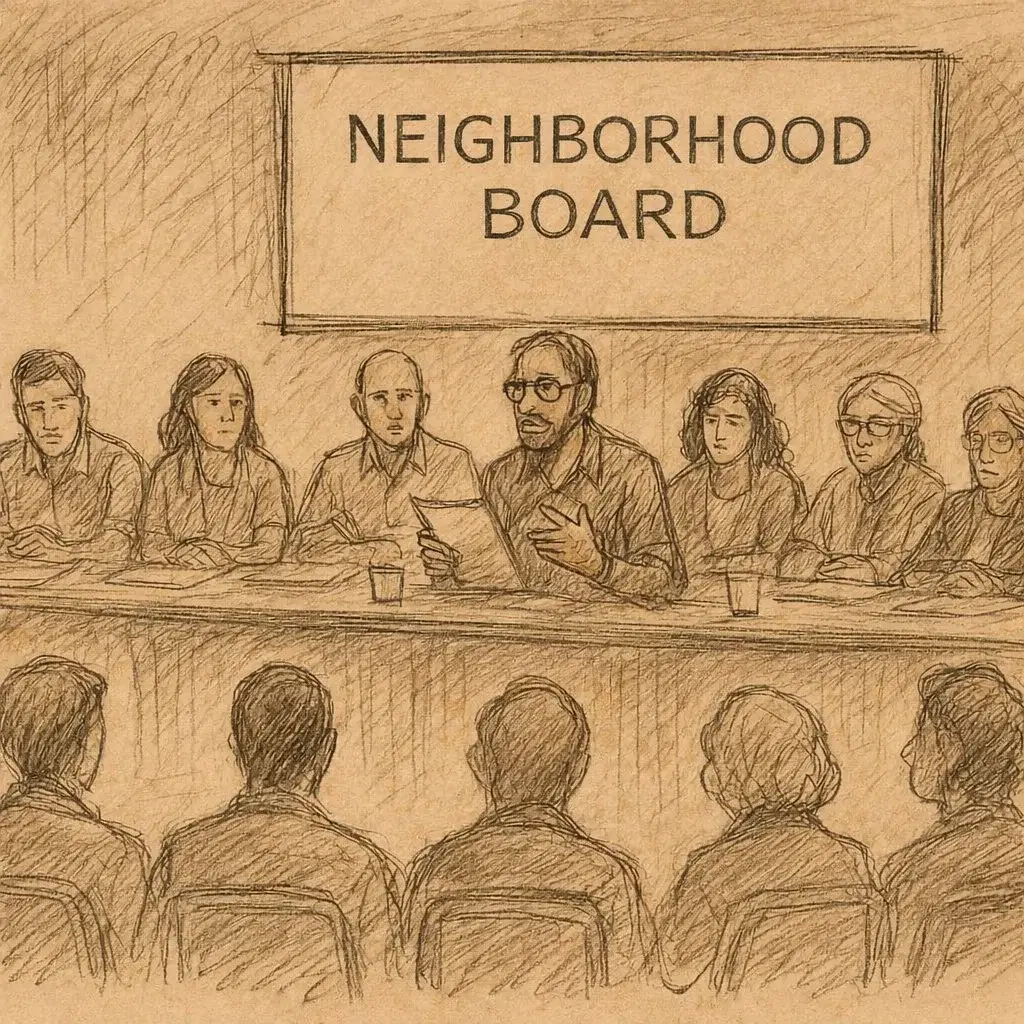
No 20 ʻAiea Neighborhood Board Regular Meeting July 2026
Listen to this article:
20 Aiea Neighborhood Board Meeting – July 15, 2026
Call to Order and Attendance
Chair Steve Wood called the meeting to order at 7:01 p.m. A roll call established a quorum with 11 board members initially present either in person or online; the board later conducted officer elections and other votes with 12 participating members. The agenda included public-safety reports, board elections and attendance matters, infrastructure and government updates, community reports, the Newtown youth treatment program, redevelopment of the Aloha Stadium site, Red Hill matters, victim-support services, and public concerns.
Honolulu Fire Department
Firefighter Mike Nojo of the ʻAiea Fire Station reported June activity consisting of one structure fire, no wildland or brush fires, four nuisance fires, no cooking fires, five alarms activated without fire, 117 medical emergencies, one collision involving a pedestrian, two other motor-vehicle collisions, no mountain or ocean rescues, and two hazardous-material incidents. Because summer hiking is popular, the department advised residents to select trails suited to their ability, consult official trail information at oahutrails.org, check rain, wind, and ocean-swell forecasts, remain on marked trails, hike with a companion or tell someone their plans, and return before dark. Incident details can be found through the response-search tool on the department’s website. In response to questions, Nojo said HFD conducts annual wildland training, including live-fire exercises, and has a specialized cadre of firefighters trained to operate drones during incidents. Incident commanders can request a drone to track fire movement, identify threatened neighborhoods, and assess areas not visible from the ground, although drones are not assigned to every station. Board members asked HFD to provide the locations and substances involved in future hazardous-material reports, especially where toxic material may have entered the air; Nojo agreed to research June’s two incidents and return with details. A question about a burned vehicle on the Hālawa Bridge was referred to HPD for removal.
Police Statistics and Major Cases
Lieutenant Iwasaki of HPD District 3 compared May and June 2026 crime statistics. Motor-vehicle thefts rose from eight to nine, burglaries remained at two, thefts increased from 17 to 23, and vehicle break-ins remained at six. Calls for service in the ʻAiea reporting area declined from 1,316 in May to 1,086 in June, while calls throughout District 3 declined from 5,069 to 4,519. HPD highlighted the June 16 arrest of a woman operating a stolen motorcycle near Target on Lāwiana Street; a June 19 robbery in front of TJ Maxx in which two Polynesian female suspects allegedly robbed two girls approximately 11 and 12 years old, a case still under detective investigation; and the June 23 arrests of two men accused of stealing two motorcycles across from Pearlridge.
HPD E-Bikes and Community Enforcement
District 3 has acquired electric bicycles and expects to be the first district to begin an e-bike patrol program after officer training is completed. The bicycles will improve officers’ mobility in locations difficult to cover by patrol car, including the shared-use path, areas near the ʻAiea bridge, houseless encampments, and the restroom near Kaʻahele Street. HPD also said the new police chief was visiting districts and that it would ask whether he planned to attend neighborhood board meetings. Officers had conducted enforcement at Pamoho Place and said they would continue monitoring reported parking problems there.
Excessively Loud Vehicle Stereos
A resident described amplified vehicle stereos as a serious health, safety, distraction, and neighborhood-nuisance problem that had not noticeably improved over the previous year. HPD agreed that social-media challenges encouraging drivers to make sound travel as far as possible had intensified the issue. The applicable law prohibits vehicle sound audible from more than 30 feet away, including when the vehicle is on private property. Officers issue citations weekly when they witness violations, and drivers may either pay the resulting fine or contest the citation in court. HPD said officers’ body-worn cameras can record the excessive sound and help establish evidence of the violation.
Unlicensed Vehicles on Hapuʻu Street
A board member again reported two unlicensed trailers and a Ford dually truck without plates at 98-870 Hapuʻu Street, off ʻŌlena Street above the ʻAiea football field. HPD said the vehicles had previously been cited but agreed to send officers back immediately after the meeting. Police noted that an unregistered truck may be towable, although the size of the dually and trailers could limit the towing companies able or willing to remove them.
Burned Vehicle on Hālawa Bridge
The board asked HPD to remove a burned-out vehicle that had remained for roughly a week on the Hālawa Bridge near the Pearl Harbor memorial. HPD explained that towing companies initially cannot take burned vehicles while they remain hot and may later refuse them if the vehicle identification number has been destroyed. In those cases, auto-theft detectives must use alternate VIN-verification procedures before a towing company will accept the vehicle. HPD agreed to check the bridge and move the process forward.
Street Racing and Excessive Speeding
The chair observed that weekend racing noise on H-1 had decreased during the previous month and credited HPD’s enforcement. Lieutenant Iwasaki said District 3 officers and the traffic division continue weekly operations against racing and excessive speeding, including arrests on weekdays as well as weekends. Racing activity fluctuates, sometimes involving gatherings of approximately 200 vehicles, and Koala Street remains one gathering location. Enforcement is coordinated across police districts because racing groups travel through multiple areas.
Kaʻahele Restroom and Houseless Encampment
A Newtown resident raised concerns about a houseless encampment near the city restroom at 98-456 Kaʻahele Street, to the left of the Newtown Recreation Center and above the driving range. He said individuals were crossing the private road and entering or passing through residential yards near his four children, and questioned why the restroom appeared to remain open around the clock when other park restrooms close at night. He asked the city to cut back vegetation that conceals the encampment and consider repurposing the property, possibly as a dog park. HPD said its community-policing team visits the area, sometimes using drone observations because portions are difficult to reach, and agreed to revisit it, investigate the restroom’s operating hours, and coordinate park-related enforcement. Residents were asked to call police whenever someone trespasses so officers can document the incident and issue trespass warnings. Kealoha West Oʻahu, a houseless-outreach organization, agreed to canvass the location on Thursday, offer services, and coordinate with HPD; the organization provided 808-745-7880 as a contact number. Outreach staff also agreed to check on a houseless man who regularly sits across from the library in an open field with a chair and two trash bags, including during rain and at night.
Election of Board Officers
The board reelected Steve Wood as chair by 12 votes. Richard Mizusawa was elected vice chair by unanimous consent with 12 votes, Lawrence Higa was elected secretary without objection, and Bill Clark was reelected treasurer with 12 votes. The secretary’s work will largely consist of reviewing draft minutes prepared from meeting recordings, suggesting corrections, and returning them for approval.
Board Vacancies and Attendance
The board considered attendance under the Neighborhood Board Plan. Because Tracy Arakaki had accumulated seven absences and had missed nearly a year of meetings, the board voted without objection to declare the seat vacant, while noting that Arakaki could seek to return later if a position remained available. A separate motion initially proposed removing Bill Clark, Jordan Conley, and May Imamura Uru after three absences, but it was amended when Clark and Conley were confirmed present and participating. Members then debated only Imamura Uru’s seat. Supporters of retaining her cited her long service and valuable input, while the chair described communications suggesting she intended to attend but might be experiencing confusion and difficulty understanding arrangements, including an offer of transportation. The motion to vacate her seat failed on a vote of five in favor, six opposed, and one abstention, so she retained her position.
Approval of Meeting Record
The board reviewed the written summary for the May 2026 video record. A correction was requested on page five concerning the Department of Health Child and Adolescent Mental Health Division: Tricia Sakamoto had been described as a community member, but she works for the division and had previously submitted testimony under a professional title, reportedly as a risk-management specialist. The board approved the summary without further objection after directing that her affiliation be corrected. The discussion referred to the May 12 record, although the chair’s final approval statement referenced May 26.
Board of Water Supply
The Board of Water Supply reported two eight-inch water-main breaks during June: one on June 4 at 98-1709 Kiapi Street and another on June 10 at 98-1078 Kawanohe Street. It also announced the annual “Unthirsty” plant sale at the Hālawa Xeriscape Garden, 99-1268 ʻĒwaʻena Street, from 9 a.m. to 1 p.m. on August 1. Local vendors will offer drought-tolerant plants, University of Hawaiʻi Master Gardeners will provide plant-care advice, and free soil conditioner will be available. An update on the ʻAiea Heights Drive water-system project placed expected completion in October 2026, barring unforeseen delays. Connections at the lower end of ʻAiea Heights Drive had been completed, work fronting the ʻAiea 277 Reservoir was scheduled to be underway, and the final phase was planned for Kahilani Place. The transcript cut off before the remaining scope and other Board of Water Supply responses were fully presented.
Preventive Infrastructure Maintenance
During the city administration discussion, a board member urged agencies to repair small defects before they become major capital projects. He cited microcracks observed in rail columns that might be inexpensive to waterproof now but costly if allowed to deteriorate. The city representative agreed that systematic asset management can lower long-term costs but said departments face staffing and funding limits. The city is developing asset-management practices in areas such as stormwater infrastructure. The representative also discussed the aging Civic Center parking structure, where tree roots have damaged waterproofing and contributed to concrete spalling. Although the city has patched spalling for years, the structure now requires more extensive waterproofing work and potentially removal of trees. Concerns about cracks in rail columns were to be referred to the Honolulu Authority for Rapid Transportation and the Department of Transportation Services.
Kamehameha Highway Bridge Condition
A board member reported an expanding gap of approximately one and a half to two inches at the bridge on Kamehameha Highway near the Pali Momi intersection, close to a rail column. He said the gap at what he described as the bridge “bookend,” or abutment area, had previously been roughly half an inch to one inch and that surrounding ground appeared displaced. He asked for early stabilization to avoid a multimillion-dollar bridge replacement and major traffic closure. The city representative requested photographs and agreed to send the concern to structural engineers or the state if the bridge was not city-owned. The Governor’s Office and state Department of Transportation later confirmed that the bridge is a state responsibility and agreed to refer the issue to the state bridge engineer and track it in an interagency spreadsheet.
Newtown Property Maintenance and City Restroom
The Newtown Estates Community Association asked who is responsible for maintaining land at the end of its driveway at 98-456 Kaʻahele Street. The association had repeatedly contacted a person believed to supervise the nearby city park and restroom but received no response. The mayor’s representative said the matter appeared to belong to the Department of Parks and Recreation and asked that aerial photographs and boundary information be sent through the chair for follow-up. This request was connected to the earlier concerns about restroom hours, vegetation, encampments, and the condition and use of city-owned land beside the Newtown community.
Tree Selection and Root Damage
A board member asked whether future city planting would favor Native Hawaiian species or large shade trees whose roots can damage pavement. The city representative said arborists and consultants establish planting criteria and that trees should not have been planted inside a structure like the Civic Center garage, but could not immediately provide the city’s complete selection standards. Tree numbers and planning requirements must be balanced with the intended shade and site conditions. A community member cited an old tree at Waimalu Park that reportedly became unstable after roots were cut during water-line work along Moanalua Freeway and after pruning left the tree weighted to one side; wind and saturated soil later caused it to fall and damage nearby improvements.
Moanalua Road Construction and Community Projects
A community representative asked for more information about prolonged trenching connected with a building project on Moanalua Road. The project had occupied two roadway areas and the sidewalk, used metal plates, concrete and reinforcing steel, and continued after an earlier street-use permit had expired. The community wanted to know whether the trench was for sewer or water service, whether restoration would prevent future road failure, and whether construction trucks could be limited to right turns because left turns onto Moanalua Road were difficult and disruptive. The city said the work was likely for utility connections, possibly including reinforced utility-line protection, and that Department of Planning and Permitting inspectors must approve work in the public right-of-way before acceptance. Representative Shimizu’s office later said the current delay at 99-230 Moanalua Road involved a new water meter. The ʻAiea Community Association also reported plans to adopt and plant at the interim Keola Life park in October, when weather should better support tree establishment, and sought organizations willing to help water plantings once a week. Regarding a separate Moana project, the property owner had provided a letter expressing willingness to sell and later listed the land for $9 million; the city agreed to continue checking with the relevant housing or land-management agency.
Councilmember Radiant Cordero
Councilmember Radiant Cordero invited residents to a summer bash at Makalapa Neighborhood Park on July 31 from noon to 4 p.m., organized with Friends of Makalapa and the Tri Center and expected to include a permitted bouncy house. She said the newly finalized city budget includes ʻAiea-area projects such as traffic and pedestrian-safety improvements at Moanalua Road and Uwau Street, speed humps or tables on Kamilo Street, and continued support for community policing through vehicles, vans, and a dedicated fund. Her Infrastructure, Transportation and Technology Committee had recently received presentations from NASA, HPD, the city Department of Transportation Services, and state Transportation Director Ed Sniffen as part of a traffic-safety review. She noted that bus, Handi-Van, and other transit fares increased effective July 1 and referred residents to thebus.org for the current rates. She also warned of fraudulent Department of Planning and Permitting emails demanding application-approval fees; residents should verify suspicious messages by calling 808-768-8000 and should request valid city identification from anyone claiming to be a DPP employee at their door. Planned pedestrian work at Moanalua Road and Nālupaka Place includes curb ramps, signs, pavement striping, and rectangular rapid-flashing beacons.
Bus Stops and Crisis Outreach
A board member asked whether bus shelters could be designed to discourage long-term sleeping, citing a woman living for approximately a week at a covered stop on Moanalua Road near City Mill who appeared to be arguing with herself and might need behavioral-health assistance. Councilmember Cordero said newer benches often have individual seating and armrests, but other neighborhoods are simultaneously requesting larger and better shelters, creating competing design goals. She emphasized outreach rather than shelter removal and agreed to request assistance from the city’s Crisis Outreach Response and Engagement Services, known as CORES. Kealoha West Oʻahu said its outreach workers knew the stop, located below Pearlside Church near a difficult curve, and would seek a safe place to park and contact the woman.
Councilmember Val Okimoto’s Office
Councilmember Okimoto’s office summarized several pending measures. Bill 41 would align Honolulu law with state House Bill 2021 by updating regulations for electric bicycles, electric micromobility devices, and related transportation devices. Bill 46 would increase the homeowner exemption for residents age 65 and older from $180,000 to $200,000 beginning in fiscal year 2029. Bill 47 would reduce the city motor-vehicle weight tax by 1.5 cents per pound from the current seven-cent-per-pound levy. Bill 50 would repeal the Land Conservation Fund and transfer its money to a similar fund, while Bill 67 would limit annual increases in assessed property value for homeowners age 65 and older to 2% or inflation, whichever is lower. The office also reported working with the Department of Parks and Recreation on recurring playground graffiti and bathroom maintenance at Waiau Park.
Governor’s Office and State Transportation
Governor Green’s representative announced the planned signing of Senate Bill 299, directing the Department of Transportation to establish a statewide clean-fuel standard through administrative rules, with public input to be accepted during rulemaking. House Bill 2021 would establish three classes of pedal-assist e-bikes and treat devices capable of more than 28 mph as e-motos rather than e-bikes, excluding them from use as ordinary e-bikes on public roads. State agencies continued stream-cleaning work focused on Kaukūnahoa Stream, Maikane, and Waiāhole, conducted an aerial survey of Waiawa Stream near Pearl City with DLNR, and were preparing a contract to clear Waimalu Stream near Kamehameha Highway. The state also reported clearing property near the town driving range and the viaduct in coordination with outreach and health partners. Under the procedure described, notice is posted for at least 24 hours, remaining property is removed and stored for 30 days, and owners may reclaim it. Another cleanup occurred near Laka and the path toward the ʻAiea area. Some transportation projects had been delayed, including Salt Lake work whose estimated completion was extended to August.
Statute of Limitations Question
A board member asked whether recently proposed extensions to the statute of limitations for bribery and related crimes would apply retroactively to matters involving a former lieutenant governor, including alleged campaign-finance mismanagement and unidentified “paper bag” money. The Governor’s Office representative said one matter was expected to be referred to the Attorney General and agreed to determine whether the legislation would apply retroactively or only prospectively.
Legislative Delegation Reports
Senator Brandon Elefante’s office distributed a summer newsletter and noted his participation in one of the final stadium “tripping” events marking dismantling work for the New Aloha Stadium Entertainment District. Representative Jackson Shimizu reported that his office had shared concerns about encampments, suspected illegal activity, and neighborhood disturbances at Lepoa Place with city and state partners, with Councilmember Cordero’s office understood to be leading follow-up. He promoted the HNL 311 website and app for potholes, dumping, vegetation, sidewalk damage, broken signs, and streetlight outages. He also provided the city Elderly Affairs Division number, 808-768-7700, for older residents who may be living alone, cognitively impaired, or otherwise in need of assistance. Shimizu has joined a House stream-management working group created by the Speaker to examine maintenance responsibilities and potential solutions. Senator Wakai, Representative Ichiyama, and Representative Kong did not provide reports.
Community Association and Library Events
The community association reported that the fishpond at McGrew Point was temporarily closed while a contractor dredges accumulated silt, work intended to improve the pond’s continued operation. The next ʻAiea Community Association meeting was scheduled for July 20 at 7 p.m. in the library with hybrid participation. A library book sale was planned for Saturday, August 29, with setup on August 28, and the annual parade was scheduled for December 13. Because Mr. Kennelly was no longer with Pearlridge Center, the chair planned to contact the shopping center’s new general manager and seek renewed representation at board meetings; until then, the regular shopping-center item may be removed from future agendas.
Newtown Youth Treatment Program
Before the Department of Health report, Chair Wood apologized to Newtown residents, the department, and fellow board members for allowing his emotions to control his conduct during the previous discussion of the residential youth treatment facility. He established ground rules that future conversations should focus on verifiable issues, contract compliance, parking, supervision, and matters that the department or homeowners can resolve, rather than personal opinions or feelings. The Department of Health said the program had reached its first anniversary and was preparing a one-year summary for presentation at the September meeting. A board member clarified that he had originally understood “supervision” to mean constant physical proximity, based partly on prior experience working with a high-needs person at Waimānalo Home and Training School, but now understood that camera monitoring could be part of supervision. The department emphasized that cameras do not replace physical supervision; instead, they may form part of an individual youth’s clinical treatment and supervision plan, even when staff are not continuously visible from outside. Residents asked that the annual report be made available to the Newtown community and include verified incidents and the number of related police reports. The department agreed to consider those requests while finalizing the report, which is expected in September because the board will recess in August.
Aloha Stadium Operations and Events
The Stadium Authority reported a busy and successful month for the swap meet while continuing to monitor rubbish and vendor issues. The upper Hālawa lots hosted their first Juneteenth event on June 19, drawing approximately 5,000 to 6,000 people and receiving positive feedback from vendors and attendees. The authority is also preparing to bring sports such as basketball, volleyball, and possibly judo into the parking areas, particularly for OIA and ILH high-school programs. Site leveling, court preparation, and other work could begin in the fourth quarter of 2026, with activities expanding into early 2027. These temporary uses are intended to maintain youth and community activity at the site during the next two and a half to three years of demolition and construction.
New Aloha Stadium Development
Aloha Hālawa District Partners reported that the ceremonial “tripping” phase had concluded and most tripped stadium quadrants had been dismantled and removed. An 800-ton mobile crane nicknamed “Liberty,” described as the island’s largest mobile crane, was removing roof and stand sections from the north and south end zones. The project is carefully preserving usable lower concrete structures, an approach expected to save approximately $90 million. Demolition remains targeted for completion in November 2026. Stadium planning has advanced from schematic design into design development. The team is refining the publicly released main design while evaluating an aspirational version with more seats and a lower-cost version with less floor area. Infrastructure planning with Hawaiian Electric, the Department of Environmental Services, and other agencies is focused on delivering the stadium before fall 2029 and supporting the future district; possible electrical line extensions may later be presented to the board. A fully vetted district master plan is expected by the end of 2026. The Stadium Authority, DPP, utility agencies, the state as landowner, and ultimately the governor all have distinct review roles, with the Stadium Authority described as the primary state entity representing the landowner’s interest.
Stadium Corrosion Research
The stadium team hosted 18 University of Hawaiʻi mechanical-engineering students and researchers, including representatives of UH’s nationally recognized corrosion laboratory, for a site visit and technical briefing. Participants reviewed the stadium’s history, observed active dismantling, examined corrosion in weathering steel, and received material samples for further study. Speakers acknowledged that the basic corrosion mechanism that damaged the old stadium is already understood, but said the visit provides real-world educational experience, may reveal additional technical details, and strengthens collaboration with UH on future corrosion prevention and technology. Community members recalled that the original stadium material had been promoted as steel that would corrode in a controlled way and become stronger, and sought assurance that the replacement project would apply the lessons learned. Project representatives said avoiding the previous mistakes is a central design objective.
Navy and Red Hill
The Navy announced opportunities for community white-boat and monthly ship tours through Navy Region Hawaiʻi. The Navy Closure Task Force–Red Hill began degassing Tank 16, the 12th of 14 tanks in the sequence, with air-quality monitoring results posted hourly through a mobile application and daily online. The Navy did not provide a firm date for reactivating the Hālawa Shaft. The Department of Health must first conduct a full inspection of the granular activated-carbon filtration system, after which the Navy must formally request and receive approval to reactivate the shaft. The Navy would not comment on how pending litigation might affect the timeline but agreed to take the question back. It said it coordinates with EPA, the Department of Health, and the Board of Water Supply on environmental remediation and decommissioning.
Red Hill Water Discharge and Monitoring
A board member asked about reports that approximately five billion gallons of filtered water had been discharged into Hālawa Stream. The Navy said pumping continues under a 2022 Department of Health emergency order. The system creates a capture zone in the Red Hill shaft, drawing potentially contaminated groundwater into a granular activated-carbon filtration system before discharge. The Navy said there is no evidence of a contaminant plume migrating beyond Red Hill and that 49 active groundwater-monitoring wells in and around the area are used to detect movement. Monitoring will continue after pumping and stream discharge stop. The Navy agreed to determine whether a particular monitoring well at Hālawa District Park belongs to the Navy or the Board of Water Supply.
Sex Abuse Treatment Center
Emma, a crisis-outreach educator with the Sex Abuse Treatment Center, explained that survivor support contributes directly to public safety by making people more likely to seek medical care, advocacy, or assistance from police and protective-service agencies. The center operates a 24-hour crisis hotline for survivors, relatives, and community members and provides continuing advocacy, emotional support, court accompaniment, assistance with police reports, short-term crisis counseling, longer-term clinical care, prevention education, and outreach. Medical forensic examinations may be available when an assault occurred within the previous five days, after which evidence collection may no longer be possible. Nearly all services are free and do not require insurance; longer-term clinical treatment is the principal exception and may bill insurance. Services are confidential and do not require a police report or police involvement unless the survivor chooses, although staff must report suspected child abuse, vulnerable-adult abuse, neglect, or maltreatment to Child Welfare Services or Adult Protective Services. The board requested electronic copies and a website link for community distribution.
Red Hill Registry
Red Hill Registry community-engagement director Tara Sutton reported that 478 people had fully enrolled, while 2,722 had begun but not completed enrollment. People uncertain about their status can contact info@redhillregistry.org or 808-427-8260. The community-designed registry tracks health outcomes, supports future research and clinical guidance concerning fuel exposure, and provides resources to people affected by the spill. New materials include a fillable letter that residents can give healthcare professionals to document the environmental exposure in their medical records and share current clinical guidance, an expanded public-resource directory, and seven fact sheets, including a new overview of the registry. Faculty connected with the Thompson Registry Hub published an Environmental Health review finding links between acute kerosene ingestion and certain respiratory effects and between chronic occupational exposure and neurological outcomes. The National Academies of Sciences, Engineering, and Medicine also released clinical-care guidance for people exposed during the November 2021 spill. The registry is offering accredited continuing-education presentations for healthcare professionals nationwide because affected residents have dispersed across the United States and overseas. Its Community Advisory Work Group meets every six weeks, with the next meeting scheduled for July 20.
Pearl Harbor-Hickam Restoration Advisory Board
Community co-chair Francie Whitfield announced that the Pearl Harbor-Hickam-Kalaeloa Restoration Advisory Board’s next meeting would be September 9. The board can have up to 20 community seats and currently has 14 potential vacancies, including seats up for renewal and positions already vacant. Applications are due August 19, three weeks before the September meeting, and information is available through the Red Hill environmental website’s community section.
Military and Community Relations Office
Randy Chung introduced the state Military and Community Relations Office, or MACRO, which was created to strengthen relationships between Hawaiʻi communities and the military. Its Community Conversations initiative gathers experiences, concerns, and proposals before state leaders make decisions affecting neighborhoods, land stewardship, and the military’s role in Hawaiʻi. MACRO has been meeting with kūpuna, Native Hawaiians, lineal descendants, kamaʻāina, veterans, military families, businesses, students, and other residents. Participants are asked what Hawaiʻi’s future relationship with the military should look like and what would meaningfully improve that relationship. Topics raised statewide include disaster preparedness, environmental stewardship, cultural access, economic opportunity, public trust, and better coordination between agencies and residents. MACRO invited ʻAiea residents, neighborhood groups, and organizations to request or participate in a facilitated conversation through the link and QR code provided.
August Recess and Next Meeting
The board confirmed that it would recess in August. The next regular meeting was announced for September 8, 2026, at 7 p.m. at the library, after which the July meeting was adjourned.