Waipahu Fire Renews Condo Safety Risk Discount
Listen to this article:
A Waipahu fire, and a bigger market signal
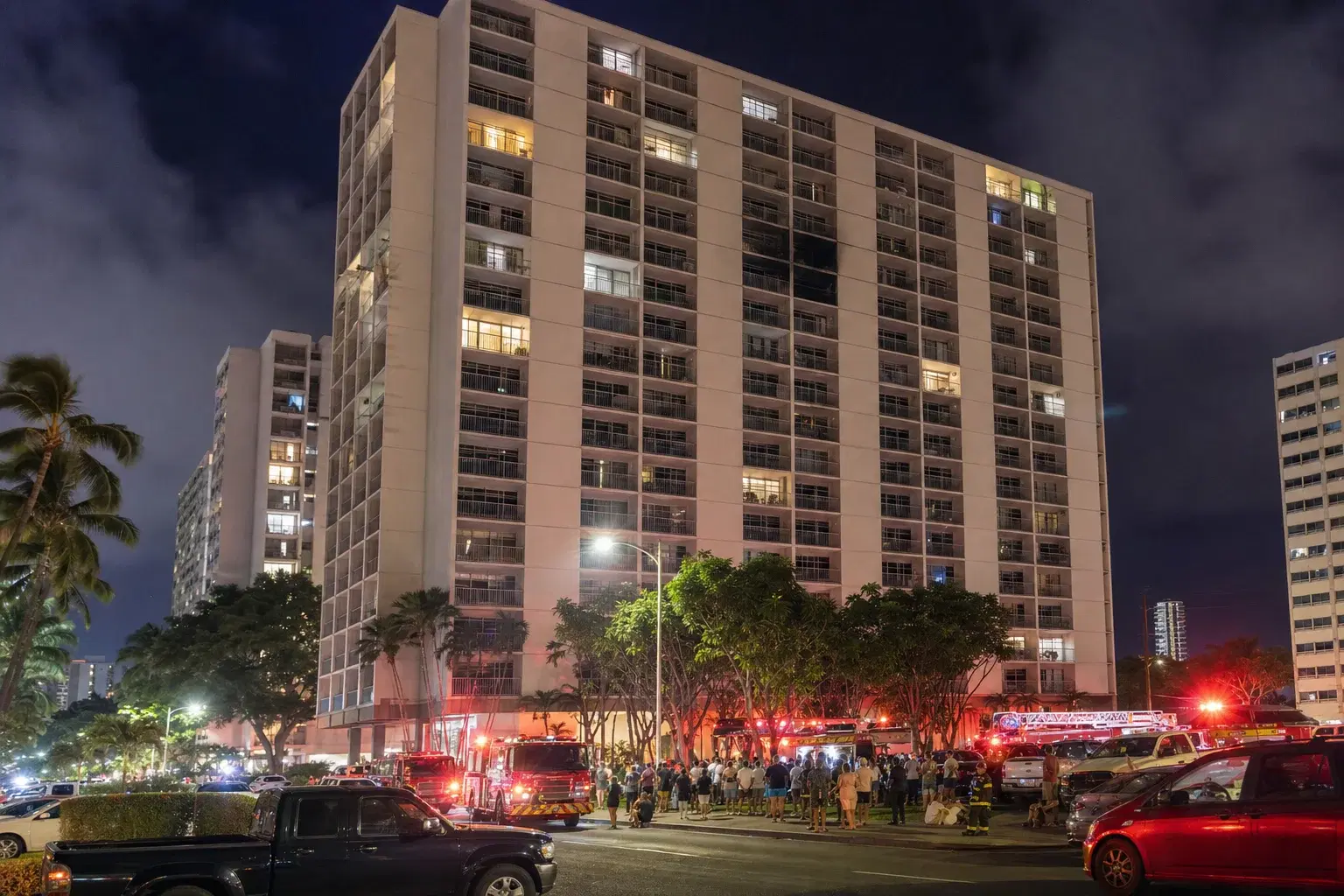
The June 8, 2026 battery fire at Waipahu Towers is important for obvious reasons: Honolulu firefighters responded to a three-alarm blaze, three residents were displaced, and the building was identified by responders as a non-sprinklered apartment building. But in my view, the deeper real estate story is not the individual fire. It is the way incidents like this can accelerate a broader repricing already underway in Oahu's condo market.
For years, many buyers evaluated condos primarily on location, price per square foot, maintenance fee, parking, and view. That framework is no longer enough, especially in older towers. Increasingly, buyers, lenders, and insurers are putting more weight on building-systems risk: sprinkler status, fire-alarm upgrades, reserve adequacy, claims history, pipe condition, deferred maintenance, and whether the association can still obtain full master insurance coverage at a workable cost.
That matters because a publicized fire tends to turn an abstract risk into a visible one. A buyer may ignore a line item in association documents, but not a headline about a battery explosion in a non-sprinklered tower. In practical terms, safety incidents can function as price discovery events. They remind the market that not all square footage is equal, and that two units with similar layouts can have very different financial risk depending on the building wrapped around them.
Why older towers are under more scrutiny
Honolulu's vulnerability here is structural, not temporary. Many Oahu condo towers were built before 1975, when sprinklers became required in new high-rises. That left a large inventory of older concrete buildings in neighborhoods like Waikiki, Makiki, Moiliili, Ala Moana, Kaimuki, and parts of urban Honolulu operating for decades without modern life-safety systems.
After the 2017 Marco Polo fire, which killed four people, the city pushed much harder on high-rise fire safety. Honolulu Fire Department guidance says existing high-rise residential buildings must comply with Ordinance 19-04, which requires fire safety evaluations and corrective action. But progress has been slow. Legislative findings tied to SB2727 stated that as of August 2023, 281 of 303 condominium properties that had submitted life-safety evaluations had not obtained passing scores. Only 22 had acceptable scores. That is roughly 93% not yet passing at that point.
This is where the market starts to separate buildings more aggressively. Not every older tower is a problem, and not every newer tower is automatically safe from cost pressure. But older non-sprinklered or partially upgraded buildings face a harder underwriting conversation. Fire engineers, insurers, lenders, and buyers are all asking variations of the same question: What unresolved building risk still exists, and who will pay for it? Once that question becomes central, the unit's ocean view starts competing with much less glamorous realities like pipe routing, water pressure, alarm upgrades, and future special assessments.
Insurance and lending are turning safety into pricing
The most powerful force in this repricing may not be code enforcement. It may be insurance. Hawaii Business has reported that about 400 condo associations on Oahu are estimated to be carrying less than 100% replacement coverage on their master policies. That is a major market issue because many lenders rely on Fannie Mae and Freddie Mac standards, and buildings that fall short can become difficult or impossible to finance through conventional channels.
At the same time, premium shocks have been severe. Hawaii reports show one-year premium increases of 300% to 600% are becoming common, with some buildings seeing costs jump 10 to 14 times prior levels. Peninsula at Hawaii Kai reportedly saw its premium rise to $3.3 million from less than $400,000. Kahala Towers saw insurance rise from about $120,000 to $720,000. Those are not line items an association can hide.
This is why I think the market discount for older under-upgraded towers may widen. Once a building loses easy financing access or carries incomplete insurance, the buyer pool shrinks. Financed buyers may fail in underwriting. Cash buyers become more important. And cash buyers usually demand a discount for uncertainty. So the repricing mechanism is fairly direct: safety and systems risk leads to insurance stress, insurance stress leads to lending friction, and lending friction leads to weaker resale liquidity.
In that environment, a lower asking price may not mean better value. Sometimes it simply means the market is already pricing in unresolved building risk.
Retrofit math is becoming part of everyday condo valuation
One reason this issue is so difficult is that retrofit work is expensive, disruptive, and technically messy. Owners often imagine sprinklers as a simple add-on. In reality, retrofit costs can include engineering, water supply upgrades, alarm integration, hazardous-material handling, ceiling demolition, patching, finish restoration, and coordination with occupied units.
The best local benchmark remains Marco Polo. According to the National Fire Sprinkler Association, its sprinkler retrofit cost about $5.26 million, with a total fire-safety project cost of around $6.08 million, or roughly $10,700 per unit. Civil Beat has reported older building retrofit projects often range from $1 million to $6 million, depending on complexity. At Kahala Towers, estimates for sprinkler installation ran roughly $4 million to $5 million, though some owners argued alternative compliance could cost closer to $2 million.
The key market implication is this: buyers should stop thinking of future building projects as vague possibilities. In many older towers, they are part of the asset's current value today. If a building still has unresolved sprinkler strategy, weak reserves, recurring claims, aging plumbing, or pending life-safety work, that is effectively a future bill attached to every unit.
On the other hand, buildings that have already repiped, addressed spalling, upgraded alarms, funded reserves, and completed or clearly funded sprinkler work may deserve a premium relative to nearby competitors. I increasingly see that distinction matter more than interior remodel quality alone.
Neighborhoods will split by building, not just by location
One of the biggest mistakes buyers can make right now is treating entire neighborhoods as if all condo inventory within them carries the same risk. On Oahu, I believe the next phase of the market is less about zip code and more about building-by-building differentiation.
Waikiki is the clearest example. It has long been valued for location, resort access, and investor demand, but it also contains a large concentration of older towers. Hawaii Business reported Waikiki condo sales were down 48% in June 2024, while Makiki-Moiliili sales fell 38%, with older underinsured stock identified as a major factor. That does not mean those neighborhoods are weak in general. It means the market is becoming more selective inside them.
Kakaako provides a useful contrast. Newer towers generally have stronger systems profiles, which is one reason some buyers are shifting there. But even Kakaako is not immune, because very high replacement values can make layered insurance expensive. Hawaii Kai shows the same point from a different angle: even planned communities and newer projects can suffer major premium spikes. So the real distinction is not simply old versus new. It is whether a building is well maintained, well insured, and clearly financeable.
That means two condos across the street from each other may now trade very differently. One may be easier to lend on, easier to insure, and easier to resell. The other may look cheaper on paper but carry enough systems risk that the lower price is justified.
What buyers and sellers should do now
For buyers, the checklist has changed. Before removing contingencies, review the association's master insurance certificate, confirm whether the building carries 100% replacement coverage, ask about sprinkler status and life-safety compliance, read at least 12 to 24 months of board minutes, and examine reserve studies and special assessment history. A lender should also review loanability early. Do not assume a condo is financeable just because the unit itself is attractive.
For sellers, building-level due diligence is now part of pricing strategy. A renovated kitchen does not offset a weak AOAO balance sheet, unresolved fire-safety work, or incomplete master insurance. If your building has already completed major projects, that should be featured clearly because it materially affects buyer confidence. If the building is underinsured or facing large retrofit costs, realistic pricing matters.
For boards and owners, state relief may help at the margin. Act 296 created funding tools, including a condominium loan revolving program, and the reactivated Hawaii Hurricane Relief Fund now offers hurricane-only commercial property insurance for eligible AOAOs. But these programs do not erase property-level underwriting risk. Buyers should verify current building status directly through association documents and official public sources such as Honolulu Fire Department guidance and state insurance resources, because building information changes over time.
The bottom line is straightforward: the Waipahu Towers fire is a warning, but not an isolated one. On Oahu, condo values are increasingly being shaped by systems, safety, insurance, and financeability. In this market, the best-looking unit is not always the best buy. The better building often is.
Sources: Primary reporting and data were drawn from Hawaii News Now on the Waipahu Towers fire; Honolulu Fire Department guidance on Ordinance 19-04 and high-rise sprinkler compliance; Hawaii Business reporting on condo insurance, underinsurance, premium spikes, and sales impacts; Civil Beat reporting on retrofit costs, insurance stress, and owner disputes; Hawaii legislative findings in SB2727 and Act 296; the Hawaii Hurricane Relief Fund; and the National Fire Sprinkler Association's Marco Polo retrofit case study.
Disclaimer: This article is provided for general informational purposes only and does not constitute legal, financial, or real estate advice. Market conditions change frequently; readers should conduct their own due diligence and consult qualified professionals before making decisions.