Honuakaha Expired: Which O'ahu Buildings Are Next?
Listen to this article:
O'ahu Housing Has More Than One Expiration Clock
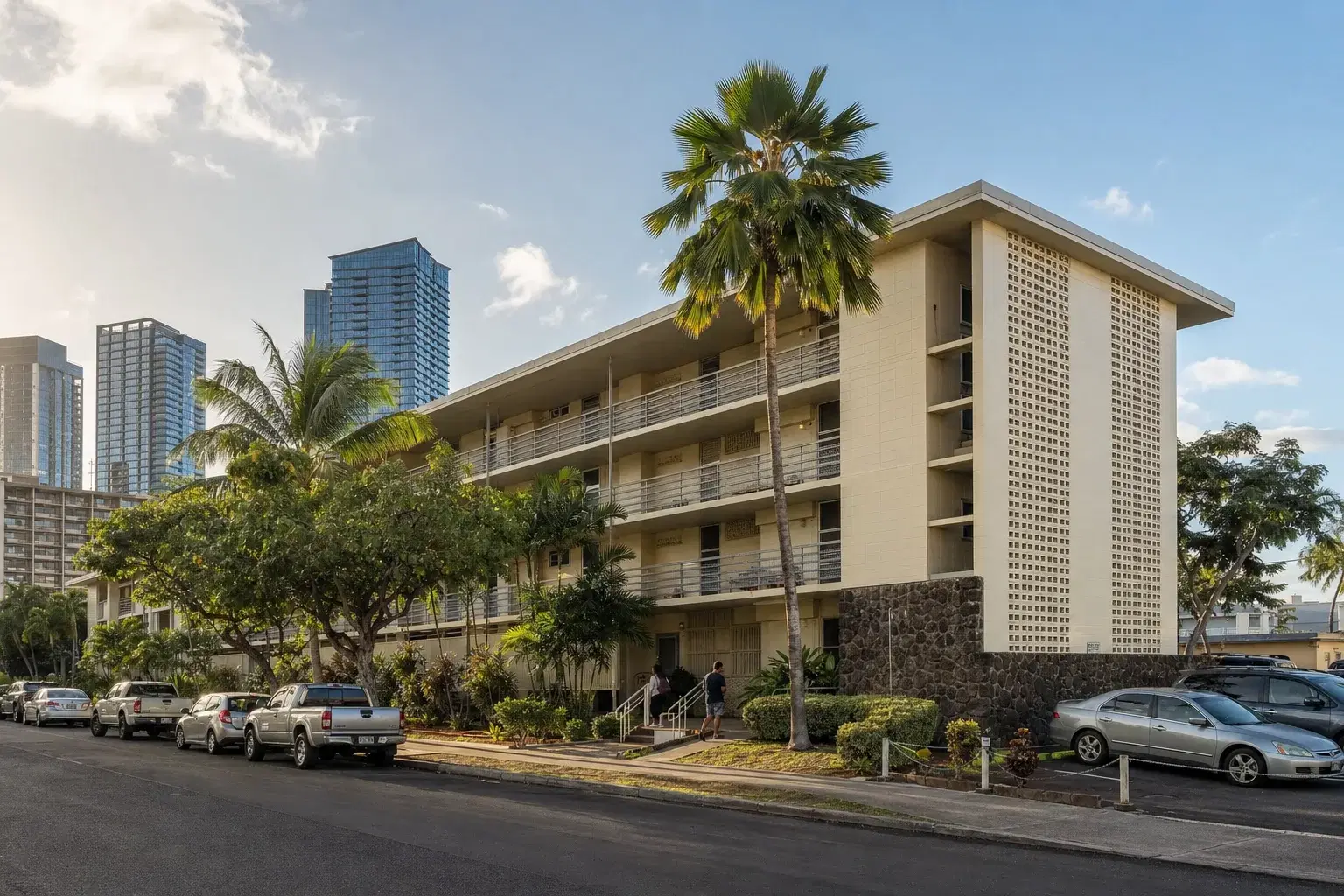
Honuakaha's federal affordability period ended on December 31, 2025, but that date tells only part of the story. The Kaka'ako property is unusual: 151 government-controlled rentals sit inside a 244-unit condominium alongside 93 privately owned homes. The AOAO-Association of Apartment Owners, the organization responsible for shared property- must maintain elevators, insurance, common areas and building systems for both groups.
The limited partnership that held the rental units dissolved on June 30, 2026, and the Hawai'i Community Development Authority, or HCDA, became their sole owner the next day. HCDA may now lease vacant units without age or income limits at approved market rents. Existing tenants are expected to remain under their current rent structure, although the absence of a newly recorded long-term protection creates uncertainty.
Several different clocks matter across O'ahu:
- Rental-affordability covenants control tenant eligibility and rents.
- Owner-occupancy and buyback restrictions limit when a reduced-price condo may be rented or resold.
- Shared appreciation requires an owner to return part of the home's price gain to the housing agency.
- Ground leases determine how long a homeowner may use land owned by someone else.
- Reserve and replacement cycles measure whether an association is saving enough for roofs, plumbing, elevators and other major work.
I would not describe a condo as "unrestricted" merely because its 10-year occupancy term ended. A shared-appreciation obligation, ground lease or agency approval requirement may remain. Buyers need to identify which clock expires, when it expires for their individual deed and what survives afterward.
The Working Expiration Map: 2025 Through 2053
This timeline is an editorial guide, not a substitute for reviewing recorded deeds, regulatory agreements and leases. Many dates run from each unit's deed recording rather than the building's opening.
| Approximate milestone | Project or group | Ownership structure | Possible outcome |
|---|---|---|---|
| 2025-2026 | Honuakaha, Kaka'ako | HCDA rentals inside a private condominium | Vacant government units may be leased without prior income or age limits; preservation, transfer or sale remains possible. |
| Already expired | 801 South, Kaka'ako | Individually owned fee-simple condos | Two-year occupancy terms ended; owners generally may sell or rent subject to building rules. |
| Around 2028 | Kapi'olani Residence | Mixed-income fee-simple condominium | Ten-year buyback and occupancy terms begin ending deed by deed; shared appreciation may remain due. |
| Beginning 2029 | Uluwehi, Nahoa and Hale Aupuni | Homeowners own improvements; HHFDC owns the land | New lease options may prevent financing and reversion problems as ground leases expire. |
| Around 2031 | The Central Ala Moana | 310 restricted and 202 market units | Resale and rental flexibility may increase, but continuing obligations require title review. |
| Mid-2030s | Early Bill 7 rentals | Privately owned rental projects | Fifteen-year covenants begin expiring unless refinancing or public benefits extend affordability. |
| Around 2033 or 2053 | The Flats at Sky Ala Moana | Mixed-use condominium | Ten- or 30-year occupancy restrictions end depending on the unit. |
Later milestones include Ililani around 2034 and Kuilei Place around 2037-2038. By contrast, Na Lei Hulu Kupuna's senior affordability was extended through December 28, 2082-proof that a clock can be reset before conversion becomes inevitable.
The UHERO Subsidized Housing Explorer is a useful starting point. Final verification requires Bureau of Conveyances or Land Court records, agency agreements and the individual unit's title documents.
Why Honuakaha's Mixed Ownership Changes the Analysis
Honuakaha was built in 1995 and contains 141 government-owned studios, 10 government-owned one-bedrooms and 93 privately owned fee-simple units. One government unit serves as the management office, leaving 150 rentals. HCDA therefore owns about 61.9% of the apartments by count, but that does not necessarily equal its voting power. Condominium votes and expenses are commonly allocated by common interest, a percentage assigned in the declaration.
The rental operation pays approximately $78,095 per month, or $937,140 annually, in AOAO assessments. Maintenance fees-the monthly amount every owner pays the association-on recent private listings have been roughly $738 to $783. The difference reflects unit size and allocation percentages, so simply dividing HCDA's payment by 151 can be misleading.
About 30 government units were vacant in August 2026. Leasing all 30 at a proposed $1,400 monthly studio rent would produce a theoretical $504,000 in annual gross rent. That sounds substantial, but it is not profit. Renovation, utilities, management, vacancy and turnover costs must come out first.
The larger concern is deferred capital work. A 2022 HCDA review cited annual operating losses of approximately $200,000 to $460,000, a reserve study that had not been updated since 2001 and an estimated $3.48 million in future improvements. The rental operation previously accumulated about $800,000 in unpaid maintenance assessments, although HCDA reports that those arrears were resolved.
For private owners, stronger rental revenue matters indirectly. The AOAO does not receive a percentage of HCDA's rent, but reliable cash flow makes another large delinquency less likely. That can reduce pressure for association borrowing, delayed repairs or special assessments-one-time charges imposed when regular fees and reserves are insufficient.
How Higher Rents Could Affect Owners and Values
A changing tenant mix could help Honuakaha, hurt it or do both at different times. Filling vacant units may improve security, hallway activity and the property's appearance. Higher rental revenue may also help HCDA pay assessments and repair its units. On the other hand, greater turnover can increase move activity, common-area wear, security demands and management costs.
The effect on private-unit sale prices will be difficult to measure because Honuakaha has extremely thin volume-roughly two fee-simple sales annually in recent years. A 628-square-foot one-bedroom sold for $490,000 in July 2026 after selling for $425,000 in February 2025. Private studios have recently been offered around $305,000 to $328,000. One transaction, however, can dramatically move a building median and should not be treated as proof that covenant expiration created appreciation.
Potential positives for private-unit comparables include:
- Better occupancy and visible unit repairs.
- Lower risk of another large-owner assessment delinquency.
- A broader pool of residents and long-term investors.
- Rehabilitation funding if the rentals transfer to a qualified operator.
Potential negatives include:
- Uncertainty over HCDA's ownership and management plan.
- Elevator, hot-water or other deferred-maintenance concerns.
- High monthly fees relative to small floor plans.
- Concentrated governance power in one institutional owner.
- Fear of future special assessments.
The proposed $1,400 rent for a smaller HCDA studio is not automatically a valid rent comparison for a private unit. Parking, furnishings, utilities, condition and square footage must be adjusted. A private studio purchased for $315,000 with a $750 monthly fee would have only $650 left from $1,400 rent before property tax, insurance, repairs, vacancy, management and mortgage payments. That is unlikely to attract yield-focused investors without higher achievable rent or a lower purchase price.
Which O'ahu Clocks Deserve the Most Attention Next?
The next milestones affect different households in different ways. At Kapi'olani Residence and The Central Ala Moana, the primary issue is flexibility. As 10-year occupancy and buyback terms end, owners may gain more ability to move, rent or sell. However, HHFDC's shared-appreciation claim may continue, meaning the agency can still be owed part of the price increase.
For Uluwehi, Nahoa Apartments and Hale Aupuni, the concern is land tenure. HHFDC has more than 500 residential leases across 13 projects, with expirations ranging from 2029 to 2055. As a ground lease gets shorter, conventional financing can become harder to obtain, reducing the buyer pool and affecting resale value. HHFDC has been developing a new 99-year option for eligible homeowners, generally tied to owner occupancy, compliance and counseling.
Bill 7 presents a broader supply issue. The Honolulu program allows smaller apartment projects with reduced regulatory costs when at least 80% of the units serve households at or below 100% of area median income, or AMI-a federal benchmark used to measure local household income. Affordability generally lasts at least 15 years. The earliest projects could begin reaching covenant expiration in the mid-2030s unless owners accept new restrictions through refinancing, tax benefits or public subsidies.
Kaka'ako also demonstrates that expiration is not predetermined. Na Lei Hulu Kupuna's affordability was extended to 2082. The 2019 Komohale transaction preserved more than 1,200 units statewide through new long-term restrictions and approximately $85.1 million in planned renovations.
In my view, deeply affordable senior rentals warrant longer protections than middle-income ownership units. A household buying a restricted condo needs eventual mobility; a low-income kupuna renting a studio needs protection from displacement and sudden rent shock.
Questions Buyers and Sellers Should Ask Now
A Honuakaha buyer should evaluate the home's total monthly ownership cost, not only its comparatively modest purchase price. That includes the mortgage, maintenance fee, property tax, HO-6 interior insurance, parking costs and a reasonable allowance for future fee increases or special assessments.
Before removing a financing or document-review contingency, buyers should examine:
- The current AOAO budget, audit and year-to-date financial statements.
- The latest reserve study and funding schedule.
- Board minutes covering at least the previous 12 to 24 months.
- Master insurance limits, deductibles and replacement-cost coverage.
- Pending assessments and elevator, plumbing, hot-water and waterproofing reports.
- HCDA's exact voting percentage and board representation.
- Delinquency reports and cost-sharing agreements between HCDA and the AOAO.
- The lender's condominium-project approval before committing to the loan.
Sellers should avoid using the building median without explaining the tiny number of annual sales. Studio, one-bedroom and loft-style units require separate comparisons. The $1,400 HCDA target should not be advertised as a private-unit rent comp without adjustments for size, utilities, parking and condition.
Owners selling restricted condos elsewhere should start agency review well before listing. A closing may require a shared-appreciation payoff, agency consent, a buyback waiver or proof that the occupancy period ended.
Building information on real estate websites is continually updated but still requires personal verification. Buyers can check HHFDC and HCDA program pages, the Hawai'i Real Estate Commission's condominium guidance, Bureau of Conveyances records and the recorded declaration for the specific property.
Honuakaha's real test is whether higher revenue can protect existing kupuna, restore aging systems and prevent costs from shifting to private owners. Covenant expiration alone accomplishes none of those goals. Sound management, enforceable tenant protections, adequate reserves and a clear ownership plan will determine whether this transition strengthens the building or merely starts another clock.
Sources: Main sources include HCDA property-management and strategic-planning documents, HHFDC program and annual reports, UHERO housing research, Hawai'i Real Estate Commission guidance, Civil Beat reporting, Hawai'i Business Magazine and recorded-program summaries for O'ahu housing projects.
Disclaimer: This article is provided for general informational purposes only and does not constitute legal, financial, or real estate advice. Market conditions change frequently; readers should conduct their own due diligence and consult qualified professionals before making decisions.