1615 Ala Wai: What Waikiki's Demolished Eyesore Means for Nearby Condos
Listen to this article:
The eyesore at Waikīkī's gateway is finally gone
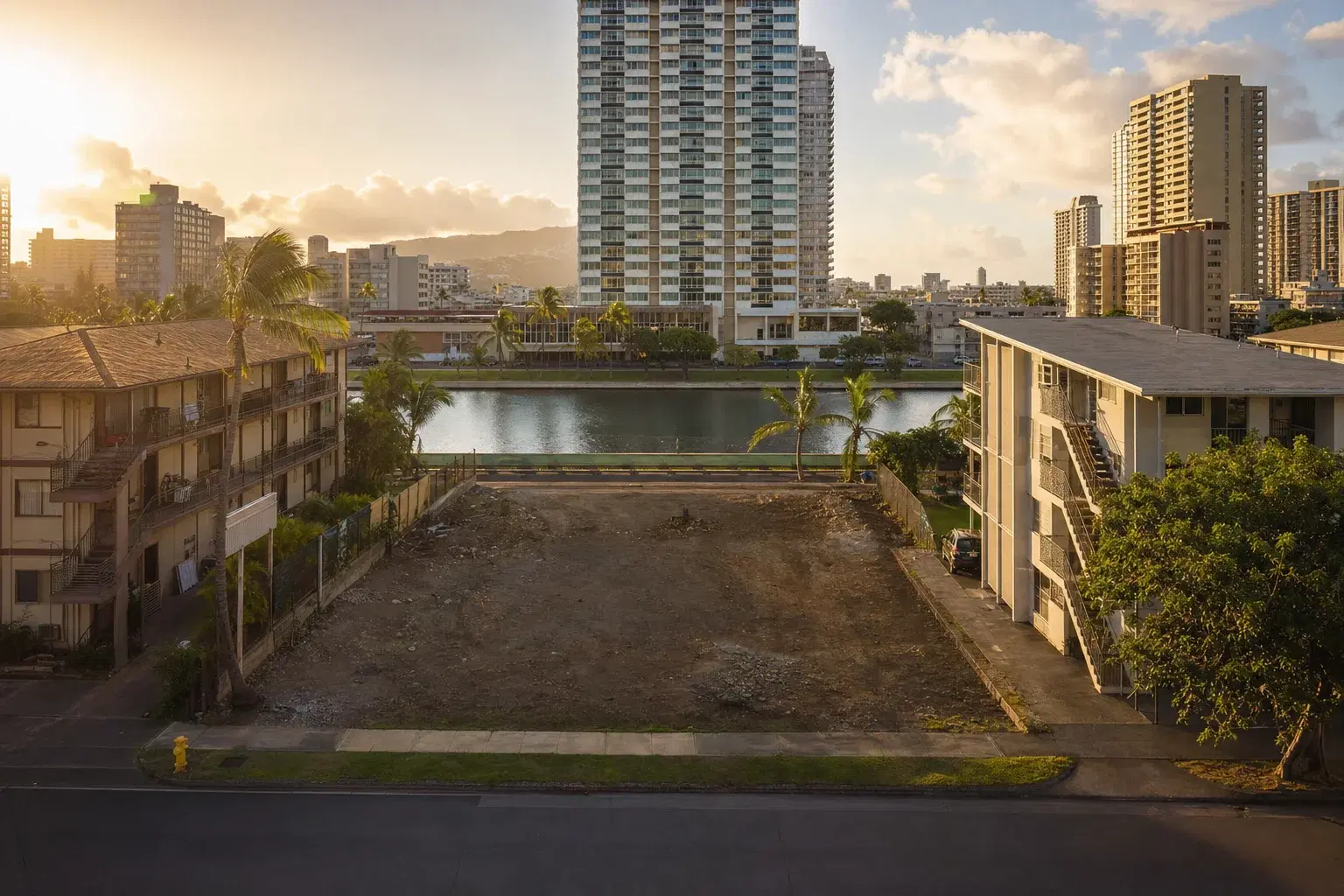
For more than 20 years, anyone driving into Waikīkī from the McCully side passed the same thing: a boarded-up, graffiti-tagged 1949 walk-up at 1615 Ala Wai Boulevard, slowly rotting behind overgrown landscaping. This summer it came down. And what replaces it may matter more to condo owners along the canal than the size of the lot suggests.
The three-story building held just 17 units and sat vacant for over two decades, drawing years of complaints about trespassing, vandalism, and blight at one of the most visible entrances to the neighborhood. After sustained community pressure, the Honolulu City Council approved acquiring the property by eminent domain in 2021. The city took title through condemnation in January 2024, secured a demolition permit in June 2025, and had the structure down by late summer — ahead of schedule. In July 2025 it named Centre Urban Real Estate, a local infill and workforce-housing developer, as its preferred partner to rebuild the site as affordable rental housing.
Why a 0.22-acre lot matters more than its size
The parcel is small — about 9,454 square feet. On its own, a modest affordable building here barely registers against O'ahu's housing shortage. What makes 1615 Ala Wai worth watching is the mechanism, not the unit count.
This is the city acting as land assembler: take a privately owned, chronically blighted parcel by eminent domain, clear it, and hand it to a private developer on a long-term ground lease to build the housing the market wasn't producing on its own. The city retains the land, the developer builds and operates. Honolulu has openly signaled it intends to run this same play on other underused city-controlled parcels.
For anyone who owns or is shopping in Waikīkī, that is the real headline. A single 40-unit-ish building doesn't move the market. A repeatable model for converting decades-old blight into occupied housing — on land the city already controls — does.
What it means for the condos next door
The immediate neighbors are older low-rise walk-ups: Marina Gardens (1621/1627 Ala Wai) and Hawaiiana Gardens, both mid-century three-story buildings. Across the canal sits the 31-story 1717 Ala Wai high-rise. For all of them, the near-term story is straightforward and, on balance, positive.
Blight removal is a value story. The single most defensible thing you can say about this project is that replacing a derelict, trespassed-in eyesore with new occupied housing lifts the immediate block. Adjacent owners have spent 20 years with that liability next door. Losing it is an upgrade to their setting, their security, and their curb appeal.
The scale change is modest. Early reports describe a roughly six-story building in place of the three stories that stood there — but the city has been explicit that design, height, and unit count are not yet finalized, and the project remains in an early negotiation window. On a lot this narrow, inside Waikīkī's regulated height regime, a mid-rise of that size does not meaningfully wall off canal or mountain views for buildings behind it, and it has no effect on the tower across the canal.
Traffic and parking impact is minor. A few dozen small units fronting an already-busy boulevard is a rounding error on Ala Wai traffic. Expect short-term construction dust and noise for the closest neighbors during the build — the standard, temporary cost — followed by a quieter, cleaner corner.
The community is on board. The Waikīkī Neighborhood Board pushed for this acquisition for years and has publicly welcomed it. No organized opposition or view-blockage fight has surfaced. That matters: projects that arrive with community support tend to move more predictably than those fought at every hearing.
The pattern Waikīkī owners should track
Step back and 1615 Ala Wai is one data point in a larger shift. Honolulu is increasingly willing to intervene directly on distressed and underused parcels — condemning blight, clearing it, and leveraging city-owned land to get housing built. For a neighborhood where a meaningful share of inventory is aging mid-century product, that has two implications worth holding in mind.
First, the floor under nearby values firms up as chronic eyesores get cleared and replaced. Second, new supply arrives slowly and in small increments — a 0.22-acre infill site is not going to reprice Waikīkī, and the entitlement-to-occupancy timeline on projects like this runs for years. Buyers underwriting today's Waikīkī condo shouldn't expect a wave of new competing inventory from these gateway sites any time soon, they should expect a gradual cleanup of the neighborhood's worst corners.
What to watch next
- The development agreement and ground lease. The city and Centre Urban had a 120-day window to finalize terms after the July 2025 selection. Those terms — length of ground lease, affordability targets, unit mix — define what actually gets built.
- DPP filings. Final height, unit count, and design will show up in Department of Planning and Permitting submissions. Treat any specific numbers circulating now as provisional until they land there.
- Neighborhood Board agendas. The city committed to briefing the Waikīkī Neighborhood Board as the design team is introduced — the earliest public look at the real plan.
For now, the takeaway is simple. The gateway eyesore is gone, the neighbors are better off for it, and the model that removed it is the thing to keep an eye on — because if it works here, the city plans to do it again.
A note on figures: unit-count and height details reported for the future building come from early secondary coverage and have not been confirmed by the city, which says the design is not yet final. Confirmed facts here — the condemnation, demolition, lot size, and developer selection — are drawn from City of Honolulu announcements and local reporting.
Sources: City & County of Honolulu — Department of Housing and Land Management and Office of the Mayor announcements (1615 Ala Wai demolition, redevelopment, and developer selection). Honolulu Star-Advertiser, Hawaii Public Radio, KITV, Spectrum News Hawaii, and Aloha State Daily reporting. Property records (Redfin/Zillow) for lot size and prior building. Early build-program details (approx. six stories, ~40 one-bedroom units, project-name references) come from secondary local coverage and are NOT confirmed by the city.
Disclaimer: This article is provided for general informational purposes only and does not constitute legal, financial, or real estate advice. Market conditions change frequently; readers should conduct their own due diligence and consult qualified professionals before making decisions.