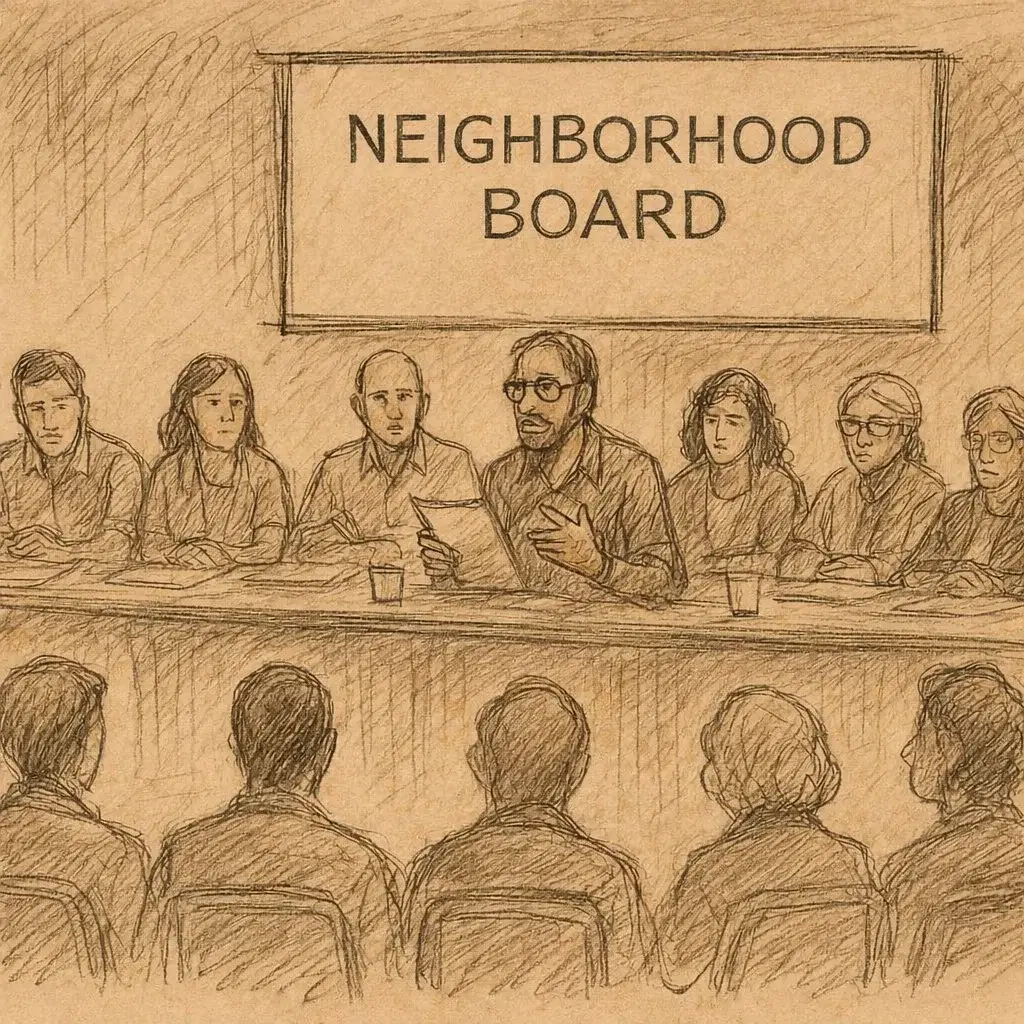
No 22 Waipahu Neighborhood Board Regular Meeting April 2026
Listen to this article:
22 Waipahu Neighborhood Board Meeting – April 24, 2026
Meeting Attendance and Proceedings
The Waipahu Neighborhood Board convened its regular meeting on April 24, 2026, with Chair Daryl Mancha presiding and board members and guests attending both in person and online. Members present included Richard Asprer, Maureen Andrade, Richard O’Farrill, Nathan Chang, Jayten Chang, Tom Plong, Danny DeGracia, Kevin Wilson, Nainoa Molotau, and John Pagan, with Rachel Cristobal joining remotely. The board moved through first responder and agency reports, board business, resident concerns, elected official updates, and announcements. The February 26, 2026 meeting minutes were approved without correction.
Honolulu Fire Department Activity and Evacuation Planning
The Honolulu Fire Department, represented by Joe Toro of the Waikele Fire Station, reported March 2026 incident statistics for the board area. There were no structure fires and no brush fires during the month, but there were two nuisance fires, one cooking fire, and 23 activated alarms where no fire was found. Emergency responses included 230 medical emergencies, one ocean rescue, and one hazardous materials incident. HFD used the report to emphasize evacuation planning, urging households to maintain an emergency preparedness plan for environmental emergencies, fires, oil-related incidents, and natural disasters. Residents were encouraged to identify at least two escape routes from their homes, determine evacuation paths out of their neighborhoods, leave early to avoid being trapped by fire, smoke, or traffic, and choose a prearranged meeting place such as a relative’s home, shelter, or evacuation center. The department also directed the public to sign up for alerts through HNL Alert and to keep a go bag ready as part of a 14-day disaster supply kit, reflecting the continued focus on readiness following recent storm events.
Honolulu Police Department Crime Statistics and Pedestrian Collision Concerns
The Honolulu Police Department presented March crime statistics compared with February, showing some improvement in certain categories but a rise in others. Motor vehicle thefts dropped from 29 in February to 24 in March, burglaries declined from nine to five, while unauthorized entry into vehicles increased significantly from eight to 15. Total calls for service in the area reached 2,170 in March, underscoring the ongoing volume of police activity in the district. HPD also highlighted four serious pedestrian collision cases in the area so far this year. The most recent occurred on April 21 at approximately 3:27 p.m., when a 22-year-old driver veered off the roadway, struck a tree, then hit a 39-year-old pedestrian on the sidewalk, pinning him against a fence; the pedestrian was taken to the hospital in critical condition, and no criminal case had been initiated at the time of the report. Earlier incidents included a February 12 collision near Lumiauau and Lumiaina involving a 53-year-old woman in a marked crosswalk, a February 11 collision at Farrington Highway and Waipahu Depot Street involving a 59-year-old woman, and a January 25 crash on Kamehameha Highway near Lumiaina involving a 24-year-old man walking in the roadway. In all of the cited cases, the victims suffered serious injuries and no criminal case was reported. The pattern of severe pedestrian crashes framed the community’s later transportation safety concerns.
Requests for Speed Enforcement and Street Safety Improvements
Board members and residents raised repeated concerns about speeding and unsafe driving on neighborhood streets and highway approaches. Board Member Danny DeGracia asked HPD to increase speed enforcement near the Kunia H-1 westbound off-ramp, describing very aggressive late-night speeding in that stretch. A resident, Douglas Icheck of 94-69 Honowai Street, described chronic speeding on Honowai Street throughout the day, including near Honowai Elementary School, and said he had called 911 and documented incidents. He also reported loud car stereos, burnouts, and reckless driving in the area. He urged installation of speed bumps, raised walkways, rumble strips, additional crosswalks, and signal adjustments, especially near the intersection of Hehi Street and Waipahu Street, where he said pedestrian movement and turning traffic conflict in dangerous ways. Board Member DeGracia reinforced those concerns under resident issues, noting that many residents had complained about speeding on Puhawai Street and that he himself had nearly been struck while crossing there. He had already contacted Honolulu Safe Streets to request built-environment measures such as rumble strips or speed humps, observing that the width of the roadway appears to encourage drivers to speed. HPD responded that it would look into deploying a speed trailer to the area if available. The discussion reflected broad concern that enforcement alone may be insufficient without redesigning streets to slow traffic and improve pedestrian visibility.
U.S. Army Hawaii Hiring Fair, Training, and Prescribed Burns
Sergeant First Class Marsha Feitner of the 599th Transportation Brigade delivered the military report on behalf of U.S. Army Hawaii. She announced that U.S. Army Garrison Hawaii had recently held a public job fair on April 21 at the Helemano Military Reservation gym and would hold another hiring fair on May 18 from 8:30 a.m. to 2:00 p.m. at the Helemano Military Reservation Training Room. The event is open to the public, with applicants advised to bring identification, a Social Security card, two references, and a resume or application, while online information is available through the MWR website. The Army also provided a training advisory for the end of April. East Range training was scheduled for April 23–24 and April 27–30 from 6:00 a.m. to 6:00 p.m., including Ranger and jungle tactics blank-fire drills and aviation operations. On Schofield Barracks, artillery, mortar, and demolitions training was planned for April 24–30, with live-fire exercises extending through the day and into late evening and early morning hours. Prescribed burns previously planned for Schofield Barracks were postponed because conditions were too wet, with the Army now targeting the week of May 11–15. These updates provided advance notice of noise, smoke, and military activity that can affect surrounding communities.
Bridge Closure, Traffic Detours, and Need for Better Signage
A recurring issue in the meeting was the continuing bridge closure near Waipahu Depot Road and the confusion it is causing for motorists. Board Member Tom Plong said drivers are still turning into the area because detour or bridge-closure signs are inadequate, particularly around Pupuhihi Street and on the Ewa side near Waipahu. He asked for better signage and an updated timeline for repairs. Later in the meeting, elected officials added further details. Council Member Augie Tulba said he had walked the back area near Waipahu Elementary and acknowledged that some motorists continue to ignore signs and try to pass through regardless. Representative Trish La Chica Hartsfield clarified that the closure affects the eastbound lane from Awamoi Street to the entrance of Hawaiian Plantation Village, while the westbound lane remains open. She reported that the principal of Waipahu High School confirmed an HPD officer has been stationed near Awamoi Street during school hours to keep drivers from entering the closed lane, and she noted that detour signs had been moved farther back so drivers receive earlier notice. The latest estimated completion date shared with her by city liaisons was late June or July. The issue remains a daily traffic and access concern, especially for school traffic and residents navigating the area.
Concerns Over Use of Central Oahu Regional Park as Storm Debris Site
Board Member John Pagan raised a detailed concern regarding the city’s use of Central Oahu Regional Park as a temporary storage and sorting site for debris from the recent Kona low storms. He first expressed sympathy for storm victims and acknowledged the urgency of debris removal, but questioned why the city used Central Oahu Regional Park rather than Dole Field, which the city’s disaster debris management plan identifies as the primary temporary debris storage site for the Central Oahu and North Shore area, while the park is listed only as an alternate site. He also asked whether less-used or undeveloped sections of the park could have been used instead of the visible area off Kamehameha Highway. Pagan further questioned what environmental protections DRC Emergency Services and Tetra Tech, the city’s contractors, had implemented to prevent contamination from nearly 5,000 tons of debris reportedly stored there, and what the restoration timeline would be to return the area to its original condition.
City Explanation of Storm Debris Operations and Environmental Restoration Plan
Mayor Rick Blangiardi’s representative, Dr. Roger Babcock of the Department of Environmental Services, gave a lengthy response explaining the city’s emergency decision-making after the March Kona low storms. He said severe flooding in Waialua and Haleiwa occurred overnight on March 21–22, and by Monday morning city staff found debris rapidly accumulating in streets and on private property as residents and local contractors began organic cleanup efforts. Because the volume was growing quickly and obstructing roads and recovery operations, the city activated its islandwide debris removal contract on Monday morning. This contract, unique in the state, involves DRC Emergency Services for hauling and sorting and Tetra Tech for monitoring, documentation, and FEMA reimbursement support. Since immediate staging space was needed before the contractors were fully mobilized, the city opened a small site near H-Power by 10:00 a.m. and then selected an approximately eight-acre corner of Central Oahu Regional Park by 2:00 p.m. because it was city-owned, quickly accessible, lacked organized athletic fields, and could accommodate large trucks entering from Kamehameha Highway without disrupting park operations. Babcock said Dole had later offered its field, but would have needed time to clear agriculture and prepare the land, which was not feasible at the time of the emergency.
Babcock also detailed the cleanup and monitoring process. He said the debris was brought to the park for roughly two weeks, sorted into recyclable and nonrecyclable streams, and then sent to destinations including landfills, metal recycling, and composting facilities. Once the site was cleared, restoration obligations under the contract began. An environmental baseline sampling program was conducted on March 25 by a local firm, EnviroServices, at 126 locations around the site because debris was already piled in the main storage area. Results returned on April 10 and showed no contamination on the site. The restoration plan now requires removal of 6 to 12 inches of soil from the entire footprint where debris had been stored, with all excavated material taken to the landfill. After excavation, the area beneath will be sampled again in a grid of dozens of locations. If contamination is found anywhere, more soil will be removed and the area re-tested until the entire site meets the same clean condition as the baseline. Only after that will clean fill be imported, the land regraded, regrassed, and the turf allowed to establish for at least 30 days before the site can be returned to the Department of Parks and Recreation. Babcock also explained that no plastic liner or other ground barrier is used in this kind of operation because heavy equipment must operate directly on the ground, so contamination control is addressed through post-use soil removal and verification rather than preventative lining.
City Storm Recovery Efforts and Public Resource Programs
In addition to the debris site explanation, Dr. Babcock provided a general city update on ongoing storm recovery. He said the city had launched a recovery website and was continuing to connect affected residents with assistance programs, noting that the response and recovery period would continue for some time. He also mentioned a recent city newsletter highlighting post-storm and public service efforts, including training of homegrown first responders in Waiʻanae. His department also promoted the city’s new Green, Recycled, Organic Waste program, known as GROW, which officially began on April 1. Under the program, residents may now place food waste in their green carts along with yard waste. The material is taken to Hawaiian Earth Recycling in Wahiawa and composted. He summarized the rule simply as “anything that is or was food” can go in the green cart. Chair Mancha asked whether community outreach sessions for the GROW program, including distribution of the small kitchen scrap containers, could be reinstated in Waipahu because at least one local session had been canceled due to storms. Babcock said the containers had now arrived and residents who completed trainings were being invited to pick them up, and he agreed to check on offering renewed outreach.
Council Member Matt Weyer: District Updates, Development Questions, and Budget Priorities
Council Member Matt Weyer provided a broad report covering development, infrastructure requests, and city budget issues. He first thanked Board Member Pagan for raising specific and respectful questions about Central Oahu Regional Park, and he publicly thanked Dr. Babcock for his work on storm response, including debris removal and pumping services that assisted residents affected by sewage and flooding not only in Waialua but across the district. Weyer then addressed questions about activity on the Haseko property associated with Royal Kunia Phase 2, saying his office had confirmed that open permits had been filed, including grading and grubbing-related permits, but none had yet been granted. His office is continuing research into what infrastructure work may be starting. He also attended the blessing for the Kunia Business Park project, saying it remains in a very early phase and is planned for business and industrial uses, with potential availability of fee-simple spaces for businesses. He encouraged residents to send concerns about either project directly to his office.
Weyer also reported that his office had requested ditch clearing and maintenance for the lower Kupuna Loop city ditch, and had asked for an assessment of a bus stop near Anonui and Anoiki Streets based on community feedback. For Nolupo Street tree maintenance, he said a Division of Urban Forestry inspection on March 11 found that some trees require work and completion is anticipated by the end of May 2026. He then summarized several budget amendments. One accepted amendment would fund improvements to the aquatic center at Central Oahu Regional Park, an effort he said grew out of conversations with youth and high school students already organizing to support upgrades. Another proposed amendment, not accepted, would have funded an expansion of the Hawaiiʻi neighborhood recreation center, which he said remains important because of long waitlists for summer programming in the Village Park and Kunia area; parks staff have indicated such an expansion would take years even if funded, but the need remains on the radar. In the meantime, the Department of Parks and Recreation will work on repainting and fixture improvements.
Opposition to Deep Cuts in the Office of Economic Revitalization
A major portion of Council Member Weyer’s remarks focused on the proposed reduction of staffing in the city’s Office of Economic Revitalization. He said the office currently has 27 positions, but a budget amendment from the Budget Chair would eliminate 20 of them, leaving only seven: three film office staff, three community equity liaisons, and a director. Weyer argued strongly against this reduction, saying the office provides language access and direct outreach to vulnerable communities, with staff who speak Tagalog, Ilocano, Chuukese, Mandarin, and Cantonese, while also working through networks in Thai, Vietnamese, Lao, and other communities. He noted that OER staff were actively assisting with disaster response in District 2, from Waialua to Kāneʻohe-side communities, and that one staff member was at that moment next door conducting training related to the community fiesta.
He also said the office helps small businesses, farmers, and ranchers access services and recover from crises, including outreach events in agricultural communities such as Kukuia and response work in Waialua, Lāʻie, Kāhalaʻu, and Waipahu. He warned that reducing the office would jeopardize the city’s ability to administer a small-business recovery fund with state support and to implement a proposed agricultural recovery fund. Beyond disaster recovery, he described the office as central to efforts to secure state, federal, and foundation resources and to support economic opportunity during a period when high costs are pushing residents to move away. He shared that school administrators in the Waipahu complex had reported student population declines as families leave due to cost pressures. Weyer compared Honolulu’s staffing to county economic development offices elsewhere in Hawaiʻi, saying Hawaiʻi County has 26 staff, Maui County has 23, and Kauaʻi has eight despite much smaller populations, while this proposal would shrink Honolulu’s office below all of them.
Royal Kunia Phase 2 Development Questions
Board Member Cheryl Oshiro pressed Council Member Weyer for more details on the long-discussed Royal Kunia Phase 2 development associated with Haseko. She emphasized that the project, long in planning and said to include 2,007 housing units and mixed uses, would have major implications for traffic, schools, and community growth, yet the developer has not appeared before the neighborhood board to explain its plans. Oshiro said the board needs information on the types of housing, the scale and location of retail and mixed-use components, the timeline for buildout, and traffic mitigation measures, particularly given expected impacts to Kunia Road and surrounding streets. She also noted that plans had historically included another school in the area and stressed that the project has been discussed for roughly 30 years. Weyer agreed with the concern, saying the board and community should expect updates as the project progresses. He said that aside from the original master developer, the Department of Hawaiian Home Lands had also discussed the property, though no final updated master timeline appears to have materialized yet. Later in the meeting, U.S. Representative Ed Case’s representative added historical context, saying prior attempts to build Royal Kunia Phase 2 had faced financing problems and conditions such as reconstruction of the Kunia interchange, widening of Kunia Road, and installation of a water line to a state agricultural park.
Support for Public Workers During Budget Pressure
Board Member Danny DeGracia used the budget discussion to thank Council Member Weyer for defending public workers and preserving government staffing capacity. Speaking both as a civil servant and as Oʻahu Island Chair for scientific and professional employees within the Hawaiʻi Government Employees Association, DeGracia said it was meaningful that Weyer was resisting cuts that would reduce the government’s ability to provide quality services. Weyer responded emotionally, saying the recent storms had made clear how much the city relies on public employees, from firefighters, police, and ocean safety personnel to shelter staff and employees across departments. He described public workers as members of the community who serve with aloha and compassion, even while navigating institutional challenges and public frustration.
Council Member Augie Tulba: Graffiti Cleanup, Parking Problems, and Local Infrastructure
Council Member Augie Tulba focused on two immediate community issues. He promoted the second annual “Tag You’re Out” volunteer graffiti paint-out, scheduled for Friday, May 8 from 3:00 to 5:00 p.m., with supply and assignment pickup at Waipahu District Park and Geiger Community Park. He asked residents to help by photographing individual graffiti tags and sending them, with addresses, to his office so volunteer teams can be directed efficiently. He framed the effort as a way to improve the appearance of the community through direct civic participation.
Tulba also raised concerns about student and other parking on Hawaiki Street and Hawaiinui Street near Waipahu High School, saying vehicles have repeatedly narrowed the roadway so much that trash collection trucks could not get through, leaving rubbish uncollected. He added that blocked streets also create risk for emergency access. His office has reached out to the city administration, the Department of Transportation Services, HPD, and Waipahu High School to investigate. In response to a question from Board Member Maureen Andrade, he also discussed the long-incomplete Hiiapo and Managers Drive roundabout, saying it had originally been expected to receive more complete treatments, including landscaping or other design features to make drivers more aware and less likely to drive over it. Andrade said a bus had recently gone over the roundabout and that she had nearly been hit there. Tulba said he would get updated information on when improvements might move forward and is also considering pavement markings and culturally themed treatments, such as a palaka motif, to make the area more visibly recognizable and reinforce Waipahu’s identity. He later gave an update on the stalled Kīhālau project associated with Kamehameha Schools and the closure of Times Supermarket, saying funding appears close but is not yet finalized and that he would seek more information from Highridge Costa.
Council Member Val Okimoto’s Office: Flood Ordinance and COVID Hazard Pay
Council Member Val Okimoto’s office, represented online by Pua, gave a short legislative update. One highlighted item was Bill 34, relating to flood hazard areas. The bill proposes amendments to the city’s flood hazard area ordinance to align with updated FEMA requirements so that Honolulu can continue participating in the National Flood Insurance Program and the Community Rating System, which affects insurance availability and affordability for Oʻahu property owners. The office also highlighted Resolution 26-074, which would authorize $16,777,253 in COVID-19 hazard pay for members of the Teamsters and Allied Workers Union in recognition of essential service performed during the pandemic. Additional community updates and links were provided in the office newsletter and online chat.
State Legislative Updates, Budget Uncertainty, and Local Problem Reports
Representative Trish La Chica Hartsfield attended in person and described the Legislature as being in conference committee, where the House and Senate attempt to reconcile bills that have not yet been agreed upon. She cautioned that budget conditions are difficult and that many requests for capital improvement projects and grants-in-aid may be reduced or not approved, including items affecting Waipahu. She also shared constituent concerns her office has received. One involved flooding behind homes near St. Joseph Church, which she said may be linked to a pipe that once existed but is no longer in place; she has been investigating after speaking with residents. She reiterated details about the Waipahu Street bridge closure, including HPD enforcement near Awamoi Street and the late June or July target for repair completion. She also mentioned reports of issues involving homeless individuals and vehicles in the Kitchen area and said she would continue follow-up regarding vehicles and applicable city parking ordinances. Chair Mancha used her presence to raise separate concerns about state road conditions, including a chronically flooded drainage area on the Kapolei-to-Kunia Road exit, persistent pothole conditions at the Kunia Road and Kupouhi intersection near Wendy’s, and overgrown vegetation that now obscures a stoplight on the right side when descending Kunia Road. Hartsfield said she would coordinate with Representative Perruso’s district office and reach out to the Department of Transportation, noting that DOT Director Ed Sniffen is responsive.
Representative Lauren Matsumoto La Chica? No — Representative David Alcos? No — Representative Amy Perruso? No — Representative Trish La Chica’s District 37 Office Update
A representative from Representative Dee Morikawa? No. The report given was from Representative Trish La Chica’s neighboring colleague, identified as Tiara on behalf of Representative Mike Lee? No — the transcript identifies her as speaking for Representative La Chica in District 37. She said the Legislature is entering one of its busiest and most consequential phases, with only about 21 percent of bills still moving. She thanked residents who participated in the office’s mid-session survey and reported that Representative La Chica still has five bills and four resolutions alive. She highlighted House Bill 1782, an artificial intelligence regulation measure focused on protecting minors, as still advancing. On the budget side, she said several proposed capital improvement projects remain in the latest version of HB 1800, including funding related to the Mililani Public Library and planning funds for Cowrie Ridge Elementary School. She also thanked Senator Donovan Dela Cruz for helping secure additional funding for Mililani educator housing and kitchen upgrades across the Leilehua, Mililani, and Waialua school complexes. She closed with community updates, including a recent alcohol awareness rally, reminders not to drink and drive during graduation and summer season, and congratulations to Naomi Koga of Mililani Middle School for winning the Legislature’s Earth Day Art Contest on April 17. Board Member DeGracia also praised Representative La Chica’s office for a creative “Stayin’ Alive” conference committee wrap-up video posted on social media.
Congressional Update from U.S. Representative Ed Case’s Office
Rex Garcia of Congressman Ed Case’s office provided a federal update and distributed the office’s second-quarter report. He said the House is considering the President’s budget for fiscal year 2027, which begins in October 2026, and that Congressman Case, as a member of the House Appropriations Committee, had participated in passing two of the 12 annual appropriations measures. The first combined military construction and Veterans Affairs funding. Garcia said one notable item in that bill was a request from Hawaiʻi’s congressional delegation that the Department of Veterans Affairs study development of a new national memorial cemetery because the National Memorial Cemetery of the Pacific at Punchbowl has no burial plots left and its niches are also nearing capacity. The second appropriations bill covered financial services and general government, affecting agencies such as the Small Business Administration and Internal Revenue Service.
Garcia also reported that Congressman Case had sent a letter to the President urging extension of the 60-day Jones Act waiver issued on March 18 during the war involving Iran. He said the waiver allows international ships to carry oil and energy-related products between U.S. ports serving noncontiguous areas such as Hawaiʻi, Alaska, Guam, Puerto Rico, and the U.S. Virgin Islands, rather than requiring only U.S.-flagged and U.S.-crewed ships. Because shipping contracts and oil movements need long lead times, Garcia said the office is seeking action before the waiver expires on May 17. He also commented on the Royal Kunia Phase 2 issue, saying he had attended the blessing of the nearby business park and was not entirely surprised to hear housing may finally move ahead because Haseko had purchased the property years ago. He recalled that earlier attempts to develop the area failed due to financing and burdensome conditions, including interchange reconstruction, road widening, and utility requirements.
Absent and Submitted Reports
Several elected offices did not appear live but were noted as having submitted written reports for board review. These included the offices of Senator Donna Mercado Kim, Senator Michelle Kidani, Senator Samantha DeCorte Lamosao, and Representative Cory Chun. Chair Mancha noted that the reports were available in the board’s shared drive. A board member also mentioned that some of those legislators were still at the Capitol during the meeting and had apologized for their absence.
Candidate Forum Proposal for the 2026 Election Cycle
Near the end of the meeting, Board Member Cheryl Oshiro suggested that the neighborhood board consider hosting a candidate forum later this year, noting that many of the elected officials who regularly attend the board will be up for reelection. She proposed focusing on local races rather than statewide contests such as governor or Congress, since residents already receive broader exposure to those campaigns. Oshiro suggested that the July board meeting could be a practical time because it would fall after the June candidate filing deadline but around the time ballots begin to be mailed. Chair Mancha said the idea would be placed on the next meeting agenda for discussion and possible board action, and that he would work with Oshiro to develop it further.
Community Announcements and Next Meeting
The board announced that its next regular meeting is scheduled for Thursday, May 28, 2026, at 7:00 p.m. at FilCom. Chair Mancha also mentioned a food drive connected with neighborhood board meetings and encouraged residents who may attend any remaining April board meetings to donate to the Hawaiʻi Foodbank. The meeting’s rebroadcast schedule on ʻŌlelo Channel 49 was also announced as every second Saturday at 9:00 p.m. and every fourth Sunday at 9:00 a.m. The meeting then adjourned.