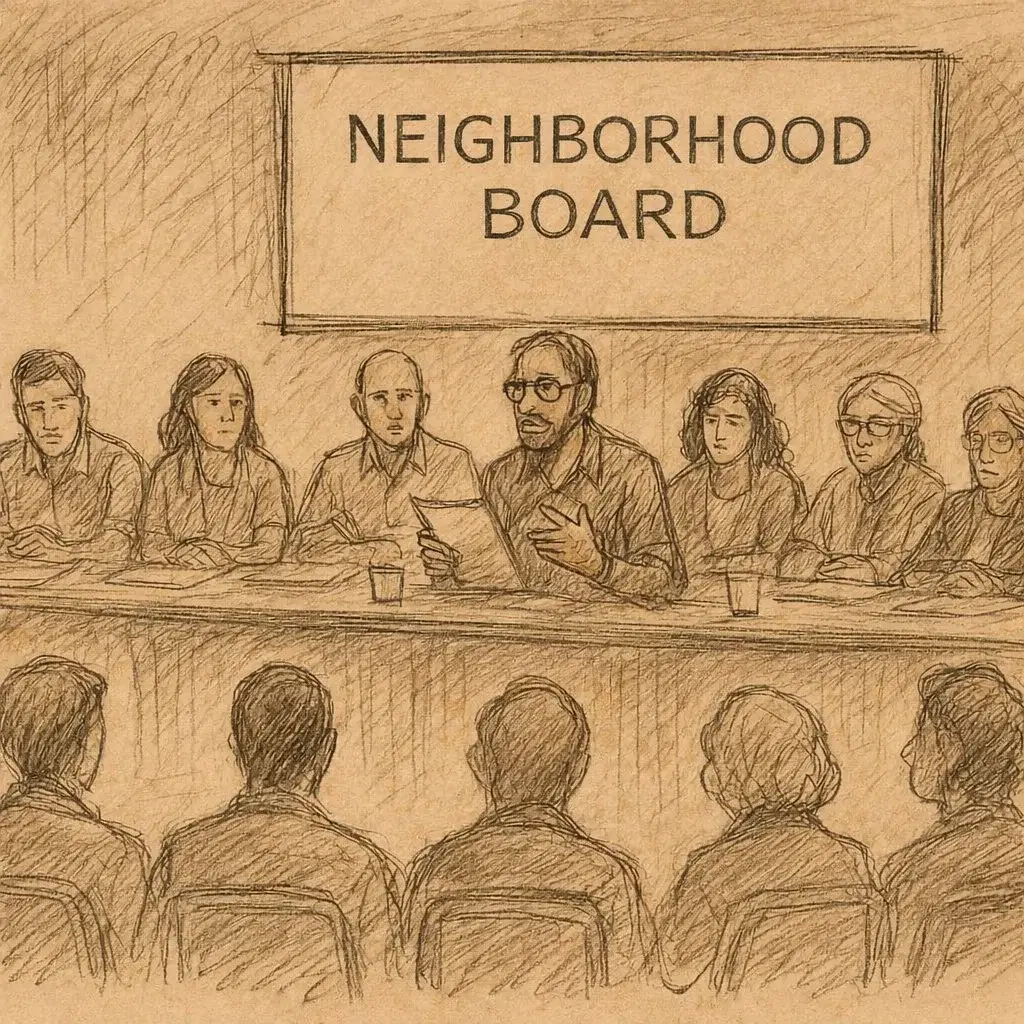
No 32 Waimānalo Neighborhood Board Regular Meeting May 2026
Listen to this article:
32 Waimanalo Neighborhood Board Meeting – May 12, 2026
Opening Protocol, Remembrance, and Invocation
The meeting opened with a brief acknowledgment of loss and a statement that no amount of time could ever fully account for the value of a life, with the board affirming that it would continue to honor those connected to the community in appropriate ways. An opening Hawaiian message and oli was then offered online by Kalola despite a power outage at her location, setting a distinctly cultural tone for the evening. The meeting later noted the arrival of additional members online and in person, establishing quorum at 7:07 p.m. and continuing to update attendance as more members joined.
Honolulu Fire Department Report and Wildfire Preparedness
Captain Dave Schuber of the Waimanalo Fire Station reported that in the previous month the station responded to 32 medical calls, 1 structure fire, 3 brush fires, 2 activated alarms, 1 nuisance fire, and 1 motor vehicle collision. He used the monthly safety message to emphasize wildfire prevention as Hawaiʻi enters a period of increased fire risk driven by dry conditions, tall grass, and shifting winds. Residents were urged to clear dry brush and vegetation around homes, avoid parking on dry grass because hot exhaust can ignite it, and avoid spark-producing activities during hot, dry, windy weather. He directed the public to fire.honolulu.gov and hawaiiwildfire.org for additional information. In response to a community question about ocean incidents, he said none appeared on the month’s report and clarified that HFD does not have jet skis, relying instead on Ocean Safety for jet ski response while maintaining rescue boards, rescue tubes, and access to a rescue boat not stationed in Waimanalo.
Honolulu Police Department Statistics, Patrol Coverage, and Handling of Iwi Discoveries
Lieutenant Drew Okage, in charge of District 4, presented April crime and service statistics for the Waimanalo district. He reported 1 motor vehicle theft compared with 0 the month before, 1 burglary compared with 1 the month before, 1 theft compared with 1 the month before, 0 car break-ins compared with 1 the prior month, and 0 robberies, unchanged from the previous month. Total calls for service fell from 527 to 496. In response to a board question about procedures when residents report iwi kupuna or human remains, he explained that residents should call 911, HPD will dispatch an officer, and if remains are found the officer will assess them and contact the appropriate state agency, which he identified as DLNR, for next steps. He said that if residents believe an incident was not handled properly, they should request a supervisor because sergeants are expected to know the proper process and ensure appropriate handling. A community member also asked about patrol staffing, and Okage said that Waimanalo typically has 3 patrol units at night and 3 to 4 during the daytime. Another community question clarified that District 4 spans from the top of Makapuʻu to Crawford’s Convalescent Home in Kahuku, illustrating the breadth of the district and the stretched nature of patrol coverage.
Ocean Safety Conditions, Rescue Activity, Staffing, and Illegal Access to Manana
Ocean Safety reported broad changes in beach use patterns and noted that areas once lightly used have become islandwide hotspots, increasing demands on coverage and enforcement. The department announced recruitment activity, including signups on the coming Friday and Saturday followed by physical tryouts, and described the transition to operating as a newer stand-alone department after separation from emergency services. For April, Sandy Beach recorded about 50,000 visitors, 30 rescues, around 7,000 preventative actions, roughly 350 first aids, and about 10,000 public contacts. Makapuʻu had about 20,000 visitors, 18 rescues, just under 3,000 preventative actions, just under 300 first aids, and about 4,000 public contacts. Waimanalo Beach Park Tower 6A had about 14,000 visitors, 897 preventative actions, just under 200 first aids, and 3 rescues. Hunananihoʻu Tower 6 had 13,000 visitors, a little over 800 preventative actions, and 2 rescues. Bellows on the city side, open only on weekends and holidays, recorded about 6,000 visitors, 2 rescues, about 700 preventative actions, 60 first aids, and about 2,000 public contacts. The department also reported an increase in domestic violence calls at beach areas, two broken legs at Sandy Beach and China Walls, and a CPR case involving an unresponsive male at Hunananihoʻu in which lifeguards began CPR before a handoff to fire and EMS.
Ocean Safety described a notable operational improvement for Waimanalo: a dedicated Waimanalo lieutenant truck, usually kept in the area and stored at the fire station, which has improved coordination and response times. The department is also moving from paper logs toward iPad-based reporting in response vehicles, with the goal of providing more immediate statistics and better tracking of response times. Board questions focused on data transparency and policy usefulness. Ocean Safety explained that much of the historic data still lives in paper tower logs collected weekly and entered monthly into a database only created about a year earlier, meaning older records remain boxed and harder to access. Reports currently note whether rescued individuals are residents or visitors through check boxes, and iPad reporting includes more detailed origin fields. The board also asked about people traveling to Manana (Rabbit Island). Ocean Safety said it has been seeing more reports of kayaks and other craft making landfall there, and while the department has no enforcement authority to issue citations, it will coordinate with DLNR and go out by jet ski when possible to educate people and ask them to leave. Staff said some of those involved appear to be visitors unaware of restrictions, while others are local users with their own kayaks.
Water Service Outage, Reservoir Impacts, and Board of Water Supply Communication Gaps
A substantial portion of the meeting focused on a recent water main break and associated service interruption in Waimanalo. A Board of Water Supply representative explained that when a reservoir level drops, it is often because electrical power is out and pumps cannot refill the system, leaving gravity flow to feed homes with reduced pressure. Residents described not receiving timely, detailed information about the outage and expressed concern that the disruption occurred on a Saturday when more people were home and demand was high. One resident asked why only one water tanker or trailer was made available and said the outage affected people at the worst possible time. Another board member requested a follow-up report explaining exactly how the reservoir was affected by the water main break and what Board of Water Supply crews were doing on Hihimanu Street on May 7 between 4:30 and 6:30 p.m., where trucks and crews had reportedly been working near the eventual break site in front of Job Corps before the system failed. The request included clarification on whether valves or manholes were being turned and whether that activity was connected to the later break.
Residents also described ongoing low pressure after service was restored. One speaker said water returned but remained weak for showers and toilets until he manually worked through the plumbing “like bleeding brakes” to purge air from the system. The Board of Water Supply representative, drawing on prior experience as a pipefitter, explained that after a water outage the best way to restore normal flow is to open the faucet farthest from the water meter and run it until the water clears, flushing out trapped air, bubbles, foam, and discoloration. The resident elaborated that he had gone from the farthest fixture back toward the meter, flushing toilets, sinks, outside spigots, and even the refrigerator dispenser until pressure normalized. The board asked that such guidance be shared proactively with residents in future outages. Another board member raised the need for clear emergency instructions for weekends and after-hours situations, especially if frontline responders are unfamiliar with water system procedures. The Board of Water Supply provided its after-hours number, 748-5000, explaining that three overnight staff handle emergencies such as water main breaks, damaged hydrants, and sinkholes. Councilmember Esther Kiaʻāina added that a complete loss of water in an emergency should be treated as a 911 matter rather than only a 311 or website issue, stressing that residents need confidence about what number to call when conditions threaten health and safety.
Mayor’s Office Report, Storm Recovery, Pavilion Construction, and Hui Mahiai Flood Questions
A representative from Mayor Rick Blangiardi’s office reported that cleanup operations from the recent Kona lows remained ongoing across Oʻahu, especially on the North Shore, with debris removal and hauling still active. Residents with storm debris were told they could use city transfer stations and convenience centers daily from 7 a.m. to 6 p.m., while Waimānalo Gulch was accepting residential construction debris such as dirt, rock, and concrete. The mayor’s town hall meetings have been indefinitely postponed while the administration focuses on storm damage and hurricane season preparation.
The office also responded to questions from the prior month. On concerns that pavilion construction materials had been exposed during storms, the Department of Design and Construction said structural steel was not exposed for prolonged periods and was promptly installed and covered by concrete and grouting. Rough carpentry did get wet because of high winds and heavy rain, so the contractor is moisture-testing lumber before painting or finishing to ensure moisture levels are acceptable. On flooding and development concerns in the Hui Mahiai area, the Department of Community Services indicated that the land under development had been determined by the Army Corps of Engineers to be outside the floodplain and that any construction would be designed to avoid flooding nearby areas. The mayor’s representative said DPP records showed no city permits issued for fencing or retaining walls in that area, while also noting that some fences and retaining walls may require permits and that state properties are not legally required to obtain city permits or approvals. Because those answers left unresolved questions, the mayor’s office offered to arrange for Department of Community Services Director Anton Krucky to attend a future board meeting to explain longer-term plans for the project. The office also said it had referred prior complaints about NAN Inc. pump trucks and possible stormwater discharges during the Kona lows to DPP inspectors and then to the Department of Facility Maintenance’s Stormwater Quality Division, but did not yet have a final response to share.
State DOT Highways Issues, Trash, Low Wires, Guardrails, Access Prevention, and Tree Planting
State Department of Transportation representative Casey Abe explained that increased workload had limited his attendance at recent meetings, but he summarized follow-up work on several concerns in Waimanalo. After a resident near the Nalo Street beach access reported trash and a missing cover on a yellow crash barrel on April 20, DOT worked with its maintenance crew to remove the trash and replace the cover by May 7. He also revisited issues first raised in March, including loose electrical wires near Nalo Street and trash on the makai side of 41-706 Kalanianaʻole Highway. During his field inspection, he found the loose wires had simply been wrapped around a utility pole to keep them from snagging, and he noticed new trash had reappeared at the same location even after an earlier cleanup. Abe said low-hanging wires along Hui Street fall under city jurisdiction and asked the mayor’s representative to coordinate with the appropriate utility company.
He also reported that after the chair raised missing bolts on a guardrail system near Kaupō Beach Park in an April 13 email, DOT replaced the missing bolts, though Abe later removed leftover excess nuts and bolts that maintenance had missed. The same field inspection identified two existing gravel driveways on the makai side of Kalanianaʻole Highway, eastbound past the end of a guardrail system, where vehicles were entering and leaving trash. DOT is now working on a solution to block vehicle access there and will report back later. Abe also saw substantial trash along Kalanianaʻole Highway throughout the board district and overgrowth from private property intruding onto the sidewalk just past ʻInoaʻole Street going westbound; he said maintenance would work with homeowners to cut it back before it causes an accident.
A major discussion centered on a beautification idea advanced by Representative Martin and Senator Lee: planting trees along the wide unpaved mauka shoulder of Kalanianaʻole Highway between ʻAuloa Street near McDonald’s and Walea Street near Keneke’s. Abe said DOT’s horticulturist recommended three possible tree types and that the department could handle periodic trimming when the trees mature, but residents would need to water and care for them until then. During field investigation, a resident at 41-1018 Kalanianaʻole Highway raised concerns about losing shoulder space used for parking vehicles and boats, and suggested planting trees near property boundary lines instead of directly in front of homes. Abe also noted that mailbox placement and a fire hydrant location could complicate tree placement and said the board’s approval would be needed before moving forward. Board discussion highlighted that the project is tied not only to aesthetics but also to reducing heat and UV exposure, which had been identified in prior research as especially severe in Waimanalo. Additional questions asked who would maintain any planted trees and whether household water bills would rise if nearby residents were expected to irrigate them.
A separate board question asked DOT to identify which agency would ultimately be responsible for a road being constructed within the TMK associated with the Hui Mahiai/Kauhale development. Abe said he would need the TMK and more information, but believed it would likely become a county road because it is a local road associated with a county-hired developer.
Filling the Remaining Board Vacancy
The board addressed one remaining at-large vacancy. Lourdes Milan nominated Karen O’Mahoney, who introduced herself by saying she grew up in Mililani, moved to Waimanalo in 2009, served as a substitute teacher at Blanche Pope for about 10 years, lives on Aliʻi Street, and runs a nonprofit horse program at Saddle City. She said she loves the community and would make time to serve despite her schedule. The board recessed briefly to verify her address documentation before moving forward with next steps.
Mālama Honua Public Charter School Activities and End-of-Year Highlights
Mālama Honua Public Charter School shared an extensive update as the school year winds down, framing its work through an ʻōlelo noʻeau about everyone paddling and bailing together to reach shore. The school celebrated successful fifth grade and eighth grade “defenses” held in March and highlighted a major collaboration among Hui Mālama o Ke Kai, Mālama Honua, and Kānehūnāmoku that brought a new waʻa, named Tuʻupokikaʻi Aloha, into the community. The canoe was launched two Fridays before the meeting and then used in the sixth grade sail the following week for its maiden voyage. Staff emphasized the role of eighth grade interns, who participated in sanding, lashing, ceremony, and protocol, and described the sixth graders’ experience sailing on the new canoe as a major milestone.
The school also reported on a WASC visit in April and ongoing K-4 trimester three hōʻike interviews, in which community members interview students about their projects. One example shared was kindergartners learning to mālama kai so that ocean health supports healthy fish and food. Upcoming events include a Puka Kula kīhei ceremony and hula hōʻike on May 27 at Windward Community College, a small group traveling to Alaska for a STEM program with Kamehameha Schools from June 6 to 13, and another collaborative program with WCC and healthcare providers from June 22 to 26 focused on health careers. The school thanked the community and the board for continuing support through the final days of the school year.
Kailua High School Kula Kaiapuni Growth, Student Participation, and Cultural Programming
Kula Kaiapuni o Kailua reported strong Hawaiian-focused participation at Kailua High School and used detailed enrollment figures to document demand for Hawaiian language and cultural programming. Of 765 students at Kailua High School, 324 are enrolled in some Papa Hawaiʻi offering. Those numbers include 139 in Kaiapuni, 54 in Papa ʻŌlelo Hawaiʻi, 30 in Papa Hānanoeao, 65 in Papa Hula, 13 in Hui Mele, 25 in the after-school hula club Nā ʻIwa o Kaweloa, and 30 in ukulele. The program said it is using this data to demonstrate strong interest in Hawaiian-centered education as it responds to issues raised in its WASC process and advocates for institutional support.
The school reviewed achievements across the year, including the establishment of a series of youth-focused Laʻopio events, beginning with Laʻa Kū Kū on November 21 in collaboration with Nā Kūpuna o Waimānalo, with additional events planned for January 9 and May 1 and hopes to schedule them more fully next year. For Mahina ʻŌlelo Hawaiʻi, students carried out a campuswide aloha campaign in Hawaiian, including posters and ʻōlelo noʻeau “graffiti” with explanations so students and teachers could stop to read and understand the messages. Students also participated in huakaʻi to ʻāina-based learning spaces such as mala, loʻi, and loko iʻa; marched successfully in the Onipaʻa March; and continued involvement in ahupuaʻa governance through the neighborhood board process. The program held a culminating hōʻike at Windward Community College in December and invited the community to attend the coming Velo performances at Kailua High School on Thursday and Friday at 6 p.m. It also reported winning the Heihei Koʻolau at Windward Community College. Photos shared in the presentation highlighted student huakaʻi, lei hulu work by a senior student, support from a Windward Community College instructor in Hawaiian Studies and hula, and community-based cultural learning throughout the year.
Kailua High School Principal Jill added that May is particularly busy, with JROTC awards, senior capstones for the Ready to Surf Academy, Kaiapuni graduation on May 22, the general school graduation returning to Kailua High at 4 p.m., and stadium lights scheduled to be tested that Wednesday after a long delay. Halau Hiʻikili’s hōʻike at WCC was set for May 28 from 5 to 6:30 p.m. She also announced that the Ready to Surf Academy had just been awarded national model status with distinction from the NAF/NCAC framework, receiving a perfect score.
Windward Community College Graduation, Registration Problems, and Scholarships
Windward Community College’s chancellor announced what she described as the college’s biggest graduation ever, with about 175 students expected to walk at commencement on Friday evening. She warned students that registration remains difficult because of issues with Banner and the transition to a new student records system, particularly for students whose “home campus” is another UH campus but who want to take classes at Windward. To address this, WCC is offering express advising throughout business hours via Zoom and in person through its TRIO Student Support Services office so students can quickly get counselor approval and troubleshoot registration problems.
The college also promoted the Hoʻole scholarship, which covers tuition not paid by financial aid for Windward-side public school graduates, including public charter school graduates, and may also assist students who graduated elsewhere but want to return to the Windward side if funds are available. For the summer, the college has paired Hoʻole with a summer bridge program allowing students to take up to 6 credits for free while working a 20-hour-per-week job at $17 per hour. In the fall, Hoʻole recipients can also access expanded freshman employment opportunities on campus to help balance work and study.
Hawaiʻi Job Corps Recovery, Enrollment, Employment, and Federal Funding Outlook
Hawaiʻi Job Corps said it is rebuilding enrollment after the U.S. Department of Labor tried to pause the program the previous year and has now returned to about 70 percent capacity. That means approximately 60 openings remain for young adults who need to complete a high school diploma or pursue career training. The center offers tours every Thursday at 9 a.m. and urged families to contact its marketing specialist to learn more. It also promoted local employment opportunities, noting that as a 24/7 operation it hires residential advisors, security officers, instructors, cooks, administrative staff, and others, and encouraged Waimanalo residents to apply for jobs at the campus itself.
The center reported strong student outcomes, including several students each week finishing the high school program and others moving directly into jobs or union apprenticeships. In the past month alone, students had joined the Laborers Union and the Painters Union. Job Corps also emphasized its continuing service role in the community, including helping at district park food distributions twice a month, assisting with parking at a kanikapila, and joining cleanup efforts after storms at Kiona’s. In response to a board question about federal funding, Job Corps said annual funding had just been approved for the coming year and that Hawaiʻi’s congressional delegation continues to strongly support the program. Staff acknowledged, however, that the current federal administration’s next-year proposal again seeks to close Job Corps and similar programs, though they expressed confidence that the prior year’s national outcry and congressional support suggest the program is likely to continue.
Waimānalo Health Center Smoking Cessation, Nurse Recognition, and Hiring
Waimānalo Health Center reminded the community about its free smoking and vaping cessation program, which offers one-on-one support either in person or through telehealth, along with nicotine patches, gum, and medications to help people quit. Residents were encouraged to call the center’s main line for assistance. The center also marked National Nurses Week, which was ending the next day with International Nurses Day, and publicly thanked its 12 nurses for their care, skill, and dedication. Finally, it noted that it continues to hire for multiple positions, including community health workers, medical assistants, cultural health positions, and dental assistants, with no prior experience required for some roles because on-the-job training is available.
East Oʻahu Climate and Resilience Mandate Draft
Community presenter Aloha McGuffey introduced a draft climate and resilience mandate for East Oʻahu, describing it as an effort to build a unified regional voice across six neighborhood board areas: Kaimukī/Palolo, Waiʻalae-Kāhala, Kuliʻouʻou/Kalaniʻiki, Hawaiʻi Kai/Maunalua, and Waimānalo. She emphasized that East Oʻahu communities share connected watersheds, streams, and ocean systems, so what happens in the Koʻolau affects both Maunalua Bay and Waimānalo Bay. The effort grew out of a sustainability planning process commissioned by the Kahala Hotel and Resort under Vice President and General Manager Joe Ibarra. That sustainability plan was developed in 2022–2023 and then expanded into a broader community initiative called the Kahala Initiative for Sustainability, Culture, and the Arts, or KISCA. A climate resilience symposium held on September 18–19, 2025 featured 32 speakers and 10 roundtables. According to the presentation, KISCA now includes about 150 connected participants.
The roundtables covered ecosystems and watershed protection, clean streams and storm drains, education and youth engagement, disaster preparedness, green infrastructure, coastal resilience, cultural heritage, waste management, food security, and policy alignment and advocacy. McGuffey stressed that each neighborhood board has its own climate risks and priorities, so the draft mandate needs local feedback. She explained that East Oʻahu is covered by three city development plans: the Koʻolaupoko Sustainable Communities Plan, the East Honolulu Sustainable Communities Plan, and the Primary Urban Center Development Plan. Many residents, she said, do not realize they are already included in these planning documents, which shape updates and funding every 10 years. The board was told that the draft mandate had been sent to them for review and that feedback is being collected through July. McGuffey said she would return to the Waimānalo board on June 8 for further discussion and hoped the board and community would review the document and offer specific recommendations before then.
Waimānalo Reservoir Improvement Project and Questions About Jurisdiction, Consultation, and Impacts
Representatives from Community Planning and Engineering, working with the State Department of Agriculture and Biosecurity, introduced the Waimānalo Reservoir Improvement Project and an associated declaration of exemption process. They said the project is still in early design and would focus on two main areas: paving the existing gravel access road from the gate on Mahalua Street up to the reservoir embankment, and improving the existing diversion and exit channels on the mauka side of the reservoir. The road work is intended to stabilize access during storm events, reduce erosion, and cut down on maintenance. Channel improvements would involve excavating the existing earthen channel and lining it with either grouted riprap or concrete to suppress vegetation growth, preserve capacity, allow sediment and debris to pass more smoothly, reduce the risk of spillway blockage, and lower maintenance needs. The team said the expected design life of the lined channel would be about 50 years, with construction anticipated in summer 2027 after design, permitting, and approvals.
Board questions focused immediately on land ownership, adjoining land status, and the need for community and beneficiary consultation. One board member asked whether adjacent mauka lands are in the Department of Hawaiian Home Lands inventory and whether DHHL beneficiaries had been consulted, saying that because of prior community experiences the board wanted clear answers before work proceeds. He requested that the project team return next month with a comprehensive explanation of the planned work and a clear identification of adjoining landowners and agency responsibilities. Another board member asked whether any member of the project team had spoken with lineal descendants or persons with personal interest in the reservoir area, and requested that the team check internally and report back. The project’s archaeological consultant said the work area appears to be previously disturbed existing infrastructure and that an archaeological literature review and field inspection found no historic properties likely to be affected, with findings to be submitted to SHPD. A community member also asserted that prior work at the site had already worsened conditions, reflecting broader skepticism toward reservoir interventions. The board indicated that this item would return for fuller discussion.
Ponoʻoluʻolu Concerns About TMK 4-1-010:008, Flooding, Permits, and Cultural Review
Mia Lisa Otis presented on behalf of Ponoʻoluʻolu, a community-based advocacy group formed to support research, education, and public understanding around development affecting TMK 4-1-010:008. She said the group also exists to provide a safe avenue for community members who fear retaliation or intimidation connected to the project and the broader kauhale initiative. Ponoʻoluʻolu requested support for a cease-and-desist on all construction and development at the parcel and surrounding area because of concerns involving health, property damage, flooding, and community safety. The group stated that multiple DHHL beneficiaries had been affected by backfilling and construction connected to Hui Mahiai Aina and wanted work halted until DHHL provides beneficiary consultation, legal support, and environmental review. It also asked DPP to pause approvals and permits, requested disclosure of flood and liability insurance coverage for impacts on nearby properties, asked SHPD to conduct an immediate on-site review including a Hāpaialii/Kapaʻakai-type cultural analysis, asked the Department of Health for an on-site health and environmental assessment, and requested a direct point of contact for communication.
The presentation described the existing Hui Mahiai site as 13.568 acres and the adjacent new kauhale development area separately, and included maps and photos. Ponoʻoluʻolu said it had met with Mahiai Developer LLC on April 19 to discuss flooding, water flow, wastewater, and neighborhood concerns but had not yet received an update. It identified developer-side names including Representative Lisa Martin, Duane Kurisu, Dexter Kubota, and Lloyd Sueda in connection with the project team, while also stating that 14 affected residents were involved with the advocacy group. Otis showed photos of what she said was a retaining wall and drainage or “weep” holes causing runoff and standing water on neighboring property, arguing that approximately 12.5 feet of fill had significantly altered the site’s elevation and changed natural drainage patterns. She also raised concerns about an underground cement basin whose function had not been explained and said banana and ulu trees used by residents for food would be lost. The board discussion that followed emphasized the need for more precise framing of which state agencies are responsible for cultural and constitutional review, especially since state agencies cannot waive their obligation to consider Native Hawaiian rights and practices. The chair indicated that any future board action would require a clearer, more specific request.
Hui Mahiai Aina Response, Flood Experience, Emergency Proclamation, and Housing Mission
Hui Mahiai Aina founder and CEO Blanche McMillan responded with her own update, saying the project’s purpose is to protect and house Native Hawaiian and local families, especially those who are unhoused. She said the retaining wall was built to protect people in the new village area and argued that the site under discussion is on DLNR land, not DHHL land. She stated that the organization had gone through civil defense processes and other reviews before moving forward, and that the current work is proceeding under Governor Josh Green’s emergency proclamation on homelessness rather than under normal permitting timelines. According to McMillan, permits are not required upfront under that emergency approach, but must be obtained at the end of the project. She said the city would ultimately issue the permit, while acknowledging questions about multiple agencies’ involvement.
McMillan strongly rejected any suggestion that the project had mishandled iwi concerns, saying archaeological work had already been done and that she would not knowingly move forward improperly. She spoke at length about repeated flooding at the original Hui Mahiai site, saying the community had been hit three times, including one event that forced 40 people into an emergency shelter for seven days and another that left 106 people cut off and requiring food delivery by pallet and forklift. She credited support from churches, Red Cross, and neighboring residents with helping the site recover and repeatedly framed the project as an effort to save people and bring Waimānalo families home. She also described services and training underway at Hui Mahiai Aina, including five residents who recently graduated as CNAs, eight more enrolled in CNA training, construction work opportunities, mobile health and mental support, and grant support from OHA used for education and workforce development. She said the new development would be called Hui Mahiai Village. Board members acknowledged the urgent housing need while also reiterating that constitutional review requirements and neighbor impacts must still be addressed.
Native Hawaiian Sovereignty and Community Accountability Commentary
During public comment, one speaker identifying herself as a Kanaka Maoli and head of a spiritual nation of Kū sharply criticized what she described as privileged access to land and processes for some actors while long-established community families bear the burden. She said the issue was not opposition to housing itself but the displacement of people who have lived in the area for generations, as well as the treatment of iwi kupuna and sacred places. Her comments reflected a broader concern heard throughout the meeting: that emergency action, political relationships, and development urgency should not override community accountability, Native Hawaiian stewardship, or direct engagement with those most affected.
Kula Kaiapuni o Waimānalo Update
A brief update was provided for Kula Kaiapuni o Waimānalo. The representative said there is a meeting scheduled with the principal of Waimānalo Elementary and Intermediate on Thursday, signaling continued efforts to coordinate and support Hawaiian immersion education in the community.
Community Concerns About Youth Sports Costs, Makai Pier Access, and Kiona Beach
Community member Bobby Larson closed his comments by drawing attention to youth sports costs, saying local families are facing fees of $400 to $500, and in some club sports as much as $1,500 per season, which creates barriers even for highly talented local athletes. He argued that this pricing structure pushes families into expensive club systems requiring travel across the island. Larson also called for the reopening of the Makai pier for fishing, asserting that the original lease for the pier required it to remain open for that use because Waimānalo’s prior generation had authorized its construction. He then spoke emotionally about Kiona Beach, describing the significance of past community volunteer work there, including construction of a boat ramp and rock wall that helped bring people together and made the area accessible. He objected to legal or administrative barriers that now prevent similar community stewardship and argued that Kiona is a cultural site whose usability and accessibility matter deeply to Waimānalo families.
Councilmember Esther Kiaʻāina Report and Clarifications on Land Title and Public Funding
Councilmember Esther Kiaʻāina gave a brief report due to the late hour. She urged residents to review and comment on the city’s first Oʻahu Food Systems Plan, with public feedback due by June 30, 2026, and said her office could provide the plan directly. She also reported securing an additional $2 million in city grants-in-aid, enough to fund about 16 more projects, and noted that Kekula Nui o Waimānalo would benefit from that increase. She named several community organizations receiving support or affected by shifting funding sources, including Partners in Development Foundation, Hui Mālama o Ke Kai, 808 Cleanups, Grow Good Hawaiʻi, and Habilitat.
On the evening’s most contentious land issue, Kiaʻāina asked residents not to speculate about her role and to contact her directly for accurate information. She stated that the parcel being discussed was formerly under DLNR but that title had been transferred to the Department of Human Services, with the governor’s office taking a lead role and multiple other actors involved, including the developer and city agencies. She said the processes are complex because normal DPP pathways are altered under the emergency structure, and she encouraged the board and community to direct specific questions to the agencies with actual jurisdiction and decision-making power so that facts are clear. Board follow-up requested confirmation about whether DLNR retains fee ownership even when another agency administers a parcel within the public land trust, underscoring unresolved questions about title, administration, and legal responsibility.
Meeting Wrap-Up, Deferrals, and Next Meeting
As the meeting extended well past its usual 9:30 p.m. end time, the chair noted the number of unresolved agenda items and proposed deferring remaining board business to the next meeting. He emphasized that the neighborhood board is meant to elevate community voices into governance and bring governance into the community, not to serve as the sole venue for every dispute or the final authority on every matter. He urged residents to also engage directly with public agencies and commissions such as the Oʻahu Historic Preservation Commission, the Honolulu Charter Commission, and the Board of Land and Natural Resources. The next regular meeting was announced for Monday, June 8, 2026. The meeting was adjourned at 10:00 p.m. after a closing pule.