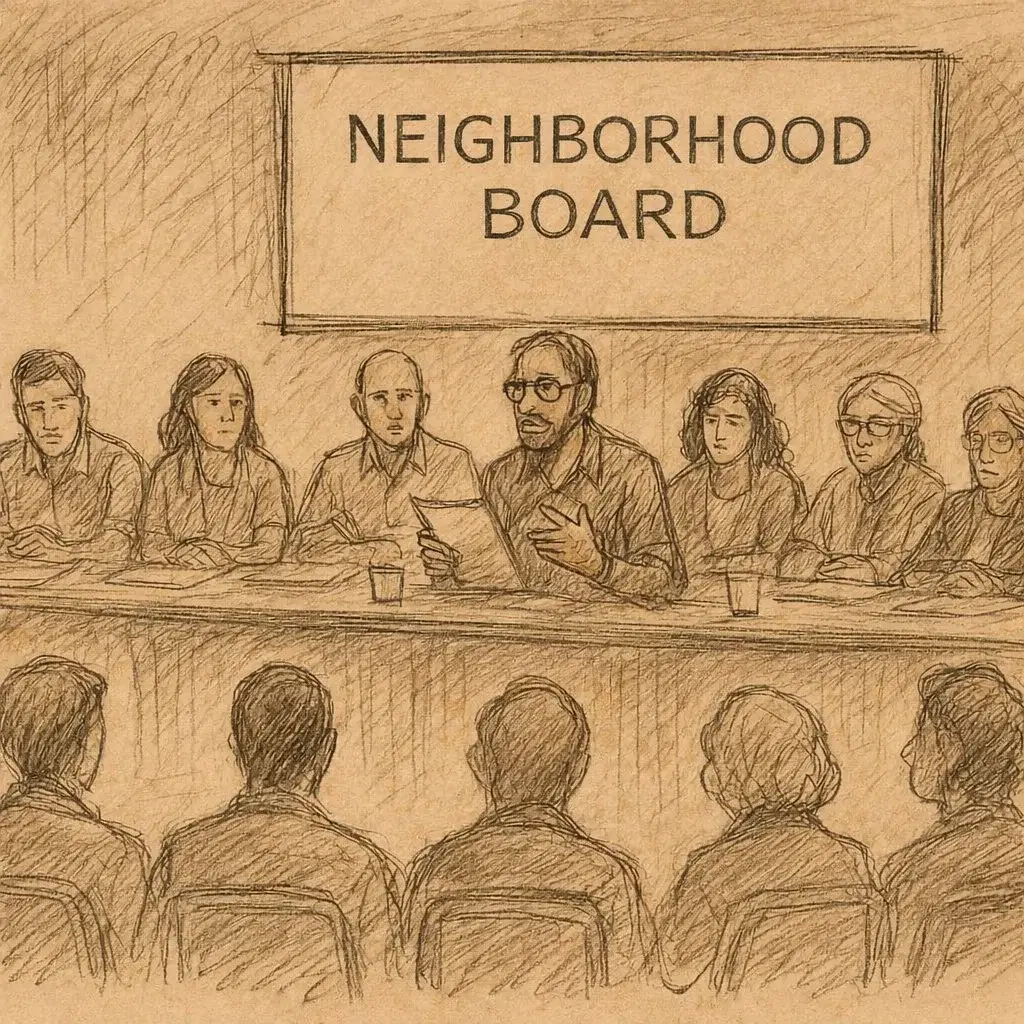
No 9 Waikīkī Neighborhood Board Public Safety Committee Meeting May 2026
Listen to this article:
9 Waikiki Neighborhood Board Meeting – May 28, 2026
HPD Approach to Homelessness: Outreach Paired With Enforcement
A major focus of the discussion was the Honolulu Police Department’s current strategy for addressing homelessness in Waikīkī. HPD leadership said officers routinely offer people the option of shelter or services before taking enforcement action, but said that “99.99% of the time” those offers are declined. The reasons given most often are shelter rules, including curfews, prohibitions on drug use, and restrictions involving pets. Police described the situation as one in which outreach alone is not enough, because without consequences people become established in public spaces and have little incentive to accept services. As a result, the department said it has adopted a deliberately aggressive combination of outreach and enforcement. In District 6, which covers roughly two square miles and includes Waikīkī, about six officers are assigned full-time to a community policing detail. Five days a week, for two to three hours a day, those officers focus specifically on homeless outreach, attempting to connect individuals with service providers, social workers, and case managers, while also carrying out enforcement when laws are being broken. HPD leadership presented this balance as central to recent improvements in public order and visible street conditions.
Crime Trends in Waikīkī From January 1 to May 1, 2025 vs. 2026
HPD presented a detailed comparison of crime statistics for Waikīkī for the period January 1 through May 1 in 2025 and 2026, describing the numbers as “apples-to-apples” comparisons. Aggravated assaults increased from 19 to 23, a 21 percent rise, which HPD partly attributed to more direct contact between officers and offenders and a greater willingness among some individuals to assault police. Robberies fell from 15 to 10, a 33 percent decrease. Burglaries dropped significantly from 45 to 28, down 37.8 percent. Theft from vehicles declined from 68 to 35, a 48 percent reduction. Motor vehicle theft fell from 69 to 61, a decrease of 11.6 percent. Weapons law violations dropped from 17 to 6, a 64.7 percent decrease. Criminal property damage also declined from 84 to 58, down 31 percent. Theft and shoplifting remained essentially flat, changing from 521 in 2025 to 530 in 2026. HPD used these figures to argue that overall crime in Waikīkī is trending downward, even if some categories remain stubborn or have risen slightly.
Reported Decline in Visible Homelessness Across Waikīkī
The meeting highlighted a point-in-time count conducted the previous month by the Waikīkī Business Improvement District in conjunction with the University of Hawaiʻi. According to HPD, that count found a 91 percent decrease in the homeless population in Waikīkī proper, defined as the area from Fort DeRussy to Kapiʻolani Park, compared with September 2022. HPD characterized that decline as significant and linked it to the district’s more assertive outreach and enforcement strategy. At the same time, police noted that certain enforcement metrics have not fallen proportionally. Trespass warnings remained high, with 384 in the prior year compared with 361 in the current year, and criminal trespass cases stayed level at 70. The implication was that although fewer homeless people are visibly present in Waikīkī proper, the district is still having to devote substantial effort to repeated quality-of-life and property-related enforcement.
Calls for Service, Arrests, and Citations
HPD also shared broader activity data for Waikīkī. In all of 2025, the district recorded 47,395 calls for service. Looking specifically at January through May 1, calls for service were 15,650 in 2025 and 15,243 in 2026, a slight decrease. Arrests during that same period fell from 469 to 425. Citations moved in the opposite direction, increasing substantially from 8,150 in early 2025 to 12,650 in early 2026. HPD presented the rise in citations as evidence of more active enforcement. The district leadership argued that these numbers, alongside the crime reductions and lower street homelessness counts, suggest measurable results from the current policing model.
Public Perception of Safety Versus Crime Data
Committee members and HPD spent considerable time discussing the gap between statistical trends and public perception. One member described this as “two realities”: the actual reality shown by crime statistics and the perceived reality shaped by what people see, hear, and feel. HPD agreed that even where crime is decreasing, residents and visitors may believe it is worsening. The department said its real objective is not only lower crime but making people feel safe in the places where they live, work, and visit. HPD leadership, including district supervisors, said they personally believe conditions have improved, especially in central Waikīkī, which they said had been especially troubled during the COVID period. The committee repeatedly returned to the idea that a visible reduction in disorder matters just as much as measurable reductions in major crime.
Social Media, Viral Videos, and Distorted Narratives
A recurring theme was the role of social media in shaping public impressions of crime and policing. HPD officials said platforms amplify the most sensational incidents because violence and conflict generate attention, while ordinary successful policing rarely becomes visible. Officers said this dynamic affects both community trust and tourism, because viral videos of fights, disturbances, and police activity can create the impression that disorder is constant. One official noted that many people now get far more of their information from social media than from traditional news. The department described this as an “X factor” that complicates public understanding because viewers often see only the most dramatic moment, not the lead-up, the context, or the police response that follows.
HPD Public Affairs Response and the Example of the Police Car Crash
In response to questions about whether HPD has a way to counter misleading online narratives, officials said the department has strengthened its public affairs office with significant hires and has become more active on Instagram and other social media platforms. They cited a recent police car crash as a clear example of how events can be misrepresented online. According to HPD, social media initially portrayed the incident as a reckless attempt by officers to use an unauthorized maneuver against a suspect vehicle. The department said the actual circumstances were different: the officer was responding to a call for service, was traveling in the bus lane with lights and siren activated, and another driver intruded into the officer’s lane at the last moment, causing the collision and sending the police vehicle off course. HPD said public affairs staff now work to correct such narratives through official statements and media releases, though they acknowledged that social media often establishes a story well before complete facts can be released.
Limits on Immediate Information Release and Body Camera Footage
The discussion also addressed why HPD cannot always respond instantly to public accusations or release body-worn camera footage immediately after an incident. Officials said the department must avoid jeopardizing investigations or court proceedings by releasing incomplete or potentially prejudicial information. This places police leadership in a difficult position, because the public increasingly expects immediate visual proof, while legal and investigative requirements often force delay. The committee acknowledged the frustration created when a social media narrative spreads quickly and HPD is slower to answer because it must first verify facts and protect prosecutorial integrity.
Frustration With Prosecutions and Repeat Offenders
Committee members repeatedly raised concern that many offenders are arrested only to return quickly to the streets. HPD agreed this is a major source of frustration for officers, especially in shoplifting and other quality-of-life crimes. Police said officers make arrests whenever they have probable cause and that long arrest histories for some individuals show police are taking action. At the same time, HPD avoided directly criticizing the judiciary or the prosecutor’s office, though members pressed for more clarity on where cases are breaking down. Questions were raised about whether the main problem lies in charging decisions, judicial standards, plea reductions from felony to misdemeanor, or a reluctance to prosecute lower-level offenses before they become more serious. HPD’s response was that they push for prosecution when they believe a case is strong, and they do have a working relationship with prosecutors, but not every case they would like charged is ultimately prosecuted. The committee chair expressed interest in inviting the Honolulu Prosecutor’s Office to a future meeting to discuss its perspective.
How HPD Coordinates With Prosecutors
HPD explained that because it is a city agency, both misdemeanor and felony cases are referred to the Honolulu Prosecutor’s Office, with only rare cases going to the Attorney General. Violent felonies are generally investigated by HPD’s Criminal Investigation Division, which works directly with prosecutors to prepare cases. In Waikīkī itself, district detectives handle burglary, theft, and related property crimes. The district said it currently has several detectives assigned to these property-crime functions, along with officers who work misdemeanor cases. These detectives and supervisors communicate directly with screening deputies in the prosecutor’s office. HPD described regular institutional contact as well, including leadership meetings several times a year and training sessions or updates from prosecutors explaining legal issues, charging trends, and evidentiary shortcomings in police reports. Committee members asked whether enough feedback reaches patrol officers who make the initial arrests, and HPD said practical communication usually occurs at the lieutenant and detective level rather than directly with every patrol officer.
Drug Court, Rehabilitation, and Mental Health Treatment
One resident asked whether there is a process for rehabilitation, such as drug court, when an offender is clearly struggling with addiction. HPD said those options arise after arrest, when the case is in the hands of the prosecutor’s office and courts. Officers said they know of cases where treatment options were used successfully, but deferred to prosecutors for broader outcome data. HPD stressed that in Waikīkī the homelessness problem is less about the existence of shelter beds and more about untreated mental illness and substance abuse. Officials said many people are homeless because of those underlying conditions, and because of that, police have focused heavily on trying to get people connected to treatment, though resistance remains very high.
Coordination With Service Providers, Waikīkī Clinic, and CORE
HPD described an increasingly collaborative outreach network involving the Waikīkī Business Improvement District, Waikīkī Health or clinic partners, and the city’s emergency response teams. The department said doctors associated with the Waikīkī clinic go out frequently and know many homeless individuals by first name, allowing them to conduct on-the-spot outreach, medication support, and psychiatric intervention. HPD credited this medical engagement as part of the area’s recent success. The district also said it has started a pilot project in Waikīkī with CORE, the City’s Crisis Outreach Response and Engagement program. Under that pilot, CORE personnel and a physician go out weekly and conduct street-level assessments for people dealing with mental health and substance abuse problems. HPD said it is already seeing some success from that effort.
Sit-Lie Enforcement, Sidewalk Obstruction, and What Residents Should Report
A committee member asked what residents should do when they see people sleeping on benches, camping near the Ala Wai promenade, or surrounding themselves with bags and debris in public spaces. HPD said enforcement depends heavily on the legal category involved. The department commonly relies on the sit-lie ordinance, but only within specific mapped boundaries intended mainly to protect core business corridors. Not all of Waikīkī is covered. For example, areas beyond Kapahulu on the eastern side are outside the sit-lie boundaries. Where sit-lie does not apply, officers may still act if there is obstruction of a sidewalk, a structure or encampment, trespass on private property, or littering. HPD encouraged residents to understand that someone merely sitting or lying in a non-covered public area may not itself be an enforceable offense under city law. This legal geography was presented as one reason visible disorder can persist in certain locations.
Crisis Intervention Training for Officers
Mental health response training was another topic. A committee member asked how many District 6 officers are crisis intervention trained. HPD did not have exact figures available at the meeting but said that beginning in recent academy classes, Crisis Intervention Team training became a graduation requirement. As a result, all newer officers now receive CIT training, while some older officers have not yet gone through it. The committee strongly supported making CIT universal across the department and praised the training as fundamental to modern police work, particularly in a district where officers frequently encounter people in behavioral health crises.
Safe and Sound Program and Charging Felonies in Waikīkī
The committee also recalled Prosecutor Steve Alm’s Safe and Sound initiative, introduced during the COVID era. HPD said that since September 2022, under Safe and Sound, the prosecutor’s office has generally committed to charging felonies committed in certain parts of Waikīkī, subject to case-specific caveats. District leadership pointed to this as one of the structural changes that has helped shift conditions in the neighborhood. The chair indicated that Alm has been willing in the past to speak directly to neighborhood bodies and could be contacted for a future discussion.
Why Waikīkī Does Not Have More Foot Patrols
One of the most frequently asked questions from the public, according to the committee, is why Waikīkī does not have more foot patrol officers. HPD said the district contains 13 beats within about two square miles, and despite the area’s compact size, one officer on foot often cannot safely or effectively handle many calls without backup. Officers therefore remain vehicle-based so they can respond rapidly and have support when needed. HPD acknowledged, however, that personal interaction and visible presence matter greatly to the community. Leadership noted that older three-wheeled patrol vehicles once allowed officers to move through traffic and engage the public more easily, and that this kind of visibility has diminished as patrol has become more car-centered. In response, HPD said it is trying to strengthen specialized support units, including electric vehicle or similar details, to increase highly visible patrols. The district also uses “fourth watch” officers, newer graduates awaiting permanent assignments, for foot patrols when staffing allows. Leadership and former officers noted that academy class sizes are now much smaller than in earlier years, reducing the pool of personnel available for supplemental patrol.
Events, Parades, and the Strain on Police Resources
Waikīkī’s large and growing number of parades, festivals, and special events was identified as another reason officers are often less visible in routine patrol. HPD said district leadership must staff these events for traffic control, public safety, and security, particularly when the city sponsors or co-sponsors them. Major events such as the upcoming Kamehameha Parade require officers at intersections from the edge of Waikīkī through Ala Moana and beyond to prevent vehicles from entering parade routes and to guard against intentional attacks. While HPD described these events as beneficial because they bring people and activity into Waikīkī, officials also said they consume substantial manpower and can pull officers away from normal neighborhood enforcement and patrol.
New Police Chief Selection and Department Morale
A committee member raised the recent selection of Honolulu’s new police chief and asked whether HPD could comment on morale, especially in light of reports that many officers had preferred another candidate. HPD leadership declined to speak in detail on internal sentiment, suggesting that the police union would be better positioned to answer morale questions. They acknowledged awareness of a survey showing strong officer support for another contender, but emphasized that under the city charter, the Police Commission is responsible for selecting the chief. HPD said it had confidence that the commission followed a transparent and exhaustive process and expressed hope that the new chief would succeed, while also noting broad anticipation among officers about what kind of leader he will be.
Homelessness Displacement and the Fort DeRussy Area
Although Waikīkī proper has seen a large drop in visible homelessness, members pointed out that displaced people often move elsewhere rather than disappearing entirely. Particular attention was given to the area behind Fort DeRussy and near the Hilton Hawaiian Village, where homelessness had increased. HPD explained that this was partly due to a jurisdictional problem. That beach area is state land, and a previous right-of-entry agreement that had allowed HPD to enforce city ordinances there had expired several years earlier. Without that agreement, HPD lost a strong legal framework for enforcing camping, alcohol, peddling, and beach closure rules in the area, and the state’s own administrative rules were described as less practical for robust enforcement. As strong enforcement in Waikīkī proper displaced people, the Fort DeRussy area became a refuge because state enforcement was not keeping pace.
Joint Operations With the State to Reduce Encampments
To address Fort DeRussy and the harbor area, HPD said it recently partnered directly with state agencies, including the Department of Boating and Ocean Recreation and the Department of Land and Natural Resources. A point-in-time count on April 19, 2026 found about 30 encampments and roughly 50 people in the harbor area behind Hilton Hawaiian Village and Fort DeRussy, including 27 or 28 tents. HPD said that through several joint operations in the following weeks, the number was reduced dramatically, and by the week of the meeting there were only about six people left in the area. HPD called this collaboration successful and said it is also trying to restore the former right-of-entry agreement so city-style enforcement authority can return on a more permanent basis. Officials noted that the federal military side of Fort DeRussy ends at the walkway, leaving the main problem area in a complicated zone between jurisdictions.
Committee Reset and the Goal of Building a Stronger HPD Relationship
The meeting marked something of a reset for the Public Safety Committee under new leadership. Committee members said they want the committee to become a consistent forum for meaningful dialogue between the neighborhood board and HPD rather than relying only on more crowded full board meetings. One member argued that the committee should help bridge the gap between community perception and HPD’s reported results, and that regular attendance by district leadership will be essential if trust is to improve. There was discussion about shifting more of the substantive public safety conversation into quarterly committee meetings, where there is more time for detailed discussion, while reporting key points back to the full neighborhood board. HPD supported continued engagement and said the district commander values attending both committee and neighborhood board meetings because it helps close the feedback loop between complaints, follow-up, and visible action.
Community Frustration With Police Visibility and Response
One committee member spoke candidly about his negative perception of HPD, recounting a past incident in which his father was assaulted by a homeless man near the Ala Wai and describing the police response as inadequate and lacking accountability. He said that despite hearing that crime is down, he often walks through Waikīkī and sees “shady people” but no officers, or only groups of officers gathered in vehicles. He emphasized that this perception is shared by other residents and undermines confidence in the department. HPD responded by acknowledging concerns about over-response in some incidents and under-visibility in others. The district commander said his own philosophy is that officers should stay on their assigned beats as much as possible, know the businesses and problem people in those areas, and develop “beat pride.” He said that is harder to maintain today because backup demands, investigative obligations at scenes, and broader operational pressures often pull officers away, but he wants to reestablish that culture.
Over-Response, Beat Integrity, and Policing Philosophy
The issue of multiple officers showing up to single incidents led to a broader conversation about “beat integrity.” HPD said officers often need backup because they do not know the full risk of what they are entering, and a disturbance described only as a person yelling could turn out to involve a weapon or severe mental health crisis. Still, leadership agreed that not every incident requires a prolonged multi-officer presence and said supervisors are instructed to avoid unnecessarily tying up personnel at cold or lower-risk cases. The district commander described his preferred model as one in which officers remain responsible for the maintenance of their own areas and take ownership of the recurring stakeholders, businesses, and trouble spots within them. Committee members with law enforcement backgrounds suggested this culture is still achievable with the right supervisory emphasis.
Officer Assaults and Frequent Open Drug Use
When asked why officer assaults are up, HPD said it is likely because officers are now more actively addressing lower-level violations and engaging individuals who are intoxicated, high, or otherwise resistant. The district commander said many people openly use drugs in Waikīkī and may do so even in front of police because their drive to get high overrides caution. In his anecdotal view, a large share of repeated low-level crime and disorder in Waikīkī is connected to homeless individuals, particularly when including trespass, theft, open drug use, and unprovoked assaults by people experiencing mental illness or intoxication. The committee chair noted that the committee itself is unlikely to solve homelessness as a whole and suggested the focus should remain on manageable public safety issues and practical pressure points.
Business Cooperation Problems in Shoplifting and Disorder Cases
HPD said one obstacle to effective enforcement is that businesses, even when repeatedly victimized, often do not want to prosecute theft, trespass, disorderly conduct, public urination, or similar offenses. Officers may be called to intervene at places like 7-Eleven or McDonald’s, but if management declines to support prosecution or appear in court, police have few options beyond temporary removal or citation. HPD argued that this contributes to the mistaken public perception that officers are not acting when, in fact, the lack of business cooperation undermines case development. Committee members said this is an area where the Public Safety Committee and business groups such as the Waikīkī Business Improvement District could potentially apply pressure or encourage stronger cooperation. The committee also referenced a prior example in which pressure had helped spur McDonald’s on Kalākaua to add private security.
Possible Ordinance Changes: Sit-Lie Wheelchair Exception and Micromobility
HPD suggested that one productive role for the committee could be supporting city ordinance changes that would make enforcement more effective. A specific example was the wheelchair exception to the sit-lie ordinance. Police said the current language can be exploited by fully ambulatory people who sit in wheelchairs all day to avoid sit-lie enforcement, and that the legal wording should be tightened so truly disabled individuals are protected without creating a loophole for loitering. Another issue mentioned was the growth of scooters, e-bikes, and similar devices on sidewalks. Committee members observed that such devices can be more dangerous than skateboards, which are already restricted, and said city rules may not have kept pace with changing transportation patterns in Waikīkī. HPD also noted that these newer mobility devices have already complicated some enforcement situations.
Peddling, Street Performance, and Disorder in Public Spaces
The committee and HPD discussed peddling and street performance, both of which have become more noticeable in Waikīkī. HPD said peddling cases are difficult because officers must prove an actual exchange for money. To do that, they sometimes have to use another officer to pose as a customer and complete a transaction before enforcement can occur. In many situations, police instead rely on sit-lie violations to move people along. Members distinguished between aggressive or disruptive solicitation and harmless artists trying to earn money, but HPD said it still receives many complaints about drumming, caricature artists, jewelry vendors, and costumed street sellers. There was interest in whether the city should define designated performance areas or otherwise refine the law to separate legitimate entertainment from conduct that interferes with pedestrians and nearby businesses.
Late-Night Liquor Service and Social Media Videos of Fights
The final substantive topic involved the frequent social media posts showing fights and groups of young people causing disturbances in Waikīkī at night. HPD said some of this is real and some is magnified by online sharing, but acknowledged that the area’s late-night liquor economy is part of the problem. Certain long-established Waikīkī businesses serve alcohol until 4 a.m., and officers said that after other parts of town close, people often converge on Waikīkī to continue drinking, creating conditions for fights and disorder around 2 a.m. and later. HPD said it has plainclothes crime reduction units operating both day and night to address these issues, but noted that many incidents become famous online because bystanders choose to film and send videos to local social media accounts rather than call 911. This contributes to the sense that Waikīkī is constantly chaotic, even when police say many disturbances are being actively managed.
Next Steps and Future Meeting Topics
At the close of the meeting, the committee said it wants to invite someone from the Honolulu Prosecutor’s Office to a future session, given the repeated concern about charging decisions, repeat offenders, and consequences. Environmental crimes were also mentioned as a topic for a future meeting, but were deferred due to time. The chair asked members to suggest additional agenda items by email and noted that future meetings may need a different location because the current building effectively closes around 6:00 p.m., making evening use difficult. The meeting ended with thanks to HPD and participants and with a stated intention to continue building a more structured, ongoing public safety dialogue focused on Waikīkī.