No 24 Wai'anae Coast Neighborhood Board Regular Meeting May 2026
Listen to this article:
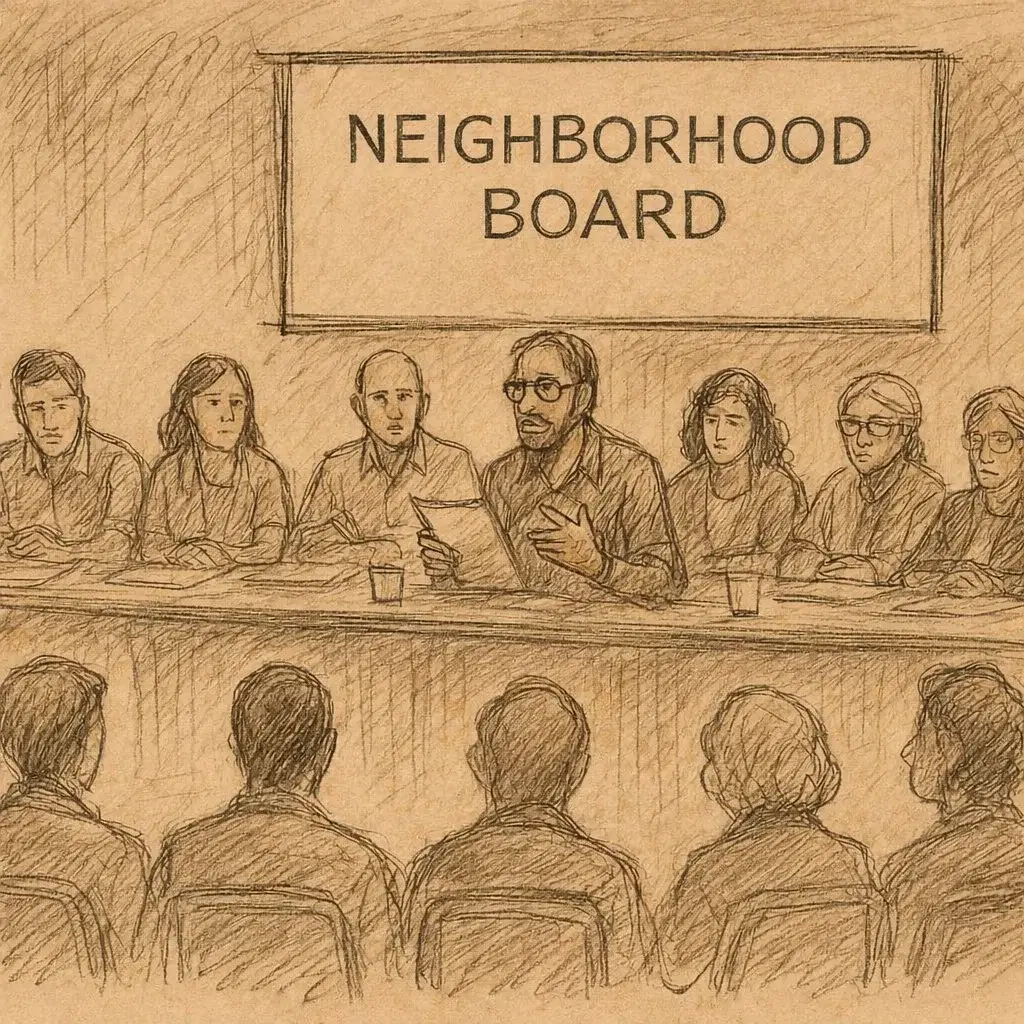
24 Waianae Coast Neighborhood Board Meeting – May 6, 2026
Fire Department Report and Wildfire Preparedness
The meeting opened with a report from the Honolulu Fire Department, delivered by Mike Donahue of the fire station across from the meeting site. He summarized April 2026 incident activity within the Neighborhood Board’s geographic area, reporting one wildland fire, nine nuisance fires, one cooking fire, six activated fire alarms, 137 medical incidents, one motor vehicle collision, two mountain rescues, and one ocean rescue. The department directed residents to the Fire Response Search tool on the HFD website for incident details and mapping. The fire safety message focused on wildfire prevention as Hawaiʻi enters a period of heightened risk due to dry conditions, tall grass, and shifting winds. Residents were urged to clear dry brush and vegetation around homes, avoid parking on dry grass because hot exhaust can ignite it, refrain from spark-producing activities during hot, dry, windy weather, and stay informed about weather and fire conditions. The emphasis reflected growing seasonal concern over human-caused wildfires and the vulnerability of leeward communities such as those on the Waianae Coast.
Police Department Crime Statistics and Agricultural Crime Concerns
Honolulu Police Department representatives Corporal Cory Makino and Sergeant Moroko presented April 2026 district and Waianae-area statistics. Across the district, HPD recorded 20 motor vehicle thefts, 14 burglaries, 105 thefts, and 21 unauthorized entries into motor vehicles. Within the Waianae area specifically, there were two motor vehicle thefts, five burglaries, 25 thefts, and six unauthorized entries into motor vehicles. Traffic enforcement included nine speeding citations, 308 moving citations, and 133 parking citations, for a total of 816 citations issued. District-wide calls for service totaled 8,413, including 2,106 in Waianae. Public testimony expanded the discussion into agricultural-area security, with resident Austin Salcido describing a burglary and trespassing incident on his agricultural property on April 23. He praised HPD’s quick response after discovering a cut padlock and a break-in at a dwelling under construction, and noted that a detective was assigned and that camera footage and social media circulation had helped identify suspects. He used the incident to remind agricultural landowners about “Duke’s Law,” Act 235, and the higher penalties tied to agricultural crimes, including the possibility of a Class C felony. His testimony highlighted the increasing need for surveillance, rapid response, and specialized enforcement in rural and agricultural parts of the coast.
Ocean Safety Activity, Rescues, and Summer Safety Advisory
Lieutenant Blake Kapparos of Honolulu Ocean Safety reported that April was relatively quiet overall, but still involved significant preventive and emergency activity along the coast from Kaʻena Point to ʻIroquois Point. Ocean Safety conducted 23,524 preventative actions in April, reflecting the department’s effort to stop beachgoers and ocean users from entering unsafe conditions before incidents escalated. Despite that high number of interventions, nine rescues were still required. These included assisting four kayakers near Kaʻena Point after distress was reported, with a Good Samaritan helping recover three while Ocean Safety’s jet ski retrieved the fourth. Other incidents included a missing female swimmer near Kahe Point who was later located on the beach, and assistance to a distressed kite surfer in the Hale Bush area. Medical and injury responses included a six-year-old child pulled from a pool at Ko Olina Villas who was resuscitated and regained a pulse, a 45-year-old man who suffered a seizure at Pokai Bay, a 38-year-old who slipped on rocks at Māʻili Beach, and a 32-year-old woman who slipped and fell at Keaʻau Beach Park. One shark sighting was reported at Kahe Point. As summer approaches, the department advised residents and visitors to use sun protection, wear hats, and stay hydrated, underscoring the seasonal increase in outdoor activity and exposure risks.
Board Vacancy Filled for Makaha Subdistrict
The board temporarily rearranged its agenda because two members needed to leave early, then proceeded to fill a vacancy for the Subdistrict 2 Makaha seat. The chair publicly thanked outgoing member Calvin Endo for his service to the community. Board member Kaukaʻohu nominated Maile DeSoto, and with no other nominations offered, the board voted unanimously among the eight members present to seat her. Following a recess and oath process, the meeting reconvened and officially welcomed DeSoto to the board. The appointment restored fuller representation for Makaha and reflected the board’s effort to maintain continuity in neighborhood governance despite turnover.
Resolution Opposing the Makaʻīwa Hills Landfill Expansion
A central issue of the meeting was a board resolution opposing Public Infrastructure Map Amendment 2026 PIM-2 and the proposed expansion of landfill operations into Makaʻīwa Hills. The chair explained that the resolution addressed the continued concentration of Oʻahu’s waste facilities on the Waianae Coast, along with environmental, cultural, health, and environmental justice concerns. The resolution specifically requested an independent health impact assessment on long-term effects to surrounding communities including Nānākuli and Ko Olina, and a formal audit of the Landfill Site Advisory Committee for its failure to identify and finalize a non–West Oʻahu landfill site. The resolution declared opposition to the proposed expansion and urged the City to pursue alternative and more equitable waste-management solutions. A board member expressed broad agreement with the measure and suggested aligning some language with a similar resolution adopted by the Kapolei-Makakilo Neighborhood Board.
Public testimony overwhelmingly opposed the landfill proposal. One speaker identified Makaʻīwa Hills as part of Honouliuli and tied the area to family and ancestral lands, stating that land should be used to grow food rather than receive more waste. She argued that by 2026 Hawaiʻi should be pursuing new waste technologies already used elsewhere rather than relying on landfills. Kalei Salcedo testified that the area contains iwi kupuna and stressed that residents had played and lived in the area for years, including around cold water flows that pass through the site. She linked longstanding landfill concentration in the district to cancer in local families and urged the community to stop allowing the coast to be used as a dumping ground. Austin Salcido announced a Thursday 10 a.m. public discussion at Nānākuli Beach Park on the landfill issue and described the proposal as effectively creating a fourth dumping ground in the 96792 area, following previous disposal sites including Waianae, PVT, and Waimanalo Gulch. He also asserted that artesian wells lie beneath the area and pointed to Act 73 restrictions intended to prevent landfill siting in sensitive locations. Another resident from Makaha opposed any further landfill expansion and rejected the idea of placing waste over known groundwater resources.
One remote speaker, Jonime Perry, raised a different perspective about district boundaries and siting history. She noted that the Landfill Advisory Board had previously considered Hikiola Ranch in Makaha and upland Nānākuli along Waianae Valley Road, but argued that Waimanalo Gulch itself is not in Neighborhood Board 24 and suggested eminent domain and expansion there instead of pushing a new site into Waianae Valley or other parts of Board 24. She also said the Nānākuli chair had previously sought support from Makakilo to redraw planning boundaries so Waimanalo Gulch would be within Nānākuli-Māʻili. After discussion and testimony, the board adopted the resolution by roll call vote, with eight votes in favor, zero opposed, and one abstention. The action formally placed the Waianae Coast Neighborhood Board on record against the Makaʻīwa Hills landfill expansion.
Army Response on Dust Suppression Chemicals at Training Areas
A representative from U.S. Army Garrison Hawaiʻi, Major Wolf speaking on behalf of Lieutenant Colonel Straw, responded to prior community concerns about chemical dust suppression used during military maneuvers. He stated that the products sometimes called “rhino snot” or “gorilla snot” are water-based polymer stabilizers used only in limited, controlled areas such as designated training ranges and selected helipad surfaces. He said they are not broadly applied, are not used in routine public access areas, and that all applications comply with environmental standards. He further stated that the Army had no indication that this limited use poses a health risk to the community, the environment, or groundwater, and he offered to send a link to the product data sheets.
That statement drew immediate pushback from residents. Kalei Salcedo objected strongly, saying the material had been sprayed in Makua and that recent Kona low conditions likely washed fragments and runoff downslope and into the ocean. She described the material as breaking into little rubber-like pieces and said local families catch and eat fish in those waters, making contamination a direct food and health concern. She accused the Army of lacking transparency and rejected the assertion that the product poses no health risk. Austin Salcido followed by noting that board members had for years requested ocean water sampling in the Makua area, and he asked whether any environmental impact study or Department of Health water analysis had ever been conducted. Another participant responded that no such ocean water sampling had been done. Salcido then called for collaboration with the Department of Health Clean Water Branch to test both ocean water and marine life in the area for possible deposits linked to Makua range runoff. Jonime Perry suggested legislative funding might be needed to support such a study. The exchange reflected persistent distrust over military environmental assurances and unresolved concern about runoff from training areas into coastal waters.
Puʻuhonua o Waiʻanae Relocation Delay and Cleanup Commitment
The meeting briefly returned to an earlier matter involving Puʻuhonua o Waiʻanae and its relocation timeline. A Department of Land and Natural Resources representative, Pua Ayau, explained that at a previous meeting the board had been told relocation would take six months from November, placing the deadline at the end of April. Because of two Kona low storms and related impacts, the relocating group requested more time. DLNR granted a two-month extension through the end of June, citing 31 lost days from storm conditions and major disruption from the February storm. The chair indicated the board would seek another update in July after the revised deadline passes.
A representative of Puʻuhonua o Waiʻanae, Kaulana “Kala,” one of the five leaders of the village, added that community support is always needed but stressed that the village has been conducting its own cleanups without state funding and is saving taxpayers money by handling its own rubbish removal. He said the group intends to continue honoring its commitment to clean the site even after relocation and would return to remove remaining waste if necessary. The comments framed the encampment not simply as a relocation issue but as an ongoing effort by residents to demonstrate stewardship and responsibility during a highly scrutinized transition.
Coastal Residential Development Proposal at 84-253 Farrington Highway
Planning Solutions Inc., represented by planner Makana White, presented a Special Management Area major permit application on behalf of the Wong family for a single-family dwelling and accessory dwelling unit at 84-253 Farrington Highway in Makaha. The undeveloped parcel, identified as TMK 8-4-011:016, is 12,754 square feet and lies on the makai side of Farrington Highway on the north side of Makaha Beach, between two developed residential lots in the Holt Street and Makau Street neighborhood. White explained that the lot is in the R-10 residential zoning district, with agricultural zoning mauka of the highway and preservation zoning on the shoreline.
Because the site is within the Special Management Area, the presentation focused heavily on shoreline and sea-level-rise hazards. White showed that all proposed development would be located outside both the shoreline setback and erosion hazard areas. He identified the projected sea level rise exposure area at 3.2 feet by 2100 and walked through the shoreline vegetation and coastal erosion hazard lines at 0.5, 1.1, 2.0, and 3.2 feet of sea level rise. According to the presentation, the accessory dwelling unit would be a two-story structure with a garage below and living space above, located closer to the highway, while the main residence would be a single-story structure located closer to but still outside the shoreline setback area. The project would observe a 75.4-foot shoreline setback, stay outside the sea level rise exposure area and shoreline erosion hazard area, and request no variances for height or setbacks.
Community questions centered on how the property might actually be used. Austin Salcido asked whether the project was intended as a group living facility, how many bedrooms were planned, whether a conditional use permit would be sought, and whether nearby neighbors had been consulted. White replied that the project is intended as a single-family residence with an accessory dwelling unit functioning as a guest house, not a group or communal living arrangement, and that no conditional use permit would be needed for that use. He said the exact bedroom count had not yet been finalized but would appear in the construction drawings submitted with the permit application, which would later be available for public hearing and comment. Blessing Star Dela Cruz questioned whether a second-floor accessory dwelling over a garage complied with local rules and asked the board to flag the issue for further review. Another participant warned that the property could become an illegal vacation rental in practice, and Jonime Perry asked whether there would be a swimming pool and whether neighbors had been mailed notice. White said neighboring properties had been notified by letter and that while no pool was currently included, the final design could change before permit submission. The discussion also touched on public shoreline access used by surfers and boogie boarders. White maintained that because the structures would be set farther back than adjacent homes and entirely outside the shoreline setback area, there was no intent to obstruct lateral shoreline access. The chair indicated interest in having the matter reviewed by the board’s housing committee once construction plans become available.
Kamaile Academy Crosswalk Safety Mural Project
Kamaile Academy Principal Kepka presented a school safety initiative aimed at improving the crosswalk on Alaʻakau Street used by students traveling to and from campus. He explained that the school has worked for years to encourage children to use the crosswalk properly and to slow traffic in the area. In partnership with the Department of Health, the school is pursuing a “quick build” project that would make the crosswalk more visible and engaging through a mural and traffic-calming features. The project includes installing delineators or turf curb extensions to prevent vehicles from parking in the crosswalk, which he identified as a major current problem that limits visibility and makes it difficult for children to cross safely.
The school has already engaged its own community in shaping the project’s moʻolelo and visual design, and selected artist Kukui, who has previously worked on murals at the school library and māla. The principal said the project is being coordinated with the Department of Transportation and will also be reviewed by the mayor’s culture and arts committee to ensure compliance with relevant standards. Preliminary designs and examples from similar projects elsewhere on Oʻahu had been shared with the board. Jonime Perry suggested adding red-painted curb treatments so the public better understands where parking is prohibited and encouraged involving Waianae Intermediate and High School students as well. Kepka said the mural process is meant to be highly participatory, with students and community members helping lay the foundation before the artist completes the final details, and estimated painting would likely occur around August or September so the improvement would be ready for the new school year. The presentation framed school-zone safety as both an infrastructure matter and a way to build pride and shared responsibility around student well-being.
Community Concerns About Water Quality, Transparency, Beach Access, and Flood Insurance
During the community concerns segment, Blessing Star Dela Cruz said she had raised questions privately with the Board of Water Supply about reports of bacteria, viruses, parasites, and other contamination concerns in local water supplies, referencing notices she had seen for areas such as Waiālua and Haleʻiwa and alleging that similar problems were affecting the coast without adequate public notice. She asked that more information be brought back to the community because of concern about contamination in drinking water and showers.
Kalei Salcedo called for greater transparency from board members about the committees they serve on and the issues they are tracking, arguing that the community deserves clearer communication about matters affecting housing, families, and public commitments. She also expressed disappointment that after board members had apparently promised to support a YMCA youth event through a security presence, only two members attended. She emphasized that when adults make promises to youth, they should either follow through or clearly explain why they cannot, because trust and accountability matter in relationships with young people.
Another resident raised concerns about closures and concrete barriers at Yokohama Bay, questioning why longtime beach users were increasingly being shut out of a place where they had historically enjoyed free access. He described the barriers as an eyesore, questioned whether they were intended to stop cars from driving on the beach instead of enforcing parking rules directly, and noted the loss of shade after removal of a banyan tree. He also linked the recent major storm to broader concern about flood-zone reclassification and insurance costs, warning that higher rates could price residents out of their homes in the same way insurance pressures have mounted elsewhere in the state. Another speaker echoed anti-landfill sentiment while criticizing illegal or destructive land practices elsewhere along the coast and describing flood damage allegedly worsened by excavation and poor land management near Kawiwi Stream.
Austin Salcido then connected flood-zone expansion to broader affordability concerns, stating that newly expanded flood-zone boundaries would force homeowners with mortgages to obtain flood insurance, which could be catastrophic for kupuna and others living on fixed incomes. He argued the governor should issue an emergency proclamation or other intervention to subsidize the cost burden. Jonime Perry said her advocacy is for the community and its beneficiaries rather than for protecting elected officials or administrative positions, and she reiterated opposition to landfill expansion, geothermal development, and encroachment into Neighborhood Board 24. The segment revealed widespread frustration around affordability, access, environmental management, and trust in public institutions.
Debate Over Board Members Speaking During Community Concerns
A procedural dispute arose over whether board members could speak during the community concerns section. The chair stated that board members are not supposed to participate in that segment as board members and should instead submit concerns by email, saying the Neighborhood Commission Office had already warned the board twice about prior violations of this rule. Several participants challenged the limitation, arguing that board members are also part of the community and that verbal concerns are captured in the public record while emails are not visible in the same way. Others replied that when serving in the meeting, board members are acting in an official board role rather than as ordinary community speakers, and that off-agenda debate on the point was itself out of order. Community members urged board members to use the many official email contacts available to them and then report back publicly later with the responses they receive. The dispute reflected broader tension over board process, representation, and how openly concerns can be aired in a recorded public forum.
Mayor’s Office Responses on Illegal Gates, Parking, Keaʻau Conditions, Parks, and a Canceled Town Hall
Mayor Rick Blangiardi’s representative, Donna Puna, relayed responses to two previously raised issues. On Kukai Place, the Department of Planning and Permitting investigated a complaint about a yellow metal cattle gate approximately 16 feet high that was installed at the end of the road and blocked access to the cul-de-sac. DPP found that the roadway is owned by the Department of Hawaiian Home Lands, meaning the matter falls outside DPP jurisdiction, and no building code violations were observed. On Lehoku Street, where residents had reported cars parking on sidewalks and blocking pedestrian access near the school, HPD monitored the area from March 11 to March 18 and issued 23 citations for various violations, with additional monitoring to continue as caseload permits.
Public questions to the mayor’s office then broadened considerably. Austin Salcido raised concerns about the Keaʻau area, saying a road-closed barricade had been placed on Farrington Highway because the eastbound lane near Nānākuli and the first bridge was washed out or otherwise compromised, yet people continued bypassing the closure. He argued that encampments and trespassing on city land in the undeveloped section of Keaʻau Beach Park had generated debris, pallets, abandoned vehicles, and other waste, and he asked the mayor to ensure enforcement and cleanup under the framework of Resolution 22-151. Kalei Salcedo criticized the mayor’s reported trip to China related to panda acquisition, calling it a waste of taxpayer money and arguing the city should instead use such funds to repair parks, roads, sidewalks, and public facilities. Another speaker said if public money is available for discretionary projects, it should instead be invested in new waste-processing technologies rather than another landfill. Jonime Perry asked that city departments come before the board more regularly when projects are proposed in the district, especially because recent flooding underscored the consequences of infrastructure decisions. Another resident asked that the mayor reschedule a canceled town hall so the community can ask questions directly. Board member Kaukaʻohu also raised concerns through the mayor’s office about whether board members’ constituent concerns can be voiced during meetings and sought clarification about the handling of those communications. The exchange showed how the mayor’s representative serves as a conduit not only for service requests but also for larger frustrations about priorities, maintenance, and responsiveness.
Councilmember Andrea Tupola’s Opposition to the Landfill and Community Updates
Councilmember Andrea Tupola’s office, represented by Kiko, reported that the councilmember opposes the Makaʻīwa Hills landfill expansion. Her office said she is working on three main fronts: removing $30 million in CIP funding in Bill 23 for land acquisition at Makaʻīwa Hills, supporting improvements to H-POWER to reduce dependence on landfilling, and introducing Resolution 267 to establish an inland landfill task force to evaluate long-term solutions. The office also highlighted the recent renaming and dedication of the Waianae District Park in honor of Shigeo Nagamine and the 100th Battalion, noting that former board chair Philip Granobong had introduced the original renaming resolution and that Nagamine’s nearly 100-year-old sister Anita was able to attend.
Public testimony pressed the office on unresolved local issues and broader policy concerns. Austin Salcido repeated his call for stronger city enforcement and implementation at Keaʻau Beach Park under Resolution 22-151. Jonime Perry criticized Resolution 267, saying comparisons with other countries are misplaced because the United States remains highly wasteful and undisciplined, and she noted that the councilmember’s report had not addressed pay raises. The council office also provided a direct community contact number, 808-861-2208, in response to concerns that constituents sometimes struggle to reach the councilmember’s office.
Legislative Session Updates, Flood-Zone Expansion, and State Opposition to the Landfill
Senator Samantha DeCorte reported that the Legislature was in its final week of session, with final readings scheduled for the next day. She said her office would email the board the final voting information before bills head to the governor. She highlighted one major local education achievement, stating that every elementary school in ZIP code 96792 now has a designated preschool, making the area the only district with preschool at every elementary school and crediting the lieutenant governor’s initiative for helping fund and establish them.
The senator also brought attention to newly designated flood zones that will take effect June 10, 2026. She said Waianae has 360 newly affected parcels, Māʻili has 144, Nānākuli has 21, Makaha has two, and Makua has one. These designations mean many additional homeowners will need flood insurance, increasing costs for residents already struggling with affordability. Community members and board members responded by urging emergency support or subsidy mechanisms, especially for kupuna and fixed-income households facing mortgage and insurance burdens. The senator agreed the issue is serious and said coordination is needed with city agencies, including the Office of Climate Change, Sustainability and Resiliency, because zoning and flood-map implementation involve both state and city systems.
DeCorte also made a forceful statement on the landfill issue from the state side. She said the City has not approached the state to seek exemptions or relaxation of Act 73 buffer-zone requirements for the proposed landfill site and stressed there has been no collaboration from her side in support of the proposal. She recalled that the mayor had personally assured her there would be no more landfills in Waianae. She also noted that on Act 255 the previous year she was the only “no” vote on the Senate side, while Representatives from the area had also made their opposition clear in the House. Later in the meeting, when asked about Office of Hawaiian Affairs funding and ceded lands revenues, she said SB 903 had been voted out of committee to provide OHA $55 million tied to the public land trust, with the understanding that the money should support on-the-ground community programs rather than major building projects. She also acknowledged ongoing frustration over the state’s failure to properly provide OHA’s full share. Additional remarks touched on Aliʻi trust lands, including concern that Kamehameha Schools is selling land to developers, and on the need for support for Papahana o Kaiona, which is expected to close on the former Kaiser building property on St. John’s Road in July and received $400,000 in the budget for an environmental study, demolition, and future construction. She asked for continued community support for the school’s permanent facility.
Representative Trish La Chica Morikawa’s First-Session Reflections and Workforce Event
State Representative Trish La Chica Morikawa kept her report brief but noted that the Legislature’s final week remained busy and said she and her colleagues continue working in the community alongside Capitol duties. She described a recent hiring blitz as successful and said it was open not only to students but also to community members seeking work or career changes. According to her, participating employers included unions, Hawaiian Airlines, and Pearl Harbor Naval Shipyard, among others, and the event featured both part-time and livable-wage opportunities. In response to a question about whether the jobs offered could realistically support living in Hawaiʻi, she said yes, emphasizing that some positions offered wages sufficient to sustain local households while others were intended to engage students over the summer.
Asked what she had learned from her first session in the House, Morikawa said she entered office not to “save the world” or “save Hawaiʻi” in the abstract but to help Waianae specifically. She said every vote and decision she makes is grounded in service to District 45 and the 96792 area, working in tandem with neighboring Representative Darius Kila. Reflecting on the session, she said she learned that the Capitol is not a magical place, that expectations are often different from realities, and that perceptions can create problems. Her comments underscored a local-first governing philosophy and the gap between community hopes and legislative process.
Questions on Native Hawaiian Funding, Homelands, and Public Trust Responsibilities
Several comments during the elected officials portion focused on Native Hawaiian rights, funding, and land management. One board member argued that if the state had been fully providing the 20 percent revenue share associated with ceded lands to the Office of Hawaiian Affairs, far more resources could be reaching the largest Native Hawaiian population in the state, including the Waianae Coast. The same speaker urged support for changes affecting Hawaiian Home Lands and asked elected officials to review statutory limitations that may constrain the Department of Hawaiian Home Lands’ land use authority by tying it too closely to Department of Land and Natural Resources rules. The discussion also included reminders that the Navy does not simply own all the lands it occupies, particularly at Lualualei, where unresolved lease, payment, or land-swap issues may still affect future control. These remarks placed local environmental and housing disputes within a broader framework of Native Hawaiian land rights and public trust accountability.
Approval of March Meeting Minutes and Recordkeeping Corrections
Under board business, the board considered approval of the March 3, 2026 meeting minutes. Board member Joel raised several corrections, including fixing references to traffic on Alaʻakau Street, correcting attribution of a question from the chair to board member Joe Jordan, and clarifying that a 44-foot emergency access easement connects to Kalawaha Road rather than Makaha Valley Road. He also noted that the minutes failed to record when two board members had left the prior meeting before certain votes were taken, an omission he said could create confusion about the vote count on rescinding the Pledge of Allegiance. The board then approved the minutes with those amendments. The discussion showed the board’s concern with keeping accurate procedural records, particularly where attendance affects voting legitimacy.
Meeting and Committee Participation, Public Announcements, and Upcoming Dates
The board briefly discussed attendance at outside meetings. The chair reported attending the recent Waianae Readiness event at the Māʻili Kamehameha Schools property, while another board member clarified that many meetings she attends involving DLNR, cultural practice, or kupuna issues are in her personal capacity as a kanaka rather than as an official board representative. The board also noted that several committee meetings had been canceled due to weather.
In closing announcements, the chair clarified that a previously listed April 29 anti-landfill event had already passed and remained on the agenda only because of a copied error. She then announced a talk story session with Representatives Morikawa and Kila on Wednesday, June 24, from 6:00 to 8:00 p.m. at Arc of Safety in Waianae Mall; Waianae High School’s graduation ceremony on Friday, May 22, at 6:00 p.m.; and an ENV landfill-related informational meeting at 10:00 a.m. that Thursday at the Kalaniʻanaʻole Beach Park recreation room. The next regular Neighborhood Board meeting was set for Tuesday, June 2, at 6:30 p.m. at the Waianae Public Library. The meeting then adjourned.