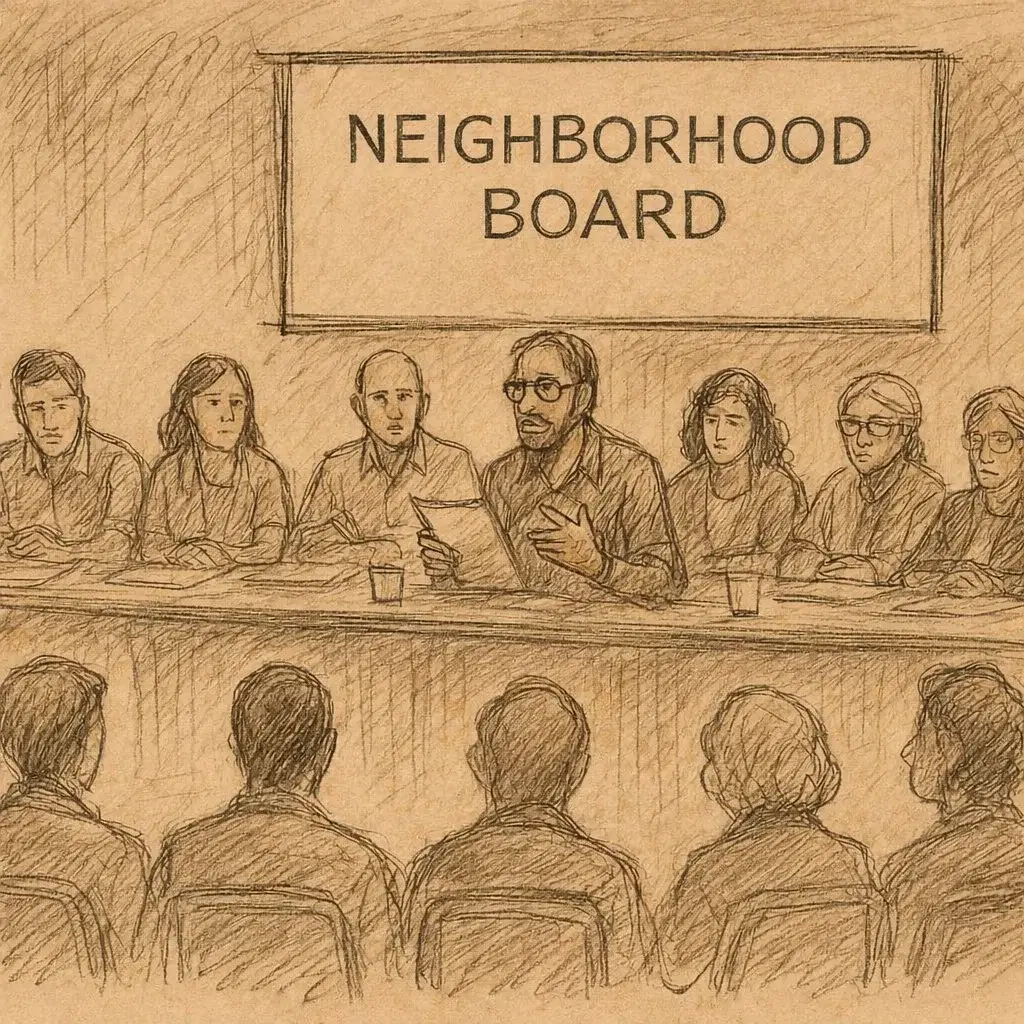
No 36 Nānākuli-Māʻili Neighborhood Board Regular Meeting April 2026
Listen to this article:
36 Nanakuli-Maili Neighborhood Board Meeting – April 22, 2026
Meeting Opening, Protocols, and Attendance
Board Chair Malia Gustin opened the regular meeting at 7:00 p.m. at Nānākuli Public Library, with additional participation available via WebEx. She explained that the neighborhood board serves as an open monthly forum between the public, government agencies, and elected officials, and reminded attendees of testimony procedures and time limits: two minutes for community comments, three minutes for official monthly reports, and 10 minutes for presenters. She emphasized respectful conduct and the spirit of aloha, noting that disruptive behavior could result in removal. Board Member Sharla Weaver delivered the opening prayer, asking for wisdom, community strength, and understanding. Roll call was then conducted by the Neighborhood Commission Office, and board members present included Tector, Towles, De La Cruz, and Weaver, with enough attendance to proceed.
Honolulu Fire Department Report and Flood-Related Questions
The Honolulu Fire Department, represented in person by Kevin Kaleo of the Nānākuli Fire Station, reported March 2026 incident statistics for the board area. These included three nuisance fires, five activated alarms, 121 medical calls, one motor vehicle collision, one mountain rescue, two ocean rescues, and three hazardous materials incidents. No structure fires and no pedestrian-related motor vehicle collisions were reported. HFD’s monthly public safety message focused on evacuation planning, including identifying two escape routes from a home, planning evacuation paths out of the neighborhood, signing up for alerts through HNL Alert, and maintaining go-bags and 14-day disaster supply kits for both people and pets. During public testimony, a resident asked how many 911 calls had come from the area since the recent flooding; HFD did not have the number at the meeting but agreed to look it up and report back. Another community member thanked the department for helping during flooding in the Pā‘akea and ‘Īlili Road area, describing HFD as one of the few agencies that responded directly and discussing possible drainage solutions involving the Army Corps of Engineers.
Honolulu Police Department Crime and Enforcement Statistics
Honolulu Police Department representatives joined online, including Corporal Corey Makino of District 8 Community Policing and Sergeant Fumi Moroka from the Kapolei Community Policing Team. They reported March 2026 crime and enforcement data. Across the district there were 26 motor vehicle thefts, 15 burglaries, 112 thefts, and 28 unauthorized entries into motor vehicles. Within the Nānākuli-Māʻili area specifically, there were four motor vehicle thefts, five burglaries, 18 thefts, and four unauthorized entries into motor vehicles. Traffic enforcement activity districtwide included 12 speeding citations, 157 moving violation citations, 25 parking citations, and 474 total citations issued. Calls for service totaled 8,473 in the district, including 1,422 in the Nānākuli-Māʻili area. No questions were raised by the public or board members during this report.
Ocean Safety Incidents, Shark Activity, Road Closures, and Alert Concerns
Honolulu Ocean Safety’s in-person report described a wet and unusually eventful March. The department responded to 33 total 911 calls. Early in the month, after heavy rain, lifeguards carried out a five-person rescue at Nānākuli Beach Park, with all five rescued safely. Personnel also dealt with overdue swimmers later found at Ka‘ena Point, a major multi-vehicle accident at Mā‘ili Beach Park, shark-related incidents including a “10-40” call at Mākaha Beach Park and multiple shark sightings at Electric Beach, and a dead whale that drifted onto rocks near Ka‘ena Point and could not be removed because it had deteriorated. The department also noted monk seal sightings near Ka‘ena Point. Yokohama Bay and the road at Kea‘au Beach Park had closures related to damage and repairs. Ocean Safety also recovered a fishing buoy for return to the University of Hawai‘i Fish Aggregating Device program. The agency gave an update on its new digital “watchtower” reporting system, which is being rolled out to lieutenants, mobile responders, and rescue ski operators; the system is intended to improve real-time messaging and data entry for first aid and incident reports, with broader implementation expected by May or June once IT issues are resolved. Looking ahead, the department said it would provide information at the next meeting about the Junior Guard summer program, expected to begin in June. Board discussion also touched on a news report involving Ala Moana lifeguards and drinking; Ocean Safety said that matter was under investigation above the speaker’s level. Another board member asked about tsunami-watch notification failures following a recent earthquake near Japan, noting that public notices appeared to go out without follow-up. Ocean Safety said it had not received the usual text alerts and would investigate why the information chain appeared to break down.
Filling Two At-Large Board Vacancies
The board filled two at-large vacancies after nominations from board members. The nominees were Mark Kong, Carla Maʻsaniai, and Skye Koleolani-Razan-Olds. Each was given one minute to introduce themselves and explain why they wanted to serve. Mark Kong described himself as a homesteader and former board participant who believes community participation is necessary because “if you don’t go, nothing will be done.” Carla Maʻsaniai said she has lived in Nānākuli for about 13 years, works locally serving homeless individuals and families at the shelter in Lualualei, is a parent of seven children with deep ties to local schools, and currently chairs the School Community Council at Nānākuli High and Intermediate School. Skye Koleolani-Razan-Olds said she is a newer Māʻili resident of about two years, recently bought her first home, has children at Ka Waihona, and works in the nonprofit field with experience in disaster management, grant writing, policy development, and board governance. The first round of voting did not produce a clear result, so the board narrowed to the top two candidates and voted again. Mark Kong and Skye Razan-Olds were selected, sworn in, and seated.
Recognition of Departing Board Members and Former Neighborhood Assistant
The board then honored departing members Valerie May Manoa and Kaui Asinson for their service. Certificates recognized their leadership roles and committee work, including education, land, and water matters, and highlighted Hawaiian proverbs they had brought into the board’s work. Valerie explained that she was resigning because she was moving closer to her children and grandchildren after the death of her husband three years earlier. She encouraged residents to keep attending meetings, speaking up, and preparing the next generation of leaders. Kaui reflected on first coming to a board meeting over concerns at Nānākuli High and Intermediate School and later joining the board, especially around securing a school resource officer for the campus. She said she was stepping aside because she felt called to do so, but would continue serving the community in other ways. The board also honored former Neighborhood Commission Office assistant Jeffrey Jones for his work from 2023 to 2026, including supporting monthly meetings and outreach events. Jones said the experience had deeply affected his life and announced that he would be working next with Boys & Girls Club of Hawaiʻi as a child and club safety coordinator.
Governor’s Representative: Farmer Relief, FEMA Declaration, and Flood Recovery Frustration
Governor Josh Green’s representative, Department of Agriculture Chair Sharon Hurd, reported several major state developments. She began by noting the resignation of Mike Lambert as director of the Department of Law Enforcement, describing his departure as a personal retirement-related decision and praising his role in helping pass Duke’s Law. Hurd then outlined the state’s emergency farmer relief effort following recent storm damage. The governor approved $2.5 million for the Emergency Farmer Relief Program, and about 1,600 applications had been verified as eligible. The state expected to cover all of them, with maximum payments of $1,500 each, but processing was moving slower than expected because of the need to verify addresses, identities, and signed statements confirming the accuracy of application information. Around 40 checks had already gone out, with another approximately 60 expected by the end of the week. Hurd estimated that all 1,600 checks could be processed within roughly three weeks if applicants promptly returned the required W-9s and signed attestations. She also said the governor had secured a FEMA declaration for Hawaiʻi, which would provide federal funding for public infrastructure such as schools, roads, and public buildings. She cautioned that aid for personal losses, where available, would take longer and involve extensive verification.
Much of the discussion centered on frustration with flood response and long-standing infrastructure problems. Residents stressed that many flooded properties were not in designated flood zones, meaning some affected kūpuna did not carry flood insurance because they had no reason to think they needed it. Speakers argued the flooding was caused not by homeowners but by poor maintenance of streams and drainage infrastructure, and urged the governor to address that reality rather than leave uninsured residents without help. One speaker referred to a 2014 West Oʻahu flood mitigation study and said DLNR engineers should appear before the board to explain why large-scale mitigation plans had stalled, especially where they could affect inland landowners and add utility infrastructure costs. Another resident said the government had known the storms would be severe, yet drains and ditches had not been cleared and people were stranded for 11 days. Others described direct local volunteer efforts and asked why community members were still the ones coordinating emergency support. Questions also focused on when FEMA funding would actually arrive in Hawaiʻi, how the governor would prioritize spending, whether BRIC hazard-mitigation funds were being pursued for future resilience, and how state agencies would coordinate around alerts, evacuations, and prevention of repeated flood losses.
Senator Samantha DeCorte: Flood Maps, Supplies, Kolekole Pass, and Insurance Concerns
State Senator Samantha DeCorte reported on flood-related issues and state coordination. She noted that FEMA had issued a determination letter taking effect June 10, 2026, and said updated flood maps would affect nearly 500 areas on the coast overall, including 21 parcels in Nānākuli and 144 in Māʻili. She said she would send the map link to the chair so residents could check individual parcels. DeCorte also praised Department of Transportation official Ed Sniffen for helping get pump trucks deployed to Pā‘akea Road while balancing storm response on both the North Shore and West Side. She said construction materials were the main need at that point for Pā‘akea residents, and asked people to contact her office if they could help. She highlighted the recent opening of Kolekole Pass during the Nānākuli water main break, saying the route had worked smoothly through coordination among the Army, DOT, and Hawaiʻi Emergency Management Agency, and suggesting it could be used more often when needed, although many drivers still default to Farrington Highway.
Questions and comments to DeCorte returned repeatedly to flooding and road safety. One resident raised conditions near Kea‘au, where 70 people reportedly had to be evacuated by helicopter during the Kona low and where damaged roadway conditions remained dangerous while people continued entering the area. Board members thanked the senator and the military for helping reopen Kolekole Pass and noted how much time it saved during traffic backups. Questions were also raised about insurance and FEMA. A board member asked whether homeowners in newly mapped flood zones would first have to rely on flood insurance before FEMA assistance, especially because many did not previously carry such insurance. DeCorte said the new maps would require homeowners to get flood insurance once they took effect, adding another financial burden, and acknowledged that insurers were often very slow. Another board member asked how the governor planned to distribute FEMA funds to the Waiʻanae Coast and whether flood-zone status would determine eligibility; DeCorte said she would follow up with the governor specifically on plans for Waiʻanae and the local distribution of funds.
Representative Darius Kila Absent Due to Legislative Conference Work
The board announced that Representative Darius Kila was unable to attend because transportation committees were advancing more than 50 bills into conference at the State Capitol. The chair acknowledged his legislative work even though he did not provide a report in person.
Councilmember Andria Tupola: Flood Response, Landfill Fight, Budget Actions, and Police Chief Timeline
Councilmember Andria Tupola provided one of the meeting’s most extensive reports, addressing both immediate storm impacts and major land-use issues. She described the landslide on Board of Water Supply property in Mākaha as dangerous and worth a dedicated presentation because debris had stopped only about a foot away from a home. Turning to recent flooding, she explained the difficult response effort on Pā‘akea and ʻĪlili Roads. DOT owns Pā‘akea Road and had acquired it in 2024, but flooding at ʻĪlili involved blocked access to private homes. She said HFD had helped by providing pumps, and that private property owners and neighbors had to be involved to create temporary drainage solutions because city and state resources were stretched and DOT trucks were hauling water as far as Pearl City. She said the first Kona low hit around March 13 and response efforts evolved through a second storm on March 19–20, with more coordinated work not really mobilized until around March 24. She emphasized that local agencies were heavily focused on the North Shore too, but West Side residents also needed pumps and trucks.
Tupola then turned to the landfill issue, which generated strong reaction. She said a city budget line item showing $30 million for landfill land acquisition had revealed a possible new landfill push in the Mākaʻīwa Hills area despite repeated public assurances that no new landfill would be placed on the West Side. She said that when environmental officials previously presented publicly, they did not disclose any plan to buy land. Tupola said she had already contacted Campbell Estate, which owns the land in question, and had been told the land was not for sale. She planned to secure a letter to that effect, and she also intended to involve the EPA because the area raises concerns similar to the current site, including flooding. She said she had removed the $30 million acquisition from the city budget and, despite requests to restore it, opposed re-inserting funds for land that was not for sale and would sit unused for six to eight years while permits were pursued. She outlined upcoming hearings and meetings, including an April 29 hearing and a May 1 second budget reading involving Bill 23, to keep pressure on the issue. She also promoted her proposed resolution to create a one-year task force to produce an actual plan to end landfill dependence in Hawaiʻi, arguing that other countries have already eliminated landfills through recycling, reuse, policy change, and materials recovery infrastructure. She said current landfill inputs consist largely of ash, auto shredder residue, and sludge, and that those waste streams should be separately addressed rather than assumed to require permanent landfill use.
She also gave a timeline for selection of Honolulu’s next police chief, with semi-finalist interviews set for May 5, commission discussion and selection of finalists on May 6, a PBS Insights candidate interview on May 14, mayoral meetings with finalists on May 18, commissioner interviews on May 19, and the final commission vote on May 20. Board and community discussion with Tupola also covered the 2014 flood study, conditions at Kea‘au, flooding at Hāle Makana O Māʻili, and whether the city could use eminent domain for a landfill site elsewhere. She said repeated drainage problems at Hāle Makana O Māʻili stemmed from incomplete and altered drainage work tied to the original development and later city permitting complications, including a canal opening that was filled with cement after protests halted construction. She promised to keep the board updated on bidding and project timing. Residents urged action rather than more studies, and one speaker criticized the city for allowing one West Side community to bear landfill after landfill while homestead lands and future housing needs remained unaddressed.
Office of Hawaiian Affairs: Storm Recovery Grants, Farmer Aid, and Active Legislation
Office of Hawaiian Affairs representative Alisa Von Sakona joined online and gave an update on OHA’s response to Kona low impacts and current legislative priorities. She said OHA had already released a first round of $100,000 in funding to support community resource hubs on Oʻahu, Maui, Molokaʻi, and Hawaiʻi Island. At OHA’s courthouse facility in Waiʻanae, a recovery center had also been opened in partnership with Hawaiian Council. A second round of OHA funding was expected within a couple of weeks and would include individual grantmaking. This would include a Mahiaʻi Microfund providing up to $5,000 for Hawaiian farmers, a separate disaster aid pool totaling $410,000, and a Mālama Honua Home Repair Grant program of up to $250,000. OHA also reallocated existing funds to Hawaiian Council so it could distribute additional storm-impact support. The representative stressed that OHA allocates funding based on where data show need, encouraging community members to help ensure accurate information is being reported.
On legislation, she said one active public land trust bill remained alive, HB 2584, which would increase funding for OHA and had passed second reading in the Senate before referral to Ways and Means. She also discussed HB 2101 on reef fish protections and aquarium fishing, noting that OHA had sought a statewide ban but the House limited the bill to Hawaiʻi Island and the Senate limited it to Oʻahu, sending the issue into conference negotiations. She said HB 1710 on historic preservation, intended to close loopholes that allow development in high-risk burial areas without review, was in conference committee, as was HB 2104 relating to island burial councils. OHA continues to advocate for burial council nominations and had submitted 10 candidates who were still awaiting transmission to the governor. In board questions, OHA was asked whether backyard farmers would qualify for assistance or whether formal agricultural licensing would be required, and whether OHA was coordinating with FEMA to ensure state grants would not jeopardize federal aid. The representative said she would follow up on both questions. Another board member questioned OHA’s eligibility restrictions, and the representative clarified that OHA funding is limited to people with verified Hawaiian ancestry who were impacted by the storm.
Christmas on the Avenue and Operation Blue Light Christmas Planning for 2026
Co-chairs Pawahi Leowiki, Tricia Palenapa, and Alana Mahoe presented plans for the fifth annual Christmas on the Avenue event, which will coincide with the 96th anniversary of Nānākuli Hawaiian Homestead. This year’s theme is “Kūpaʻa Me Ka Lōkahi, Standing Firm as One.” The organizers described the event as both a holiday celebration and a broader community-building effort that now operates year-round through service, food distributions, flood recovery efforts, and other local support activities. They highlighted how the event had grown substantially. In 2025, Christmas on the Avenue ran for six hours across three blocks from Mano Avenue to Pīlilaʻau Avenue, featured 80 vendors including food and craft booths, and included two stages of live entertainment. Through Operation Blue Light, 2,026 gifts were distributed to children on the Waiʻanae Coast. Six resource vendors participated, including Waianae Coast Comprehensive Health Center’s mobile clinic, agencies helping with SNAP and Med-QUEST applications, the Department of Hawaiian Home Lands, OHA, and Hawaiian Council, which distributed Foodland gift cards. Organizers said the event remained incident-free and had increased neighborhood safety coordination through Neighborhood Security Watch, Teen Challenge, Powerhouse Church, HPD, and other partners.
For 2026, the organizers said they are still collecting the final 15 signatures for support letters. Plans call for 105 areas of safety equipment, including tower lights donated by Safety Systems and Great Pacific. They are coordinating with DOT to keep bus service operating by rerouting buses through Mano Avenue, Haleakalā, and Pīlilaʻau during the event. The 2026 event is expected to feature 81 vendors, including six food trucks, two main stages, additional kupuna seating on each block, free parking at Nānākuli High School, and two free shuttles from the school to Pīlilaʻau Avenue, with possible expansion of the shuttle route if enough volunteers and sponsors are secured. Organizers said volunteer participation had grown from about 60 people in the early years to more than 300, but more help was still needed as the event expands. The board voted unanimously to support the road closure request needed for the event and praised the organizers’ track record and preparation.
Hawaiʻi Connectivity and Cable Landing Station Expansion Proposal
Representatives of Hawaiʻi-based cable infrastructure company Hawaiki, including David Slesser, local community liaison Leia Half of Waiʻanae, and contractor representative Jennifer Cruz of Kolohe, returned to the board to address concerns raised in an earlier presentation. Slesser explained that Hawaiki’s subsea cable system has connected Hawaiʻi since 2018 to the West Coast, American Samoa, Tonga, New Zealand, and Australia, and can support additional Pacific island connections. He said the current project is not to install a new cable immediately but to expand cable-landing capacity and make the site “future-ready” so other cable operators can use the existing location rather than disturb new shoreline areas elsewhere. He said several existing cable systems serving Hawaiʻi are nearing the end of their useful life and that Hawaiʻi risks being bypassed by newer systems because of permitting complexity.
The proposal would install three underground conduits extending about 3,000 feet offshore from the existing facility using horizontal directional drilling. This method would pass through solid bedrock and emerge beneath the seafloor in sandy conditions at roughly 60 feet of water depth, avoiding direct trenching across reefs and limiting disturbance to corals. Slesser said the company had conducted marine surveys out to more than 3,200 feet and had reduced the project scope from six conduits to three in response to findings and community concerns, specifically removing lower conduits that would have affected sensitive habitat. He listed environmental safeguards including avoiding contact with coral reefs, conducting pre-work surveys, pausing work if protected marine species enter the area, maintaining trained observers, avoiding sensitive coral spawning periods, and submitting regular monitoring reports. He also described community outreach since September 2024, including open-door sessions and local discussions, and said the company is supporting scholarships as part of its community benefit efforts. Residents questioned cybersecurity and data privacy, with one speaker referencing concerns about previous cable-related breaches and foreign snooping. Slesser responded that Hawaiki does not store customer data itself and described the data transmission process as highly secure because information moves as flashes of light through fiber and can be additionally encrypted. Board members asked about direct local benefits, jobs, scholarships, and the project’s cultural and traffic impacts. The company said local contractors and specialists are being used, roads and rail crossings would be drilled far underground, and construction traffic would be scheduled outside peak flow as much as possible. Board members nevertheless emphasized that communities already host many major infrastructure burdens and want meaningful benefits and strong consultation.
Community Concerns: Nānākuli High and Intermediate School, Utility Reliability, Flooding, and Landfill Burden
During the resident concerns segment, several speakers focused intensely on Nānākuli High and Intermediate School. One longtime resident, graduate, and parent said the school needed serious external review, arguing that administration was failing students academically and not providing the level of support, opportunity, and accountability the community’s children deserve. She called for someone to “check out” the administration and staff. Other speakers, including former board member Kaui Asinson and another parent advocate, alleged retaliation against people who raise concerns at the school, challenged the accuracy of performance data being reported, and criticized recognition given to school leadership for work they said had been done by others. The issues raised included chronic absenteeism, low academic outcomes, and mistrust between families and the campus administration. A parent of a student with an Individualized Education Program then spoke emotionally in response, saying her son had made principal’s list and loved the school, and asking whether the criticism meant his progress might not be real. The chair indicated the question would be taken offline after the meeting rather than debated publicly.
Other community concerns included repeated power outages along the coast, especially in the Lualualei-to-Nānākuli Avenue corridor, and whether Hawaiian Electric should be brought in to explain reliability problems as more housing is proposed across the region. Several speakers returned again to flooding and the need for agencies such as DLNR to explain why mitigation plans and maintenance have lagged for years. Residents also criticized the pattern of placing successive waste facilities on the Waiʻanae Coast, calling the proposed new landfill effectively the fourth such burden placed on West Side communities while other parts of Oʻahu avoid it. Speakers argued that the Mākaʻīwa site is agricultural land that had also been discussed in relation to housing and Hawaiian homesteading, and they warned that cultural sites and ancestral burials near the current landfill area had not been fully acknowledged. Another speaker urged support for Councilmember Tupola’s attempt to force an actual long-term landfill phaseout plan, noting that counties continue to depend on tipping fees and centralized disposal patterns that unfairly burden the Leeward Coast.
U.S. Army Garrison Hawaiʻi: Job Fair and Prescribed Burns
Lieutenant Colonel Ricky MacArthur represented U.S. Army Garrison Hawaiʻi and gave a brief report. He announced a job fair to be held May 18 at Helemano Military Reservation, with information available online through the garrison’s morale, welfare, and recreation website. He also reported that the prescribed burns previously discussed had been delayed by weather and were now scheduled for May 11 through 15 in Schofield. He provided a community concern line, 808-787-1528, for questions. A board member thanked the Army for allowing Kolekole Pass to be used during the recent storm and said the route had significantly reduced travel times when Farrington Highway was congested.
Resolution Supporting Piliokahi Avenue Residents and Opposing Renaming
Because of time constraints, the board moved ahead to one item of board business: a resolution supporting residents of Piliokahi Avenue and opposing a proposed change of the street name to “Pili o Kahe Avenue.” Before reading the resolution, Board Member Myers asked residents of Piliokahi to stand, visibly showing the presence of those directly affected. The resolution stated that the board has an obligation to protect community stability, identity, and the cultural integrity of residents, especially Department of Hawaiian Home Lands beneficiaries. It noted that similar renaming efforts had surfaced before and failed for lack of support, and that current residents on Piliokahi Avenue oppose the proposal and had not been meaningfully consulted in the renewed effort. The resolution argued that street naming is not based solely on geography, and that historical understanding from DHHL land development planning indicates the name “Piliokahi” was intentionally chosen to mean “to weave into one,” reflecting the connection between makai and mauka homestead lands and families across Farrington Highway. It further emphasized that the current name is embedded in approved residential leases and forms part of the legal and lived identity of residents, and that changing it would create administrative burdens while erasing established cultural meaning. The board voted in favor of the resolution, and the chair said it would be sent to the City and County of Honolulu with a request that the sign be adjusted accordingly.
Final Reports, Announcements, and Adjournment
Because the meeting had run long, the chair limited final reports to one minute each and did not take questions. The Board of Water Supply representative said he stood on his written report. A representative from Congresswoman Jill Tokuda’s office apologized for not yet providing written answers to questions from the prior meeting but said they would be sent to the chair. The congressional office also reported that it had requested information regarding drainage on Pā‘akea Road, but had been passed between agencies so far and was still awaiting a concrete answer, though an admiral had suggested a possible solution. The office hoped to provide a more definite update by the June meeting.
The chair then read announcements. A Waiʻanae Readiness Review Kickoff Meeting was scheduled for Wednesday, April 29, from 1:00 to 3:00 p.m. at the Kaiaulu Community Learning Center in Māʻili, involving the city’s resilience office and stakeholders in the Waiʻanae planning district. A “Lei of Literacy” event was set for Thursday, May 7, from 4:00 to 8:00 p.m. at the Nānākuli Public Library. The board announced it would be in recess for the month of May. Nānākuli High and Intermediate School’s graduation ceremony was scheduled for Saturday, May 23, 2026. The next regular board meeting was set for Tuesday, June 16, 2026, at 7:00 p.m. at the Nānākuli Public Library and on WebEx. The meeting adjourned after 10:00 p.m. with thanks to all who stayed late.