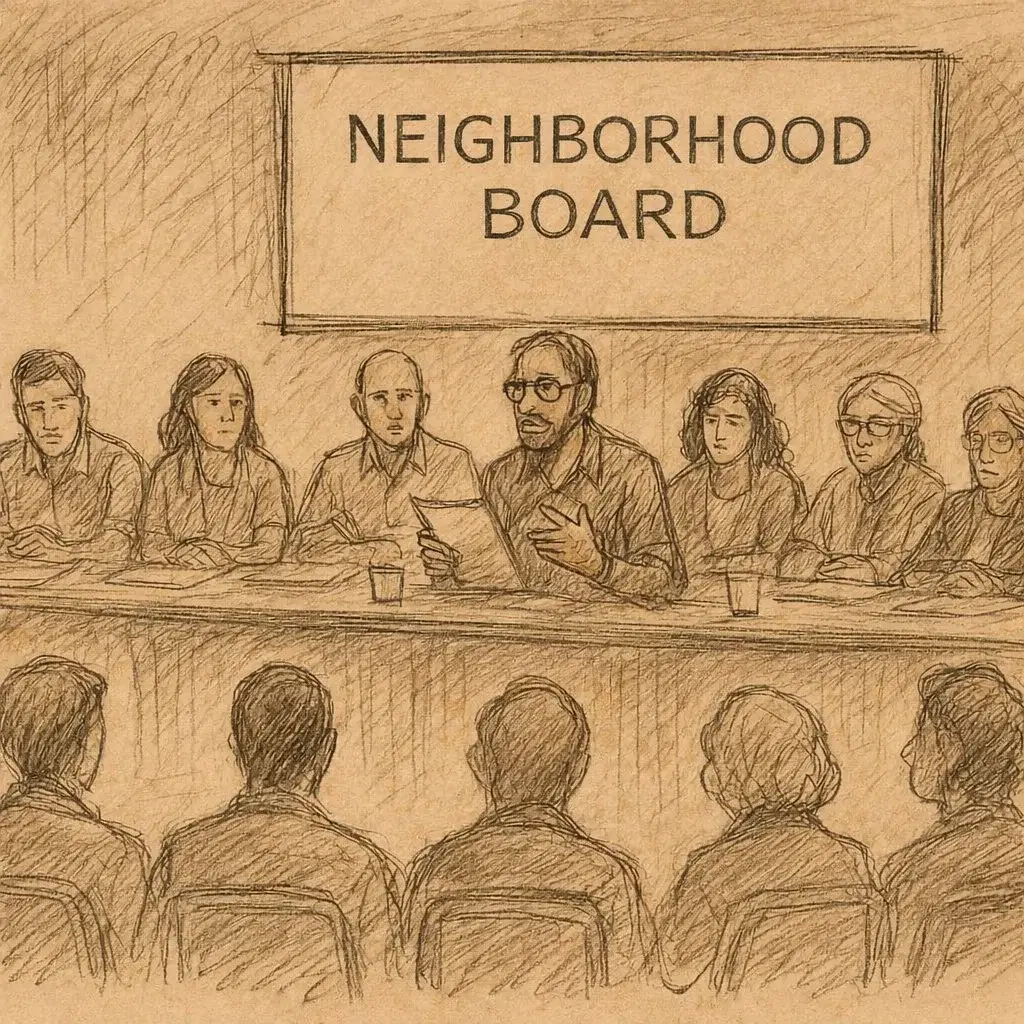
No 25 Mililani-Waipi'o Neighborhood Board Regular Meeting April 2026
Listen to this article:
25 Mililani-Waipio Neighborhood Board Meeting – April 24, 2026
Police Enforcement and Traffic Safety Concerns
The board continued its discussion with Honolulu Police Department representatives by revisiting a resident request from the prior month for stronger speeding enforcement on Mahinahou Street near the recreation center, neighborhood park, and preschool, particularly during school drop-off and pick-up periods. Board members said residents who work from home have observed frequent speeding in that corridor and had not seen as much enforcement presence as hoped after the original request, prompting a renewed appeal. HPD responded that the request had already been reflected in an after-action report and said enforcement would be emphasized again. The board also sought clarification on HPD’s reported traffic activity in Mililani, learning that beyond 764 traffic infractions, officers had issued 112 traffic crime citations specifically within beats 50, 52, 54, and 56, covering the Mililani area. Board members expressed surprise at the volume and thanked District 2 officers for maintaining enforcement in Mililani despite being stretched by North Shore emergency response, road closures in Waimea and Waialua, and reserve and special duty deployments linked to storm impacts.
HPD Citation Technology and Long-Running Digital Pilot Program
A board member pressed HPD about why traffic citation processing still appears heavily paper-based when many mainland agencies use mobile digital systems with printers or handheld devices. The member noted that residents can order services by smartphone while police officers still appear to write citations manually, creating extra work if forms then must be entered later at district offices. HPD said the department has had a consolidated citation form for some time, but acknowledged that broader digital citation expansion remains unresolved after years of pilot testing. The explanation given was largely logistical and financial: outfitting roughly 1,400 beat officers with printers, devices, and ongoing paper and equipment support is expensive, and the department is still trying to determine a workable combination of hardware and process. HPD agreed to provide a future update on the status of the digital traffic citation pilot program.
Army Job Fair, Training Activity, and Prescribed Burns
Representing the U.S. Army Combat Aviation Brigade and U.S. Army Garrison Hawaii, Captain Katie Kolb announced a public job fair scheduled for May 18 at the Helemano Military Reservation training room from 8:30 a.m. to 2:00 p.m. She said job offers and provisional hiring may occur on site, and applicants were advised to bring two references, proof of identification, a Social Security card, and a resume or application. Job opportunities include business operations, golf, bowling, food service, child and youth services, and other fields, with advance job listings available at www.himwr.com. She also reviewed remaining April training activity, including ranger and jungle tactics training with blank fire in East Range through April 24 and again April 27–30, aviation training on April 23 during daytime hours, and artillery, mortar, and demolitions training at Schofield Barracks from April 24–30, including day and night live fire, some in late evening and early morning hours. The Army also said previously planned prescribed burns had been postponed because of overly wet conditions and were rescheduled for May 11–15.
Military Security, Base Access, and Weapons Policy Questions
Board members asked the Army about increased visible security on and off Schofield Barracks after a recent base shutdown tied to a possible active shooter report that later turned out to involve an air rifle. A member asked whether heightened security was connected to Force Protection Condition Bravo levels and whether there had been any local implementation of a Department of Defense policy concerning concealed weapons on base. Captain Kolb said she could not speak to the specifics of how threat levels are determined, but clarified that no blanket authorization had been issued for service members to carry weapons on post. She explained that any such permission would depend on the garrison commander and would likely occur, if at all, through exceptions to policy for specific individuals, rather than a general rule applicable to all personnel.
Water Main Break and Continued Conservation Messaging
The Board of Water Supply reported one main break on March 23 involving an eight-inch main at 95-698 Keleiwaa Street in Mililani. Although recent rains have been heavy, the board was reminded that those storms do not eliminate the need for water conservation. The BWS representative noted that after an initial beneficial rainfall, much of the additional rain becomes runoff rather than groundwater recharge, as reflected in muddy streams and brown coastal waters. Residents were asked to remain mindful of water use despite the wet weather.
School Facilities Authority Environmental Review Update
The School Facilities Authority provided a brief update, stating that responses to the environmental assessment comments are currently being prepared. The representative specifically acknowledged that the neighborhood board had submitted substantial comments and said the agency appreciated that input. A posting of the response materials is expected soon. While little substantive new information was presented this month, the update signaled that the environmental review process is still active and nearing a public next step.
Central Oahu Regional Park Debris Storage Site Status
A major subject of interest was the temporary storm debris storage site at Central Oahu Regional Park, which had been used after severe flooding in Waialua and Haleiwa. Although Environmental Services Director Roger Babcock was unable to attend because he was simultaneously presenting at the Makakilo Neighborhood Board on a potential new landfill site, the chair read his written update into the record. According to that report, debris from Waialua and Haleiwa began arriving at the site on March 23. Baseline soil sampling was conducted March 25 by contractor EnviroServices, using 126 grid locations, and results received April 10 showed no contamination. That baseline report was posted on the Environmental Services website the day of the meeting. All debris had been removed about a week and a half earlier. The city planned to bulldoze the debris area to a depth of 6 to 12 inches during the week of the meeting and transport that soil to Waimanalo Gulch Landfill. The contractor would then return the following week to sample the exposed soil at roughly 60 grid locations, with results expected 16 days later. If no contamination is found, the city will place clean fill, restore the site to original grade, regrass it, maintain it for 30 days, and then return it to the Department of Parks and Recreation for public reopening. If any contamination is found, the city will excavate deeper in affected areas and repeat testing until the entire site is confirmed clean. The chair said Director Babcock is expected to return in May for a fuller update.
Red Hill Registry: Independent Health Monitoring After Fuel Contamination
The most detailed presentation of the evening came from Tara Sutton, Director of Community Engagement for the Red Hill Registry and a Mililani resident whose own family was affected by the Red Hill water crisis. She explained that the registry is an independent, community-engaged effort housed through the University of Hawaii and supported by a five-year cooperative agreement, currently funded through May 2029, to track and better understand long-term health outcomes tied to Red Hill fuel contamination. Sutton said the Navy estimates about 9,600 households and roughly 93,000 people were served by the affected Navy water system. She emphasized that the November 2021 exposure involved JP-5 jet fuel and that studies by the Agency for Toxic Substances and Disease Registry, the University of Hawaii, and the Defense Health Agency’s EpiData Center have documented complaints affecting nearly every organ system. Frequently reported symptoms included headaches, dry and itchy skin, and diarrhea, while mental health effects such as anxiety, depression, stress, PTSD, and sleep disruption were reported in large numbers. Similar symptoms were also reported in pets.
Red Hill Registry Structure, Enrollment Tiers, and Research Potential
Sutton said the registry grew out of calls from Hawaii’s congressional delegation, ATSDR, the Hawaii Department of Health, the Defense Health Agency, and community members for an independent system to monitor exposed individuals. One of the registry’s first assignments was a report to Congress on whether an epidemiological health outcomes study is feasible; the registry concluded that such study is both feasible and necessary, and Sutton said a recently published National Academies consensus report supports that conclusion. The registry now includes approximately 40 to 50 staff across multiple UH units and partner disciplines including public health, medicine, environmental science, and outreach. Community engagement has been central from the beginning through focus groups, surveys, and a volunteer community advisory work group. The registry officially launched with a community fair on August 2, 2025, and has since seen about 2,000 people begin enrollment. Its three main goals are to track health outcomes over time, connect people to resources and services, and provide education for both residents and healthcare providers. Enrollment uses a tiered model beginning with a five-minute pre-enrollment questionnaire that asks where, when, and how people used water. Those who lived, worked, visited, worshipped, or otherwise spent time in the designated affected areas during the defined exposure window are placed in baseline enrollment, while those in surrounding areas, in earlier or later periods, or in the same household as an exposed person may enter expanded enrollment. This design is intended to support future comparison studies by researchers.
Registry Limits, Data Collection, and Community Outreach
Board questions explored whether the registry will contribute to cancer research or collect biological samples. Sutton said the registry is not currently collecting blood, urine, or other biomonitoring samples because its existing funding does not support that work. She said chemicals involved in the Red Hill incident are believed to leave the body too quickly for blood and urine to be useful now, though other biological materials might prove informative in the future if funding and partnerships expand. At present, the registry is gathering comprehensive questionnaire-based information and is designed to serve as a repository from which researchers can later request data sets, including specific cohorts such as pregnant women exposed during the crisis or comparable groups before and after the incident. She stressed that people should enroll regardless of whether they believe they have symptoms, because research requires both those with no apparent health effects and those reporting severe impacts. Sutton also described the registry’s public resource directory, built through Unite Us, and its referral system for enrolled participants seeking assistance. Educational efforts already include fact sheets, continuing medical education through grand rounds, and future webinars and explanatory videos. A board member in the Air Force Reserves offered to help connect the registry to presentations on Joint Base Pearl Harbor-Hickam and potentially to National Guard audiences.
Board Attendance Rules and Retention of Dennis Kim
During board business, the chair reported that member Dennis Kim had missed three meetings, triggering a review under the neighborhood plan. Kim explained that his absences were caused by international travel to Peru and Taiwan, including lack of internet access and a flight delay caused by an airline cancellation while he was trying to return in time for a meeting. He asked to remain on the board. The chair noted that the written neighborhood plan language appears awkward because it contemplates a motion to vacate after the member requests retention, and said that past practice had instead been to vote directly on retention. The board agreed to proceed that way and voted by roll call to retain Kim. The motion passed unanimously, 17-0-0.
Chair’s Report and Large-Scale Donation Drive for Flood-Affected Communities
In one of the meeting’s most expansive local reports, the chair explained that several planned April agenda items had been postponed to May because of expected lengthy discussion on Red Hill and the Central Oahu Regional Park debris issue. Those delayed items include a community awards presentation, a report on the Mililani Town dog-friendly park survey, and a board resolution from member Marilyn Lee. The chair then gave a detailed accounting of a Good Friday donation drive organized by the Mililani-Waipio Neighborhood Board in partnership with the Mililani Mauka Neighborhood Board, the Mililani Lions, and Mililani High School to aid communities affected by severe flooding. She said questions had been raised about why a neighborhood board would organize such an effort, and she defended it by describing the longstanding ties among Mililani, Wahiawa, Waipio, Waikele, and North Shore communities, including family, school, and economic connections. The drive drew more than 100 cars, including support from outside Central Oahu such as the Embassy Suites in Kapolei, and collected 1,476 cubic feet of donations. Of that, 800 cubic feet went the same day to the Waialua Resilience Hub using a rented 20-foot box truck. The Mililani YMCA provided not one but two buses after donations exceeded expectations, carrying another 600 cubic feet to the Waianae Community Resilience Hub at Waianae Intermediate School. An additional 76 cubic feet was loaded into a resident’s Chevrolet Silverado and personally delivered by the chair to Waimanalo, where it was sent via Matson container ship to Molokai, which had also experienced severe flooding and evacuations. The chair said more than 50 volunteers participated, including neighborhood board members, Lions members, Mililani High School staff, teachers, and students from at least 15 school clubs.
Parks Survey and Dog-Friendly Park Feedback Deadline
In the Parks and Recreation committee report, the board secretary said the response to the Mililani Town dog-friendly park survey would be pushed to the May meeting. The public was reminded that the survey deadline is now May 26 and that the link is included in the agenda and minutes. Board members were encouraged to share it widely to maximize participation, signaling that the board intends to base future recommendations on broader resident input.
Education Updates: Awards Season and Library Programming
The Education committee reported that local schools are entering the final stretch of the academic year. Mililani Middle School’s awards assembly is set for April 29 in the cafeteria, where outstanding eighth-grade students will be recognized. At Mililani High School, the Golden Scholars Award night is planned for May, though the date had shifted from May 13. The report also highlighted student scholarships and college plans, emphasizing the achievements of graduating seniors. For elementary schools, the focus is on examinations and year-end activity. Beyond schools, the Mililani library is sponsoring a cultural program on Hanafuda, the plantation-era card game revived through community teaching, with a session titled “Hanafuda Hawaii on Understanding Hawaiian Culture Through Hanafuda,” followed by instruction and play on Saturday, April 25, from 10:00 a.m. to 12:00 p.m.
Congressman Ed Case: Art Competition, Service Academy Nominations, Veterans, and Jones Act Waiver
Congressman Ed Case’s office highlighted several federal matters. The annual congressional art competition is open, with submissions due within days of the meeting, and students were directed to the congressman’s website for eligibility and instructions. The office also reminded interested applicants about congressional nominations to the U.S. service academies, with a deadline of October 9 for mailed submissions. The representative noted that each of the congressman’s district offices has staff assigned to help constituents with Veterans Affairs issues, including medical care and benefits. A board member raised the Jones Act and a legal challenge reportedly involving Koloa Rum Company, asking whether the congressman was aware and whether he might support action beyond current exemptions. The office said it would check. It also described a fresh press release issued that day: because of the war involving Iran, the president had granted a 60-day Jones Act waiver for non-contiguous states and territories, including Hawaii, allowing international ships to carry oil and energy-related products between U.S. ports. That waiver began March 18 and expires May 17. Congressman Case has already asked the president, the Secretary of War, and the Secretary of Homeland Security for an extension because the petroleum industry requires long lead times and contracts to move fuel. Another board member asked about Congressman Case’s likely position on the federal farm bill, especially possible SNAP cuts; the office said it had not yet received a formal position and would follow up.
Governor’s Office: Storm Housing, National Guard Response, and Hawaiian Diacritical Marks on Signage
The governor’s office focused primarily on recovery from the Konalo storm and subsequent weather events. The state has been working with the City and County of Honolulu and North Shore lawmakers to help heavily impacted communities. It secured 80 hotel rooms at the Inn at Schofield in Wahiawa through April 30, while the city made more than 50 additional housing units available. On the neighbor islands, the state is using Hale o Laie and short-term rentals for displaced households whose homes became uninhabitable. Costs for hotel stays are being covered through the major disaster fund, and affected residents were directed to call 211 or register at ready.hawaii.gov. The Hawaii National Guard conducted evacuations at Otake Camp during severe flooding and continues to support debris removal and emergency logistics. Residents looking to help were encouraged to volunteer through trusted nonprofits and resilience hubs. The office also announced an ongoing Hawaii Department of Transportation effort to add proper Hawaiian diacritical markings to street names and destination signs on the state highway system. The public can review the master list of roughly 2,000 state highways and connecting street names, provide comments year-round, and report misspellings, including on county streets, which HDOT will relay to local agencies.
Resident Safety Concern: Suspected Night Hunting Near Mililani Cemetery Road
During the governor’s office report, a board member raised a serious public safety concern involving repeated nighttime gunfire in the forested area along Mililani Cemetery Road extending toward the cemetery. She said she has found spent casings and believes shots are being fired in the direction of the H-2 Freeway, where traffic is active. She stressed that night hunting is illegal without a permit and said such permits would not be appropriate in that area. The member expressed alarm that with nearby development, including the Ho‘opili/Corvidge? area referenced near the route, someone could be struck if the activity continues. She said she had already contacted HPD and the Department of Land and Natural Resources and recalled a prior time when Kamehameha Schools had hired law enforcement to clear hunters from adjoining land, but stated the activity now appears to be increasing. The governor’s office agreed to take the concern back.
Mayor’s Office: Storm Recovery, Police Chief Selection, Food Waste Pilot, and Traffic Signal Fixes
The mayor’s office also centered its report on post-storm recovery. It said the city continues cleanup and coordination with state and federal partners following three major storms and hopes the presidential disaster declaration will unlock federal assistance both for government costs and for residents’ individual needs. The city’s recovery portal, oneoahu.org, includes information on reporting damage, health and safety guidance, assistance, and opportunities to support recovery. Storm debris can still be taken to city transfer stations and convenience centers daily from 7:00 a.m. to 6:00 p.m. The mayor’s planned town hall meetings have been indefinitely postponed because departments remain busy with storm response. The office also outlined the public process for selecting Honolulu’s next police chief. The Police Commission has narrowed applicants to six finalists. Community stakeholder interviews are scheduled for May 5, the commission will meet May 6, PBS will host a public insights panel on May 14, and the commission plans to vote May 20. The office also promoted the new “GRO” recycling pilot launched April 1, which allows Mililani residents in participating areas to place food scraps and wasted food into green compost carts.
Follow-Up on Prior Requests: School Safety, Graffiti, and Traffic Signal Repairs
The mayor’s office returned with responses to issues raised at previous meetings. Regarding a malfunctioning traffic signal at Kamehameha Highway and Kuahelani/Cocoa? Boulevard where a resident had reportedly waited 15 minutes for assistance, the Department of Transportation Services found an intermittently failing component and replaced it. The city said 911 is the correct number to call for immediate help when a signal malfunctions. On a request for speed bumps and school zone improvements near Kipapa Elementary School along Kuahelani Avenue and Kipapa Drive, DTS reviewed crash history, conducted a speed survey, and performed a field inspection. While no collision trend emerged over the past three years, the survey confirmed speeding in the easterly direction near Kipapa Neighborhood Park. The city now plans to coordinate with the state DOT to convert the existing crosswalk fronting the park into a raised crosswalk. In the meantime, HPD has been notified to monitor the area, and a speed feedback trailer may be considered. A work order has also been submitted for missing or inadequate school zone signage. Another request concerning graffiti on the side of the Meheula drainage ditch near the golf course has been assigned to the Facility Maintenance Division. A separate request regarding trees remains pending with the Department of Parks and Recreation.
City Council: Floodplain Rules, Hazard Pay, Soil Testing Resolution, and Local Capital Projects
Councilmember Val Okimoto’s office reported on several council matters. Bill 34 would amend the city’s flood hazard area ordinance to align Honolulu rules with updated FEMA requirements so the city can remain in the National Flood Insurance Program. Resolution 26-074 concerns approximately $17 million in hazard pay for members of the Teamsters and Allied Workers Union in recognition of essential service during the pandemic. Resolution 26-075, introduced by the councilmember if needed, would strongly urge the city administration to implement weekly soil testing at Patsy T. Mink Central Oahu Regional Park and make results public within 24 hours. The office also described district-level project follow-up, including work with parks staff to replace broken basketball rims at Mililani Mauka District Park and a repair request to fix sidewalk damage near the driveway entry to the Mililani High School stadium. It added that capital improvement requests have been submitted for roadway repaving and park upgrades including lighting, seating, and shade structures.
Councilmember Matt Weyer: Disaster Preparedness, OER Staffing, Wahiawa Convenience Center, and Aquatic Center Funding
Councilmember Matt Weyer thanked the board and its partners for the donation drive and used his report to connect immediate flood relief with broader questions of preparedness. He said future budget discussions should include how the city can better prepare for disasters, especially as hurricane season approaches. On local service issues, he said his office is still awaiting an update from Environmental Services about concerns raised over the Wahiawa convenience center, including requests for additional bins that might reduce early closures when containers fill. His office has also distributed a newsletter summarizing district budget amendments, including support for improvements at the Daniel K. Akaka Veterans Memorial Aquatic Center, driven in part by advocacy from youth swimmers and their families. Weyer drew particular attention to cuts proposed for the Office of Economic Revitalization. He said 20 of the office’s 27 positions were slated for elimination, leaving only seven positions total, including three film office jobs, three community equity liaisons, and the director. He contrasted that with county economic development staffing levels elsewhere in the state, noting Hawaii County has 26 such staff, Maui 23, and Kauai eight despite much smaller populations. He argued that OER staff have been heavily deployed during storm recovery across District 2 and elsewhere, including Waialua, Koʻolauloa, Kahuku, Laie, and Koʻolaupoko, and are crucial in helping small businesses, ranchers, and farmers access support. He also described ongoing work through oneoahu.org, tax remission options, Board of Water Supply payment reductions, and a Department of Planning and Permitting donation-matching website that links residents needing construction help or materials with donors and volunteers.
CORP Debris Site as a Disaster Response Case Study
Weyer also reflected on the temporary use of Central Oahu Regional Park for disaster debris storage, saying that while the community’s questions were valid, the situation underscored how quickly city action can depend on pre-identified spaces and standing contracts. He noted that in a major disaster, especially one with debris scattered islandwide, parks and other open public lands may be necessary staging areas after roads are first cleared for life-safety access. He emphasized that rural communities in District 2 can be cut off for days from road access, power, and water, and said the recent storms showed the need for broader public understanding of debris management and emergency logistics.
State Senator Michelle Kidani: Budget Priorities, Education Bills, and A+ Registration
Reporting on behalf of Senator Michelle Kidani, staff said the Legislature is in conference committee, where House and Senate members are negotiating final versions of bills before the end of session. The senator is working on the Senate version of the budget and advancing education-related appropriations listed in her newsletter. As vice chair of the Senate Education Committee, she also announced that Department of Education A+ after-school program registration for the upcoming school year opened that day at 3:00 p.m. for students in grades K through 6, through the Hawaii Community Engagement website. Three of the senator’s bills remain alive in conference: SB 2613, SB 2614, and SB 2615.
State Senator Donovan Dela Cruz: Central Oahu Ag Hub, DLNR Training Substation, Wahiawa Dam, and School Agriculture
Senator Donovan Dela Cruz’s office answered a prior question about whether the Central Oahu Agriculture and Food Hub is replacing the planned law enforcement training facility at Mililani Tech Park. Staff said the ag hub does include a Department of Law Enforcement substation, but that this does not replace Mililani Tech Park. Rather, the ag hub facility is intended to support broader Central Oahu law enforcement presence and includes cold storage and warehouse space linked to the Food and Product Innovation Network and a regional kitchen expected to open in 2029. Funding for planning and design of the Mililani Tech Park law enforcement training center is reportedly in the Senate draft of the state budget, and state law requires a statewide law enforcement training facility. The office also said the Board of Land and Natural Resources and the Agribusiness Development Corporation have approved acquisition of Wahiawa Dam under Act 218, and that this year’s Senate budget draft includes appropriations for dam testing and repairs. Separately, staff noted that Senator Dela Cruz had recently appeared with Mililani High School Principal Fred Murphy on a Hawaii News Now segment highlighting the school’s agricultural career and technical education program and McKinley Community School for Adults’ career foundations work.
Representative Trish La Chica: AI Protections, District Budget Items, Red Light Camera Expansion, and Kipapa Crosswalk
Representative Trish La Chica reported that conference committee work is consuming long days and evening floor sessions as lawmakers finalize bill language and budget items. Her newsletter lists bills still moving and resolutions introduced. She highlighted her priority legislation to regulate AI chatbots for minors, describing it as one of the strongest state-level protections in the country and saying it is being developed in partnership with the Office of Consumer Protection and the Attorney General. On transportation issues raised by the board, she explained that the state’s red-light camera program began as a two-year pilot at 10 sites mainly in downtown Honolulu and Kakaako, expiring in fall 2025, and is now being expanded. She said the intersection at Meheula and Lanikuhana near the old Ruby Tuesday’s site is on the list at number 92, while Lanikuhana and Kamehameha Highway is listed at number 89. Prioritization is based on crash history, traffic patterns, and pedestrian use. The program is expected to expand over eight years, about 20 cameras annually, and is funded through collected fines rather than new appropriations. The discussion also drew public skepticism from a resident who questioned whether camera enforcement is being used for safety or revenue generation and asked how precisely a violation is defined when a driver enters on yellow but the signal turns red. The representative said the camera is triggered when a vehicle crosses into the intersection after the light turns red, and the footage is reviewed by actual personnel, though she said she would need to confirm the exact timing details. She also confirmed that state DOT intends to use Safe Routes to School funding this year for the raised crosswalk project at Kipapa Elementary.
Representative Lauren Matsumoto: Constituent Survey and School Highlights
Representative Lauren Matsumoto’s report focused on a new district survey asking constituents to weigh in on bills still moving through the Legislature. She emphasized that this differs from her earlier pre-session survey because it asks about specific legislation before final votes are cast. Residents were encouraged to complete it via the mailed paper copy or QR code, even if they do not live in District 38, by identifying that fact in the online form. She also praised Mililani High School’s culinary program and Kipapa Elementary School’s production of “Finding Nemo Jr.,” describing both as especially impressive examples of student work.
Representative Amy Perruso: Budget Conference and Judicial Leadership
Representative Amy Perruso thanked the board for the flood donation drive, saying it helped not only with material needs but also with morale and with reinforcing the connection among communities. She said the House had opened conference on HB 1800, the state budget bill, that day and that she expects the budget negotiations to be consequential and closely watched. She also urged the public to pay attention to the Senate Judiciary Committee’s vetting of the next Chief Justice of the Hawaii Supreme Court, describing that process as important to the future of the judicial system. She noted that hundreds of bills remain in conference, with 420 overall still in play and conferees assigned on many but not all of them, and said she would wait until next month to discuss final outcomes.
Meeting Timing, Next Agenda, and Upcoming Priorities
The chair closed by reminding attendees that the next meeting will be held Wednesday, May 27, 2026, at 7:00 p.m. at Mililani High School and warned that it will likely be lengthy. In addition to routine reports, the May agenda is expected to include Director Babcock’s return for a fuller update on the Central Oahu Regional Park debris site, the delayed dog-friendly park survey report, community recognition awards, and a board resolution from member Marilyn Lee. The meeting also ended with a reminder from the Neighborhood Commission Office about a Hawaii Foodbank canned food drive conducted in partnership with the City and County of Honolulu.