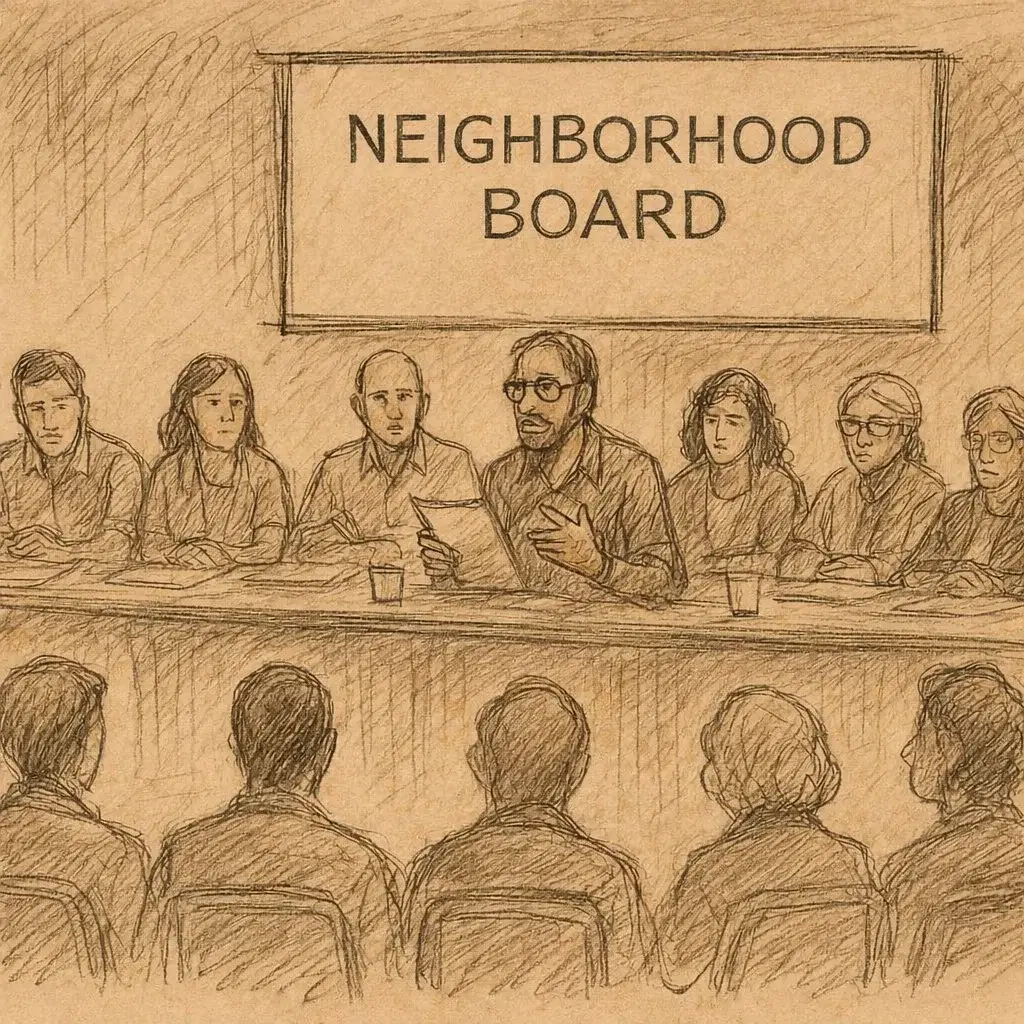
No 34 Makakilo Kapolei Honokai Hale Neighborhood Board Regular Meeting April 2026
Listen to this article:
34 Makakilo-Kapolei-Honokai Hale Neighborhood Board Meeting – April 23, 2026
Fire Department Report, Emergency Response Activity, and Evacuation Planning
The meeting opened with an explanation that Honolulu Fire Department personnel had been delayed by an emergency call, but East Kapolei Fire Station Captain Brandon Stevens later arrived and delivered the fire department’s March activity report for the board area. He reported three structure fires, one wildland fire, nine rubbish fires, and 43 activated alarms where no fire was present. Emergency responses included 176 medical emergencies, one motor vehicle collision involving a pedestrian, one other motor vehicle crash, two ocean rescues, and three hazardous materials incidents. He also shared a monthly safety message focused on evacuation planning, urging residents to prepare for fires, environmental emergencies, and natural disasters by identifying at least two escape routes from home, deciding on a meeting place, signing up for alerts through hnlalert.gov, and keeping a go-bag ready as part of a 14-day disaster supply kit. HFD directed residents to fire.honolulu.gov and honolulu.gov/dem/build-a-kit for additional guidance.
Makakilo’s One-Road Access Problem and Emergency Evacuation Concerns
Residents immediately tied the fire department’s evacuation advice to a longstanding Makakilo problem: the area’s limited access and the danger of relying on a single road in and out. Wendy Nelson asked what residents at the top of Makakilo are supposed to do if a fire blocks the roadway somewhere along the hill. Captain Stevens acknowledged that some neighborhoods face exactly that type of constrained access and said the best available advice is to leave early when danger is visible, before congestion builds, with possible police traffic control assistance. The chair then linked the concern to a broader unresolved infrastructure issue, noting that the board has been asking for the completion of Makakilo Drive for more than 20 years and that the emergency access road involving Grace Pacific remains stalled. Several residents reinforced that this is not theoretical: they described being trapped in traffic during emergencies and unable to return home to care for family and pets. The discussion made clear that wildfire, disaster response, and transportation planning are tightly connected in the area.
Landfill Fire Risks, Hazardous Materials, and Fire Department Preparedness
Public testimony quickly broadened from household evacuation to landfill fires and hazardous materials. Residents referenced the long-burning fires at Waimanalo Gulch and questioned whether HFD has the equipment, training, and information needed to fight a major landfill fire involving unknown waste, hazardous materials, or possible explosions. Captain Stevens said HFD does have a hazardous materials company that can assess conditions, but emphasized that landfill environments are unpredictable because they may contain propane tanks or other dangerous goods. He explained that firefighters would attack basic rubbish fires, but if hazards were discovered, they would create distance and potentially allow the fire to burn rather than expose firefighters or the public to unacceptable risks. That answer prompted strong reaction from residents, who linked landfill fire risk to the region’s already-limited evacuation options and argued that a major incident near a future landfill could leave Makakilo families with no safe escape route.
Brush Clearance, Perimeter Homes, and Enforcement Challenges in Fire-Prone Areas
Residents with decades of experience in Makakilo and nearby communities stressed that preparedness cannot rely only on household self-help because enforcement around easements, large lots, renters, ranch land, and overlapping jurisdictions is inconsistent. Jackie Zahn, who said she has been involved in Makakilo for over 50 years, described earlier periods when the fire department pushed homeowners harder to maintain defensible space and argued that perimeter areas still need stronger, more consistent accountability. Captain Stevens advised residents—especially those along the edges of brush-heavy areas—to clear vegetation behind homes, keep flammable materials away from structures, and maintain trees and grass. Another resident highlighted the complexity of the Polyhuia community, noting it includes 3,682 members as well as renters, ranch land, inherited easements, and multiple layers of ownership and authority, making enforcement difficult. The board said it would note these jurisdictional issues and look for ways to help.
Asbestos and Hazard Response Questions Related to Waimanalo Gulch
Patti Kahanamoku-Tiruiya asked whether HFD is trained and equipped to handle a disaster involving asbestos at Waimanalo Gulch, noting that asbestos had been moved through the landfill in 2021 and questioning what would happen if it were released through fire or another emergency. Captain Stevens replied that the hazardous materials unit would be the proper source for a detailed answer and said HFD would check on its capabilities related to asbestos fires. He acknowledged that asbestos presents a hazardous situation that responders would not want to expose personnel to, but did not provide a definitive operational answer at the meeting. The board accepted that a follow-up would be needed.
Police Department Crime and Traffic Statistics for March
Honolulu Police Department then presented its monthly numbers. District 8 Community Policing Team Corporal Corey Makino, with Sergeant Fumi Moroka online, reported 26 motor vehicle thefts in the district, including nine in Kapolei; 15 burglaries districtwide, including four in Kapolei; 112 thefts districtwide, with 57 in Kapolei; and 28 unauthorized entries into motor vehicles, with 20 in Kapolei. Traffic enforcement included 47 speeding citations, 734 moving violations, and 66 parking violations, for a total of 1,037 citations. HPD also reported 8,473 total calls for service districtwide and 2,834 in the Kapolei area. These figures gave the board a baseline picture of local property crime, traffic enforcement, and police workload.
Homeless Encampments, Dumping, and Jurisdiction Issues Near Barbers Point and Nimitz Beach
Board member Mick Ferrara raised concerns about a growing homeless population and illegal dumping near the campground at Barbers Point and along the corridor near where the race track is expected. He said residents have reported that parts of the campground are effectively being taken over, discouraging lawful camping and adding safety concerns. Sergeant Moroka responded that HPD is aware of the growing encampments in the Nimitz Beach area and has a cleanup scheduled in cooperation with Facility Maintenance, city parks, and outreach teams to help move people toward shelter and housing. HPD explained that the broader area is split among multiple landowners and agencies, including DHHL, HCDA, the federal government, and others, and said police use a jurisdiction map and coordinate with whichever agency controls each parcel before conducting cleanups. Ferrara also asked where HPD jurisdiction ends and Navy control begins, underscoring how fragmented land ownership complicates enforcement.
Campaign Sign Dispute, Property Damage Allegation, and Questions About Sign Rules
A community member, Barbie Hatcher, speaking on behalf of her aunt Kathleen Suopil, raised an issue first brought up in January involving campaign signage allegedly installed by Representative Kanani Souza on her aunt’s wooden fence with screws and without permission, causing damage. She said the signs had been there since December 2025 and that after more than 90 days there had been no meaningful response or accountability. She asked HPD what happens after a police report is filed. HPD said it would review the report and follow up, then later clarified that the original report merely documented that a banner had been placed there without permission and that the complainant did not want to pursue the matter, so it was not currently a criminal case unless she changed her mind and made another report. Representative Souza then addressed the board in her official capacity, stating that she had permission for her banners, that she had also filed a police report over damaged banners, and that the issue was part of a smear campaign by an opponent’s campaign team. Another speaker asked more generally what the legal time window is for campaign signs to remain posted. HPD answered that on private property the owner may generally remove or keep signs as they choose, while Auntie Johnny Mae Perry added that state law provides a 45-day period before an election, though she said it is not enforced. The chair used the exchange to emphasize that neighborhood boards may air concerns and discuss what is appropriate in the community, even when they do not have authority to determine legal fault.
Agenda Reordered to Prioritize Landfill Presentation and Public Testimony
Because of the high turnout and intensity of community concern, board member Dr. Keoni Dudley asked that the board move directly to the landfill-related presentation and testimony. The chair agreed in principle but noted that city ordinance requires HFD and HPD to report first. Once those reports concluded, the board moved by unanimous consent to bring forward the Department of Environmental Services presentation on the Public Infrastructure Map revision for the proposed Makaʻīwa Hills landfill and the related board resolution opposing a new landfill in West Oʻahu. This procedural step reflected the meeting’s central focus and the unusually large public audience gathered for the issue.
Department of Environmental Services Overview of Oʻahu Waste System
ENV Director Roger Babcock and Refuse Division Chief Josh Nagashima gave a detailed presentation on waste management and the landfill siting process. Nagashima said Oʻahu generates about 1.2 million tons of municipal solid waste each year and another 500,000 tons of construction and demolition waste. The city itself handles about half of that total, mainly through residential cart collection, some manual collection, front-loader service for multi-family properties and businesses, and limited business cart service. He said about 700,000 tons per year normally go to H-Power, though recent mechanical issues there have forced more waste to Waimanalo Gulch. About 250,000 tons per year must still go to landfill, including ash from H-Power, bypass waste, and recycling residue not suitable for combustion. One example he highlighted was residue from shredded vehicles, including foam and wires, which currently cannot be burned at H-Power. He noted that PVT, Oʻahu’s only construction and demolition landfill, may close within five years and cannot expand, meaning some of that waste could eventually have to go to the city’s municipal solid waste landfill as well.
Waimanalo Gulch Status and Remaining Capacity
The presentation showed visual comparisons of Waimanalo Gulch from November 2024 and just days before the meeting, illustrating how close the facility is to its final configuration. Nagashima said the landfill is now at its last bench and that the liner is being laid for the final cell within the existing footprint. He stated that Waimanalo Gulch has capacity to about 2031, though recent flooding and disaster debris from Wailua may affect that estimate. He also reviewed the legal timeline established under the current special use permit extension granted in November 2019, which required the city to identify the next landfill by December 31, 2022 and to stop accepting waste at Waimanalo Gulch no later than March 2, 2028. That deadline framework shaped the city’s current siting effort.
Act 73, Landfill Advisory Committee, and Why Earlier Candidate Sites Fell Away
ENV explained that Act 73, passed in 2020, significantly narrowed possible sites by requiring a half-mile buffer between a landfill and residences, schools, and hospitals. After that law passed, the city created a Landfill Advisory Committee, which evaluated candidate sites. According to the city, all of the committee’s sites were located in the Board of Water Supply’s no-pass zone above drinking water, and the committee ultimately did not endorse any site, concluding that it did not want a landfill over drinking water. The city then undertook a supplemental evaluation, including federal lands and hypothetical changes to Act 73, to see what could become available if the law were modified. The mayor then announced a Wahiawā site on Dole land in December 2024 as the preferred landfill location, based on prior evaluations, while also describing a three-path strategy: safely operating a heavily protected landfill over the aquifer, amending Act 73 to reduce the buffer, and extending Waimanalo Gulch.
Act 255 and the Elimination of the Wahiawā Option
ENV said the Wahiawā site was removed from consideration after the state legislature passed Act 255 on July 1, 2025. That law prohibited new landfills on Class A agricultural land and inland of the Underground Injection Control line, which identifies underground drinking water sources. Because the Wahiawā parcel was within the UIC line, the city said the first path identified by the mayor was blocked. It also said negotiations with the military over possible federal lands failed, and that modifying Act 73 did not prove possible, eliminating the second path. ENV therefore argued that only the third path remained: a new landfill adjacent to Waimanalo Gulch on the Makaʻīwa Hills property.
Makaʻīwa Hills as the Remaining Site and the Public Infrastructure Map Request
Using updated maps, ENV said that once all restrictions under Act 73, Act 255, federal airport rules, and other constraints are layered together, the only remaining feasible site is Makaʻīwa Hills, with only a tiny and inadequate remnant in Kailua also appearing on the map. The city described the PIM request as applying two designations to the Makaʻīwa parcels. One is “SW” for solid waste, covering the landfill itself for municipal waste, ash, residue, and possibly construction and demolition material. The other is “CY,” a corporation yard designation, intended for supporting infrastructure such as vehicle yards, waste pre-processing, additional recycling, material separation, and possibly a sustainability or education complex. The city said the PIM amendment is necessary before public money can be spent on these properties. It said the public comment period had opened, with review expected by the City Council’s Planning and Zoning Committee on May 21 and then the full council on June 5.
Timeline, Land Acquisition, Environmental Review, and a Likely Waste Disposal Gap
ENV outlined a multi-year path if the PIM amendment is approved. Beginning in the next fiscal year, which starts July 1, the city hopes to pursue acquisition of the land from Campbell, though it acknowledged Campbell does not want to sell and that condemnation may be required. The city said land acquisition or condemnation could take roughly two years. It then expects to prepare an environmental impact statement, seek a solid waste permit and air permit from the Department of Health, possibly seek a special use permit, and proceed through design and construction. Based on that sequence, ENV said the earliest the new landfill could open is 2033. Because Waimanalo Gulch is expected to be full by 2031 and its current permit expires in 2028, the city said it will likely need to extend Waimanalo Gulch from March 2, 2028 until it is filled, then address a 2031–2033 gap through either off-island shipping or a temporary lined site where waste would be held and later moved into the new landfill.
Host Community Benefits Proposal
The presentation also introduced the concept of host community benefits for the neighborhood that would receive the next landfill. ENV said a benefits fund could be created through an increase in landfill tipping fees, either as a flat amount or a percentage, and that a host community benefits committee could then decide how the money should be spent. Director Babcock gave rough scale examples, noting that with about 250,000 tons going to landfill, a $1-per-ton increase would generate about $250,000 a year while a $10-per-ton increase would yield about $2.5 million annually. The city said the committee could potentially be formed during the EIS process, perhaps within one to two years, but it did not present a specific benefit package or guaranteed funding amount.
Board Questions About Zero Waste, International Examples, and Why a Landfill Is Still Being Pursued
Board members challenged the city’s premise that a landfill remains necessary. Dr. Dudley argued that some countries effectively have no trash and asked why Honolulu cannot emulate them. Babcock responded that the city is unaware of any country with truly zero waste, though many are moving toward major reduction. He said Oʻahu currently diverts more than 80 percent of its waste stream away from landfill, leaving about 17 percent still requiring disposal, and explained that reaching 100 percent diversion would require, among other things, a viable way to reuse all H-Power ash. He said the city has spent nearly 30 years trying to recycle ash but has not yet been able to secure Department of Health approval. He also stressed that landfill space is needed for contingencies such as storms and disasters, saying a Category 4 hurricane could generate about 20 years’ worth of landfill demand in a single event. He added that H-Power’s permit currently requires an on-island ash disposal site, so a landfill remains tied to the operation of the waste-to-energy plant.
Board Questions on Act 73, Kapaa Quarry, Condemnation, and Why Alternatives Were Not Pursued More Aggressively
Board member Sheila Medeiros focused on Act 73, arguing that the half-mile buffer appears to be what forces the city back to West Oʻahu. She asked how much effort the city made with legislators to amend the law and whether reducing the buffer to a quarter mile would make Kapaa Quarry viable. ENV said a quarter-mile buffer would make that quarry possible, but Director Babcock said he did not know what conversations had taken place with lawmakers because that was not part of his task list. Medeiros then questioned why condemnation powers could not be used to acquire properties around the quarry instead of condemning Makaʻīwa Hills. Babcock said the south quarry would require condemnation of more than 250 homes as well as a school, a health facility, and a large residential tower, costing hundreds of millions of dollars, while the north quarry is too small, too steep, and too expensive to excavate for limited lifespan gains of only eight to nine years. Later, Senator Samantha DeCorte asked similar technical questions, and ENV said the full quarry could provide about a 20-year lifespan if the buffer and conservation-district constraints were removed.
Questions About Quarrys, Dust, and Existing Community Burdens
Mick Ferrara objected that the area already lives with dust and fallout from the nearby quarry and existing landfill and does not want additional industrial impacts. He described daily dust coating vehicles in Upper Makakilo and said family members already suffer respiratory effects. He asked why the Grace Pacific quarry, which he described as being near the freeway and away from homes, could not be used instead, but ENV replied that the half-mile buffer and surrounding residentially zoned properties rule it out. Ferrara also pointed out that a new landfill at Makaʻīwa would still remain close to communities in Seascape, along ʻAlele Street, and in Honokai Hale, meaning the burden would not disappear for those already affected.
Future Housing at Makaʻīwa Hills and Visibility from Makakilo and Ko Olina
Dr. Dudley asked whether Makaʻīwa Hills had already been planned for housing and whether Makakilo residents would end up looking directly down on a dump. Babcock said the property had been approved in principle in the early 2000s for about 4,200 residential units, both single-family and multi-family, but the zoning change process was never completed and the land remains agricultural. He said Campbell still describes it as a planned development and does not want to sell. On visual impacts, ENV said it conducted view-plane analyses from Ko Olina, Honokai Hale, and Makakilo. It showed a rendering from a Ko Olina hotel comparing the current Waimanalo Gulch view and a possible Makaʻīwa landfill view, then said a ridge blocks direct views from Makakilo.
Campbell Industrial Park, Federal Airport Restrictions, and Federal Lands
Board member Moon Kauhale asked whether the landfill could simply be moved to Campbell Industrial Park, near existing recycling vendors and industrial uses, and also questioned why Wahiawā could not be revived given the contamination issues already seen elsewhere, such as Red Hill. ENV replied that Campbell Industrial Park is excluded by federal aviation rules because landfills must remain at least 10,000 feet away from airports and flight paths, which removes all of Campbell Industrial from consideration. Senator Mike Gabbard later asked whether the city had thoroughly explored military lands, noting the military controls roughly 80,000 to 85,000 acres on Oʻahu. ENV responded that most military lands are over drinking water and therefore prohibited under Act 255, and said only three federal parcels were legally plausible: the Waipiʻo Peninsula Soccer Complex area, Iroquois Point, and part of the Lualualei reservation. It said the Navy rejected the first two and that the mayor had agreed not to pursue the third.
Public Questions About Decision-Making, Missing Technical Studies, and Cultural Review
Councilmember Andria Tupola questioned who actually decided on Makaʻīwa if the Landfill Advisory Committee never recommended a site and the city had no new technical study naming it. She also asked whether cultural impacts documented in earlier environmental work had been considered, and challenged the inclusion of $30 million in the city budget for land acquisition when the land is not for sale and condemnation could take longer than a year. ENV answered that the administration selected Makaʻīwa after the three-path approach narrowed down to a single option, that cultural review would occur during the future EIS once the city had access to the land, and that the budget item was needed because public money cannot be spent on the project unless the PIM designates the intended use. The chair separately pressed ENV about the absence of a technical memorandum showing how all sites were eliminated, and Babcock responded that the city instead relies on the Landfill Advisory Committee report, the supplemental technical evaluation, and the updated interactive restrictions map.
Public Criticism of Legislative Strategy and City Communication
Several legislators sharply criticized the city for not seeking amendments to Act 73 sooner. One speaker stated that no one in the legislature representing the area had been approached by the city to amend the act in order to preserve the promise that no new landfill would be placed in West Oʻahu. Another speaker said Honolulu had never made such a request in four years and instead had focused on protecting revenue streams by quietly opposing other waste-related proposals. The discussion exposed a major political conflict over whether the current situation was unavoidable or the product of missed opportunities and poor strategy.
Environmental Justice, Health Impacts, and Community Distrust
A large portion of the hearing centered not on engineering but on trust, fairness, and health. Legislators and residents repeatedly argued that West Oʻahu and the Waianae Coast already carry a disproportionate burden of industrial uses, including the landfill, H-Power, power plants, oil refineries, quarries, and other heavy facilities. One speaker asked how the city can justify adding another environmental burden to a community already known to have elevated risks of cancer, respiratory illness, and birth defects. ENV answered that its responsibility is to comply with federal and state environmental regulations under the Resource Conservation and Recovery Act and Department of Health permits, and that it must assume those standards are designed to protect public health. It also pointed to Act 73’s half-mile buffer as a health-related safeguard. Those answers did not satisfy many in the room, who cited past leaks, odors, dust, leachate problems, and long-standing distrust of city promises and enforcement.
Debate Over Waste-to-Energy, New Technologies, and Whether H-Power Is Enough
State Senator Maile Shimabukuro criticized the city for not pursuing newer waste technologies more aggressively and argued that countries such as Japan, China, Indonesia, and others are using systems that reduce ash and emissions. She said multiple binders of material on alternative technologies had been given to the administration and accused the city of preferring a landfill-centered model that benefits private operators. Babcock replied that the city is not aware of a proven replacement technology capable of handling Oʻahu’s volume of waste at the necessary scale without major operational risk. He emphasized that every industrial process has downtime and maintenance periods, and said relying on an unproven replacement for H-Power could leave the island without a place for waste if the new system failed. He also noted the cost difference between maintaining H-Power for another 20 years, estimated at about $250 million, and replacing it entirely, estimated around $1.5 billion. Nagashima added that H-Power itself is already a waste-to-energy system and that the city is still trying to divert more organics and recyclables away from both incineration and landfill.
UH Involvement in Ash Recycling Research
A member of the public asked whether the city has involved outside institutions such as the University of Hawaiʻi at Mānoa in researching ash reuse, rather than relying only on internal work. ENV said University of Hawaiʻi researchers had in fact been involved in earlier ash recycling studies and pilot testing, and that the city has even completed plans for an ash recycling facility. However, it said construction has not gone forward because the Department of Health has not yet issued the necessary permit.
Questions on Whether Makaʻīwa Is Really “New” or Just an Expansion of Waimanalo Gulch
Many testifiers rejected the city’s description of Makaʻīwa Hills as a new landfill, arguing that it is effectively an expansion of Waimanalo Gulch with a new name. Senator DeCorte said she was offended that the city appeared to think the public would accept the project if it simply shifted the facility “two degrees to the right” and gave it a Hawaiian name. She and others argued that because it would sit directly adjacent to Waimanalo Gulch and perpetuate the same impact corridor, it should be understood as continuing the same burden in West Oʻahu rather than moving it elsewhere.
Board Resolution Opposing the Makaʻīwa Hills Landfill and Calling on the Mayor to Keep His Promise
After concluding technical questions, the board moved to a formal resolution opposing the PIM amendment and the proposed Makaʻīwa Hills landfill. The chair read the resolution at length. It cited the mayor’s public promise, including at his March 18, 2026 State of the City address, not to place a new landfill in West Oʻahu; constitutional guarantees of a clean and healthful environment; the cumulative burden already borne by leeward communities; the nearly 40-year history of Waimanalo Gulch; the concentration of Native Hawaiian populations and Hawaiian homestead beneficiaries in the affected area; scientific and public health literature linking waste facilities to respiratory and other health risks; and the legislature’s 2025 funding of a University of Hawaiʻi Cancer Center study on environmental exposures and cancer in Native Hawaiian, Pacific Islander, and Filipino communities living near landfills. The resolution also recounted the landfill’s long history of missed closure promises, the 2010 leachate violations, the 2011 breach that released waste into the ocean, and the city’s repeated extensions beyond the landfill’s originally proposed eight-year life.
Resolution Demands for Transparency, Delay, Alternatives, and Compensation
The board’s resolution specifically opposed PIM Amendment 2026/PIM-2 and any effort to site, permit, or build a new municipal landfill at Makaʻīwa Hills or elsewhere in West Oʻahu. It urged the mayor and ENV to pause funding, land acquisition, rezoning, and condemnation related to Makaʻīwa pending full public disclosure and independent review. It demanded a written assurance from the mayor within 30 days that no new municipal landfill would be proposed, permitted, condemned, or built in West Oʻahu during his current term. It asked the City Council to halt active siting efforts in West Oʻahu until a publicly vetted alternatives analysis is completed, and called for the immediate creation of a community-led compensation fund for neighborhoods already burdened by current waste operations, rather than waiting to tie benefits to a future new landfill. The resolution also sought disclosure of why condemnation is being considered for Makaʻīwa but was not used for other candidate sites, release of all information ENV used to determine Makaʻīwa was the only viable option, defunding of attempts to acquire the Makaʻīwa parcels, a public progress update from the mayor within 60 days and quarterly thereafter, and a comprehensive accounting report within 120 days addressing community concerns. It framed the issue as one of environmental injustice and explicitly rejected further racist overburdening of West Oʻahu with waste infrastructure.
Organizational Testimony Against the Landfill
A series of organizations formally testified in support of the board’s resolution and against the landfill. The Prince Kūhiō Hawaiian Civic Club described the project as environmental injustice and racism and said any consideration of the site would require baseline data, cumulative impacts analysis, continuous third-party monitoring, and real consequences for broken promises. The Waianae Coast Comprehensive Health Center opposed the project on health grounds and emphasized that the city’s own timeline leaves enough time to complete rigorous health impact analysis before any irreversible decision. Ko Olina Resort, through its general manager, reviewed decades of opposition to Waimanalo Gulch and past legal proceedings, revisiting the 2010 and 2011 pollution incidents and arguing that the city has repeatedly broken closure promises while shifting costs and risks onto the leeward coast. The Hawaiian Council and the Association of Hawaiian Civic Clubs also opposed the proposal, saying they would mobilize organizational capacity and statewide membership networks to challenge it. Their testimony showed that resistance extended well beyond immediate neighbors and had become a broader Native Hawaiian and civic issue.
Campbell Estate Opposition and Dispute Over the Site’s Development History
Representing James Campbell Company, which owns the Makaʻīwa land, Matt Cares said the company stands with the community in opposing the PIM amendment and any expansion of Waimanalo Gulch onto the property. He disputed the city’s suggestion that the company had done nothing to advance the housing project, saying annual reports had been provided since the land was rezoned in 2008 for up to 4,200 homes. He framed the company as stewarding land with a multi-generational perspective and argued that housing, not a landfill, is the intended future use. This testimony added another major obstacle to the city’s plans, since the landowner publicly stated it does not support the project.
Health Survey Data and Community-Based Evidence from Waianae
Community speakers also introduced local evidence. Representatives from Kingdom Pathways said they had conducted a health survey completed in December 2025 with 102 respondents from the Waianae Moku area. According to their testimony, 50 percent reported sickness or medical conditions tied to air quality in the vicinity of Waimanalo Gulch, while the other 50 percent rated the air quality as only fair. They said these responses came from families living roughly a quarter mile away and argued this is already proof of ongoing health disparity. Testifiers also described current collaboration with the University of Hawaiʻi Cancer Center as part of broader efforts to document environmental and health effects.
Historical Testimony on Promises, Prior Landfills, and Repeated Extensions
Longtime residents and advocates revisited the history of waste siting in the region. Mike Freitas said he has dealt with the landfill issue for 41 years and recalled that as early as 1985 the city had proposed using Makaʻīwa Gulch in connection with Waimanalo Gulch. He said then-Mayor Frank Fasi agreed to remove Makaʻīwa from the proposal after community opposition and promised the landfill would last only 10 years. Freitas argued that if the current plan proceeds, Honokai Hale will have endured three landfills within 41 years: Pālā‘ilāi, Waimanalo Gulch, and now Makaʻīwa. Other residents and neighborhood board representatives from the Waianae Coast and Maʻili-Nānākuli said the west side has reached its limit and should not be expected to absorb yet another “temporary” extension that becomes effectively permanent.
Criticism of Process, Maps, and Lack of Early Disclosure
Several residents from Honokai Hale, Makakilo, and Kapolei said the process felt deceptive from the beginning. One resident said the maps presented online clouded over parts of the community and did not clearly show how far the affected parcels extend toward old Farrington Highway, leading residents to conclude the city was trying to obscure the true footprint. Others objected that the proposal came as a surprise to the community and seemed backward: first the administration moved toward a site selection and budget allocation, and only afterward did the public get a chance to push back. This compounded the overall theme that community consultation was too late, too narrow, and too incomplete.
Native Hawaiian Lineal Descendant Testimony, Cultural Sites, and Land Title Claims
Late in the hearing, several Native Hawaiian speakers testified not only against the landfill but also against development on the land more generally, raising issues of lineal descent, royal patents, and cultural significance in Honouliuli and Makaʻīwa. Speakers identified themselves as descendants connected to specific royal patents and land commission awards and argued that there are unresolved title issues and fraud in the historical transfer chain. They described the area as spiritually and culturally significant, referred to habitation sites, petroglyphs, trails, aquifer-fed systems, and traditional fisheries from mauka to makai, and argued that any environmental review must directly include lineal descendants, not merely consultant summaries. Although these claims were separate from the board’s immediate vote, they introduced another layer of opposition grounded in genealogy, cultural rights, and land history.
Additional Community Proposals: Decentralized Waste, Composting, and Locally Managed Solutions
Some testimony moved beyond opposition to outline alternatives. Kapua Keliʻi-Kuakamae argued that each moku should be responsible for its own waste rather than concentrating disposal in one area, saying the current siting parameters effectively predetermine a west side outcome. Nani Peterson of ʻĀina Maluhia o Waiʻanae urged support for a West Oʻahu community composting pilot led by Native Hawaiian stewardship, linking waste policy to housing, food systems, workforce development, and soil restoration. She noted that 40 to 50 percent of Oʻahu’s waste stream is food and green waste and roughly 25 percent is construction waste that could be further recycled, framing the current landfill approach as a linear system that should be replaced by circular restoration-based practices.
Board Vote and Final Action
As the meeting moved past its 10:00 p.m. scheduled endpoint, the chair closed testimony in order to preserve the board’s ability to act before the Department of Planning and Permitting’s May 8 deadline. There was no board debate after testimony closed. The board then voted on the resolution calling on the mayor and the City and County of Honolulu to keep his promise and oppose any new landfill in West Oʻahu. The vote was unanimous, with no opposition and no abstentions. The chair stated that the rest of the evening’s agenda would be deferred to a future regular or special meeting, thanked ENV for appearing, and thanked the many residents, organizations, and lineal descendants who came forward to share their knowledge, pain, and commitment. The meeting adjourned with a final call for a more sustainable future and “no more landfills.”