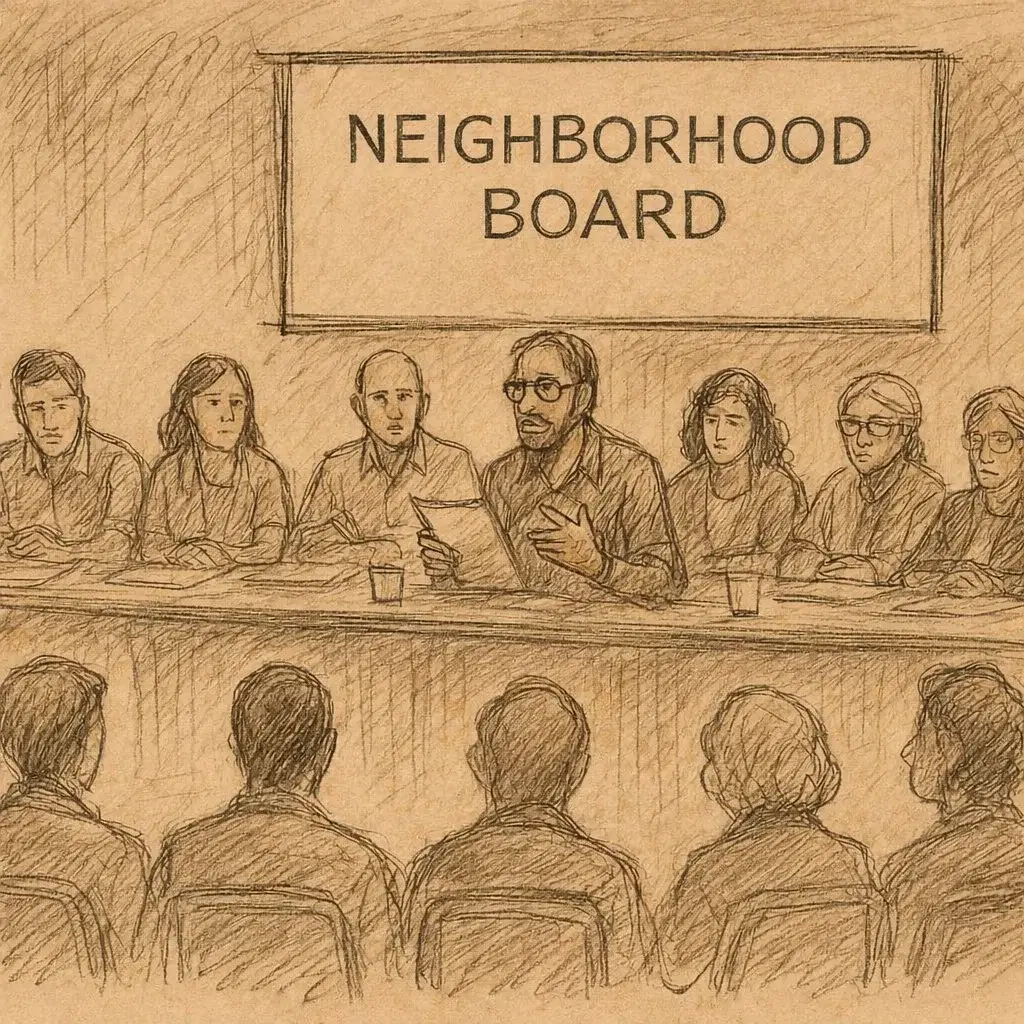
No 34 Makakilo-Kapolei-Honokai Hale Neighborhood Board Regular Meeting March 2026
Listen to this article:
34 Makakilo-Kapolei-Honokai Hale Neighborhood Board Meeting – March 27, 2026
Call to Order and Agenda Overview
Chair Anthony McConaughey Paris opened the March 27, 2026 meeting, noting it was held in a hybrid format at Kapolei Hale and online. He welcomed community members and highlighted rules for speaking, including time limits for comments and reports. The chair requested everyone maintain decorum, direct their remarks to him, and stay on mute unless recognized. Attendees were reminded to respect one another’s perspectives and to keep to allotted speaking times to ensure the meeting remained efficient. Meeting materials were posted in an online shared drive. The board then proceeded with roll call, confirming who was present in person and online.
Roll Call and Housekeeping Matters
Board members responded to the roll call, with some noted as absent or not yet connected online. The chair thanked the neighborhood assistant, Jeffrey Jones, for helping facilitate both the in-person and virtual formats. Attendees were reminded to mute electronic devices to avoid distractions. The chair reviewed the format for agency reports, specifying three-minute individual comments and 10-minute agency presentations. Any adjustments in agenda items were announced, including rescheduling of a planned presentation from the USDA Hawaii Pacific Campus to the following month.
Honolulu Police Department (HPD) Report
HPD representatives presented crime statistics for February 2025 within the district, which included 23 motor vehicle thefts, 12 burglaries, 103 thefts, and 27 motor vehicle break-ins, with Kapolei-specific numbers noted for each category. They reported 1,133 citations issued district-wide and 7,950 total calls for service. Kapolei accounted for 2,613 of those calls. HPD addressed ongoing traffic enforcement on Kalaeloa Boulevard, highlighting 165 citations (including speeding violations) issued since the previous board meeting. A community member expressed ongoing concerns about aggressive driving and illegal turns in the Campbell Industrial and Costco Gas Station area, urging HPD presence at key intersections. HPD acknowledged the challenge of drivers slowing down only when officers are visible and mentioned attempts to coordinate with their traffic division. The possibility of installing traffic cameras was briefly discussed, though HPD explained any such project would require coordination with state and city agencies.
Storm-Related Updates and Mayor’s Office Report
Deputy Director Deborah Zeisman joined via Webex on behalf of Mayor Rick Blangiardi. She emphasized significant citywide cleanup efforts following recent back-to-back Kona Low storms, highlighting strong interagency work involving state and federal partners. She referred the public to Honolulu.gov for daily updates on storm recovery, including statistics on debris removal, damage reporting, and instructions on discarding waste. The deputy director outlined various city support measures, such as shelters, food distribution locations, and medical staging at parks on the North Shore—focusing on areas of greatest flood impact but clarifying that all affected communities, including leeward regions, were being assessed. She encouraged residents to use the city’s 311 system to report issues like potholes, illegal dumping, and clogged drains, noting this information is crucial for directing cleanup crews effectively.
Follow-Ups on Community Inquiries
Deputy Director Zeisman addressed prior board questions, clarifying that a grading permit application for the Makakilo Bluffs development had been received but was not undergoing active review. She explained that land use changes or approvals would require further public processes. The Mayor’s Office on Culture and the Arts (MOCA) informed residents of a process for painting murals on city property, requiring submission of design concepts to MOCA’s commission. Regarding the Makakilo Drive environmental assessment, she noted a 2009 version is posted online. The city confirmed there are no immediate plans or funding commitments to advance the Makakilo Drive Extension project. Zeisman also elaborated on potential traffic-calming measures for Makakilo Drive, including a “road diet” reducing four lanes to three with a center turning lane, raised crosswalks, speed tables, and curb extensions. She promised to return with more detailed plans once concepts are finalized. Finally, she addressed concerns about illegal political signs, recommending residents report signs posted in public areas via the 311 system and contact HPD if unauthorized signs appear on private property.
Concerns About Vegetation, Illegal Dumping, and Ka‘a‘awa Island-Wide Recovery
Board members cited worries about potential disaster scenarios, referencing traffic congestion and the need for greater tree maintenance. An attendee described ongoing illegal dumping and homeless encampments in the Campbell Industrial area and near the old racetrack site, saying the rubbish and abandoned structures raise serious safety hazards. HPD acknowledged these concerns and indicated plans for cleanup efforts, working with the Department of Parks and Recreation (DPR) to find long-term solutions. The city representative was asked to relay the urgency to the proper departments, including fencing cost estimates, rubbish disposal coordination, and outreach services to those experiencing homelessness.
Updates from the Honolulu Authority for Rapid Transportation (HART) and O‘ahu Metropolitan Planning Organization (O‘ahuMPO)
Uncle Frank Canario, the board’s liaison to the O‘ahuMPO Citizen Advisory Committee, reported on recent policy board decisions and long-term planning proposals. He mentioned that the O‘ahu Regional Transportation Plan (ORTP) for 2050 remains under review, with public and agency comments under consideration. Notably, the Makakilo Drive project was restored as an “illustrative” yet unfunded project. Conversely, the Fort Barrette Road widening project was classified as “not recommended.” He also shared discussions about cycling infrastructure concerns, potential Skyline rail extensions, and the possibility of alternative traction, such as magnetic levitation, for future rail expansions. The board appreciated his efforts clarifying how the transportation planning process proceeds and its implications for west side residents.
Liquefied Natural Gas (LNG) Strategic Partnering Agreement Presentation
Wayne Chung Tanaka, Executive Director of the Sierra Club of Hawai‘i, delivered a detailed 25-minute presentation expressing concerns about the proposed importation and use of LNG in Hawai‘i. He criticized the process used to justify LNG, underscoring a recently admitted error in the Hawai‘i State Energy Office’s cost-benefit analysis that initially omitted the cost of the LNG fuel itself. Tanaka argued that such omissions significantly alter the projected savings, now indicating potential net losses for ratepayers. Highlighting examples from industrial accidents and pipeline explosions elsewhere, he questioned the safety of placing large LNG facilities in the Kapolei region, noting that failures in heavily populated areas could cause catastrophic damage. The speaker also addressed the risk of locking Hawai‘i into expensive fossil-fuel infrastructure, especially given frequent storms, climate unpredictability, and better prospects for renewable energy expansions. He urged the community and policymakers not to sign on to an arrangement without comprehensive environmental impact studies and rigorous health risk assessments.
Board Resolution on LNG Opposition
Following the Sierra Club’s presentation, the board took up a resolution opposing the import and infrastructure buildup of LNG in Hawai‘i until independent review and community safeguards are completed. Several board members affirmed reservations regarding LNG’s public health and environmental risks, citing the possibility of explosions and the financial burden of building massive projects without guaranteed cost savings. They agreed that more transparency and accountability were needed from state leaders, with requests for an updated health impact study, cost analysis, and thorough community engagement. The resolution passed unanimously, reflecting the board’s stance that if LNG is pursued, it must be subjected to rigorous studies and clear, reliable data confirming it is economical, safe, and consistent with Hawai‘i’s long-term sustainability goals.
Ko Olina Boundary Clarification with Nānākuli-Māʻili Board
A representative from the Nānākuli-Māʻili Neighborhood Board introduced a resolution requesting a formal boundary adjustment to include Ko Olina within their district lines. She explained that Ko Olina’s development projects and the nearby Waimanalo Gulch Landfill often affect the Nānākuli area. The proposal would not remove Ko Olina from Neighborhood Board 34’s jurisdiction but would officially recognize shared oversight. This step would ensure that developers and government agencies engage both boards on projects affecting the region, particularly those related to landfills and major resorts. The board expressed general support and anticipated formal consideration in April.
Villages of Kapolei Association (VOCA) Concerns
Community members raised various issues about governance at the Villages of Kapolei, including requests for financial records and questions over new electronic voting procedures. Spokespeople expressed frustration that homeowner forums had been canceled, limiting their ability to engage with board members overseeing VOCA. The Neighborhood Board chair suggested drafting possible resolutions or letters encouraging VOCA to hold public forums, adopt best governance practices, and share requested financial information. Residents were also advised to contact the Department of Commerce and Consumer Affairs for regulatory guidance on homeowners’ associations.
Elected Officials’ Updates
Representative Diamond Garcia provided insights on legislation affecting West O‘ahu, thanking Hawaii Department of Transportation crews for work on VOCA road signage. He discussed HR 149, which urges progress on the Makakilo Drive Extension, along with other bills addressing domestic violence resources and tax credits for educational freedom. Representative Garcia announced a town hall set for May 6, 2026, focusing on the transfer of certain state roads in the Kapolei area to the city and the associated maintenance responsibilities. Senator Mike Gabbard’s liaison, Melanie June, shared that the senator’s next “Listen Story” meeting would examine post-session legislative outcomes and ways to support West O‘ahu communities. She encouraged public attendance and offered remote participation options.
Committee Reports and Adjournment
Board committee chairs briefly reported on ongoing projects. Transportation Committee members mentioned continued interest in new bus stops and routes connecting riders to rail stations, as well as improved traffic calming measures for major thoroughfares. Beautification Committee representatives discussed plans to submit designs for painting street-level utility boxes with culturally significant art. The Community Outreach and Education Committee promoted participation in the upcoming Prince Kūhio Day Parade, noting the board’s tradition of walking with a banner and inviting neighborhood participation. Chair Paris reminded everyone that the next regular board meeting would be held on April 22, 2026, at Kapolei Hale and online, concluding the meeting with a request for continued civic engagement and mahalo to participants.