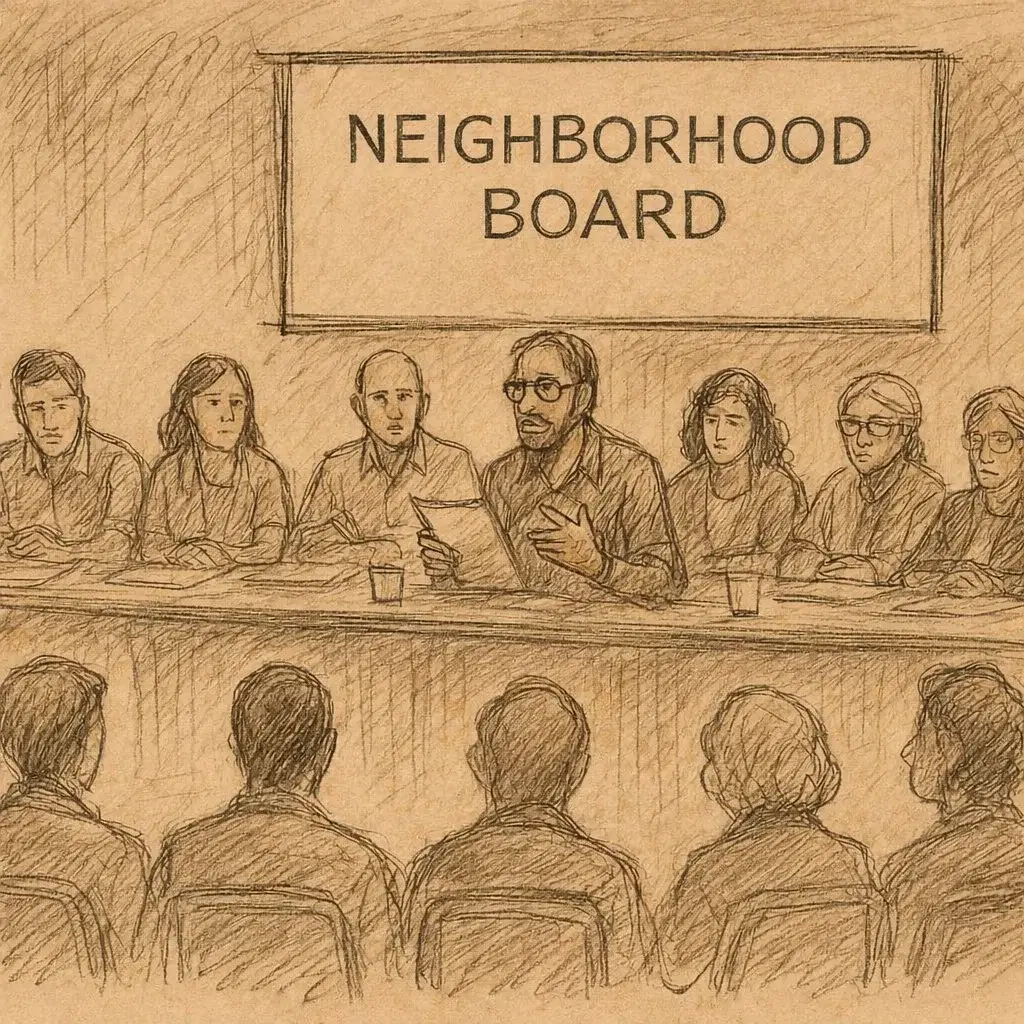
No 28 Ko`olauloa Neighborhood Board Regular Meeting May 2026
Listen to this article:
28 Koolauloa Neighborhood Board Meeting – May 15, 2026
Opening and Meeting Format
The meeting opened with the chair welcoming those attending in person and online and noting that the proceedings are recorded on YouTube and continue to draw viewers beyond those physically present. Although several board members were absent at the start, the chair later confirmed that quorum was achieved with four neighborhood board members online, allowing the board to proceed officially. The meeting followed a structured format that included agency reports, government updates, community presentations, board discussion on priorities, and public announcements, with repeated emphasis on follow-up, accountability, and making the board more effective in addressing Koʻolauloa’s ongoing concerns.
Honolulu Fire Department Report and Wildfire Preparedness
Acting Captain Carvalho from the Honolulu Fire Department presented April 2026 incident statistics for the Koʻolauloa neighborhood board area. The department reported one fire, one brush fire, four nuisance fires, one cooking fire, and six activated alarms. In addition to fire-related incidents, there were 46 medical emergencies and three ocean rescues during the month. The captain directed the public to the HFD fire response search tool on the department website for maps and additional details and provided an email contact for further questions.
The fire department also delivered a monthly safety message focused on wildfire prevention and preparedness, reflecting increasing dry conditions, tall grass, and shifting winds in Hawaiʻi. Residents were advised to clear dry vegetation around homes, avoid parking on dry grass because hot exhaust systems can ignite it, and avoid activities that produce sparks or heat during hot, dry, windy weather. The department emphasized that most wildfires are human-caused and preventable, underscoring the heightened seasonal fire risk affecting rural communities like Koʻolauloa.
Proposal to Explore Fire Station Use as a Disaster Medical Site
A major discussion following the fire report centered on emergency resilience planning in Hauʻula and the broader Koʻolauloa region. Community member Dottie Kelly explained that she is working on a resilience hub project and had recently received a U.S. Department of Energy grant to study renewable energy sources for use during disasters. She noted that recent emergencies had exposed weaknesses in local disaster readiness and argued that relying on a single resilience hub would not be enough because different disasters affect different parts of the region in different ways.
Kelly specifically asked whether the fire station could be explored as a potential emergency medical center during disasters, especially in scenarios where communities might be cut off by flooding at Punaluʻu or road closures that prevent access to larger medical facilities. Her concern was practical: if residents in places like Hauʻula cannot travel out and medical emergencies arise, the community needs local backup capacity. Acting Captain Carvalho did not commit to a definitive answer but agreed to raise the idea internally for consideration. The exchange highlighted the community’s interest in developing decentralized emergency infrastructure and in using existing public facilities more strategically during crises.
Questions About Fire Equipment Capacity
A resident also raised a past concern about whether a ladder truck might have allowed firefighters to save a home during an earlier fire incident. The question reflected lingering community concerns about whether Koʻolauloa has the right equipment for its needs. Captain Carvalho responded cautiously, saying he could not comment on a specific past case, but explained that the main purpose of a ladder truck is extended reach and noted that current trucks already carry ladders that reach up to 24 feet. The conversation suggested interest in clearer criteria for how the fire department evaluates specialized equipment needs in rural communities where resources are limited and distances are long.
Honolulu Police Department Crime Statistics and Staffing
Lieutenant Villaflor, Sergeant Kayave, and another officer from the Honolulu Police Department attended and reviewed April 2026 public safety statistics for the sector. Reported motor vehicle thefts were zero, down from three the previous month. Home burglaries totaled three, the same as the previous month. Theft reports, which HPD said include a wide range of incidents from pickpocketing to lost property, totaled five, down from seven. Unauthorized entry into motor vehicles was zero, down from two the previous month. One robbery was reported, compared with zero in the previous month. HPD also reported 613 calls for service in April, up from 559 the month before, confirming that the district experiences a significant volume of police activity in a single month.
The board asked for more detail on burglaries, including where they were occurring and whether they tended to happen when residents were home or away. HPD did not have that breakdown immediately available but agreed to provide more localized data in future reports. A board member suggested the use of cluster maps to identify patterns geographically, noting that current software makes this easy if address data are available. The request reflected an effort to move beyond raw totals toward more useful place-based crime analysis for communities spread across a long rural district.
The police also clarified staffing levels. A resident said they had long been told only two officers were associated with the district. HPD explained that the Koʻolauloa area currently has five personnel, including a station sergeant and a road sergeant, covering the area from Kualoa Ranch to Kahuku. The clarification was received positively because it suggested a stronger police presence than some residents had understood.
Homeless-Related Police Calls and Beach Access Questions
A resident asked whether HPD could estimate how many calls for service involve homeless individuals, referencing a prior example in Kāneʻohe where such estimates had helped support a grant application. HPD said they were not sure how easily that could be researched but agreed to look into it. The request connected policing data to broader efforts to seek funding for homelessness-related services.
The police also followed up on a question from the prior meeting concerning people staying in a beach area under a permit associated with the Read Together Foundation. HPD reported that the individuals were allowed to be there under a lease arrangement. However, a resident clarified that the deeper concern was not just the lease itself but the possibility that a traditional public beach access point had been physically closed off with a chain between two poles. The resident said that access had historically been recognized and identified by kūpuna. HPD agreed to check specifically on whether the public access point was being improperly blocked. This exchange reflected the tension between interim housing or encampment arrangements and the preservation of shoreline public access rights.
Reporting Speeding, E-Bikes, and Ongoing Traffic Problems
HPD also addressed earlier complaints about speeding and e-bike problems. Officers explained that while residents should continue calling 911 for immediate dangerous activity, many speeding incidents are hard to catch in real time because the vehicle is gone before officers arrive. They advised residents to also submit complaints through the city’s 311 app or the mayor’s app, including approximate times, frequency, vehicle descriptions, direction of travel, and license plate numbers if possible. HPD said those complaints are tracked through the mayor’s office, forwarded down the chain of command, and can trigger targeted enforcement.
For e-bike issues and other recurring behavior, officers said it is especially helpful when residents can identify where riders congregate and, if possible, who they are. HPD noted that in tight-knit communities like Kahuku, local knowledge can help officers identify and cite violators and even seize bikes in cases involving criminal activity. The emphasis was on turning anecdotal complaints into actionable enforcement information.
Request for U.S. Army Participation and Kahuku Access Road Concerns
Before moving into government reports, a board member asked whether the U.S. Army continues to receive invitations to attend meetings, stressing that the community wants the Army present to discuss the access road at Kahuku and move that matter forward. The chair said he would specifically reach out and invite them to the next meeting, noting that the board is recessed in June and would next meet in July unless a special meeting is scheduled. The request indicates that military-controlled or influenced land access remains an unresolved issue in the area.
Mayor’s Office Report on Kona Low Recovery
A representative from Mayor Rick Blangiardi’s office reported that the city continues to respond to the severe weather events and Kona Low storms that caused major flooding and damage across Oʻahu, with North Shore communities remaining a central focus of cleanup and recovery. A city recovery website, oneoahu.org, has been launched as a central source of information where residents can report home damage, access health and safety guidance, learn about available assistance, and find ways to support affected communities.
Cleanup operations remain underway islandwide, especially on the North Shore, with significant city resources deployed, including dump trucks, heavy equipment, and dumpsters. Storm debris may be taken to city transfer stations and convenience centers daily from 7 a.m. to 6 p.m. H-Power is accepting commercial municipal solid waste, and Waimānalo Gulch is accepting residential construction debris such as dirt, rock, and concrete. Because of the scale of the storm response, previously planned mayoral town hall meetings have been postponed indefinitely so departments can focus on recovery and mitigation.
Follow-Up on Board of Water Supply Main Break Repairs
The mayor’s office also followed up on a complaint from a prior meeting regarding a road repair associated with a Board of Water Supply 30-inch water main break. According to BWS, the repair work itself took about 24 hours, which the agency described as relatively efficient for a break involving a pipe of that size. Public updates were issued through the BWS website and social media platforms including Facebook, Instagram, and Nextdoor, and because the break affected a major road, an HNL Alert was also issued. BWS said this communication protocol is standard practice and that the agency also keeps the Department of Transportation Services, Department of Transportation, and elected officials informed by text message.
A key concern had been the uneven road surface or bump left afterward. BWS explained that the bump appeared about a day later and that state procurement rules prevented the agency from immediately hiring a paving contractor under an emergency contract. In the meantime, BWS installed signs and reflective strips and has been checking the area daily while procuring a new paving contract, which it hopes to award within about a month. The agency offered to include the neighborhood board or its designee in future notifications about major water main breaks if the board reaches out to the designated BWS contact.
Investigation of Alleged Illegal Commercial Use of Residential Agricultural Property
Another follow-up involved a property in Hauʻula alleged to be operating a business despite being zoned residential/agricultural AG-2. The Department of Planning and Permitting conducted a site inspection on March 4 but was unable to gain access to the premises. DPP told the mayor’s office it will continue investigating and gathering evidence to determine whether a retreat home is operating illegally on the property without a conditional use permit. If violations are confirmed, DPP may issue a notice of violation. The issue reflects longstanding neighborhood concern over commercial activity in areas intended for residential and agricultural use.
Turtle Bay Development and Public Amenities Requirements
The mayor’s office also responded to questions about why DPP is allowing additional development at Turtle Bay before unresolved community benefits issues are settled. The explanation given was that DPP follows the unilateral agreement governing the project and that public amenities are required only at specific points in the development timeline. For example, some amenities are not due until before issuance of a building permit for the first hotel. Until the project reaches the triggering stage identified in the agreement, the city does not require those amenities to be completed. This response did not fully settle broader community concerns about who is responsible for which commitments, especially given land divisions and new entities involved in Turtle Bay and nearby development.
City Council Report: Budget Amendments and Stream Maintenance
A representative from Councilmember Matt Weyer’s office gave a budget-season update and highlighted several amendments accepted at the latest budget committee meeting. These included capital improvement funding for the Mark Takai Veterans Memorial Aquatic Center and park improvements at Wahiawā District Park. Two notable flood-related items were accepted: $1.5 million as the city’s cost-share portion for an Army Corps of Engineers federal flood control study of the Wailele Stream, and a similar allocation for Kīpuka or Kāneaka-related bay and stream work, referred to in the report as Kayaka Bay. The office also noted two accepted operating budget amendments: $1 million for food access and social support programs for kūpuna, and $150,000 to develop a report evaluating the city’s stream maintenance plan and establishing a timeline for planned stream clearing.
These items aligned with concerns repeatedly raised in Koʻolauloa over flooding, food access, and the need for more systematic maintenance of streams and drainage channels. The accepted stream maintenance review was especially relevant after recent storms exposed vulnerabilities in drainage infrastructure and emergency readiness.
Community Meeting Hosted by Councilmember Weyer
Councilmember Weyer’s office also announced a community meeting to be held on May 27, 2026, at 6 p.m. at the Marriott in Lāʻie. The office described the event as a first attempt to create a space where residents and community leaders can come together, share information, and connect around local concerns. Facilitation support had been arranged, and the office said it was still working on outreach and on confirming which agencies and participants would attend. The meeting was framed as an effort to support, rather than replace, the many community-led organizing efforts already underway.
Questions About Emergency Management Budget and Council Priorities
A resident asked Councilmember Weyer’s office to clarify the councilmember’s position on the emergency management budget and why he appeared not to support part of the mayor’s proposal. The resident specifically referred to concerns about whether funding should go to the emergency management division or instead preserve certain jobs, and said the community needed clearer information before taking positions in upcoming budget discussions. The council office responded that Weyer is not a voting member of the budget committee and cautioned against misunderstandings, while also noting that he had proposed a $720,000 increase to the emergency management budget for dedicated district coordinator positions. The exchange showed both the sensitivity of post-disaster budget decisions and the strong expectation that elected officials explain their reasoning clearly when emergency preparedness funding is at stake.
Questions About City Salary Increases
Another resident asked about proposed city salary increases and whether the law governing those increases could be changed so raises occur only when the economy is strong and community needs are being met. The question reflected frustration that elected officials and city leadership may receive pay increases while roads and other basic infrastructure remain in poor condition. No detailed answer was provided at the meeting, but the issue was raised as part of a wider demand for stronger alignment between government compensation, performance, and neighborhood conditions.
DPP Follow-Up Requests: Turtle Bay, Vacation Rentals, Flood Zones, and Reporting Barriers
Community members raised multiple detailed issues requiring follow-up from DPP and the mayor’s office. One resident asked whether DPP’s explanation about Turtle Bay meant that only the Ritz-Carlton portion of the project, and not Arete or other entities, is responsible for delivering community benefits, especially since the obligations run with the land and portions of the property have been divided. The same resident asked whether proposed Kahuku affordable housing land acquired by Arete lies in a flood zone or was affected by past tsunami and storm flooding. She also expressed concern that illegal vacation rentals can no longer be reported anonymously, arguing that this discourages reporting because some neighbors fear retaliation. The mayor’s representative agreed to take all of these questions back for follow-up.
These concerns tied together several recurring frustrations: uncertainty over who must fulfill development promises, concern that affordable housing could be sited in hazardous locations, and the perception that enforcement systems for illegal vacation rentals remain too weak or too risky for residents to use.
Pat’s at Punaluʻu and “Unofficial Hotel” Concerns
A resident raised renewed concerns about Pat’s at Punaluʻu, describing activity there as resembling an unofficial hotel. She pointed to a visible “check in” sign in front of the property and said guests appear to be parking along the highway or in another lot while some parking lot work is underway. Her argument was that a condominium complex openly directing arriving guests to “check in” suggests widespread short-term rental activity inconsistent with residential use. She also noted that elevator access makes enforcement inspections difficult because inspectors cannot easily reach upper floors. The mayor’s office agreed to report the issue to DPP’s short-term rental enforcement branch and to seek a status update on enforcement actions at that specific site. The issue was linked to broader concern about the concentration of illegal or questionable vacation rentals in Koʻolauloa and their effects on housing availability and neighborhood character.
Repeated Frustration Over Illegal Vacation Rentals
Several speakers emphasized that illegal vacation rentals remain one of the most persistent unresolved issues on the Koʻolauloa side. One resident asked why illegal vacation rentals are still not treated as a criminal offense. Another board member said years of advocacy on the issue took on new meaning after recent flood relief efforts, when displaced families needed temporary housing but could not be placed in many of the short-term rental units operating in the area. As a result, some affected families had to be placed farther from home while trying to clean up, recover, and rebuild. The board member asked what actionable steps elected officials could take so the same questions do not have to be raised meeting after meeting. This linked enforcement failures directly to disaster recovery, housing access, and community stability.
Green Stormwater Infrastructure Initiative and Free Rain Barrels
Veronica Gibson of Mālama Maunalua presented the organization’s Green Stormwater Infrastructure Initiative, which is now in its second phase. The nonprofit is offering free rain barrels and free installation to Oʻahu residents as part of an islandwide effort to reduce stormwater runoff. The current program will install 250 barrels across the island. The rain barrels hold 55 gallons, and applicants need a standard 3-by-2-inch aluminum downspout for installation. Residents can apply through rainwaterhawaii.com, and because outreach had not reached all parts of Koʻolauloa equally, the application deadline was extended to July 15, 2026, although installations remain first come, first served.
Gibson explained that while a 55-gallon barrel would not prevent flooding during extreme Kona Low events, the system does help reduce runoff during smaller storms by capturing water during peak rainfall. That reduces polluted stormwater entering the environment and allows collected water to be used later for gardens, where it can percolate into the aquifer after storm conditions subside. She also noted the barrels can serve as a non-potable backup water source during emergencies. The board chair praised the program and said the neighborhood board would help circulate digital flyers through its newsletter. Residents asked how to apply and were told the account ID required on the website is simply “oahu” in lowercase.
WaiHome Presentation on Affordable Cesspool Conversion Technology
Natasha Kashishian and James from WaiHome introduced a new wastewater technology intended to provide a more affordable alternative to conventional cesspool conversion systems. They explained that cesspool upgrades in Hawaiʻi are unusually expensive because of shallow bedrock, steep slopes, high groundwater, small lots, and difficult excavation conditions. Typical conversion costs in some North Shore and rural areas can run from $30,000 to $60,000, placing compliance out of reach for many homeowners.
WaiHome has developed an above-ground alternative that can sit beside homes with raised plantation-style foundations. Instead of relying on a large 1,000-gallon underground tank, the system uses an auger screen to separate solids and then dehydrates them. The company said its solid waste interceptor unit is priced at $7,500, and its goal is to offer complete cesspool upgrades, including permitting and engineering, for under $15,000 where an existing cesspool can be reused as a seepage pit. The presenters explained that the Department of Health now allows cesspool conversion to seepage pits for treated water disposal if three conditions are met: the cesspool has no history of failure, passes an injection test appropriate to the house size, and has some form of structural lining such as bedrock, concrete rings, or CMU blocks in good condition.
The system stores separated solids in bins where they are dehydrated and thermally sterilized using a fan and a 300-watt heater that raises temperatures above 55 degrees Celsius. The company said the resulting biosolid is compact and intended to be manageable enough for homeowners to dispose of themselves in green bins, though a maintenance service will also be offered. Questions focused on total installation costs, maintenance, regulatory approval status, and whether the technology might help owners of undersized lots who struggle to meet the state’s 10,000-square-foot standard for new systems. WaiHome said the Department of Health is still reviewing third-party testing from the University of Hawaiʻi, so the system is not yet available for immediate installation, but the company recently passed a key IAMPO plumbing standard inspection and expects a product listing soon. They emphasized that they are trying to connect early with communities facing wastewater affordability problems.
Oʻahu Pentathlon Event Notification and Road Safety Debate
Courtney McCormick presented information on the 6th annual Oʻahu Pentathlon scheduled for August 8–9, 2026. The endurance event involves five disciplines rather than the three of a triathlon and begins and ends in Kailua. Participants must swim, run, bike, paddle, carry a 45-pound sandbag around Kaʻena Point, and then bike back, all within a sunrise-to-sunrise window. For Koʻolauloa, the relevant segment is the paddle from Kualoa to Kokololio Beach Park, where athletes will transition to bicycles. Organizers said they moved the transition point from Laniākea or a similarly earlier site after previous community concerns and found Kokololio Beach Park worked better.
The event is relatively small, with about 150 to 200 athletes total and roughly 30 to 40 people at the Koʻolauloa location at any one time between approximately 11 a.m. and 3 p.m. Support crews will accompany participants, and organizers said athletes must obey traffic laws, wear helmets, travel with the flow of traffic, and remove their equipment quickly after transitions. Organizers said they are not requesting traffic control or road closures in the area, only informing the board that the event is happening.
A resident challenged the event’s local value, arguing that any bicycle activity on Kamehameha Highway necessarily creates inconvenience on a poorly maintained two-lane road already in bad shape. She asked what direct benefit accrues to the affected community. McCormick responded that the event supports a nonprofit called Point One Vision and is meant to be for the broader island community, with participation from local athletes as well as some mainland entrants. The board chair suggested that organizers of endurance events like this should also take on an advocacy role for safer cycling and better road infrastructure, potentially joining with neighborhood boards and other event sponsors to push for improvements. The idea was to turn repeated use of the area for athletic events into organized support for infrastructure upgrades rather than simply asking communities to absorb inconvenience.
Chair’s Presentation on Board Priorities, Committee Reform, and Long-Term Strategy
The chair delivered a substantial presentation on how the Koʻolauloa Neighborhood Board can become more focused and effective. Drawing from a January 29 special meeting and later discussion, he identified four major priority areas: housing and affordability, including housing for local residents and illegal vacation rentals; infrastructure and emergency response, including wastewater, flood control, roads, and power; government transparency and accountability; and jobs and entrepreneurship with a locally focused economic development emphasis. He also said recent flood discussions had added at least two more themes that deserve stronger attention: support and resilience for kūpuna during emergencies, and the safety risks and accountability issues associated with tourists staying in illegal vacation rentals.
The chair emphasized that neighborhood boards are advisory bodies but can function as powerful civic network managers by connecting residents with agencies, sustaining public attention, coordinating stakeholders, gathering technical information, and maintaining accountability over years rather than months. He listed what he sees as effective neighborhood board practices: relentless follow-up, issue specialization, strong public testimony culture, coalition building, media visibility, frequent resolutions, regional coordination with other boards, and strong institutional memory.
He questioned whether the board’s current committee structure still makes sense and suggested it may be outdated and insufficiently active. He proposed reorganizing around clearer community priorities, using themed meetings devoted to major issues such as illegal vacation rentals or emergency preparedness, and asking board members to focus deeply on one or two issues they care strongly about. He also advocated bringing non-board residents into leadership roles in committees and working groups, mentioning community members such as Casey, Evelyn, and Luca as examples of people whose energy and knowledge could be more intentionally integrated into board work. The chair said he plans to draft a resolution on board priorities and circulate it, possibly for discussion at a special meeting before the board reconvenes in July after its June recess.
Calls for Better Agency Attendance and Community Participation
During the discussion of board effectiveness, a resident pointed out that attendance by representatives from government offices has declined over time even though virtual participation should make it easier. She suggested the board should more actively call attention to missing agencies and remind them they are expected to show up. The chair agreed this was a good idea and said he could send follow-up messages after meetings noting who was absent and expressing hope to see them at the next one.
Another board member stressed that interested community members should be invited into committees because they are already engaged and want to improve the area. The chair echoed that sentiment and said residents do not need to be official board members to play meaningful roles, though he also encouraged anyone interested in deeper service to consider joining the neighborhood board itself.
Emergency Shelter Training Announcement
As part of community announcements, Dottie Kelly announced that the American Red Cross will provide emergency shelter training in Koʻolauloa on June 19 and 20, 2026, a Friday and Saturday. She described the need for a well-run shelter as urgent and said the area currently lacks even adequate training for operating one, despite having recently faced storm events where shelters were needed. The two-day training is intended to prepare residents to help manage shelters during emergencies. Space for about 25 participants is available initially, with the possibility of adding another training if demand exceeds capacity. The announcement tied directly into the larger meeting theme of strengthening community readiness and local emergency capacity.
State Road Closure Warning for Waimea Rock Mitigation
Another community announcement informed residents that road closures related to rock mitigation work in Waimea are upcoming, likely on a weekend. Specific dates and times were not clearly read into the record, but the board wanted residents to be aware that closures are expected and to check online for details. Although not in Koʻolauloa itself, closures affecting regional access routes matter because North Shore transportation options are limited.
Hawaiian Electric Renewable Energy Zones Proposal
Ken Araki from Hawaiian Electric gave a brief late-agenda presentation on the utility’s effort to designate renewable energy zones on Oʻahu. He explained that Hawaiian Electric is required by the state to identify two such zones by the end of June 2026. The company has narrowed candidate areas to four based on data-driven analysis and is seeking public input through an online map where residents can place pins and comment on locations they believe are suitable or unsuitable for large-scale renewable projects such as solar farms or other utility-scale energy developments.
Board members asked what renewable energy zones actually mean and what criteria are being used. Araki said the process considers transmission availability, cost, schedule, and locations of existing generating resources. One of the candidate areas includes parts of Hauʻula, Punaluʻu, and the Kualoa area. He said public input will be one factor in narrowing the list to two near-term zones, but also made clear that the whole island may ultimately be considered as the state pursues 100 percent renewable energy.
The presentation prompted strong criticism from community members. Speakers argued that rural communities continue to bear the burden of utility-scale energy development while urban areas drive most of the demand. Concerns focused on environmental justice, energy justice, and the cumulative burden placed on places like Kahuku. Residents questioned why more energy generation is not required within urban growth areas like Kakaʻako, where major new high-rise development is adding substantial electrical demand. Suggestions included requiring developers to supply more of their own energy, using rooftops and existing parking structures rather than agricultural land, and moving toward smaller community-based microgrids with battery storage instead of relying on large external projects.
Speakers also referenced Kahuku’s history with wind turbines and noted that existing turbines have not prevented prolonged local outages, including one recent outage that reportedly lasted nearly 48 hours. One resident cited concerns that Kahuku wind turbines can only withstand a Category 1 hurricane according to an environmental impact statement and argued that local communities are being damaged for the benefit of vacant units and developments elsewhere. Board members urged Hawaiian Electric to return in July or August for a fuller discussion, and the chair suggested that renewable energy infrastructure should be added to the board’s infrastructure priority area.
Charter Commission Meeting Notice
A final public announcement notified attendees that a Charter Commission meeting would be held on May 18 at 1:30 p.m. in the City Council Chamber. No further discussion was provided, but the notice was entered into the meeting record for community awareness.
Meeting Recess and Next Steps
The board noted that it is normally recessed in June, but the chair said a special meeting may still be called before July to continue work on board priorities, committee restructuring, and a resolution setting a more focused agenda. The meeting adjourned at approximately 8:26 p.m. after nearly two and a half hours of discussion that touched on disaster preparedness, policing, illegal vacation rentals, land use enforcement, infrastructure, wastewater, athletics, renewable energy, and board governance. Across nearly every topic, the recurring themes were follow-through, local capacity, and a demand that outside agencies respond more clearly and more consistently to Koʻolauloa’s needs.