No 28 Ko`olauloa Neighborhood Board Regular Meeting April 2026
Listen to this article:
28 Koolauloa Neighborhood Board Meeting – May 1, 2026
Meeting Context and Focus on Flood Response
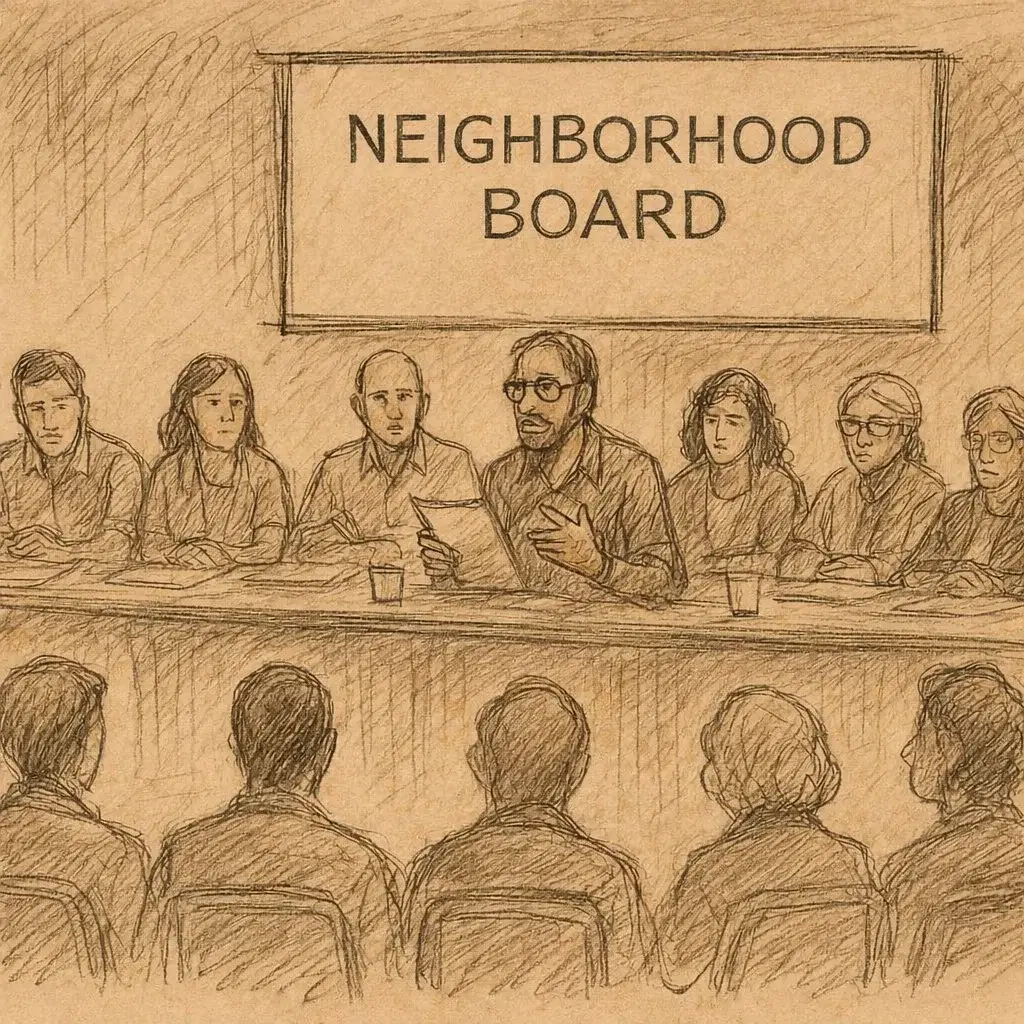
The meeting opened under unusual conditions, with an accident in Waiʻole delaying the camera crew, Councilmember Matt Weyer, and others, forcing the board to proceed with a single microphone and a modified format. The chair explained that the board’s previous two meetings had been canceled because of the Kona lows, and that the region had experienced substantial developments in the meantime. Because of that disruption, the board intentionally inverted its agenda to prioritize community testimony on emergency preparedness, flood response, and lessons from the recent storms before hearing from government representatives. The meeting was framed not only as a chance to identify failures and unmet needs, but also to recognize the community’s strengths and the extensive volunteer response that had emerged across Koʻolauloa.
Police Report and Public Safety Concerns
Honolulu Police Department representatives reported neighborhood crime statistics for March and April across the sector extending roughly from Pūpūkea Ranch to Kahuku. In April, HPD recorded two auto thefts, five burglaries, five thefts, one unauthorized entry into a motor vehicle, and zero robberies. In March, they recorded three auto thefts, five burglaries, zero thefts, one unauthorized entry into a motor vehicle, and one robbery. Community discussion quickly shifted from crime counts to roadway safety, with residents describing repeated incidents of speeding vehicles in Waikāne, children riding e-bikes down the middle of Kamehameha Highway without helmets, and young riders doing wheelies on dirt bikes and motorcycles in traffic. HPD advised residents to call 911 immediately when dangerous driving is observed and to also file complaints through the city system so officers can be assigned to targeted enforcement during specific times and at specific locations. Officers emphasized that enforcement is already underway, including plainclothes operations, but said effective intervention depends heavily on neighborhood intelligence about where riders begin, stop, and congregate.
Emergency Response Recognition and Access Issues
Residents also used the HPD segment to acknowledge successful emergency response during the flooding. One resident thanked police and emergency responders for helping a wheelchair-bound neighbor at 2:30 a.m. when rising water entered the home and evacuation to an upstairs level was not possible without assistance. Another question raised a concern about a chained-off public access near Punaluu, in the area of a former house site and apparent encampment, with uncertainty about whether the closure was lawful or who had jurisdiction. HPD indicated it would check whether the chain had been installed by the city or another agency, while acknowledging the issue might involve land-management agencies such as DLNR. Even in these shorter exchanges, the discussion highlighted how emergency conditions intersect with mobility, property access, and uncertainty over who controls or maintains public spaces.
Flood Mitigation Recommendations from the Koʻolauloa Emergency Flood Meeting
A major portion of the meeting was devoted to reporting out from a recent Koʻolauloa emergency flood planning session organized by Hui o Hauʻula and the Hauʻula Community Association. Dottie, who leads the board’s community resilience and emergency preparedness work, summarized the community-generated mitigation strategies and emphasized that the goal was not simply to recount storm impacts but to identify practical actions before the next event. She said representatives from communities across the board area had contributed, and that more detailed, community-specific notes had also been compiled for later circulation. Her presentation focused on a dozen broad strategies, intended to capture the most urgent and repeatable themes that emerged from the flood meeting.
Stream Responsibility, Homeowner Awareness, and Legal Obligations
One of the most forceful points in the presentation was that many property owners do not realize they are legally responsible for maintaining streams adjacent to or running through their land. Dottie described learning this only after buying a home in Hauʻula and later experiencing a flood near a stream on her property. The discussion clarified that under state law, and also under city ordinance, many homeowners likely own at least half of the stream bordering their property and therefore carry some maintenance obligation. The meeting identified a major gap in basic public education: buyers are often not told clearly enough during real estate transactions that stream clearing may be their legal duty. Participants suggested this information needs to be communicated upfront through brokers, government agencies, or disclosure requirements so residents understand their responsibilities before flood season.
Need for Government Support in Stream Maintenance and Ocean Outfalls
Although homeowners may hold legal responsibility for stream maintenance, the meeting stressed that stream management in Koʻolauloa often exceeds what individual residents can reasonably handle. Dottie said communities must advocate for changes that bring city and state support into stream clearing, especially where equipment is required and where work in waterways triggers permitting and regulatory restrictions. She argued that the state should help clean streams and ensure they are open to the ocean, because many stream mouths become blocked by sand and debris, trapping floodwaters inland. She gave the example of efforts at Pokiwai, where older residents had personally tried to cut openings through sand berms to release water, describing that as an unacceptable substitute for proactive state action. The recommendation was that agencies should respond to weather forecasts before storms arrive by clearing stream mouths and reducing obstructions rather than waiting until homes are already threatened.
Bridges, DOT Responsibilities, and Kahana Valley Needs
The presentation also singled out the Department of Transportation for responsibility to remove debris from beneath bridges before storms, arguing that bridge chokepoints can drastically worsen flooding when logs, vegetation, and sediment pile up. Dottie said DOT must be held accountable for this maintenance, and suggested the agency should engage more directly with Koʻolauloa communities in the same way it has done elsewhere. Kahana Valley was discussed separately as an area where the community needs stronger state assistance because the valley lies within a state park setting and includes older residents who cannot reasonably manage extensive stream clearing alone. The message from that area was that residents are already trying to care for their waterways, but state participation is necessary to prevent homes from flooding.
Evacuation Timing, Alert Systems, and Isolation Risks
Residents and board leadership repeatedly emphasized that people must evacuate early rather than waiting to see how bad the flooding becomes. Once roads flood, many communities become trapped, especially in low-lying areas such as Punaluu and other stream crossings. Dottie said the storms reinforced how unreliable Kamehameha Highway can be and how quickly movement can be cut off. Emergency alert systems were another recurring concern. She said existing warning horns are not audible in many homes, and that even functioning systems do not adequately cover all communities. When power is out, many residents lose internet and television access at the same time, leaving them without timely information unless audible alerts or other non-grid communications are available. The recommendation was to expand and strengthen emergency alert coverage so warnings can reach households even when modern communication systems fail.
Alternative Access Road and Transportation Vulnerability
One of the strongest transportation themes of the night was the need for an alternative access road into and out of Koʻolauloa. Dottie described this as one of the area’s biggest long-term infrastructure issues, and the recent storms made the danger visible again as sections near Waiāhole were blocked by boulders, Kualoa Ranch flooded, and other stretches in between were inundated. Residents noted that the community already relies on informal systems, including checking local updates about whether the Waiāhole bridge is passable, because the single-road reality is so fragile. The board argued that being dependent on one coastal route is unacceptable not only for disaster evacuation but also for medical appointments, work, supplies, and emergencies of every kind. Later in the meeting, an online participant specifically asked state and city representatives to push forcefully in future lease and transportation negotiations for this issue to be treated as a priority.
Resilience Hubs and Shelter Limitations
Dottie then turned to the concept of resilience hubs, explaining that in Koʻolauloa they are being pursued as a more realistic and safer alternative to relying solely on standard emergency shelters. She said the island’s designated shelters often come with a warning to enter at one’s own risk because many have not been tested for high winds and may only offer elevation above tsunami or flood danger rather than true storm protection. A resilience hub, by contrast, is intended to be a hardened, community-based facility that can support people during extended disruptions. She emphasized that while one person’s home can function as a resilience hub if it is safe, supplied, and outside major hazard zones, many homes in Koʻolauloa are in flood or tsunami exposure areas and cannot reliably fill that role. She also said the region likely needs more than one such facility, though the cost of building them has proven extremely high.
Food Security and Store Closures During the Storms
Food security emerged as one of the clearest everyday impacts of the Kona lows. Dottie said both grocery stores serving Hauʻula and Laʻie shut down during the emergency. Tomorrow’s in Hauʻula was reportedly contaminated by septic water from a leak, while Foodland in Laʻie was emptied as residents rushed to buy what they could before or during the road closures. With trucks unable to get through blocked highways, there was no quick replenishment. She credited nonprofits and mutual aid networks with distributing food and helping prevent hunger, but made clear that local households also need to prepare by keeping emergency food supplies at home. The broader recommendation was that food resilience in Koʻolauloa cannot depend on just-in-time deliveries or a single open store.
Starlink Communications and Community Outreach
Another major preparedness topic was emergency communications using Starlink. Dottie said the area now has five Starlink units across Koʻolauloa, which can allow people to send texts when conventional power and connectivity are down, but only if residents know where the units are, have the access codes, and have already downloaded the necessary app. She described this as one of the most promising tools currently available for maintaining communication during outages, but said outreach has not yet gone far enough. Her priority for the coming months is to meet with each site team, strengthen local volunteer support, and make sure residents know how to use the system before an emergency rather than trying to learn during one.
Dialysis, Medical Access, and the Kahuku Medical Center Survey
Health care continuity was discussed in especially urgent terms around dialysis. Dottie said many residents in the area depend on regular dialysis, estimating that about 30% of the population is on dialysis, and noted that missed treatments become life-threatening very quickly. Because many patients must travel to town or to limited local facilities for care, road closures create immediate medical danger. She said Koʻolauloa needs a clearer plan, in partnership with Kahuku Medical Center and other providers, for how dialysis and related care will continue during major disruptions. She also urged residents to complete a current Kahuku Medical Center survey, explaining that the facility is planning expanded services and will base those offerings on community responses.
Business Continuity and Backup Power
The meeting also highlighted the role of private businesses in emergency response. Dottie said grocery stores and other retail outlets need backup generators so they can keep freezers running, remain open, and continue distributing basic goods. This was framed not as a technical challenge but as a practical preparedness measure that should become more standard in the district. The broader point was that community resilience depends partly on whether local businesses can continue operating during outages and road isolation.
Koʻolauloa Resilience Hub Project Update
Dottie gave a substantial update on the long-discussed Koʻolauloa Resilience Hub project. She said the project completed an environmental assessment in 2024 through G70, producing a document roughly 1,000 pages long, and also finished a preliminary design. In 2025, however, changes in the federal funding landscape made it unrealistic to continue depending on the FEMA BRIC grant program, which had been seen as the main potential source for up to $50 million needed to realize the original vision. In response, project leaders shifted strategy. Rather than pursuing a larger, more ambitious facility, they decided to focus on a simpler but stronger building that could still save lives. The revised concept is essentially a hardened shelter or large gymnasium-like structure capable of withstanding Category 5 hurricanes and located outside both flood and tsunami zones.
Revised Capacity, Funding Strategy, and Planned Uses of the Hub
Under the revised plan, the resilience hub will serve about 600 people rather than the originally envisioned 1,500. Dottie said this is a significant reduction, but one that preserves the most critical safety functions. The project is now being coordinated with the City and County of Honolulu and the Department of Emergency Management, and she said it has been included in the city’s budget planning. The current strategy is to first use HUD funding and then have the city complete the facility afterward, because federal and local funds cannot be easily mixed at the same stage. She said the building will still include medical services, dialysis support, safety and security for both people and pets, and a range of educational and social uses for the broader community through Hui o Hauʻula and partner organizations. Even in its reduced form, it is still expected to be more than twice the size of the existing facility serving those functions now.
Community Reactions to the Mitigation Work
Board members and residents strongly supported Dottie’s presentation and thanked her for the scale of work behind it. The chair noted that the Hauʻula group’s flood-planning discussion had produced very detailed, location-specific observations, down to issues affecting particular streets such as Halai Street, and said he hoped the final flood mitigation plan would include both broad regional strategies and short summaries for each community to take back to their local associations. Dottie replied that those localized notes had already been prepared and would be circulated. Another board member expressed gratitude that no one had died or drowned during the storms, describing that outcome as one of the clearest signs that the work on preparedness and coordination matters.
Kahana Perspective on Traditional Stewardship and Flood Prevention
A resident from Kahana offered an important corrective and example from her valley, stating that Kahana had not flooded during the recent storms because the community has been diligently restoring streams and maintaining water pathways during the summer in preparation for winter weather. She said this work comes from a longstanding understanding that caring for waterways is part of the responsibility of those who live on and benefit from the land. She supported broader education for newer residents about stream stewardship, but also framed the issue in terms of kuleana and ecological observation rather than only legal compliance. She added that Kahana, as one of the wettest places in Hawaiʻi and a source of diverted water serving other parts of Oʻahu, experiences environmental impacts that make local attention to natural systems even more necessary.
Kahuku Senior Housing Vulnerabilities
One of the most detailed and urgent testimonies came from a resident of the Kahuku senior housing complex, who described severe shortcomings in emergency planning and support there. She said residents are not allowed to keep generators or propane stoves in their units, and that management does not maintain an on-site emergency team to care for disabled, housebound, or cognitively declining seniors during disasters. Many residents reportedly do not even know when a storm is coming unless management issues a notice, which sometimes happens only if residents press for it. During the recent outage, people were unable to call relatives or access support. She said Kahuku Medical Center brought over a generator and charging station, which helped, but management did not distribute sandbags in a meaningful way and simply told elderly residents they could come pick them up, despite obvious mobility limitations.
Evacuation Challenges at the Senior Complex and Need for Policy Change
The same testimony raised concern about flooding around the reservoir near Kahuku Chapel and the possibility that senior residents might need to evacuate to the nearby golf course if the roadway becomes impassable. Because the golf course closes its gate, the resident said the community needs a memorandum of understanding guaranteeing emergency access. She also argued that the issue goes beyond local goodwill and requires legislative or ordinance changes so any entity housing seniors, particularly state-linked low-income housing, must have stronger emergency preparedness obligations. In a later exchange, she explained that management has repeatedly said the housing is considered “independent living” under HUD rules and therefore does not trigger additional duties to assist residents during disasters. She argued that the city, county, and state housing structures still bear responsibility and that current policy leaves vulnerable elders dangerously unsupported.
Community Debate on Responsibility for Kupuna Support
Several participants responded to the senior housing issue by trying to identify where responsibility properly lies. One board member observed that in every emergency situation there is usually a first-tier responsible party, and asked what specific duty the management company or housing operator has before volunteers and nonprofits are expected to fill the gap. Another noted that Hui o Hauʻula and the Kahuku Community Association had already provided assistance, including kupuna navigators, emergency kits, and Starlink support through grant-funded work, but emphasized that volunteer organizations cannot sustainably replace institutional responsibility. The chair summarized the issue as one requiring a dedicated senior emergency response strategy, especially in communities with high concentrations of kupuna and low-income residents, and asked government representatives to return with more concrete guidance.
Illegal Vacation Rentals and Emergency Burden
Illegal vacation rentals were another recurring concern. A caller said the area has long had large numbers of unpermitted rentals, including single rooms, and that the scale may now be much greater than earlier community estimates of around 1,000 units. She said these rentals create a major emergency planning problem because visitors often arrive with no extra food, no emergency supplies, no understanding of local hazards, and no way for responders or neighbors to know how many people are present or where they are. Others added that illegal rentals also complicate stream stewardship because absent owners or commercial operators may not maintain adjacent waterways. The concern was not framed solely as an enforcement issue but as a real burden on local residents and emergency systems when disasters strike.
Community Suggestions on Tourist Management During Disasters
Discussion of visitors and rentals also produced practical suggestions. One participant noted that in Lahaina, one of the first emergency priorities had been moving tourists out so responders could focus on residents, and said Koʻolauloa needs a plan that similarly accounts for its visitor population. Another resident argued that while illegal rentals remain a serious problem, in a crisis the community will still try to care for everyone present, making it even more important to build relationships with neighbors and know who is staying nearby. The chair later asked government representatives to come back with recommendations on both kupuna protection and how to integrate visitor populations into emergency planning, regardless of whether a rental is legal.
Koʻolauloa Resilience Hub Network Emergency Activation
Rainbow provided one of the clearest accounts of what community-led response looked like during and immediately after the storm. She said the Koʻolauloa Resilience Hub Network, established in 2024 by Vibrant Hawaiʻi and comprising 15 nonprofit and community-based organizations, activated within the first 24 hours after the storm. By March 20, five network partners were already leading community-based response efforts. Within the first 48 hours, while a second heavy rain event was still unfolding, the network deployed $42,000 in Foodland gift cards to more than 150 families in Hauʻula, Kaʻaʻawa, Laʻie, Kahuku, and Punaluu. She said this immediate action helped address urgent food insecurity while also revealing where unmet needs were concentrated.
Scale of Relief Operations and Community Assistance Centers
Rainbow described a first week of daily canvassing in geographically isolated valleys and under-resourced communities, including outreach to migrant and agricultural workers, support for damage assessments and SNAP replacement applications, Wi-Fi and Starlink access, translation services, and distribution of food, water, cleaning supplies, and hygiene items. She said these efforts were supported by $150,000 in direct investment and in-kind resources from 42 organizations. The network established seven points of distribution in Laʻie, Pūpūkea, and Hauʻula along with additional neighborhood-level micro-hubs, and coordinated regular roll-away bin operations for debris removal aligned with mālama ʻāina principles. In the second week, work focused more on helping farmers, completing city and state damage assessments, and sending heavy equipment to places such as Māʻili and Moloaa? [transcript unclear] where rebuilding support was urgently needed. She also said the network helped distribute sandbags in partnership with HRI, DOT, and West Oʻahu Aggregate, and has since established community assistance centers at BYU and a farmer-specific center distributing more than 500 storage buckets, water filters, and other critical supplies.
Ongoing FEMA and SBA Assistance Events
Rainbow said the network is now actively helping residents apply for FEMA and SBA aid through recurring assistance events every Monday at Hauʻula Civic Center from 12 p.m. to 8 p.m., every Wednesday at Key Project from 12 p.m. to 8 p.m., and every Friday at the Laʻie Marriott from 12 p.m. to 8 p.m., except for May 8. Another community organizer added that Rebuild Oʻahu and DPP were also being hosted as part of a support event on Saturday at 9 a.m. at the Laʻie Hawaii Stake Center, combined with food distribution. These reports reinforced the extent to which recovery work was still underway weeks after the storms and how much it depended on multiple organizations coordinating rather than any single entity acting alone.
Government Response: Department of Emergency Management
DEM representative Dr. Collins thanked the board for making disaster preparedness a priority and praised the detailed brainstorming process led by Dottie. In response to the kupuna discussion, he outlined a three-level framework: first, elders and their families should create their own household emergency plans; second, the surrounding community should know which residents need extra help and check on them during disasters; and third, government emergency responders need to know essential information such as medications, conditions, and support needs if they are called in. On the issue of illegal vacation rentals and tourists, he said DEM’s responsibility is to all lives on the island, regardless of how or why people are staying in a particular location. He argued that the stronger need is for better visitor education before or upon arrival so tourists understand the fragility of Oʻahu and the ways a disaster can instantly change the environment they expected to enjoy.
Government Response: Councilmember Matt Weyer
Councilmember Weyer offered a broad response that mixed short-term recovery updates with longer-term planning and budget concerns. He said his office had spent the weeks after the storm contacting community association leaders, identifying the most serious health and safety issues, and trying to map needs across the district. He proposed organizing a follow-up community planning process, likely before the board’s May 14 meeting, to identify exactly who in each area experienced what impacts, who should be checking on whom in future storms, and where city action can supplement work already being done by residents and associations. He said the purpose would be to reduce the cracks and gaps through which families often fall during government response efforts.
FEMA, SBA, and Recovery Navigation
Weyer urged residents to continue using the One Oʻahu website and the community assistance centers to navigate aid. He highlighted that some SBA programs, though often dismissed because they involve loans, may still offer useful options for homeowners, nonprofits, and businesses, including refinancing existing mortgages up to $500,000 at lower rates in some cases. He stressed that not every resource applies to everyone, but that residents affected by the floods should speak with navigators because eligibility and options vary. He also noted that while the formal June deadline for SBA applications is important, there is reportedly an automatic 60-day extension window and likely room for further case-by-case discussion if needs continue beyond that.
Budget Items: Resilience, Streams, Recovery, and Kupuna Feeding
In discussing the city budget, Weyer said some amendments had already been added to support resilience-related needs, including portions of funding for the resilience hub. He said he was especially concerned about proposed cuts to the Office of Economic Revitalization, which would eliminate 20 staff positions and leave mainly film office staff and a few community equity liaisons. He argued that OER staff have been actively helping coordinate field response, farmer outreach, and recovery support, and that losing them would weaken future disaster recovery capacity. He highlighted a proposed $1 million appropriation for kupuna feeding, which had appeared in the budget chair’s draft but could still change. He also mentioned additional amendments his office supports for small business recovery, farmer support, and a nonprofit recovery fund, all of which he said are important to sustaining recovery in communities like Koʻolauloa.
Stream Management Staffing and Rights-of-Entry Problems
Weyer strongly supported creating or retaining a watershed management position for the city, saying a similar position had been added in a previous budget cycle but was never filled. He said this role is needed to coordinate among city departments, communities, and state and federal agencies on stream maintenance, because current responsibilities are fragmented and confusing. He said an effective system would need to identify where city support is necessary, map rights-of-entry in advance, and possibly develop grant programs or equipment support for private landowners. He noted that many community members are willing to help and even have access to heavy equipment, but without prearranged legal access and coordination, that willingness cannot easily translate into action when it is needed.
Illegal Vacation Rental Enforcement and Housing Pressure
Weyer agreed that illegal short-term rentals are a continuing problem and said the city should continue defaulting to enforcement so illegally operated units are returned to housing use during a severe housing shortage. He pointed residents to the city’s public map of violations and enforcement history and said some fines already reach very high levels, though he acknowledged that even large fines may not deter owners making substantial rental income. He noted that the city had previously foreclosed on at least one property in town after fines reached nearly $1 million. He also clarified that some arrangements residents may see as relatively minor, such as renting an extra bedroom while occupying the home, are still not necessarily legal under current rules, even if the owners are not acting in bad faith.
Governor’s Office and Legislative Follow-Up
A representative from Governor Josh Green’s office thanked local leaders for participating in state recovery convenings and said Dottie’s full presentation would be shared with the governor’s policy team and relevant departments, including DOT, DBEDT regarding tourism, and DLNR regarding stream management and equipment issues. She committed to returning with responses at a later meeting. Representative Sean Quinlan’s office reported that the Legislature was still finalizing the state budget and noted that state and city grants and federal loans remain available for small businesses affected by the flooding. The office also highlighted the passage of a statewide ban on gondolas, describing it as a move intended to protect sacred places and reduce tourism-related pressure tied to agricultural tourism proposals.
Insurance, FEMA Flood Program, and Need for Insurance Guidance
Residents raised concern that some homeowners who had paid flood insurance for years were now being denied claims after suffering damage. In response, community organizers said Pono Legal is working with affected families and that FEMA can supplement what insurance does not cover in some cases. Rainbow and another organizer said they have been trained as disaster case managers and are helping residents with FEMA applications, though many people are struggling even with basic identity verification through login.gov. Dr. Collins clarified that the National Flood Insurance Program is administered by FEMA rather than by standard private insurers, and asked that cases of denials or apparent nonpayment be forwarded to his office so they can be raised with FEMA Region 9. Another participant suggested that, as happened after the Lahaina fire, the state insurance commissioner should come directly to the community to explain coverage, claims, and next steps in person.
Real Estate Disclosure and Buyer Education
As part of the stream management discussion, the chair asked whether real estate disclosures could be strengthened so buyers are specifically informed of their floodplain and stream maintenance obligations when purchasing property. Weyer said the Board of Realtors should be engaged on this issue and that the city has already raised compliance expectations with them, while also encouraging residents to report suspected violations or nondisclosure concerns. The discussion linked hazard preparedness to the housing market itself, suggesting that many long-term infrastructure and maintenance problems begin with what buyers are or are not told at the point of sale.
Food Trucks, Kahuku Sugar Mill Area, and Emergency Access
A resident from the Kahuku senior housing complex also raised concerns about the lunch wagons and conditions in the Kahuku sugar mill area, describing abandoned vehicles, multiple ownership arrangements, and what she sees as inadequate regulation of a congested commercial space that became especially important during the storm because those vendors remained among the only food outlets still operating while Kahuku retained power. She said buses and crowds associated with food-truck activity create confusion and could hinder evacuation or emergency access. Other speakers, including community members familiar with the property owners, said some inspections have occurred and some owners have expressed willingness to work with the community, but the overall system remains fragmented and unclear. The chair suggested inviting DPP to a future board meeting and encouraging a more collective regulatory discussion that would both support local businesses and improve safety.
Alternative Route Advocacy and Other Public Testimony
An online participant urged the mayor’s and governor’s offices to treat the alternative-access-road issue as a matter requiring stronger pressure in upcoming lease and infrastructure decisions, saying the public needs proof that government leaders are seriously advancing it. The same speaker also raised a separate concern about conditions at Halawa Correctional Facility, describing severe rat infestation observed during teaching work there and calling attention to the health and dignity of both staff and inmates. Though outside the board’s core agenda, the testimony reflected the way neighborhood board meetings often serve as a public forum for wider state and city accountability concerns when residents have few other direct venues.
Final Community Questions and Unresolved Flood Recovery in Laʻie
Just before adjournment, a resident asked why families in repeatedly flooded parts of Laʻie, including Nāniloa Loop and Yosepa Street, continue suffering the same damage year after year. She said some households have already removed flooring and drywall multiple times over the years and now face the prospect of doing it again after the next major rain. Her comment captured the frustration that while emergency response may have improved, recurring structural flooding remains unresolved in some neighborhoods despite years of known vulnerability. That closing question underscored the board’s overall theme: the need to move from heroic volunteer response toward durable mitigation, stronger infrastructure, clearer accountability, and systems that do not leave the same residents facing the same losses every storm season.
Meeting Close and Next Steps
The board closed by noting that this special-format meeting had generated valuable discussion and that several issues would be revisited at the board’s regular May 14 meeting. Government representatives were asked in particular to return with more concrete recommendations on kupuna emergency support and the visitor population connected to illegal vacation rentals. The board also approved minutes before adjourning. The meeting ended with a clear expectation that the next session should not simply repeat concerns, but build toward more specific follow-up actions across community organizations, city departments, and state agencies.