No 16 Kalihi Valley Neighborhood Board Regular Meeting May 2026
Listen to this article:
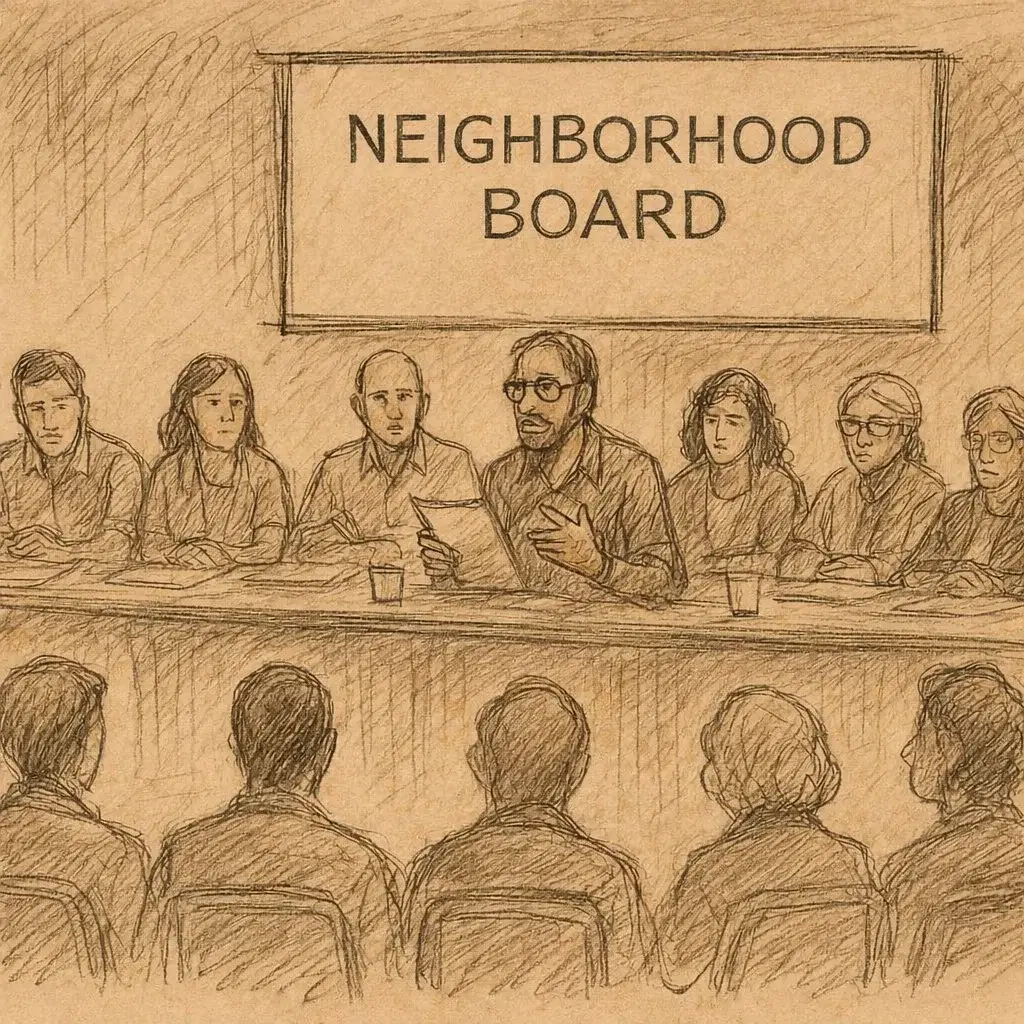
16 Kalihi Valley Neighborhood Board Meeting – May 14, 2026
Honolulu Fire Department Report and Wildfire Preparedness
Captain Alan Costello of HFD Engine 32, Third Watch, presented April incident statistics for the board area. The Fire Department recorded one brush or wildfire incident, two nuisance fires, one activated alarm with no actual fire, and 49 medical emergencies. Captain Costello explained that nuisance fires include rubbish fires outside a structure or vehicle fire. He directed the public to HFD’s Fire Response Search Tool for mapped incident details and provided the neighborhood board email contact for follow-up questions. The fire safety message focused on wildfire prevention as Hawaiʻi moves into a higher-risk season marked by dry conditions, tall grass, and shifting winds. Residents were advised to clear dry brush and vegetation around homes, avoid parking on dry grass because hot exhaust can ignite it, refrain from activities that create sparks during hot, dry, windy weather, and monitor weather and fire conditions. Additional wildfire resources were identified at fire.honolulu.gov and hawaiiwildfire.org.
Board members and residents used the wildfire discussion to focus on the recurring fire risk on the hillside in the neighborhood. Questions centered on what could be done to prevent another brush fire, especially given past concern that children may have started one by playing with fire in the area. Captain Costello said prevention would depend heavily on community education, especially outreach to children and parents, and on vegetation management around structures. He noted that schools can request HFD visits through the department’s community relations office, although HFD does not automatically go to elementary schools with HPD for presentations. A detailed discussion followed about defensible space and responsibility for brush clearance. Captain Costello said residents are responsible for maintaining fire breaks on their own properties, while any land beyond private property lines would be the responsibility of the owner, such as the Department of Land and Natural Resources or another landholder. He said at least five feet of clearance around a building is typically recommended under NFPA guidance, though greater separation is better. For farmland and other special situations, he advised contacting HFD fire inspectors, who can inspect sites and provide recommendations.
Honolulu Police Department Crime Statistics and Community Policing Outreach
Sergeant Tabanera of HPD District 5 reported crime and service data for April. Compared with March, aggravated assaults increased from one to two, auto thefts rose from four to six, burglaries increased to three, and sex assault cases rose from two to three. Simple assaults remained at two. Thefts increased from seven to nine, while unauthorized entry into motor vehicles decreased from three to two. No robberies were reported. Total calls for service in the area climbed from 574 in March to 630 in April, showing a noticeable increase in police activity. HPD’s safety focus for May was the annual “Click It or Ticket” seat belt campaign, with officers emphasizing seat belt use for adults and proper safety restraints, car seats, or booster seats for children as required by age.
Lieutenant Yamashita added a community engagement announcement for a “Coffee with a Cop” event scheduled for Friday, June 12, from 9:00 to 11:00 a.m. at the Starbucks in Kamehameha Shopping Center, 1620 North School Street. The event was presented as an opportunity for residents to meet officers informally and discuss concerns directly. No additional questions were raised by board members or the public, but the report highlighted both rising property crime concerns and HPD’s continued effort to maintain visibility and public access through local events.
Board of Water Supply Main Breaks, Water Conservation, and Kalihi Pump Station Museum Delay
Board of Water Supply representative Iris Oda attended remotely and combined what would have been her March, April, and May reports. She said that in February there had been two main breaks affecting the broader reporting period, one on February 2 near 2031 Kamehameha IV Road and another on February 16 near 1810 Liliha Street. She added that there were no reported main breaks in March, and one main break in April, on April 12 at the corner of Kalihi Street and Analu Place. She also noted past public outreach efforts such as “Detect a Leak Week,” held from April 12 through 18, when leak detection dye tablets were made available, and she said similar dye tablets may still be available at the Board of Water Supply lobby or City Hall.
Her current message emphasized continued water conservation despite recent storms. She explained that rainfall does not offset normal daily water use enough to remove the need for conservation, particularly with warmer summer months approaching. Residents were encouraged to water plants early in the morning to reduce evaporation, take shorter showers, check toilets for leaks since faulty flappers are a common cause, avoid letting faucets run unnecessarily, and use BWS rebate programs for water-efficient appliances and systems. She directed residents to boardofwatersupply.com/7ways for more conservation tips. Oda also followed up on earlier board questions about water main break losses, explaining that because breaks are unplanned, BWS cannot precisely measure or recover the amount of water lost. Repair time varies widely depending on break size, site conditions, nearby underground utilities, and road restoration requirements. She also provided an update on the long-discussed reopening of the Kalihi pump station museum, saying the project remains delayed because the existing fire alarm system must be replaced first. There is still no estimated completion date.
Resident Concern About Residential Parking Zone Permit System
During the resident concerns segment, Clarence Seren raised objections to the current RPZ permit structure, arguing that the system meant to protect residents is now burdening them. He said the four-permit limit and annual cost of $625 have created financial pressure and anxiety for local households, especially in a neighborhood where multigenerational living and rental units are common survival arrangements because of Hawaiʻi’s high cost of living. He described the requirement to consolidate vehicles in driveways as dangerous in emergencies because it can block access for kūpuna and wheelchair users. He said many residents joined the original pilot program in good faith and agreed that it reduced parking by non-residents and improved safety, but he characterized the transition from pilot to permanent permit system as a “bait and switch” that placed the solution behind a paywall.
Seren also criticized the public process, saying outreach had been inadequate and recalling at least one notable meeting held in a private home on Olive Street, which he felt was not an appropriate venue for a public policy discussion. He said residents at that meeting voiced opposition that was ignored in the final process. He cited the online RPZ portal and said that only 325 permits had been issued out of 42,000, which he argued suggested very low participation and support. He asked that the current permit system be reviewed or paused and that a broader public forum be held. His comments made clear that parking regulation remains a highly sensitive issue in the area, with continuing disagreement over cost, enforcement, emergency access, and how much the system reflects actual neighborhood support.
Community Resilience Hubs and Emergency Preparedness Network
Sage Murakami presented on Serene Community Engagement for Resilient Neighborhoods and the Oʻahu Resilience Hub Learning Community, often shortened to HLC. He described the HLC as a community of practice dedicated to supporting resilience hubs on Oʻahu and connecting them into a wider ecosystem of preparedness. He defined resilience as the ability to survive, adapt, and thrive regardless of shocks or stresses, and he said the group intentionally uses a broad definition to include both major disasters and local disruptions. A resilience hub was described as a trusted gathering group that serves the community year-round during “blue skies” and has an activation plan during “gray skies,” meaning emergencies or disruptions. Murakami stressed that a hub does not necessarily need a building and can be as simple as six people with a sense of kuleana and some equipment.
The presentation connected Kalihi Valley’s emerging efforts to a broader islandwide and statewide network. Murakami said the HLC is operated jointly by the Lōhui Foundation and the Serene Sustainability Lab at Kapiʻolani Community College, with student leaders involved from KCC and UH West Oʻahu. The group works with partners including the Hawaiʻi Climate Commission, HI-EMA, DEM, the Office of Climate Change, Sustainability and Resilience, the American Red Cross, and Vibrant Hawaiʻi, whose Big Island model helped shape the Oʻahu network. The HLC currently supports about 12 hubs in the Koʻolau Loko region and is recruiting more. Monthly gatherings are held every third Thursday at 3:00 p.m., and working groups include neighborhood boards, next-generation youth leaders, health and hubs, grant funding, kūpuna, faith-based groups, and CERT. Office hours are offered Mondays and Fridays from noon to 2:00 p.m. A resilience hub summit was announced for June 6 and 7.
Discussion clarified how the concept applies in Kalihi Valley. Board member James Sung explained that the local hub being organized would not focus only on emergency response but also on year-round needs such as food banks, ESL training, and job training, reflecting the concentration of low-income housing in the area. Murakami agreed that each ahupuaʻa has different needs and that resilience work must meet communities where they are. Questions from board members focused on what participants would actually do. Murakami said ordinary members can stay informed with minimal burden, while leaders would facilitate local activities and communication. During emergencies, the network can distribute alerts and coordinate information. Sung added that members could pursue training through CERT, ham radio, the American Red Cross, HI-EMA, HFD, CPR, AED use, and fire extinguisher use. He described CERT as the most intensive program, involving search and rescue training over three Saturdays. The presentation emphasized that participation is free, supported through city and county funding and other grants.
Kalihi Valley Homes Community Center Demolition Project
Representatives from Bowers & Kubota and the Hawaiʻi Public Housing Authority gave a detailed update on the long-closed Kalihi Valley Homes Community Center. Taishira Mizu explained that the center sits within the Kalihi Valley Homes public housing property, which contains about 373 affordable housing units. The community center itself was built around 1973 and has been closed for more than 10 years because of severe deterioration and safety concerns. HPHA is proposing to demolish the structure, which occupies about 6,000 square feet, in order to eliminate hazards and clear the site for future community use. The demolition will be funded with state capital improvement funds. Because the structure is on a federal public housing site, a Section 18 demolition application must be approved by the U.S. Department of Housing and Urban Development before work can begin. The action is exempt from a state environmental assessment under HRS 343, but a federal environmental review is still required.
The consulting team said research and technical studies are largely complete, including a historic architecture study by Mason Architects. Because the building is more than 50 years old, federal Section 106 and state Chapter 6E historic preservation rules had to be considered. The April 2026 study found that the structure did not meet the significance criteria for listing on historic registers because of its deterioration, damage, and prior alterations, meaning no historic preservation barriers were triggered. The project also requires consultation under the Endangered Species Act and completion of a federal environmental assessment, which will be published on HUD’s website. A community meeting held in December 2025 drew 34 attendees, and residents generally supported demolition if it leads to renewed site use, including a possible new court or new community center, with requests for future activities for children and teenagers. The timeline presented showed environmental and agency review continuing through much of 2026, with demolition unable to begin until after HUD approval, which the team estimated could be around the end of October 2026.
Residents and board members pressed HPHA on what would replace the building. Officials stressed that the immediate goal is demolition, but HPHA said the intention is to replace the community center and not simply leave an empty slab. Becky Choi of HPHA said five bids had been received for demolition and the agency was vetting contractors, with the low bidder unable to handle hazardous materials and the next bidder under review. She said bidders were told there would be a delay because demolition cannot start until federal approvals are complete. HPHA is also planning to issue a request for qualifications for design consultants and hopes to identify qualified candidates by July 1 so that design work and community engagement can begin while the federal demolition review is underway. No construction funding has yet been secured for a replacement facility, although demolition funding is already in place and HPHA expects to seek future construction funds through a mix of federal formula funds and state appropriations.
The discussion revealed deep frustration over how long the community has gone without the center. Residents recalled past after-school tutoring and community programming at the site and said the condition of the facility makes the area feel neglected. HPHA responded that it has a statewide capital backlog exceeding $300 million while its annual federal capital grant is only about $14 million to cover needs across all public housing properties in Hawaiʻi. Choi said urgent life-safety repairs to housing units often take precedence over community facilities, but noted that this demolition was able to move forward because special funds were secured specifically for it. Board members thanked staff and legislative supporters for advancing the project and asked for continued reporting. Residents requested regular transparency updates, ideally quarterly or monthly, especially once demolition begins and impacts such as traffic, noise, dust, and hazardous material handling become more visible. HPHA said monthly in-person attendance would be difficult because of staffing shortages but agreed to provide updates and written reports.
Mayor’s Office Updates, Storm Recovery, Parks, and Pending City Responses
A representative from Mayor Rick Blangiardi’s office provided city updates and follow-up responses to prior board inquiries. He said the city continues to respond to the recent Kona Low storm and has launched recovery information through oneoahu.org, where residents can report home damage, access health and safety guidance, find available assistance, and learn how to support affected communities. He also referenced the mayor’s newsletter, which included updates on storm recovery, postponed town halls, the 2026 State of the City address, accreditation for the Honolulu Zoo, expanded housing options in Chinatown, the city’s annual sustainability report, and staffing changes in the Office of Climate Change, Sustainability and Resilience.
Several prior neighborhood issues remained unresolved. For the monkeypod tree above 1710 Kilohea Street and for Kamanaiki Stream cleaning, the Department of Facility Maintenance requested extensions to provide answers, likely because of storm-related workload. For concerns about parked cars and housed or unhoused vehicle habitation around Kalihi Uka Community Park, the city said residents should contact HPD for assistance. On a request to install motion detector lights and cameras at the park, the city said the park sits on shared land involving both the Department of Education and the city’s Department of Parks and Recreation, so any installation would require coordination between state and city agencies. On the request for mobile crime units in Kalihi, HPD responded that District 5 already maintains two crime reduction units assigned to day and night watch operations and uses them for proactive enforcement, repeat offender suppression, and short-term deployments based on staffing, crime data, and service demands. HPD also clarified that its Scientific Investigation Section handles forensic work islandwide and does not conduct regular patrol operations.
The mayor’s office also relayed a DPR response to continuing complaints about Kalihi Valley District Park facilities. DPR said the boxing gym has long-term deterioration that goes beyond routine maintenance and will reopen only after roof repairs are completed. A work order submitted on November 24, 2025 addresses termite-damaged sections of the gym floor. The city said these issues must be fixed before the facility can be considered safe for public use. During the question period, a board member also raised the cost of surveillance cameras based on a separate project at KPT, noting that three cameras there were reportedly costing $35,000 each plus a $1,000 monthly operating fee, adding context to ongoing neighborhood discussions about security infrastructure. Another resident asked about ADA accessibility at a restroom in the Maunalua Bay area in Hawaiʻi Kai after witnessing an elderly person struggle to reach it with a walker. The mayor’s representative said ADA access is generally intended or required and promised to check on that specific site.
City Council Update: Dangerous Dog Bill, Graffiti Cleanup, Park Facilities, and Pool Closure
Constituent Services Director Lynn Robinson reported for Councilmember Tyler Dos Santos-Tam. She highlighted Bill 8, which passed third reading that day in the full City Council. The bill addresses animal nuisances and dangerous dog incidents by increasing penalties for repeat violations and filling gaps in reporting and prosecution that had limited enforcement. Robinson said the council office had done significant research to strengthen the law. She also pointed residents to graffiti cleanup resources listed in the councilmember’s newsletter, including different contact numbers for graffiti at bus shelters, state properties, parks, and a general mayor’s office contact number, 768-5180.
Robinson followed up on prior board concerns about Kalihi Valley District Park. She said earlier staffing issues at the pool had been temporarily addressed, but more recent information from DPR indicated the pool is now shut down because parts for the filtration system must be ordered and shipped. There is currently no definitive timeline for repairs, even as summer approaches. She acknowledged this was disappointing and said the council office has asked for regular updates so it can keep the board informed. She also confirmed that the mayor’s proposed FY 2027 capital budget includes a $4.8 million appropriation for repairs to the Kalihi Valley District Park gym, including roof replacement. Robinson said the office is continuing to push for broader improvements beyond the roof, including the courts, hoops, grading, exterior conditions, locker rooms, and other issues, and would continue acting as a “squeaky wheel” to keep those projects moving. Board members also pointed out errors in a mailed notice listing the neighborhood board meeting location and time, asking that future mailers identify the meeting correctly as being at Kalihi Valley District Park at 6:30 p.m.
Governor’s Representative and Legislative Session Context
A representative for Governor Josh Green attended in person and explained that neighborhood board representation from the governor’s office had only recently been restored after a period of vacancy. She said there was no substantive reason Kalihi Valley had gone without a representative for so long, aside from timing and possible holiday delays, and that all neighborhood board vacancies have now been filled. When asked what office she worked for, she identified herself as the public affairs officer for the Hawaiʻi Tourism Authority. The brief exchange reflected prior frustration from board members about the absence of state executive representation and the importance the board places on direct access to government agencies.
Because many questions in earlier meetings had centered on housing matters, the governor’s representative deferred most discussion to the legislators present and offered to yield time to them. She also addressed a process question about newsletters, after a community member raised concern that not everyone has equal access to emailed materials. She said reports had been sent to the chair and could also be provided more directly to board members. The discussion underscored an ongoing issue in neighborhood board operations: getting timely information from agencies into forms that are accessible to both members and the wider public.
State Legislative Report: Taxes, Campaign Finance, Kalihi Projects, Care Homes, and Stream Governance
Representative Ikaika Hussey gave a post-session report on major legislative outcomes and district priorities. He said the Legislature had adjourned and that he had circulated a report containing all passed bills and resolutions. Among the bills he highlighted was one intended to strengthen Hawaiʻi’s position against the effects of the Citizens United decision by limiting pathways for dark money to influence politics. He described that effort as an experiment in reducing corrosive outside influence on civic life. He also highlighted SB 3125 on taxes, saying it strengthened earlier tax cuts for working families while adding higher tax brackets at the top so wealthier residents contribute a fairer share. At the same time, he noted concern that the bill could negatively affect the solar industry and suggested that a special session or future legislation may be needed to correct that problem.
Hussey said the Legislature also protected immigrant rights, increased funding for care homes, and secured money for repairs to KPT gym facilities and the Kalihi Public Library. He revisited the Kalihi Valley Homes Community Center discussion and noted that state support had helped push that issue forward. He also discussed a bill that failed: a proposal related to NIL compensation for student athletes. Hussey said he voted against it because it would have used $4 million from the University of Hawaiʻi tuition special fund, meaning money paid by all students, to capitalize an NIL program benefiting a smaller subset of student athletes. He said the cost should instead be borne by the advertising and television interests that profit from college athletics. His explanation gave the board a clear view of his equity-based approach to education and public finance decisions.
Another major point in Hussey’s report was a bill enabling community co-management of public trust resources such as streams, mountains, and watersheds. He said he hopes this new framework can support better governance for Kalihi Stream, where overgrowth and fragmented jurisdiction have long hindered consistent maintenance. He also announced that he is preparing a memo to the city and county with a broad list of infrastructure concerns raised in the district and invited input through his website. With the legislative session over, Hussey said he plans to focus during the summer on community beautification and activation, including stream cleanups, trash pickups, graffiti paint-outs, and activities for children at parks. Board members strongly supported the idea, especially with church and youth group participation, though one resident cautioned that safety issues and encampments near the stream should be addressed before volunteer cleanup efforts proceed.
Committee Reports: S-Curve Safety, Sustainability, RPZ Concerns, Tours, and Education
In committee reporting, James Sung updated the board on the Sidewalk S-Curve and Transportation Committee. He said a site visit had documented issues along the S-curve, including concerns near the bend on the Kaʻahumanu side and by a drainage ditch. Keiko Kaina had used the city’s 311 app to report ditch conditions, while Sung reported damaged guardrails to the Department of Transportation. He also noted that vegetation obstructing sightlines along the sidewalk had been cut back, improving visibility. Simeon Rojas, speaking for the Sustainability Committee, said he conducted observations before and after the Kona Low storm and plans to submit a list of erosion areas affecting curbs and sidewalks. Some locations are already being addressed by the city, but he said additional problem spots remain.
Sung also reported on the Joint Committee’s activities and upcoming opportunities for board members. He announced that “Our Kakaʻako Ride” would be held May 30 from 8:00 a.m. to 2:00 p.m., with a suggestion to meet at K-Vibe in support of the local business. He said some neighborhood board members had already donated snacks and water. He also informed the board that Costco would be presenting at the Kūhiō-Pālama Neighborhood Board on May 20 regarding plans to move its gas station, a project he expected to generate strong public interest. Sung announced another “Tour de Trash” for July, involving visits to H-Power and Waimānalo Gulch, and said he was also arranging future tours of HI-EMA at Diamond Head Crater, the American Red Cross, and HART’s rail yard. These tours were presented as educational opportunities to help board members better understand public infrastructure and emergency systems.
During discussion of committee structure, the board voted to separate the Joint Communications Committee back into two committees, one for joint matters and one for communications. The chair said the earlier combined structure had placed too much work on one leadership role, especially with the communications side involving newsletter management that had not been consistently maintained. The motion was made by Board Member Līwōp and seconded by Simeon Rojas. It passed with five ayes and one abstention from Sung. In the Education Committee report, Līwōp described concerns raised at Farrington High School’s School Community Council. He said projected enrollment for next school year is 1,611 students across all grades, reflecting declining enrollment. He reported that morale among teachers, custodians, and staff appears low, and said that when adults on campus are overwhelmed, student morale suffers as well. He connected those concerns to declining test scores, noting Farrington is among the bottom two schools in testing results. He also mentioned drops at other nearby schools and argued that neighborhood conditions, including heavy development and too few safe recreational spaces for children, are affecting student well-being and performance. His comments linked education outcomes to broader community infrastructure and quality-of-life issues.
Parking Zone Clarification and Meeting Close
Near adjournment, a board member raised a follow-up parking question after a resident reported being told a permit was needed to park near a Korean church by a small park off a side road in the valley. The chair clarified that the restricted parking permit zone does not apply to the board’s own immediate meeting area and that the permit requirement is limited to the affected zone farther up near the Pink Store. This final exchange showed that RPZ boundaries and rules remain a source of confusion for residents, even beyond the earlier formal testimony.
The chair announced that the next regular meeting will be held Wednesday, June 10, 2026, at 6:30 p.m. at Kalihi Valley District Park. She noted that summer heat is increasing and said she would try to bring cold drinks to the next meeting. Residents were also reminded that neighborhood board meetings air on ʻŌlelo Channel 49 on the fourth Saturday of the month at 6:00 p.m. and on the first and third Sunday of the month at 9:00 a.m. With no further business, the meeting was adjourned.