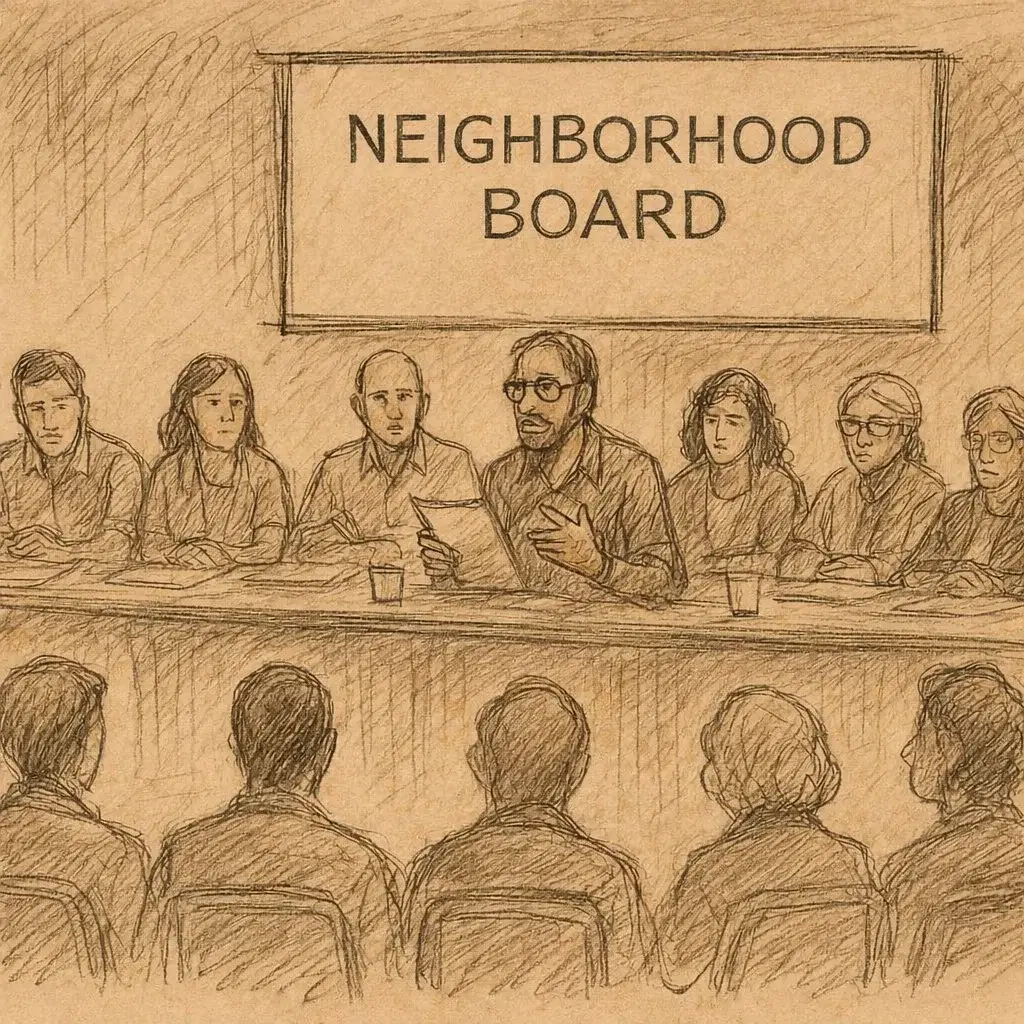
No 31 Kailua Neighborhood Board Regular Meeting February 2026
Listen to this article:
31 Kailua Neighborhood Board Meeting – February 20, 2026
Introductions and Meeting Logistics
Chair Bill Hicks opened the rescheduled Kailua Neighborhood Board meeting following a February 5th power outage at the district park facility. Arcing and sparking in the equipment room caused the original meeting to be canceled, and HECO deemed it unsafe to proceed at that time. On February 20th, all 18 board members (13 in person, 5 online) confirmed attendance, achieving 100% participation. The board reminded attendees of key announcements, including a venue shift for committee meetings to Kailua District Park due to ongoing roof repairs at Kalama Beach Park’s Butcher Estate House, and a reminder that the comment period for the FAA’s Hawaii Airspace Modernization Project remains open until March 15. Additional announcements addressed finalizing meeting logistics, acknowledging that future board committees could convene in various rooms at the district park.
Honolulu Police Department (HPD) Report
Sergeant Sherman Dalkin presented crime statistics for January 2026 in the Kailua-Waimanalo area, noting three motor vehicle thefts, seven burglaries (an increase of three from the previous month), 14 thefts (down from 23), four unauthorized entries into vehicles (up by one), and no robberies. HPD reported an ongoing power-related issue at a major intersection in Kailua, with increased police presence to direct traffic. Residents raised concerns about speeding on Mokapu Road near the Marine Corps Base, homeless loitering at Kailua Beach Park, and vehicle parking on unimproved sidewalks. The department emphasized that if a car forces pedestrians to walk in the roadway, residents should call 911 to facilitate towing or citations. HPD representatives also clarified that obstructions placed by homeowners in city easements (like rocks or shrubs) generally fall under Department of Planning and Permitting (DPP) jurisdiction. Officers confirmed that plainclothes operations could take place in unmarked vehicles and advised that anyone unsure of an officer’s identity should comply but may call 911 to verify.
Honolulu Fire Department (HFD) Update
Captain Corey Silva from Kailua Fire Station provided January 2026 incident statistics: two nuisance fires, one cooking fire, and 11 activated alarms with no actual fires, plus 96 medical emergencies, two motor vehicle crashes, and five hazardous material incidents. He noted that HFD fully transitioned to the National Emergency Response Information System (NERIS) on January 1, 2026, which may slightly reorganize reporting categories. HFD reminded the public never to drive directly to a fire station in an emergency, but rather to call 911 so the closest available unit can respond. Several residents inquired about lithium-ion battery fires, and HFD confirmed that excessive water application and isolation are the main tactics when such fires occur.
Ocean Safety Report
Ocean Safety acting lieutenant Anka Tamashiro briefed the board on heightened rescue activity amid seasonal high winds and high surf, particularly at Makapu‘u, Kalama Beach area, and the canal near Ka‘elepulu. Medical calls have increased at the Kailua boat ramp and Kalama Beach Park shower areas, including assistance for falls and seizures. There has been a recent surge in box jellyfish stings on the Windward side, although Kailua sees fewer than Waimanalo. Rescue teams remain short-staffed, and the department continues to recruit. Tamashiro noted the station at Lanikai Point remains under construction, with hopes to complete it by summer 2026, though that timeline has shifted before.
Motion to Extend Kalama Beach Park Lot Hours
The Parks and Recreation Committee introduced a motion to standardize Kalama Beach Park’s closing time at 7:00 p.m. year-round (replacing its unique 6:00 p.m. closure), aligning it with other City & County beach parks. This measure aims to prevent cars from being locked in prematurely and end confusion for lifeguards whose shifts run until 6:30 p.m. The board unanimously passed the motion, recognizing that final implementation requires city administration review.
Motion Supporting an Empty Homes Tax (Bill 46-2024)
The Planning, Zoning, and Environment Committee introduced a resolution supporting Honolulu City Council Bill 46-2024, establishing an empty homes tax. Emphasizing that many O‘ahu neighborhood boards already backed similar proposals, the board noted the measure’s goal to discourage properties left vacant by owners, especially out-of-state investors, and to generate revenue for affordable housing initiatives. Board members discussed the bill’s numerous exemptions for owner-occupants, long-term rentals, caregiving situations, and deployed military families. While some questioned self-reporting and scope, others cited Vancouver, Washington D.C., and San Francisco as comparables. After debate, the board passed the resolution 17–1, symbolically joining other boards in supporting the legislation.
Kawai Lua Youth and Family Wellness Center Master Plan
Representatives from the Office of Youth Services (OYS), Department of Accounting and General Services (DAGS), and consultants presented a master plan summary for the Kawai Lua Youth and Family Wellness Center (formerly the Hawai‘i Youth Correctional Facility) in Olomana. The 437-acre campus aims to expand and enhance rehabilitative, mental health, and vocational services for at-risk youth. The plan includes demolishing structurally unsafe buildings, constructing new dormitories, restoring agricultural training sites, and introducing cultural healing programs. Current partnerships with community organizations provide mental health assessment, transitional housing, cultural education, and vocational training. Officials clarified the plan remains subject to funding, an Environmental Impact Statement, and a Plan Review Use application. Community members inquired about total costs, project timelines, and ensuring existing successful programs remain uninterrupted throughout renovation phases. OYS pledged continued collaboration with stakeholders, emphasizing the facility’s move to a therapeutic, rather than purely punitive, model.
Resident Concerns: Road Restoration at Triangle Park
A group of residents from Kailepulu Drive and the surrounding area expressed frustration about the ongoing restoration of Kailua Mini Park (Triangle Park), used as a construction staging ground for a major roundabout project. Heavy trucks and a mobile office left the park’s landscape damaged with rocks, possible oil spills, and bare patches of earth. Although the project concluded months ago, Hawaiian Electric’s disconnection of a work unit took extra time. Neighbors gathered roughly 60 signatures and requested a clear timeline for final restoration, including cleanup of debris and comprehensive re-grassing. The board pledged to follow up with the contractor and push for swift remediation.
Lanikai Parking and Traffic Discussion
Residents filled the meeting room to address the longstanding traffic congestion in Lanikai. Over 75 written submissions arrived, plus in-person testimony. Concerns centered on safety, emergency vehicle access, overcrowding by visitors, and the constitutional right of all residents statewide to enjoy public shorelines. The board’s discussion referenced a years-long Lanikai Transportation Management Plan from the Department of Transportation Services (DTS). Key points included:
• Whether to accelerate placing “no parking” signs on the entire loop (Mokulua and ‘Ala‘apapa Drives) before cross-street adjustments, or wait until cross-street widening, one-way conversions, marked stalls, and increased bus frequency can be funded and completed by late 2026 or early 2027.
• Lanikai residents, some citing “decades of inaction,” described extreme gridlock, blocked driveways, and pedestrian dangers amidst a single-entry neighborhood. Others advocated a “no parking 10 a.m. to 4 p.m.” daily approach, similar to existing three-day-weekend bans, to allow morning and evening local use.
• Opposing voices contended a blanket ban, especially 24/7, effectively privatizes the beach, disproportionately impacting local families who regularly fish, paddle, or visit outside official park hours. Some requested a broader solution—such as opening other roads or establishing a shuttle system—rather than simply eliminating spaces.
• Many residents from outside Lanikai noted spillover effects as cars fill nearby neighborhoods and hamper emergency access there.
Due to time constraints, the board did not vote on the Lanikai parking action item. The topic is slated for continued discussion at the next meeting on March 5, 2026.
Adjournment
With the meeting room reservation expiring, the board adjourned the February 20, 2026 session, confirming that many key issues—especially the Lanikai congestion motion—would continue on the March 5 agenda. Members and residents left with an understanding that proposals impacting public beach access, emergency preparedness, and neighborhood character remain under active negotiation.