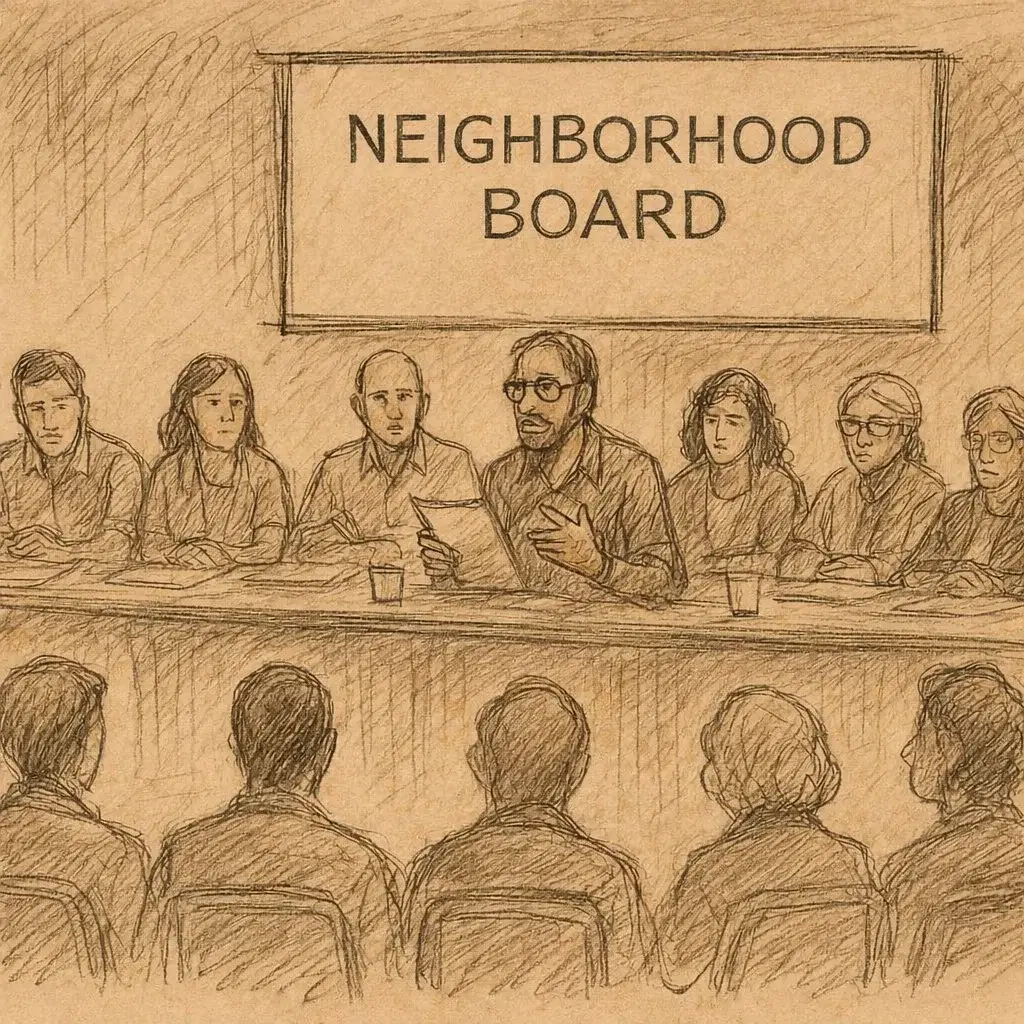
No 01 Hawaiʻi Kai Neighborhood Board Regular Meeting April 2026
Listen to this article:
1 Hawaii Kai Neighborhood Board Meeting – April 29, 2026
Honolulu Police Department Access and Community Contact
The meeting opened with a practical discussion about how Hawaiʻi Kai residents can effectively notify police about unusually large events, especially gatherings of more than 100 people at private homes or other locations. A resident explained that attempts to call police often led to voicemail loops and asked for the best direct contact. The Honolulu Police Department representative advised residents to call District 7’s main office at 808-723-3369 and ask for the District 7 Community Policing Team, which works daytime hours from 7:45 a.m. to 4:30 p.m. Residents can provide details such as the type of event, location, and expected attendance, and the team can either record the information or direct callers to the proper permitting or enforcement agencies. The discussion also clarified that the Hawaiʻi Kai police storefront is not staffed 24 hours a day because of manpower limitations. If someone goes there and needs immediate assistance, they should call 911 so an officer can meet them at the location. The exchange focused on the gap between community expectations for a visible neighborhood police presence and the operational reality of limited staffing.
Board of Water Supply Main Breaks, Conservation, and Follow-Up Items
The Board of Water Supply reported two water main breaks in March, both near 715 Hahaʻione Street, occurring on March 13 and March 19. In addition to the incident report, the representative emphasized seasonal water conservation, noting that even recent storms do not offset normal household demand, especially as summer approaches. Residents were encouraged to water plants early in the morning, take shorter showers, check toilets for leaks, avoid running faucets unnecessarily, and apply for Board of Water Supply rebates for water-efficient appliances and systems. The agency directed residents to its website for rebate information and conservation ideas. The board also received follow-up on prior questions. Regarding rough paving near 1093 Wainiha Street after a 2023 main break repair, the agency said that because the project was completed long ago, current road conditions must now be addressed by the Department of Facility Maintenance Road Division, reachable at 808-768-3343. Residents were urged to report poor restoration quickly after any Board of Water Supply project so contractors can be called back while the work is still fresh.
Mariners Ridge Road Damage and Long-Term Repair Timeline
A major follow-up item involved ongoing roadway damage and erosion on Kaluanui Road near Kaʻahue Street in the Mariners Ridge area. The Board of Water Supply said that the Department of Facility Maintenance, Department of Design and Construction, and the Board of Water Supply had met and were coordinating both an interim repair and a permanent solution. Interim investigation and repair work was expected to begin in April 2026, depending on crew and equipment availability, with road reopening dependent on what subgrade conditions are uncovered during excavation. The more significant update was that the permanent project is expected to take about three years, including design, approvals, solicitation, contractor hiring, and construction. Representative Joe Gideon’s office responded that residents have viewed the issue as unresolved since approximately September 2025, and raised concerns about narrow temporary delineators being struck by passing vehicles, as well as a lack of visible progress and regular communication. The office pressed for more transparency and frequent updates, especially because nearby driveways are affected. The Board of Water Supply said the lead contact for the project is Cindy Cromwell of the Department of Design and Construction at cindy.cromwell@honolulu.gov, while also agreeing to relay concerns internally.
Kalama Valley Waterline Work and Paving Standards
The Board of Water Supply also answered a pending question about ongoing work in Kalama Valley. The anticipated completion timeframe was given as early 2027, assuming no unforeseen problems. The agency explained that pavement restoration there will follow standard Board of Water Supply trench repair practice, meaning the roadway will be paved only over the width of the trench, not edge-to-edge across the full road. That answer addressed resident concerns about whether the finished roadway would be uniformly resurfaced or patched in a narrower strip.
Kaiser Complex Schools Activities, Student Achievements, and Campus Events
Kaiser Complex Schools delivered an extensive education report covering upcoming events, student achievements, and a major capital project. The board was invited to the Kaiser High School Hōʻike on May 1 at 6:00 p.m. in the gym, a May Day-style cultural performance featuring a Maunalua oli performed by students from across the complex. Kaiser High School’s commencement exercises are scheduled for May 22 at 6:30 p.m. on the school field. Across the complex, schools announced additional cultural and graduation events: Niu Valley’s eighth-grade commencement on May 28, Hānaiaʻiʻa’s Hōʻike on May 15, Hahaʻione’s May Day on May 13, Kamiloiki’s day of service at Keawāwa Wetland on May 15, and Koko Head’s May Day on May 8, along with elementary commencement programs. The report reflected a busy closing season for schools and reinforced how central these campuses are to neighborhood life.
Kaiser Visual and Performing Arts Complex Revised Plan
A major update was given on the long-discussed Kaiser Visual and Performing Arts Complex. Following a meeting held earlier that same day, planners reported that a revised site on the Great Lawn fronting the library, mauka of the administration building, would reduce costs by about $4 million. The current estimated total project cost is $65.5 million, divided into two phases. Phase 1 would be an auditorium costing $50.6 million, while Phase 2 would be a classroom building for dance, learning center, and visual arts, costing $15.03 million. The new timeline presented to the board placed Phase 1 groundbreaking in 2031 with 18 months of construction, and Phase 2 groundbreaking in 2033. These dates superseded earlier materials that still showed 2028. The school emphasized that construction depends on securing funds first. Board members asked for future information on square footage, seating capacity, and whether the current cost estimate accounts for inflation or tariffs over such a long timeline. There was also interest in seeing renderings or preliminary sketches once available, as the project remains in the design phase. The discussion showed both enthusiasm and skepticism, especially because versions of this concept have existed for decades.
Student Awards in Science, Academics, Athletics, and Programs
The schools report highlighted a long list of student accomplishments. At the Hawaiʻi State Science and Engineering Fair, Zoe Glazer and Olivia Park each placed second in their categories, while Vera Wang placed first in her category and third overall in the state, qualifying for the International Science and Engineering Fair in Phoenix. Her project examined natural biodegradation of marine pollutants through the coconut fiber microbiome. Additional honors included Kaiser’s Science Olympiad team placing fifth overall at the Pro City Invitational, the Oʻahu Math League team placing fourth overall, and students Xiaolong Kong and Leonard Cheung finishing in the top ten. Kaiser’s Mock Trial team reached the quarterfinals, the robotics team won the Energy Award at an event in Monroe, Washington, and ROTC took first in drill team competition. The school’s HOSA team placed first in phlebotomy and advanced to nationals, and Kaiser students took third in the Japanese Wizards competition. In athletics, Kaiser’s girls tennis team were OIA champions and doubles champions, boys tennis finished second in OIA and in doubles, girls water polo repeated as back-to-back OIA champions, and junior varsity volleyball placed second in OIA. A board member who served as a science fair judge remarked that this year’s projects were exceptionally strong.
Community Support for Student Success and Alumni Engagement
Several comments underscored broader community involvement in Kaiser schools. Livable Maunalua Hui noted that Vera Wang’s award-winning science project drew samples from Keawāwa Wetland and the niu grove, and that her work will be featured in an upcoming ʻŌlelo program so the public can learn more about it. Another board member announced that the Kaiser High School Class of 1976, which had just celebrated its 50th reunion, is being invited to attend the upcoming commencement and be recognized. The meeting also included an announcement that the Hahaʻione rummage sale would return on May 9 from 7:00 a.m. to 12:30 p.m., with proceeds supporting student projects.
Department of Transportation Follow-Up Delays
State transportation liaison Galen Wong reported that he had no updates yet on two issues raised previously: adding new trash cans at the lookout parking area and addressing traffic backups at Hanauma Bay. He said staff had been heavily occupied with cleanup from recent Konaloa storms and would try to return with information the following month. Although brief, this update reflected how storm response continues to delay progress on more routine service requests.
Community Announcements: Wetland Work, Firebreaks, and Hazard Mitigation
A board member announced a community workday at Keawāwa Wetland on May 9 and gave a detailed update on recent firebreak work in Mariner’s Cove and the back of Kamilo Nui Valley. The work has involved Hawaiʻi Kai Strong, Hawaiʻi Wildfire Management Organization, Team Rubicon, Livable Maunalua Hui, Aloha ʻĀina Kamilo Nui, Mariner’s Cove, Kamehameha Schools, and Royal Construction. Volunteers have been widening existing firebreaks to reduce wildfire risk, with work continuing through the weekend. The update connected local landscape maintenance with broader concerns about wildfire vulnerability in dry and windy parts of East Honolulu.
Hahaʻione Advocates Open House at the Former JAMS Building
Cheryl Park of Hahaʻione Advocates for Respectful Development announced that the group had received Kamehameha Schools approval to hold an open house at the former Japanese American Institute of Management Science building on May 9 from 10:00 to 11:30 a.m. The event will begin with a short program and includes support from elected officials, including Council Chair Tommy Waters and state legislators from the area. An online survey will be posted through the group’s website so residents can share what they would like to see in the building and on the property. Park described the site as visually understated from the road but striking inside, with a treehouse-like feeling, valley views, and significant potential for future use. She said ideas under discussion include a year-round community center and a community resiliency hub that could provide post-disaster relief, training, research, and education. The announcement reflected continued organizing around the future of one of the area’s most significant undeveloped institutional properties.
Candidate Announcements and Civic Engagement
Several candidates used the community announcement portion of the meeting to introduce themselves and upcoming events. Kahi Pakaro, running for State House District 19 in the Democratic primary against Representative Mark Hashem, highlighted recent work with Keawāwa Wetland, natural lands protection through the Clean Water and Natural Lands Commission, and the use of goat grazing in Waiʻalae Iki as a fire mitigation practice that Hawaiʻi Kai might examine. She invited residents to a talk story at Kuliʻouʻou Beach Park on the upcoming Saturday from 3:00 p.m. to sunset. She also later mentioned a June 6 World Oceans Day celebration at the restored area by Sandy Beach, marking five years of turning what she described as a former dump site into a park. Jason Liang, a candidate for City Council, introduced himself and said he would stay after the meeting to answer questions. Later, Tara Malia Gregory, also identified as a City Council candidate for District 4, raised concerns about emergency planning and other city issues during public testimony.
Community Race, Conservation Programs, and Marine Restoration Activities
Additional community announcements included a June 6 “Okala 5K” race in Kalama Valley, starting at 7:00 a.m., organized by the Mid-Pacific Roadrunners Club to benefit the Hawaiʻi Primary Care Association, which operates 16 clinics serving underserved and vulnerable communities. The route will run into the valley, loop out toward Kealahou and back to Kalama Valley Community Park, with an expected field of 100 to 150 runners. The nonprofit Ocean Alliance Project also announced free Kamaʻāina coral restoration and ecological monitoring programs on May 23–24 and May 30–31. These programs currently require scuba certification, though the group is working to expand access for free divers. The project combines coral restoration, monitoring, regenerative tourism, and Hawaiian cultural values.
Public Concerns: Traffic Countdown Signals and Highway Safety Near Cockroach Cove
During the public-generated issue segment, one resident questioned why certain traffic signals, including one on Kalanianaʻole Highway heading toward town from Hawaiʻi Kai, display countdown numbers in the 40s but then turn yellow long before the countdown reaches zero. She described the mismatch as confusing and possibly unfair to drivers, and requested clarification. Another resident raised safety concerns along Kalanianaʻole Highway by the blowhole lookout and the access to Cockroach Cove/“From Here to Eternity” beach. She described the deteriorated warning sign near a step-down access point, people walking in unsafe areas, possible rockfall risks on the makai side, rain-related slides and loose rocks on the mauka shoulder, and rusting guardrails along the highway. The issue was referred to state transportation officials, and Representative Gideon’s office added that it had already sent photos and concerns to the Department of Transportation earlier in the month but had not received a reply. Galen Wong asked that future reports and images be sent directly to him at galen.wong@hawaii.gov so he can follow up internally.
Community Climate Mandate for East Oʻahu
A major presentation introduced the Community Climate and Resiliency Mandate for East Oʻahu, led by Aloha McGuffie of the steering committee and Ulu Mau, with support from the Kāhala Initiative for Sustainability, Culture, and the Arts (KISCA Hui). McGuffie described East Oʻahu as an interconnected region stretching from Palolo and Kaimukī through Hawaiʻi Kai and Waimānalo, linked by the Koʻolau watershed and the flow of water from mauka to makai into Maunalua Bay and Waimānalo Bay. She said the process began in September 2025, when about 100 participants—including residents, educators, cultural practitioners, businesses, and government partners—gathered to identify local climate resilience priorities. A two-day symposium later produced 10 roundtables on major issues and helped shape a draft mandate. McGuffie praised Hawaiʻi Kai as a model for East Oʻahu, citing its active civic engagement and the emerging conversation around a resiliency hub in Hahaʻione.
Climate Risks, Place-Based Solutions, and Timeline for the Mandate
The climate mandate presentation identified the region’s shared challenges as flooding, wildfires, reef and watershed impacts, strong winds and power outages, coastal erosion, and sea level rise, noting that East Oʻahu has now experienced three Konaloa storms. McGuffie stressed that East Oʻahu needs place-based solutions that reflect the distinct priorities of its six neighborhood board areas rather than relying on generic islandwide approaches. The draft mandate is built on the values of mālama, kuleana, and hoʻomau, and is intended as a living framework extending to 2050 rather than a one-time report. Areas for participation include watershed restoration, stream and canal cleaning, reef and shoreline protection, local agriculture and food security, and neighborhood disaster preparedness. McGuffie highlighted stream and canal cleanup as a major gap, comparing East Oʻahu to Manoa, where a regular stream cleaning group has existed for decades. She said the steering committee will meet with the six East Oʻahu neighborhood boards twice between now and July, collect feedback, and work with Hawaiʻi Green Growth to align the plan with the state’s Aloha+ Goals, with the aim of finalizing the mandate by the end of 2026 and beginning implementation in 2027.
Questions About Structure, Reach, and Waimānalo Inclusion
In discussion, residents asked about the structure of the climate mandate effort and whether it was a nonprofit or government entity. McGuffie explained that it began as a grassroots effort supported by the Kāhala Hotel & Resort, which sponsored the earlier symposium, and includes Kamehameha Schools, nonprofits, and community members. The KISCA Hui now has around 150 members connected through a Basecamp platform where documents and discussion are housed. Residents also asked whether the mandate includes specific resiliency hub locations and how deeply Waimānalo is integrated into the planning. McGuffie said there are not yet specific hub sites in the plan, but she emphasized that Waimānalo must be included because Maunalua is part of the broader traditional system connected to that side of the island. She said she would continue engagement with the Waimānalo Neighborhood Board in June and July.
Oʻahu Community Resilience Hubs and the “Blue Skies/Gray Skies” Model
The second major presentation came from Honu ʻĀina Nichols of the SERENE Sustainability Lab, in partnership with the City and County’s Office of Climate Change, Sustainability and Resiliency, on the Oʻahu Community Resilience Hubs Learning Community. Nichols defined a resilience hub as a trusted gathering site or group that supports year-round community resilience and activates to support coordinated response during disruptions. She explained that the learning community spent significant time developing this definition and intentionally designed it to be broad. A resilience hub does not need to be a formal building or institution; it can be a church, wetland stewardship group, food provider, farm, nursing home, or any trusted network of people. Nichols used a “blue skies/gray skies” framework to explain the idea. “Blue skies” refers to normal times, when hubs build relationships, provide services, and strengthen communities; “gray skies” refers to disasters, when those same trusted networks help coordinate response. She stressed repeatedly that resilience work is not limited to emergency response but is about making communities strong enough that disasters become disruptions rather than total breakdowns.
Learning Community Structure, Training, and Support
Nichols described the learning community as a growing community of practice that meets every third Thursday at 3:00 p.m. and connects local hubs with training, partners, templates, guest speakers, certifications, and funding opportunities. She said the effort is supported by SERENE, the Lāhui Foundation, university researchers, and an advisory group that includes city climate staff and community leaders. The learning community does not itself activate disaster response operations; rather, it helps groups prepare, organize, and understand how to work together. Nichols noted that another partner, Vibrant Hawaiʻi, helps train hubs in activation planning. She cited recent free training in psychological first aid for around 35 people, and said the network can help hubs access FEMA certifications and other preparedness tools. The group is also preparing for a Resilience Hub Summit on June 5–6 at Camp Homelani, with stipends offered to participants in recognition of their time and local expertise. She urged potential hubs and individuals to sign up through the program’s intake form so they can be mapped into the network.
Debate Over How Resilience Hubs Relate to Red Cross and Formal Emergency Response
A substantial discussion followed over how resilience hubs differ from organizations like the American Red Cross. One audience member questioned whether the resilience hub concept might duplicate or complicate work already done by the Red Cross, which has large-scale logistics, shelters, and trained volunteers. Nichols responded that the learning community is not trying to replace or direct the Red Cross, but to build local capacity and improve community readiness before disasters, as well as help neighborhoods identify and share resources directly. Another speaker who had volunteered after the Maui fires said both models are necessary: major organizations handled large-scale supplies and food distribution, while smaller neighborhood hubs provided childcare, massage, music, local healing practices, communications support, and emotional care that residents desperately needed. Board and audience comments suggested that the resilience hub model fills a community-level gap between government systems and the immediate relationships people actually rely on in crisis.
Local Examples, Grassroots Response, and the Need for Better Coordination
Several participants connected the resilience hub discussion to experiences from recent storms. One speaker from community mutual aid work described using malamaMap.org to quickly identify active aid hubs and said that after the Konaloa flooding, four support sites were set up within 12 hours, well before major agencies arrived. She emphasized that communities in places like Kuliʻouʻou, Manoa, Waiʻanae, and the North Shore often rely first on neighbors and informal networks for water, cleanup support, and information. Another speaker asked why younger people trying to organize practical climate and emergency solutions often face skepticism, and argued that the neighborhood board system needs to be more open to new forms of participation. In response to a question about legislation, Nichols said bills including SB2109, SB17, and SB2645 were moving through the Legislature to support resilience hub funding. The discussion as a whole revealed broad interest in community self-organization, but also confusion about terminology and how these efforts should connect with existing agencies.
Vacancy Announcement and Board Recruitment
The board announced that it currently has three vacancies and again invited residents to apply. No one came forward during the meeting, but the chair said the board would continue seeking applicants at future meetings. The announcement reflected an ongoing challenge for neighborhood boards in maintaining full membership and broad community representation.
Mayor’s Representative: Homelessness Checks and Enforcement Follow-Up
Mayor Rick Blangiardi’s representative, Amy Asselbaye, provided follow-up on prior requests involving homelessness and overnight vehicle use. At Sandy Beach Park, where concerns had been raised about two Handy Vans, cars, and tour vehicles parking near the bathrooms, District 7 patrol officers conducted checks from April 8 to April 13, issued multiple verbal warnings, and wrote one citation for an expired safety check. No other violations were observed, and follow-up checks are expected to continue. Regarding reports of homeless individuals at the Hawaiʻi Kai Park and Ride, the Great Lawn, and the bridge into Portlock, police also conducted checks from April 8 to April 13 and issued one citation on April 12 for lying down at a bus stop. The Department of Community Services, checking between April 8 and April 18, reported not finding homeless individuals in those locations during its visits, though it acknowledged that people do camp and loiter there at times. The administration said HPD, DCS, and the Institute for Human Services had been asked to continue outreach and monitoring.
City Guidance on Service Requests and Infrastructure Complaints
Asselbaye said she did not yet have new responses on tree maintenance, Cocoa Crater Stables, or some roadway questions, but she encouraged residents to use the city’s 311 system, which now allows users to pinpoint locations on a map, attach photos, and route concerns directly to the responsible department. She suggested that 311 may produce faster responses than waiting through the neighborhood board process for some operational issues, while still affirming that the administration would continue trying to answer board questions. She also spoke favorably about the role local networks have played in storm response, saying that on the North Shore and in Waiʻanae, city agencies depended heavily on community organizations with local trust and language capacity to connect residents with FEMA, property tax relief, and other services.
Council Chair Tommy Waters: JAMS Building and Future Use
Council Chair Tommy Waters used his report to discuss several major policy matters. He strongly encouraged residents to attend the May 9 open house at the former Japanese American Institute of Management Science building, saying he recently toured it and found it beautiful but clearly designed as a school, with classrooms and a kitchen. Waters said that earlier in the budget process he had advocated setting aside $34 million, based on the tax-assessed value, to acquire the property from Kamehameha Schools, although the property is not formally for sale. In light of the city’s estimated $50 million to $100 million in storm-related expenses after the Konaloa events, he concluded that this was not the right year to pursue that appropriation. He said the idea could return in a future budget, possibly with state financial support, and in the meantime he is encouraging Kamehameha Schools to work with the community on a compatible use for the site. He also said that while he understands concerns about Kamehameha Schools liquidating lands, some arrangement such as a lease could perhaps be explored. He made clear his opposition to any proposal for a tall residential building on the site, saying that as long as he remains in office, such a permit would not move forward.
Council Budget Priorities and Resilience Hubs in Each District
Waters strongly supported the resilience hub concept and connected it to his own concerns about the adequacy of current evacuation shelters. He noted that schools are commonly designated as evacuation sites but questioned whether many cafeteria buildings could actually survive a major hurricane. He described personally visiting Niu Valley Intermediate during a previous hurricane alert and doubting that the structure would be safe in a severe storm. In response, he said the city budget currently includes $2 million for a resilience hub in Hauʻula, and he is advocating for $2 million in each council district so every district can develop a facility capable of withstanding disasters and serving as a true refuge. He urged residents who support that approach to testify at the city’s special budget hearing.
Landfill Siting, Aquifer Protections, and Hawaiʻi Kai Concerns
Waters devoted a major portion of his report to the city’s landfill crisis. He reviewed the history of the Waimānalo Gulch Sanitary Landfill, which has operated since 1989, and the legal requirements for siting a replacement. He explained that federal and state rules prohibit landfills in certain areas, including near airports, and that Act 73 (2020) bars waste disposal facilities in conservation districts and within half a mile of residences, schools, and hospitals. He then walked through earlier city studies, including a 2012 mayoral advisory committee report listing potential sites such as Upland Hawaiʻi Kai, Kapaʻa Quarry Road, Upland Lāʻie, Upland Nānākuli, and others. Later city studies identified six options, but all were over aquifers. After the city selected a Dole site, the Legislature passed Act 255 (2025) prohibiting landfills over aquifers. Waters displayed a Board of Water Supply “no pass zone” map showing areas over aquifers and said Hawaiʻi Kai is not automatically eliminated under that framework, which means residents must stay vigilant if other options fail. He also noted that the city is now seeking a public infrastructure map symbol to place the next landfill at Makaʻiwa, adjacent to the current west side landfill, despite the mayor’s pledge not to site the next landfill in that region. Waters said that if Makaʻiwa fails, pressure could shift elsewhere, including places that have already appeared in past studies. In response, board members and residents pointed out that Kamilo Nui Valley is in a Board of Water Supply no-pass zone, which would offer some protection. Waters said the city also needs to reduce waste generation overall and support more reuse and diversion.
Disaster Planning, City Finances, and Stream Maintenance
Waters said he would be chairing an Executive Management Committee hearing at 9:00 a.m. the next morning to review city emergency management performance after recent flooding, including the amount of money being spent and whether the city should create a provisional account for disaster mitigation and preparedness. Rather than raising taxes, he suggested setting aside a portion of existing vacancy and lapse funds each year to create a reserve for emergencies. He also emphasized the need for regular stream and ditch maintenance, not just last-minute clearing before storms, and said the city must become more proactive because events once described as “100-year storms” are happening far more often. This portion of his report tied together multiple themes of the meeting: resilience, climate impacts, and infrastructure management.
Legislative and Agency Updates from State Offices
State officials and legislative offices gave shorter reports. The governor’s representative was absent due to a conflict, but information on the coconut rhinoceros beetle had been circulated to board members. A representative from Senator Stanley Chang’s office thanked residents for their testimony during the legislative session, said the office has been in direct contact with Hawaiian Electric about recurring outages in East Honolulu, and reminded residents that storm-related mortgage relief may be available under Governor Green’s emergency proclamation, including forbearance options, foreclosure moratoriums, and waived late fees for some borrowers. The office also encouraged residents to use the Public Access Room during the final week of session. In response to a board question about SB2423, the office said that community pushback had caused the bill to be recommitted and effectively halted. Representative Joe Gideon’s office reported on odor complaints near the golf course, saying initial investigation suggests the smell likely came from the Hawaiʻi American Water treatment facility rather than the golf course itself. The office also promoted pothole reporting through 311 and announced a tax policy talk story scheduled for 6:00 p.m. Thursday at Oʻahu Country Club featuring Ted Foleis of the Grassroot Institute and Tom Yamachika of the Tax Foundation of Hawaiʻi. Representative Mark Hashem’s office said the representative supports more regular stream maintenance and has floated the idea of using green fee funds for that purpose, while also encouraging residents to use the 311 app.
Kamilo Nui Valley Agriculture Conditions and Farmer Uncertainty
In the final board business section, farmer Judy Nii updated the board on conditions in Kamilo Nui Valley after heavy rains. She confirmed earlier reports that the main access road had become impassable because clearing of overgrown vegetation allowed water to run directly through the roadway, forcing use of an emergency route. She described severe agricultural impacts from prolonged rainfall, including rotting crops, increased disease pressure, inability to harvest, and poor growing conditions for vegetable farmers because of the lack of sun. She also said Kamehameha Schools is currently offering only one-year licenses, generally renewed around the end of June, which creates major uncertainty for farmers trying to invest in infrastructure or secure loans. According to Nii, some new farmers have had to seek outside investors because ordinary agricultural financing is difficult without secure tenure. She said the future is especially unclear because farmers have still not been shown a firm plan for whatever sewer-related work may affect the valley, and there is concern that water service could be interrupted. Another board member noted that native birds, including the ʻalae ʻula and the Hawaiian moorhen, had recently been observed on one parcel after flooding created ponded conditions, reflecting the valley’s ecological sensitivity as well as its agricultural value.
Cocoa Crater Stables and Continuing Questions
There was no substantive update on Cocoa Crater Stables, though a board member asked whether the administration could provide a letter explaining how its decisions were made over the years and why responsibility for current problems was effectively shifted elsewhere after such a long period. The chair said she would take the request under advisement and try to determine what could be pursued.
Board Administration and Next Meeting
The board approved the March 31, 2026 regular meeting minutes without changes. It also reminded the public that the next regular meeting will be held on Tuesday, May 26, 2026, at 7:00 p.m. at Hahaʻione Elementary School Cafeteria and on Webex. Meetings continue to be cablecast on ʻŌlelo Channel 49 and archived online through both ʻŌlelo and the Neighborhood Commission Office. The meeting closed after a long agenda that centered heavily on climate resilience, emergency readiness, infrastructure vulnerability, school achievements, and long-term land use questions shaping Hawaiʻi Kai’s future.