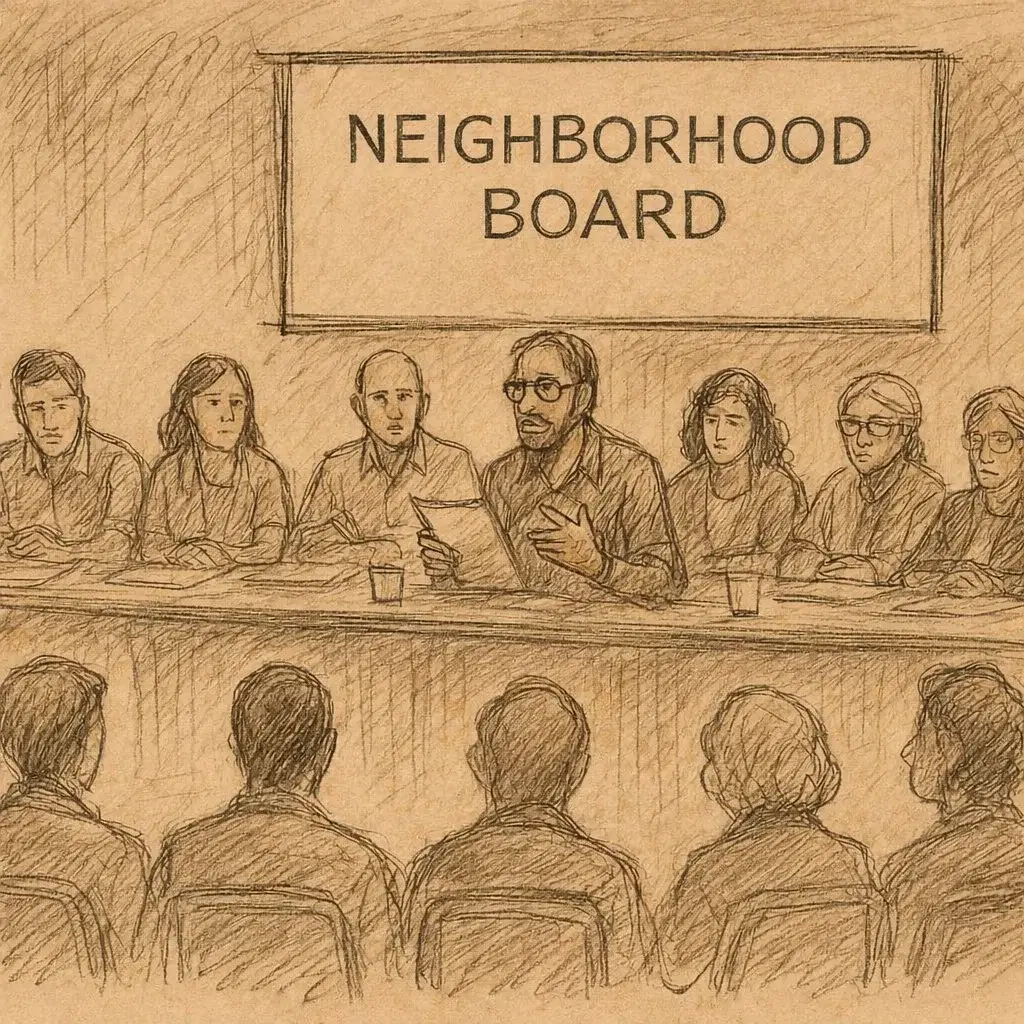
No 23 ʻEwa Neighborhood Board Regular Meeting May 2026
Listen to this article:
23 Ewa Neighborhood Board Meeting – May 15, 2026
Illegal Burning, Smoke Exposure, and Health Complaints in Westloch
A major community concern centered on recurring nighttime and early morning burning near Westloch Fairways and Westloch Estates, with residents describing repeated episodes of smoke after earlier brush-clearing efforts had temporarily improved conditions. A resident, Junior Shinaga, said the burning had returned despite prior city work to clear dry brush near the park and bike path area. She described neighbors reporting dizziness, sinus problems, breathing difficulty, and other illnesses, and said at least five people on her street had experienced dizziness severe enough to require emergency care. She also recounted a February 6 incident in which someone in her household had trouble breathing badly enough that 911 was called. Residents said the smoke sometimes smelled toxic or chemical-like, raising fears that rubbish or other hazardous material may be burning. One document shared with the board reportedly related to a May 7 trash fire and included communication from a federal official apologizing for the recurrence and indicating coordination with DLNR. The discussion underscored that residents often cannot identify the exact burn location quickly enough for responders, which has made enforcement and suppression difficult.
Fire and Police Response Guidance for Nuisance Burning
Honolulu Fire Department and Honolulu Police Department representatives stressed that immediate reporting is essential because nuisance or rubbish fires often flare up with a large smoke plume and then die down before crews can locate them. Residents were told to call 911 right away when they see smoke, flames, or feel acute medical effects. Officials explained that responders need a timely call and, if possible, as precise a location as residents can provide. They indicated that when no one reports the event in real time, police and fire generally are not dispatched simply because smoke might be visible somewhere in the area. That exchange made clear that the current response model depends heavily on residents serving as the trigger for action.
Federal Land, Homeless Encampments, and Plans for a Neighborhood Security Watch
HPD District 8 Acting Park Sergeant Corporal Pagan explained that the area behind Westloch, including portions near the bike path and park, involves overlapping jurisdictions and in some places federal property, which is why Federal Fire had responded previously. She said police know that unhoused individuals have moved through the mangroves and federal lands, but the camps are mobile and not concentrated in fixed large encampments on city property. HPD has been trying to coordinate with DLNR and the military regarding access and enforcement on those lands. Corporal Pagan also reported that Councilmember Augie Tulba’s office had expressed interest in starting a neighborhood security watch for the area, which was presented as one possible tool to improve reporting and deterrence. Board members asked HPD to continue the work and provide updates in future meetings so the board can report progress back to residents of Westloch Fairways and Westloch Estates.
Ewa Weed and Seed Update and Annual Golf Tournament
Corporal Pagan also gave a brief Ewa Weed and Seed update, announcing that the program’s annual golf tournament would be held on May 21, 2026 at Hoakalei Golf Course. The mention was short because the transcript cuts off, but the event was framed as a fundraiser and community support effort for Weed and Seed activities in the area.
University of Hawaii Cancer Center Community Outreach and Engagement Program
Kelly E. Nixon of the University of Hawaii Cancer Center introduced the Kualoa program, a longstanding community health education initiative focused on Native Hawaiian men and their families. She explained that the program began from research led by Dr. Kekuni Blaisdell and Dr. Claire Hughes, originally involving Native Hawaiian women and breast cancer, and evolved when women in that study asked what was being done for their husbands and male family members who were also dying young. Nixon said the program has existed for more than 30 years under different names and was renamed Kualoa in 2021. She described a framework built around encouraging men to take control of their health through small-group sessions that include cancer education, peer discussion, cultural grounding, and direct access to a doctor for about two hours, substantially longer than a typical primary care appointment. The four major cancer modules focus on colorectal, lung, mouth and throat, and prostate cancer, reflecting the most prevalent cancers in Hawaii. Cultural modules include healthy eating, fishpond-related learning, cordage and canoe-lashing traditions, and prayer. She also described community support work such as paying for meeting spaces, food, screenings, scholarships for certified research professional training, and collaboration with local organizations.
Recruitment Challenges for Men’s Health Sessions and Free Colorectal Screening
The Cancer Center representative said the immediate ask to the board and community was help recruiting men age 18 and older into the program, especially through existing men’s groups or community networks in Ewa. She noted that the program has struggled to assemble men’s groups consistently, although a recent session had been held in Waianae and another was being scheduled in Palolo. Nixon, who said she grew up in Ewa and attended Campbell High School, asked for ideas on better local recruitment so the effort can remain community-driven. She also highlighted one direct service: free fecal immunochemical tests for colorectal screening. Participants who fit screening ages can receive the test at no cost, take it to Diagnostic Laboratory Services, and if they do not have a primary care provider, the program’s doctor can help follow up. If results are positive, the program can help guide people through the next steps.
Questions on Vaping, Incarcerated Populations, and Cancer Screening Coverage
Board members and attendees raised broader issues about prevention and access. One member asked about the program’s position on vaping and cigarettes, and Nixon responded that the program discourages both, along with alcohol abuse, as cancer risk factors. Another question concerned men in prison, but Nixon said that because incarcerated people are considered a vulnerable population for research and consent purposes, including them may be more complicated under current grant rules, though it might be considered in future grant revisions. Discussion also touched on whether the legislature had advanced proposals for free cancer screening, though Nixon said she was not positioned to answer program funding and policy details at that level.
Senator’s Critique of Cancer Demographics, Insurance Barriers, and Women’s Treatment Equity
Senator Kurt Fevella used the presentation to make a broader criticism of cancer policy in Hawaii, arguing that standard screening age thresholds such as age 45 do not reflect the realities of Hawaii’s communities. He said people in Hawaii, including Native Hawaiians and other groups, are being diagnosed and dying younger than the standard demographic assumptions used in insurance coverage decisions, leaving younger patients screened but not fully covered for treatment because they fall outside recognized criteria. He argued that environmental and lifestyle conditions in Hawaii are contributing factors and said he and others have repeatedly challenged the Cancer Center and health system over these gaps. He also criticized disparities in treatment innovation, saying men often receive better access to cutting-edge trial therapies than women. He gave a personal example involving his father’s prostate cancer treatment and called for stronger focus on women’s cancer treatment and research equity. The exchange made clear that community concern extended beyond education into structural questions of who qualifies for screening, who gets covered by insurance, and who benefits from medical research.
Question About Federal Funding Cuts to the Cancer Program
The board chair asked whether the Kualoa program had been targeted by current federal or administrative funding cuts, especially relating to NIH funding. Nixon said her understanding was that their current grant support comes through the University of Hawaii Foundation and, for her specific work, through the American Cancer Society’s prostate cancer module funding, and she did not believe NIH cuts were affecting their program directly.
Inspire Church Ho‘opili Conditional Use Permit Proposal
Inspire Church presented plans for a new project in Ho‘opili at the southwest corner of Farrington Highway and Iwikuamoo Street, about a quarter mile west of the Honouliuli Skyline Station. Planner Bradley Furuya of PBR Hawaii said the site is vacant and zoned AMX-2, Apartment Mixed Use Medium Density, which allows a maximum height of 65 feet and maximum lot coverage of 40 percent. The church proposal includes a two-story sanctuary building, a covered walkway and courtyard, a children’s church building that would operate as a preschool on weekdays, and a multi-purpose building with a sports court and bleacher seating for about 100 spectators. The site plan also includes roughly 500 parking stalls. The proposed structures would remain within zoning limits, with a planned height of 40 feet and 37 percent buildable area. Because the meeting facility and preschool uses require a conditional use permit in the AMX-2 zone, the team said it expected to file its application with the Department of Planning and Permitting within the next month or two.
Board Frustration Over Lack of Quorum During Church Presentation
Because the neighborhood board did not have quorum, members could not take formal action or issue a resolution of support for the Inspire Church project. Senator Fevella sharply criticized the absence of enough board members, saying it was disappointing that a project team came out to present a development he considered beneficial to the community without being able to receive an official board position. Board members expressed informal support and encouraged the applicants to keep the board updated as the permit process moves forward and construction approaches. One member suggested the applicant could submit draft language for a future resolution so the board could potentially take a position later. Another asked whether an environmental assessment would be required; the team replied that the project does not independently trigger one, though prior environmental impact documents for Ho‘opili contain the broader area analysis.
Public Support and Suggested Follow-Up on the Church Project
Public testimony on the Inspire Church item included an enthusiastic statement of support from a resident who praised the project in explicitly religious terms. Board members also suggested the project team return during later phases, possibly with contractors, to maintain transparency and community involvement. Discussion included procedural suggestions such as bringing the issue before a board committee first if that would help generate support ahead of a future full-board vote.
Sierra Club Presentation on the Liquid Natural Gas Strategic Partnering Agreement
Wayne Tanaka of Sierra Club of Hawai‘i delivered a detailed presentation opposing a proposal to bring liquefied natural gas, or LNG, to Hawaii under a strategic partnering agreement involving the state and JERA, a Japanese-American energy company. Tanaka said the plan being advanced would involve about $2 billion in new infrastructure to import LNG by a 300-meter tanker moored offshore of Campbell Industrial Park, connect it through a subsea pipeline, and pipe it inland to converted oil-burning power plants. He said proponents argue LNG would serve as a temporary lower-cost bridge fuel before a later transition to hydrogen or another future fuel, and that the state would effectively be borrowing the $2 billion through JERA with the costs later recovered through ratepayers’ electric bills. He also said the agreement includes commitments by the state to form a coalition to advance related energy policies and even develop curriculum for other Pacific jurisdictions, with JERA involved in leading those efforts.
Safety Risks of LNG Infrastructure and Documented Explosions
A central part of the Sierra Club presentation focused on public safety. Tanaka argued that once LNG is regasified, it becomes an explosive fuel with significant risks of leakage, venting, and catastrophic incidents. He said that in 2026 alone there had already been three major pipeline explosions on the mainland, and that from 2010 to 2020 there were around 1,500 reportable gas pipeline explosions in the continental United States. He also cited JERA’s own 2022 Freeport facility explosion, which reportedly caused about $751 million in damages, and said JERA facilities in Japan had experienced fires every year from 2022 through 2025. He argued that a centralized LNG import and pipeline system on Oahu would create vulnerability to earthquakes, hurricanes, industrial accidents, and even sabotage, potentially affecting multiple power plants at once.
Environmental and Public Health Concerns Related to LNG
Tanaka also described health and environmental risks associated with LNG facilities, including methane leakage, benzene and toluene emissions, and the formation of ground-level ozone or smog. He said these pollutants could worsen breathing conditions in leeward areas where winds may be weak. He also cited concerns from other countries about marine and water contamination, including the use of chlorine in LNG systems to kill marine organisms drawn into equipment. He referenced Australia as having rejected a similar facility due to environmental concerns, and also pointed to severe fishery impacts in places with large fossil-fuel infrastructure, including examples of shrimp and fish catch declines in Louisiana and the Philippines.
Disputed Cost Savings, Ratepayer Risk, and Potential Lock-In Beyond 2045
Tanaka challenged the economic case for LNG, saying HECO’s earlier financial models had contained a roughly $1 billion error by omitting fuel costs. Even after revisions, he argued the projected benefit had shrunk to a narrow margin. In one updated scenario, he said the system might deliver only about $150 million in net benefit from a $2 billion investment if everything goes perfectly, with no cost overruns, delays, accidents, or price spikes. He criticized assumptions that LNG-related infrastructure could later be repurposed to hydrogen and still retain enough value 15 years later to count as a major savings. He also warned that large-scale LNG procurement requires buying and burning substantial quantities of gas, which could crowd out demand for renewables and lock the state into fossil fuel use beyond Hawaii’s legal 2045 renewable requirement. His broader point was that even modest overruns could erase any savings and leave ratepayers committed to a costly long-term obligation.
Questions on Nuclear Power, Renewable Alternatives, and Grid Strategy
Board discussion expanded into energy alternatives. One member asked whether modern small modular nuclear reactors, including Gen 4 concepts, had changed Sierra Club’s opposition to nuclear power, and whether such technologies could theoretically be ship-based and connected to island grids. Tanaka said there had been a working group the previous year that looked at small modular reactors and concluded the technology was still likely at least a decade away from practical commercial deployment at needed scale. He said Sierra Club’s future position would depend on how feasible and safe those technologies actually become. More broadly, he argued that Hawaii should focus on direct renewable investment, storage, smart demand management, and grid modernization rather than building major LNG infrastructure.
Tension Between LNG and Hawaii’s Renewable Energy Mandates
Another board member questioned how a multibillion-dollar LNG buildout could be reconciled with Hawaii’s 100 percent renewable energy mandate by 2045 and Governor Green’s own stated goals of 70 percent renewable energy on Oahu and 100 percent on neighbor islands by 2035. Tanaka replied that many outside experts and University of Hawaii researchers find the LNG push difficult to reconcile with those goals and suggested there is an aggressive behind-the-scenes lobbying effort underway. He named major public relations and lobbying firms allegedly working on LNG promotion and suggested opposition voices have had difficulty securing representation in that environment.
Additional Public and Legislative Criticism of LNG and Waste-to-Energy Advocacy
Public testimony on LNG included criticism that the agreement was being advanced without proper public consent and that there are better alternatives. Another speaker asked about a legislative resolution that would have created basic “guardrails” to protect ratepayers from LNG-related financial risk. Tanaka said JERA had opposed those consumer protections, including provisions that would prevent ratepayers from bearing excessive risk and ensure only necessary quantities of LNG would be purchased. He argued that JERA’s opposition showed a preference for transferring risk to Hawaii’s public while preserving its own upside. Senator Fevella also used the LNG discussion to advocate for true waste-to-energy infrastructure as a cleaner long-term alternative to both landfill expansion and imported gas. He sharply criticized what he described as decades of inaction, a flawed current H-Power model, and failure to pursue newer international waste-to-energy systems that could reduce landfill dependence and emissions.
Deferred Board Action on a Separate Resolution Due to Lack of Quorum
When the meeting moved into new business, the board could not take action because quorum was still lacking. Member Plowman noted that a resolution previously discussed would likely need to return next month. He added that similar resolutions had already passed in Makakilo, Pearl City, and possibly Waikiki neighborhood boards, with each tailoring language to local issues such as the Kalaeloa tower and helicopter traffic. The inability to act became a recurring frustration throughout the meeting.
Fairway Tavern Opening at Ewa Villages Golf Course
In community announcements, Barbara and Chris Natal introduced Fairway Tavern, a new restaurant that had opened about two weeks earlier at the Ewa Villages Golf Course. They said the business is a partnership with Adam and Sonny Gilbert and offers plantation-style food, with Chef Adam known previously from Plantation Tavern in Kapolei Shopping Center before COVID. The restaurant currently offers grab-and-go breakfast service for golfers, sit-down breakfast, and lunch from 11 a.m. to 6 p.m., with dinner service expected in a few months. They described it as a family-style place intended to remain community-friendly rather than rowdy, and invited residents to visit.
Red Hill Registry Enrollment Reminder for Ewa Residents
Jolie Nomasaki, community engagement specialist for the Red Hill Registry, reminded residents about the registry created in response to the 2021 Red Hill fuel-contaminated water crisis. She noted that in the Ewa area, Kapilina Beach Homes is the neighborhood directly affected, but enrollment is also open to concerned water users on Oahu through an expanded enrollment category. She said the registry tracks health outcomes among those potentially exposed, develops educational materials for residents and healthcare providers, and connects community members with available resources such as housing and information support. She emphasized that enrollment matters even for people not currently experiencing symptoms because long-term health effects from fuel exposure are still uncertain. The registry uses an enrollment questionnaire and follow-up questionnaires to monitor possible delayed health impacts. Residents were directed to redhillregistry.org for more information.
Community Representation Initiative on Red Hill Continues Without Navy Participation
Member Tainanes announced an upcoming Community Representation Initiative meeting on Zoom the following Thursday, explaining that the group was created by the EPA to engage with the Navy on Red Hill issues. He said the Navy had stopped meeting with the group, but the CRI meetings were continuing. The next session would feature retired EPA scientist Eva Davis discussing the plume that still exists above the aquifer and George Lujan from New Mexico speaking on jet fuel plumes and the difficulty of removing them. The event was described as focused on debunking myths about jet fuel contamination and cleanup.
E-Bike Safety, Enforcement, and Parental Responsibility
Community comments also returned to e-bikes and road safety. One member said videos show riders doing tricks and taking over roads, and warned that in a collision between a truck and an uninsured e-bike rider, the consequences for both families could be severe. He urged parents to understand legal age requirements, which he said were 15 and up for certain devices, and not to “spoil” children with powerful bikes without teaching safe use. Later in the meeting, Senator Fevella provided a legislative update on House Bill 2021, which passed and establishes clearer rules for electric bikes and other electric mobility devices. He said the law creates definitions, restrictions, labeling and signage requirements, and importantly gives police stronger authority to seize illegal or noncompliant devices. He argued that confiscation matters because some of these bikes cost $7,000 to $8,000 and seizure would be a stronger deterrent than citations alone.
Developer Reports and Follow-Up Questions
Haseko’s representative, Keola Fisher, said there was nothing new to report but remained available for questions. A caller asked about an earlier promised follow-up concerning road and stoplight issues, possibly on Geiger Road, and whether another pending Haseko matter still needed to come back. The exchange suggested some long-running development and traffic questions remain unresolved and may need to be revived by reviewing prior minutes.
Marine Corps Base Hawaii Update and Command Transition
Colonel Bevan of Marine Corps Base Hawaii reported that the next PRTF working group, led by Representative Julie Reyes Oda and including Alex Goos, was scheduled for May 27. He said his team expected to present information then from a Range Environmental Vulnerability Assessment. He also announced that after three years as commanding officer, his tenure would end the following week, though he would remain on Oahu in an Indo-Pacific assignment. He thanked the board, legislators, and community for their partnership over the past three years, noting that while perspectives differ, continued dialogue has been valuable. A board member thanked him specifically for attending in person and engaging directly rather than relying only on staff, describing that as meaningful to the community.
U.S. Navy Questions on Red Hill, Westloch Fires, and Weapons Magazine Expansion
A Navy representative said the Navy had been in touch with the relevant installation regarding interest in the weapons magazine expansion and could schedule a formal presentation if the board wants one. Board members requested that presentation, especially regarding traffic changes and road impacts. Questions then shifted to Red Hill and Westloch. One member asked for documentation that all devices tested in the Halawa shaft reopening pilot study are certified to NSF 61, the standard for drinking-water safety. The Navy representative agreed to forward the request after the questioner said she had been referred back and forth between the Navy and Department of Health. Another member asked what the Navy is doing about homeless individuals reportedly burning fires on or near naval land behind Westloch. The Navy representative said the concern would be relayed back. Community members also urged the Navy to resume participation in the EPA-created CRI meetings, arguing that after contaminating the aquifer, continued direct engagement is the least the Navy should do.
Navy Response on Legal Questions and Information to Residents
Another Navy-affiliated public affairs representative responded to a question about whether incoming military families and Kapilina residents are informed that water contamination can be considered an “incident to service.” She said the Navy could not answer legal questions and would defer those to the Department of Justice, but that a resource guide is provided to residents on the Joint Base Pearl Harbor-Hickam water system and to Kapilina property managers for distribution to tenants.
Mayor’s Representative: Storm Recovery, Deferred Town Halls, and City Updates
Deputy Director Kehao Puu attended as the mayor’s representative and began with an update on the city’s continuing response to the Konaloa storm recovery. She said the city launched a recovery website at oneoahu.org to provide information on damage reporting, health and safety, assistance, and support efforts. Cleanup, particularly on the North Shore, remains active with dump trucks, heavy equipment, and dumpsters deployed. Because of this ongoing recovery work, all previously planned mayor’s town hall meetings were postponed indefinitely. She also highlighted recent citywide updates including the mayor’s 2026 State of the City address, new zoo accreditation, release of the city’s annual sustainability report, and the naming of Tricia Deng as deputy director of the Office of Climate Change, Sustainability, and Resiliency.
Papipi Road Sidewalk Signage Near Ewa Beach Elementary
In response to an earlier concern about children’s safety on Papipi Road, especially by Ewa Beach Elementary School, the city reported that DTS does not recommend removing signs between the school and Kapolei Parkway. The rationale given was that the signs comply with the Manual on Uniform Traffic Control Devices and that relocating them behind the sidewalk could cause them to be obstructed by trees. The city also noted that the grass strip in that area is maintained by Ocean Pointe, not the city. Board members pushed back on this answer later in the meeting, arguing that many of the signs in question are no-parking signs rather than essential traffic control signs and that school principals have raised the issue because children walking and biking there have already had close calls. A possible meeting with DTS and board members was suggested.
USTA Facility Traffic Concerns on Keaunui Drive
On the planned USTA facility project, the city said DPP understands the community’s request for an alternate ingress-egress point because of existing traffic issues on Keaunui Drive. DPP reported that the USTA is conducting a traffic study and that once the study is submitted, the department will evaluate findings and possible street impacts while keeping the community’s access concerns in mind.
City Refuses Name Changes for Honouliuli Wastewater Facility and Transit Center
Deputy Director Puu relayed that the city has no plans to remove the place name Honouliuli from the Honouliuli wastewater treatment facility and does not plan to spend taxpayer funds changing it, after evaluating the request and speaking with school leaders. She also said the names used for the transit center by the Kroc Center and East Kapolei Skyline stop were selected by an approved Hawaiian naming working group and are consistent with the Kapolei long-range plan. Senator Fevella responded angrily, arguing that these decisions erase local history and significance tied to Pu‘uloa, Honouliuli, and the broader Ewa ahupua‘a, and contrasted the refusal to spend money on local place-name corrections with spending on other city priorities such as panda-related travel and branding. He said he intends to continue pressing for name changes.
Calls for Continued Brush Clearing Behind Westloch
Board members used the mayor’s report to again raise the need for clearing brush behind Westloch, noting that after the Lahaina fires the city had funded a one-time clearing effort, but the brush has now grown back. Members said the area is once again full of tinder and that with recurring fires and upcoming summer dry conditions, the threat has returned. The mayor’s representative said she would follow up with the responsible department, likely Parks or DTS. Board members insisted that the city must treat the area as an annual maintenance responsibility rather than a one-time cleanup.
City Coordination Requested on Homeless Encampments and Fire Risk
Members also asked the city to coordinate with the Navy and DLNR, similar to previous major cleanup efforts such as Keehi Lagoon, to address both brush and homeless encampments near Westloch. The idea was that clearing vegetation without addressing camping and burning may only provide temporary relief. The request was for an interagency response involving the city, state, federal land managers, and neighborhood residents.
Concerns About Park Conditions, Irrigation, and Rail Parking
Representative Matt LoPresti Alcos, speaking later in the meeting, asked the mayor’s office to address several local park issues including the need for dirt at multiple baseball fields at Ewa Beach Community Park and another field near Leeward Estates. He also raised concerns about filled parking lots at Skyline stations, especially near the Kroc Center and West Oahu station, where he said parking is full by around 7:30 a.m. and people are parking on grass or muddy areas. He also asked whether any Ewa parks have major irrigation problems and emphasized the need to keep fields green as the rainy season fades.
Councilmember Andria Tupola’s Office: Landfill Task Force and Maka‘iwa Opposition
Councilmember Andria Tupola’s office reported on Resolution 26-7, which establishes a landfill task force to work toward ending landfills in the future. Her office said she opposes the proposed Maka‘iwa Hills landfill site and has also pushed to support improvements at H-Power that reduce landfill dependency. The office highlighted efforts to remove $30 million in CIP funding requested by ENV for land associated with the Maka‘iwa Hills proposal. That removal was tied to Bill 23 and was expected to come to final budget reading in June. The office encouraged public attendance to help ensure that the $30 million remains out of the CIP budget.
Upcoming Coral Sea Road Cleanup and Homeless Outreach Coordination
Councilmember Tupola’s staff also confirmed a Coral Sea Road cleanup planned for June 20, with outreach to unhoused residents scheduled the day before on June 19. The cleanup is being coordinated with Representative Alcos’ office and city departments, with homeless service providers such as KWO and others involved in advance outreach. The plan is to clean the corridor and nearby bushes after engaging people living there and helping them prepare for the cleanup.
Councilmember Augie Tulba’s Office: School Walkway Clearing and Event Complaints at Pu‘uloa Beach Park
Councilmember Tulba’s office highlighted an Earth Day project in which the Waiawa prison work detail helped clear and level the mauka side of North Road near the golf course-owned portion of Ewa, creating a safer walking path to school. The office is now discussing how to maintain or permanently improve that walkway. The office also referenced complaints about a large permitted class reunion event at Pu‘uloa Beach Park that allegedly disturbed nearby residents. This led to broader discussion about repeated complaints from a small number of neighbors and how HPD and DPR respond to permitted events. Several speakers argued that the reunion had been held for 23 years without serious incidents and that police enforcement during the latest event was heavy-handed, including citations despite little or no amplified music at the time. Members questioned whether chronic complainants should continue driving enforcement responses if events are properly permitted.
Debate Over Noise Complaints and Police Discretion at Community Events
The park event issue developed into a larger argument about fairness and consistency in enforcement. Representative Alcos said he was present at the reunion setup and personally saw what he considered mistreatment of organizers. Senator Fevella argued that HPD should have used discretion and warnings rather than immediate citations, especially because the event had permits and no clear active violation at the time. He said one complainant should not be allowed to effectively control long-standing community use of a public park. Tulba’s office said DPR had advised that permit-related concerns should be directed to the district office, which controls whether permits are issued and under what conditions.
Board of Water Supply: Main Breaks and Water Conservation Message
Keoni Matos returned as the Board of Water Supply representative after having served in that role years earlier. He reported two main breaks in April: a 2-inch break on April 10 at 91-1171 Renton Road and a 12-inch break on April 14 at the intersection of Pohakupuna Road and Polo‘ula Place. He used the monthly report to emphasize ongoing water conservation despite recent heavy rains, noting that rainfall alone does not offset summer usage. Residents were urged to water plants early, shorten showers, check toilet flappers for leaks, avoid running taps unnecessarily, and apply for Board of Water Supply rebates for efficient appliances and systems.
Sewer Conversion Concerns and Septic Tank Grandfathering
The meeting also surfaced significant concern about possible future sewer conversion requirements in older Ewa neighborhoods. A board member recalled a past proposal in which the city would install sewer mains but require individual homeowners to pay out of pocket to connect. Senator Fevella said a town hall was upcoming on this issue and warned that forcing owners who already paid roughly $16,000 for septic systems to connect to sewer without grandfathering would be unfair. He urged the Board of Water Supply and ENV to coordinate on protections for those households. Matos said sewer matters would need to be referred to ENV, though he agreed to carry concerns back.
Desalination, Long-Term Water Security, and Watershed Planning
Representative Alcos asked for a future update on long-term water planning, including desalination in Campbell Industrial Park, and what the Board of Water Supply would do if Oahu’s freshwater sources become more constrained. Matos said the desalination project is active and that the board could provide a future presentation on desalination and broader diversification plans. A caller also asked when the Ewa watershed management plan would be updated, especially given Red Hill, desalination, and anticipated growth under the Kalaeloa master plan. Matos said Board of Water Supply is updating watershed management plans in sequence and would report back on Ewa’s timeline.
Department of Education: End of School Year and New Ho‘opili Elementary
DOE Complex Area Superintendent John Henry Lee said the public schools in Ewa Beach and Kapolei are entering the final two weeks of the school year, with Holomua Elementary remaining the only multi-track school in the state. He noted upcoming year-end events including Kaimiloa Elementary’s May Day, Campbell and Kapolei High seniors’ last day on May 18, Campbell High graduation on May 27 at Stan Sheriff Center, Ilima Intermediate’s ceremony on May 26 on campus, and the last day of school for most students on May 28. He also thanked legislators for funding the new elementary school in Ho‘opili and said that if the governor releases the funds quickly, the projected opening could be 2029.
Senator and Representative Updates on School Overcrowding and Capital Projects
Both Senator Fevella and Representative Reyes Oda emphasized that school overcrowding remains one of Ewa’s most pressing long-term issues. Reyes Oda said more than one out of every 10 public school students in Hawaii attend schools in zip codes 96706 and 96707 combined, and that the broader Leeward district from Pearl City to Makaha contains roughly one in four public school students statewide. She said the East Kapolei elementary school was funded at approximately $143 million for construction, not just planning, after earlier years in which DOE and the governor had not prioritized it. Fevella said he and others had to push forcefully to prevent the project from being bypassed again. He also noted final funding for Campbell High School’s athletic complex and said $1.5 million had been approved for improvements planning at the Ewa Beach Public and School Library.
Senator Fevella’s Legislative and Community Update
Beyond schools and e-bikes, Senator Fevella highlighted a series of local school and community events he attended, including James Campbell High’s Saber Showcase, May Day, college signing day, senior breakfast, and Ewa Beach Elementary’s honor society and showcase programs. He used these examples to emphasize positive activity in the district. He also continued to argue throughout the meeting for stronger emergency planning, civil defense revival, and local disaster readiness.
Disaster Preparedness and Lack of Adequate Hurricane Shelters
A serious policy discussion arose over hurricane preparedness after a board member said radio reports had warned that no local shelters can withstand storms stronger than Category 1. He criticized state advice that residents should simply shelter in place or find a friend with a hardened house, calling that unrealistic and dangerous in a district where many residents would be forced to evacuate storm surge zones. He urged state lawmakers to make public shelter capability a legislative priority next session. Senator Fevella responded that emergency management remains deeply underprepared, citing failed efforts to centralize emergency response functions and repeating his long-held concern that Ewa lacks a viable evacuation plan. He warned that if major trees along Fort Weaver Road and Kapolei Parkway fall during a storm, Ewa could be trapped. He advocated reviving a community-based civil defense structure, with local residents serving as eyes, ears, and communication links during disasters.
Senator Mike Gabbard’s Office and Legislative Wrap-Up Meeting
Senator Mike Gabbard’s office announced that his May newsletter, including a legislative wrap-up, was available and invited residents to a “Listen Story” community meeting on May 30 from 9 to 10 a.m. at Kapolei High School’s teacher’s lounge, with a Zoom option available. The office also agreed to relay the board’s concern that the state must do more to prepare for major hurricanes and provide survivable public shelter options.
Representative Julie Reyes Oda’s Upcoming Town Hall and Community Priorities
Representative Julie Reyes Oda announced a June 17 town hall at 6:30 p.m. at Pohakea Elementary School. The event will include AARP’s James Burke on disaster planning, DLE’s Mike Lambert on illegal fireworks prevention ahead of July 4, Deputy Director Kehao Puu on parks issues, and Community Policing on e-bikes and homelessness at parks. Reyes Oda said she would also give a legislative update there. She highlighted summer food distribution through the Kau Kau for Keiki program, with weekly distributions from June 1 to July 31 and an Ewa Beach site at AMVETS on Tuesdays, likely from 3 to 5 p.m. She also said her office helped coordinate a third meal program through Boys and Girls Club beginning in January and continuing through summer. She reported the next PRTF working group would be on May 27 at the Capitol. Reyes Oda also summarized her own resolutions, including one urging a permanent landfill host benefit program and advisory group, and another requesting a study on improving facilities access for public charter schools.
Representative Alcos’ District Update, 400-Acre Kalaeloa Vision, and Homeless Services
Representative Alcos said he would provide a fuller legislative wrap-up next month but previewed several district projects. He discussed continued efforts to shape the use of about 400 acres transferred by the Navy, advocating for parks and a racetrack and saying planning money of about $1.8 million may already be in motion. He said he is also working with the University of Hawaii on a broader land-use concept for that area. He promoted a monthly kupuna jam session held every second Wednesday and announced a developing homeless outreach effort with Pastor Dan and River of Life to offer hot meals, haircuts, showers, and possibly medical services. He also announced a town hall at the library the following Wednesday focused on cost of living.
Committee Activity and Future Military Affairs Meeting
Most board committees did not report, but the military affairs chair said a committee meeting should be expected soon and that agendas would be sent out once the date is finalized.
Meeting Operations and Next Meeting
The meeting repeatedly returned to the board’s lack of quorum, which prevented any official votes or formal board positions despite lengthy presentations on projects and policy issues. The board announced that its next regular meeting would be held in June 2026 at 7 p.m., with the exact date still to be announced. The meeting then adjourned.