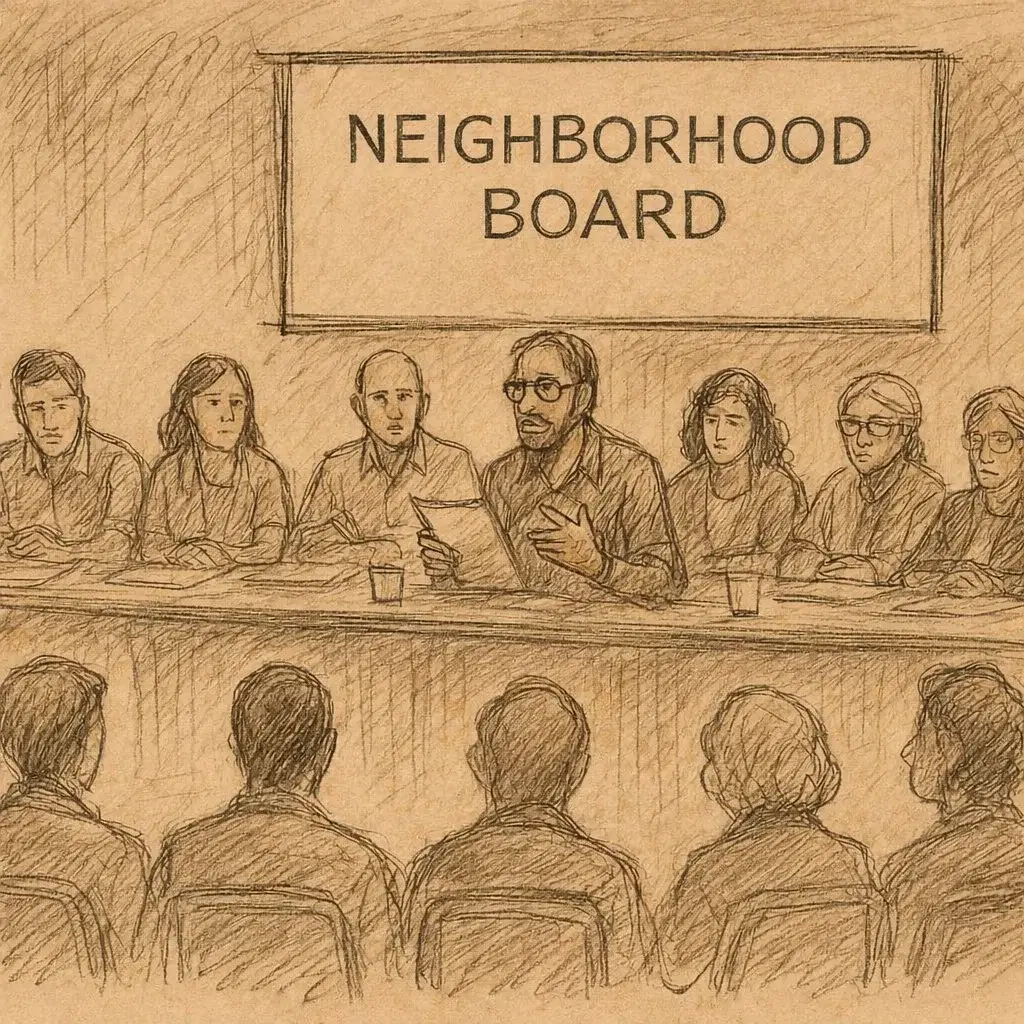
No 13 Downtown Chinatown Neighborhood Board Regular Meeting May 2026
Listen to this article:
13 Downtown-Chinatown Neighborhood Board Meeting – May 11, 2026
Honolulu Police Department Crime Report and Chinatown Enforcement
HPD opened the meeting with April 2026 public safety statistics for Chinatown, compared with March. Motor vehicle thefts remained unchanged at 8 in both months. Burglaries dropped from 2 in March to 1 in April. Theft cases declined from 24 to 18, and unauthorized entry into motor vehicles, or auto break-ins, dropped from 7 to 3. Sex assault cases decreased from 1 to 0, and graffiti cases also went from 1 to 0. Drug cases rose sharply from 4 in March to 10 in April. Motor vehicle collisions were nearly flat, with 99 in April versus 100 in March. Total calls for service also declined, from 2,230 in March to 2,092 in April. HPD noted that these statistics are publicly available on the department’s website. Interim District 1 Major Paul Okamoto, filling in for Major Henry Roberts during an out-of-state special assignment for the next couple of months, said District 1 has recently intensified Chinatown operations through shopping cart removals, sit-lie enforcement, outreach work, pickup truck patrols, and ATV patrols. Board members and residents responded positively, saying the more visible officer presence has helped create a greater sense of order and safety, especially in the early morning and in the core business areas.
Waikīkī Light Tower Pilot and Possible Chinatown Use
A board member asked HPD about the late-night light tower system being used in Waikīkī to disperse crowds after bars close and whether something similar could be deployed downtown. Major Okamoto explained that the pilot project was launched on Lewers Street, where 4 a.m. bars were generating recurring trouble as patrons left, waited for rideshares, argued, and sometimes fought with each other or police. HPD introduced large generator-powered tower lights to “destroy the mood” and signal that the night was over, and he said the pilot has been very effective in encouraging crowds to leave. He is now discussing with District 1 staff whether the concept could work in Chinatown as well, though he noted that darkness levels and street conditions differ and that the equipment requires specially trained operators because the towers are large and must be towed. The issue was raised in connection with calls for more visible HPD presence around bar closing time in the downtown entertainment district, especially on weekend nights.
Parking, Mopeds, and Street Use Questions Deferred for Follow-Up
Board members asked HPD to comment on whether mopeds can legally be chained to “no parking” signs and whether commercial trucks may occupy more than one marked parking stall on the street, including after business hours. Major Okamoto said he was not immediately sure of the specific legal provisions involved and would need to research whether a statute or rule covers those situations. He committed to returning next month with answers. The questions reflected recurring frustrations over curbside management, sidewalk obstruction, and limited street parking in the neighborhood, where loading, deliveries, mopeds, and improperly parked vehicles affect circulation and access.
Police Recruitment, Retention, and Staffing Trends
The board asked HPD about recruitment and retention, referencing ongoing discussions around staffing shortages and the idea that retention can be the best recruitment tool. Major Okamoto, who previously served as captain at the police training academy, said HPD is now seeing renewed public interest in police work and larger recruit classes after a period of lower interest. He cited one class now in field training that numbers about 38 recruits, which he described as fairly large. He said that if this trend continues, it should gradually help rebuild staffing levels. On attrition, he said many officers continue to retire as soon as they are eligible under the 25-year retirement system, which remains a major factor in the department’s staffing challenges.
Illegal Vehicle Traffic on Hotel Street and Calls for Stronger Controls
Board members again raised concerns about unauthorized vehicles entering and speeding along Hotel Street, which is intended largely for bus use. One recent case involved a driver identified by a board member as Anthony O’Korpuz, who was reportedly speeding on Hotel Street and nearly hit a woman with a baby near the district courthouse. The board also referenced a prior vehicle collision on Hotel Street near Fête, where another vehicle was T-boned. Major Okamoto said there are “no turns” signs at each intersection, but he suspects many drivers, especially tourists, are being routed incorrectly by GPS. He distinguished the earlier T-bone crash as what appeared to be an intentional criminal act rather than a simple navigation mistake, and said a criminal case was opened in that matter. HPD committed to a month of increased enforcement and education on Hotel Street and said it would report back with statistics. Major Okamoto also suggested the city may need to consider larger or more visible signs because the current signage can be hard to see. Several later comments from board members reinforced the urgency of this issue and called for immediate street-level measures such as painting “buses only” directly on the pavement.
Late-Night Crowds, Scarlet, First Friday, and Bus Interference
The board reported ongoing weekend and First Friday problems associated with crowds leaving Scarlet and spilling onto Hotel Street, where they block buses and create congestion for transit drivers. A board member said the issue is especially bad when nightlife activity spreads beyond bar property lines and becomes a public space problem. HPD did not offer a detailed operational response beyond acknowledging the concern, but the matter was linked to the broader discussion of late-night crowd management, the Waikīkī lighting pilot, and recurring enforcement needs in downtown’s bar district. Later public testimony noted that private security at venues cannot legally move beyond their own premises because of insurance and liability limitations, leaving sidewalk and street crowd behavior as a public enforcement issue.
Cinco de Mayo and Smith Street Event Outcomes
Board members asked HPD for an assessment of recent downtown events, including Cinco de Mayo and another event on Smith Street. Major Okamoto said nothing notable was reported to him from Cinco de Mayo and there were no major disturbances that he was aware of. Board members and community speakers strongly echoed that assessment, saying both the Cinco de Mayo event and the Smith Street festival were successful, well-supported by police and security, and did not result in arrests or property damage. Several participants praised the increased foot traffic and said these events demonstrated that well-managed public programming can bring large crowds downtown without major disorder.
Traffic, Parking, and Crosswalk Problems Around HART Construction
A board member described severe Sunday morning traffic and parking problems around HART’s work zone where half of Kekaulike and Nimitz has been blocked. The board said this has led to illegal parking and loading in the bus lane on North King Street between River and Kekaulike, blocking of crosswalks, and vehicles obstructing pedestrian movement. Community volunteers have been placing cones, but the cones are being stolen by drivers trying to park illegally. The board urged HART to hire off-duty officers for traffic control and asked HPD to help enforce violations on Sundays, when conditions are especially chaotic. Major Okamoto replied that the hiring of officers is a special duty matter for HART to address, but he said HPD would send officers on Sunday mornings to monitor the area and cite parking violations when observed. The issue later resurfaced in the Chinatown Business and Community Association report, which described broader commercial impacts from HART work, including loading difficulties and restricted access.
Questions About Police Leadership Selection
A resident asked whether HPD personnel have a preference in the ongoing selection of a new police chief and whether the board could support the candidate the department believes would best lead it. Major Okamoto said many people within HPD have their own preferences, making it difficult for him to answer publicly or endorse anyone. He said the department has confidence that the Police Commission will make the right choice. The exchange reflected wider public interest in stability and leadership at HPD during a period when staffing, Chinatown safety, and district operations remain under pressure.
Board Vacancy Filled After Former Chair’s Resignation
The board addressed a vacancy created by the resignation of former chair Carvalho. A procedural question was raised about whether the board had received formal notice of the vacancy from the Neighborhood Commission Office executive secretary, and the acting chair confirmed that he believed such a letter had been received. Three candidates sought appointment: Charles Johnson, a state budget analyst and former legislative aide and researcher living at Chinatown Gateway Plaza; Hei Ho, a commercial real estate manager living and working in the district, including at Maunakea Marketplace; and Dr. Diane Nomura, administrator of the Hawaiʻi Health Foundation, longtime neighborhood resident, and former Central Intermediate student with deep personal and historical ties to downtown and Chinatown. Their statements highlighted different strengths, including public policy and drafting experience, commercial property revitalization and neighborhood security work, and long-term historical, environmental, and public health advocacy perspectives. The board also asked the candidates what they knew about the neighborhood board system and the neighborhood plan. Johnson said he understood the board’s role as a channel for community involvement and contact with elected officials. Ho said he was not yet very familiar with the system but emphasized that he is a fast learner focused on producing results. Dr. Nomura said she had printed the neighborhood plan, was still reading it, and had reviewed the Sunshine Law training materials, showing awareness of transparency and procedural requirements. On roll call, Hei Ho received the majority of votes and was appointed to fill the vacant seat, restoring the board to its full nine-member membership.
Chair Election Ends in Deadlock
With the board back at full membership, it moved to elect a chair after the prior chair’s resignation. Nominations were made for Vice Chair Nainoa Isokane and board member Chulyn Schuler-Kwok; another nomination was declined. Schuler-Kwok said she had served on the board for nearly 13 years, had previously chaired the board, and believed her long experience in Chinatown and on multiple boards would be useful during a turbulent period. Isokane said he would emphasize crisp and efficient meetings, effective advocacy, and process grounded firmly in the rules, and argued that the board has a rare “home court advantage” because both the State Capitol and Honolulu Hale are in or adjacent to the district. The first roll call ended in a tie, with one abstention. A second roll call produced the same result. A question was then raised about whether abstention was permitted under the neighborhood plan, and it was stated that the Neighborhood Commission had previously determined members may abstain. Because no chair was elected, the acting chair announced that the status quo would remain in place until the next month, when the current term would end in June 2026.
Board Minutes Approved After Failed Attempt to Defer
The board then turned to approval of the March 5 and April 2, 2026 meeting minutes. A member moved to divide consideration of the two sets of minutes and noted that testimony and suggested edits had been separately submitted into the public Google Drive. That motion did not receive a second. A separate motion was then made to defer approval of the minutes until June 2026. That motion was seconded but failed on roll call, with a divided board. The board then voted on whether to approve the minutes as drafted. That motion passed 8-1, approving both the March 5 and April 2 minutes.
Governor’s Office Responses on Trees, Electric Rates, Disaster Aid, Highway Sign Messaging, and Noise Cameras
Governor Josh Green’s representative, Adam Lefebvre, presented answers to questions raised at the previous meeting. On the Navahine settlement involving the Hawaiʻi Department of Transportation, he said the agreement does not preserve existing trees but instead requires the planting of about 1,000 new trees each year. He reported that the state has met or exceeded that goal for the past three years and is on track to exceed it again this year. On concerns that Hawaiian Electric might raise rates by 20 to 30 percent, he said a Public Utilities Commission decision and order signaled energy affordability as a state priority, and he read a statement from the governor emphasizing the need to reduce residents’ dependence on high-cost imported polluting fuels and avoid burdening another generation with unaffordable utility bills. On Senator Karl Rhoads’ retirement, he said the governor does not typically issue commendations for retiring legislators, but a request form was provided if the community wished to pursue one. On storm damage from the Kona low, he reported that the president had approved a major disaster declaration for Hawaiʻi. On state highway sign messaging, he said DOT has been using more creative, younger-skewed language in response to increased traffic fatalities and believes that “speaking their language” can improve message impact. On noise enforcement cameras, he said a planned camera around North Beretania and River Street had not yet been installed because the state was still working with the city to obtain right-of-entry approval, but once approved, installation should take about a week.
Pushback on Proposed Noise Camera Location
A board member sharply questioned the state’s choice of North Beretania and River Street as the proposed location for a noise detection camera, saying that intersection had never been the neighborhood’s identified hotspot for loud motorcycles and engine racing. He pointed instead to the original map and requests submitted through Councilmember Tyler Dos Santos-Tam, which targeted areas such as the entrances to downtown-Chinatown, Pali Highway, Vineyard Boulevard, Nuuanu Avenue, and Beretania near a parking lot where drivers reportedly rev engines and race on weekend nights. The board member asked the governor’s representative to take the concern back and find out why River Street had been selected over the locations the neighborhood had actually proposed. The representative agreed to follow up.
Kauhale Audit Question and Lahaina Settlement Delay Concerns
A board member asked the governor’s office about the administration’s public reaction to the state auditor’s report on the Kauhale program, arguing that criticizing the independent auditor instead of directly addressing the findings came across as “shooting the messenger.” He acknowledged support for the Kauhale concept and the use of emergency proclamations to move quickly, but asked whether the administration planned to address the inefficiencies and issues identified by the audit. The governor’s representative said he would follow up later. A resident also asked about the governor’s comments regarding the Lahaina fire settlements, saying it appeared victims might wait a total of roughly nine years — two years already elapsed plus seven more — before receiving compensation, which the resident called unacceptable for people trying to rebuild homes and businesses. The same resident also asked what assurances the governor could provide that the new Aloha Stadium project would stay within budget and avoid the kind of overruns associated with rail. The representative did not answer substantively during the meeting but committed to follow up at a later meeting.
Election Administration and Public Health Update from Senator Karl Rhoads
Senator Karl Rhoads reported on election procedures and urged residents to vote. He said primary election day is August 8, 2026, with ballots arriving by July 21, and the general election is November 3, with ballots arriving by October 16. He emphasized that ballots must be received by 6 p.m. on election day, not merely postmarked, and that ballots deposited in drop boxes must also be in the box by 6 p.m. on election day. He said the nearest drop box and voter service center for District 13 residents is at Honolulu Hale and reminded residents that in-person voting is available, though it often involves long lines. He also noted that because the federal administration is trying to limit voting by mail, people who choose to mail ballots may wish to use the Office of Elections’ ballot notification system to verify receipt and processing. On public health, he said COVID case counts and influenza A were down, while influenza B remained high, and suggested residents might consider getting a flu shot.
Reflections on the 2026 Legislative Session and Retirement
Asked for his broader assessment of the legislative session with one day remaining, Senator Rhoads said the session was shaped heavily by budget limits and uncertainty created by federal pullbacks in major programs, including SNAP and Med-QUEST, as well as cuts affecting Native Hawaiian programs. He said there were both successes and failures and pointed specifically to his disappointment that a bill to improve compensation for the wrongfully imprisoned did not pass. He described a case in which a man exonerated after about 20 years in prison had to fight for compensation, settled for less than the statutory amount, and later died in a homeless camp. Rhoads also said he was pleased that the legislature preserved tax cuts for lower-income households while pausing decreases at the higher end. Board members thanked him for his years of service as a former neighborhood board member, state representative, senator, and chair of the Senate Judiciary Committee, and one board member said the neighborhood was pleased that House Bill 2413, which they viewed as too lenient on repeat felony offenders, had been defeated. Another praised his effort to close campaign finance loopholes involving contractor family members, noting disappointment that the bill had failed.
Rhoads Explains Vote Against Supreme Court Chief Justice Nominee
The acting chair asked Senator Rhoads for candid comments on his decision not to confirm Devin D’Is’s nomination as Chief Justice of the Hawaiʻi Supreme Court. Rhoads said his concern was not simply that the nominee had served on the board of Be Change Now, an organization tied to Pacific Resource Partnership, but that this role was not disclosed during the earlier 2023 confirmation process when he was confirmed unanimously. Rhoads said he felt he never received a straight answer about why that board service had been omitted, despite multiple opportunities to disclose information that the Senate might consider relevant. He described the choice as painful and politically costly because it alienated labor supporters, lawyers, the new chief justice, and the governor, but said he could not bring himself to support a nominee whose explanation he did not find believable. He added that others he respects have vouched for the nominee’s honesty and ability, and he hopes they are right.
Debate Over Uncollected Traffic Tickets and “Stoppers”
The acting chair also asked Senator Rhoads about news reports involving roughly $15 million in uncollected traffic tickets. Rhoads explained that years earlier he had sponsored legislation to eliminate many “stoppers,” meaning blocks that prevented people from renewing licenses or registrations until debts were paid. He said he believed those systems functioned like a modern form of debtor’s prison because taking away someone’s ability to drive to work made it harder, not easier, for them to pay what they owed. He acknowledged that an unintended consequence has been that some people appear to have accumulated enormous unpaid ticket balances, in some cases tens of thousands of dollars. He said he would not object to future legislation aimed specifically at people who are blatantly abusing the system, though he still believes the broader policy of reducing punitive stoppers was sound.
Mayor’s Office Reports on Storm Recovery, Roads, Short-Term Rentals, Sidewalk Ramp Repairs, and Empty Homes Tax
Mayor Rick Blangiardi’s representative, Deputy Director Ian Santee, said the city continues to respond to Kona low storm recovery and has launched a public recovery website at oneoahu.org. He said the mayor’s newsletter this month highlights the storm, the State of the City, zoo accreditation, housing expansion in Chinatown, and the city’s sustainability report. In response to prior questions about road conditions, he said the Department of Facility Maintenance conducts road condition surveys every two years on city-maintained streets and uses the results to prioritize capital improvement rehabilitation projects, while design and construction work is implemented through consultants and low-bid construction contracts. He added that Hawaiʻi’s high fuel, materials, and transportation costs contribute to the high cost of road repair. On short-term rentals, he said the Department of Planning and Permitting continues enforcement against rentals of fewer than 30 consecutive days. On an ADA issue at 1027 Maunakea Street, he said sidewalk ramp repairs have been referred from Facility Maintenance to the Department of Design and Construction and must comply with current ADA standards under the city’s “touch it, fix it” rule. On the proposed empty homes tax, he said the administration no longer supports pursuing it after an Ernest & Young feasibility study found that the expected return of vacant units to the local market would be lower than anticipated and would not justify the cost, complexity, administrative burden, and legal risk of creating a new tax program. He said the administration is concerned by constitutional challenges that have invalidated similar laws elsewhere and instead encourages a broader review of real property tax measures.
Board Pushes Back on Empty Homes Tax Rejection
A board member responded that returning roughly 1,000 homes to the market and generating an estimated $290 million over 10 years did not seem insignificant, especially during a budget crisis, and expressed disappointment in the administration’s position. No extended debate followed, but the exchange showed that some board members still see the empty homes concept as a potentially useful housing and fiscal tool even if the administration has moved away from it.
Calls for Better Road Maintenance Accountability
A resident criticized the mayor’s office response on road conditions as too procedural and said it did not answer the real question: what the mayor plans to do to improve Honolulu’s roads, which the resident said are still ranked among the three worst in the country despite the city being in the mayor’s second term and residents paying high taxes. The mayor’s representative acknowledged the question and said the administration would respond later. The exchange reflected continuing frustration that technical explanations about jurisdiction and repair processes are not translating into visible improvements on the street network.
Requests to Fix Signage, Flags, Lighting, Roosters, and Crosswalks
Board members used the mayor’s report period to raise a series of specific neighborhood issues. One asked who in the city is responsible for ensuring flags in city parks are lowered to half-staff when directed by the governor, saying that question from the prior month had not been answered. The same member proposed a quick, low-cost response to Hotel Street’s unauthorized vehicle problem by clearing sticker-covered “do not turn” signs and asked whether volunteer groups such as the Lions Club could legally remove those stickers if city crews cannot do it quickly. He also asked for more funding to expand the rooster trap subsidy program, saying two downtown mortuaries are dealing with nuisance roosters that affect livability. Another board member warned that the city is “cruising to a fatality” on Hotel Street if signage and markings are not improved immediately and recommended repainting the pavement as a clearer traffic control measure. He also said Union Mall has been dark for months and asked the city to restore lighting in that already-sketchy area. He requested a full update next month on city plans for Kamāmalu Mini Park, suggesting that the neighborhood knows something is being planned there but has not been informed. Additional requests included repainting very faded crosswalks at Kekaulike and North King and at Kekaulike and North Hotel, and repainting “buses only” directly on Hotel Street. The mayor’s representative did not provide immediate answers but agreed to follow up.
Support for Streamlining City-Owned Vacant Property Leases in Chinatown
A board member expressed support for Department of Housing and Land Management efforts tied to Bill 10 (2026), which seeks to streamline regulations and rules for leasing vacant city-owned property in Chinatown. He said Councilmember Dos Santos-Tam has estimated that the city is forgoing hundreds of thousands of dollars in revenue in Chinatown alone by leaving these properties underused, money that could help fund revitalization and public safety improvements such as special duty police officers. The board member noted that another more comprehensive measure, Bill 35, may also be in play, and asked what the mayor’s office could do to get the matter scheduled for a hearing and how the board might help. The representative did not answer substantively at the meeting.
Request for Mayor to Resume Town Halls
The acting chair noted that the mayor’s town halls have reportedly been postponed and suggested that one reason may be strong public reaction in other neighborhoods. He asked the administration to reconsider because downtown-Chinatown residents value the opportunity to speak directly with the mayor and feel that he pays attention to the district’s concerns. The representative said he would take the request back.
Representative Kim Coco Iwamoto’s Survey and End of Session
Representative Kim Coco Iwamoto’s office manager reported that the legislative session was ending the next day and said the representative was proud of the work completed. A board member asked when results from the representative’s district resident survey would be released, noting that a useful report had been shared the prior year. The office manager said responses are still being collected and must be filtered to exclude people outside the district, and that additional time is also being spent on preparing the report’s graphics and presentation. She said the office would try to have something ready within the next couple of months.
Public Testimony from Congressional Candidate Della Au Belatti
Former state representative Della Au Belatti, who represents Makiki, Tantalus, Punchbowl, and Papakōlea and is retiring from the legislature, introduced herself as a candidate for Congress. She said this was the eighth neighborhood board she had visited and praised the neighborhood board system as a valuable institution for understanding communities. She invited board members and residents to attend a community dinner and talk story event on May 13 at 55 South Kukui Street, second floor meeting room, and noted that her campaign would also be participating in the Heart of Honolulu event and hosting another urban Honolulu community dinner on May 18 at Ala Wai Intermediate. Her testimony underscored the district’s role as a politically central urban constituency within Congressional District 1.
Fort Street Mall Transition, Event Strategy, and Pride Festival Proposal
Fort Street Mall Business Improvement District executive director Ed Karski announced that he will be leaving as of June 30 and that the organization is expanding into a broader Downtown Business Improvement District. He introduced colleague Brooke Laidnot as the person who will help lead the next stage. He said Cinco de Mayo was used as a learning experience and invited the board to share any concerns, especially around neighborhood compatibility and noise. He also said the BID is trying to treat Fort Street Mall as an event venue and currently has an application pending for a Saturday, June 27 Pride festival. He said the goal is not to create a giant blowout but to mark Pride Month with an appropriate stakeholder-led event. More broadly, he urged the board to think about how Wilcox Park and Fort Street Mall’s existing lights, stage, and public setting could be used for school events, slam poetry, and other programming that would activate downtown as a destination rather than simply a pass-through. In discussion, a board member praised the decision not to charge for age-verification wristbands at Cinco de Mayo and said that made the event more family-friendly. Karski estimated attendance at Cinco de Mayo at perhaps 1,000 to 2,000 people, smaller than St. Patrick’s Day but part of a growing evening event strategy only six months old. He explained that nightlife crowd control issues tied to military patrons and bars such as Scarlet remain difficult because private venue security cannot legally police public sidewalks beyond the premises.
Positive Reviews of Umi and Smith Street Festivals
Former chair Carvalho and event organizer Nicole Reed both offered favorable assessments of recent Chinatown events. Carvalho said he attended both the Umi festival on Smith Street and Cinco de Mayo and found both well run and heavily attended. He especially praised the revised event layout using Merchant Street rather than Nuuanu for one of the festivals, saying it worked better because buses did not have to be rerouted through the event path. Reed said the Smith Street event appeared to go well, with free public access, strong entertainment, food vendors including Two Ladies Kitchen from Hilo, and the street both closed and reopened on schedule, with cleanup completed early. She said the event demonstrated that Chinatown can function as a festival venue beyond the boundaries of the Fort Street BID and noted that while BID resources stop at Nuuanu, the rest of Chinatown also has potential for larger community events similar to those that already occur on Beretania during Lunar New Year.
Board of Water Supply Conservation Message
The Board of Water Supply’s representative said that despite recent storms, water conservation remains important because rainfall alone does not offset daily use, especially heading into the warmer summer months. She urged residents to water plants early in the morning to reduce evaporation, take shorter showers, check toilets for leaks caused by faulty flappers, avoid running faucets unnecessarily, and apply for Board of Water Supply rebates for water-efficient appliances and systems. She referred residents to boardofwatersupply.com/sevenways for more conservation ideas. She also acknowledged a question from the prior month about whether the Kona low caused any damage within the neighborhood board area and said she did not yet have the answer in time for the meeting but would follow up next month or sooner through staff.
Chinatown Business and Community Association Report: Crime, HART, Loading, Parking, and Security
The Chinatown Business and Community Association reported a busy April. It met on April 14, discussed House Bill 2413, and was pleased that the bill failed on a 16-9 vote because members believed it would have made it easier for repeat felony offenders to return to the streets. The association also helped Chinese farmers affected by North Shore flooding. Much of its report focused on the impact of HART’s blocking of half of Kekaulike and Nimitz. The association said it has had to spend considerable time trying to preserve safety around crosswalks and loading zones, including using its Chinatown security team and volunteers for hours on Sunday mornings and other busy days. It reported a major success in getting one locked Harbor Village garage gate reopened after it had remained shut since the COVID period, forcing drivers and pedestrians into awkward circulation patterns. The association said HART-related closures have also pushed merchants into loading in the North King Street bus lane because of lack of access and parking, creating conflicts with the many buses passing through. As a remedy, it is asking the Department of Transportation Services to remove two defunct bus stops on River Street and convert those spaces into loading areas. It is also requesting the relocation of trees and the median islands on the Ewa side of River Street to create more parking and improve the ability of ambulances and fire trucks to pass through safely, and it wants seven parking stalls restored on Pauahi Street between River and Maunakea that were removed during the Hannemann administration due to drug dealing concerns that it says no longer justify the loss. The association also said its Chinatown security team and partners have been active in keeping sidewalks clear and helping homeless individuals off sidewalks when possible. It cited a report from the Department of Community Services’ SAFE program stating that crime in Chinatown has dropped 33 percent since 2023, and the association said it was proud to be part of that outcome. Its next meeting is the following Tuesday.
Neighborhood Citizen Patrol Observations: Parks, Graffiti, Homelessness, Structures, and Street Disorder
The Neighborhood Citizen Patrol reported on an April cleanup at Smith Beretania Mini Park and Dr. Sun Yat-sen Memorial Park with the Lions Club and touched on a range of ongoing observations from patrols. The report referenced progress related to prior machete attacks and jokingly mentioned fear that meat cleavers could become the next weapon of choice, underscoring continuing anxiety about random violent incidents. The patrol also noted a significant crash at Vineyard and Nuuanu in early May, recurring mopeds tied to signs, and a recent HECO information session downstairs at the school regarding replacement of underground lead-sheathed wires over the next year. Graffiti remains widespread, and the patrol showed concern about visibly troubled individuals in public space who appear to need mental health support or medication but are not receiving meaningful intervention beyond wellness checks. One recurring case involved a man constructing what the patrol called a “mobile pallet palace,” now upgraded with a slanted roof, prompting a tongue-in-cheek suggestion that the Department of Planning and Permitting might eventually get involved. Sit-lie violations continue, and the patrol warned residents to remain alert around parked cars because people may be hiding or sleeping between them and because glass or other hazards may be under tires. It also reported seeing theft of water from street pipes and encouraged private property owners to watch for that. At the same time, the patrol highlighted signs of vibrancy, including live music and dancing on Hotel Street. The next patrol was announced for the second Tuesday of the month at 7 p.m. in the Diamond Head Tower lobby of Kukui Plaza.
Next Meeting and Broadcast Information
The board announced that its next regular meeting is scheduled for Thursday, June 4, 2026 at 6 p.m., in person and via Webex. Rebroadcasts of the meeting are scheduled on ʻŌlelo Channel 49 every third Thursday at 9 p.m. and at 9 a.m. on the fourth Saturday of each month, with archived meetings available online by searching for Downtown on OleloNet.