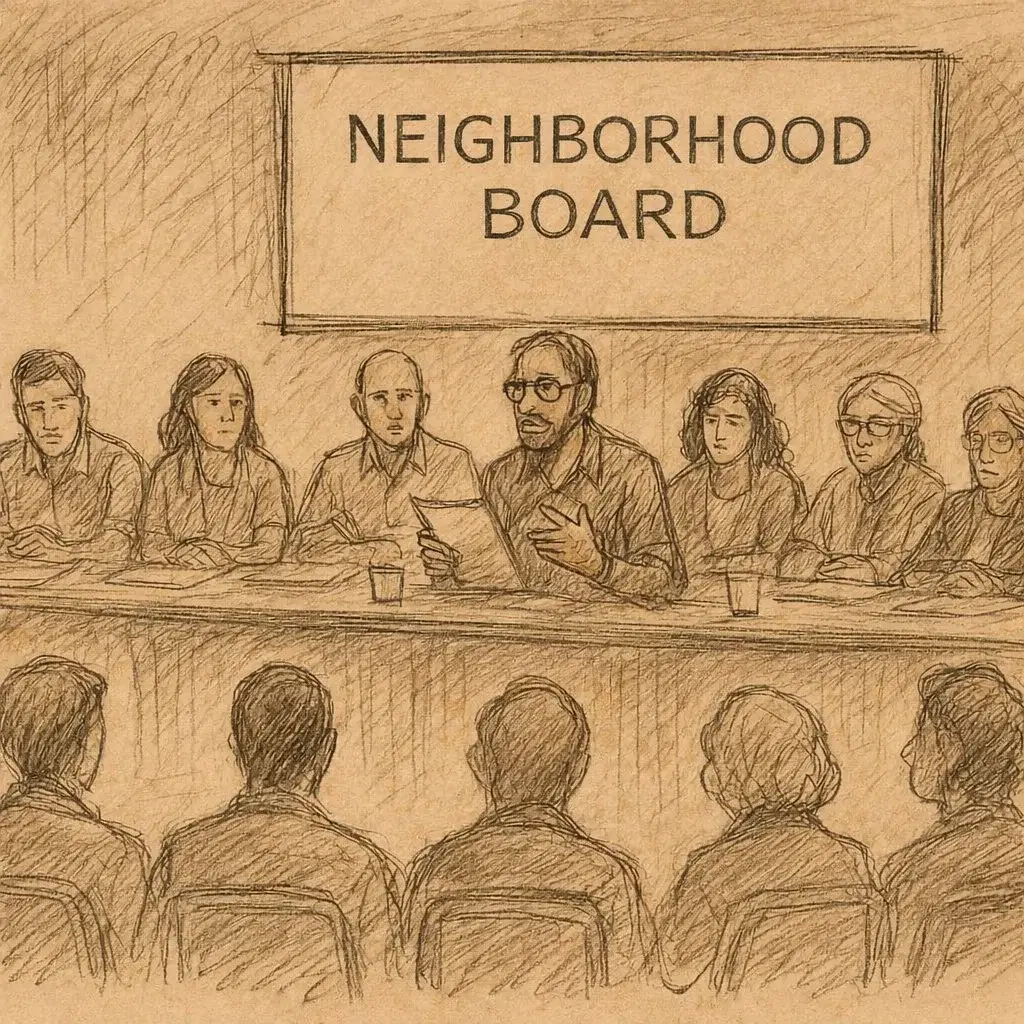
No 05 Diamond Head-Kapahulu-St. Louis Heights Neighborhood Board Regular Meeting May 2026
Listen to this article:
5 Diamond Head-Kapahulu-St. Louis Neighborhood Board Meeting – May 15, 2026
Meeting Opening, Quorum, and Compressed Agenda
The board opened its May 15, 2026 regular meeting with roll call and confirmed a quorum of nine members. Board leadership noted that the previous two months of meetings had been canceled by the City because of severe storms, leaving a large backlog of business and an unusually full agenda. To manage time, the board announced a two-minute limit for comments and said it would try to move quickly through routine and contentious matters so that larger discussions could still take place. This framing shaped the rest of the meeting, with repeated efforts to compress presentations while still handling a wide range of neighborhood issues involving public safety, infrastructure, parks, transportation, and land use.
Honolulu Fire Department Report and Wildfire Readiness
Honolulu Fire Department Captain Joshua Chase, speaking from Waikīkī first watch, reported April 2026 activity for the area: one nuisance fire, five activated alarms with no fire, 59 medical emergencies, one mountain rescue, two ocean rescues, and two hazmat incidents. He also shared wildfire prevention guidance, urging residents to clear dry brush and vegetation around homes, avoid parking on dry grass because hot exhaust can ignite it, avoid spark-producing activity during hot, dry, windy weather, and monitor weather and fire conditions. A board member revived an earlier idea of using goats or sheep for brush clearing in nearby valleys, ridgelines, and around Diamond Head, referencing a neighboring valley that has used grazing animals as a vegetation management tool. HFD agreed to raise the concept internally and with Firewise-related programs. The exchange reflected continued concern about wildfire risk in the board area’s steep terrain and open spaces, especially after recent weather extremes.
Honolulu Police Department District 6 Report, Crime Trends, and Public Safety Concerns
HPD District 6, covering Waikīkī, Kapahulu, Kapiʻolani Park, and Diamond Head, reported April statistics showing mixed trends. Robberies fell to 2 from 3 the prior month, burglaries rose to 6 from 5, thefts dropped to 126 from 166, unauthorized entry into motor vehicles fell to 8 from 13, assaults declined to 38 from 43, and sex crimes rose to 14 from 7. Sidewalk enforcement for bikes and skateboards showed zero incidents compared with 3 previously. Speeding enforcement resulted in 19 citations and no arrests, compared with 11 citations in the prior month. Parking enforcement dropped sharply to 1,556 citations from 2,520. Loud muffler and prohibited noise cases declined to 2 from 7. For park closures, HPD issued 36 citations and made 16 arrests, compared with 65 citations and 15 arrests in the previous month. Calls for service totaled 4,160, down from 4,356, and DUI/DWI arrests fell to 6 from 10.
During follow-up questions, a resident described seeing beachgoers get dangerously close to a monk seal and pup at Kaimana Beach after lifeguards had left and said that calling 911 resulted in a long wait before reaching a dispatcher. HPD explained that monk seal protection primarily falls under DLNR/DOCARE, though police will respond if contacted. The lieutenant acknowledged long wait times and linked them to staffing shortages. Another resident raised concern about large off-leash dogs on sidewalks and in parks, including around Diamond Head and Kapiʻolani Park, describing a frightening encounter while running. HPD said morning officers assigned to Kapiʻolani Park already check for vehicles, off-leash dogs, and overnight activity, and the concern was noted for continued enforcement.
Honolulu Police Department District 7 Report and Complaints from St. Louis Heights, Kuili Place, and Makalei Beach Park
HPD District 7, covering Diamond Head, Kapahulu, St. Louis Heights, and East Honolulu, reported April totals of 2 motor vehicle thefts, 6 burglaries, 21 thefts, 6 unauthorized entries into motor vehicles, and 5,614 calls for service. The district’s public safety message focused on hurricane preparedness, noting that June through November is hurricane season and that first responder response may be delayed during severe weather. Residents were urged to maintain evacuation kits, know evacuation routes, and understand whether they live in flood-prone areas.
Public testimony then shifted to specific neighborhood conditions. A St. Louis Heights resident requested more patrols in the evening, especially for illegal parking and blocked driveways around Oswald Street and St. Louis Drive, where narrow roads and bus traffic create dangerous visibility and turning conditions. District 7 agreed to increase checks. Another resident reported contractor parking tied to the Kūilei Place project near Kapiʻolani and University, saying workers were parking illegally near signs, on unimproved sidewalks, and in ways that clogged neighborhood streets despite other available parking areas. HPD said it had already spoken to a project representative and would follow up again.
Noella, a regular neighborhood participant, reported ongoing damage at Makalei Beach Park from mopeds and motorized vehicles parking on the grass despite posted restrictions. She said the turf was being destroyed and turning to dirt, counted 26 mopeds from her vantage point on one occasion, and also reported vending activity in the park and harassment of monk seals nearby. She urged more ticketing rather than warnings and suggested involving DLNR because of the wildlife impacts. HPD said officers would be sent to check the park and also address the earlier complaint regarding off-leash dogs.
Board of Water Supply: Pipeline Work, Hurricane Preparedness, Reservoir Plantings, and Red Hill
Board of Water Supply representative Kathleen Pahinui emphasized emergency water preparedness as hurricane season approaches, reminding residents that if storms knock out electricity, pumping stations may not be able to move water to reservoirs, creating service issues for homes in some elevation zones. She urged households to maintain at least two weeks of water and food, including supplies for pets, and said BWS still has emergency 2.5-gallon water storage bags available to distribute.
She then gave several project updates. Pipeline replacement work on Montserrat Avenue has continued, including activity on Campbell Avenue. In response to a resident complaint about a noisy and bumpy steel road plate on Montserrat, BWS temporarily removed the plate and filled the excavation, which reduced vibrations. She encouraged residents to continue reporting construction impacts. BWS also confirmed that it had sent a letter to the board regarding security fencing at the Kaimukī Pump Station. At the Diamond Head Reservoir fencing project, some landscaping had failed because there is no permanent irrigation system. BWS is now working with a staff member who is a master gardener to replace dead plantings with more successful native plants requiring less water, and plans to send the board updated photos. On a separate request from the board chair about planting trees, Pahinui said the Department of Parks and Recreation is open to the idea and BWS is now advancing that concept internally.
In response to questions, she said Oʻahu is not currently in drought conditions despite continued concern about long-term water conservation. She noted that even though recent storms brought enormous rainfall, much of it ran off because the soil was saturated and did not all recharge the aquifer. Asked about soil saturation and flood capacity entering hurricane season, she said stream levels were beginning to lower on the North Shore and Lake Wilson had substantial capacity because of ongoing dam work. On Red Hill, she said legal matters continue and limited what she could say publicly, but added that BWS leadership remains engaged and that Board Manager Ernie Lau has made trips to Washington, D.C. on the issue.
State Bill Blocking Gondolas and Tramways Near Sacred and Scenic Areas
During the BWS discussion, a community member congratulated those who opposed the proposed Haʻikū Stairs gondola and tramway project, calling the mountain sacred. Pahinui then announced that House Bill 1881 had passed, prohibiting tramways and gondolas, and credited Council Chair Tommy Waters as instrumental on the council side. She said the Department of Planning and Permitting is still reviewing the related permit application, but the new law is expected to make the permit issue moot once signed by the governor. The exchange reflected broader neighborhood sensitivity to development proposals affecting ridgelines, historic landscapes, and culturally significant sites.
Diamond Head State Monument Programs and Fire Mitigation Work
Olivia Storms, Interpretive Technician at Lēʻahi Diamond Head, announced an upcoming Kids to Parks Day event scheduled for Saturday from 9 a.m. to 2 p.m. at Diamond Head. The program was described as one of the site’s largest post-COVID family events, with about 24 local community organizations participating in games and educational activities and offering children a chance to win free shave ice. She also highlighted ongoing volunteer opportunities at Diamond Head, currently at least four each month and expected to expand, and said staff are actively implementing a wildfire mitigation plan developed with the Hawaiʻi Wildfire Management Organization. Because the crater has only about three permanent staff, she urged community members to volunteer to assist with fire prevention work.
Public Event Announcements: Heart Walk and International Yoga Day
The American Heart Association announced its annual Heart Walk for Saturday, August 15. Organizers said they will again coordinate with the Department of Transportation, road authorities, and HPD regarding road closures on Diamond Head Road, with electronic message boards posted several days in advance and postcards sent to nearby residents. A board member asked when roads would reopen, and the presenter said she believed around noon, though she would confirm details later. This annual event remains one of the larger scheduled traffic impacts in the area.
A representative speaking for Dr. Raj Kumar and the Gandhi International Institute also announced the International Yoga Day Festival for June 21, 2026, from 9 a.m. to noon at the Kapiʻolani Park bandstand. He thanked the neighborhood board and community for their support of the institute’s activities, including upkeep and events around the Gandhi statue, and noted that earlier incidents there had been resolved.
Candidate and Resident Announcements, Including Ala Wai Ferry Proposal
During the community concerns period, Congressional District 1 candidate Della Au Belatti announced a community dinner and talk story event for Monday, May 18, from 6 to 8 p.m. at Ala Wai Elementary School. Board member Angie Knight, speaking as a private resident, formally announced her candidacy for House District 21. City council candidate Jason Liang also introduced himself remotely, saying he would try to attend in person next month.
Resident Laura Ruby introduced a proposal she intends to bring back as a resolution at a future meeting: a low-cost ferry crossing over the Ala Wai Canal for pedestrians and bicyclists. She described the concept as roughly the length of a bus but wider, ADA-compliant, using side ramps for docking, operating with one operator and Holo card access, and excluding mopeds and other gasoline-powered vehicles. She suggested one or more crossing points could be created relatively quickly and cheaply, not subject to sea-level-rise limitations in the same way as fixed structures, with operating hours similar to a transit service. Another board member said the idea made sense and encouraged others to review it, while another resident expressed interest based on water transportation experience. The discussion signaled emerging interest in alternatives for crossing the canal without relying only on road traffic.
Agenda Reordering and Procedural Debate Over Kapiʻolani Park Trust Lands Resolution
A significant procedural discussion arose when board member Michelle Mattson asked whether the board would move up the Kapiʻolani Park trust lands resolution because it had been pending for months, including through the storm-related cancellations. A motion was made and seconded to amend the agenda to advance the item. There was confusion over the voting threshold needed to reorder the agenda, with discussion of whether two-thirds of the full board or of those present was required. Despite procedural uncertainty, the chair ultimately brought the item forward. The exchange reflected both the board’s frustration about delayed deliberation and the urgency many members felt about pending trust land decisions affecting Kapiʻolani Park and ocean safety facilities.
Resolution Adopted on Ocean Safety’s Temporary Extended Use of Kapiʻolani Park Trust Lands
The board then heard a summary of the joint committee’s resolution concerning Kapiʻolani Park trust lands occupied by the Department of Ocean Safety on Leahi Avenue. Committee leadership argued that the current trust parcels should remain in the trust and not be removed permanently or casually for city departmental use. They said ocean safety’s current site is too small and poorly situated for modern needs and that lifeguards require larger space, better road access, and facilities appropriate for a department of 294 personnel, including 242 full-time and 37 contract lifeguards. The committee also objected to the possibility that two beachfront acres at the Waikīkī entrance to Kapiʻolani Park might be used for an ocean safety base, describing that as incompatible with the park gateway and with trust purposes.
The legal argument centered on the claim that the trust was never compensated for prior removals of land and that court rulings from 1998 require conveyed trust lands to remain in the trust. The committee said the city’s use of the Leahi Avenue parcels for Ocean Safety from 1998 through 2025 had been temporary and that any further use should be strictly limited to no more than five additional years while relocation occurs. An alternative location at Kewalo Basin was presented as the proper long-term site, citing a 2011 Hawaiʻi Community Development Authority plan identifying an ocean safety facility there because of its central shoreline location and proximity to hospitals. The board clarified that two versions of a resolution existed in its shared drive: one from the city and a later committee version developed after legal review. A motion was made to adopt the committee’s version. After discussion, the resolution passed 11-0 with 1 abstention. Board leadership thanked members who had done the research and said they would continue to work with the city.
Urban Honolulu Mobility Hub Proposal on Kapahulu Avenue Draws Sharp Pushback
One of the meeting’s longest and most contentious discussions involved a presentation by the Oʻahu Metropolitan Planning Organization, the Department of Transportation Services, and consultant SSFM on an Urban Honolulu Mobility Hub study. OʻahuMPO explained that it coordinates islandwide transportation planning and federal transportation funding and recently adopted the ORTP 2050 regional transportation plan. Presenters described mobility hubs as small transit-oriented centers where buses, bike share, ride-hailing, carpooling, community space, and potentially food options or government office space can be co-located.
The proposed hub concept for the urban core would include bus stops, bus electric vehicle charging, pedestrian and bicycle infrastructure, possible Biki bike share, scooter and bike parking, designated pickup and drop-off areas for Uber, Lyft, carpooling, and vanpooling, and indoor or outdoor community space such as a plaza, playground, or dog park. The project was framed as a way to improve transit efficiency by ending the current bus loop around the zoo and layovers on Montserrat Avenue while also serving Waikīkī and Kapahulu residents and visitors. After reviewing eight government-related sites using criteria such as parcel size, ownership, access, connectivity, flood and sea-level-rise risk, land use restrictions, and costs, the study narrowed to two top candidates: an approximately two-acre undeveloped corner of Ala Wai Golf Course near Waikīkī Library, and the smaller DLNR recycling site parking lot near Date Street. The team said it is still in a feasibility-study phase and has not secured funding for construction. A larger public meeting was announced for May 19 at Kaimukī High School.
Community reaction was overwhelmingly skeptical or hostile. Multiple board members and residents said Kapahulu traffic is already unbearable, with morning backups that continue into the afternoon, and argued that adding a transit center would worsen congestion rather than relieve it. Several people raised pedestrian safety concerns on Kapahulu Avenue, especially where crosswalks have disappeared or are ignored, including near Rainbow Drive-In. One member asked whether flood mitigation plans that involve flooding the Ala Wai Golf Course would affect the proposal. Others questioned whether the project was really being designed for neighborhood residents or mainly to serve Waikīkī and tourists. There were objections to using preservation land or green gateway spaces between Kapahulu and Kapiʻolani Park, concerns that “community amenities” could evolve into a shopping center or other unwanted development, and criticism that city decisions on nearby land have repeatedly ignored earlier community wishes, including prior support for a dog park. Residents also defended the DLNR recycling center as heavily used and said removing it would undermine years of public messaging around recycling. One board member strongly supported the concept, saying better bus service is needed and criticizing the contradiction of complaining about traffic while opposing transit improvements, but that was a minority view. Presenters declined to respond point by point and instead said the comments were valuable early-stage input and invited continued participation.
Mayor’s Office Report: Storm Recovery, Trust Resolution, Road Issues, Shelters, and Planned Improvements
Mayor’s representative Director Kruke provided a broad update after the storm-related meeting hiatus. He said long-term recovery from recent catastrophic storms is underway and directed residents to oneoahu.org for consolidated information. Because of the recovery effort, the mayor postponed planned spring town halls. He highlighted the mayor’s State of the City address, the Honolulu Zoo’s reaccreditation by the Association of Zoos and Aquariums, the purchase of a Chinatown building on River Street for affordable housing, release of the 2026 Annual Sustainability Report, and the appointment of Tricia Dang as Deputy Director of the Office of Climate Change, Sustainability, and Resiliency.
He also announced personnel changes: Managing Director Mike Formby is leaving for the private sector, Krishna Jayaram is the managing director designate pending council approval, and Ian Scheuring will become deputy managing director. The board expressed appreciation for Formby’s service. Kruke said he would take the newly adopted Kapiʻolani Park trust resolution back into the city process.
Responding to earlier board requests, he said the Department of Design and Construction had inspected concerns about possible road collapse along Diamond Head Road near Lēʻahi Beach Park and judged the roadway itself to be in good-to-fair condition and not in immediate danger, though cracks were found in an exposed culvert top slab within the park and will be further investigated. He said information on emergency shelters would be left for the board, noting that the recent sequence of storms severely stressed the shelter system. He also raised concern about a coming El Niño season and said the city is coordinating with service providers to better support unsheltered people during emergencies, both for safety and as opportunities for outreach. On transportation safety, he said DTS is studying Leahi Avenue and the Kapahulu area west of Kapahulu Avenue in response to earlier board resolutions on dangerous traffic conditions, and will report preliminary findings to the chair. He also noted a budgeted $1.5 million rockslide management project on St. Louis Drive, confirmed the board had received a Board of Water Supply letter about security fencing, and mentioned city action regarding no-parking signs at 958 6th Avenue.
Board members used the report to thank city crews for pothole repair after the storms, rapid restoration of a 10th Avenue sign at Harding, and visible cleanup of encampments and debris around Diamond Head cliffs. Kruke said the city has been working to reduce jurisdictional gaps among agencies and has conducted joint operations with state partners, including in places like Fort DeRussy, Kewalo, and Diamond Head.
Requests for More Committee Work on Disaster Preparedness, Parks, and Traffic
Following the mayor’s report, board leadership suggested creating or reactivating several committees because of the backlog of unresolved issues and the loss of previous meetings. There was interest in having the Public Safety and Disaster Committee hold a special meeting on emergency sheltering, disaster response, and where residents in this district should go during major events. The Environmental and Parks Committee was expected to meet in early June to review proposed changes to Kapiʻolani Park, including volleyball sand courts, a bocce court, and new equipment placement. There was also a call to reactivate or strengthen a Traffic and Transportation Committee to identify persistent traffic danger spots and keep DTS engaged before projects advance too far.
Council Chair Tommy Waters: City Leadership Changes, Youth Commission, and Local Follow-Up
Council Chair Tommy Waters attended in person and noted the retirement of longtime City Clerk Glen Takahashi, the search for a new city clerk, and the need to fill the city auditor post after Auditor Arushi Kumar left because of family matters. He also asked for nominations to the new Youth Commission, created by charter amendment, for members ages 14 to 24 who live in Council District 4, which runs from Hawaiʻi Kai to Waikīkī. He highlighted the departure of his appointee, Asa Shimizu, who will attend Brown University.
On neighborhood matters, Waters said he would inspect the confusing pedestrian-related sign on Paki Avenue that residents said looks like a stop sign and causes drivers to halt where no legal stop is required. He had also received the mobility hub presentation and encouraged the board to formally weigh in. During the exchange, he floated the idea that if a mobility-related facility were eventually built, it could perhaps be paired with a dog park, while also emphasizing he had not taken a formal position. Residents and board members then raised concerns about a three-story bright yellow structure on Noela Drive in the Diamond Head Special District that they believe is out of character or may violate district controls. Waters agreed to investigate and coordinate with DPP. He also discussed Kapiʻolani Park trustee arrangements, explaining that all councilmembers serve as trustees and that the relevant committee chaired by Councilmember Nishimoto includes all nine members, though board members said confusion remains over who is acting as chair for trust matters. Waters said he would talk with Nishimoto and help if needed.
Councilmember Scott Nishimoto’s Office and Traffic Concerns in St. Louis Heights
A representative from Councilmember Scott Nishimoto’s office said the council is in the midst of budget season and that office updates are limited until budget decisions are finalized in June. The office invited direct contact from residents in St. Louis Heights. A resident then raised speeding concerns on Alencastre Street and Bertram Street, describing them as steep, straight corridors where narrow geometry already forces vehicles to move aside for one another. The office said it would check whether a request for speed mitigation was already in process and, if not, submit another request.
Governor’s Office, Monk Seal Contact Information, and State Issues Raised by the Board
Governor’s representative Ryan Aguilar said he would post the May governor’s newsletter in the meeting chat, along with information on monk seal reporting contacts in response to earlier seal concerns. He said the newsletter focuses heavily on the recent storm events and statewide recovery efforts. Board members used the opportunity to raise unrelated state matters, including disappointment that the legislature weakened the proposed “Green Fee” bill and concern over the possible transfer of Kīlauea District Park to the Department of Education. Another member asked about the new pedestrian bridge at Ala Moana Boulevard by Kewalo Basin, saying it appeared not to be in use despite its $26 million cost. Aguilar said he would take that question back. The board also thanked the governor for honoring sailor Oliver and his cat Phoenix after their arrival at Waikīkī Yacht Club.
Senator Les Ihara’s Legislative Session Review and Constitutional Perspective
Senator Les Ihara gave a broad end-of-session review, noting that the legislature adjourned on time and that the governor is now reviewing bills, with a veto list due by the end of June. He explained that the legislature could reconvene in early July to consider overrides, though that is rare, especially in an election year. He also described the Senate’s role in judicial and board confirmations and said the Senate may return during the interim for confirmations if needed.
Ihara then reflected on his 40 years of legislative service, describing a transition into more of an “elder” role focused on institutional memory and constitutional values. He emphasized that Hawaiʻi’s constitution is unusually values-based among the states, citing commitments added in 1978 relating to environmental stewardship, care for land and water, a healthful environment, and respect for Native Hawaiian gathering rights. His remarks offered a wider framework for many of the land, trust, and environmental issues discussed throughout the meeting.
Representative Tina Grandinetti’s End-of-Session Summary and Kīlauea District Park Controversy
Representative Tina Grandinetti delivered a detailed end-of-session report, describing the 2026 session as one of the first in her experience where lawmakers effectively met the moment despite federal threats, budget constraints, and social pressures. She said the legislature preserved the social safety net and avoided major cuts to departments, while also expanding tax relief for working- and middle-class families. She highlighted a revenue change asking the top 0.36% of income earners in Hawaiʻi to pay slightly more on income above $1 million and said that idea had grown from a bill she introduced earlier in session.
She also cited progress on long-term care, the governor’s signing of a bill challenging Citizens United in what she called a first-in-the-nation effort, emergency funding to preserve Native Hawaiian programs after federal cuts, and major legal protections for immigrants and due process. At the same time, she called elimination of the renewable energy tax credit one of the session’s biggest disappointments, saying it would hurt the solar industry and undermine climate commitments.
Grandinetti then addressed concern over Kīlauea District Park, explaining that a bill intended to transfer some city parcels to the Department of Education was amended to include the park. She said the goal may have been to access state money for deferred maintenance, but the move created serious alarm over whether classes, sports leagues, fitness programs, and senior activities like the Mahjong club would be disrupted. She said the DOE does not want the transfer to occur and that she and other officials are working with the governor’s office, mayor’s office, DOE, and city Parks Department to stop the transfer and preserve existing uses. She had visited the park that morning and described fixing the issue as her top immediate priority after session.
Neighborhood Board Boundary Review Begins, Including St. Louis Heights Interest in Kaimukī
Late in the meeting, the chair raised a new issue requested by the Neighborhood Commission Office: all neighborhood boards are being asked to review their boundaries and consider whether any changes are needed before the 2027 neighborhood board election cycle. The chair said St. Louis Heights Community Association had emailed expressing interest in joining the Kaimukī Neighborhood Board area, saying it feels more connected to Kaimukī. Board members stressed that any such shift would require broader discussion with neighboring boards including Kaimukī, Pālolo, Waikīkī, Mānoa-Moʻiliʻili, and Kahala. There was also mention of whether some areas, such as all lands around Diamond Head, should be reconsidered. Neighborhood Commission Chair Patrick Smith appeared briefly to confirm that while there is no immediate emergency, the process is lengthy and should begin soon if changes are to be ready before 2027. He also suggested that in some cases boards may consider memorandums of understanding or shared “spheres of influence” for certain parks or developments even if formal election boundaries remain fixed. The board leaned toward handling the matter through a special or ad hoc committee process rather than assigning it solely to planning and zoning.
Resolution Adopted Supporting Restoration of Bus Route 200 / Former Route 9 Alignment
The board then turned to a transportation resolution that had been developed over roughly a year and a half by transportation committees from this board and neighboring boards. Presenters argued that the current Route 200 alignment creates highly uneven service, with 409 buses per day along the Kapahulu-Kaimukī boundary but none through the middle of Kaimukī, where destinations such as Kaimukī town, the post office, library, fire station, Kaimukī Middle School, and Kīlauea District Park are located. They said hundreds of households had provided input, including nearly 200 in Pālolo, and that the broad preference is to restore the main trunk alignment of former Route 9 through central Kaimukī.
The route advocates argued that the current 200 loop through Kapiʻolani Park has low ridership, with roughly 80% of riders using the service in Pālolo and many getting off by Waialae Avenue or Market City. Below that area, they said, 80% of buses are often nearly empty and those with riders typically carry fewer than four people. They proposed reducing costs and improving efficiency by removing the current Kapiʻolani Park loop from Route 200 while restoring the central Kaimukī corridor. To preserve service to residents living at the end of the park, they suggested instead restoring the old 2B Kapiʻolani Park pattern at 15-minute frequency. The presentation also emphasized the importance of the old route for school-age independence, especially for Kaimukī Middle School students and working families. After discussion, the board unanimously adopted the resolution, 12-0.
Resolution Adopted on Archery Range Safety Standards in Community Parks
In the meeting’s final substantive item, the board considered a resolution about archery ranges in parks. The issue was prompted by the earlier relocation of archery from Kapiʻolani Park after stray arrows reportedly reached nearby tennis courts, and by recent controversy over a proposed Japanese archery facility in Mauʻumae Nature Park. Presenters said the concern is not opposition to archery as a sport but the need for clear safety standards, proper siting, and public process before ranges are placed near homes, schools, trails, or public recreation spaces.
They said city plans for archery in Mauʻumae had advanced to a binding agreement with a private foundation before environmental review and before meaningful public awareness, and argued that three earlier consultants in 2003 had already rejected archery there because of insufficient buffer area and terrain problems. Citing U.S. Department of Agriculture Forest Service guidance, they said recommended archery safety buffers range from 150 to 400 feet away from public areas, trails, and buildings, and that the Kapiʻolani Park incident illustrated arrows can travel around 500 feet. Using maps, they argued that similar distances in Mauʻumae would extend into nearby operational and residential areas. One board member questioned whether the sport was being unfairly stigmatized and said no pro-archery voices had been heard that night, but supporters of the resolution replied that it does not ban archery and instead asks for safety-based guidelines and proper community consultation. The board adopted the resolution 11-1.
Meeting Scheduling, Missed Months, and Shift Toward Committee Work Before July
As the meeting closed, the board discussed whether to hold a June meeting. Because the next regular meeting date falls on Kamehameha Day and city facilities and support staff would not be available, a full board meeting in June appeared impractical. Some members strongly objected to skipping more time after already losing months to storm cancellations, but the board concluded it would likely recess until July while encouraging committee meetings in June to keep moving on urgent issues such as disaster preparedness, traffic, parks, and neighborhood board boundary review. The meeting adjourned after 8:30 p.m. with acknowledgment of both Kamehameha Day and Memorial Day.