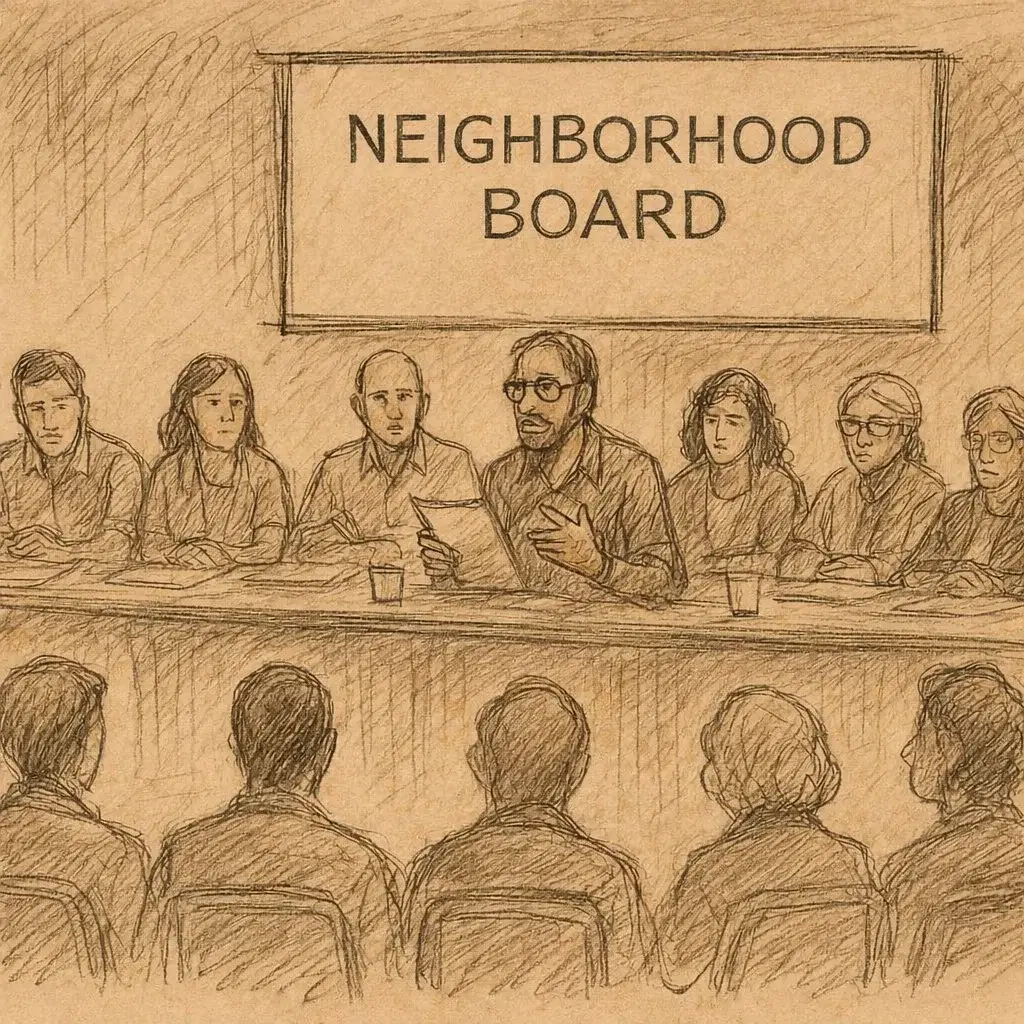
No 11 Ala Moana Kaka'ako Neighborhood Board Regular Meeting April 2026
Listen to this article:
11 Ala Moana-Kakaako Neighborhood Board Meeting – April 29, 2026
Meeting Opening, Roll Call, and Board Vacancy
The Ala Moana-Kakaako Neighborhood Board convened at 6:01 p.m. with Chair Kathleen Lee presiding and reiterating the board’s civic role in helping the neighborhood remain a strong place to live, work, and gather. Roll call confirmed quorum with nine members present. During board business later in the meeting, Chair Lee announced that member Eduardo Hernandez had informed her he is resigning from the board, though formal written notice still must be submitted to the Neighborhood Commission Office. She thanked him for his service, particularly his attention to pedestrian safety issues and his professional perspective from HBL. His departure creates a vacancy for Sub-District 3. Board members clarified that this subdistrict covers the area east of Ward Avenue toward Atkinson Drive and south of Kapiʻolani Boulevard, including McKinley High School and nearby Kakaʻako residential areas. The board encouraged interested residents to apply through the official process in advance of next month’s meeting.
Honolulu Police Department Crime Trends and Enforcement Priorities
A substantial portion of the meeting focused on public safety, with an unusually large Honolulu Police Department presence that the board noted was encouraging. Sergeant Aaron Osichuk, the sector sergeant for Kakaʻako and Ala Moana, was joined by District 1 and District 6 leadership, including Interim Major Paul Okamoto, Lieutenant Winston Leong, Captain Scott Matsumura, and Lieutenant Henry Lee. HPD reported mixed but notable crime changes compared with the prior month. Motor vehicle thefts declined from 13 to 9, and sexual assaults dropped from 6 to 2. Burglaries increased from 5 to 8, overall thefts rose sharply from 67 to 117, unauthorized entry into motor vehicles increased from 5 to 9, assaults rose from 12 to 22, graffiti incidents went from 0 to 1, drug offenses held steady at 3, and motor vehicle collisions increased from 107 to 113. Calls for service rose significantly from 3,023 to 3,533, an increase of about 500 calls in one month. Major Okamoto said he did not yet see a single alarming root cause behind the rise, particularly since he is only temporarily covering District 1 while its major is on an out-of-state special assignment through July, but he framed the increase as broad-based rather than tied to one specific pattern.
Homelessness, Public Safety, and the “Broken Windows” Approach
Board members repeatedly raised concerns about safety conditions around areas where homeless encampments and street-level disorder have become more visible, especially along Makaloa Street, around Don Quijote, near Ala Moana Center, and on Kapiʻolani-area side streets. Member Chang described Kahaka Street as “Homeless Highway,” with encampments stretching from Ala Moana Center toward the parks inland. Major Okamoto said HPD has recently intensified enforcement and cleanup activity in some of these areas, including a recent operation that recovered 28 shopping carts and returned them to retailers through the Department of Facility Management. He described the strategy as applying steady pressure in order to move people toward shelter and services, while also preventing public spaces from being monopolized. He acknowledged that enforcement often causes displacement and asked residents for patience during that process. He also described HPD’s philosophy in terms of the “broken windows theory,” saying that consistently addressing small offenses and visible disorder can help reduce more serious crime by increasing police presence and restoring order.
Makaloa Street, Don Quijote, and a Possible District-Wide Task Force
Second Vice Chair VanDerBrink spoke in detail about feeling unsafe walking on Makaloa Street, particularly near the back entrance of Walmart, the Heald College area, and a vacant lot reportedly being used by unhoused individuals who have cut fences and created makeshift shelters. He also highlighted recurring activity around Don Quijote, where groups of six to eight unhoused people often gather, and referenced a fire near the bus stop there that required Honolulu Fire Department response. Major Okamoto said he had personally visited the Makaloa site the day before and confirmed HPD is considering a new pilot project modeled after the former Chinatown task force, with officers specifically assigned to address district-level hotspots on a daily basis. He said details were still under discussion between him and the district captain that very day, but the goal would be a more structured, proactive deployment for this area over the coming months.
HPD and CORE Collaboration on Severe Mental Illness
Major Okamoto also described a newer collaboration between HPD and CORE, particularly with Dr. Ireland, focused on homeless individuals suffering from severe mental illness. He said that during the prior week, officers and CORE personnel had identified and transported three people for mental health examination. He described this as an effort to directly address the subset of street disorder that most visibly frightens residents, particularly people who are screaming, unstable, or unable to care for themselves. The board responded positively to the possibility of adapting successful Waikīkī outreach and service-coordination models to Ala Moana and Kakaʻako.
Community Reporting: 911, 311, Anonymous Tips, and Witness Participation
Several questions focused on how residents can help HPD respond effectively. In response to Member Chee’s prompt, HPD stressed that active crimes or situations requiring an immediate police response should be reported through 911, not the 311 app. Officers explained that app-based reports may not be reviewed until the next business day, making them unsuitable for urgent incidents involving suspects still on scene. For non-urgent concerns, the app remains useful and helps officers manage their workload. HPD strongly encouraged residents who make reports to remain on scene when possible and speak directly with officers so they can identify the issue and provide statements. Major Okamoto said anonymous reporting is possible through district email, 911, or the app, but emphasized that anonymity can limit the department’s ability to build prosecutable cases. For enforcement to result in a successful prosecution, complainants and witnesses are often necessary.
Illegal Gambling Complaint on Elm Street
Member Chee relayed a constituent concern regarding property at 1237 Elm Street that neighbors suspect may be operating as an illegal gambling or gaming room. HPD said it would follow up with the Narcotics/Vice Division but would not discuss possible investigations in open session. Major Okamoto said he would report back next month to the extent possible, while preserving any confidentiality necessary for active enforcement.
Traffic Safety, Illegal Turns, and Damaged Stanchions at Sheridan and Kapiʻolani
First Vice Chair Rice again raised a recurring concern at Kapiʻolani Boulevard and Sheridan Street, where drivers illegally turn left despite yellow stanchions meant to block the maneuver. She said many of the stanchions have been lying flattened on the ground for months and that the area remains dangerous because motorists continue to make illegal turns all day long. HPD said it believed the issue likely falls under the Department of Transportation Services and promised follow-up. Later in the meeting, Deputy Director Mark Yonamine from the Mayor’s office provided a more concrete update: DTS confirmed the no-left-turn sign at the intersection is faded and needs replacement, and a work order has been sent to the Department of Facility Management. He added that the city’s next Kapiʻolani paving project, running from Atkinson Drive to Ward Avenue, will include replacement of the damaged stanchions as part of that construction rather than through a temporary repair. He expected more detailed timing by next month once permits are finalized.
Moped and E-Bike Groups, Street Safety, and Pending State Legislation
First Vice Chair Rice described two recurring transportation-related disturbances: a Sunday morning procession of more than 300 mopeds heading toward Waikīkī and large groups of e-bikes traveling along Ala Moana Boulevard every Friday and Saturday night between about 10:00 and 10:30 p.m. She said riders were doing wheelies, intimidating vehicles, and generating noise. HPD explained the challenge of trying to stop illegal or dangerous e-bike activity: many riders flee, and pursuits can result in crashes, injuries, or deaths. Officers said public safety has to govern how aggressively these situations are handled. They also noted that proposed legislation is advancing at the state level to redefine and regulate many e-bikes more like motor vehicles, requiring registration, increasing the minimum age from 16 to 18 for certain uses, requiring helmets, and potentially making parents legally responsible for violations involving minors. The police connected this effort to school safety and said the last three e-bike fatalities involved children. Representative Ikaika Old later confirmed details from the bill, saying it distinguishes true e-bicycles from electric motorcycles by requiring pedals that can propel the bike, bars riders 16 and under from operating Class 2 and Class 3 e-bikes, and requires helmets for riders under 18.
Nighttime Disorder on Kona Street
Second Vice Chair VanDerBrink raised another public safety concern around the closing time of bars on Kona Street near The District and Republic, saying that at 2:00 a.m. there are often no officers visible despite the area’s reputation online for fights and disorder. He contrasted this with Chinatown and Waikīkī, where police presence is more routine when bars let out. Major Okamoto said he would confer with nighttime district leadership to see what assets could be deployed there.
Home Security Advice from HPD
Sergeant Osichuk also offered practical crime-prevention advice for residents. He recommended reinforcing front doors by replacing the short screws in the strike plate on door frames with half-inch or one-inch screws, making it significantly harder for burglars to kick in a door. He said this is a simple adjustment supported by current crime-prevention practice and noted he had done it himself at home.
Police Staffing and Recruitment
In response to a question about how residents can support HPD and how people can join the force, Major Okamoto encouraged prospective recruits to apply through honolulupd.org, describing police work as the best and most rewarding job he has ever had. He said HPD remains short by roughly 400 officers and is actively recruiting, while also emphasizing that compensation is competitive. On financial support, he acknowledged there are organizations that support the department but declined to specifically solicit donations at the meeting.
Neighborhood Commission Oversight and Potential Rule Changes
Neighborhood Commission Chair Patrick Smith attended to explain the commission’s role in setting policy and overseeing boards. He said the commission recently released a revised complaints process under Chapter 18 of the Neighborhood Plan to make it more efficient, though still robust enough to address misconduct or dysfunction by boards or members when needed. That revised process has been sent to corporation counsel for review. The commission is also reviewing Chapter 14, which governs the operation of neighborhood boards, including whether requirements like maintaining a treasurer or secretary are outdated. Smith said discussions are also underway about whether to eliminate subdistrict structures and standardize boards citywide, though there is substantial pushback from those who prefer local flexibility. He also disclosed a preliminary and divisive conversation about term limits, with possibilities such as eight- or ten-year service caps, limits on chairs specifically, or rules allowing members to return after time off. He made clear that no decisions had been made and personally said he opposes term limits, though he is not dictating outcomes. Board members strongly pushed back on term limits for general members, noting that many board seats already go uncontested and hard caps could leave boards unable to make quorum.
Resource Constraints, Equipment, and Equity Among Neighborhood Boards
A related part of the commission discussion focused on what support neighborhood boards can realistically expect from the Neighborhood Commission Office. Member Chang suggested small budgets for neighborhood projects such as beautification efforts in places like Sheridan Park. Smith responded that giving boards discretionary funds raises ethics and money-management issues, though there used to be modest promotional budgets when city finances allowed. VanDerBrink raised a different equity issue: some boards, such as Waikīkī, can hold committee meetings in professionally equipped hotel spaces with sound and video provided by business associations, while Ala Moana-Kakaʻako has had to rely on personal laptops, mobile hotspots, and improvised setups. Smith acknowledged disparities in meeting spaces and resources across the island but said budget and staffing constraints make broader support difficult.
Renewed Interest in Islandwide Neighborhood Board Collaboration
Member Chang also proposed reviving a former practice of bringing all neighborhood board members together across Oʻahu, not just board chairs. He said he has spoken with people from other neighborhoods including the North Shore, Makiki, Chinatown, and Waikīkī, and believes a larger gathering could generate stronger cross-community relationships, more public visibility for neighborhood boards, and better recruitment of future participants, including people who previously ran for seats but were not elected. Smith said he and the vice chair have been visiting boards to gather ideas and would take that suggestion back to the commission.
Honolulu Night Market Scheduled for July 18
Peggy Maxwell-Luke of Six Pillars Marketing announced that the 2026 Honolulu Night Market will take place on Saturday, July 18, from 5:00 to 10:00 p.m. She said the annual event is intended to present Kakaʻako as a vibrant urban neighborhood grounded in Hawaiian culture and will again feature live entertainment, food, retail shopping, and family-friendly activities. The footprint will be similar to prior years, and Six Pillars is building a communications plan that includes outreach to media, local businesses, and the community. Board members praised the event as a meaningful gathering for the neighborhood, and VanDerBrink suggested organizers consider whether a similar street event could someday be held on the Ala Moana side, where there are also opportunities for road closures, food trucks, and community programming.
Approval of Minutes and DPP Request for Comment on 1588 Ala Moana
The board approved the March 24, 2026 regular meeting minutes by voice vote. Chair Lee then reminded the board that the Department of Planning and Permitting is seeking public input on the proposed 1588 Ala Moana project, which had previously been presented to the board by representatives from R.M. Towill and development consultant Isaiah Soto in October 2025. Board members may submit comments individually or through a consolidated board response. The discussion broadened into concerns about the project’s impact on view planes, including information that Parks and Recreation may seek compensation because the tower would obstruct mountain views from Magic Island. First Vice Chair Rice also raised uncertainty about who is behind the project, noting confusion in the public over whether Kobayashi Development is involved, and suggested the closure of the Neiman Marcus store at Ala Moana Center at the end of May might warrant rethinking the project entirely. She speculated that Macy’s could potentially relocate into the former Neiman Marcus space, reducing the need for redevelopment in the current location and perhaps preserving better use of the site. Chair Lee said she would contact the project team to ask for updated information and possibly a return presentation.
Legislative Advocacy and Board Participation in the State Process
Second Vice Chair VanDerBrink updated the board on its legislative advocacy work this session. Of roughly 20 bills the board supported, only four remained alive at the time of the meeting. One had reached the governor’s desk, while three were still in conference committee. He said he would prepare a fuller presentation next month, including a graph showing at what stages the board’s supported bills died, since many measures fail early in session without hearings. He also plans to gather and upload all testimony the board submitted so members and the public can review the written positions taken on behalf of the neighborhood.
Voter Registration Drive and Resident Outreach
Secretary Morala reported that he is organizing a voter registration drive, ideally to be held at the Kakaʻako Farmers Market, with the goal of involving more young people in civic life and reminding the public that even in midterm cycles and in Hawaiʻi, local elections remain consequential. He said he is consulting the Elections Commission on how to run the effort effectively and intends to provide whatever printed materials and information are needed for registration. Later in the meeting, VanDerBrink reminded residents to check their voter registration status through the state’s online system if they had not yet received their mailed election information. He encouraged people to verify that their address is current using basic identifying information such as Social Security number, birth date, and name.
Action Committee Work, Community Outreach, and Ending Zoom for Committee Meetings
First Vice Chair Rice and Second Vice Chair VanDerBrink reported on the board’s action committee meeting. One major update was that dogs will be allowed at Pāwaʻa In-Ha Park, a change that drew enthusiasm. The committee is also continuing efforts to explain the neighborhood board’s role to the broader community and recruit more participation through outreach events and appearances. Rice said the board is still seeking more venues beyond the Kewalo Basin farmers market because outreach attempts with Sam’s Club have gone unanswered. She urged more board members to volunteer for these events rather than relying on the same few people repeatedly. The committee also discussed neighborhood noise concerns at Queen and Waimanu, which would later become the centerpiece of the community concerns section. In addition, the board agreed in principle to stop offering Zoom access for action committee meetings. Members said hybrid committee meetings have become cumbersome because board members supply their own hotspots and computers, online attendees often do not alert anyone when technical problems prevent them from hearing, and recordings still do not substitute for required notes. Several members added that committee discussions are more useful and authentic in person, especially since attendance is usually sparse. The board emphasized that regular monthly board meetings would continue to have online access.
Recent Town Hall with Area Legislators
Chair Lee and several members reported attending a recent multi-legislator town hall hosted by area representatives and senators. Participants praised it as an effective format because it brought together renters, condo owners, transit users, and drivers in one room, allowing residents to hear concerns outside their own immediate experience. VanDerBrink said it was also valuable because it created a rare opportunity to ask difficult questions directly of lawmakers, including on issues such as ethics and voting decisions. Board members said the event demonstrated how useful it can be to gather all neighborhood legislators in one place and suggested that more such meetings should be held in the future.
Ala Moana Neighborhood Historical Association Event
The board announced an upcoming event organized by the Ala Moana Neighborhood Historical Association on May 22. Although organizer Bishop “Suru” had left before the announcement, Chair Lee highlighted the effort as part of a broader push to help residents better understand the deep history of Ala Moana and Kakaʻako and how past development patterns and public decisions shaped current neighborhood conditions.
Queen and Waimanu Construction Noise, “Super Suckers,” and Jurisdictional Confusion
Community member Michelle Opotek gave one of the most detailed and urgent testimonies of the night, describing persistent construction noise near Queen and Waimanu Streets that has affected her daily life at 1133 Waimanu. She has been attending multiple meetings, contacting legislators, and trying to determine which agencies are responsible because the project involves overlapping jurisdictions including city streets, state infrastructure, HCDA regulation, HECO-related utility work, and Howard Hughes development. The immediate source of the disturbance is a vacuum truck referred to as a “super sucker,” which is being used to lower the water table and facilitate electrical and sewer infrastructure installation tied to development around Ward Village, including utility work moving along Queens Lane toward Ala Moana Boulevard. Opotek said she has repeatedly requested information about permits and why construction noise that would normally be limited to 78 decibels is reaching roughly 120 decibels, but she has not yet received answers from HCDA. She argued that the current sound levels are unhealthy for residents, pedestrians, and nearby businesses.
Howard Hughes Infrastructure Work, Ward Center Redevelopment, and Local Impacts
First Vice Chair Rice expanded on Opotek’s testimony by providing neighborhood context. She said the utility work appears connected to new Howard Hughes luxury towers planned after the demolition of Ward Center, which is expected to begin in June. She described the forthcoming towers as extremely high-end, citing a reported $250,000 initiation fee for one project simply for the privilege of purchasing a unit starting at around $3 million on lower floors, in addition to maintenance fees and other charges. She also noted plans for a new park at Kamakeʻe and Auahi. Rice said the “super sucker” work is moving from the Queen and Waimanu area down Queens Lane and eventually toward Ala Moana Boulevard, and she expects the noise burden to spread to more nearby buildings including Koʻolani and Hokua. She said Howard Hughes had sent some email notifications to nearby buildings and businesses, but in her view had not adequately communicated the scale of detours, steel plates, and long-duration disruptions to the broader community. She also suggested that even if the current project is not officially part of rail, it is likely laying groundwork that will eventually intersect with future transit-related infrastructure in Ala Moana.
HCDA Response on Construction Noise and Building Vibration Questions
HCDA representative Francine Murray responded to the construction and oversight questions later in the meeting. She acknowledged Opotek’s complaint and said she would follow up regarding the permit for the construction work and the issue of allowed noise levels. She also responded to a second community concern from Todd Adams, who asked whether HCDA has any process for ongoing oversight of approved developments when building mechanical systems appear not to perform as expected. Adams specifically cited an unresolved vibration issue at ʻUlana Ward Village, where a mechanical system reportedly transmits vibration into residential units. Murray did not have an immediate answer on either matter but committed to follow up.
Suggestions for Noise Mitigation and Health Effects
Member Chung added technical and public health context to the construction noise discussion. He emphasized that chronic noise exposure is more serious than many people realize and has been linked to major health consequences including stroke and heart attack. He argued that while the project itself might not be stoppable, the responsible parties have a duty to mitigate the impact. Based on preliminary engineering research, he said silencers for the vacuum blowers may be available at a cost of roughly $1,000 to $3,000 and that pump mufflers are another potential option. He said the public deserves an engineering explanation of what mitigation options were considered and at what cost, especially given the scale of private development involved. He also suggested that complaints may carry more weight if health impacts to a specific resident can be documented.
Sheridan Park Cleanup, Planting Efforts, and Budget Request
Community advocate Alex Bader, associated with Adopt Sheridan Park, thanked board members and elected officials who joined a recent park cleanup and plant giveaway. He urged the public to support Councilmember Scott Nishimoto’s proposed Capital Improvement Project budget amendment for Sheridan Community Park. He directed residents to submit testimony through the city council’s online testimony portal for the May 1 budget meeting under Bill 23, the capital improvement budget, and specifically to support Council Communication 76 (2026), which contains the requested Sheridan Park improvements. Bader also said he is working with the Rotary Club on a future planting program and expects additional events later in the summer. He invited residents to join his email list and even offered leftover plants to anyone interested.
Mayor’s Office Updates: Illegal Parking, Street Signs, and Road Markings
Deputy Director Mark Yonamine, appearing for Mayor Rick Blangiardi, followed up on several unresolved neighborhood issues from previous meetings. On Leona Street, where illegal parking and a shipping container had been reported, he said HPD found a container belonging to Ocean Network Express that was not actively loading or unloading and was lacking proper permits, so it was cited. HPD will continue monitoring the area. In addition to the Sheridan and Kapiʻolani sign and stanchion issue, Yonamine also addressed missing street signs at the intersection of Kalākaua Avenue, Makaloa Street, and nearby approaches toward Kapiʻolani. He said DFM would replace the signs and also repaint the stop bar and crosswalk markings. His updates reinforced the board’s role as a conduit for persistent but practical neighborhood concerns involving signage, pavement markings, and curbside safety.
Pedestrian Signal Timing at Ala Moana and Atkinson
Second Vice Chair VanDerBrink asked the mayor’s representative to review the pedestrian crossing time at Ala Moana Boulevard and Atkinson Drive, referring to a recent Civil Beat article that said the signal gives too little time for people—especially kūpuna and those with mobility limitations—to cross between Ala Moana Center and the park/Waikīkī side safely. Yonamine said he would follow up with the Department of Transportation Services. The issue fits a broader pattern of concerns about whether infrastructure in heavily traveled visitor and residential districts is calibrated to the actual pace and needs of people on foot.
Representative Kim Coco Iwamoto: Budget Choices, Public Survey, and Immigration Issues
Representative Kim Coco Iwamoto attended in person and reflected positively on the recent legislator town hall, saying she appreciated hearing the concerns of renters, condo owners, transit riders, and drivers together. She said her office has also received complaints about construction noise from loose metal road plates that create repeated booming sounds under traffic. She then encouraged residents to complete a district survey her office mailed at the beginning of April and is also collecting online or by phone. She said the responses help guide her floor votes as the legislature approaches final budget decisions. The survey asks how the state should finance major needs such as replacing state buildings, funding a new Aloha Stadium, and supporting military-related expansions—whether through closing tax loopholes and paying cash, or through bond financing that can effectively double long-term costs through debt service. As of the meeting, about 400 responses had been received. She also said the survey asks about ICE overreach and what residents want the legislature to do in response. VanDerBrink and Morala then raised immigration-related legislation, warning that leadership might quietly kill bills in conference and stressing the urgency of passing protections this year because a special session is unlikely. Iwamoto explained one complication involving a Ninth Circuit ruling on masked federal immigration officers, which may affect one measure, but said several immigration bills were still moving.
School Impact Fees and Education Funding
Secretary Morala asked Representative Iwamoto about HB 1713, which would repeal school impact fees. He said that in a high-growth area like Kakaʻako, where development continues while school facilities deteriorate or become overcrowded, he worries that eliminating impact fees will deprive schools of a meaningful revenue source. Iwamoto, drawing on her experience on the Board of Education, said those fees had never generated as much money as many assumed and were often distributed irregularly or politically. She described the fee system as a distraction from the legislature’s core responsibility to raise and appropriate revenue for public education. In her view, the burden of providing adequate school capacity and facilities should remain squarely on lawmakers rather than being shifted to an unreliable impact-fee mechanism.
City Council and Budget Concerns, Including Sexual Assault Kit Funding
Councilmember Scott Nishimoto’s office did not present major updates, but policy questions arose during the report. VanDerBrink noted that April is Sexual Assault Awareness Month and said he had learned that federal grants typically used to help fund contractors who process sexual assault kits for the City and County may not be arriving as expected this year. He asked whether the city budget contains contingency funding in case federal support is reduced. Staff member Sophia said she would take the concern back to the councilmember and senior policy staff, especially given Nishimoto’s role as vice chair of the budget committee. The exchange reflected broader concern that abrupt federal grant cuts may create gaps in essential local services with little warning.
Representative Ikaika Olds: Vulnerable Youth Housing and E-Bike Regulation
Representative Ikaika Olds reported that the five bills he had previously discussed as having crossed over to the Senate had all died there, but he highlighted one success: the concept from his HB 2167 establishing a Vulnerable Youth Housing Stability Assistance Program was inserted as a budget line item, which could still provide support for youth at risk of homelessness. He also revisited the e-bike bill in response to earlier discussion, confirming that the measure includes age restrictions, helmet requirements, and technical classifications based on wattage, speed, and whether the vehicle has functional pedals. He said he was pleased that this year’s legislation incorporated distinctions he had pushed for earlier between e-bicycles and electric motorcycles, helping align state law with how these vehicles are actually used on the street.
Representative Adrian Tam: Noise Detection Cameras and Convention Center Crowding
Representative Adrian Tam joined remotely and said he continues pushing HB 1588, the bill relating to noise detection cameras, though it did not yet have Senate conferees assigned and he was concerned it might not survive conference. If it dies, he said the pilot program will still end this year while the cameras remain in place to continue gathering data, which could support a stronger bill next session. He emphasized the need for data-driven legislation and thanked urban Honolulu lawmakers for helping colleagues from less urban districts understand the intensity of noise problems here. VanDerBrink then described severe crowd management issues during the recent Kawaii Kon at the Hawaiʻi Convention Center, where lines reportedly stretched from the building down the promenade, across the Ala Moana bridge, and back toward Kalākaua, involving thousands of attendees waiting for hours in sun and then darkness. He said the crowd spilled onto sidewalks used by residents and tourists, raising heat, safety, and conflict concerns, and noted there was no visible HPD presence. Looking ahead, he urged support for Kawaii Kon’s proposed schedule change next year to a Saturday-Sunday-Monday event over Memorial Day weekend to avoid construction-related delays that contributed to this year’s backup. Tam said line management has also been an issue for other major events such as the Made in Hawaiʻi Festival and agreed the convention center should look at requiring large events to provide funding for additional police or crowd-control services.
Senator Sharon Moriwaki’s Legislative Priorities
A staff member for Senator Sharon Moriwaki reported on multiple bills still alive in conference, particularly measures related to kūpuna and human services. These included HB 1972, HB 1973 on in-home services, HB 1974 on hearing loss, SB 2866 on kūpuna housing, HB 1976, SB 3324, and HB 2304 on long-term care financing. She also listed SB 2360 on enterprise zones, SB 2803 on homelessness, and SCR 159 urging shared guiding principles for restoring Waikīkī beaches. One tourism- and culture-related item, HCR 106 endorsing Waikīkī as a World Surfing Reserve, had already been adopted. VanDerBrink asked that the senator also support pressure on the convention center to allow Kawaii Kon’s proposed schedule shift and to improve crowd security planning.
Governor’s Office: Storm Recovery, Film Production, and Tax Deadline Extension
Governor Josh Green’s representative, Ashton Stallings, highlighted several administration updates. She said recovery from the recent kona storm continues across Oʻahu and the neighbor islands, with support from the National Guard, the Department of Transportation, Kaiser Permanente, and others. She pointed to housing efforts that included setting up 80 units at Schofield and exploring multiple shelter options for residents displaced by storm impacts. She also said Hawaiʻi is seeing an uptick in film and television production on multiple islands, creating jobs and economic activity. Another item in the governor’s newsletter was a 12-month foster-pet pilot partnership among the Hawaiian Humane Society, the Women’s Community Correctional Center, and the Department of Corrections and Rehabilitation, intended to build empathy and responsibility among participants. In direct response to a prior board question, Stallings confirmed that individuals impacted by the storms have until July 20 to file their state income tax returns without penalties. VanDerBrink used the opportunity to stress the significance of HB 1875, the gender-affirming care bill, which the board had supported. While Stallings could not discuss whether the governor would sign it, she acknowledged the request that, if enacted, it be signed in a public ceremony aligned with Pride Month and the raising of the pride flag at the Capitol.
HCDA Legislative Monitoring and Upcoming Meetings
Beyond responding to community concerns, HCDA’s Francine Murray noted that the agency’s newsletter includes the key bills it monitored and testified on during the 2026 legislative session, all of which remained pending in conference at the time of the meeting. She also announced that the next HCDA board meetings would take place on May 6, with agendas to be posted on April 30. Her report underscored HCDA’s continuing role in shaping development oversight and land-use questions in the urban core, even when immediate community frustrations often concern practical issues such as permits, noise, and building performance.
HART Update
HART representative Harry Cho said there were no major new updates beyond the quarterly newsletter he had circulated to the board earlier that day and in the meeting chat. He noted that the newsletter contains information on construction progress through the project’s third segment. While there was no substantive rail discussion during this portion of the meeting, rail remained part of the broader background of neighborhood conversations about future infrastructure, utility work, and transportation planning in Ala Moana.
Community Priorities Reflected Across the Meeting
Across reports, testimony, and board discussion, the meeting reflected a neighborhood balancing rapid development, public disorder, pedestrian safety, infrastructure stress, and quality-of-life concerns. Repeated themes included visible homelessness and encampments, the difficulty of coordinating services and enforcement, noise from construction and temporary street conditions, nighttime safety near bars and major corridors, growing pressure from luxury redevelopment, and concern that large institutional decisions are often made without enough communication to residents. The board also showed sustained interest in encouraging voter participation, strengthening neighborhood board outreach, improving parks, and ensuring that legislation and budgeting at both the city and state levels reflect the realities of dense urban Honolulu.
Announcements and Adjournment
The board closed with a series of community announcements, including the Police Week kickoff and memorial march on May 11, the Ala Moana Neighborhood Historical Association event on May 22, the Shinnyo Lantern Floating Hawaiʻi at Ala Moana Beach Park on May 25, Festa Italiana on June 6, the King Kamehameha Celebration Floral Parade on June 13, and the Honolulu Night Market on July 18. The next action committee meeting is scheduled for May 14, and the next regular board meeting is set for May 26. The meeting adjourned at 8:10 p.m.