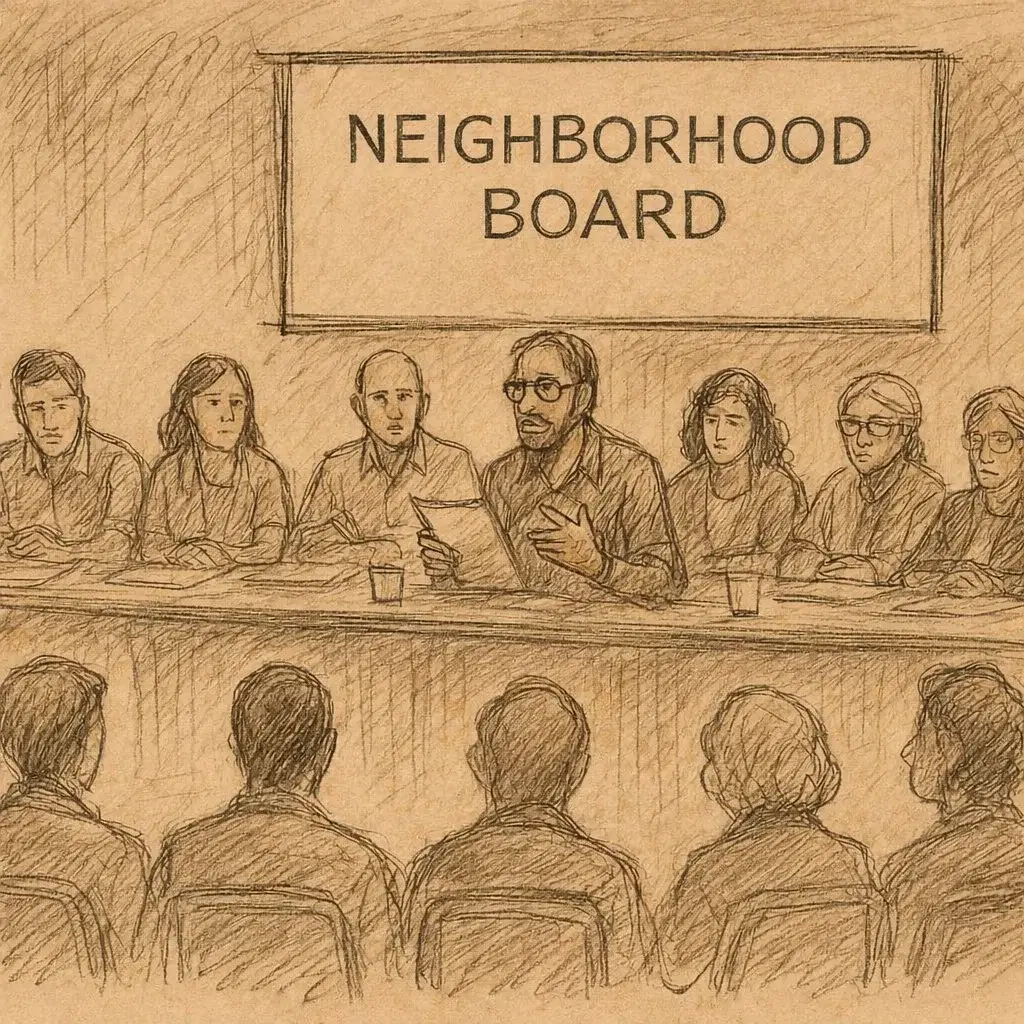
No 20 ʻAiea Neighborhood Board Regular Meeting May 2026
Listen to this article:
20 Aiea Neighborhood Board Meeting – May 13, 2026
Quorum, Attendance, and Meeting Opening
The meeting opened with roll call and initially appeared to lack quorum, with several members absent either in person or online. After a late arrival by a board member, quorum was achieved and the board proceeded. The attendance issue was briefly noted as unusual, with the chair remarking that it may have been the first time the board nearly failed to meet quorum. This framed the meeting as one with a relatively light board presence but a substantial agenda and significant community participation.
Honolulu Fire Department Statistics and Wildfire Preparedness
The Honolulu Fire Department, represented by a firefighter from the nearby Aiea station, reported April 2026 activity totals for the station area: 2 nuisance fires, 17 activated alarms with no fire found, 117 medical calls, 6 motor vehicle collisions, and 4 hazmat calls. The department emphasized seasonal wildfire prevention as Hawaiʻi enters a higher-risk period marked by dry conditions, tall grass, and shifting winds. Residents were urged to clear dry vegetation around homes, avoid parking on dry grass because hot exhaust can ignite it, refrain from spark-producing activities on hot, dry, windy days, and monitor weather and fire conditions. The discussion connected these risks to everyday residential practices and preparedness.
Fire Access on Narrow or Obstructed Streets
Board members asked how HFD handles fires on narrow or dead-end streets where illegal parking or roadway obstruction prevents a fire truck from reaching a structure. HFD explained that crews do not simply wait for vehicles to be moved or towed; they attempt to access the fire as quickly as possible and will deploy hose lines from whatever point they can reach if conditions allow. The response depends on the exact situation, including distance from the truck to the fire and whether owners can be located to move vehicles. The exchange highlighted ongoing neighborhood concerns about roadway clearance, especially in tight residential areas where parked cars may reduce emergency access.
CPR and First Aid Training Request for Newtown Residents
A board member asked whether HFD could provide basic CPR or first aid outreach at the Newtown Estates Recreation Center, particularly for an aging population that may need to help one another while waiting for first responders. HFD said there is no personal program immediately in hand but committed to looking into available training options and reporting back through the chair at a future meeting. The request reflected concern about emergency response time and practical health preparedness for older residents.
Honolulu Police Department Response to Parking Obstruction on Pamaho Place
A substantial discussion focused on illegal or obstructive parking on Pamaho Place, a dead-end street off Nalopaka. A board member said the situation improved for about a week after prior discussion but had returned, with cars again forcing drivers to cross into opposing traffic to navigate the street. HPD reviewed the signage as visible on mapping and explained that parking appears prohibited only on the outbound side and around the turnaround area, while some inbound-side parking may be allowed if it does not obstruct traffic. HPD stressed that blocking the road is not permissible and that vehicles impeding emergency access can be towed. Residents were told to call 911 when violations occur, especially if tensions among neighbors are escalating, rather than confronting one another directly. HPD also noted that while officers can conduct checks, they cannot continuously monitor every street without fresh complaints.
Crosswalk Safety on Kaʻahele Street Near Newtown Recreation Center
Residents from Newtown Estates raised concerns about the crosswalk fronting 98-456 Kaʻahele Street at the entrance to the Newtown Recreation Center. They described drivers speeding despite a recent sign-waving event and despite the presence of crossing flags previously installed through Senator Takai’s efforts. A request was made for a flashing beacon at the crosswalk. HPD said it could support speed enforcement, sign-waving, and placement of a speed trailer, but that installation of a beacon would fall under another agency. The mayor’s office later confirmed the request would be relayed to the Department of Transportation Services, and another community member added that a rectangular rapid flashing beacon has already been approved and is in DTS planning. The expected timeline is not immediate; the project is hoped for in 2027 as part of a package of smaller projects, not in the current year.
Community Frustration Over Homelessness, Encampments, and Public Disorder
A resident who walks daily through Aiea, Pearlridge, and surrounding areas spoke at length about visible crime, homeless encampments, suspected gambling operations, bike stripping near the Times pedestrian overpass, and repeated disorder around Aiea Park. He described trying to report concerns through 311, his council office, and HPD, but feeling that conditions in the neighborhood are worsening. He also reported a recurring issue involving a man at Aiea Park who allegedly drops his pants in public near children being brought to the area by a preschool. The resident said HPD responded previously but told him there was little they could do beyond asking the individual to leave or offering transport for evaluation if the person agreed. The exchange captured resident fatigue with cyclical enforcement and the perception that people are repeatedly moved and then return.
HPD Guidance on Public Lewdness, Mental Health Response, and Escalation to Supervisors
In response to the resident’s concerns, HPD clarified that if a responding officer’s action seems inadequate, the reporting party should call back and request a supervisor. A sergeant can then reevaluate the scene, and if needed the district commander can also respond. HPD explained that behavior such as dropping pants in public can implicate criminal statutes like open lewdness or indecent exposure, but that circumstances matter and mental illness may affect whether conduct is handled as criminal behavior or a mental health intervention. HPD reiterated that homelessness itself is not a crime and said Crisis Outreach, Response and Engagement services should continue to be contacted through 311 or related channels regarding camps and vulnerable individuals. The chair and others argued that persistent follow-up is often the only reason conditions improve, citing graffiti abatement in Halawa as an example of repeated intervention eventually reducing recurrence.
Encampments, Neighborhood Persistence, and the Limits of Enforcement
The broader discussion on encampments returned to the recurring pattern of cleanups followed by reoccupation, including under the bridge near Times and in areas around parks. The chair described this as a long-term issue requiring repeated action from residents, agencies, and outreach providers rather than one-time responses. A board member noted that after a homeless-oriented project at Blaisdell Park ended, more homeless individuals appeared to remain in the area because they had become familiar with the location. The conversation underscored how nearby social service efforts, park conditions, infrastructure, and recurring outreach all intersect in shaping visible homelessness in the district.
Additional Traffic and Parking Complaints Near Kaʻahele and Kekeʻalii
A resident raised another traffic safety issue at the intersection of Kaʻahele and Kekeʻalii, where a white Tacoma truck allegedly parks too close to the corner and makes it difficult for residents to safely exit the street. The concern had reportedly persisted for months, with residents repeatedly calling but not seeing tickets issued. HPD said it would check the location, particularly because the complaint indicated the vehicle might be violating corner-clearance distance requirements. This was another example of residents asking for more consistent parking enforcement at neighborhood choke points.
Board of Water Supply Main Breaks and Summer Water Conservation
The Board of Water Supply reported three water main breaks in the neighborhood board district during the previous month, all on 8-inch mains. The locations were Iwa Iwa Street in Halawa Heights, Hālai Aliʻi Way at the top of Halawa Heights, and Kaimu Loop in Aiea. BWS also issued a general summer conservation reminder, emphasizing that recent storms do not eliminate the need to save water. Residents were advised to water plants early in the morning, take shorter showers, check toilets for leaks, avoid running taps unnecessarily, and apply for BWS rebates for water-efficient appliances and systems. The message tied daily household behavior directly to water supply management and utility costs.
Sewer Bill Separation Question Remains Unresolved
A board member asked when the city would separate the combined water and sewer billing. BWS said the change is still being worked on but is not ready and no concrete timeframe is available. The question reflects ongoing concern about utility billing transparency and how future billing changes may affect households.
Aiea Heights Drive Water Work, PFAS Questions, and Uneven Road Patch
Community members pressed BWS for updates on the ongoing work on Aiea Heights Drive, but the representative did not have the current project status available and promised a follow-up at the next meeting and for the record. Another resident asked about PFAS filtering at the Palomino Wells, specifically how much PFAS is being removed and what happens to it after filtration; BWS also deferred that answer to a future meeting. A resident additionally complained about a large, uneven patch on Halawa Heights Drive near the intersection with Liʻi Po, left after a water main break and still badly raised months later. BWS again committed to taking the issue back and returning with an answer. The repeated deferrals showed frustration around incomplete project communication and unresolved roadway impacts tied to utility work.
Mayor’s Office Update on Storm Recovery, City Priorities, and Delayed Town Halls
The mayor’s office, represented by Department of Design and Construction Director Haku Mills, highlighted updates from the mayor’s newsletter, including Oʻahu’s recovery from catastrophic storms, postponement of mayoral town halls, the 2026 State of the City address, the Honolulu Zoo’s accreditation, expanded housing options in Chinatown, and release of the 2026 Annual Sustainability Report. Residents were directed to oneoahu.org for information about reporting home damage, health and safety tips related to recovery, and ways to support affected communities. This framed the neighborhood’s concerns within larger citywide recovery and resilience efforts.
Pearlridge Crosswalk at Moanalua Road and Waimano Home Road Area
The mayor’s office followed up on a previous concern about the pedestrian crosswalk near Pearlridge Shopping Center at Moanalua Road and Waimano Home Road/Ualo Street, where visibility and safety had been raised by a board member. DTS had previously determined that a full traffic signal is warranted, but design and installation have been programmed for future federal funding. As an interim measure, DTS plans to relocate the crosswalk to the opposite side of the intersection, remove the left-turn lane into Pacific Village condominium, and install a median with solar-powered rectangular rapid flashing beacons. Funding availability will drive timing, with tentative installation in fiscal year 2027–2028. The long lead time underscored the phased nature of traffic safety improvements.
Moanalua Road Sidewalk and Bus Stop Construction Near 99-230 Moanalua Road
The mayor’s office also responded to concerns about sidewalk construction and trenching near 99-230 Moanalua Road, where gravel and work around a fire hydrant were affecting the bus stop area. DTS said temporary relocation of the bus stop was not recommended because operations and rider access were still functioning. The Department of Planning and Permitting’s civil engineering branch reportedly spoke with the contractor, who said sidewalk work should be completed by early June 2026. When a resident questioned whether inspection activity was actually occurring because the site appeared inactive, the mayor’s office said the issue would be taken back again and encouraged residents to continue reporting visible problems directly so inspectors can be sent out.
Lack of Update on Aiea Park and Kealoha Aiea ʻOhana Park Plans
When asked about the interim Aiea Park and the proposed Kealoha Aiea ʻOhana Park plans that had been supported through a board resolution in January, the mayor’s office said the Department of Parks and Recreation had not yet provided an update. The office committed to checking back and bringing information later. The absence of detail suggested the park proposal remained unresolved despite prior board action.
Councilmember Cordero Community Events and District Updates
Councilmember Radiant Cordero attended in person and highlighted a rescheduled Halawa Read Aloud event with Read to Me International on Saturday, May 30, 2026, from 10:00 to 11:00 a.m. at Halawa Station, now also featuring the fire department and a fire truck. Children attending can receive books, with registration used to estimate quantities. She also noted city sewer CARES credits of up to $240 for qualifying customers through the Department of Environmental Services and promoted signups for the city’s Junior Lifeguard program for ages 11 to 17, with Ala Moana identified as the nearest likely training site for local participants. Her report tied local engagement to both family programming and public services.
Towing Program Audit, Large Vehicle Removal, and Bus Route Changes
Councilmember Cordero noted a city council audit concerning the Honolulu towing program, including HPD and Department of Customer Services towing operations. She said one budget focus is securing a contract capable of towing large vehicles that the city currently says it cannot remove, an issue affecting industrial parts of her district and neighborhoods alike. She also flagged upcoming bus route adjustments affecting routes including the A-Line, U-Line, W-Line, and 1L, mostly involving timing and frequency changes. These updates addressed persistent neighborhood concerns about abandoned large vehicles and transit reliability.
District Activities and Follow-Up on Crime and Park Concerns
The councilmember mentioned recent community events, including a combined Aiea and Salt Lake seniors bingo gathering and Earth Day tree planting at Makalapa Neighborhood Park with Aiea Elementary students. She also said she took down the frustrated resident’s contact information and intends to walk Aiea Mini Park with him and others to observe problems firsthand, including the gambling operation he referenced near Wendy’s and general conditions in the park area. This reflected an effort to shift some complaints from abstract reporting into direct field review.
Question About Federal Disaster Funds and Halawa Stream Dredging
A board member asked whether disaster assistance linked to recent flooding could be used for flood control improvements such as dredging Halawa Stream, which he said had filled in with rock after the recent Kona low and now looks markedly different from two years ago. Councilmember Cordero said she would look into whether those federal funds could support such a use and offered to provide the board with information from a recent city presentation on disaster funding. The discussion linked storm recovery policy to long-standing local drainage and stream maintenance concerns.
Feeding of Feral Cats and Growing Neighborhood Disputes
The meeting then turned to repeated complaints about a woman feeding stray cats in several Aiea locations, including near Nalopaka, Pamaho Place, and the Pearlridge parking structure near Bank of Hawaiʻi. Board members and residents said the feeding has caused the cat population to grow, brought fleas, and generated disputes among neighbors. One resident said a child in the area is severely allergic to fleas. Another said cats are spraying grills and creating a nuisance while a separate neighbor feeds chickens, adding roosters crowing as early as 2:30 or 3:00 a.m. Councilmember Cordero said she believed she knew the feeder being described and had worked with nearby associations previously, though tensions had caused efforts to stall. She asked for license plate or identifying information so the matter could be pursued.
Cat Feeding Ordinance Gap and Humane Society Catch-Neuter-Release Reality
Councilmember Andria Tupola Okimoto’s office joined the cat discussion and clarified that Hawaiʻi Island has an ordinance addressing illegal cat feeding but Oʻahu does not currently have a similar one. However, feeding on private property without permission is not allowed, and there is work underway regarding feeding on city sidewalks and public areas. The office explained that cat feeders are supposed to remain with the animals while feeding and, where possible, capture them for Hawaiian Humane Society spay-neuter services. Residents noted frustration that cats trapped and brought in are generally returned to the same location after treatment, limiting the effect on nuisance conditions. The office promised to share a direct Humane Society contact with the board chair for follow-up.
Councilmember Okimoto Office Legislative Update on Animal Nuisances and Flood Hazards
Councilmember Okimoto’s office also provided broader legislative updates. Bill 8, relating to animal nuisances, would strengthen ordinances addressing animal-related disturbances and increase fines, but the office later clarified it is mainly aimed at dangerous dogs, dog bites, and enforcement mechanisms rather than feral chickens or cat feeding. Bill 34, relating to flood hazard areas, would update local building standards to maintain Honolulu’s eligibility for the National Flood Insurance Program and Community Rating System. Resolution 26-007 would establish a landfill task force to explore reducing the city’s landfill dependence and moving toward zero waste. The office reminded residents that the city budget process was underway, with final council action scheduled for June 3 and the charter deadline on June 15.
Graduation Season Traffic Advisory
Councilmember Okimoto’s office also gave a detailed schedule of public high school graduations from May 16 through May 27, including Aiea High School’s ceremony on Sunday, May 17, 2026, at the Hawaiʻi Convention Center and Moanalua High School’s graduation on May 26. The office asked residents to plan for heavy traffic around venues and school communities during graduation season.
Governor’s Office: Wahiawā Dam Rehabilitation, Disaster Assistance, and Library Lights
The governor’s office returned with follow-ups from previous meetings. On the Wahiawā Dam rehabilitation project, the office said the work will improve water delivery from more than 9,000 acres of farmland to about 12,000 acres and bring the spillway up to modern safety standards, reducing risk to downstream communities such as Haleʻiwa and Waialua. Hydroelectric generation is also being pursued as part of the rehabilitation. The office confirmed that the recent disaster received a federal declaration for both individual assistance for damaged homes and public assistance for rebuilding infrastructure. For stream clearing, the state Department of Transportation has been funded to clear streams from source to mouth regardless of jurisdiction, with work underway on Kaukonahua and expected next at Waiāhole and Waikāne, and the board’s stream concern to be checked for possible inclusion. The office also said replacement of failed light poles at the Aiea library parking lot is estimated to take about a year because new permanent poles must meet current building codes and fit existing electrical infrastructure; temporary solar rental lights have been installed in the meantime.
Debate Over State Assumption of Dam Liability and Rising Costs
A board member strongly questioned the state’s decision to take over responsibility for the Wahiawā Dam/Lake Wilson area, arguing that the prior owner should have paid for repairs rather than the state assuming major liability. He said he had understood earlier estimates to be around $20 million but the project now carries a $65 million contract with Goodfellow Brothers, and he warned that a dam failure could financially devastate the state. He also argued that the state has a poor maintenance record and suggested that the Board of Water Supply, which maintains other dams, might be better suited to handle future operation and maintenance. The governor’s office said the Department of Agriculture and Biosecurity is leading the project, DOT is assisting, and the Agriculture Development Corporation under DBEDT is expected to assume control after construction.
State Highway Work, Cemetery Wall, and Convention Center Questions
A community member thanked the state for improvements behind Aiea Cemetery, describing the work as visibly much better than the prior condition despite traffic disruptions during construction. She also noted that vegetation had been cleared from Nālā stream, displacing some homeless individuals near a preschool and changing how water now hits the property. She then asked about the Hawaiʻi Convention Center contract, saying she believed an earlier bidding round failed and that work had been expected to start in January 2026. No answer was given in the transcript before the meeting moved on.
Senator Elefante: End of Session Report and Aiea High School Funding
Senator Brandon Elefante provided an end-of-session report and said the Aiea library parking lot is open for use, with temporary lighting expected before the end of May to open more of the mauka side. He highlighted state funding secured for Aiea High School totaling $450,000, split into $225,000 for perimeter fencing around the athletic and football field and $225,000 for leveling around the gym. He also announced that the contract for the new athletic and football field at Aiea High School had just been awarded to Peterson Brothers Construction for $7.69 million. These updates were among the most concrete capital improvements discussed at the meeting.
Broader State Capital and Policy Measures
Senator Elefante also pointed to larger statewide appropriations, including $446 million and $81.4 million in Department of Education bulk funds for deferred maintenance and renovations, as well as $365 million for airports and $646 million for the state highway system through the Department of Transportation. He noted that nearly 300 bills passed this session out of more than 2,000 introduced. Measures he highlighted included one allowing expansion of red-light and speed camera enforcement to no more than two installations per Senate district per year if signed by the governor, legislation regulating electric bicycles by category, and a measure appropriating $50,000 for a feral chicken contractor for the City and County of Honolulu, also pending the governor’s signature.
HB1530 Community Safety Action Plan Did Not Advance
When asked about House Bill 1530, relating to a community safety action plan, Senator Elefante’s office checked the status and reported that the measure had been deferred in a House health committee back in February and failed to meet deadlines. The bill therefore did not advance.
Representative Shimizu: Session Wrap-Up, Student Leadership, and Red Hill
Representative Garner Shimizu’s office reported that the legislator had remained active in the district during session and recently attended the Aiea High School Student Association induction ceremony alongside Representative Kong and Senator Elefante. The student association was recognized for receiving the 2026 National Gold Council of Excellence distinction. The office also said Representative Shimizu attended the Red Hill open house hosted by the Navy Closure Task Force and continues to monitor Red Hill as one of the district’s top priorities. Looking forward, the office is considering a District 32 community town hall focused on practical residential issues such as public safety, infrastructure, traffic, water, and quality of life.
Aiea Community Association and Mural Protection
The Aiea Community Association announced its next meeting for Monday, May 18, in the same room, with hybrid participation available. The ACA is also working on obtaining a plexiglass protective cover for the mural in the library meeting space so it is not further damaged. The mention was brief but reflected the board’s ongoing use of the library as a civic meeting place and concern for preserving local public art.
State DOT Roadwork, Moanalua Freeway Paving, and Weekend Rehabilitation Projects
The state DOT noted that after extending work to include an additional roughly 120 feet plus restriping and slope capping, the recent wall work was completed. Night paving on the Moanalua Freeway is set to resume, though DOT learned that one planned work night conflicts with a Moanalua High School graduation date and said project managers would be asked to review all graduation dates. DOT also said the Pearl City rehabilitation project remains ongoing, as does the Salt Lake rehabilitation project on weekends. Residents were directed to sign up for the weekly lane closure notices under the Ewa Highway District.
Pearlridge Center Events and Escalator Delays
Pearlridge Center reported upcoming events, including Coffee with a Cop on Tuesday, May 19, from 10:00 a.m. to noon in the Wai Makai food court and the Blood Bank of Hawaiʻi donation drive on Saturday, May 30, from 10:00 a.m. to 4:00 p.m. A board member asked about a long-out-of-service escalator on the Phase 2 makai side, saying seniors had noticed the issue. The center’s general manager said the delay is due to difficulty obtaining escalator parts since COVID, with major components that once took weeks now taking six to eight months. He added that parts for the mauka elevator had recently arrived and installation was being coordinated.
Department of Health and Catholic Charities Youth Home Oversight
The Department of Health provided updates regarding the Catholic Charities youth home that has dominated many prior meetings. The representative said cameras have now been integrated into some individualized clinical plans, but they do not replace the requirement that staff be positioned for immediate physical response. She strongly objected to neighbors openly watching, photographing, or recording youth, staff, vehicles, or the property, saying this interferes with trauma-informed care and a sense of safety for the youths. DOH also said all Catholic Charities staff have been instructed to park on Kaʻahele Street as a courtesy to neighbors, even though they are not subject to different parking rules than others in the neighborhood. The board was told that an annual report requested at a previous meeting is being prepared and will be provided later. May was also noted as Mental Health Month, with sign-waving events and buildings lit in green as part of awareness efforts.
Board Chair Forces Shift Away From Repeating Catholic Charities Disputes
A long and heated exchange followed between the board, community members, and a resident who defended the Catholic Charities home and criticized the repeated neighborhood objections. The chair repeatedly intervened, saying the same concerns had been raised for more than a year and that the meeting could not keep relitigating them. He advised residents that if they believe Catholic Charities is violating its contract, they should keep written logs of dates, times, and incidents rather than openly photographing or surveilling the youth. He said the only effective way to challenge the program would be to document failures to follow contract terms and present those to the Department of Health. The moment was one of the most emotionally charged parts of the meeting, exposing deep neighborhood divisions and frustration over both the facility and the repeated conflict surrounding it.
New Aloha Stadium Entertainment District and Stadium Dismantling Progress
The Stadium Authority and project partners provided one of the meeting’s most substantial capital project updates. The swap meet is entering its summer peak season, with Sunday vendors reportedly lining up as early as 2:30 a.m., prompting management to encourage attendance on Saturdays instead. The authority also said a recent food bank collection drive brought in more than $2,000 worth of donations in five days. For the New Aloha Stadium Entertainment District, project manager Kalua Robinson of Aloha Halawa District Partners said dismantling of the existing stadium is now underway. The first and second quadrants of the west makai stands have been stripped, and work on the mauka stands is expected next month. The end-zone grandstands will be dismantled more strategically in order to preserve the existing concrete end zones for future use.
New Stadium Design, Timing, and Community Art Activation
The development team reported that schematic design is about 80 percent complete and that coordination with city and state agencies for permits and approvals is ongoing so new stadium construction can begin next year. The new stadium is planned for the same general footprint, with about 31,000 seats and the ability to expand if demand warrants. It is being designed not only for football but also for soccer, rugby, large concerts, and community events, with the stated goal of creating a new home for UH Rainbow Warriors football. The authority also announced a partnership with the State Foundation on Culture and the Arts to transform the black construction boards around the site into a community mural project involving Aiea-area participants over the next two to three years.
Stadium Legislation: Revenue Flexibility and HCDA Role
Stadium counsel said that of roughly 21 bills related to or affecting the stadium introduced during the session, only two reached the governor. Senate Bill 2074 would exempt concessions within the stadium facility from the usual Chapter 102 rules governing concessions on public property, allowing the stadium to compete more effectively and deposit generated revenue directly into the stadium development special fund. Senate Bill 2599, often referred to during the meeting as the HCDA bill, would remove the ceiling from the special fund, allowing the Stadium Authority to access the full $49.5 million currently in that account. It would also require closer coordination among the Stadium Authority, the Department of Accounting and General Services, and the Hawaiʻi Community Development Authority, giving HCDA a larger role in zoning, land use, and infrastructure funding within the district while still preserving the Stadium Authority’s final say over what is built on site.
Signage Bill Failed, So Billboard Restrictions Remain
A board member asked about prior discussion of inward-facing signage and concern about signs facing the roadways. Stadium counsel replied that Senate Bill 2353, which related to signage, died in conference and never reached the governor. As a result, existing billboard restrictions remain in place, and any outward-facing signage would still need permits. Counsel added that the project team’s intent is to avoid garish, objectionable signs and to focus signage inward toward the district.
OCCC Replacement Jail Planning and Work Furlough Review
The warden of Oʻahu Community Correctional Center said the replacement jail project is continuing, with ongoing collaboration with the UH Community Design Center to integrate design ideas. He also noted that recently passed legislation will require a prison oversight commission task force to provide recommendations on rehabilitative practices statewide, and those recommendations will have to be considered in the jail’s design and planning. In response to a board question, the warden also revisited the earlier incident involving a work furlough inmate. He said the department reviewed the program, found most procedures were sound, but tightened oversight and front-end screening. The involved inmate was returned to Halawa in a secure setting and removed from the program. The furlough program had been temporarily shut down and has now resumed.
OCCC Staffing Shortages and Emergency Hires
The warden said OCCC remains short about 100 employees out of a staffing level of roughly 410, though that is somewhat improved. To address the shortage, the facility is using emergency 89-day temporary hires who receive training and work alongside experienced officers rather than alone. The hope is that some of these temporary workers will proceed through the academy and become permanent recruits. This staffing strategy was described as a practical workaround given the state’s slower standard hiring mechanisms.
Navy Region Hawaiʻi and Red Hill Operations
The Navy Closure Task Force and Navy Region Hawaiʻi provided updates on both routine military activity and Red Hill defueling and closure operations. Residents were told that the Rim of the Pacific exercise will run from June 24 through July 31, bringing more than 25,000 people into the area and increasing traffic around military installations. At Red Hill, the Navy is currently degassing Tank 11 so workers can enter, remove sludge, and complete cleaning for eventual closure. The Navy is also preparing for pipeline removal operations, with removed pipe to be taken off-island rather than disposed of locally. The task force again pointed residents to its website and mobile app for biweekly highlights and operational updates.
Uncertain Timeline for Halawa Well Reactivation
A board member asked about the Halawa Well and when it might be reactivated. The Navy representative said no definite timeline is available because the work involves engineering and construction improvements to the infrastructure. She declined to estimate whether the well would be back online this year or next year, indicating that the project remains in a planning and implementation phase without a public completion date.
Red Hill Registry Community Outreach
A representative from the Red Hill Registry reminded residents of the program’s purpose: tracking health outcomes, informing future research and clinical guidance on fuel exposure, and connecting impacted residents to resources related to the 2021 Red Hill fuel spill and related concerns. She said registry staff recently participated in a cleanup in Pearl City Peninsula near a bike path and elementary school and offered to support similar work in Aiea if invited. She also announced a second round of focus groups and community surveys and encouraged residents to subscribe to the registry’s updates through redhillregistry.org.
Approval of March and April Meeting Summaries
In board business, the board approved the written summaries for the March 10, 2026 and April 14, 2026 meetings. One correction was noted to add a board member’s name and arrival time to the March summary. Both approvals were handled by motion, second, and no objection.
Green Recycling Organic Waste Program Goes Islandwide October 1
The Department of Environmental Services presented the city’s Green Recycling Organic Waste program, known as GROW, which will expand islandwide on October 1, 2026. The presentation explained that Oʻahu households generate about 60,000 tons of residential food waste each year and that the city aims to divert 95 percent of garbage from the landfill. Under GROW, food scraps and wasted food will now be added to existing green carts already used for yard waste in homes with automated three-cart curbside service. Pilot areas have already included Waipahu, Nānākuli, Waikīkī, Mililani, Kailua, and Kalihi.
What Can and Cannot Go in Green Carts
Residents were told that in addition to yard waste such as grass clippings, leaves, branches, palm fronds, and natural Christmas trees, the green cart can now accept fruits, vegetables, dairy solids, bread, baked goods, pasta, rice, meat, seafood, poultry, and bones. Liquids are not allowed, nor are paper products, metal, plastic, glass, fats, oils, grease, compostable serviceware, pet waste, coffee cups, takeout containers, or food wrappers. The city urged residents to collect food scraps in reusable sealed containers, optionally freeze scraps until collection day, and use hacks such as coffee grounds, baking soda, and layering food within green waste to reduce odors. Bags of any kind are not wanted in the green carts because they interfere with compost processing.
Composting Process, Wahiawā Drop-Off, and Concerns About Odor
The city said adding food waste greatly accelerates composting, reducing processing time from 12 to 24 months down to about 6 months. Hawaiian Earth Recycling in Wahiawā is the city’s contractor and handles composting under methods designed both to process organics efficiently and to avoid spreading coconut rhinoceros beetle host material. Residents can drop off material directly at Hawaiian Earth Recycling’s Wahiawā site free of charge in private vehicles, but not at city transfer stations or convenience centers, which will continue accepting only green waste, not food scraps. Board members and residents asked about odor and collection frequency, particularly for institutions that generate a lot of food scraps. The department said odor has been manageable in tests if carts are layered properly and kept closed, but acknowledged that some larger generators may need case-specific discussion.
Consumer Advocacy Division Explains Utility Oversight Role
The Hawaii Division of Consumer Advocacy from the Department of Commerce and Consumer Affairs closed the night with a presentation explaining its role as the state office representing customers of privately owned utilities before the Public Utilities Commission and other regulatory bodies. The office does not handle public utilities such as Board of Water Supply, but it does represent customers of Hawaiian Electric, certain private wastewater and gas companies, telecom matters in limited cases, and transportation entities such as Young Brothers. The division evaluates proposed utility expenditures, rate increases, and projects using legal, engineering, economic, accounting, and social science analysis to argue for safe, reliable, affordable, equitable service aligned with Hawaiʻi’s clean energy goals.
Public Participation in Utility Cases and Questions About HECO Costs
Residents were encouraged to monitor Public Utilities Commission dockets and provide public comment in rate cases and major project proceedings, because public testimony is read by both the Consumer Advocate and the commission. A board member asked about Hawaiian Electric’s Waiau repowering project and whether cost overruns would automatically be passed to ratepayers. The representative said the PUC capped project cost recovery at roughly $850 million and Hawaiian Electric would have to justify any amount above that in a later proceeding. Another question concerned why the community benefits package linked to the project seemed concentrated in Pearl City; the representative said he would need to follow up. He also confirmed that his office had not been involved in the governor-backed synthetic natural gas discussion because no such proposal had been formally filed before the PUC.
Resolution Opposing HMSA–Hawaii Pacific Health Partnership Delayed Again
Late in the meeting, the board returned to a previously deferred resolution opposing the proposed HMSA and Hawaiʻi Pacific Health partnership. The sponsor argued he remained concerned that the arrangement lacked concrete, enforceable assurances about how cost savings would be used, whether doctor reimbursement would increase, and whether the merger would worsen competitive conditions for other health systems and independent physicians. He also linked the issue to doctor shortages in Hawaiʻi, saying physicians continue leaving because they cannot sustain the cost of living and student loan burdens here. Another member said she still did not feel sufficiently informed and wanted more details, including how administrative approvals for specialist procedures might be reduced under the partnership. With no momentum to vote and the hour already late, the chair proposed inviting Hawaiʻi Pacific Health leadership, specifically CEO Ray Vara, to a future meeting for direct questioning and delaying action again until July. The board appeared to agree to that approach rather than voting.
Recess in June and Next Meeting
The board announced it would be in recess in June. The next regular meeting is scheduled for Tuesday, July 14, 2026, at 7:00 p.m. at the Aiea Public Library. The meeting adjourned at 10:07 p.m.